

The Best US National Parks For Hiking, According To Visitors
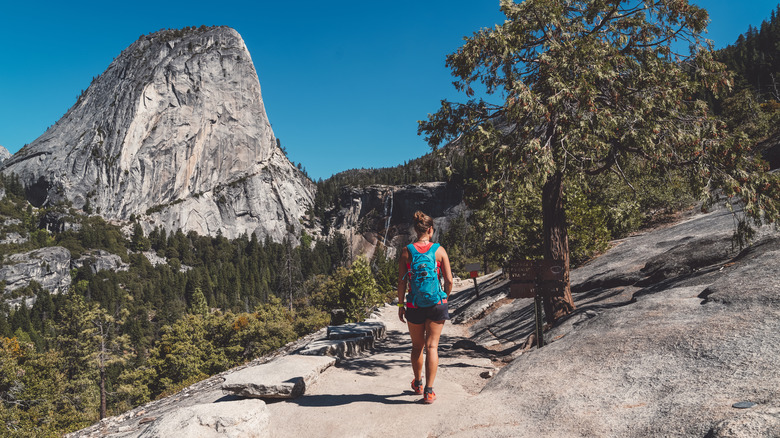
The U.S. has 63 national parks, some of which are relatively small yet rich in biodiversity, while others are expansive, geologically fascinating, and sometimes rather difficult to get to. Cumulatively, they boast thousands of miles to explore. Shenandoah National Park, for example, features more than 500 miles of trails, and the vast majority are dog-friendly. Great Smoky Mountains National Park boasts more than 800 miles of marked routes. The Grand Canyon features both easy scenic walks and challenging canyon treks, each awe-inspiring in their own way. Of these 63 parks, a dozen of them stand out for their extraordinary hiking trails.
The best thing about hiking in U.S. national parks is how stunningly diverse, beautiful, and immersive they can be. From historic paths in Yosemite, to otherworldly treks in Canyonlands, to miles of former carriage roads at Acadia, there's a walk for everyone. Crowds can be a big issue at some parks, especially in heavily touristed areas like Angels Landing at Zion National Park or Grand Canyon Village. But, even the famous Rim Trail at Grand Canyon can feel completely serene first thing in the morning or during the off season. While each of these 12 parks offers something unique, all rank among the very best in the country for hiking.
Iconic views at Grand Canyon National Park
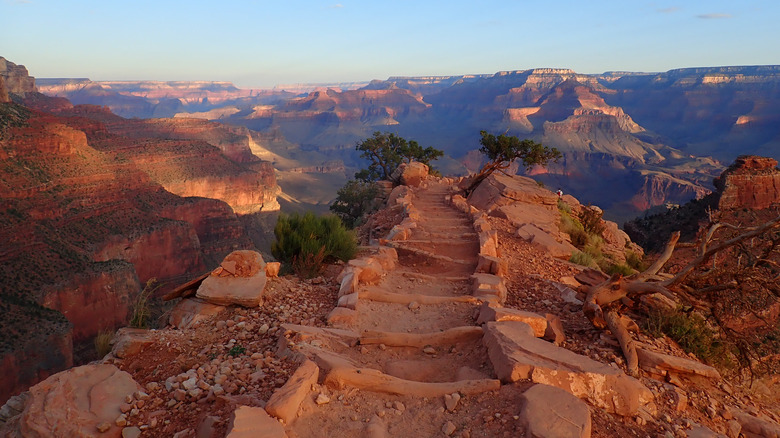
One of the most recognizable national parks in America — and one of the most remarkable canyons in the world — the Grand Canyon is undoubtedly a fantastic spot for hiking. While the crowds in the summertime can be a bit of a drag sometimes, it is possible to escape the hubbub of Grand Canyon Village on the South Rim. And the North Rim, though ravaged by a forest fire in 2025 that destroyed a historic lodge, is a less-visited side that nevertheless offers spectacular views.
First, it pays to think about which rim of the Grand Canyon offers the best hike based on what you want. All in all, the park boasts more than 400 miles of trails to explore. On the South Rim, one option for all skill levels and abilities is the Rim Trail, a 2.83-mile stretch starting at Yavapai Point that doubles as "The Trail of Time," a geological timeline and scenic walk in one. The South Kaibab Trail is also one of the park's most spectacular hikes. Popular stops or turnaround points for day hikes include Ooh Aah Point, which is 1.8 miles round-trip, or Cedar Ridge, which is 3 miles out and back. At 6 miles round-trip, Skeleton Point is a very challenging distance for a day hike, and anything beyond that usually requires multiple days. If the trail is open in its entirety, you can even hook up to another iconic route, Bright Angel Trail.
Aside from fire damage-related closures, North Rim is open to visitors between mid-May and mid-November. A number of hikes that range from under a mile to upwards of 10 miles offer phenomenal views of the canyon. Only the North Kaibab Trail heads into the canyon from North Rim, with numerous vista points along the way that make for easy turnaround spots.
Fido-friendly hiking at Shenandoah National Park
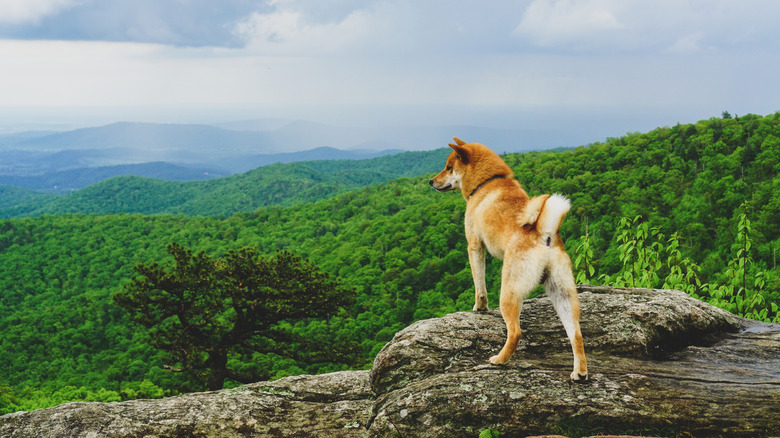
Shenandoah National Park is nestled in the Appalachian Mountain Range, within easy reach of numerous urban centers on the East Coast. It's within a two-hour drive of both Washington, D.C., and Richmond, Virginia, but its mountainous terrain and lush forests feel a world away. It's also criss-crossed by more than 500 miles of trails, around 480 of which are also open to dogs, making it one of the most dog-friendly national parks in America.
Shorter hikes are one of the easiest ways to approach the trails here, but strenuous and long hikes like Riprap-Wildcat Ridge trail can take an entire day. The Appalachian Trail passes directly through the park for more than 100 miles, so multi-day routes are certainly possible. Old Rag is Shenandoah's most popular destination for amazing views, but you'll need a $2 ticket if visiting between March and November, as the park limits the number of visits to 800 per day. The Old Rag Circuit is a strenuous 9.4-mile loop for experienced hikers, as it ascends more than 2,300 feet and requires some scrambling.
Options for short or medium hikes feel virtually endless, with dozens to choose from depending on your preferences and location within the park. A beautiful, kid-friendly trail to Blackrock Summit takes only about 45 minutes round-trip and offers stunning views over the mountains. Or, take to the woods on the Doyle River Falls trail, which is 3.3 miles round-trip past a couple of stunning waterfalls. While in the woods, be sure to watch out for poison ivy, which grows abundantly along the trails throughout Shenandoah.
Historic vistas at Yosemite National Park
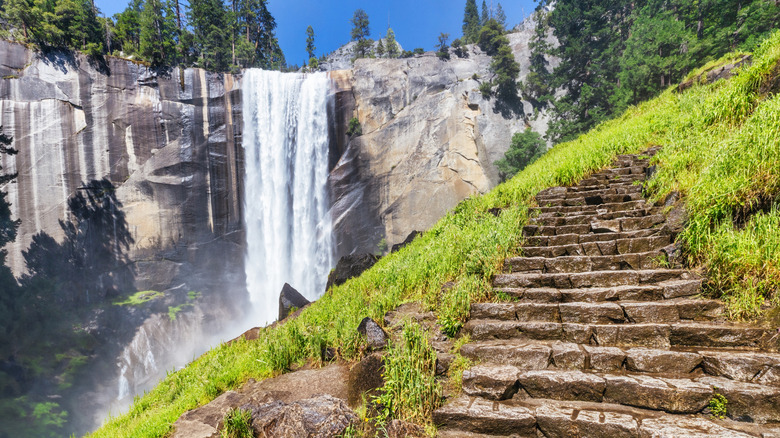
Famed for its waterfalls and sheer cliffs that are popular with adrenaline-seeking climbers, California's Yosemite National Park is also a haven for hikers. Before it became an official national park in 1890, one of the oldest trails in the area took shape between 1873 and 1877, and it remains one of the park's most iconic hikes to this day: Yosemite Falls Trail.
Upper Yosemite Falls Trail offers amazing views over the valley from the top of the park's tallest waterfall. This trip can be done as either a short hike with a turnaround at Columbia Rock — roughly 2 miles round-trip — or as a longer 7.2-mile hike to the top of Yosemite Falls and back. Columbia Rock affords beautiful views over the valley and the park's geological stars: Half Dome and Sentinel Rock. Continuous switchbacks offer additional amazing views, with a platform overlooking the waterfall at the summit.
For an easier alternative that still showcases Yosemite Falls in all its glory, take the 1-mile Lower Yosemite Falls Trail loop to gaze up at the cascade. Along with other popular routes like the Mist Trail and the John Muir Trail — both of which boast stunning views of Vernal Fall and Nevada Fall — these trails can all get extremely busy, especially in the summer. To avoid crowds, head out early in the day or check out some of the less-trodden trails like Artist Point Trail or Mirror Lake Loop Trail.
Ecological variety at Olympic National Park
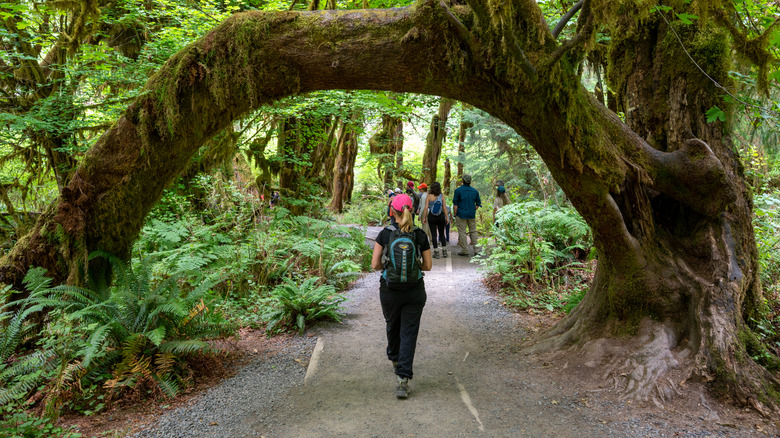
Combining lush woodlands with coastal scenery and steep mountains, Washington's Olympic National Park has something for everyone. This park, which comprises nearly 1 million acres of Washington's Olympic Peninsula, is a biodiverse region that boasts everything from temperate rainforest and coastal forest to alpine and subalpine plant life. It's home to 60 glaciers and more than 70 miles of wild coastline. In September and October, many hikers love to visit Olympic National Park to see the salmon jumping up waterfalls.
The best way to experience this expansive park is on foot, as it boasts more than 600 miles of trails. To really get your steps in, take on the Elwha River Trail, which covers over 28 miles to a camping destination known as Low Divide, linking up part of the way with the Pacific Northwest Trail. There are numerous day hike options to choose from, too, with many easy and moderate routes through the forest. Hall of Mosses Trail is an otherworldly .8-mile loop into Hoh Rainforest that begins right at the visitor center — a thrill for hikers of all ages. Numerous coastal hikes are relatively flat with access to both forests and beaches. If you head to the shore, it's a good idea to have a tide chart with you, which can be picked up from the visitor center. For mountain vistas, embark on the Hurricane Hill Trail, which spans 3.4 miles in total and leads to a panoramic viewpoint.
Atlantic coastal vibes at Acadia National Park
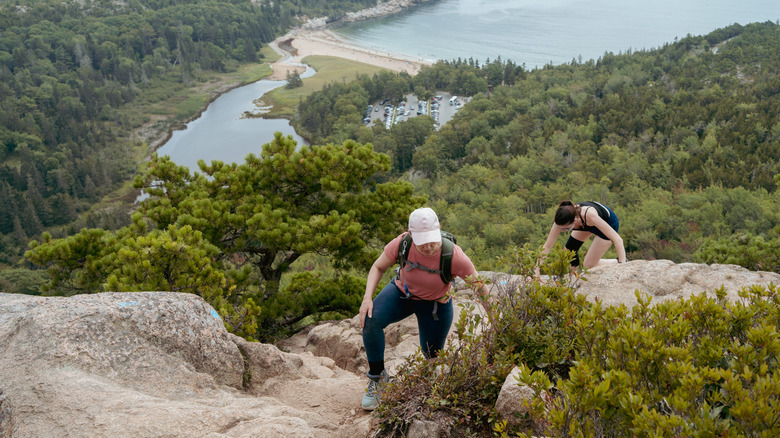
Located in Maine on the Atlantic Ocean coastline, Acadia National Park is home to more than 150 miles of trails, including many dog-friendly hikes and historic carriage roads. One of its most iconic spots is also its tallest point: Cadillac Mountain. The summit is easy to reach on an accessible, paved path called the Cadillac Summit Loop Trail. But, it also brims with adventure possibilities for experienced hikers who have numerous options for reaching the peak, such as the North and South Cadillac Mountain Ridge Trails.
Cadillac is far from the only mountain worth scaling on foot in the park. The strenuous Precipice Loop up Champlain Mountain is 3.2 miles round-trip and ascends 1,000 feet of elevation. It's one of Acadia's most daring trails with a climb up a sheer cliff to breathtaking views of Frenchman Bay. Occasionally, certain trails close temporarily to protect nesting peregrine falcons, including Precipice Loop, so it's a good idea to check the trail's status before visiting in late spring or summer.
Another beloved yet challenging day hike is the Six Summits Trail, which loops for a total of 5.7 miles over the summits of Bald Peak, Parkman Mountain, Gilmore Peak, Sargent Mountain, Penobscot Mountain, and Cedar Swamp Mountain. This is a fall favorite, as the views of foliage from the peaks are second to none.
Mountains and glaciers at North Cascades National Park
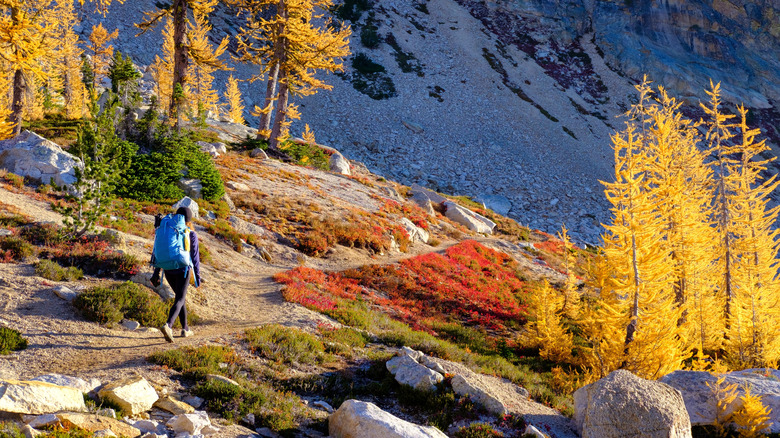
When you think of the Pacific Northwest, you likely imagine coastlines and temperate rainforests, but did you know it's home to a gorgeous and underrated U.S. national park that's one of the world's snowiest places? North Cascades National Park in Washington has some of the most impressive alpine landscapes in the country. Ironically, it boasts way more glaciers than Glacier National Park, although it's said that climate change has had a lot to do with this widening gap over the past several decades. North Cascades is also home to more than 400 miles of trails that range from gentle and accessible walks to strenuous backcountry treks — and plenty in between, of course.
In this mountainous park, hikes with the most dramatic scenery are often on the moderate to difficult end of the spectrum. The Cascade Pass Trail is a 7-mile route that ascends nearly 1,800 feet in elevation and takes upwards of five hours to complete. You'll encounter dozens of switchbacks that offer amazing views over the valley and surrounding peaks. But, there are some easier options, too, like a series of wooded valley trails in the Newhalem area, or Thunder Creek Trail, which can be extended past its first 2 miles into a lengthier, more challenging route. On that note, for the extra adventurous, multi-day treks also provide ample opportunities to explore the park's more remote areas.
Fewer crowds at Canyonlands National Park

Compared to the rest of Utah's "Mighty Five" national parks like Zion and Arches, Canyonlands has a reputation for being a bit less crowded. However, this depends on when you visit and which part of the park you explore. With three distinct districts, you can choose between the park's main attractions or rugged backcountry areas where you'll feel as if you have the entire place to yourself. Island in the Sky and The Needles are two of the most popular areas, largely because they're the easiest to get to. Island in the Sky is by far the most accessible, as it can be reached by way of a scenic drive. This broad mesa features easy trails like the iconic Mesa Arch, along with longer and more challenging routes like Shafer Trail with its vibrant sandstone cliffs.
The Needles offers a slightly less crowded but nevertheless popular backcountry experience. You'll find a few short trails here, but the most rewarding of all are half-day or full-day hikes. For example, the hike to Druid Arch is nearly 11 miles round-trip, and Chesler Park Viewpoint offers amazing views of grassy expanses and towering stone spires. If longer treks and wilderness camping get your heart thumping, look no further than the park's most remote district, The Maze, which is great for experienced hikers and can be completed over the span of at least three days. Remember to register for a permit if you plan to camp overnight.
Red-rock dreamscapes at Zion National Park
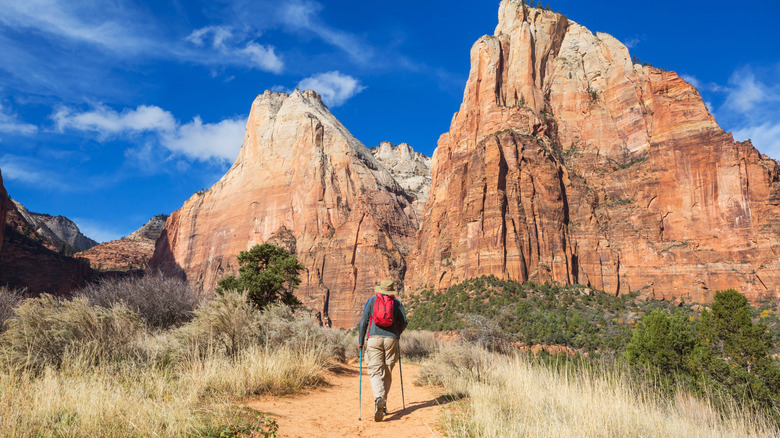
Zion is the second most-visited U.S. national park for good reason, as its otherworldly landscapes are ideal for exploring on foot. Located in Utah, the park features around 90 miles of official trails and nearly 125,000 acres of wilderness to explore. Planning for crowds is essential, and you may want to shuttle in from the town of Springdale where parking may be easier to find. When the shuttle buses are running, especially during the peak months between March and November, cars aren't allowed on Zion Scenic Canyon Road, so you may want to peruse the park map and choose your preferred hikes in advance.
Zion National Park features numerous hiking trails, both in the popular Zion Canyon or in the Zion Wilderness, with various options to choose from depending on your skill level and the amount of time you have. Angels Landing is arguably the most famous — and crowded — hike in the park, so mandatory permits now limit the daily number of hikers to 800. The Narrows is another iconic route, which unlike most trails, actually takes hikers inside the river at the narrowest part of Zion Canyon. To escape the hubbub and the selfie sticks, head to Kolob Canyons, Zion's uncrowded "other" entrance that's a gateway to breathtaking trails, vistas, and camping. And to truly immerse yourself in this enchanting park, make your way into the backcountry for overnight camping. Just remember to secure a permit, which is advisable to do well in advance because despite the remoteness, it's still pretty competitive.
Appalachian beauty at Great Smoky Mountains National Park
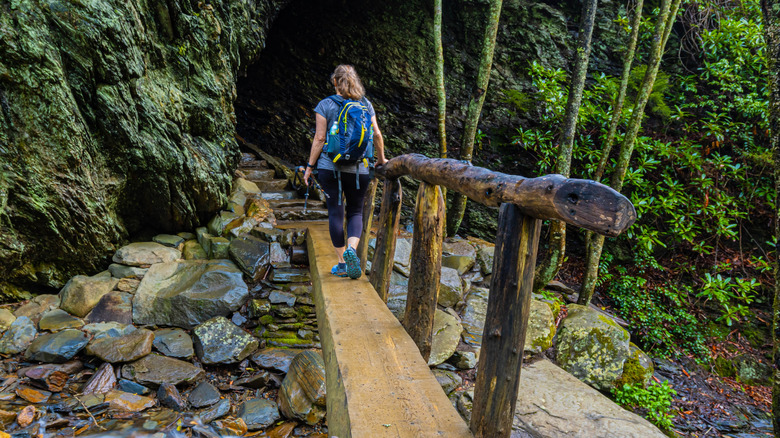
Consistently the busiest national park in the country year over year, Great Smoky Mountains is nevertheless one that we'd be seriously remiss to leave off a list of these precious public lands with the best hikes. Straddling the border of Tennessee and North Carolina, the vast park features more than 800 miles of trails, including 76 miles of the Appalachian Trail.
One of the top hikes is to the summit of Kuwohi, formerly known as Clingmans Dome, which is famous for being the highest point in Tennessee. Another very popular route is the Alum Cave Trail to Mount Le Conte, which spans 10 miles round-trip. Another way to summit Mount Le Conte is by ascending the Rainbow Falls Trail — with waterfall views along the way — and descending on the Bullhead Trail. Crowds are to be expected during peak season, which is typically throughout the summer and in the fall when the foliage is a huge draw. If you'd like to avoid the rush as much as possible, visit the park during the off season or early on a weekday morning.
Family-friendly hikes at Sequoia and Kings Canyon National Parks
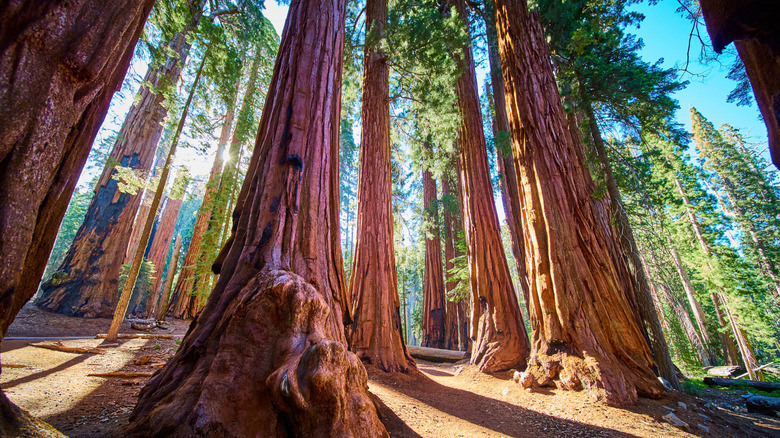
No matter how old you are, nothing compares to the thrill of staring up at the largest tree in the world. Nature lovers of all ages will enjoy a trip to Sequoia National Park in California for its astounding old-growth forests. Home of the General Sherman Tree, a giant sequoia that's somewhere around 2,200 years old, the woodland walks here are like nowhere else.
Sequoia and Kings Canyon National Parks are technically two separate destinations, but they share a border. You have plenty of choices for shorter, easy hikes in the forests, meadows, and foothills of Kings Canyon, or longer, more challenging routes into the mountains and up to Mount Whitney, though keep in mind that a permit is required. It's perfect for a memorable outing with the kids as the sheer beauty of this place is bound to impress.
Backcountry adventures at Denali National Park
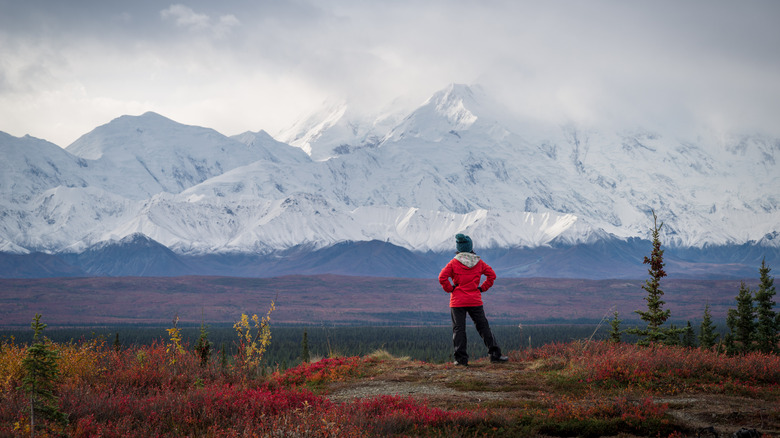
Alaska's Denali National Park is a rare exception to the general rule within the U.S. National Park Service that visitors should always stay on marked trails. That's because there are very few official trails in this vast expanse of minimally-developed land, and the real adventure begins when hikers head out into the wilderness. There's only one road that runs through the park's 6-million-and-change acres, and developed trails are largely concentrated within a few miles of the visitor center.
For off-trail hiking, which can be a little nerve-wracking for a first-timer, one way to choose a route is by boarding one of the park's transit buses early in the day, observing the landscape as you ride along Denali Park Road, and picking a spot to jump off. Hikers can request to be dropped off anywhere, just be aware that a timed reservation is required and the buses typically run between late May and mid-September. Rangers are often happy to provide tips for making the most of your trek. Due to the ongoing Pretty Rocks Landslide, Denali Park Road won't be accessible past Mile 43 until at least 2027, so trails beyond this point are currently not accessible by vehicle. Fortunately, you can still lace up your boots and hoof it.
Methodology
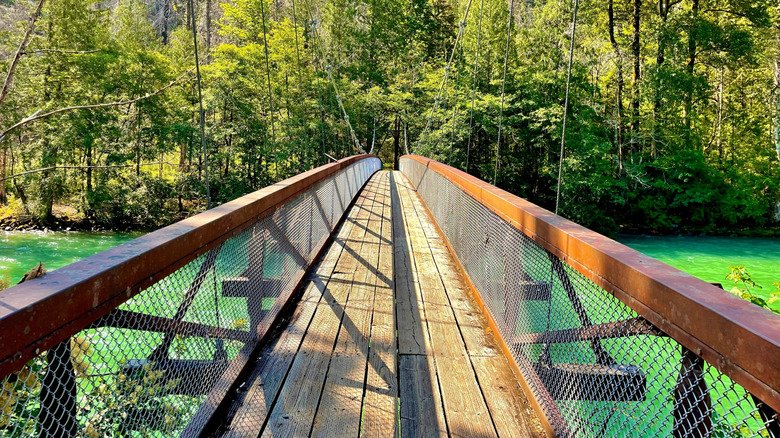
National parks are beloved nationwide for their countless trails and vistas. Selecting the 12 best national parks for hiking is no easy task, but we carefully considered each park based on a number of criteria, including its overall size, number of trails for various skill levels, stunning scenery, famous sights, and general accessibility.
For location-specific information about trail lengths, difficulty levels, closures, and seasonal considerations, we consulted official resources such as NPS.gov, USGS.gov, Yosemite.com, NationalParks.org, WNPF.org, and others. Additional tips about each site were sourced from tourism boards and reputable platforms such as OnlyinYourState.com, SmithsonianMag.com, TheBigOutside.com, and Gatlinburg.com. We ensured that the trails described at each destination are among the most highly-rated, popular, and easiest to explore in one day. For this, we gathered insights from countless reviews shared on AllTrails, Reddit forums, Tripadvisor, and Google Reviews.