
Rick Steves Recommends This Payment Method While Shopping In Europe

When travel expert Rick Steves is going through his final travel checklist, he makes sure to have his finances in order — and he recommends you do, too. Besides having your credit card and debit card ready to go in your wallet, it doesn't hurt to make sure you have a bit of emergency cash. While plastic trumps cash in many cases in the U.S. – especially if you earn points or miles for purchases — after decades of experience in developing tours and traveling across Europe, Steves recommends keeping your cards in your wallet and pulling out the local currency for most of your everyday purchases on the other side of the Atlantic. You'll likely need small amounts of money or coins for public bathrooms or for an inexpensive coffee, even though you can use Visa, Mastercard, and possibly American Express in major cities, though mostly for purchases over a certain amount.
Steves also notes that smaller, family-run guesthouses or restaurants may prefer cash, as they can avoid paying a transaction fee and may offer you a small discount. You won't get points or miles on your purchase, but you'll likely get both a better value and an authentic experience instead. Cash can come in handy as well if you're visiting smaller or more local Christmas markets in Europe for the first time. Even if the seller prefers cash, be sure to get a receipt, as it is a legal requirement in some countries, including Germany, Greece, and Italy.
How to avoid overpaying in Europe
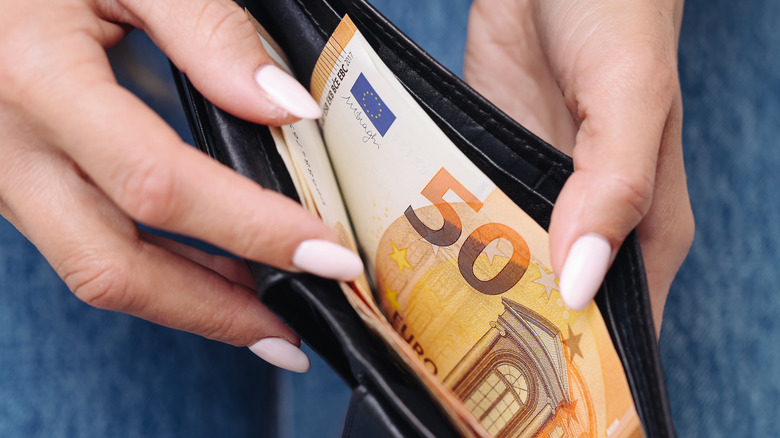
Rather than packing your suitcase full of dollars and trying to convert them abroad (or worse, at the airport), Rick Steves has another tip to keep more money in your wallet: Once you arrive at your destination, find an ATM as soon as you land and withdraw the local currency, then keep it safe. Take a moment to research the currency of each country you're planning to visit, as several European countries, including Denmark, Poland, and Switzerland, use their own local currency (rather than euros). While you'll be able to exchange dollars or euros in these countries, Steves warns you should expect to lose 5% to 10% as a currency conversion fee at a currency exchange kiosk.
The travel guru notes that he uses credit cards for big purchases and cash for smaller ones. If you are making a payment with a card in a foreign country, be sure to double-check whether you are paying in the local currency or your home currency. Even if you pay an extra 2% to 3% for the foreign transaction, it still may be cheaper than paying in your normal currency. Many card readers may give you the option to pay in your normal currency using a DCC, or "dynamic currency conversion," fee, where the seller's payment processor may charge you an additional fee and give you a poor exchange rate on top of it. Before making that purchase, keep your phone handy or check the exchange rate for the day so you aren't double-charged.