

10 Beautiful Canyons In The US Even More Stunning Than The Grand Canyon
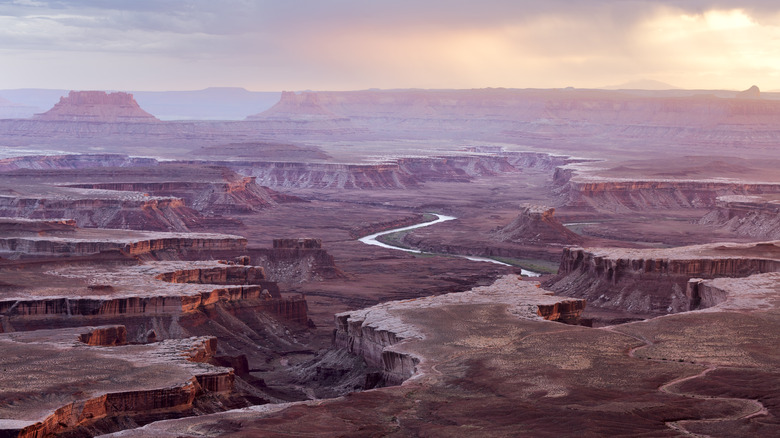
One of the most iconic landscapes — and national parks — in the U.S., the Grand Canyon is undoubtedly a natural wonder. Over millions of years, the Colorado River has carved a mile-deep gorge into the earth, revealing unique stone stratifications. The youngest rocks at the top are around 300 million years old, and the so-called "basement rocks" at the bottom are up to 1.7 billion years old. Surrounded by awe-inspiring desert terrain, it's no wonder that a scenic road trip to get to the Grand Canyon is honestly just as gorgeous as the destination. It certainly lives up to its name, and compared to other canyons, is admittedly a pretty intrepid endeavor.
What's really exciting is just how many other dramatic canyons there are across the nation. While the Grand Canyon sees nearly 5 million visitors each year, smaller parks and preserves are often much less crowded and therefore more enjoyable to visit. Some are easy to reach from urban areas, making them easy for a quick escape from the city. Oftentimes, these canyons are surrounded by other scenic sights, including waterfalls, epic trails, museums, historic inns, and much more. Each of these destinations brims with its own distinctive character, layered history, unique terrain, and local experiences that make it truly unforgettable.
Hells Canyon, Oregon and Idaho
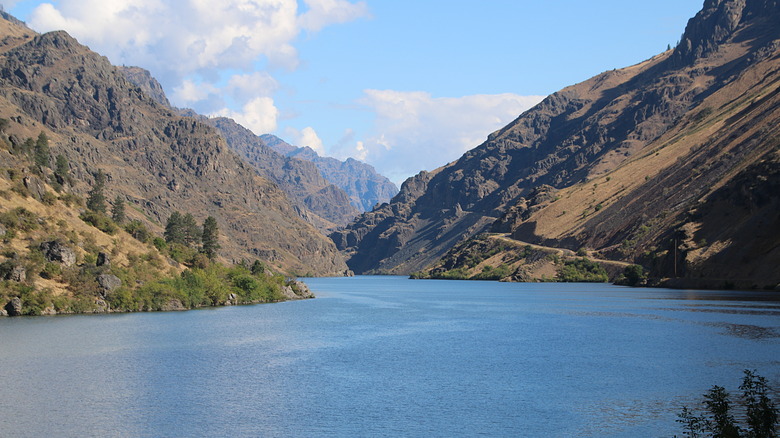
Known as the deepest canyon in America, Hells Canyon is an extraordinary destination. Located along the Snake River, which forms the boundary between northeastern Oregon and western Idaho, this river gorge is more than 8,000 feet deep. By comparison, the deepest part of the Grand Canyon is around 6,000 feet deep. Hells Canyon features rocky outcrops of basalt and granite, formed by millions of years of volcanic activity, and it extends 10 miles wide.
Hells Canyon is far less touristy than the Grand Canyon. The surrounding dirt roads provide access to a number of striking viewpoints such as Heaven's Gate Overlook on the Idaho side, or Hat Point Overlook on the Oregon side — a view you'll need to work for by ascending the steep, single-lane Hat Point Road. Route maps are available for download on the U.S. Forest Service's website, and hard copies can be picked up at Wallowa-Whitman National Forest ranger stations.
The canyon is just one slice of an expansive wilderness area called the Hells Canyon National Recreation Area, which spans more than 1,000 square miles of stunning Oregon and Idaho landscapes. Experiencing the canyon from below is also a treat, with jetboat tours, guided fishing excursions, and whitewater rafting trips on the Snake River provided by companies like Hells Canyon Adventures, Mountain River Outfitters, and Tributary.
Letchworth State Park, New York
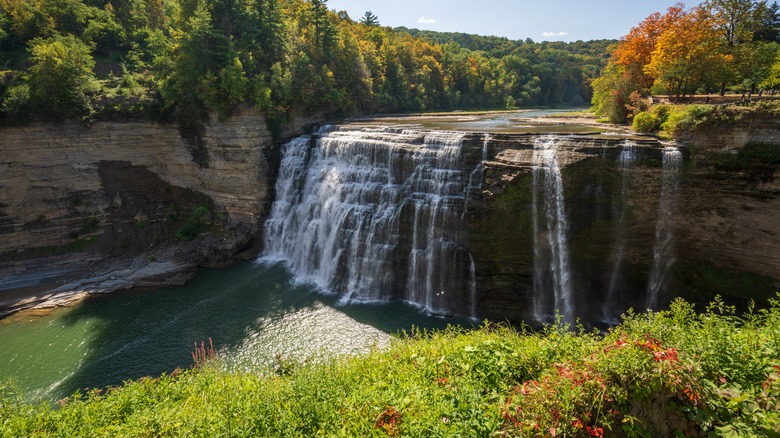
The Genesee River cuts a deep gorge through Upstate New York, giving one of America's most spectacular state parks the nickname of "Grand Canyon of the East." Some of the region's most impressive waterfalls — three major cascades, in particular — can be found amid cliffs that reach heights of 600 feet in some areas. Covering almost 14,500 acres in total, Letchworth State Park is about 17 miles long and is criss-crossed with 66 miles of multi-use trails. One special feature of this park is its Autism Nature Trail, an accessible, 1-mile stretch dotted with sensory stations that offer a more inclusive hiking experience.
Letchworth State Park is located about 58 miles southeast of Buffalo and 40 miles southwest of Rochester. Unlike most desert canyons, the Genesee River gorge is a verdant, forested area that's ideal for hiking and overnights under the stars. The Humphrey Nature Center is open daily, and the park is a popular camping spot during the summer. There's even a wonderfully historic lodging option called the Glen Iris Inn, the renovated former home of the park's namesake, William P. Letchworth.
The park's three most famous cascades — the Upper, Lower, and Middle Genesee Falls — are easily seen from the overlooks along the main vehicular artery, Park Road. At about 70 feet high, these wide falls usually flow vigorously. If you hit the trails, you'll find numerous other waterfalls — some reaching up to 500 feet tall — that are especially powerful after heavy rainfall.
Paria Canyon-Vermilion Cliffs Wilderness, Utah and Arizona
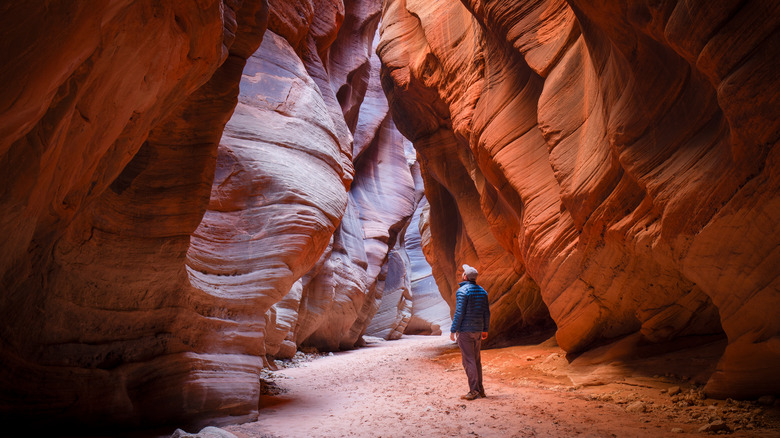
Slot canyons are incredible counterpoints to larger gorges carved by huge rivers, as they're often atmospherically narrow, deep, and maze-like. These canyons are particularly prevalent in the American Southwest, thanks to the softer sandstone composition of the red rock formations in the region, which are continuously eroded over time by heavy rains and flash floods. Buckskin Gulch is a remarkable example of this natural phenomenon, meandering for around 16 miles in Utah, just north of the Arizona border, with rock walls up to 500 feet tall.
Buckskin Gulch is one of the world's longest slot canyons, formed by water moving forcefully during floods, stripping away the rock to create unique striations. A hike through Buckskin Gulch is a bucket list item for many, but it's also one of America's most dangerous hikes, due to the inherent risk of floods in a narrow canyon that can't be easily evacuated. There's always some sludge at the bottom of a particularly narrow part of the canyon known to hikers as "The Cesspool," where the water never totally evaporates. If you're planning to hike, do your research and check the forecast for the entire catchment area of the canyon. On the flip side, when you visit, you'll likely have moments where you feel like you have the place all to yourself.
Situated in the northern portion of the Paria Canyon-Vermilion Cliffs Wilderness, Buckskin Gulch is part of an area that's home to a technicolor wonderland of towering cliffs and swirling stone waves. Paria Canyon itself is another fantastic area to explore, along with the famed, otherworldly swirls of the Coyote Buttes, known as "The Wave," which visitors can access by applying for a lottery-based permit.
Waimea Canyon, Hawaii
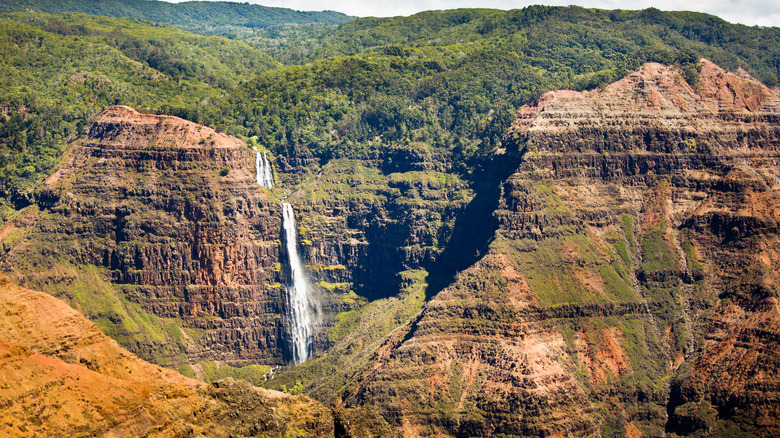
Located on the west side of the island of Kauai, Hawaii, the Waimea Canyon is roughly 14 miles long and more than 3,600 feet deep. Carved over millennia by the Waimea River, it's about a mile wide, gushing with waterfalls and embraced by lush tropical foliage. Its size and scale would be nothing like it is today without the impact of volcanic activity on the island, created in part because Kauai's ancient, formational volcano partially collapsed and became filled with lava.
The canyon is situated in an area of abundant nature in Kauai, protected within Waimea Canyon State Park and surrounded by numerous other parks and forest preserves like Nā-Pali Kona Forest Reserve, Pu'u Ka Pele Forest Reserve, and Polihale State Park on the coast. The latter, which is about an hour's drive from the gorge, offers camping, whereas Waimea Canyon State Park is designed primarily for day visits. You'll find a main road with several overlooks, plus a number of hiking trails that take you up-close to the park's many waterfalls.
Other than the short lookout trails, which are easily accessible from the main scenic drive, most of the hikes in the canyon are rated difficult due to dramatic changes in elevation. One of the most popular hikes is the Pu'u Hinahina and Canyon Trail to Waipo'o Falls, a 2.7-mile out-and-back route to two cascades and splendid views of the canyon that emerge from the trees.
Antelope Canyon, Arizona
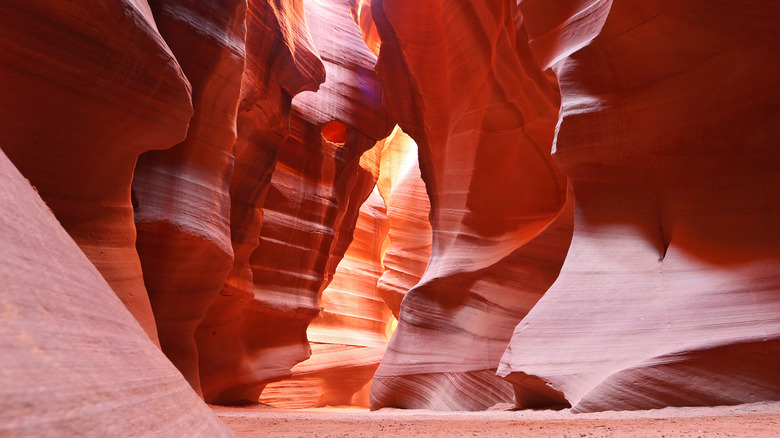
Located near Page, Arizona, on the Navajo Nation, Antelope Canyon is an astonishing slot canyon that feels out of this world. It's one of the most photographed places in the Southwest, and for good reason, as the midday sun during the summertime creates dramatic lighting effects on the colorful rock walls. Designated a Navajo Tribal Park, the canyon is only accessible with a guided tour by an authorized tour company like Navajo Tours, MaxTour, Antelope Canyon Tours, and others. Visitors can take advantage of countless activities, like an adventure park that leads novice climbers through slot canyons and stone cathedrals.
Antelope Canyon is only about 15 minutes west by car from Horseshoe Bend, and Paria Canyon-Vermilion Cliffs Wilderness is only about 45 minutes away, allowing you to visit multiple sights in one day, or weekend. Antelope Canyon is among the busiest canyon destinations in the Southwest, so it's not the place for those who prefer to stay away from crowds — it regularly sees more than 1 million visitors each year. But, its 120-foot-tall rippling sandstone walls and relative accessibility — particularly, the gentler Upper Antelope Canyon — makes it a go-to for spectacular scenery. Lower Antelope Canyon may not be as busy, but requires climbing ladders and staircases.
Black Canyon of the Gunnison, Colorado

Probably one of the best names for a river gorge in the U.S. belongs to the Black Canyon of the Gunnison, a stunningly deep, narrow, and dark canyon — hence the name — in western Colorado, carved by the Gunnison River. Although the area has been designated a national monument since 1933, it's a relatively recent addition to the official list of U.S. national parks, officially earning that title in 1999. The rims of the canyon show evidence of human activity dating back at least 9,000 years. In total, the canyon stretches for 48 miles — only 14 of which are encompassed by the national park boundary.
One of the reasons this canyon is so incredible is its sheer drops and narrow passages. Much of it is bathed in shadow during the day, so it looks unbelievably deep. At its maximum depth known as Warner Point, Black Canyon of the Gunnison is 2,722 feet deep. In another area known as The Narrows, the canyon is 1,725 feet deep but only 40 feet across at the river level. A variety of viewpoints — easily accessible from scenic roads on both the north and south rims — showcase the stunning landmark. Also on the display is a striking segment called the Painted Wall, Colorado's tallest cliff streaked with dramatic striations.
A wildfire took a toll on the south rim in 2025, so as of this writing, the South Rim Campground and East Portal Campground are closed until further notice, along with a section of the Rim Rock Trail. Fortunately, if you plan to stay a while, the national park shares a boundary with Curecanti National Recreation Area, comprising three reservoirs along the Gunnison River where you'll find numerous options for camping.
Royal Gorge, Colorado
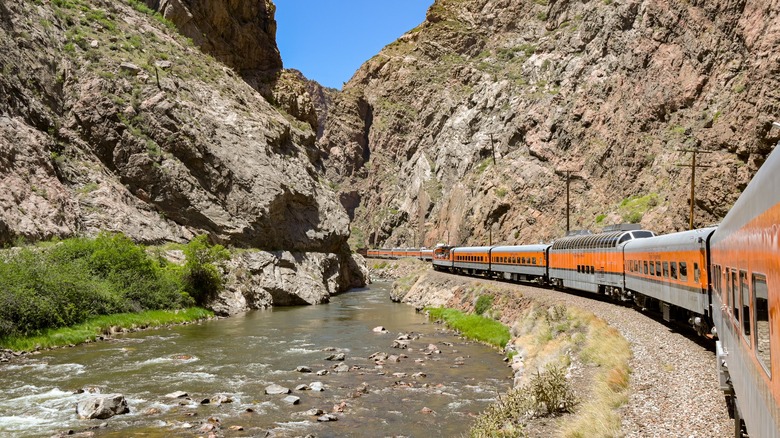
Another geological wonder in Colorado is located just west of Cañon City in the eastern foothills of the Rocky Mountains, where America's highest suspension bridge connects a canyon with trails, trains, and outdoor fun. Royal Gorge Bridge and Park centers around a natural gem created by a combination of geological uplift and the formation of the powerful Arkansas River over millions of years. The soaring cliffs are comprised of pre-Cambrian granite and gneiss, some of which is over 4 billion years old. Today, its most recognizable feature is a nearly century-old steel suspension bridge that hovers more than 950 feet above the river and stretches 1,260 feet across the canyon.
Royal Gorge is a somewhat commercialized destination that offers all kinds of activities, from ziplining and scenic gondola rides, to hiking and rock climbing. Down in the river, whitewater rafting is a fantastic way to witness the sheer height of the canyon walls while taking on some adrenaline-pumping Class III, IV, and V rapids. Royal Gorge Rafting, for example, offers both half-day and full-day group trips. The half-day journey is approximately 10 miles around Royal Gorge, and the full day includes an additional 10 miles in Bighorn Sheep Canyon, located upriver a few miles to the west.
Another way to experience the gorge at river level is via the Royal Gorge Route Railroad. There are up to four daily departures throughout the year, with numerous themed rides and cuisine options. Opt for coach, deluxe, or "Vista Dome" seating for panoramic views in all directions while you dine. You can even ride in the front cab with the engineer. In November and December, the holiday-themed train rides are a memorable festive activity for the whole family.
Grand Canyon of the Yellowstone, Wyoming
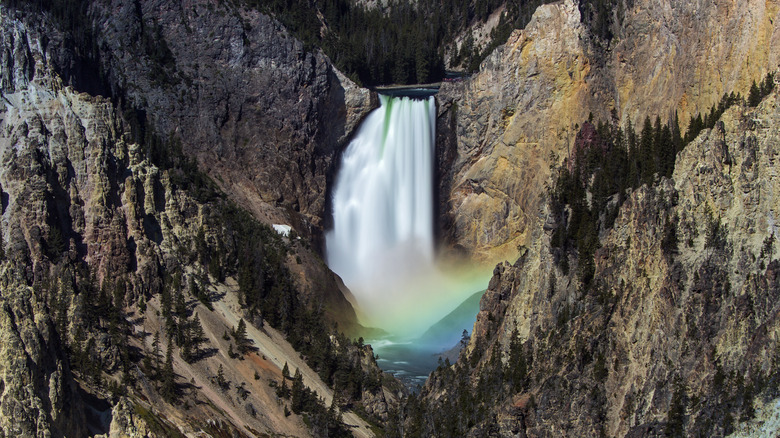
When you think of the Grand Canyon, chances are your imagination takes you straight to northern Arizona. But, did you know there's another Grand Canyon about 1,000 miles away, two states to the north? The "Grand Canyon of the Yellowstone" is a breathtaking marvel in Yellowstone National Park. It may not be as deep or as long as Arizona's, but this gorge features dramatic waterfalls and stunning overlooks. Plus, it's within the world's very first national park, a perennial favorite in the U.S.
Like some of the other canyons on this list, the Grand Canyon of the Yellowstone has volcanoes to thank, in part, for its creation. A huge concentration of hydrothermal features like hot springs and geysers are still connected to the ancient geothermal system that formed the canyon we see today. The canyon began to take shape after a giant caldera was formed as a result of a volcanic eruption some 630,000 years ago, followed by millennia of continuous flowing lava and, eventually, the river. Compared to the Royal Gorge and Arizona's Grand Canyon, Yellowstone's canyon is in its infancy.
The gorge's dramatic cascades and tree-lined rims are a sight to behold, and are best enjoyed on foot. Be sure to check out Lower Falls, which spills 308 feet, and the 109-foot Upper Falls. These can be seen from viewpoints on the trails along North Rim Drive, South Rim Drive, and Brink of the Lower Falls Drive. Like the original Grand Canyon, Yellowstone gets very busy in the summer, so to avoid the biggest crowds, plan to visit during the shoulder seasons.
Palo Duro Canyon, Texas
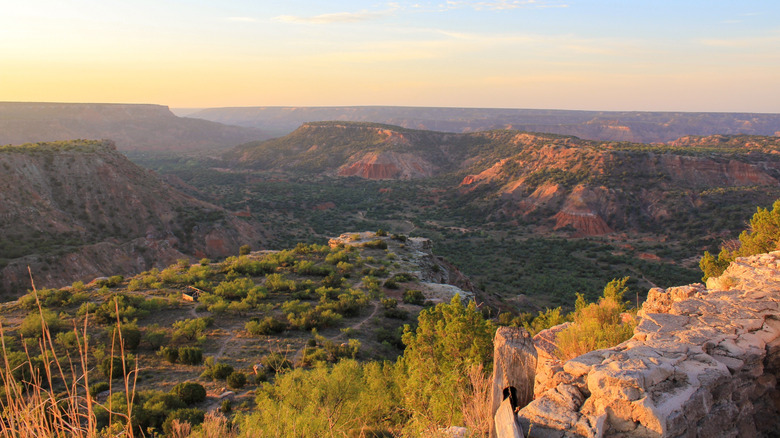
The Grand Canyon is by far the largest natural landmark of its kind in the U.S., but the second largest is Palo Duro Canyon, which sits in the Texas Panhandle south of Amarillo. It's around 120 miles long and about 800 feet deep. In this otherwise very flat, grassy expanse, the canyon is such a dramatic shift in the topography that you almost can't believe it's there until you see it. Continuously carved from beautiful red rock by the Palo Duro River, the 20-mile-wide canyon features sheer walls and hoodoos formed over the past 1 million years or so. Its surrounding geology, though, goes back a whopping 250 million years.
Palo Duro Canyon State Park spans more than 29,000 acres, preserving the natural wilderness of the canyon while providing plenty of opportunities to peer over its expanse from a lookout near the visitor center and along more than 30 miles of multi-use trails. Horseback riders can share a couple of trails with hikers, but 1,500 acres are also reserved specifically for equestrian use. The park has all-terrain wheelchair rentals to make it even more accessible. Camping here is also a treat, with a range of options including standard campsites, traditional cabins, equestrian sites, and canvas-sided glamping cabins.
Canyonlands National Park, Utah
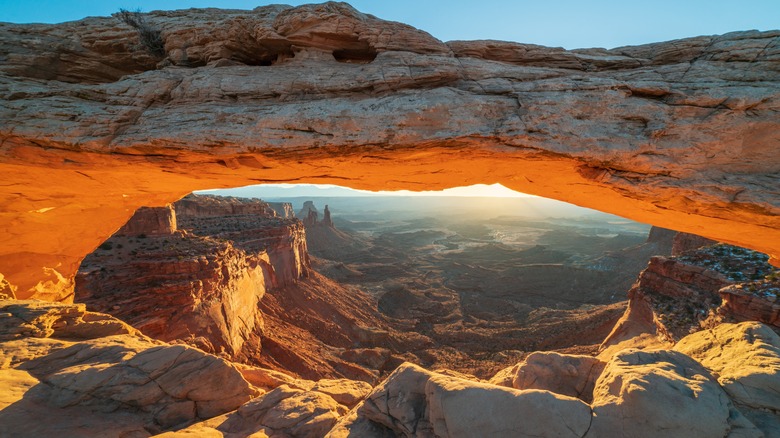
One of Utah's so-called Mighty Five national parks, Canyonlands is pretty much exactly what the name suggests. Rather than one particular gorge, this park highlights and preserves a wide range of geological formations in distinctive regions. One of the most accessible areas is Island in the Sky, a mesa that overlooks an out-of-this-world landscape shaped by millions of years of erosion. Easily reached on a scenic road, it boasts views from 1,000 feet above the surrounding region.
One of the most iconic viewpoints is on the Mesa Arch Trail, a natural archway at the edge of a cliff overlooking the vast landscape below. The Needles is another area named for its famous red sandstone towers. If you're ready to cool off and retreat from the high desert sun, paddle in the calmer upstream areas of the Green and Colorado Rivers, or take to the thrilling whitewater rapids of Cataract Canyon.
If you have extra time to spare and the necessary gear for a rugged backcountry trek, head to The Maze. This is the most challenging area to explore at Canyonlands National Park, but it's one of the most rewarding — and definitely crowd-free, especially if you plan to spend a few days here. The Maze shares a boundary with Glen Canyon National Recreation Area, home to the mesmerizing Horseshoe Bend, one of the most photographed destinations in Arizona.
Methodology

There are hundreds, if not thousands, of canyons around North America. Ranging from tiny slot canyons to expansive gorges that run for dozens of miles, their diversity is extraordinary. To narrow down the 10 best that rival the Grand Canyon, we surveyed the most renowned destinations known for their exceptional proportions, distinctive scenery, and opportunities for exploration. To refine our final picks, we consulted resources from several tourism boards such as TravelOregon.com, VisitArizona.com, Kauai.com, RoyalGorgeRegion.com, and VisitUtah.com.
This guide also draws from the author's personal experience while visiting landmarks such as the Black Canyon of the Gunnison, Canyonlands National Park, Royal Gorge, and the original Grand Canyon. For location-specific details such as natural history, geological features, visitor information, and accessibility, we referenced official sources such as USGS.gov, NPS.gov, Parks.NY.gov, BLM.gov, DLNR.Hawaii.gov, RoyalGorgeRoute.com, and TPWD.Texas.gov. We also relied on recommendations from reputable travel bloggers like DayTripNomad.com, as well as ratings and reviews on AllTrails and Tripadvisor.