

Georgia's Beautiful State Park Full Of Waterfalls And Viewpoints Is Truly A Natural Wonder
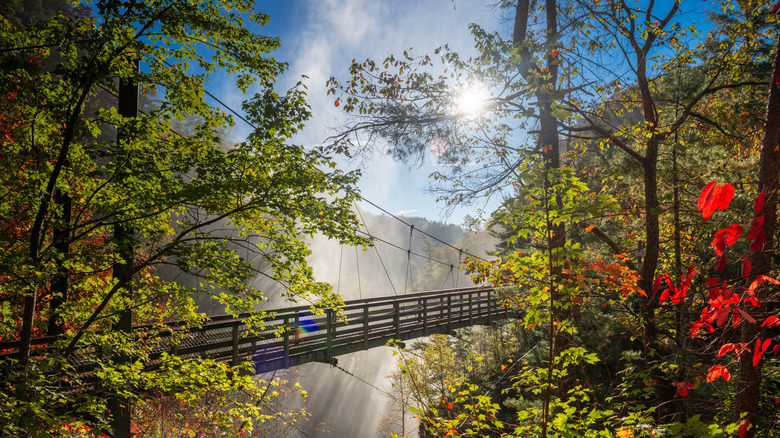
There is something magical about a waterfall. It's incredible how a gush of water pouring over a cliff can remind us of the power and beauty of nature in a way that makes wherever you see them unforgettable. While there's no shortage of great spots to witness this breathtaking spectacle in the U.S., there is one perfect location in Georgia that you absolutely have to put on your bucket list: Tallulah Gorge State Park in Tallulah Falls.
One of the top natural wonders in the state, Tallulah Gorge State Park boasts five lovely falls, a few rare plant and animal species, and a stunning gorge that is nearly 2 miles long and almost 1,000 feet deep. Along with that, this 473-acre park also has 20 miles of trails that take you to scenic overlooks, rock climbing, camping, and slippery rocks that act like a natural Slip 'N' Slide. The Tallulah River drops around 500 feet in less than a mile over the falls and into the gorge, and you can even see one from a suspension bridge for the ultimate photo op.
Tallulah Gorge State Park is located just over 100 miles north from the world's busiest airport, Hartsfield-Jackson Atlanta International Airport, and about 100 miles west from Greenville-Spartanburg International Airport in Greer, South Carolina. If you can find the right flight, it's also about an hour and a half outside of the regional Athens-Ben Epps Airport in Athens, Georgia. The park is open from 8 a.m. until dark, and it costs $5 per vehicle to park. You only have to pay it once if you're staying to camp. However, there are some spots that require a permit — including the gorge floor and some hikes. You can purchase these at the Interpretive Center after a safety briefing.
All about Tallulah Gorge State Park in Georgia
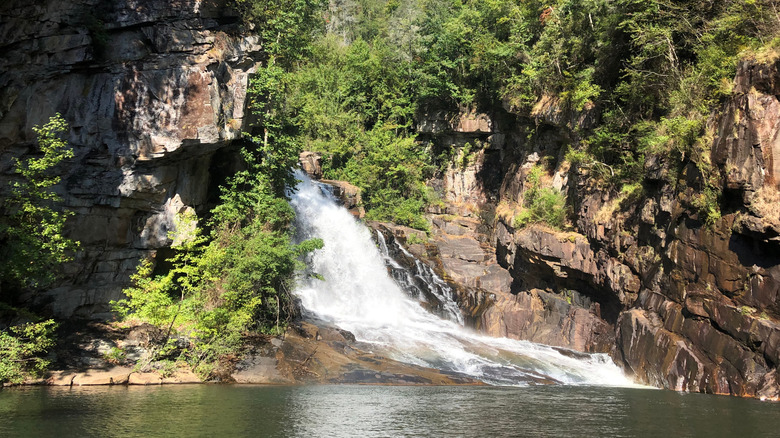
In the late 19th century, the area became a big tourist attraction, and a train would bring people in to see the falls. Though visits fell off in later years, acrobat Karl Wallenda's famous 1970 tightrope walk across the gorge reignited the public's curiosity to see this natural beauty in person. If you're visiting Tallulah Gorge State Park, it's a great idea to hit up the Jane Hurt Yarn Interpretive Center. There, you can learn all about the ecology of the area, the history of tourism, Karl Wallenda's famous feat — the tower he used is still in the park — and the protected species that live here, including the monkey-face orchid, the green salamander, and the persistent trillium, which is only found in this region of the country. There is also a gift shop with snacks, souvenirs, and apparel.
The lake above the gorge was dammed in 1913, and, every year, there are scheduled water releases. The aesthetic releases force the water rushing down faster than usual, and it's lovely to see. However, during the whitewater boating weekends, the release is more intense, and kayakers make for a spectacular sight as they navigate the rushing river.
Accommodation-wise, you can camp inside the park in one of the 52 sites that allow tents, RVs, and trailers, or at one of the two backcountry Adirondack shelters. As for amenities, there are playgrounds, an EV charger for your car, and a sand beach for swimming. Rock climbing is big here; however, if you want to take part, you'll have to pick up a free permit at the Interpretive Center. Do note that there is no climbing from February 1 through the third week in March (and sometimes later) because of nesting peregrine falcons.
Hitting the trails in Tallulah Gorge State Park
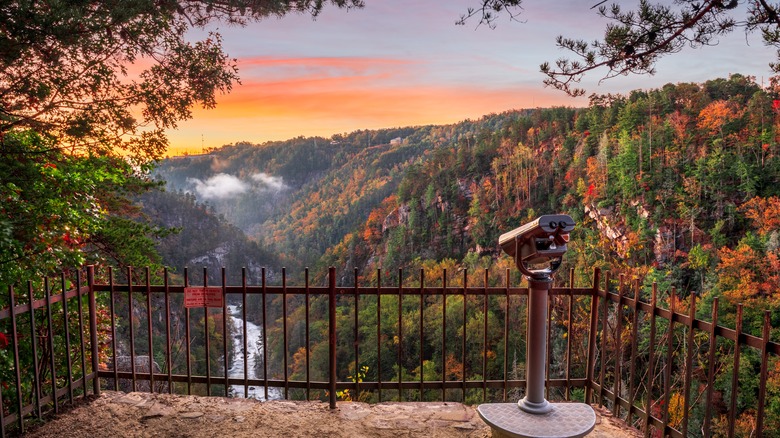
Hiking is the best way to see the waterfalls, and there are great trails to do that. If you want to hike along the Gorge Floor Trail, you'll need a permit, as this 2.5-mile hike round-trip is rated difficult. Alternatively, you can also hike or bike the 10-mile Stoneplace Trail, which also requires a permit, and bright clothing during hunting season. Your best bets if you have limited time, however, are the North and South Rim trails. The North Rim Trail starts behind the Interpretive Center and is .75 miles each way. Along the route, you'll pass five scenic overlooks where you can see Oceana Falls, a glimpse of Bridal Veil Falls, L'Eau d'Or Falls, the top of Tempesta Falls, and more.
The South Rim Trail is the same length on the other side of the gorge and shows you Hawthorne Pool, Tempesta Falls, Hurricane Falls, Oceana Falls, Caledonia Cascade, the Devil's Pulpit outcrop, and the famous Wallenda North Tower. You may also want to try the Hurricane Falls Loop, which is 2 miles round-trip. However, this trek features 1,099 stairs to the gorge floor. If you want something a little easier, take the 3-mile paved Bill and Dustie MacKay Trail, which forms part of an old railroad bed .
Finally, after your waterfall adventures, it's also worth taking a drive to Clayton, located just 11 miles away. The perfect alternative to Atlanta's crowds, Clayton is brimming with wineries, cozy charm, and even more waterfalls. A short drive from Clayton is the Panther Creek Trail Waterfall, which offers a completely different experience from Tallulah Gorge. The water there looks like it's cascading down a series of steps, and it's absolutely worth a visit.