

Rick Steves Calls This City In Poland 'Europe's Greatest Still-Undiscovered Destination'
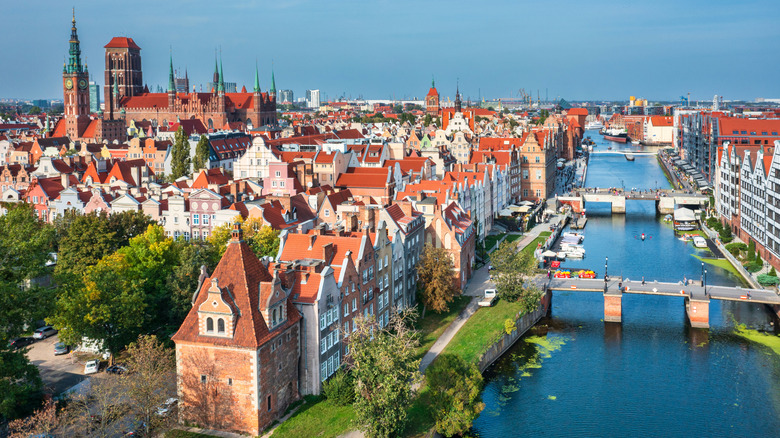
Poland is climbing the ladder in popularity for tourism around the world. Nearly 77 million international tourists visited the country in 2024, many opting to stay near the country's major cities. While stunning Kraków, the world's most stress-free city, is widely known for its incredible beauty and history, seaside Gdańsk is what travel pro Rick Steves calls "Europe's greatest still-undiscovered destination." Known as the birthplace of Poland's Solidarity movement, Gdańsk has a rich history captured in the city's museums, architecture, and "milk bars" (similar to a cafeteria) that tell a unique tale topped off with stunning sunsets on the Baltic Sea.
Gdańsk has a fascinating history among Polish cities. Formerly called Danzig, it was one of the wealthiest cities in the Hanseatic League for hundreds of years, even having traveling troupes of English actors performing Shakespeare's works in the 1600s. The cosmopolitan city's strategic location on the Baltic Sea made it incredibly prosperous and coveted by neighboring empires and countries. Due to being predominantly German with a Polish minority through much of its history, the Treaty of Versailles made Gdańsk a free town after World War I, protected by the League of Nations. This lasted until 1939, when Nazi Germany invaded Poland to capture the city, kicking off World War II.
Gdańsk is easy to reach from within Europe by rail and air. The city's international airport, Lech Walesa International Airport (GDN), has direct flights to cities all over the continent, but none to North America. Another option is to fly directly into Warsaw, "the Paris of the East," and take a short connecting flight (approximately 55 minutes to Gdańsk) or a comfy two-to-three-hour train ride.
Colorful and historic Gdańsk
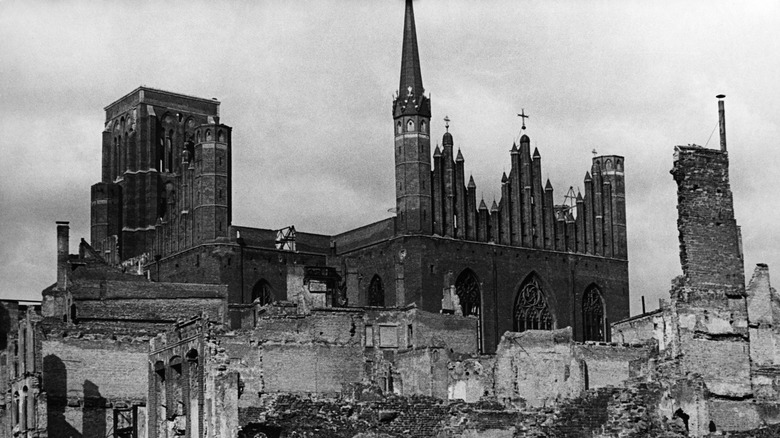
Rick Steves notes that Poland is often misinterpreted as being colorless and gloomy; however, the second you walk through rebuilt Old Town ("Stare Miasto" in Polish) Gdańsk, you'll see past that notion. Here, the colorful and ornate city gates, edifices, churches, and streets were literally pulled from the ashes of war after nearly 90% of Gdańsk was destroyed during World War II. Resilient locals rebuilt and restored the city to its former glory by salvaging bricks and building materials spared during the war. Stroll along the Royal Route from the Upland Gate to the Motlawa River and be fascinated every step of the way, like Polish royalty were centuries ago. For souvenirs or a truly romantic vibe, cobblestone Mariacka Street is adorned with lovely lamps and some of the most popular cafes and eateries in the city. Here, you might start to see why Gdańsk has been called Amsterdam's laidback sister.
At the end of Mariacka Street, you likely won't miss seeing the 256-foot spire at St. Mary's Church. Built to house a congregation of over 25,000, and serving as a literal sanctuary for Poland's Solidarity movement in the 1980s, St. Mary's is said to be the largest red brick church in the world. The church's observation tower is a bit of a climb (409 stairs) up a spiral staircase, but you'll be rewarded sweeping views of the city. Visitors are welcome to visit the 30 gorgeous chapels to see incredible works of art, including an ingenious 15th-century clock that marks the time, date, and season, and a calendar of the saints. Moreover, you are also welcome to attend regular Mass services in Polish or English.
Gdansk's hidden gems
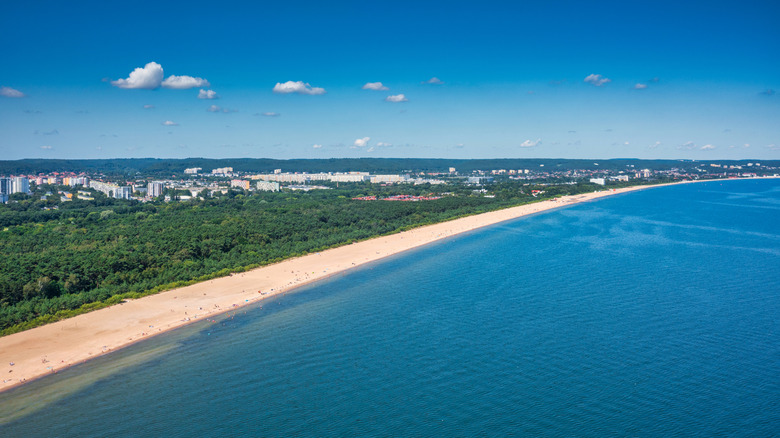
While Poland's Carpathian Mountains are full of breathtaking views and outdoor recreation, its beaches along the Baltic Sea are still largely a hidden gem. Though they lack the warmer waters of Southern Europe, they offer plenty of space to spread out without crowds and garbage on the sand. Visit Jelitkowo Beach, one of Gdańsk's more popular beaches on a summer day, and you'll likely see families out for a walk or lazing away the day. Once you hop off the tram from Old Town, you'll be just a short walk away. When you get hungry, just follow your nose (and local Polish tradition) and order lody ("ice cream" in Polish) or gofry, a delectable Polish waffle. Just make sure it's hot and crispy!
On your trip to the Gdańsk Bay, Rick Steves notes in a HeraldNet article that you'll be within eyesight of two of the biggest events in the 20th century: the first shots of World War II and the first major crack in the Eastern Bloc. On September 1, 1939, the German battleship Schleswig-Holstein attacked Westerplatte, the site of a small Polish munitions depot along Gdańsk Bay. For a week, roughly 210 Poles repelled 13 German assaults on the island before eventually surrendering. Though you can take a bus to Westerplatte, hop on a ferry from Targ Rybny in Old Town for a spectacular view.
Four decades later, brave Poles stood up against communism in the city's shipyards. To get a deeper story about both events, don't miss visiting the Museum of the Second World War or the European Solidarity Center. For the World War II museum, arrive early in the morning to avoid the crowds. If you do meet locals in Gdańsk, tread lightly around these issues, especially if they have experienced them firsthand.