

This Spanish City Boasts Rich Culture, Music, And Stunning Architecture
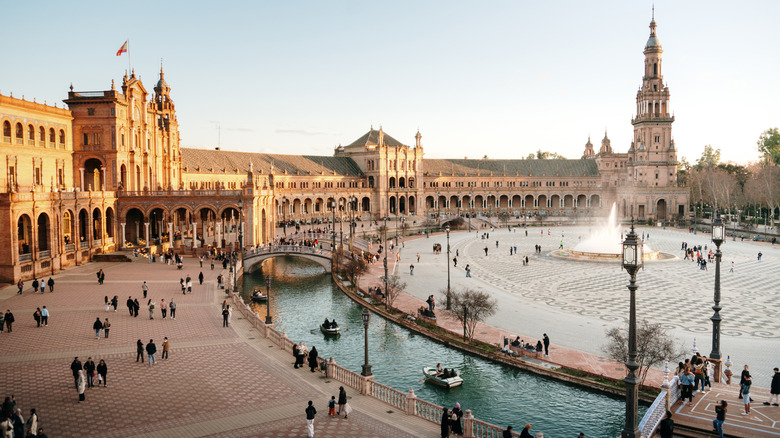
If you're looking for a Spanish city that embodies local culture and history with boundless energy (after a siesta, of course!), look no further than Seville. With a picturesque cityscape of romantic palaces, ornate cathedrals, and stunning parks, Spain's fourth-largest city will leave you with no shortage of places to lose yourself in. As the capital of Spain's autonomous Andalucía region, Seville has a strong dose of local flair in its music, festivals, and food, and will leave your senses craving more, whether you're passing a flamenco performance by the Plaza de España, diving into tasty tapas, or wrapping your mind around head-spinning modern architecture.
For centuries, Seville sat at the crossroads between Europe and the Arab world and was ruled by the Moors for over five centuries. Their rule left a tremendous influence on the region, especially in the architecture and the region's name. Andalucía comes from "Al-Andalus," the Arabic word for the Iberian Peninsula. After Columbus voyaged to the New World, Seville gained a monopoly on Spain's trade with the Americas, and during this "golden age," iconic buildings such as the Archivo General de Indias and the Seville Cathedral (Catedral de Santa Maria de la Sede) were constructed and completed.
While Seville is no longer the main port of entry for the country, you'll still find plenty of flights from most major European hubs to the city. Seville is also easy to reach from within Spain by high-speed rail from Madrid, with Seville's Santa Justa Station being less than a 30-minute walk to the ancient city, Casco Antiguo.
Immerse yourself in Spanish culture in Seville
While Barcelona has been suffering from overtourism and has had its authentic feel chipped away, Seville still proudly carries the torch of authenticity and traditional Spanish culture throughout its narrow streets and wide plazas. You'll notice this as you walk through the Triana District, constructed by the Romans and today bursting with color and soul. Take a stroll in the authentic heart of Seville to the Triana Market, preferably on weekends, where the city puts on a show for the senses that will keep your eyes open, no matter how little sleep you've had the night before.
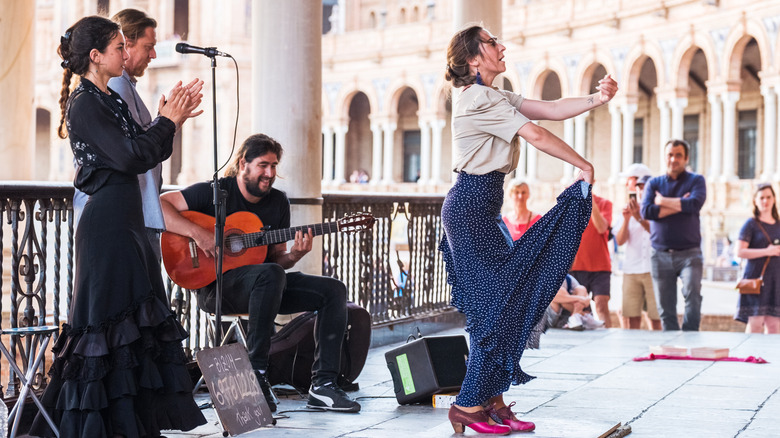
Travel guru Rick Steves claims that "flamenco is a must" in Seville. The now world-famous performance was created in the region, and you'll find plenty of tablaos where the spectacle is performed across the city. Make reservations to see a show at Casa de la Guitarra, where intimate performances are held in a local professional guitarist's home. Or, for a truly special night to remember, enjoy dinner and flamenco at Tablao El Arenal. If you're hooked or want to brush up on your steps, don't miss visiting the Museo del baile Flamenco, which bills itself as "the only flamenco dance museum in the world." Catch an afternoon show, or browse the museum's exhibitions. Or, go local and book a dance, guitar, or percussion class in advance on the museum's website and experience the magic yourself.
Seville's stunning cityscape from its golden age
In the 1500s, Seville was the largest and wealthiest city in Spain and one of the wealthiest in Europe. During this century, the first public park in Europe, the Alameda de Hercules, was built and is adorned with two 2,000-year-old Roman statues, one of Julius Caesar and one of Hercules, the mythical founder of Seville. Nearby, you'll find local bars and student-, family-, and LGBTQ-friendly hangout spots. For a rich mix of Spanish cuisine, including paella, pork, and sangria served inside or al fresco, try nearby Quilombo Tapas, which has English menus and boasts a 4.6-star rating on Google.
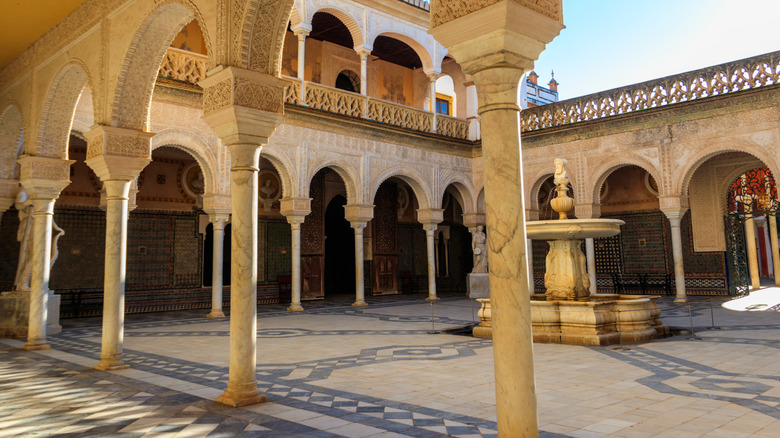
To see a home built during this time period, don't miss visiting the ornate Casa de Pilatos, an under-the-radar, non-royal palace that was gradually expanded over the centuries. Throughout the manor's ornate marble courtyard lined with stunning Mudejar arches, you'll spot 24 marble busts of Spanish kings and Roman emperors, added from Naples in 1570. Further inside, rooms such as the Judges' Rest Room and the Praetor's Room are intricately decorated from floor to ceiling. Though the home is beautiful, the property was truly set apart by its lush gardens. At the time, the home was one of the few in Seville to have direct access to water.
Like Madrid, "Europe's best-kept secret," Seville is largely walkable. Take in the stunning Avenida de la Constitución on foot, where you'll find many of the city's most notable and historic buildings, or hop on the tram passing through the historic core. Just be careful of pickpockets on public transportation, as Rick Steves bets this is where your wallet will be most vulnerable.