

The Best Attitude Tourists Should Adopt While Exploring Europe, Per Rick Steves

Traveling overseas can be one of the most wonderful experiences. Exploring new cities and countries, getting a sense of what life is like in other places, and meeting new people can be transformative enough to change your life — even after you get home. However, to really make the most of your trip, travel pro Rick Steves has a tip about the best attitude to have when you travel.
On his website, Steves cautions: "Be militantly humble — Attila had a lousy trip." With decades of experience, Steves writes that he commonly sees tourists and locals having issues — particularly in the summer, when things are packed and sweaty. That can test the patience of a saint at the best of times, and if you're already tired and jet-lagged from traveling, it can make things much more fraught.
As such, Steves writes: "Sometimes it's the result of the tourist's mistake; sometimes it's the local's fault...and often it's a simple misunderstanding compounded by linguistic and cultural differences. Many tourists leave needlessly soured." Ultimately, however, issues can happen anywhere, of course — even right where you live. Nonetheless, it's easier for miscommunication to happen when you're new in town, so to speak. And having a calm demeanor, a willingness to adapt, and the ability to let things go — even if an incident occurs — can not only make your trip better, but can also be much better for your own mental health. After all, even the worst day can make for a great story later.
Having the right attitude starts before you ever leave home

Having the right attitude about travel can begin before you even leave your house. If you've been following the news, you've probably read reports about some Europeans becoming "anti-tourist." While this may make you feel a bit defensive before you even get on the plane, it's important to understand where that frustration comes from. Part of the issue, according to Steves, is that things are simply getting too overcrowded. In fact, it's no secret that tourists largely flock to famous sites to take pictures for social media, blocking others while they set up shots, and not respecting the fact that this is a place where people live — not a theme park. As a result, resentment can build up. Another issue is with cruise ships that only dock for the day. Visitors spend a few hours, and maybe a bit of money, crowding the streets — but they don't stay for meals or overnight.
Thankfully, conscious travelers can help combat the feeling by being more respectful of their surroundings and spending their time and money more thoughtfully. In another post on his website, Steves writes: "If you want to be warmly welcomed, be deserving of a warm welcome."
Along with maintaining a respectful mindset, travelers can also plan around some of the more crowded areas by setting up an itinerary. Steves suggests making reservations for the bigger tourist attractions ahead of time so you're not standing in lines with impatient people. He also recommends looking beyond the tourist spots that everyone knows. Don't just pick the top three attractions where you're going — instead, ask locals for their recommendations and for help if you need it. According to Steves, "Many tourists are too timid to ask questions, even to prevent mistakes that can cost precious time and money. Locals are a wealth of information — use them. Most people are happy to help a traveler."
More ways to stay flexible and friendly abroad
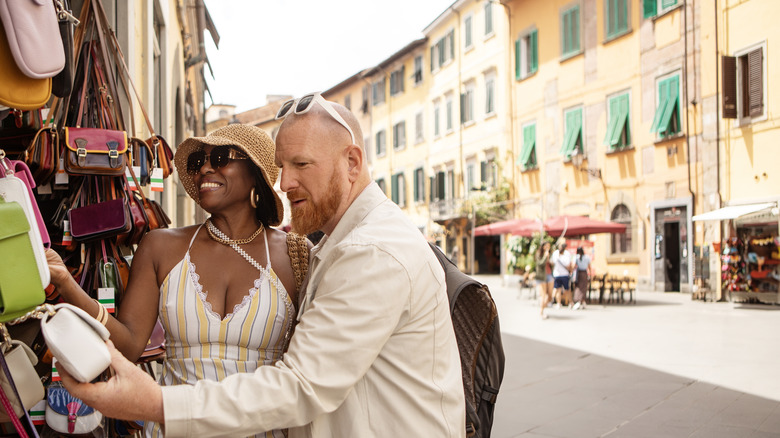
Another thing you might want to do before you head out on your trip is learn a few phrases in the local language. Steves has great tips for overcoming a language barrier, including speaking slowly and clearly, and keeping your words simple — even if you're conversing in English. However, don't be afraid to make use of apps like Google Translate, which can instantly translate between two languages.
Even if you and the person you're speaking to share the same language — or if you're both fluent — misunderstandings can happen. If and when that does occur, Steves recommends that you stay relaxed and friendly. He says that if he encounters someone who has messed up a bill or argues with him, he smiles and remains calm. "Assume it's a misunderstanding. With a focus on solving (instead of 'winning') any dispute you may find yourself in, you'll be on your way faster — with your good mood intact," he writes. A calm and friendly attitude, even in the face of an argument, can help de-escalate a difficult situation. Even if you feel like you can out-yell someone, you're a guest in their country and should behave as such. Being, as Steves says, "stubbornly optimistic," can smooth things over — or at the very least, keep from making it worse.
Even more importantly, Steves reminds us to shake things off. It's very easy to let a rough couple of minutes stay with you for the rest of the trip, but in the end, you're only robbing yourself of the joy and magic of what you're seeing and experiencing. If things don't go your way, let it go and enjoy everything else. It can make all the difference.