
10 Dortmund, Germany Tourist Attractions To Add To Your Itinerary
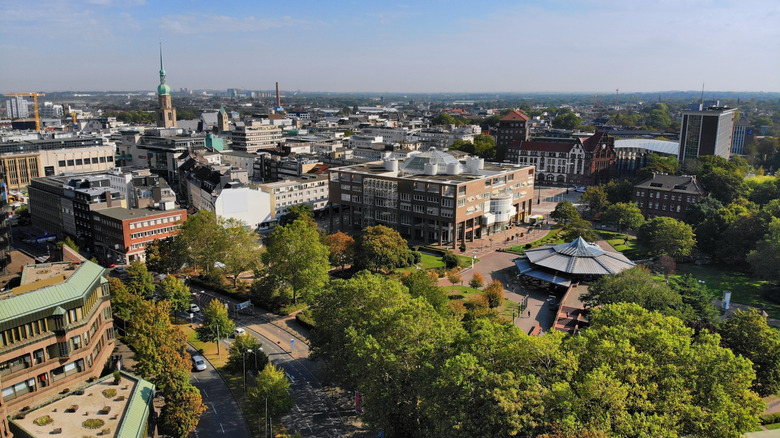
Located in Northwest Germany in North Rhine-Westphalia, Dortmund is one of the Metropolitan Ruhr Area's key cities. After the completion of the Dortmund-Ems Canal in 1899, the city exploded in size and became a major industrial hub. However, it was devastated by World War II, and by the time the 1990s came around, its industrial sector was facing decline. An ambitious project was launched to transform Dortmund into a city focused on sustainability and quality of life. Nowadays, the city is defined by green space, parks, gardens, and waterways, while cutting-edge industries like IT, robotics, nanotechnology, biomedicine, and e-commerce are all taking root.
That said, Dortmund doesn't dazzle like grander European cities such as Barcelona, Rome, or Paris. You'll be hard-pressed to find any world-famous landmarks. But, what you do get is a city that reveals its hidden magic to those who dig a little deeper. It's very much a place for travelers seeking authentic local experiences — something that those aforementioned cities often lack. There's little hype and hustle, and you can wander around at your own pace, taking your time rather than racing through a checklist of must-see sights.
With its multicultural population, you can enjoy a range of diverse cuisine at a wide selection of eateries. Dortmund is also more budget-friendly, giving you greater value for your money than Germany's big tourist cities. So, if you're traveling around Germany, take at least a few days to explore Dortmund's sprawling natural landscapes and marvel at its medieval churches. You may even discover some world-class soccer culture and experience one of Europe's biggest Christmas markets. Without further delay, here are 10 fascinating attractions you'll want to add to your itinerary.
Westfalenpark
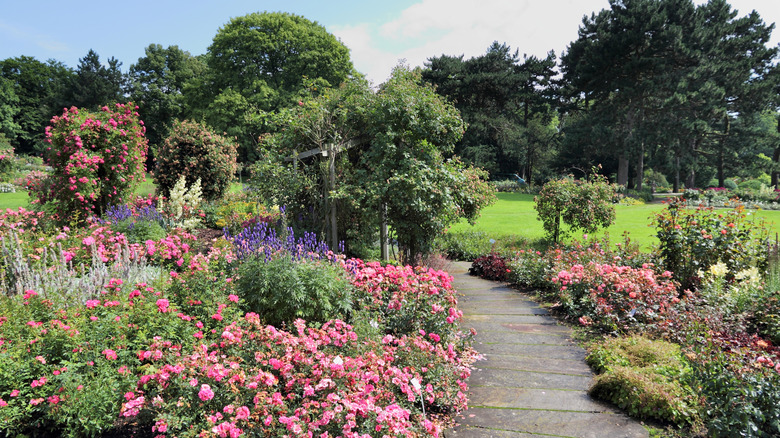
Westfalenpark offers an unusual blend of urban environment and green space for travelers who are looking to go beyond the typical tourist attractions. It was originally built for the 1959 Federal Garden Show and spans 173 acres, offering everything from the striking Florianturm views to secluded spots inviting discovery along less-trodden paths. You'll walk through gardens of rhododendrons and tropical plants, while colorful murals splashed across walls offer photogenic opportunities.
The Rosarium is among the park's proudest collections of flora. You'll find 3,000 varieties of roses in tapestries of crimson, coral, and blush pink, covering the grounds and climbing up trellises in waves of midnight purple and snow-white. Other areas for botanophiles include a beautiful cottage garden with vegetables, fruit trees, herbs, and heath plantings, while the Asian garden features bamboo and azaleas, stepping stones across ponds, torii gates, and a tea house, creating a peaceful environment.
The Florianturm telecommunications tower takes the views to another level with its revolving restaurant at 450 feet overlooking the city skyline and Phoenix Lake. Germany's oldest working cable car delivers more bird's-eye views, and families with little ones will enjoy the on-site playground and roller coaster. The Buschmühlenteich lakeside stage hosts concerts year-round, and the park transforms for annual events like the Festival of Lights in late summer and Winterleuchten, which brightens the winter months.
Signal Iduna Park (Westfalenstadion)
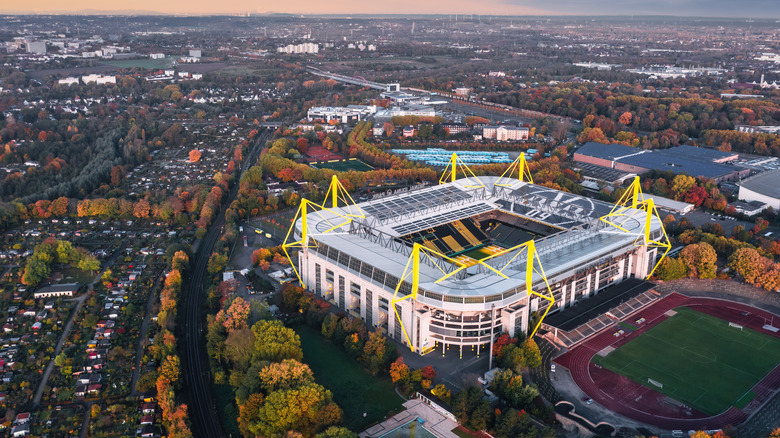
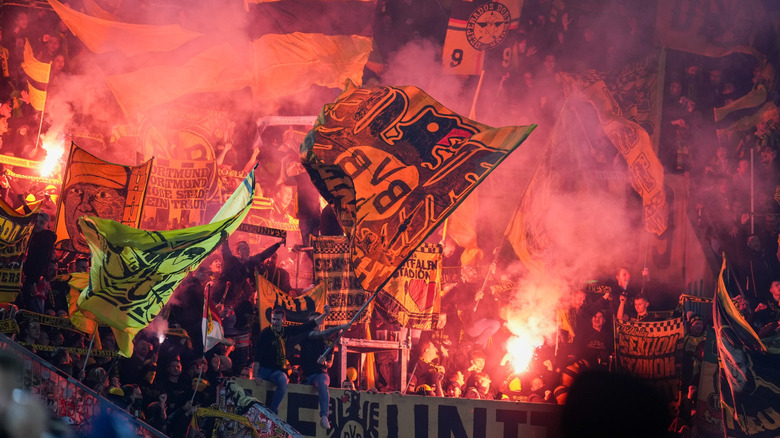
For more than 50 years, the Westfalenstadion has been the fortress of Borussia Dortmund, the city's famous soccer team. Officially called the Signal Iduna Park after a 2005 sponsorship deal, it is consistently full for every home game, with 81,365 spectators packing the stadium to the brim. It has been the site of German Bundesliga titles and European triumphs, and has gained worldwide fame through its towering Yellow Wall — Europe's largest standing terrace. At over 130 feet tall, 328 feet wide, and set at a dramatic 37-degree angle, it crams in almost 24,500 fanatical supporters for one of the most atmospheric spectacles you'll see in sport.
But, just like football stadiums in the U.S. with fun activities and events, Signal Iduna Park is more than just a sporting arena. During the holidays, the stadium hosts a beloved annual Christmas carol event, which sees record-breaking crowds of over 70,000 people. Imagine that in your holiday season home movie. As it's never quite a sellout, tickets for this jolly singalong are fairly easy to get. Unfortunately, match tickets aren't as easy to procure in this city, so you may need to plan well in advance if you hope to experience the electric atmosphere for yourself.
If you simply want to see the stadium, guided public tours are available. These tours provide access to areas that fans don't usually see, including locker rooms and the press area. Take in the legendary Yellow Wall and imagine the deafening roar of tens of thousands of Dortmund fans. Customizable private tours are another option, and you can even add in catering services if you desire.
German Football Museum (DFB-Museum)
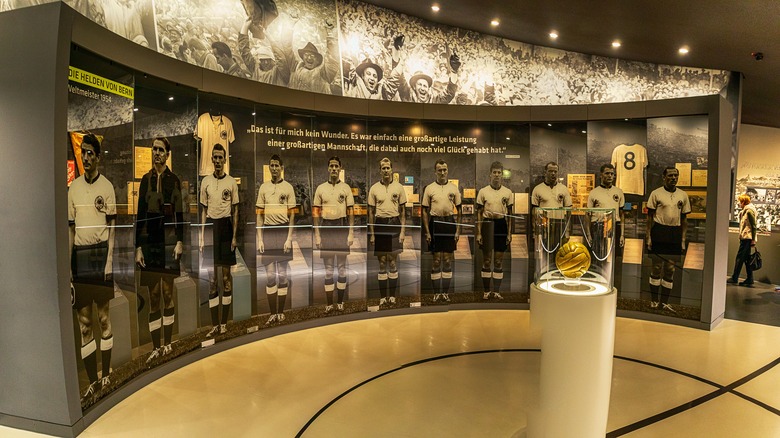
Since opening in 2015 next to the main train station in Dortmund, the German Football Museum, also known as the DFB-Museum, draws around 200,000 visitors every year. Conveniently, it sits within an hour of four more Bundesliga city stadiums, and attendance jumps on match days when fans flood into the city. Instead of traditional floors, the museum is organized into two halves in a reference to the two periods of a soccer match. The first half takes you through the highs and lows of the national team's history. It's lined with trophy displays and historical items, and complemented by interactive displays of famous moments in football history. You'll also see match day jerseys with mud and grass stains still visible, boots caked in years-old dirt, and other authentic memorabilia that hold decades of treasured memories.
The museum doesn't shy away from the country's dark past, either. The Nazi persecution of Jewish footballers is highlighted, as is the politically charged 1974 World Cup match against East Germany that was lost by West Germany on home soil at the height of ideological tensions. The second half of the museum looks at the game at club level, exploring what makes each team unique. It delves deep into supporter culture and also shows how television coverage has shaped the modern game. Finally, visitors can kick a ball around and even join a game on the museum's playing field.
Dortmund U-Tower, including the Museum Ostwall
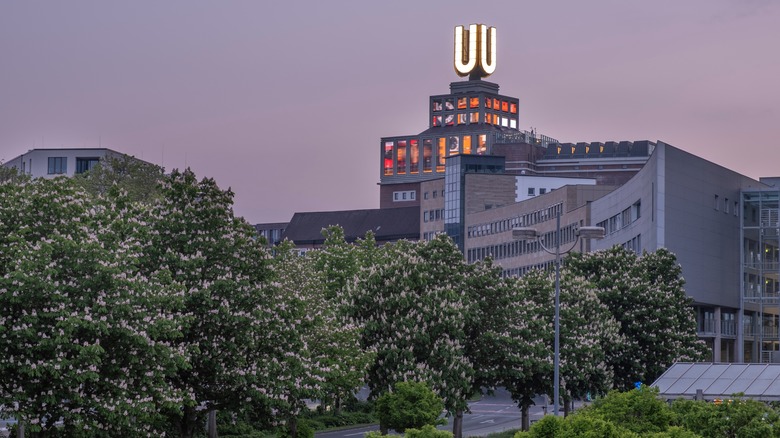
Back in 1927, the Dortmund U-Tower was the city's most recognizable landmark. It was built as a storage facility for Union Brewery, but when the brewery shut down, the building was abandoned. However, the tower survived, and after years of restoration, it made a triumphant comeback in 2010 as the city's home of the arts. It was a major transformation and symbolized the city's move away from industry in the direction of culture. The venue plays host to concerts, theater performances, cinema screenings, and creative workshops throughout the year, and it is a fascinating place for tourists to visit. However, the tower doesn't just focus on entertainment. It also houses research institutes working on new innovations and creative businesses looking for collaborative space, while providing a platform to help start-ups get off the ground.
But, it's the Museum Ostwall on the fourth, fifth, and sixth floors that pulls in most visitors. It may not get the same attention as the best art museums in Italy, but it's a place where you'll encounter galleries displaying everything from abstract paintings to photography exhibitions. The museum primarily focuses on 20th-century works, and following its opening in 1949, it holds the distinction of being the first post-war museum in West Germany. In the 1960s, it was a hot spot for Fluxus art, a movement that rejected elitist notions of what art should be. You can admire pieces from this avant-garde period on the fourth floor, including works by Joseph Beuys, Wolf Vostell, and Dieter Roth. The museum relocated to the U-Tower in 2010, and entry has been free since 2019.
LWL Industrial Museum Zollern
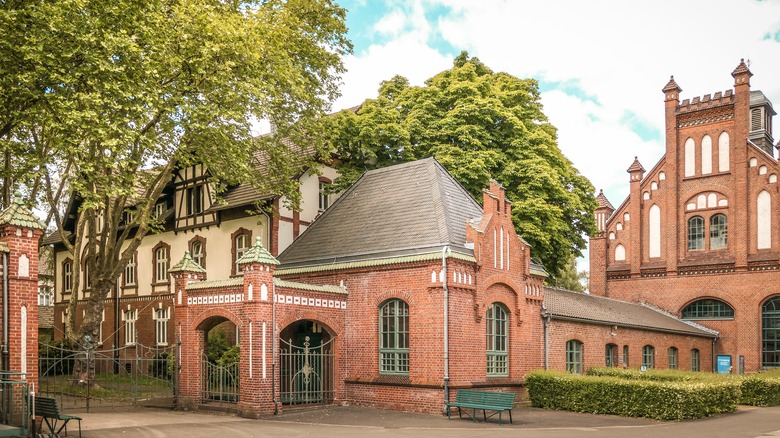
This LWL Museum preserves the site of the old Zollern coal mine in West Dortmund. And while it is dressed in elaborate brickwork with an Art Nouveau gateway resembling a grand estate, the colliery itself presents the harsh realities of mining life behind its artistic facade. It started operations at the tail end of the 19th century and ran until its closure in the 1960s, when plans were in place to tear it down and build a highway over the site. However, local activists ignited what would become a broader push to preserve the Ruhr region's industrial past. It's now part of the European Route of Industrial Heritage, a network that links around 2,500 sites across the continent.
Locals nicknamed it the "Castle of Labor" for good reason. Instead of glorifying Dortmund's industrial history, exhibitions highlight the working conditions, dangers, and harsh realities that miners and their families endured. Spaces like the lamp room and washing facilities show the genuine difficulties, and stories are told through firsthand biographical accounts. In contrast, features like the Machine Hall's original stained-glass windows stand out as true works of art that leave many visitors mesmerized by their beauty. It's a compelling place to take a tour, and organizers even make it interesting for kids with a hands-on underground sensory room and a conveyor tower they can climb and explore.
Rombergpark Botanical Garden

This botanical garden is one of the largest in Europe and was once part of a 14th-century moated castle that was destroyed during World War II. The castle's private estate is the star attraction now, but a 17th-century gatehouse has survived intact and now serves as an art gallery and the park's main entrance. Inside the tranquil grounds, you'll find an extensive network of trails winding through different zones.
One of Rombergpark Botanical Garden's highlights is its cherry blossom avenue. It puts on a dramatic show in spring when arching branches, heavy with pink and white blooms, create magic with falling petals drifting down like snow. It could easily be considered one of the world's most mesmerizing places to see flowers in bloom. There's also a beautiful rhododendron valley winding through the grounds, while several greenhouses hold displays of orchids, cacti, and other exotic plants.
You might even learn a thing or two in areas like the medicinal herb garden, which has plants on display that have been used for healing across the ages. There's also a large arboretum with a vast collection of trees and shrubs, some of which are hundreds of years old. In summer, the fields are carpeted with bright crocuses, and the gardens become a photographer's dream. They're especially striking at sunset, when amber light washes across the landscape.
St. Reinold's Church
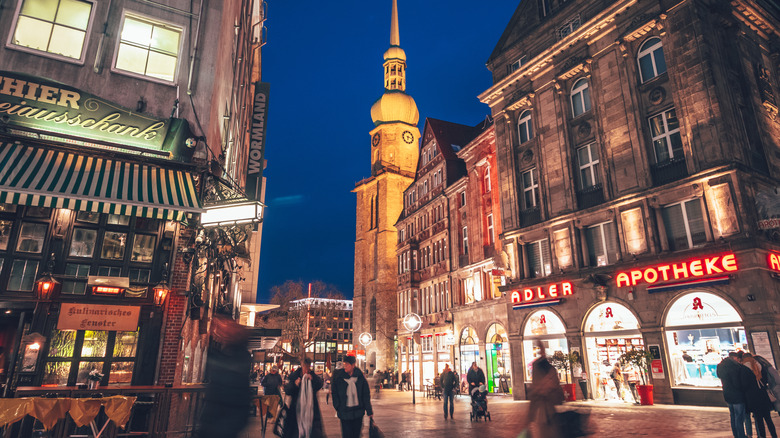
Located deep in the heart of the city is a church that predates every other place of worship in Dortmund. It survived war, urban transformation, and even an earthquake — and this resilience has made St. Reinold's Church, or Reinoldikirche, inseparable from the city's skyline and history. It's dedicated to Dortmund's patron saint and was completed in the 15th century, but some of what you see now is the result of restoration efforts after damage caused by World War II bombings. However, it sits on Romanesque foundations of thick, solid walls and rounded arches with distinctive late gothic features of high vaulted ceilings and intricate stonework.
At 367 feet, the single spire was the city's tallest structure on completion. This earned it the nickname of "Miracle of Westphalia." Copper domes and bells crown the tower, which stands tall over the Old Market Plaza below. It holds six bells, including one that is thought to be the largest in all of Westphalia. Step inside the church and you'll find ornate altarpieces complemented by detailed wood carvings covering most surfaces. During the daytime, the space is bathed in colorful light spilling through brilliant stained-glass windows. Religious artwork and carved biblical figures fill the nave, and you'll leave with a deep appreciation for its storied past, even if it isn't one of those surreal religious wonders that defy belief.
Dortmund Christmas Market
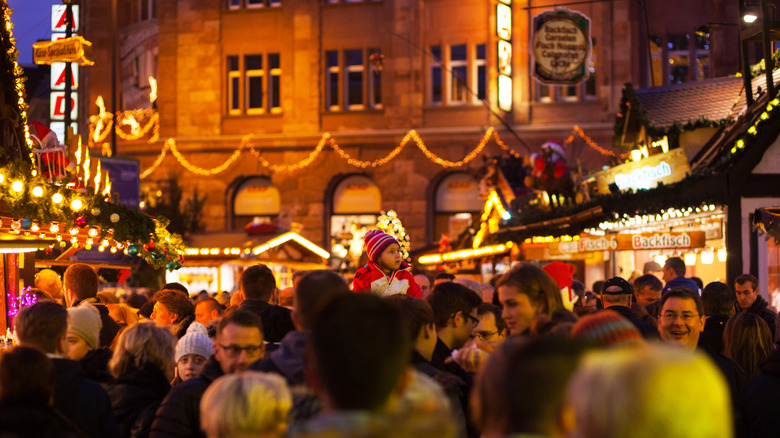
The holiday season in Dortmund is a very special time, as it proudly boasts one of Germany's biggest Christmas markets. More than 3.5 million people visit every year, making it one of the busiest and best Christmas markets across Europe. Many visit to see what is known as the world's tallest Christmas tree, standing at nearly 150 feet tall. It's actually made from 1,200 individual Norway spruces that are grown specifically for the occasion, and it's adorned with a mind-boggling 138,000 LED lights. Assembly begins as early as October to get this record-breaking tree ready for the holiday season, but the labor is well worth it.
Since being constructed for the first time in 1996, the giant tree has become an annual tradition, but the market has so much more to kindle the festive spirit. Illuminated sculptures tell stories of the city's history and its transition into the modern landscape of today, and dazzling light shows run in the evenings. If you climb aboard the century-old Ferris wheel, you'll get a bird's-eye vista of the entire winter wonderland from above.
Of course, Christmas markets are all about the festive food and drinks, too. Mulled wine and other seasonal beverages are served in commemorative mugs (which have become sought-after collectibles), while food vendors dish out hearty German staples like bratwurst and Westphalian grilled ham. Dessert stands serve up crêpes, candy, and various other seasonal sweet treats. With more than 250 stalls packed into the market's grounds, you'll find everything from hand-carved ornaments and knitted scarves, to wooden toys and artisan jewelry.
Phoenix Lake

When the Phoenix-Ost steelworks site shut down in 2001, workers immediately started excavating the 59-acre industrial area and decontaminating its soil to create a huge artificial lake. A festival in 2010 marked the filling of the lake. The late American actor Larry Hagmann, no less, ceremonially turned on the water valve to begin the process. It took around six months to complete, and by 2011, a fully filled lake occupied the former factory site. Now, Phoenix Lake — or Phönix See in German — functions as both a recreation area and, by absorbing excess rainfall, a flood control system.
To enjoy it as a tourist, you can walk the scenic shores on the 2.2-mile perimeter loop. It usually takes around 45 minutes to an hour to stroll all the way around, but you can also cycle it or even take part in a Segway tour. These two-wheeled motorized vehicles include an audio guide, detailing some of the city's history as a medieval settlement and its evolution into the environmentally-conscious metropolis we know today.
The lake is also a lovely spot for birdwatchers. You can look for tufted ducks and mute swans on the water, while black-headed gulls and Canada geese congregate along the banks. The winter months see great bitterns drawn to the reeds, but it's the red-crested pochard that is the most notable. These diving ducks, with their distinctive rusty orange heads and bright red bills, successfully nested at the lake for the first time in 2023.
Dortmund Zoo
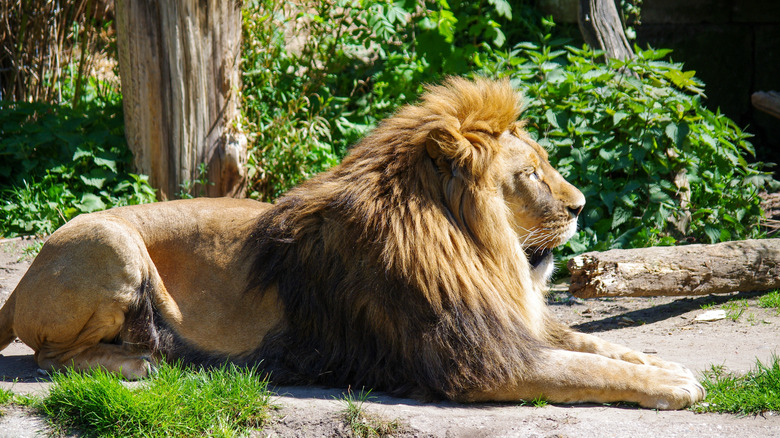
Sitting on 69 acres of land in southern Dortmund is the city's zoo. It first opened in 1953 and now attracts around half a million visitors annually. It might be difficult to compete with Europe's most visited zoo in Berlin, but around 1,500 animals across 230 different species call the Dortmund Zoo home, including towering giraffes, mischievous meerkats, and lounging lions.
The zoo is also home to the country's largest herd of Asian elephants — watching them lumber across their enclosure, tussle playfully, and communicate with each other through their rumbling calls is mesmerizing for both kids and adults. There's also a Sumatran tiger habitat that recreates the Indonesian jungle where these critically endangered cats can stalk, climb, and exhibit their natural hunting behaviors.
However, the zoo has built its reputation around South American species. The Amazon House and South America Meadow are recreations of the animals' natural habitats, and Dortmund Zoo also oversees breeding programs for giant anteaters and tamanduas. You'll also find more giant otters here than in any other wildlife park in the world. To round things off, there is a Children's Zoo where kids can interact with cute and friendly farm animals like sheep and goats. Gates open daily from 10 a.m. and close at 5:30 p.m.
Methodology
Dortmund is a dynamic and evolving city that often flies under the radar. However, it's unexpectedly rich with cultural offerings, entertainment, and natural beauty, and we aimed to capture its diversity in this guide. To narrow down our list of Dortmund's most renowned tourist attractions, we looked to published content by reputable travel platforms Expedia and Hotels, along with renowned travel blogs, local tourism boards and guides like What's On in Dortmund, Stadt Dortmund, and North Rhine-Westphalia (NRW) Tourism. We also drew from the expertise of travel author Rick Steves, as well as commentary from locals on Reddit and feedback from previous visitors on Tripadvisor, AllTrails, and Google Reviews. A personal visit by the author also lingers fresh in the memory.