

Full-Body Airport Scanners Vs Metal Detectors: Which Is More Effective (And Revealing)?
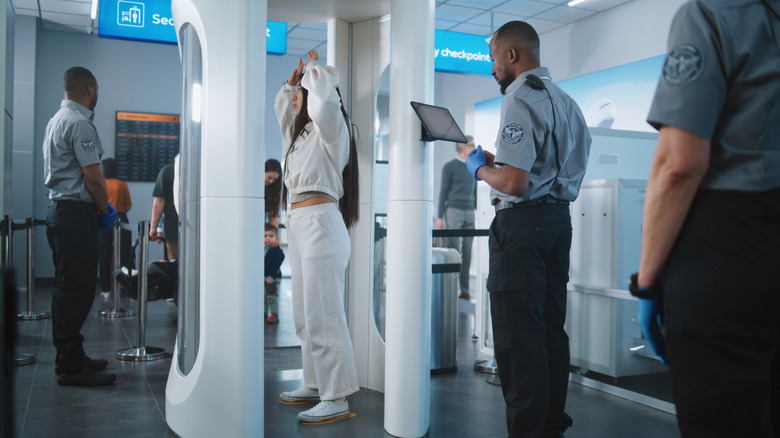
If you've ever been to the airport to take a flight, you've surely endured the inconvenience of the dreaded airport security line. We all want to feel safe during the many phases of air travel, but it seems like there should be a faster, easier way to screen everyone for restricted items. There are plenty of ways to prepare for the inevitability of security screening, and reviewing these 11 must-know dos and don'ts for getting through airport security is a great place to start, but we're betting the average traveler has some additional questions regarding the actual methods utilized to ensure passengers are adhering to safety protocol.
If you've ever wondered about the difference between the two most common screening machines, you're not alone. Metal detectors and full-body scanners are not the same in terms of the technology being utilized, and they ultimately convey different information to security agents. While a metal detector is doing just that — detecting if any metal is present on, or even inside, a person — the full-body scanner is searching for any hidden items, not just those made of metal, making it both more effective and more revealing than its counterpart. In most cases you will be expected to pass through one machine or the other, and occasionally security agents may need to utilize both methods on a single traveler.
While the average person may opt to go with the flow when it comes to the airport security line, for those with the interest, there are steps you can take to have more control over the process. Read on to learn exactly how these machines work, what TSA agents can see via the full-body scanner, and what you can do to lessen the probability of unwanted additional screening.
What's the difference between metal detectors and full-body scanners?
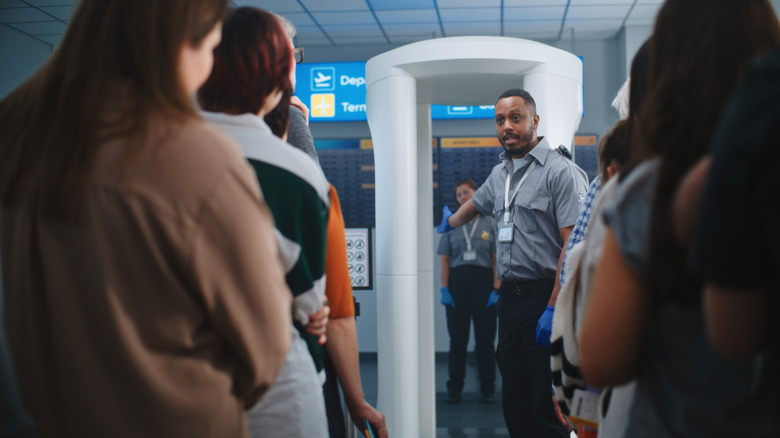
There's a significant difference between using a metal detector and a full-body scanner. The name of the metal detector is already a huge clue as to the main difference between these machines, but the technical term for the principle behind its technology is electromagnetic induction. Simply put, metal detectors are looking for objects made of metal by utilizing a low-intensity magnetic field. This field can sense when metal passes through it, sounding an accompanying alarm that alerts security staff to the fact that additional screening is needed. Watch out for culprits like loose pocket change, jewelry, belt buckles, and hardware on shoes when it comes to passing through a metal detector.
If you do trigger the alarm, the next step may include a manual pat-down or a full-body scanner, which utilizes different technology than a metal detector. Full-body scanners tend to be a bit more controversial due to the fact that low-energy radiation known as millimeter waves is utilized during their operation. "Body scanners use a technology called Advanced Imaging Technology (AIT) for full-body scans at airport checkpoints," TSA spokesperson R. Carter Langston told Reader's Digest. "It's a millimeter wave scanner that detects a wide range of metallic and nonmetallic threats in a matter of seconds."
But what does this really mean? "Essentially, the machines send millimeter waves toward a passenger's insides," said Dr. Shawna Malvini Redden, a communication researcher who has specialized in studying the TSA for more than a decade (via Reader's Digest). "The waves go through clothing and reflect off the passenger's skin (and whatever else is concealed) and bounce back an image, which is interpreted by the machine."
How much do full-body scanners actually reveal to TSA?
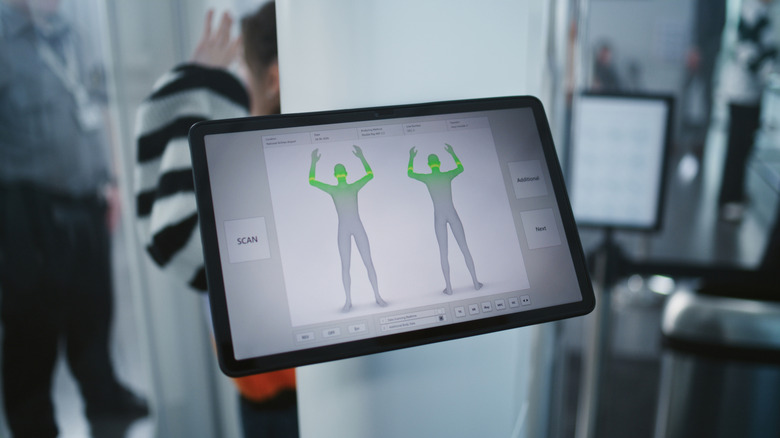
Though full-body scanners are more revealing than metal detectors, and they're able to reveal a wider range of concealed items (not just those made of metal) — this doesn't mean that they're invasive where personal privacy is concerned. The truth is that you don't need to worry about how much of your body the security officer will see when you step inside a full-body scanner because they're not seeing under your clothes or detailed physical features at all. The machine uses a tablet to display an avatar that's little more than a crude silhouette of a human form, and if the machine picks up any anomalies with your scan, little boxes placed on the avatar will let the operating agent know what areas need to be searched further. In fact, backscatter machines used a similar technology but with added X-ray and were phased out of use in 2013 because of the explicit images they were producing.
While nondescript images that aren't in any way a photo of your body are clearly nothing to worry about, these scans can often pick up false readings that will trigger a more invasive pat-down. The machine is looking for abnormal thickness, and what may surprise most passengers is that even scar tissue is sometimes enough to trigger these "stop and check" signals. Be prepared for extra screening if you braid your hair close to your scalp, for instance, and know that even sweat can get you flagged for a humiliating TSA pat-down at the airport.
Are metal detectors and full-body scanners safe for everyone?
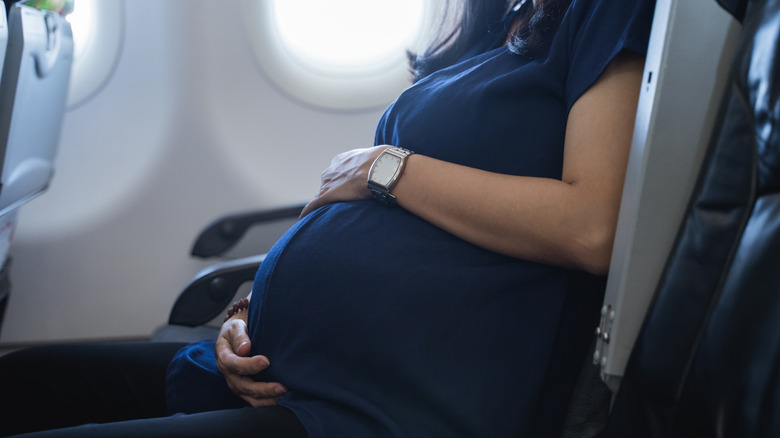
Harmful radiation is the main concern when it comes to how safe metal detectors and full-body scanners are for the human body. However, there is no radiation utilized by metal detectors. Instead, they create a low-intensity magnetic field, similar to that of household appliances like refrigerators, microwaves, and even your cell phone, which we're willing to bet you see a lot more of than the airport metal detector. The World Heath Organization (WHO) has classified walk-through metal detectors as low-risk, even for those in vulnerable categories like pregnant women and children.
While the question of health risks posed by full-body scanners may be a little more complicated due to the fact that they do utilize radiation, it's important to note that there are different kinds of radiation, and some are more harmful than others. Current full-body scanners depend on non-ionizing radiation, which is not strong enough to damage DNA. The irony of fliers being concerned with radiation exposure when it comes to the security line is that the amount of cosmic radiation all passengers are exposed to during even a short flight is greater than what you'll experience in the TSA checkpoint.
The Center for Disease Control and Prevention (CDC) assures that the amount of energy released by airport scanners at large is actually thousands of times less than the energy released by a cell phone. In short, normal exposure to airport screening is highly unlikely to affect your long-term health in any significant way.
Can you avoid metal detectors and full-body scanners at airports?
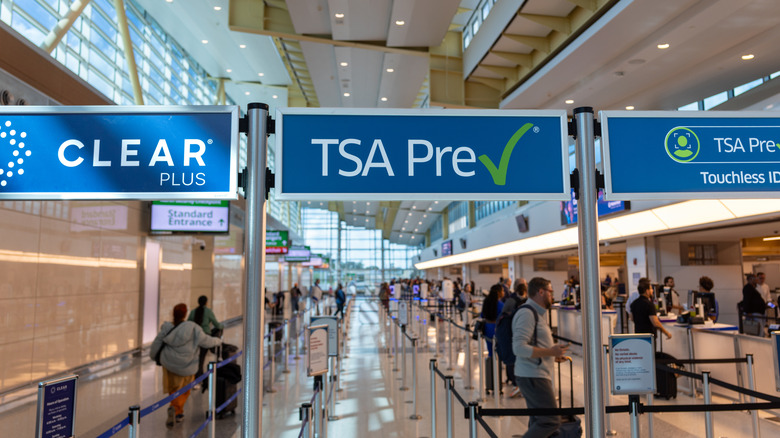
You may be asking yourself, "Is there a way to completely avoid the metal detectors and full-body scanners at the airport?" You could always opt for a full pat-down straight from the jump, but most people won't find this option more appealing than a few seconds in a machine. If it's the full-body scanner you're uncomfortable with, there is a way to cut down on the number of times you'll be shuffled into that line.
The easiest way to avoid the full-body scanner at the airport is to sign up for the TSA PreCheck program, which can be utilized at domestic airports in the United States, even if you're flying to an international destination. TSA PreCheck allows low-risk, pre-approved travelers to be filtered into an expedited line with less screening. You can apply online, and after an in-person appointment, if approved, you'll be assigned a Known Traveler Number that you can add to your airline reservation. This addition in your reservation will trigger PreCheck to appear on your boarding pass, thus lessening your wait time and opening the door to a new series of special perks.
The program allows you to keep your shoes on, keep your electronics and liquids stashed away in your bag, and, yes, steer clear of the full-body scanner line. Instead, you'll only be shuffled through the metal detector, unless you set it off, of course. Remember, you must comply with everything that the officers ask of you, and even something you consider to be a harmless behavior can be a major red flag for TSA agents during a security check.