

Sicily's Top 14 Tourist Attractions To Visit During Your First Trip
The largest island in the Mediterranean, Sicily looks a bit like an oddly-shaped rock that the boot of Italy is kicking into the sea. But don't let that give you the impression that this densely populated island is anything other than a historical and cultural gem. Not unlike Malta, a Mediterranean island just off the coast of Italy with gorgeous pebble beaches and perfect weather, Sicily has seen centuries upon centuries of cultural influences — ranging from the ancient Greeks and Byzantines to medieval North African Arabs and Normans.
By the mid-18th century, the Bourbons had gained control of the island, which later became a part of the Kingdom of Italy following unification in 1860. That said, it's no wonder that Sicily is an invariable treasure trove of archaeology and heritage, as well as a spectacular place to find glistening beaches, famously mouthwatering cuisine, beautiful vistas, and much more.
Sicily is separated from the mainland by a 2-mile body of water called the Strait of Messina. Across its more than 9,900 square miles, the island is home to around 4.8 million people — about a fourth of whom live in the metropolitan area of the capital city of Palermo. However, there are numerous ways to experience this Italian island — whether you make your base camp in Palermo or another city, or take a more nomadic approach by tackling the island's stunning tourist-free bike route through authentic small towns. Nonetheless, whatever you choose, it's still a good idea to rent a car, as the island's most inviting small towns and landmarks are dotted all over. With that in mind, read on for 14 must-see attractions to make the most of your first trip to Sicily.
Discover ancient history at Valley of the Temples
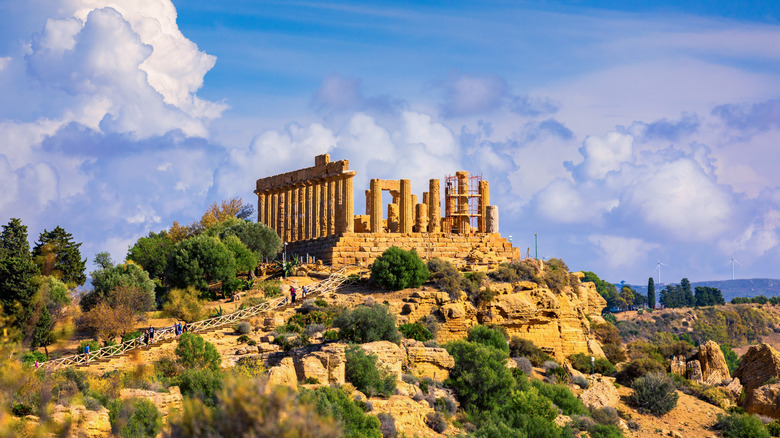
Among the seven UNESCO World Heritage sites in Sicily — which range from Syracuse and the Rocky Necropolis of Pantalica to the island's famed volcano, Mount Etna — the Valley of the Temples is among its most iconic. The prominent archaeological site near Agrigento features sacred Hellenic architecture dating to around the 6th century B.C. In other words, about 2,500 years ago, a Greek settlement took root here that included a series of stone temples and a necropolis. While much of the area remains under agricultural fields, some portions have been excavated to show the spectacular ancient community, exemplified by elegant stonework like colonnades, tall Doric columns, and geometric pediments.
The Valley of the Temples includes more than half a dozen sacred structures dedicated to ancient deities and heroes like Zeus, Heracles, and Juno. Wander around the temple complex on your own or book a guided tour from regional providers. Sunset tours are a popular way to take in the unique atmosphere of the place, especially as the temples are illuminated after dark. The park is open daily from 8:30 a.m. to 8 p.m., and as of this writing, standard admission is around $20. Alternatively, purchase a combination ticket for roughly $26 to also take advantage of the Pietro Griffo Archaeological Museum.
Visit the Cattedrale di Palermo
Sicily's largest city, Palermo, has long been plagued by its reputation as an infamous hub for the mafia. Known as Cosa Nostra, the organization has been a part of the social fabric of Sicily since the 19th century — and it's not unusual to hear murmurings about whether visiting Palermo is safe or not. However, it's worth noting that a lot has changed over the decades. Today, Palermo only sees a fraction of the crime complaints of Rome, Florence, and Milan — the latter of which usually takes the No. 1 spot. In other words: don't get the wrong idea about Palermo, a city with one of Italy's lowest costs of living that's also a famous coastal foodie paradise. After all, its history and culture are sure to delight.
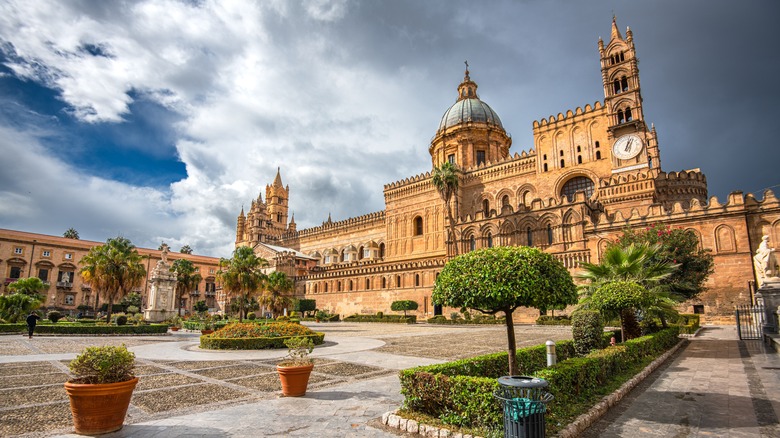
No visit to the Sicilian capital would be complete without dropping into the Cattedrale di Palermo, or Palermo Cathedral. Originally built in 1185, the building has undergone many additions and transformations, making it one of the island's most prominent churches. Part of a multi-location UNESCO World Heritage site that encompasses Arab-Norman Palermo and the cathedrals of Cefalú and Monreale, the structure features a fusion of European, Islamic, and Byzantine architectural styles. Look for the ornate silver reliquary containing the remains of Saint Rosalia, known as "la Santuzza" by locals, and 12th-century elements that still embellish the apse.
Stroll around Ortigia
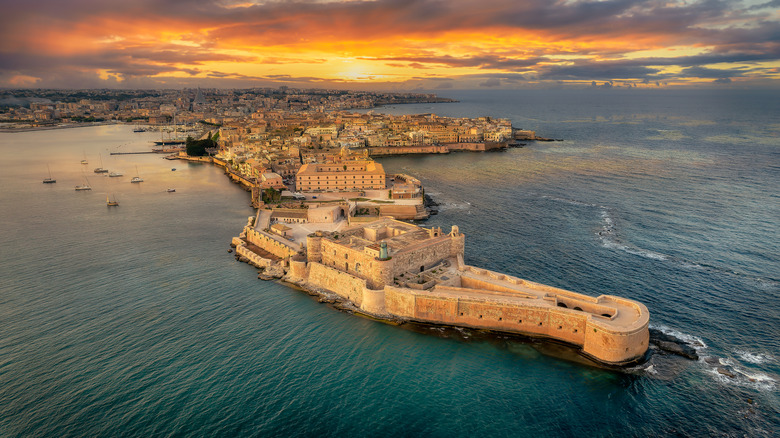
Off the southern tip of Syracuse, a historic city on the southeastern coast of Sicily, sits the small island of Ortigia. The most ancient part of Syracuse, the rocky promontory was originally called Ortygia by the Greeks who settled it in the 8th century B.C., and one can still meander past the remains of temples, a Greek theater, and more. Today, layered histories converge on an urban island chock full of unique details and beautiful views.
On the northern end of Ortigia, grab a snack at the open-air market — where vendors sell everything from fresh produce to jewelry — before strolling through the ruins of the Temple of Apollo. Walk less than 10 minutes south to Piazza del Duomo to see the Baroque facade of Syracuse Cathedral, which still holds vestiges of its former life as the ancient Temple of Athena, exemplified by Doric columns that remain visible.
Continue south to the fabled Fountain of Arethusa, the site where Roman poet Ovid once recounted the myth that a nymph named Arethusa transformed into a spring in order to escape the advances of the river god Alpheus. Finally, don't miss the Museo Archimede e Leonardo, dedicated to the legendary Greek mathematician and inventor Archimedes, a native of Syracuse, along with Renaissance luminary Leonardo da Vinci.
Walk along Corso Umberto
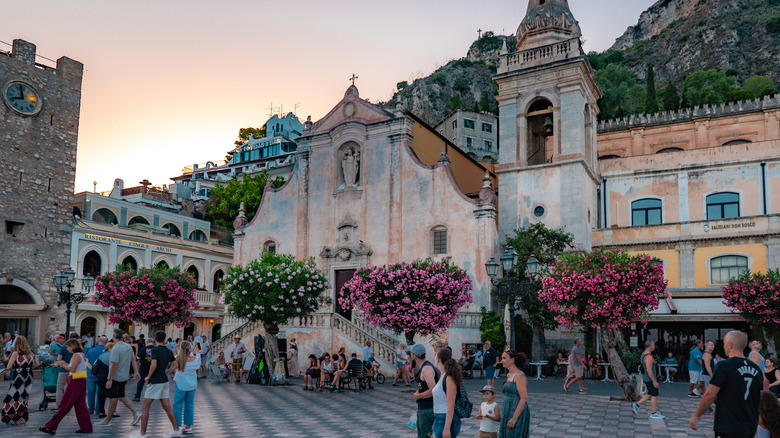
Arguably one of the most gorgeous streets in Sicily, Corso Umberto, in Taormina, is brimming with centuries-old architectural heritage, restaurants, and shops. Taormina itself is one of the most popular Sicilian destinations — a reputation it's held since the late 19th century, when it became a desirable stop on the European Grand Tour. For wealthy English travelers in particular, the Grand Tour was a traditional trek across Europe that typically took at least a year and was viewed as a kind of rite of passage to becoming a cultured and worldly individual.
Just like these tourists of yore, walk in the footsteps of the first settlers of this area, as Corso Umberto follows the original Greco-Roman route called Consolare Valeria. Now a pedestrian area, the street is full of hotels and cafes, as well as quaint plazas that boast amazing views over the Ionian Sea. Make sure to visit the beautiful Chiesa di San Giuseppe, a Baroque church overlooking a charming checkerboard piazza, which is elegantly decorated inside.
See the ancient Theater of Taormina

Perched high above downtown Taormina is a famously ancient Greek theater that dates back to the 3rd century B.C. Initially, it was conceived as a place to stage performances, and the Romans later adapted the design to incorporate their own cultural activities, including gladiatorial contests. The open-air theater could hold — and still occasionally does for modern performances — up to 5,400 spectators on long benches carved in stone, which remain remarkably well preserved today. This, combined with its dramatic hillside setting, only adds to the sense of grandeur.
While many of the smaller details and embellishments like statues are gone, visitors can still get a sense of the scale of the place from what remains of the stage area. This includes a series of arched structures and a few remnants of columns, past which you can take in glorious views of the landscape, including Mount Etna rising in the distance.
Scale Mount Etna
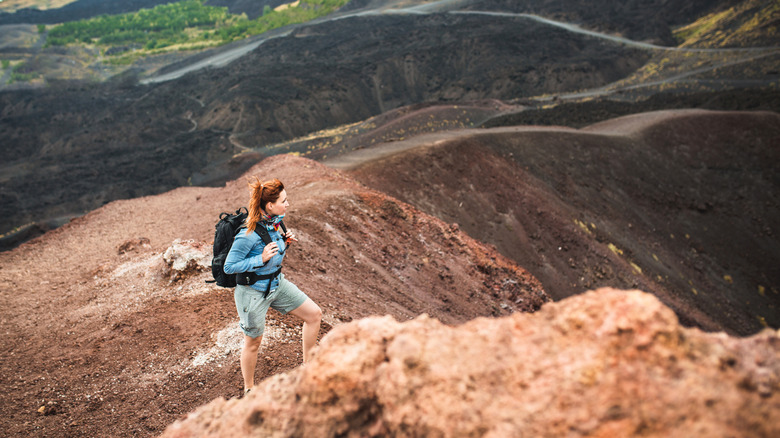
Known for blowing unique smoke rings, otherwise known as volcanic vortex rings, Mount Etna is Europe's tallest volcano and among the world's most active. The peak clocks in at more than 10,900 feet and is impressive enough to earn a designation from UNESCO as a site of outstanding universal value. For hikers, it offers a thrilling trek to see active craters, which regularly smoke and emit ever-changing lava flows. Full- and half-day tours provided by local companies offer a no-fuss way to see this dramatic landmark, departing from the city of your choice.
The Tour 3000 is a popular choice and includes the Funivia dell'Etna — a scenic cable car that carries you up to an elevation of about 8,200 feet. From there, a 4x4 vehicle connects you to a guided walking tour of the craters. A bonus for wine connoisseurs is a tour offered by Go Etna that rounds out the day with a wine tasting at a local cantina, where you can taste vintages grown and harvested on the lower slopes of Mount Etna.
Hike through the Riserva dello Zingaro
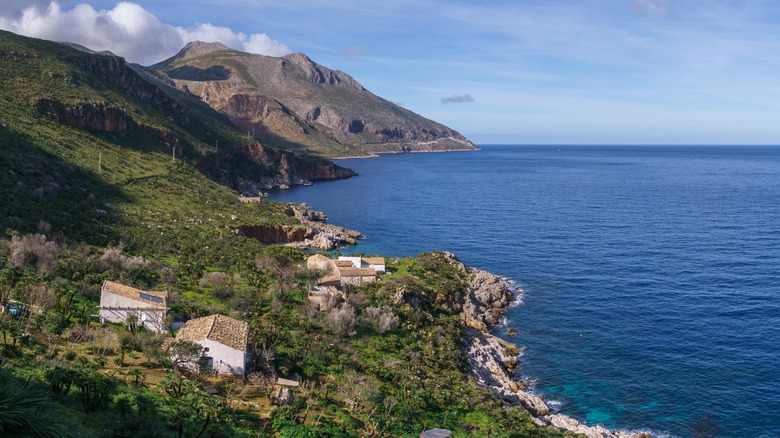
The Riserva dello Zingaro, or Zingaro Nature Reserve, is a spectacular area of preserved Sicilian landscape dotted with stunning beaches, sea views, hiking trails, and historic landmarks. Located along the coast of the San Vito lo Capo peninsula on the northwest tip of Sicily, the park is a natural oasis that makes the most of its sea views thanks to the lack of a developed coastal road along this stretch. The Coastal Path, which travels from the north to the south entrance, or vice versa, is a popular route covering just under 4.5 miles that takes about two hours to complete. Make sure to pack plenty of water, as services are limited.
While there are no formal camping facilities in the Riserva dello Zingaro, you can stay overnight in one of the park's hike-in rustic bivouacs, depending on the time of year and upon prior agreement with the reserve's management. As of this writing, an overnight stay costs roughly $12 per person. Along with postcard-worthy hiking trails, the reserve is also home to a number of cultural institutions, including the Natural History Museum, the Museum of Maritime Activities, the Museum of Rural Civilization, and the Environmental Education Center.
Go Baroque at Ragusa Ibla
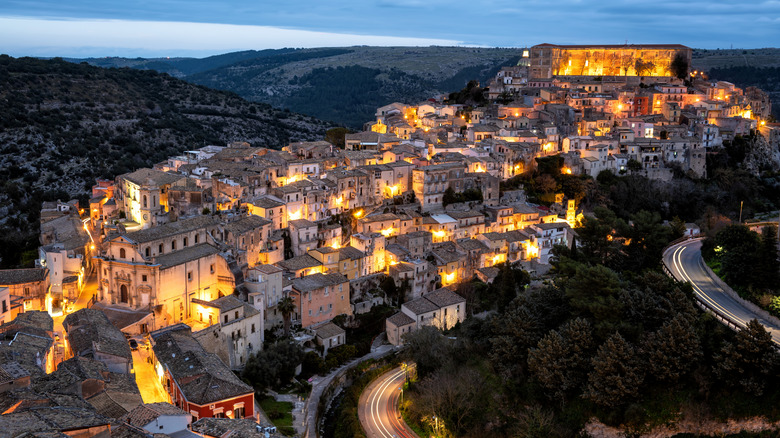
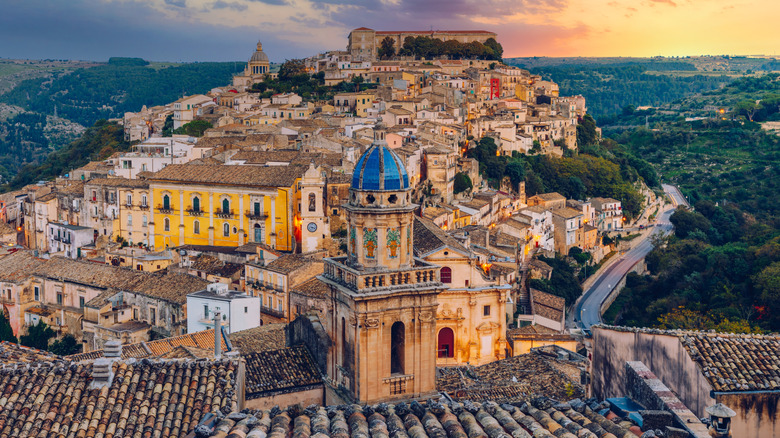
Ragusa is a beautiful community in southeastern Sicily centered around a picturesque old town that sits on the site of an ancient hilltop settlement. The city's main attraction is Ragusa Ibla, the old-town district that was rebuilt following a disastrous earthquake in 1693. Its Baroque churches and residences line narrow passageways, and it's an atmospheric place to explore pedestrian lanes, visit cafes and boutiques, and take in views of the surrounding countryside.
An icon of the neighborhood is the Cathedral of San Giorgio, which perches elegantly atop a tall set of stairs overlooking a narrow plaza. Along with other cities in the southeastern region rebuilt in the Late Baroque style — such as Caltagirone, Catania, and Noto — Ragusa's old town is a UNESCO World Heritage site recognized for its exceptional art and architecture.
Ride the Erice Cableway
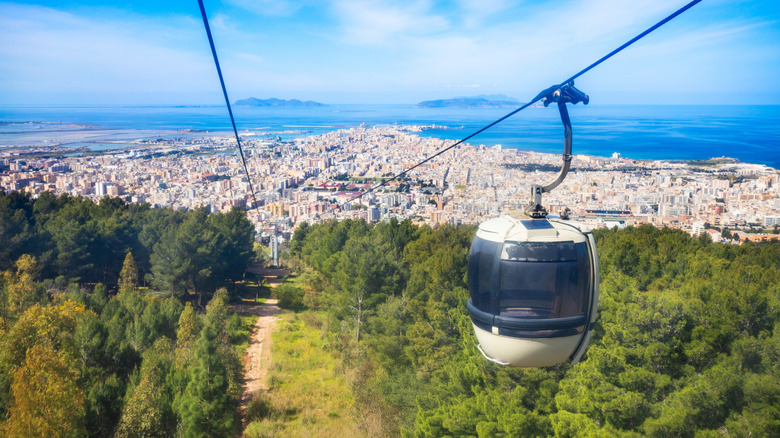
A mountainous island, Sicily has no shortage of amazing viewpoints to take in sweeping scenes of the Mediterranean, the countryside, and the island's historic cities and villages. Thankfully, there are some interesting ways to scale some of these heights — one of which is the Funivia di Erice, or the Erice Cableway. Connecting the seaside city of Trapani, known for its salt flats and churches, to Mount Erice, the ride up to an elevation of about 2,300 feet takes about 10 minutes. At the time of writing, a one-way fare costs around $8, while a round-trip is $13 with discounts available if you plan to commute a few times. From the top, you can take in panoramic views of the rocky Egadi Islands.
That said, what awaits at the top isn't just a great view from Mount Erice, but also a beautiful medieval Italian town. Also called Erice, this community has the nickname the "City of a Hundred Churches." Wander through the historic Spanish quarter and check out the 12th- to 13th-century Castello di Venere, or Castle of Venus.
See ancient mosaics at Villa Romana del Casale
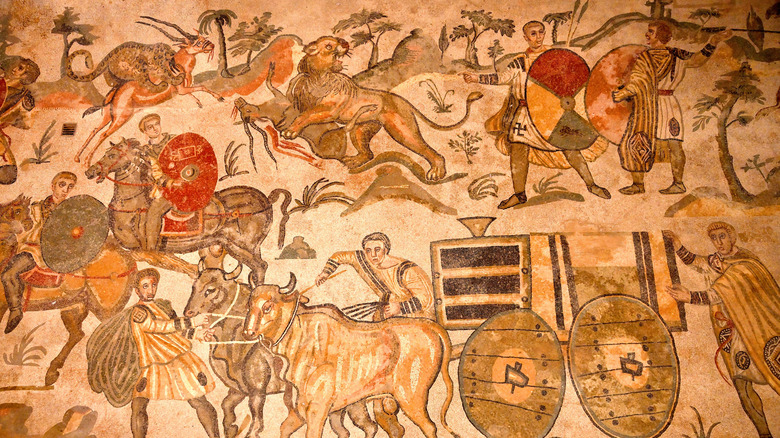
Sicily is home to a mind-blowing number of UNESCO World Heritage sites, ranging from Baroque old towns and architectural fusions to the tallest volcano in Europe. Another standout among them highlights an extraordinary ancient Roman residence called Villa Romana del Casale. Known for its amazingly preserved mosaics, which can be found in nearly every room, the villa's sumptuous decor is among the most beautiful and highly executed anywhere in the world — made all the more fascinating by the fact that it remains in its original location and covers more than 32,000 square feet in total. This remarkable preservation is partly due to an accident of nature: a landslide during the 1100s buried the entire site beneath layers of earth, protecting them for some seven centuries until excavations in the mid-20th century revealed how significant they really were.
Today, the villa is protected beneath a reconstructed roof, and visitors can wander along an elevated walkway that affords unobstructed views of the floors below. As of this writing, standard admission is roughly $20, and the concession rate is about $12. If you happen to be in the area during the first Sunday of the month, admission is free.
Peruse the Mercato di Ballarò

Palermo's historic food market has been running for around 1,000 years, and it never disappoints with its array of fresh produce, seafood, meats, sweet treats, and prepared foods. Per Rick Steves, the most important things you can shop for while in Europe are cultural souvenirs — and a street market is an ideal place to peruse gifts to take home with you, or simply enjoy a snack as you continue to explore.
It's thought that the name Ballarò is a holdover from its beginnings in the 9th century, when Arabs from North Africa ruled the region. This type of market is not too different from a souk — an Arab bazaar — and it's possible that the name is derived from the historical name for a village nearby called Bahlara, where the market's traders were based. Vendors often shout to get the attention of passersby, creating a distinctive and memorable atmosphere that's worth soaking up — along with the aroma of fresh fish — at least once.
Take a swim at Spiaggia di San Vito lo Capo
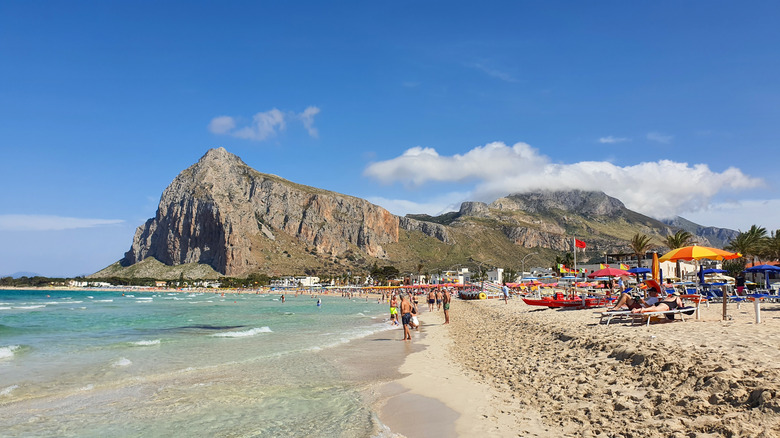
While it sometimes sees large crowds — which might not be every beachgoer's cup of tea — Spiaggia di San Vito lo Capo, or San Vito Beach, is a long, scenic, crescent-shaped stretch of sand at the top of the San Vito lo Capo peninsula. Crystal-clear water, beautiful views of the surrounding rocky hills, and golden sand have earned San Vito Beach a Blue Flag award, which signals a high standard of safety and environmental sustainability, as far as beaches go.
San Vito Beach is a family-friendly spot to soak up the sun and take a dip. As a majority of the beach is technically private, umbrellas are available to rent — a convenience that comes in handy on the hottest days in midsummer. Even though the rental fee for a couple of chairs and a sun shade can seem a little steep (upwards of $35), you'll also have access to the on-site restrooms and showers. The public areas are bound to be busier, but at least they're free.
Visit Duomo di Monreale
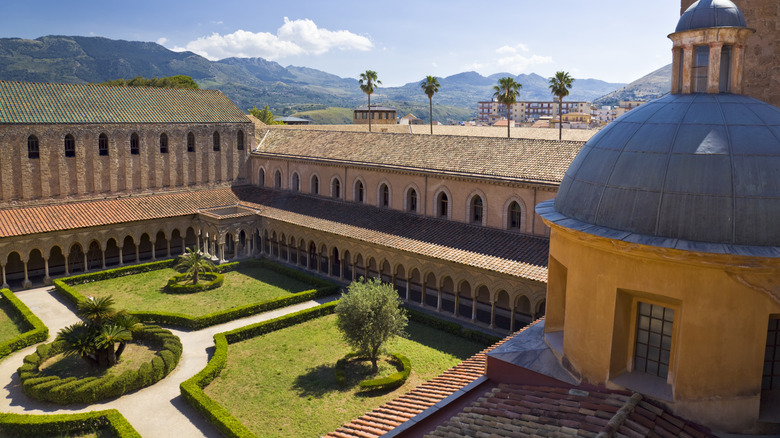
Italy is chock-a-block with astonishing cathedrals, from the Duomo of duomos in Florence to St. Peter's Basilica in Vatican City, a wildly famous and tiny destination that tops the list for overcrowded travel. Thankfully, there are so many more to check out throughout the country that you'll be spoiled for choice — and Sicily is certainly no exception. Inscribed on the UNESCO World Heritage list, the Duomo di Monreale, or Monreale Cathedral, is a sight to behold. It's gilt to the gills inside, centering around a 12th-century Sicilian-Norman abbey church that is brimming with elaborate gold-coated glass mosaics — nearly 70,000 square feet of them, as a matter of fact.
A visit to the exterior elevated walkway is an excellent way to take in views of the city from the rooftop. Access is open to the public daily, for a few hours in either the morning or afternoon, depending on the day. Back inside, don't miss the Chapel of the Crucifix, with its elaborate Norman floor mosaics and 17th-century Baroque ornamentation that is a true masterpiece of multicolored marble work.
See Sicily from the water

Being an island, it might go without saying that seeing Sicily from the water is a great way to take in its coastal towns, mountainous landscapes, and surrounding islands. Lest you get too caught up in an itinerary that sticks to solid ground, it's worth carving out some time for a cruise. Numerous full- and half-day guided boat tours take tourists to surrounding islands for swimming, dolphin sightings, and more.
Of course, as an island in the Mediterranean — where cruises are especially abundant — Sicily is a pleasure to explore via the sea as your highway. Smithsonian Journeys offers a nine-day itinerary called A Circumnavigation of Sicily aboard a ship that carries fewer than 200 passengers, making it an intimate yet social experience with numerous shore excursions. It even includes a quick leg to Tunisia, an underrated North African country known for its remarkable sand dunes. Other major companies like Royal Caribbean and Windstar Cruises also offer numerous options.
Methodology

Sicily is an island of astonishing variety, from epic nature and beaches to spectacular food and heritage that goes back millennia. To round up 14 must-see attractions that make essential additions to a first-visit itinerary, we consulted regional tourism sites like BestofSicily.com, VisitSicily.info, WeArePalermo.com, and Italia.it.
Meanwhile, for specific information like opening times, admission rates, and artistic or historical context, we referred to official sites such as ParcoValledeiTempli.it, Cattedrale.Palermo.it, RiservaZingaro.it, FuniviaErice.it, VillaRomanadelCasale.it, DuomoMonreale.com, and more. We also researched additional historical information and data from UNESCO, Britannica.com, Royal Museums Greenwich, and ItalySegreta.com.