

Brazil's 10 Most Amazing Sights And Attractions For First-Time Visitors
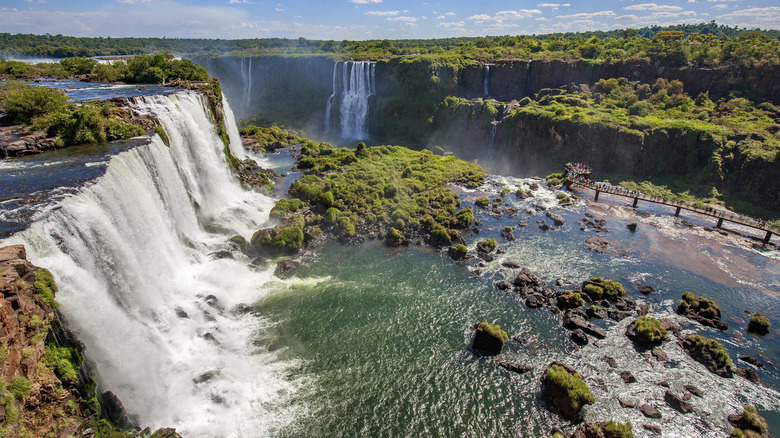
Brazil is the fifth largest country in the world, and it spans over an incredible 3.3 million square miles of jungles, lakes, and wetlands. Part of the impressive Amazon rainforest falls within Brazil's borders to the north — as does a slice of the massive Cataratas do Iguaçú waterfalls to the south. Between these two points lie 74 national parks, 500 dams and lagoons, and 15 cities with a population over 1 million. All these factors make Brazil an incredible place to visit — even if it can be really difficult to choose which destinations to include on your itinerary.
As a Lusophone specialist who has led trips to Brazil, I know a thing or two about planning the best Brazilian vacation. Using a combination of my own experiences, the tips of an expert Brazilian tour guide (who also happens to be my mother-in-law), and traveler reviews, I have compiled a list of the best Brazilian destinations for first-time visitors. My recommendations cover everything from the urban metropolises of Rio de Janeiro and Salvador da Bahia to the natural sanctuaries of Bonito, Mato Grosso do Sul, and the Amazon River. The result is a list of destinations that embraces many sides of Brazil's identity.
Parque Nacional dos Lençóis Maranheses national park (Maranhão))
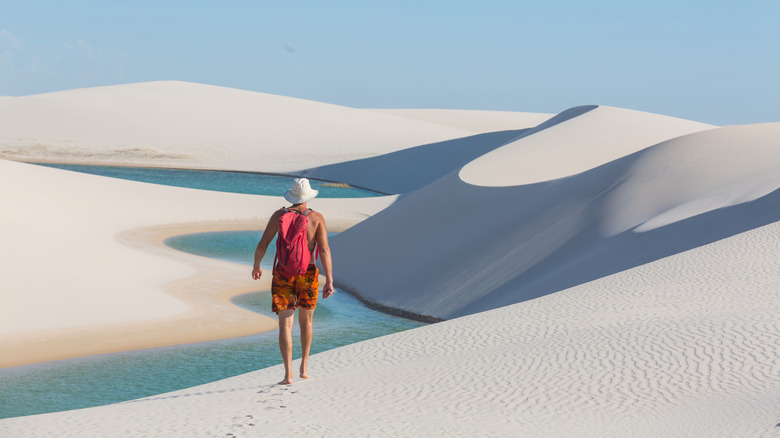
Imagine 50 miles of white sand dunes laced with slices of turquoise water. If that sounds like a little piece of paradise, you should visit the Parque Nacional dos Lençóis Maranheses in the state of Maranhão, Brazil. This stunning nature preserve encapsulates approximately 222,000 acres of sand dunes, between which lie gorgeous crystal lagoons. Recognized by UNESCO as a World Heritage Site, this national park offers views for days.
To explore the national park, I highly recommend signing up for a guided tour. Four-wheeler excursions are especially popular, as these vehicles allow visitors to cover a lot of ground in just a few hours. Hop on board, drive over white sand dunes, and stop at scenic overlooks. Don't forget to bring your swimsuit so that you can take a dip in the lagoons. Folks who want to really sink their feet into the sand can also sign up for a single or multi-day trekking tour of the Lençóis Maranheses. Hike miles through the dunes, dive into the water, and camp overnight.
When planning your trip to the Parque Nacional dos Lençóis Maranheses, keep in mind that the famous lagoons only fill up after the rainy season. Because of this, the best time to visit is between June and August. The rest of the year, it can be hard to find lagoons with enough water to swim in.
The Christ the Redeemer statue and Sugarloaf in Rio de Janeiro (Rio de Janeiro)
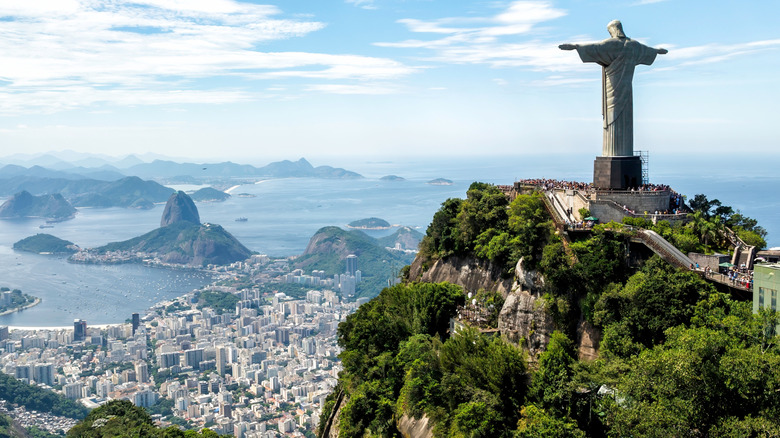
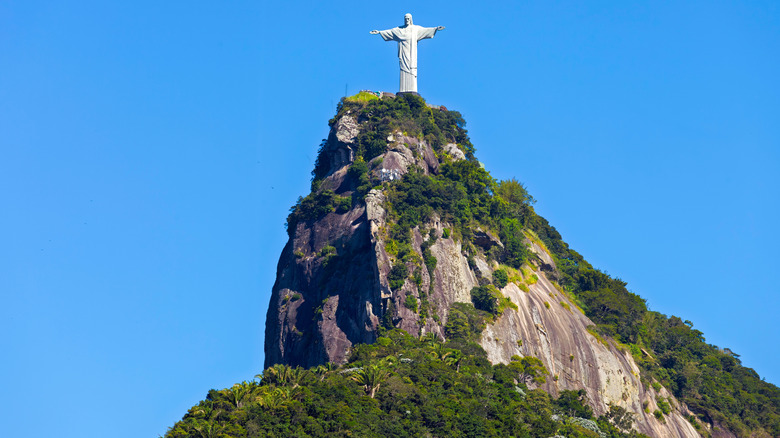
Rio de Janeiro, Brazil has gained worldwide fame for its two most stunning topographical features — the Corcovado Mountain and Sugarloaf Mountain — and each features a unique engineering feat that visitors love. The summit of the Corcovado Mountain boasts the iconic Christ the Redeemer Statue. Towering a whopping 98 feet into the air, this statue is an impressive sight to behold. The easiest way to arrive is by catching the red Concorvado train from the Cosme Velho station at the base of the mountain. Gaze at the thick foliage of the Parque da Tijuca national forest as the train climbs to the summit. Then, walk around the Christ the Redeemer statue and gaze out at the impressive views from the mountaintop. You'll be sure to spot Sugarloaf Mountain below.
While not quite as tall as the summit of the Corcovado Mountain, the Sugarloaf is incredibly steep. With rocky walls that seem to jut straight out of the mountain and into the sky, this landmass used to appear impossible to scale. In 1912, local engineers decided to shock the world by building a cable car to the summit. More than a century later, this gondola — known to locals as the "bondinho" — is a major attraction that takes tourists to one of Brazil's best viewpoints. Don't forget to snap aerial photos of Guanabara Bay and the Atlantic Ocean at the top.
The culinary scene in São Paulo (São Paulo)
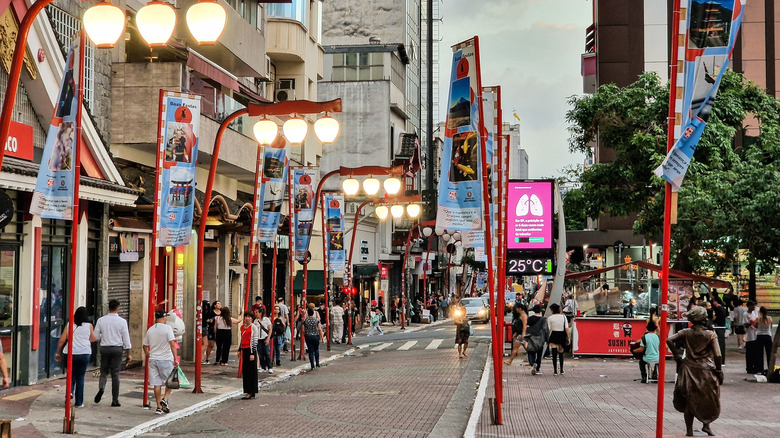
São Paulo, São Paulo is not just a big city. It is also the largest city in the New World by population. Home to people of many different ethnic origins and linguistic backgrounds, São Paulo is also an incredible place to eat. For truly mouth-watering Japanese food, head to the traditionally Japanese Liberdade neighborhood. Because São Paulo hosts the largest community of Japanese descendants outside of Japan, you can find some truly top-rated sushi restaurants and noodle joints.
The Lebanese food in São Paulo is also out-of-this-world, thanks to the enormous community of Lebanese immigrants that settled there; there are more Lebanese descendants in Brazil than there are in Lebanon. And, although these exact numbers have been called into question, there is no doubting the excellence of the vermicelli rice or bazella stew at São Paulo's most scrumptious Lebanese eateries.
These incredible international elements explain why São Paulo was voted Brazil's best culinary destination. Whether you're hoping to enjoy all-you-can-eat sushi, a plate of homemade humus, or a traditional Brazilian plate of meat and beans, you can count on the biggest city in the Americas to deliver. And, if you want to enjoy some fine dining, you can always check out one of the 17 São Paulo restaurants that earned a Michelin star in 2025.
Cataratas do Iguaçú waterfalls (Paraná)
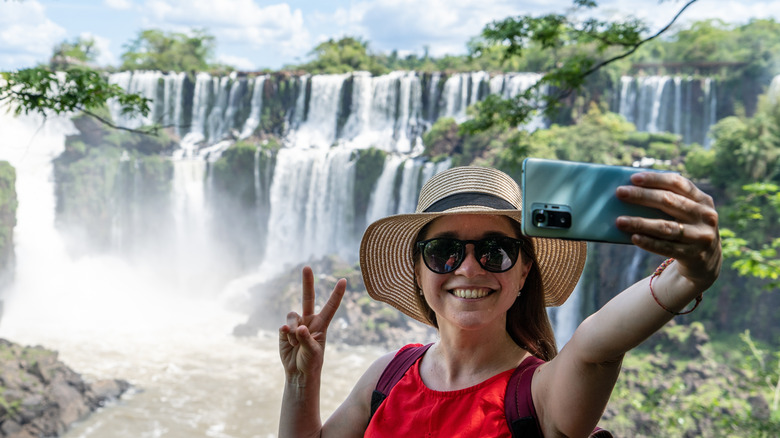
The Cataratas do Iguaçú waterfalls may not be as tall as the iconic Niagara Falls, but its width is simply incomparable with the North American cataracts. Spanning a shocking 1.7 miles in width, this water system encompasses 275 individual falls that continue on across the Iguaçú River. The sheer size of this phenomenon makes the Cataratas do Iguaçú waterfalls the largest system of waterfalls on Earth — and an incredible destination to add to your Brazilian itinerary. To see the cascades up close, take a boat tour of the falls and hear the water roar all around you. Take it from me, though, don't forget your poncho because you very likely will get wet!
If boating isn't your thing, fear not. There's also an incredible walkway that will allow you to observe the waterfalls with both of your feet firmly on the ground. A gorgeous boardwalk walkway called the Passarela Garganta do Diabo stretches approximately 0.6 miles over the Iguaçú River right below the falls. From here, you can see the famed Garganta do Diabo cataracts, which tower 262 feet into the air. Stretch your legs on the boardwalk, pause to snap some photos, and see why the falls are considered a UNESCO World Heritage Site. Folks who want to see even more of the Cataratas do Iguaçú can cross over to the Argentine side of the border — where even more rapids and boardwalk viewpoints await.
The historical town in Ouro Preto (Minas Gerais)
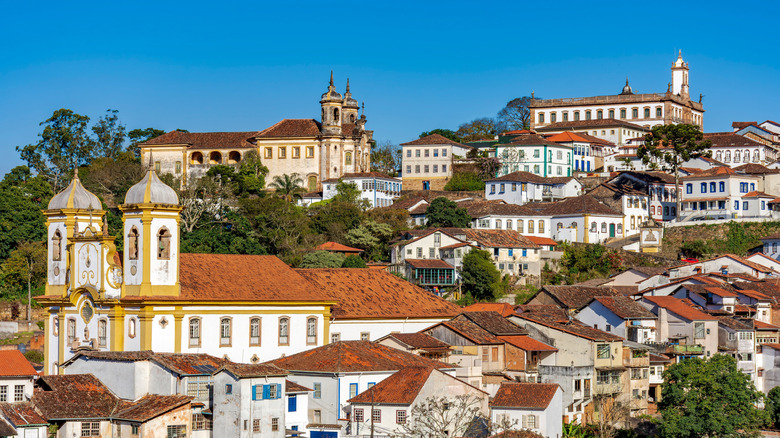
Ouro Preto, Brazil is a small town in the state of Minas Gerais. Its roots are entrenched in Brazil's colonial days, when enslaved workers were sent into poorly constructed mines in search of gold and other riches. Starting in the late 17th century, Ouro Preto became the epicenter of the Brazilian gold rush, creating severe inequality. The elite reaped the benefits of the mines, creating the expensive fountains, cathedrals, and cobblestone streets that visitors can admire today. Workers, meanwhile, were sent deep into the mines, where they often risked their lives to extract valuable metals from the Earth.
To understand all sides of Ouro Preto's identity, I highly recommend signing up for a historical tour. On a guided visit of local mining tunnels, travelers can view four different underground galleries and observe the space where precious metals like gold, iron, and copper were extracted. Learn about mining techniques and the challenges faced by workers. Afterward, step inside the Basílica de Nossa Senhora do Pilar basilica and see why Ouro Preto used to be known as "Vila Rica" — or "Rich Town." Walk through the space where only the elite were allowed to worship and reflect upon the elaborate Baroque and Rococo style details. Afterward, swing by the Palácio D'Ouro — or "Golden Palace" — that conserves stunning relics from that era. Ouro Preto is a UNESCO World Heritage Site — and also a town of many contrasts.
The German colony in Gramado (Rio Grande do Sul)
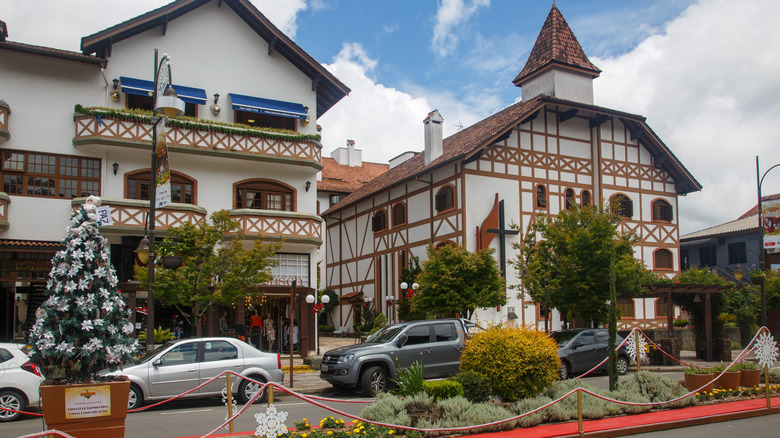
North America is full of cities that look like popular European destinations, and South America is no different. Just Brazil is full of underrated small towns that travelers love, ranging from the Finnish-inspired Penedo to the Italian village of Serra Negra — which boasts a life-sized replica of the Trevi Fountain. Gramado, Rio Grande do Sul is a town with strong Germanic imagery. The buildings embrace Bavarian-style architecture, and the restaurant scene can only be described as "Swiss-forward" — with plenty of options for hearty fondue dinners accompanied by delicious chocolaty desserts.
Despite its location in the subtropics, Gramado even tries to emulate Alpine winters. Its indoor Snowland complex is a massive tourist destination where permanent temperatures of 23 degrees Fahrenheit allow visitors to enjoy year-round snow. Race down a hill on a snow tube, admire some ice sculptures, and even watch an ice skating performance. Afterward, warm up with a cup of hot cocoa or head to another winter-themed attraction, like the iconic local Ice Bar. As you sip your drink out of a cup made of ice, lean back into your chilly ice sculpture seat and check out the snow art on the walls. Even if you're from a snowy part of the world, Gramado is worth a visit, as the town's passion for all things cold just might have you falling in love with winter like you never have before.
The crystal clear waters of Bonito (Mato Grosso do Sul)
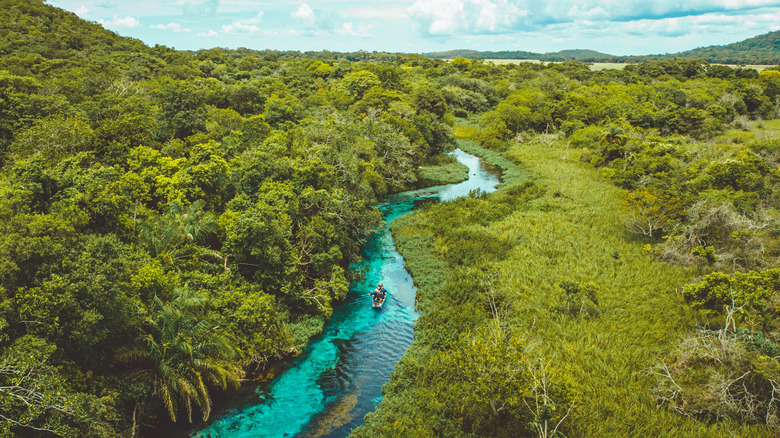
Brazil is home to the crystalline Sucurí River — the third clearest river in the world. Located in Bonito, Mato Grosso do Sul, this stunning turquoise river slices through the green jungle to create a visual contrast that photographers are bound to love. But activities on the Sucurí River don't stop at nature photography. Swimmers, SCUBA divers, and snorkelers alike will love getting immersed in these refreshing waters. On a guided SCUBA or snorkeling tour, visitors can expect to float down the river and view piraputanga fish, sucurí cobras, and even capybaras. Led by professional guides who have support kayaks at their disposal, these tours provide the safest way to explore the natural side of the river.
Of course, folks who prefer to keep wildlife at an arm's length may prefer to enjoy the Nascente Azul ecotourism park. Here, you can frolic in Bonito's pure natural waters — but in a more controlled environment. With a series of drawbridges, an inflatable waterpark, and a beach area with plenty of lounge chairs, Nascente Azul is ideal for families with energetic children. Spend an afternoon splashing in the water, zooming down waterslides, and even ziplining. Foodies will be happy to know that they can take a satisfying lunch break at Chef Sylvio Trujillo's Restaurante Comitiva eatery. Enjoy a buffet lunch of local fare as you take a break from the sun. Then, leap right back into Nascente Azul's stunning water.
African diaspora culture in Salvador da Bahia (Bahia)
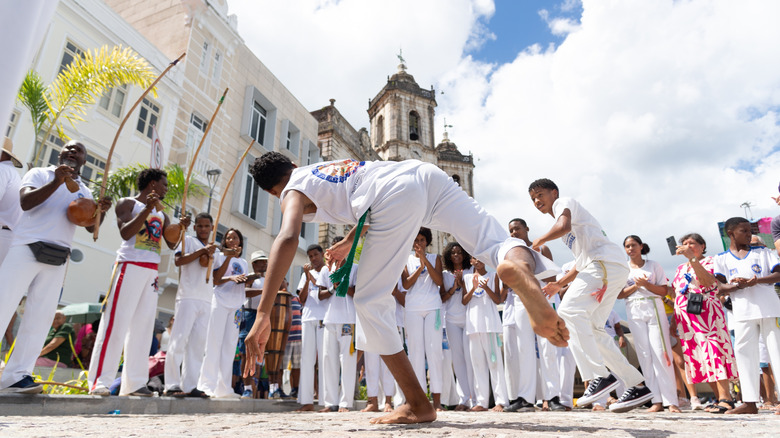
Salvador da Bahia is the capital of the Brazilian state of Bahia, and it is home to the largest population of Afro-descendants outside of Africa. The city has a difficult past. In 1558, the city opened the first slave market in the Americas, and over the course of the following centuries, 1.2 million humans were trafficked through the port of Bahia. That is approximately three times the number of enslaved people who were trafficked into the whole of the United States during the entirety of the U.S. slave trade.
These days, Salvador's history stands as a symbol of resistance to oppression. It was home to the Malê Rebellion, in which 600 enslaved people managed to recapture their city in 1835 — if only temporarily. It also serves as a capital of African cultural elements in the Americas. Local delicacies like acarajé hold strong Yoruba roots, and music like samba incorporates African rhythms. Even the Brazilian martial art of capoeira was born of African dance traditions, contributing to Salvador's unique character.
To really dive into the cultural elements of Salvador da Bahia, take one of the many walking tours of the city. Learn about the slave trade's indelible impact on Salvador, taste some delicious acarajé, and visit Afro-Brazilian cultural centers. Attend a samba show, or stroll through the Fortaleza de Santo Antonio to see some of the top capoeira schools at work. Salvador is now a city of hope.
Bahia do Sancho beach (Pernambuco)
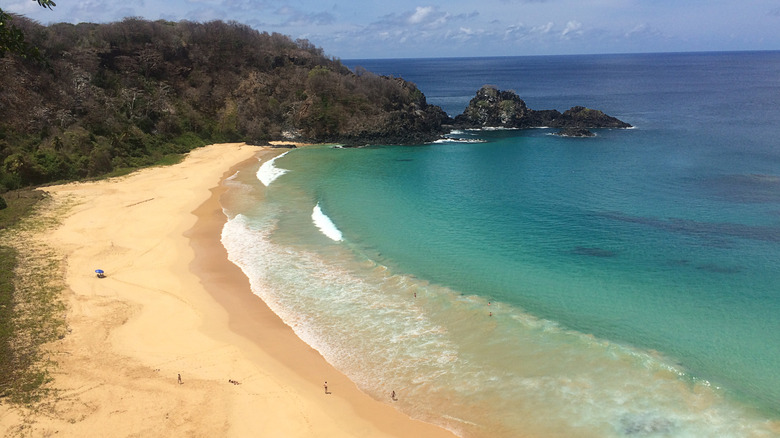
When you picture a beach reminiscent of paradise on Earth, what images flood your mind? For many Brazilians, it's the Bahia do Sancho beach on the island of Fernando de Noronha in the state of Pernambuco. One of the best beaches in the world, this golden stretch of sand has earned both international and local recognition for its beauty. The World's 50 Best Beaches ranking listed it as the 25th most attractive beach in the world in 2025. And, as reported by the Brazilian outlet Veja, a whopping 86% of local visitors ranked it as "excellent" — placing it among the most popular tourist beaches in the country.
To enjoy this beautiful slice of nature for yourself, head to the Bahia do Sancho beach and soak up the scenery. Unlike some of Brazil's more chaotic urban beaches, here there are no condominiums casting a shadow over the sands or bars blasting music. Instead, you'll be surrounded by peaceful nature — lush greenery on one side and clear ocean waters on the other. Wade into the water, take a dip, and enjoy moments of solace. To maximize your visit, bring a snorkeling mask or goggles along with you. There is tons of gorgeous underwater life – like rock damselfish and green sea turtles — that you won't want to miss.
Amazon River cruise (Amazonas)
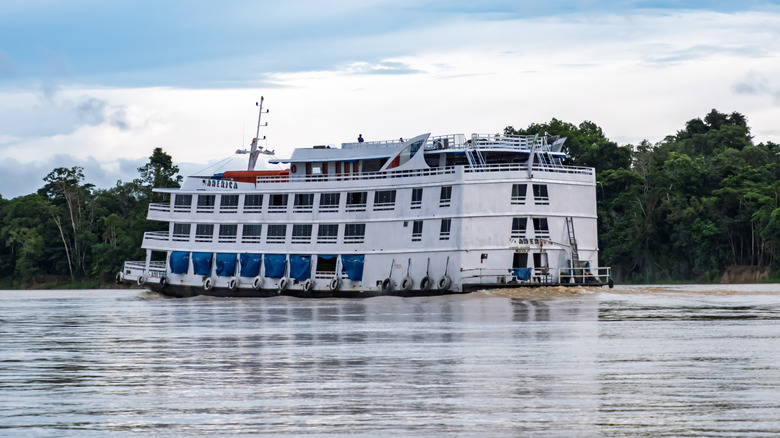
The Amazon River is the second largest river in the world, and it snakes through an ecological area — the Amazon Rainforest — that boasts 2,500 species of trees and 427 types of mammals. To explore this natural wonder for yourself, sign up for an Amazon River cruise. On one of these multi-day journeys down the river, travelers can expect to see plenty of wildlife up close. Sit on the deck of your cruise ship and try to spot pink boto dolphins frolicking in the current. You'll also want to keep your eyes peeled for alligators sunbathing on the riverbanks. Depending on the tour company that you select, you may even get to try your hand at piranha fishing, as well.
Hiking enthusiasts should definitely select one of the cruise companies that offers experiences on shore. Many include day trips into the Amazon Rainforest, which allow visitors to enjoy guided walks through dense parts of the jungle. See this impressive flora up close and learn about the way that local Indigenous people have been using and caring for these natural resources for centuries. As you stroll along, look up into the trees for sloths and toucans. Photographers will be thrilled with this unique chance at nature photography, while bird watchers will be excited to be among 1,300 different species of birds. Folks who just want to take it easy, meanwhile, should definitely choose one of the ships with a nice swimming pool and comfy lounge chair.
Methodology
Organizing this list of the best destinations in Brazil for first-time visitors was a pleasure. I have traveled extensively through the region and was thrilled to share some of the reasons you should visit Brazil. Based on my own experiences and advice from a local tour guide, I came up with an initial list of 20 spots in Brazil that are really fantastic. From there, I parsed down these recommendations by cross-referencing them with traveler reviews on sites like Google reviews, Tripadvisor, and Reddit. Only the highest-ranked locations remained on the list — ensuring its high quality. I also wanted to include places that had gained some level of international recognition for their excellence. With this in mind, I included three UNESCO World Heritage Sites among my recommendations.