

This Stunning Region In Canada Boasts Spectacular Natural Scenery And Recreation
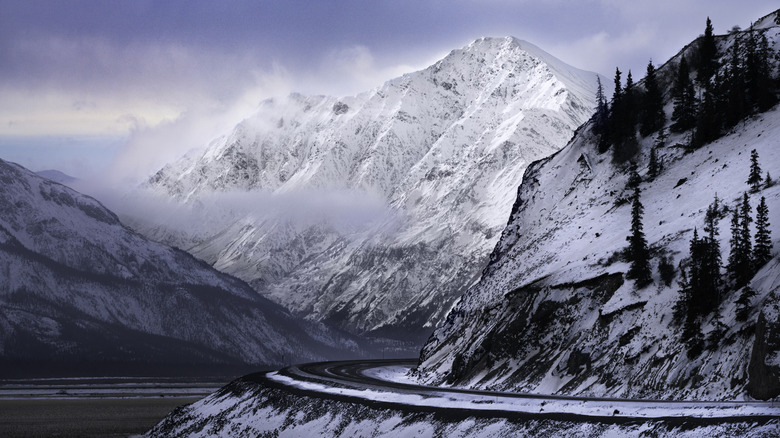
There are those who daydream about jetsetting to splashy, glitzy, and so-on-trend vacation destinations, like Bangkok, Paris, Hong Kong, Rome, and Bali. Then there are those who long for locations that are so far removed from the cultural zeitgeist, so far off the beaten path that the scenery outshines any urge to post, and moose actually outnumber people. The vast Yukon Territory is one such destination, a stretch of wilderness that still manages to seduce even the most comfort-seeking traveler.
A region made infamous by Jack London's "White Fang" and the 1896 Klondike Gold Rush, the event that inspired the American literary masterpiece, the Yukon has remained remarkably untouched in the nearly 130 years since prospectors first descended on its formidable terrain. While it may appear remote and desolate, or, as London described it, "the savage, frozen-hearted Northland Wild," the Yukon offers the kind of beauty and intrigue that can only be found where the line between wilderness and legend disappears.
While the Yukon is the smallest of Canada's three territories, its land area is still larger than the state of California, yet it is only home to around 45,000 people – about ten times smaller than Oakland. Despite its small population, a rich and culturally diverse history has shaped the Yukon of today. Modern residents are a part of several First Nations tribes, and also hail from the United States, the Philippines, Germany, India, France, and many more international destinations. This unique demographic has contributed to a cultural mosaic as rich and layered as the territory's rugged landscape.
Whitehorse serves as the gateway to your Yukon adventure

The Yukon territory's capital, Whitehorse, is overflowing with gold rush history and creative vibes, making it the perfect place to start your wild Canadian adventure. Downtown Whitehorse is replete with museums, attractions, and activities, like the Kwanlin Dün Cultural Centre, the McBride Museum of Yukon History, and the SS Klondike National Historic Site, all of which showcase the importance of the region's First Nations People as well as the impact of its post-Klondike rush residents. For an exhilarating twist on this important history lesson, animal lovers can also add a bit of thrill seeking to their expedition by booking a day-long dog sledding and indigenous culture tour.
Given Whitehorse's location directly under the Aurora oval, you don't have to make the long (and, based on personal experience, expensive) trip to Iceland to catch a glimpse of one of nature's most awe-inspiring natural phenomena. The Northern Lights are viewable in the Yukon from mid-August through mid-April, but are at their most brilliant during the first few weeks of winter. The Eclipse Hot Spring (located in Whitehorse) offers a welcome respite from the biting cold, even during the long winter months, and is a truly one-of-a-kind way to take in the majesty of the Northern Lights.
For the more adventurous, Kluane National Park and Reserve, a two-and-a-half-hour drive from Whitehorse, is an imposing landscape spanning more than 24 million acres of wild, untamed, and awe-inducing splendor. Home to 17 of Canada's 20 tallest mountains, including the highest, Mount Logan, and the dazzling Kathleen Lake, visitors can hike, raft, camp, and explore cultural centers in the park. The bold can also take to the skies on flightseeing expeditions, surveying Kluane's vast wilderness and rugged landscape.
Dawson City: Come for the history, stay for the Sourtoe

The Yukon's second most populous city, with a population of just over 2,700 inhabitants, is Dawson City. As the headquarters of the aforementioned gold rush and a key point along the country's idyllic Trans Canada Trail, modern-day Dawson City still retains the wild, remote, and untamed spirit it was founded on, while making space for the many artists, adventurers, miners, and First Nations People that now (and still) call the small city home.
Strolling through the town's weathered, gold-rush-era streets feels like a step back in time as many of the buildings and architectural designs remain unchanged from their original builds. Time spent at the Dänojà Zho Cultural Centre deepens this experience, underscoring the significance and lasting impact the Tr'ondëk Hwëch'in First Nations people have had on the region, long before 19th-century treasure hunters descended upon its borders. Host for many events and festivals, including the Yukon River Arts Festival and the Dawson International Short Film Festival, Dawson City remains a vibrant hub where history, creativity, and northern culture converge.
Whether it's panning for gold at Free Claim #6, trying your hand at curling at the Dawson City Curling Club, snowshoeing through the city's numerous trails, channeling your inner mountie at Dawson City Escape, or having a picnic on the lawn of the Commissioner's Residence, there's no shortage of fun and interesting ways to pass your time in Dawson City. For a truly unique and unforgettable experience before leaving, try a Sourtoe Cocktail at the Sourdough Saloon. True to its name, this one-of-a-kind cocktail is a simple shot of whiskey, served with — you guessed it — a pickled, mummified toe.
From gravy-soaked classics to global flavors, the Yukon offers unforgettable bites

Canada's national dish for a reason, poutine is a mouth-watering, savory collision of brown gravy, crispy French fries, and ooey, gooey, oh-so-melty cheese curds. I first fell for this glorious, magnificent mess as an American military brat living in Canada, and nothing has ever topped the version from the former Wheeler Burger, a tiny, family-run roadside joint my family made weekly pilgrimages to in North Bay, Ontario. But hundreds of miles northwest, in the heart of the Yukon, Titan Tavern and Collectibles, named the best poutine in the Yukon by multiple sources, makes a strong case for the throne, serving this quintessentially Canadian fare with a side of board and card games, action heroes, and weekly community events.
For a more refined dining experience, sip and eat from local handblown glassware at Gather Cafe & Taphouse in Whitehorse. Like its partnership with next-door neighbor Lumel Studios, Gather focuses on collaborating with other local businesses and producers, sourcing their ingredients and supplies from the resident Yukon community, and fostering a spirit of inclusivity and acceptance for locals and tourists alike.
True to the territory's multicultural makeup, The Drunken Goat is a highly-rated authentic Greek Restaurant in Dawson City that offers big plates, quick service, a nice patio, and a chicken souvlaki that, according to one Google reviewer, "is blackened to perfection." Nearby, Island Eats is a Jamaican restaurant serving authentic Caribbean staples, including curried goat and jerk chicken, the latter of which makes a case for "the best chicken anywhere north of the 60th parallel," according to the Yukon Lookout.
The best places to stay in the Yukon

Mount Logan EcoLodge in Haines Junction is a highly-rated, privately-owned rustic retreat that seamlessly combines nature, relaxation, and adventure. Offering everything from traditional accommodations to unique yurts and one-of-a-kind pods, the Yukon's premier all-inclusive eco-lodge sits just steps away from Kluane National Park. Its in-house restaurant further reflects the region's rich cultural diversity, where the EcoLodge's resident chef, originally from the Czech Republic, crafts a tantalizing Czech-Japanese fusion menu.
In Dawson City, the eco-friendly Dawson Lodge is a boutique hotel that, like its home city, seamlessly blends its Gold Rush history with modern comforts. With just ten rooms, including mini and full suites, each space offers unique interiors and amenities. The Dawson Lodge is also home to a spa, complete with sauna, steam rooms, ice baths, hot tubs, pool, and aesthetic treatments, as well as an on-site cafe that serves coffee, breakfast, and grab and go items.
For a truly unique experience with a perfect five-star rating on Google, venture to Yukon Black Spruce Cabins. Just minutes from downtown Whitehorse, these distinctive accommodations have been featured in The New York Times, Forbes, CBC News, and more. The property is home to four custom-made, private buildings that feature large forest-facing windows, full kitchens, modern furnishings and designs, and all the comforts of home. With additional community spaces and an on-site sauna, the Yukon Black Spruce Cabins are truly a welcoming haven carved into the Yukon wilderness.
How to visit the Yukon and when to plan your wild getaway

To visit the daunting yet unforgettable Yukon Territory, first fly into the Erik Nielsen Whitehorse International Airport. Once in the Yukon, there are a variety of ways to travel throughout the region, including by plane to the territory's smaller airports, by car and guided tours, or through RVs, ferries, and even seaplanes. For a journey back in time, adventure seekers can also travel via the White Pass and Yukon Gold Railroad. This historic locomotive journeys through the heart of the Yukon's vast wilderness, through mountains, around glaciers, and even passes into neighboring Alaska.
Aptly nicknamed "The Land of the Midnight Sun," during the June solstice, the Yukon experiences 18 to 22 hours of sunlight per day, with the sun not dropping beneath the horizon until well after midnight. Conversely, during the winter months, there can be as little as five hours of sunlight per day, making long outdoor activities or grand wilderness excursions particularly challenging, yet all the more rewarding for those who properly plan ahead of time and are undeterred by the dark recesses of the night.
The Yukon is also an area that can experience drastic fluctuations in temperature, with wintertime weather having the propensity to be extremely harsh. While the summer months experience regular highs of 78 degrees Fahrenheit, temperatures in the winter can drop as low as -40 degrees Fahrenheit. Still, many of the Yukon's signature pursuits and attractions, including ice fishing, dog sledding, and skiing, remain both exhilarating and accessible during the long winter months with the right preparation, gear, and guidance.