

Florida's Picturesque National Park Offers A Warm, Tropical Getaway During Winter
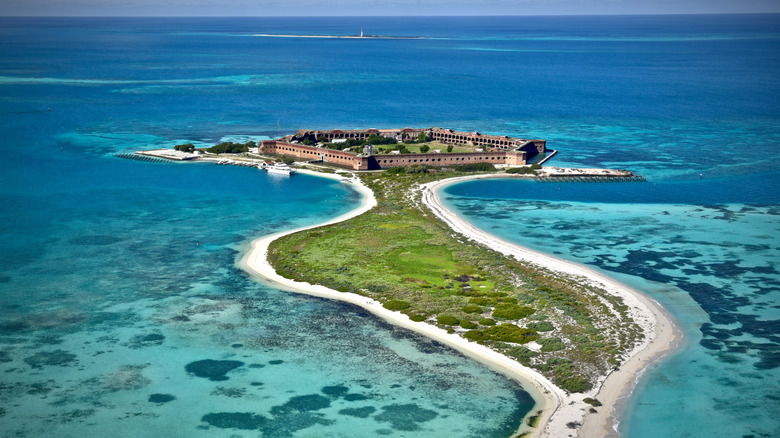
Winters in much of North America can be harsh, with snow, sleet, ice, and gloomy skies. It's no wonder that many people flock to the South during the most frigid months of the year, and while some escape to places like Mesa, an affordable desert destination with scenic canyon views in Arizona, few places draw as many refugees from the cold as Florida. This makes perfect sense. After all, they call it the Sunshine State for a reason, and while Florida boasts an array of warm-weather choices ranging from uncrowded barrier islands to the secret gulf coast beauty of Dunedin, perhaps nowhere is a more unique and unspoiled getaway than Dry Tortugas National Park.
If you trace your finger on a map of Florida all the way down to Key West — the continental U.S.' southernmost point — and then draw a nearly straight line 70 miles to the west, you'll hit Dry Tortugas National Park. This one-of-a-kind island reserve has the distinction of being 99% underwater, making it the ideal destination for snorkelers and divers. However, you don't have to don a mask and fins to appreciate Dry Tortugas, as there are also things to see and do above the surface of the ocean, including Fort Jefferson, a 19th-century military installation that's a fascinating relic of American history.
Experience the wild magic of Dry Tortugas National Park
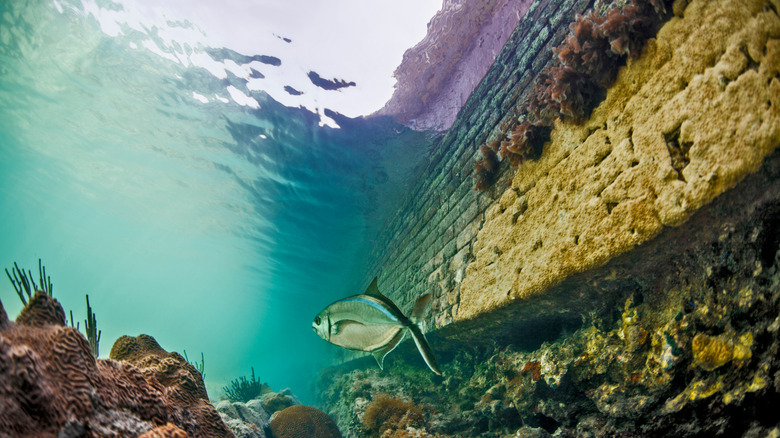
Encompassing 46 square miles, Dry Tortugas is one of the country's premier marine reserves. The park is known for its crystalline waters and stunning coral reefs that are bursting with colorful sea life, drawing divers and snorkeling enthusiasts from far and wide. While beneath the waves, lose yourself among mesmerizing schools of reef fish while keeping your eyes peeled for nurse sharks. These gentle, laid-back predators slowly cruise over the reefs and can often be found in great numbers. The waters of the reserve are also home to a large number of shipwrecks, including the "Windjammer," an iron-hulled, three-mast sailing ship that sank in 1907.
While the underwater world of Dry Tortugas is indeed enchanting, you can also find terra firma in the form of a seven-key archipelago. These narrow strips of land are critical habitats for migratory sea birds such as boobies, brown noddies, frigatebirds, and sooty terns. You'll also find plenty of sea turtles, which the keys are named for (tortugas means "turtles" in Spanish). The majestic marine reptiles come ashore to lay their eggs during the summer, a yearly ritual that has been going on as long as the little islands have existed.
Dry Tortugas National Park guarantees stunning views above and below the water, as well as warm winter temperatures, where the thermometer usually hovers in the 60s and 70s (Fahrenheit). Winter is also the dry season, which means you're unlikely to experience the humidity, rain, and hurricanes that can plague Florida during the wet summer season.
Soak up the history of Fort Jefferson
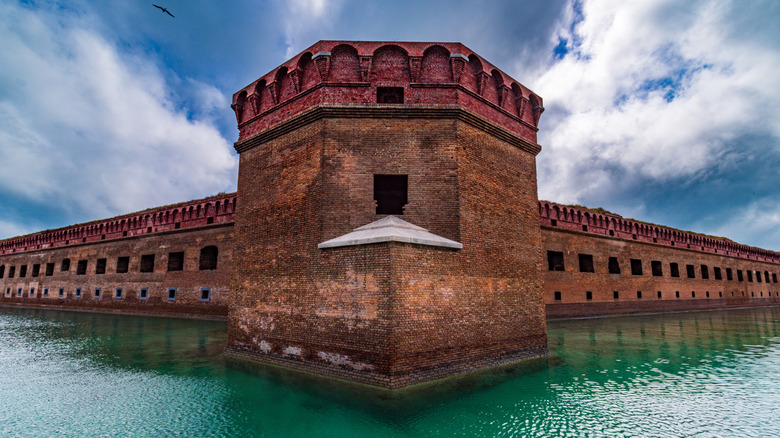
Constructed over the span of nearly 30 years in the mid-1800s, Fort Jefferson is said to be the largest brick building in the Western Hemisphere. This former U.S. military outpost was built to project American power into the Gulf of Mexico (renamed the Gulf of America in 2025 by U.S. President Donald Trump), but despite the estimated 16 million bricks that went into its construction, it was never completed. During the Civil War, it served as a prison and its harbor was a haven for Union ships, until it was finally abandoned in 1874. Today, Fort Jefferson is open to the public from sunrise to sunset.
While many come to Dry Tortugas National Park as a day trip, it is also possible to camp there. Garden Key — the site of the park's public dock — has a campground. The sites are primitive, and campers must bring in their own food, water, and other supplies (sunscreen is a must). Groups of up to six people are guaranteed a spot, while larger parties must reserve ahead of time. Garden Key presents excellent opportunities for snorkeling, and given Dry Tortugas' remote location, the nights skies transform into a tapestry of shimmering heavenly bodies, making the park a hotspot for stargazing.
Dry Tortugas National Park is not easy to get to. It's only accessible by private boat, seaplane, or the commercial ferry that departs daily from Key West. Seats can sell out months in advance, so make sure to reserve early, and campers who wish to bring kayaks or canoes must arrange it with the ferry company ahead of time. It's a three-hour-and-15-minute drive from Miami International Airport to Key West (though Key West also has its own airport). From there, it takes another three hours to reach Dry Tortugas by ferry, though the seaplane will get you there in just 40 minutes.