

Think Twice Before Camping Using A Rooftop Tent - Here's Why
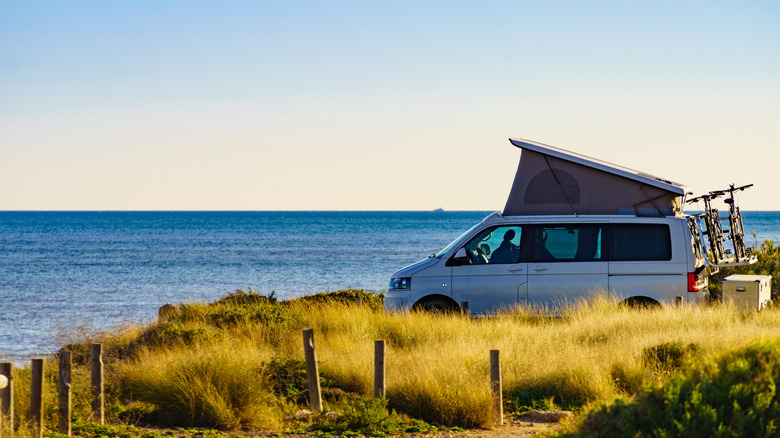
Rooftop tents are one of the shining stars of camping blogs and social media at large, and it's easy to understand why. They're quite a novelty — a sure-fire way to elevate (no pun intended) your camping experience. And let's face it, they look pretty cool in pictures. We've all seen the images of a vehicle equipped with a rooftop tent, parked next to some stunning vista, allowing those campers a front-row seat to sunrises, sunsets, and whatever else nature has to offer. But looks can be deceiving, and there are some serious downfalls to the rooftop tent you should know about before making what will likely be a significant investment.
Let's begin with the logistics of the rooftop tent. Unlike a car tent, where the shelter remains on the ground and is often attached as an extension to the back of a vehicle, the rooftop tent is exactly as its name reveals – a tent that is pitched and secured to the actual roof of your main mode of transportation. Depending on the type of vehicle you have, a roof rack or additional hardware may be required, which will add to the already high cost of this camping equipment. While you can find a high-end ground tent for a few hundred dollars, the lowest model roof tent will likely run you more than $1,000, and that's if you forgo the bells and whistles like built-in mattresses, LED lighting, solar panels, and higher quality materials.
Of course, there are ways to cut your camping costs without compromising on the tent you want, like taking advantage of Costco's useful, budget-friendly essentials that'll upgrade your camping experience, but the cost of rooftop tents is just the beginning when it comes to their drawbacks.
Rooftop tents will impact your mobility in more ways than one
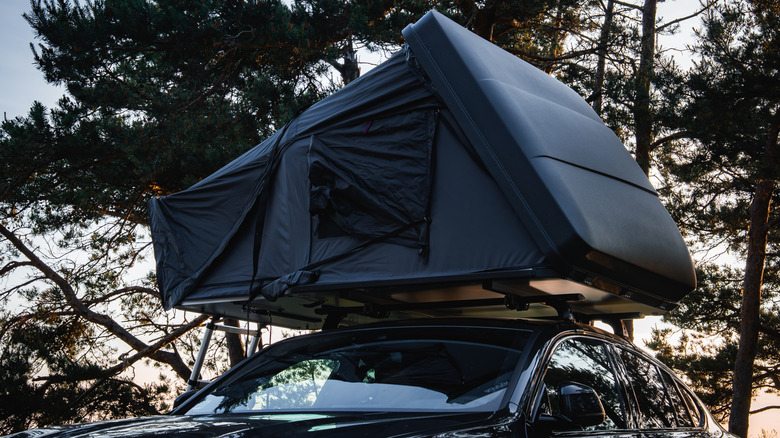
When it comes to what you need for a solo camping trip, a tent that keeps you warm and dry is going to top the list every time. Even if you aren't going it alone, the ease of the set-up and breakdown of that tent is going to impact you in a big way. Imagine: Your first full day on site is well underway, and you've decided it would be best to explore the area. A rooftop tent is going to make that infinitely more complicated than driving away from a tent that's staked into the ground. While most rooftop tents boast a fairly quick and easy set-up and breakdown process, it often takes at least 20 minutes to disassemble and another 20 or so minutes to re-erect the tent when you return. You can easily expect to lose an hour or more each day.
Rooftop tents are not designed to be permanent fixtures, but many owners will ultimately admit to leaving them attached when they're not in use due to how time consuming it is to install them in the first place. Anytime you drive with extra weight, it is going to affect your gas mileage, which turns out to be another hidden cost of the rooftop tent.
Lastly, when it comes to your mobility, it certainly doesn't take a lot of time to climb or descend a short ladder connected to the tent, but you may find it inconvenient. Nighttime bathroom breaks just got an extra step, and if you need to exit the tent quickly for any other reason, you can't forget you're likely more than 6 feet in the air.
The most commonly listed pros of the rooftop tent can be deceiving
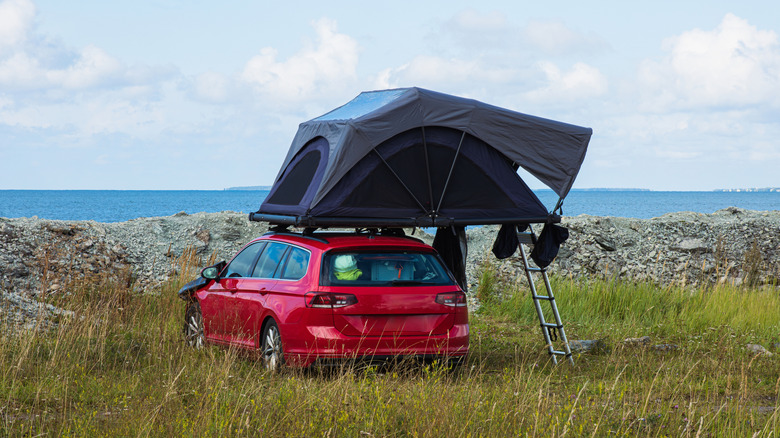
As with everything, there are going to be pros to the rooftop tent as well as cons, but the perks provided by this specific style of shelter may not make them worth the effort in the long run. First, placing a tent on top of your vehicle basically means that you can camp anywhere, right? But it's not always that simple, because camping outside of designated sites is not a great idea. Ignoring this fundamental camping consideration is unsafe for you and the environment, no matter how easy (and tempting) it is to park wherever you please.
Other perks commonly mentioned are not needing to find level ground, being out of reach of wildlife, and sleeping peacefully, but none of these are exactly accurate. You're absolutely going to need to find a level place to park your vehicle, and while you can take simple measures to manually level the ground under a typical tent, that process is not going to be as easy for something as large as an SUV or a truck. Experienced campers will tell you there isn't much that crawls on the ground or flies through the air that won't be capable of getting up into your rooftop tent, and that includes everything from mosquitoes to bears. And when it comes to resting, be prepared for certain weather conditions to negatively affect your beauty sleep in a big way. In that elevated position, wind and rain can be deafening, more so than from a position on the ground.
Despite their aesthetic appeal, rooftop tents are not going to be a good fit for every camper. Be sure to consider the cost and various logistics prior to purchasing this viral product.