

Rick Steves Calls These Popular Hubs The 'Cornerstone Of The Irish Social Scene'
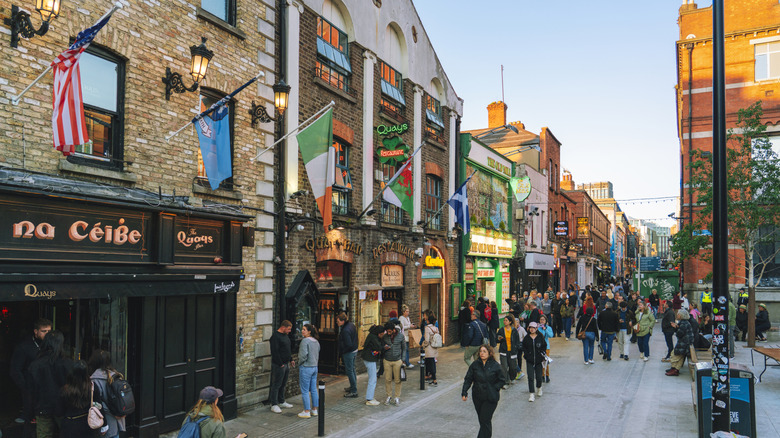
Here's the scene: You're traveling in Ireland and staying in the quaint Irish village of Doolin, on the country's wild west coast. You've been out all day on a hike through the verdant, rolling hills. As you tromp through a chilly drizzle back towards your room in town, you pass by a country pub. You can just make out the lilting sound of music coming from inside, and immediately feel its pull.
While Ireland is known for shamrocks, leprechauns, and stunning, unique landscapes, perhaps nothing represents the country's free spirit more than the pub. On his website, European travel guru Rick Steves (along with guidebook co-author Pat O'Connor) wrote: "Pubs are a cornerstone of the Irish social scene, and whether you're a teetotaler or a beer guzzler, they should be a part of your Ireland experience."
This makes sense, as Ireland boasts around 7,000 public houses throughout the country. This translates to one pub for every 684 adults — the third highest ratio of boozers to humans in the world. It's estimated that nearly three fourths of the population lives within 300 meters of a pub, and it's hard to fully understand just what makes the country tick without visiting at least one during your travels.
Pubs offer the essential Irish experience
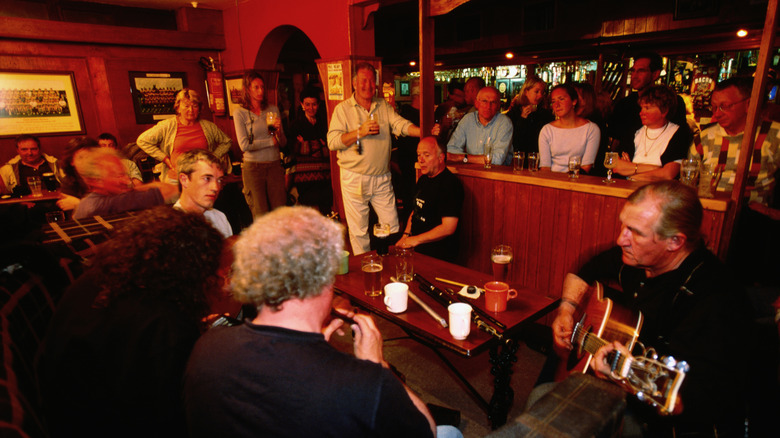
Irish pubs are much more than a place to grab a drink. These cozy establishments are typically full of locals sipping away, laughing, chatting, and taking in the traditional music being played by a quartet seated at a table in the corner: guitar, mandolin, fiddle, and the handheld Irish drum known as the bodhrán. Many also feature food. Think Irish stew, shepherds pie, fish and chips, soda bread, and coddle — a stew made from sausage, potatoes, bacon, and onions.
Beyond their social significance, pubs have been hubs for artists, musicians, and some of the biggest names in Irish literature. In addition, these spaces also played a key role in Ireland's independence struggle, as many political leaders and revolutionaries met and plotted over pints at their local watering holes.
More than anything, though, Irish pubs are warm, welcoming places. As soon as you step foot inside, you immediately feel the warmth from the fire and the friendly faces around you — and when the barman sets down that perfectly-poured pint of Guinness, you know you've made the right choice. As Steves keenly noted: "You're a guest on your first night; after that, you're a regular. A wise Irishman once said, 'It never rains in a pub.' The relaxed, informal atmosphere feels like a refuge from daily cares."
How to get the most of your time at an Irish pub
While the Irish tend to be extremely easy-going, there are a few essential pub etiquette rules that will not only make your time in a pub in Ireland more enjoyable, but will also help ingratiate you with the locals. The first thing to know is that most pubs don't offer table service. So, when it comes time to order, head straight to the bar and pay on the spot. Also, if you end up drinking with locals — you will often be invited — make sure to observe "round" etiquette, where each person at the table buys drinks for everyone else. Skipping out before it's your turn to buy a round is considered very bad form. If you don't plan on drinking much, it's best to decline getting into a round in the first place.
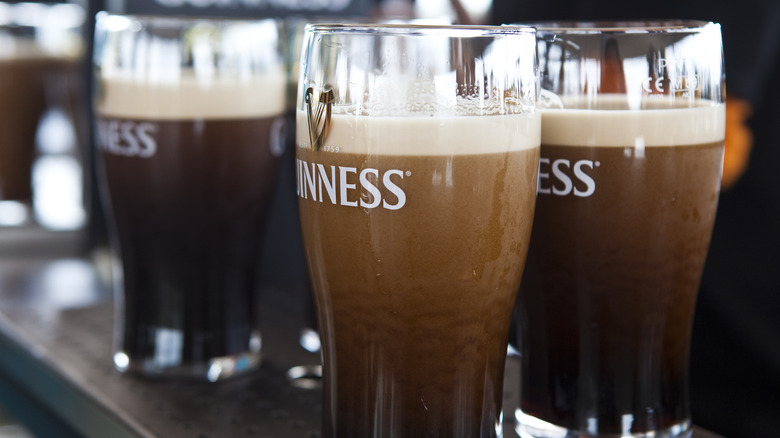
Guinness — Ireland's ubiquitous stout — is the default beer throughout much of the country. It's usually served as an Imperial-sized pint (20 fluid ounces), which is larger than the 16-ounce pint poured stateside. If that's more than you'd like, just ask for a "glass," which is roughly a half pint. Other popular stouts include Murphy's and Beamish, while the clean and crisp Harp remains the country's most prominent lager.
While tipping isn't expected, a small gratuity (10% or 15%) is appreciated at the bar for big orders. If a trad session (live traditional music) is on, feel free to buy the musicians a round, or toss a Euro or 10 in the tip jar.