

Innsbruck, Austria's 12 Top-Tier Tourist Attractions For Your First Trip
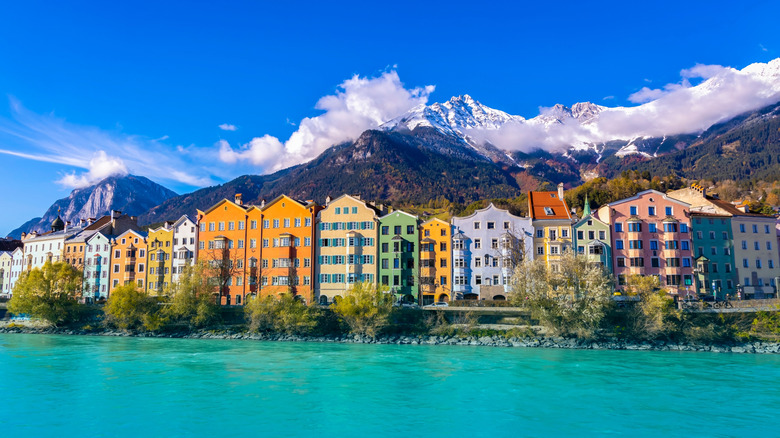
Comprising most of the western arm of Austria, the state of Tyrol — sometimes spelled Tirol — is practically synonymous with soaring alpine peaks. The area is beautiful in the summer when the valleys are green. It's arguably even more of a destination in the winter, when the slopes come alive with skiers and snowboarders. Nestled in the heart of the Tyrolean Alps is Innsbruck, a picturesque city of nearly 140,000 residents and the gateway to some of Austria's most impressive ski resorts. Of course, there are plenty of other winter experiences to travel for in Europe other than skiing, many of which you can enjoy in Innsbruck, from cable car rides, to spa retreats, to historic Christmas markets.
Austria is a predominantly German-speaking country. Innsbruck sits on the Inn River, and since the German word for bridge is "brücke," Innsbruck's name essentially means "bridge over the Inn." It was first mentioned in written records in 1180, when it was a steadily growing market town along a strategic trade route. Surrounded by mountains, the city's backdrop has always been awe-inspiring, and its streets are dotted with cultural sites that have been carefully preserved through the centuries.
Getting to Innsbruck is fairly straightforward. Trains run regularly, with frequent direct routes from Frankfurt, Venice, and Vienna. The city is also well connected within Europe, even though pilots have no kind words for Innsbruck's daunting local airport. International bus trips are also a scenic and economical way to get around. For example, FlixBus offers regular service from Munich Airport to Innsbruck, and the journey costs around $25 USD per person. However you choose to get there, be sure to put these 12 must-see attractions on your Innsbruck itinerary.
Stroll around Altstadt
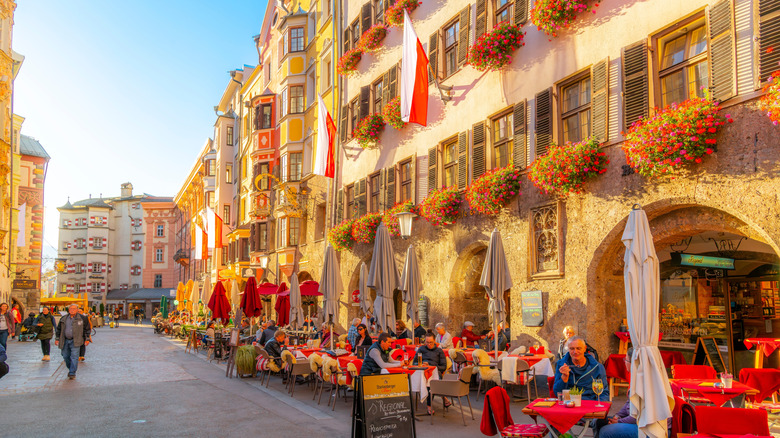
Innsbruck is a beautiful town tucked in the Austrian Alps that offers incredible cuisine and endless trails. Numerous walking routes encircle the city and connect you much farther afield, but there's also plenty to see on foot in the city center. Innsbruck's Altstadt, or Old Town, is immanently charming with its medieval heritage, cafes, shops, and picturesque views. Keep your eyes peeled for the Golden Roof, a Renaissance architectural gem made with more than 2,600 gilded shingles and embellished with frescoes and sandstone reliefs — head to the Golden Roof Museum for a closer look. Other attractions include the Imperial Palace, Innsbruck Cathedral, and the City Tower. Along with gorgeous architecture, you'll discover independent boutiques and restaurants around practically every corner. Pay a visit to the historic Golden Eagle, or Goldener Adler in German, an inn dating back to 1390.
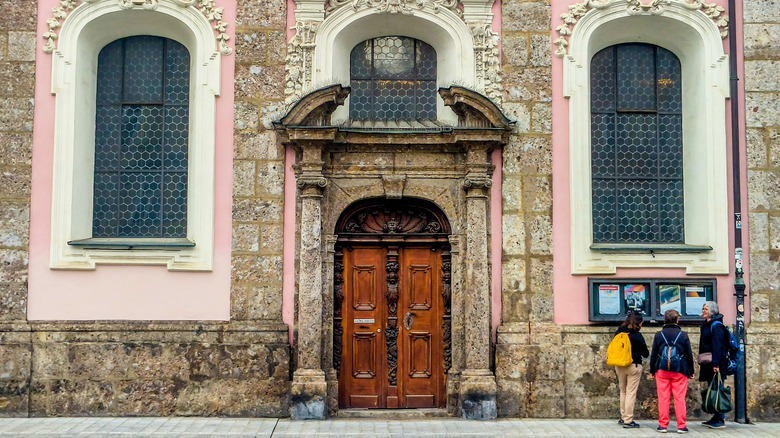
Maria-Theresien-Strasse is another pedestrian-only area that extends south from the Altstadt, and is easily one of Innsbruck's most beautiful streets. Brimming with baroque details, it's lined with historic buildings and postcard-worthy facades with the mountains in the background. Stop into the Servite Church with its recognizable pink trim, then check out the stunning Triumphal Arch, commissioned in the 1700s by Empress Maria Theresa, the namesake of this popular thoroughfare.
Tour Schloss Ambras Innsbruck
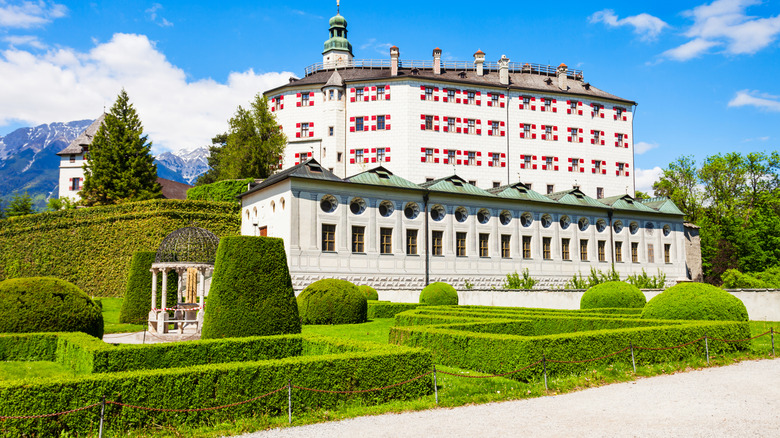
Even though Innsbruck can be busy with tourists, the city is among Europe's so-called "tourist traps" that Rick Steves actually loves. There's no denying that the city's nearby ski resorts, scenic hiking trails, quaint cafes, and Old Town are a magnet for visitors, but that's all for good reason. One place definitely worth checking out is the stunning palace called Schloss Ambras Innsbruck, perched on a rocky outcrop above the city. The regal residence dates back to at least the 10th century, and was subject to numerous updates and expansions as it changed ownership. It's most famous for being the home of Archduke Ferdinand II, who moved to the estate in 1564. He turned Schloss Ambras into a veritable treasury, filling it with his expansive collections of weaponry and armor, art, natural history specimens, and more.
Schloss Ambras consists of what's known as the "hochschloss," or high castle, and the "unterschloss," or lower castle. The latter was built specifically by Ferdinand to house his displays, creating a private museum. Even after Ferdinand's death, the collection continued to attract visitors, and eventually, in 1881, it was opened up as a public museum. The buildings are complemented by a park consisting of beautiful formal gardens. Visit the lavish 16th-century Spanish Hall and the 14th-century St. Nicholas Chapel with its colorful murals. In the gardens, you'll likely witness peacocks strutting their stuff.
The palace is open daily from 10 a.m. to 5 p.m., and closes for the month of November. Visitors can save some money by purchasing tickets online in advance for €16 per adult, instead of €18 on-site, equivalent to roughly $18.65 USD and $21 USD, respectively.
Head to the Top of Innsbruck
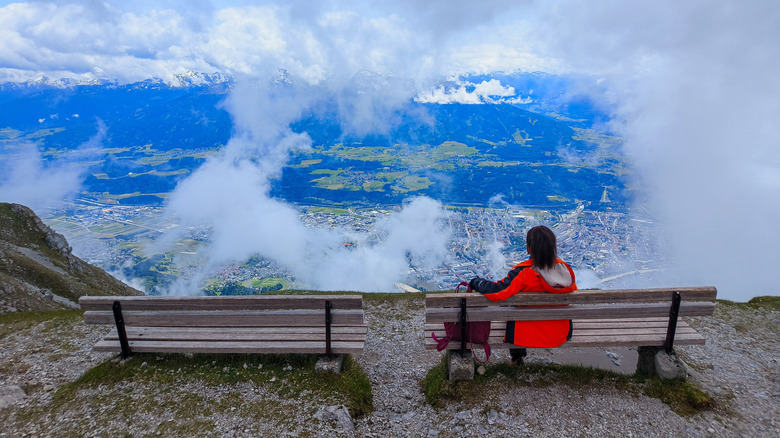
Innsbruck is often the first port of call for those arriving in Tyrol to take advantage of skiing in the winter. But, even if you're not a big fan of downhill sports, the views over Innsbruck from Nordkette aren't to be missed. A cable car journey called Nordkettenbahnen, which departs from the middle of Old Town, whisks visitors up to a snow park and breathtakingly scenic viewpoint known as the Top of Innsbruck.
The Nordkette Skyline Park is particularly attractive for snowboarders, located about 20 minutes from the city by car on the local Seegrube mountain — known locally as the "Gruabn." Nordkette features six slopes that cater to different skill levels, and it's also a destination for expert, thrill-seeking free-skiers, with one of the steepest slopes in Europe that boasts a gradient of 70%.
If you plan to do a lot of skiing, the SKI plus CITY pass Stubai Innsbruck offers excellent value with access to 12 destinations in total, including the nearby Stubai Valley. Nearly two-dozen additional attractions are also included in the card's perks, along with free buses to the slopes. Various packages are available, depending on the number of days you plan to ski. Prices start at €154 per adult for a two-day pass, or around $180 USD. Young people can receive a 30% to 50% discount depending on their age.
Gaze up at Dom zu St. Jakob
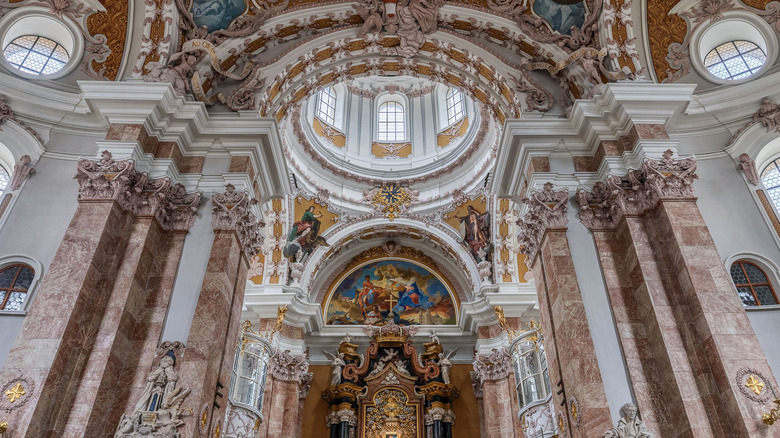
The Cathedral of St. James, known locally as Dom zu St. Jakob or simply as Innsbruck Cathedral, is a baroque beauty with spectacular interiors. Dating as far back as 1180, it looks quite a bit different today than it would have appeared during the medieval period, when it was a major stop along the Way of St. James. Also known as the Camino de Santiago, the storied route is one of the most famous Christian pilgrimages in Europe, dating to the Middle Ages — today, it remains one of the most incredible summer hikes in the world.
Earthquakes severely damaged the cathedral a few centuries ago, so the baroque ornamentation that remains today is the product of major renovations in the early 18th century. Listen for the 48-bell carillon, which plays every day at noon. The church is open daily throughout the year, with slightly extended hours during the summer months.
Visit the Hofburg
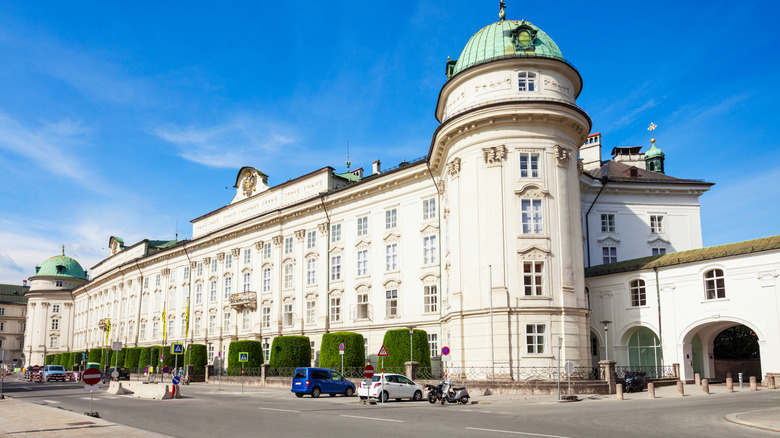
Emperor Maximilian I is who we have to thank for the sprawling Hofburg, or Imperial Palace, in the center of Innsbruck. The impressive building was originally completed in 1500, although it has changed a lot since then. While some elements of its original design still exist, such as the gothic reception hall and its overall scale, it was Habsburg monarch Maria Theresa who gave it the stylistic stamp that we see today. During the mid-1700s, the palace underwent a major baroque-ification, followed by more stylistic changes in the 19th century. Along with St. Stephen's Cathedral and Schloss Schönbrunn in Vienna, the breathtaking European capital famous for its coffee culture, the Imperial Palace is considered one of the greatest buildings in all of Austria.
The Hofburg is open every day from 9 a.m. to 5 p.m., and closes occasionally for special events. Admission to the Imperial Apartments costs €9.50 for a standard ticket, or around $11 USD. Access to the special exhibition about Maximilian I is €7.50, or just under $9 USD. A combined ticket provides access to both for €15, or around $17.50 USD. For an additional fee, join one of four themed guided tours of the palace that run frequently throughout the week.
See the Museum of Tyrolean Folk Art
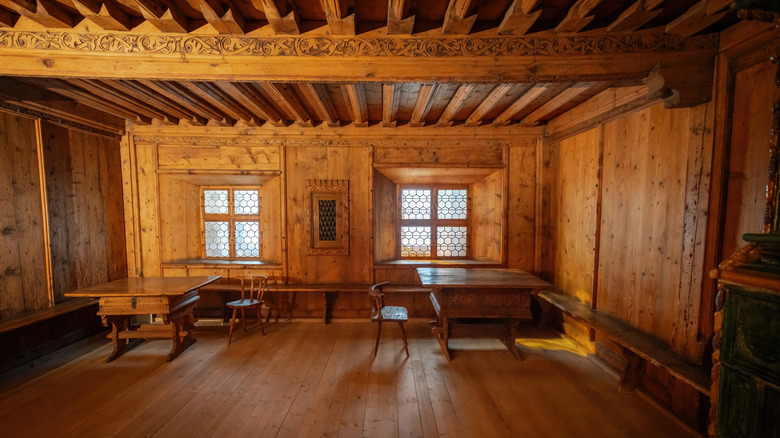
In Europe's cultural capitals, visitors are often wowed by soaring chapels and the historic palatial residences of royalty and wealthy elites. But, what about the everyday folks of earlier civilizations? We often don't get a chance to see much of what quotidian life was like throughout the centuries. That's what makes the Museum of Tyrolean Folk Art a true gem.
Sometimes referred to as the Museum of Tyrolean Regional Heritage, this unique exhibition space welcomes visitors to explore collections that run the gamut of what life was like in the Tyrol region in centuries past. Explore interior furnishings, folk costumes, handmade nativity scenes, and more, which span two thematic areas: "The Abundant Year" and "Precarious Life." The former looks at periods of abundance and celebration, while the latter explores themes of survival and the struggles of ordinary people.
The museum is open daily from 9 a.m. to 5 p.m., and admission is €9, or $10.50 USD. Combination tickets offer great value if you plan to visit other museums in the city, like the Tyrol Panorama Museum or the Imperial Riflemen Museum. Innsbruck is a hub of arts and culture, home to a multitude of unique institutions including the Anatomical Museum, aut. architecture and Tyrol, the Audioversum Science Center, and fine art galleries.
Summit the Patscherkofel
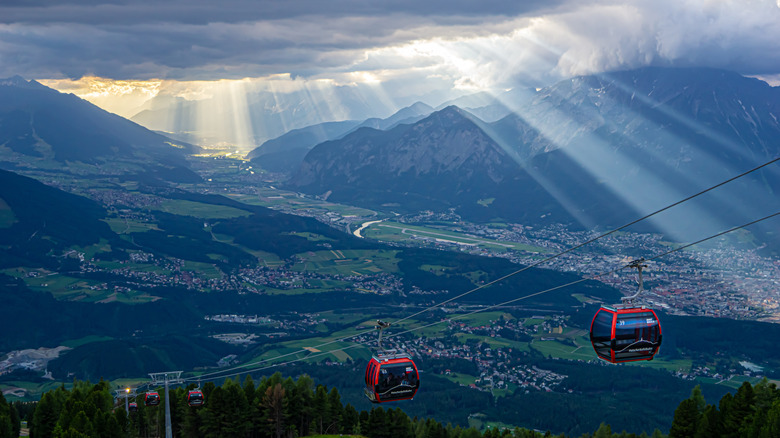
The Patscherkofel is fondly known as Innsbruck's "backyard mountain," thanks to its close proximity to the city. In the winter, the peak is a popular destination for snowshoeing, skiing, and snowboarding, for which it's well known — it was even a Winter Olympics location during the 1964 and 1976 games. In the warmer months, the views of Innsbruck and the green valley below are glorious from its many cycling and hiking trails. There are even more epic views to discover on the Patscherkofelbahn, or cable car gondola, which ascends more than 3,000 feet from its base in the Innsbruck suburb of Igls.
Igls is only about a 15-minute drive south from central Innsbruck, making it a perfect spot to hit the slopes if you make the city your basecamp for adventure. You can purchase a one-way or round-trip ticket for the cable car, in addition to day passes for the slopes, which vary in price depending on how long you'd like to stay. You'll also find three restaurants at different levels — one in the valley, one at the halfway point of the cable car journey, and another at the summit.
Climb the Stadtturm
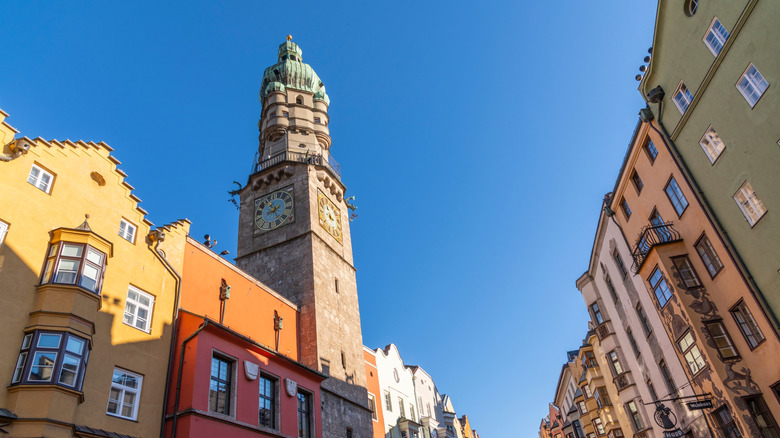
Nestled in an alpine valley surrounded by soaring mountains, scenic vantage points abound in the city of Innsbruck. Innsbruck's Stadtturm, or City Tower, offers a unique aerial perspective of the city's rooftops. A viewing platform situated at just over 100 feet high is reachable by climbing a narrow, double-spiral staircase. "The 133-step spiral staircase you have to climb to reach the top of the tower will challenge some, but it's well worth the effort," wrote a visitor on Tripadvisor. "At least you know the descent is easy, with a separate spiral staircase leading down, so you won't have to fight climbers on their way up. It's all about the view, and you certainly get it."
Completed in 1450, the Stadtturm was erected as a prominent symbol of Innbruck's status. For more than four centuries, watchmen were stationed at the top to keep an eye out for any threats to the city, natural or otherwise. Today, we can still appreciate its striking 16th-century onion dome and clocks — features that remain as prominent as ever amid the Tyrolean capital's skyline. Tower access costs €4.50 per adult and €3 for visitors under 18 years old, or roughly $5.25 and $3.50 USD, respectively.
Go wild at the Alpenzoo
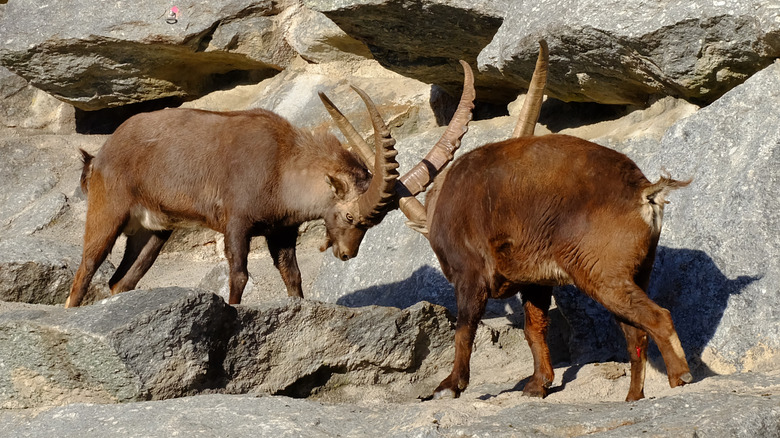
When thinking about the Alps, sky-high snowy peaks are often the first image that comes to mind. But, people often forget that it's also a region of incredible biodiversity, consisting of moors, lakes, glacial areas, grasslands, a variety of forests, and more. At Innsbruck's Alpenzoo, visitors will discover the array of wildlife that inhabits these diverse landscapes. The alpine-themed zoo is motivated by conservation, focusing particularly on the range of animals that are native to the region. You'll encounter everything from ibexes and moose, to adders and fire salamanders. There are also 60 bird species — out of around 200 native to the area — along with 50 alpine fish species housed in the world's largest cold water aquarium, some of which are extremely rare.
All in all, visitors will come face-to-face with around 2,000 critters at this extraordinary park. Alpenzoo is open 365 days a year, and seasonal events invite young visitors to learn about the animals and participate in activities. It's only a 20-minute journey on foot from Innsbruck's Altstadt, making it easy to reach without a car. Standard admission is €15 per adult, or close to $17.50 USD.
See a historic panoramic painting
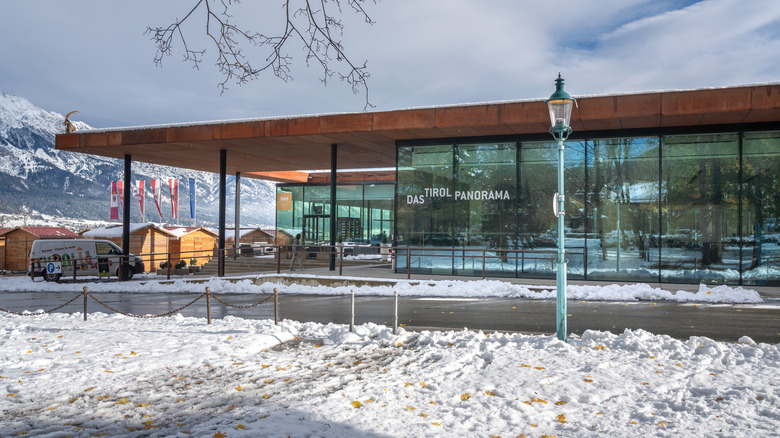
In the late 18th century and well into the 19th century, an immersive art form known as the panorama painting became all the rage. Before photography, let alone movies, these 360-degree paintings were constructed on a monumental scale inside purpose-built pavilions, welcoming visitors to escape into historic scenes or far-off landscapes. In fact, the word "panorama" was coined specifically to describe these artworks. Few remain today, as they have largely gone out of style, but the surviving examples are undeniably impressive. Among these is the spectacular "Giant Panoramic Painting," the centerpiece of the Tyrol Panorama Museum.
Painted by Munich-based artist Michael Zeno Diemer, and supervised by renowned Austrian artist Franz von Defregger, the enormous composition spans well over 10,000 square feet and was completed in only three months. Finished in 1896, it portrays scenes from the Third Battle of Bergisel, a decisive victory for the Tyroleans against Bavarian-French forces in 1809. Today, visitors can stand in the center of the painting and follow its narrative just like the original audience did at the turn of the 20th century. A modern museum, completed in 2011, now houses the work. Perched on a hill above town, the Tyrol Panorama Museum is also a spectacular place to take in views over Innsbruck. It's open every day except Tuesday, from 9 a.m. to 5 p.m., and adult admission is €9, or $10.50 USD.
Explore Wilten Basilica
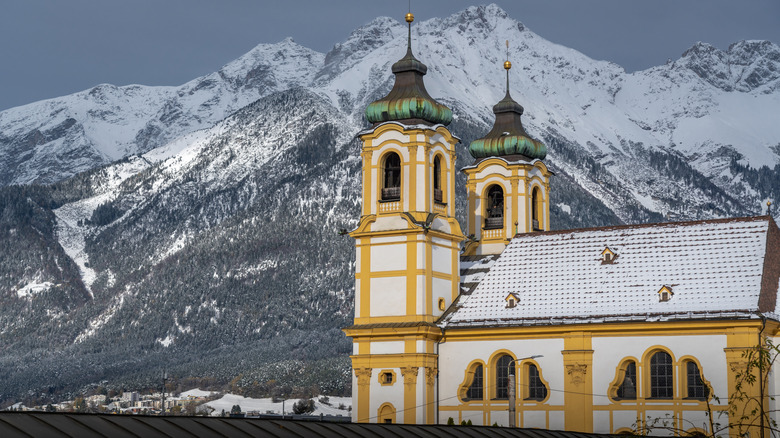
A rococo confection, it would be remiss not to include Wilten Basilica on the list of Innsbruck's most photo-worthy landmarks. With its yellow exterior accents and onion domes, Wilten Basilica's golden features continue inside with a warm, gilded ambiance. The church also sits on a site that has been considered sacred for centuries. Romans may have worshipped here, and it became a significant site among Christians in the 13th century, when worshippers made pilgrimages to venerate an image of the Virgin Mary "under the four columns" — which is the reason it's also known today as Our Lady Under the Four Columns. The sublime architecture of the present church is the vision of a man named Franz de Paula Penz. Like the soaring mountains surrounding it, the basilica's ethereal, light-filled design encourages visitors to look up toward the heavens. Open every day from 7:30 a.m. to 6 p.m., Wilten Basilica is free to visit, and donations are always welcome.
Unleash your inner foodie at Markthalle
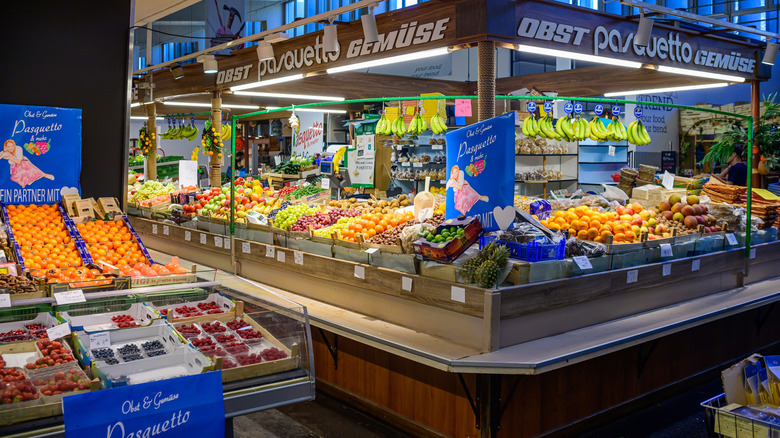
There's truly nothing quite so aesthetically pleasing — and of course, mouthwatering — than walking through a vibrant European market. That's exactly what you'll find at Innsbruck's Markthalle, which features around 40 vendors providing all sorts of delights, from fresh produce to prepared goods. Grab a sachet of alpine herbs from Joseph Heim, sample melt-in-your-mouth cheeses from Tiroler Schmankerl-Alm, and relax with a glass of red or white at the vinum in wine bar. Take a bottle to go and browse the surrounding stalls for excellent souvenirs or gifts.
Set up indoors, the Markthalle is ideal to explore in any season, and it also boasts a handful of dining spots for prepared food and drinks. In the summertime, the market's outdoor seating area is a great place to enjoy a bite and unwind in the sunshine. Each vendor keeps their own hours, but most open around 7 a.m. or a little later on weekdays and Saturday — Markthalle is closed on Sunday. Some are open half the day, while others remain open until 6 p.m. or so. For the best selection, plan to arrive in the morning. The market's restaurants and bars open in the late morning or afternoon.
Methodology
To round up the top 12 attractions for your first trip to the Tyrolean capital, we started with local tourism websites like Innsbruck.info and Innsbruck-Altstadt.com to narrow down the most renowned sites. We then consulted official sources like SchlossAmbras-Innsbruck.at, Nordkette.com, Burghauptmannschaft.at, Tiroler-Landesmuseen.at, Patscherkofelbahn.at, Alpenzoo.at, and others for specific information about opening times, admission fees, and historical context. We also sourced historical information from U.S. News Travel, online encylcopedias, and Museum With No Frontiers. Finally, we ensured that our selection includes destinations that previous visitors have consistently ranked highly on platforms like Tripadvisor and Google Reviews.