

Rio De Janeiro's 10 Best Tourist Attractions To Visit On Your First Trip

If locals call Rio de Janeiro the "cidade maravilhosa" — or marvelous city — it's not hard to see why. Nestled onto the curve of Guanabara Bay and the Atlantic Ocean, this metropolis offers some of the best views around. Rio de Janeiro's lush mountainous topography only adds to its appeal, thanks to the striking contrast between soaring green peaks and the agitated blue waves below. Add white sand beaches and friendly palms to the picture, and you have a city built in a geographic paradise.
As a Lusophone Studies specialist, I have spent a total of six months in Rio de Janeiro with locals — including some of my own family. During this time, I was privileged enough to enjoy some of the very best of the city with the help of a very special guide: My mother-in-law is, in fact, an official Rio de Janeiro tour guide who knows the ins and outs of the marvelous city like the back of her hand. Her tips and recommendations helped me identify the best places to visit in Rio de Janeiro — which I am now thrilled to be able to share with others. Using a combination of her suggestions, traveler reviews, and my own experiences, I have compiled a list of the best destinations in Rio de Janeiro for first-time visitors. While some of these places are famous worldwide, others are hidden gems in Rio that tourists often miss.
Parque Lage
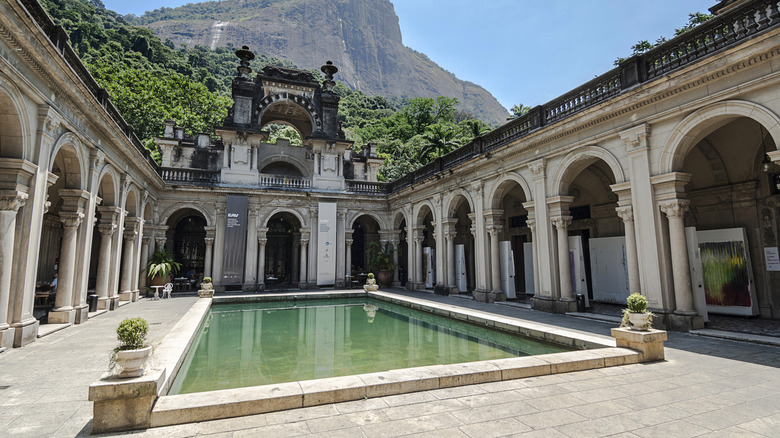
Back in Brazil's colonial era, a sugar plantation was built between the base of Corcovado Mountain and the edge of the Rodrigo de Freitas Lagoon. In 1811, the property became a private residence. And in 1840, a landscape architect by the name of John Tyndale transformed it into a lush Romantic-style garden complete with a stone tower and an artificial island. Although the property remained private for decades, it was eventually acquired by the state and incorporated into Tijuca National Park.
These days, anyone can roam the 128-acre garden, peek inside its artificial grotto, and hike through a dense jungle forest to its idyllic duck pond. Parque Lage's trails whisk visitors away to another era, winding past an aquarium and old stables. That said, given Brazil's complicated history as the last country in the Americas to abolish slavery, there are also more serious monuments to contemplate. The "lavandaria dos escravos" — or slaves' washing area — stands as a reminder of the garden's tragic origins.
Beyond the historical side of Parque Lage, visitors are encouraged to keep an eye out for the local fauna that call the grounds home. Animal lovers will be thrilled to spot capuchin monkeys swinging from tree to tree, while bird watchers can see local species like toucans flying through the air. Just be sure to treat the wildlife with respect, as monkeys can respond aggressively to those who mistreat them.
Cristo Redentor (Christ the Redeemer)

No monument may be more synonymous with Brazil than the Cristo Redentor, or Christ the Redeemer, statue in Rio de Janeiro. Located at the top of Corcovado Mountain, this impressive structure stares out over the marvelous city from atop a platform with sweeping views of the Rodrigo de Freitas Lagoon, the Santa Teresa neighborhood, and even the Atlantic Ocean.
Beyond the Cristo Redentor's spectacular location, its true marvel lies in its construction. Standing tall at a shocking 124 feet and boasting pieces that had to be imported from France, this statue required an enormous effort to erect. Just the figure's heart — which is located inside its chest — is reportedly over 4 feet long. At the time that it was inaugurated in 1931, the Cristo Redentor cost 2,500 contos de réis — or around $1.7 million. Today, that would amount to roughly $4.8 million.
To see the Cristo Redentor up close, visitors can choose between hiking to the summit of Corcovado Mountain or taking the train up to the top. The hike departs from Parque Lage and winds through 1.4 miles of thick forest. While this 2.8-mile out-and-back is relatively short, it is known to be very challenging due to the steep climb. Those who would rather make it to the summit sweat-free can hop aboard a gorgeous red train from the adorable Cosme Velho station. Ride through the jungle and soak in the views until you reach this iconic Brazilian monument.
The Real Gabinete Português de Leitura (Royal Portuguese Reading Room)
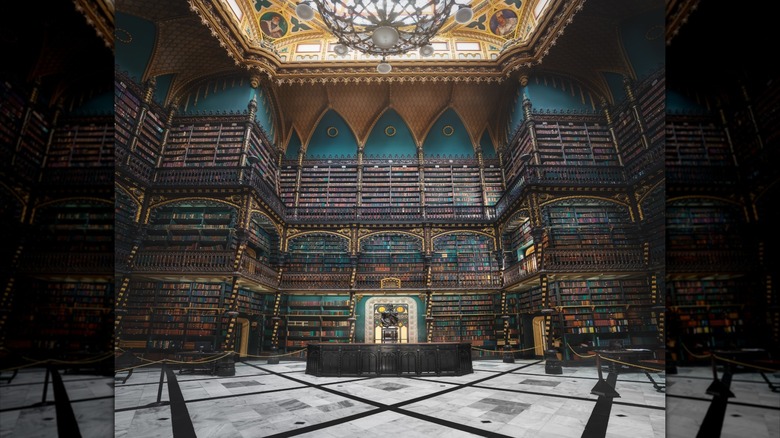
Rio de Janeiro is one of the world's leading literary destinations, and book worms know it. The home of history's great writers — including Machado de Assis and Clarice Lispector — Rio has long inspired stories of love and loss. To truly dive into the city's literary lore, head to the Real Gabinete Português de Leitura, or Royal Portuguese Reading Room.
Originally founded in 1837 by a small group of Portuguese immigrants, the library was intended to be exclusively for the elite — a reality reflected in its grand archways and intricate bookshelves. Luckily, however, it became a public institution in 1900. Now, more than a century later, the Real Gabinete Português de Leitura remains open for readers from around the world.
As of this writing, travelers can visit the library free of charge. That being said, the best way to experience it is by taking a guided tour that will explain the architectural and historical significance of the building. This experience only costs a small fee, but must be booked in advance online. Tours are available in both Portuguese and English and last approximately one hour. In addition to 350,000 gorgeous books, visitors can also expect to see sculptures of great literary figures, historic paintings, and stained glass windows. As you observe all the intricate design, you'll almost certainly understand why it was voted among 2025's top 10 most beautiful libraries in the world by 1000 Libraries.
The cable car at Pão de Açúcar (Sugarloaf Mountain)

When the clock struck midnight on New Year's Eve in 1912, there were only two passenger cable cars in the world: the Mount Ulia gondola in Spain's Basque country — a veritable food, wine, and art lover's paradise — and the Wellerhorn in Switzerland. By October of that year, there was a third at Rio de Janeiro's iconic Pão de Açúcar, or Sugarloaf Mountain.
The pet project of engineering genius Augusto Ferreira Ramos, this cable car seemed like a silly dream to his critics. His supporters, meanwhile, hoped it would bolster Brazil's international image. Ultimately, the project was a massive success — although it was not easy to pull off. Over 400 people were involved, including a group of 100 specialized rock climbers who transported a whopping 8,000 pounds of building materials and equipment. The result is a two-step cable car journey that first takes visitors from Praia Vermelha beach to Morro da Urca hill, and from there to the Sugarloaf's summit.
These days, visitors can enjoy a unique experience by riding the cable car to the top of the mountain, which offers panoramic views of the Atlantic Ocean and Guanabara Bay. Travelers are also encouraged to stop at Morro da Urca, where there are plenty of restaurants, bars, and cafes to enjoy. Afterward, they can ride the second phase of the cable car up to the top, where stunning viewing platforms abound. Try to catch the sunset from there, as there's truly nothing like it.
Ilha da Gigóia (Gigoia Island)
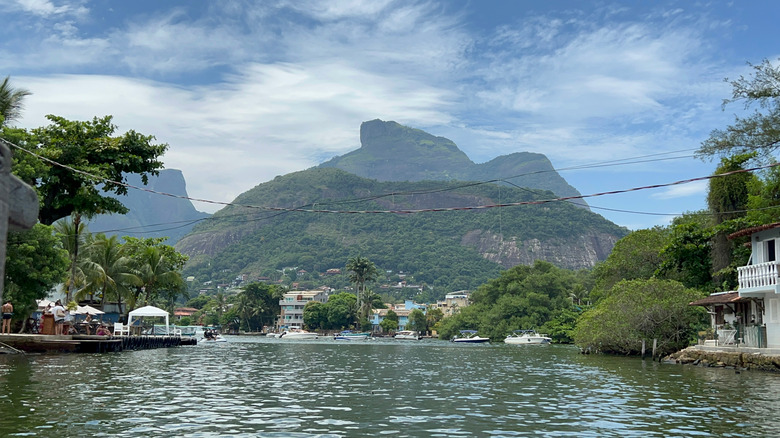
Rio de Janeiro may be the "Marvelous City," but it's still a big city complete with a universe of chaos and excitement. If you need a vacation from all the noise, head to Ilha da Gigóia — a peaceful island located smack dab in the middle of the city.
Situated on the Tijuca Lagoon between the beachy Jardim Oceânico neighborhood and the famous Itanhangá Golf Club, Ilha da Gigóia exudes peaceful hippie vibes. Bright street art decorates the walkways and local buildings, while unmanicured bougainvillea and palms spurt from the earth. Cars are banned on the island, allowing walkers to explore its grounds without facing noise or pollution. Go for a stroll, stop for a coffee, and soak in the plant-clad atmosphere. At lunchtime, head to one of the island's famous seafood restaurants for a plate of local fish.
To get to Ilha da Gigóia, catch the local ferry from the Deck Principal Ilha da Gigóia — which is located right beside the Barra Point Shopping Center. The trip to the island takes about five minutes, but folks looking to extend their time on the water can sign up for a longer boating adventure, where travelers can explore the Tijuca Lagoon and its most enchanting channels, zooming past mangroves and oceanside homes. Capybaras and alligators inhabit the area, so keep your eyes open for these majestic creatures.
The Jardim Botânico (Botanical Garden of Rio de Janeiro)
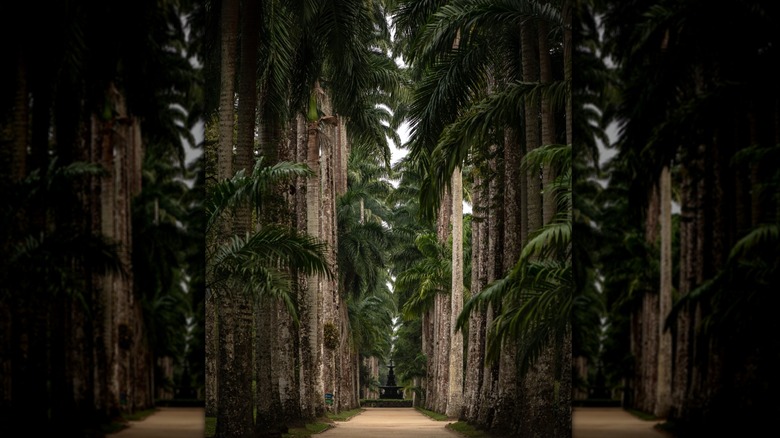
The city's Jardim Botânico, or botanical garden, dates back to 1808, when the then-heir to the Portuguese throne, King John VI, decided to collect plants from all over the world. This original garden included a lot of spices — including peppers, cinnamon, and vanilla. In more recent times, however, the garden has taken on the mission of preserving endangered species. These days, the Jardim Botânico is home to the severely endangered Terminalia acuminata tree. Other, more common plants also grow within the garden walls, ranging from several types of palm tree to orchids. All this flora is only made more beautiful by the decorative fountains and cobblestone walkways.
To enjoy the Jardim Botânico to the fullest, follow one of the many designated trails through the garden grounds. The African Trail, for example, takes approximately 90 minutes to complete and guides visitors past 19 different plants that originated on the African continent. Many of the species on hand are important to modern Afro-Brazilian religions like Candomblé and Umbanda. Meanwhile, the two-hour-long Indigenous Trail stops at 17 points that hold significance to some of the 255 Indigenous groups that live in Brazil. As you walk from one specimen to the next, you'll learn about their diverse functions. While some plants have been used by native groups to create musical instruments, others are used for medicinal purposes, or even to make fishing hooks.
Praia do Arpoador (Arpoador Beach)

Rio de Janeiro is known as a Brazilian city with endless white sand beaches. However, there is one that stands out among the rest: Praia do Arpoador, or Arpoador Beach, in Ipanema. A stunning stretch of golden sands that meets the foamy turquoise waters of the Atlantic Ocean, the people-watching here is particularly high-caliber. During the daytime, this bustling beach explodes with local vendors selling everything from caipirinha cocktails to ice cream sundaes, and grilled meat. A mixture of locals and international tourists spend time here, and you can just as easily spot a Brazilian beach volleyball crew practicing their pikes alongside a foreign family building sandcastles.
The best moment to check out Praia do Arpoador, however, is sunset. At this splendid hour, beachgoers gather at the Pedra do Arpoador (Arpoador Rock) to watch the sun sink behind the hills of Tijuca National Park. In fact, this view is so iconic that it was even mentioned in the Netflix original song "Ver o Mar" — which encapsulates Rio's most enchanting elements. Whether you are a songwriter, a poet, or a traveler who wants to catch a great view, Praia do Arpoador is easily among the best places to contemplate a fiery sunset.
Igreja Nossa Senhora de Bonsucesso (Church of Our Lady of Good Success)
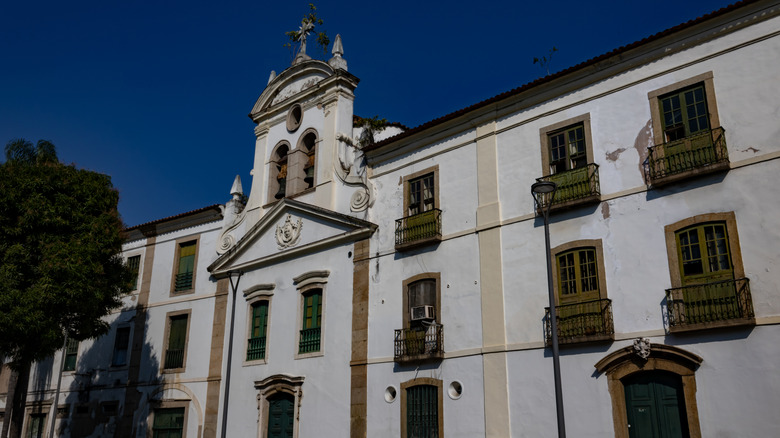
Brazil's history entails an intense period of Portuguese colonialism that has left a complicated legacy to this day. And Rio's Igreja Nossa Senhora de Bonsucesso, or Church of Our Lady of Good Success, stands as a relic of this time. Originally built in 1567, the structure started out as a tiny chapel that could barely receive visitors. In fact, it was so crowded that locals had to attend mass on the streets. As a result, the church was rebuilt in 1780 to accommodate larger crowds. These days, the Igreja Nossa Senhora de Bonsucesso still boasts a number of historical elements — including an altar and pulpit from the 16th century.
As of this writing, visiting the Igreja Nossa Senhora de Bonsucesso is free. Travelers can observe the building's unique Portuguese-style architecture, gaze upon centuries-old relics, and even attend mass. Folks with wheelchairs or small children should be aware that the church is not accessible or stroller-friendly. However, even just the outside of the church is worth visiting. The structure was built on the cobblestone Ladeira da Misericórdia street. Considered the first public road in Rio de Janeiro, it was built by enslaved workers in 1567. In 2017, it was formally declared a Brazilian Patrimony Site by the national cultural institution, Iphan. Today, it's the perfect place to contemplate Brazil's complicated past.
Museu do Amanhã (Museum of Tomorrow)
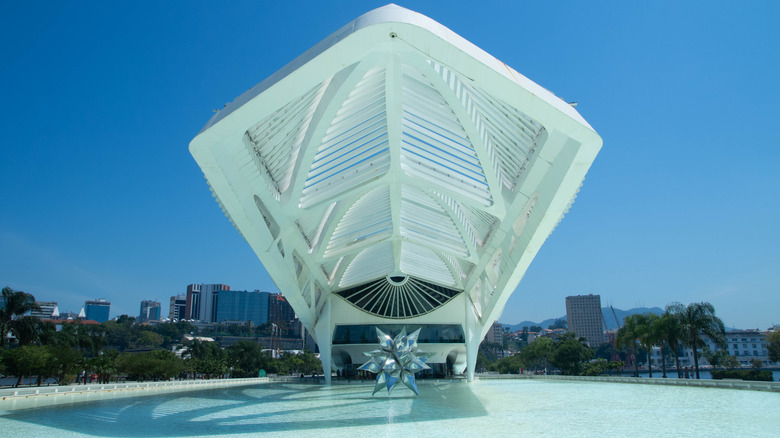
While Rio de Janeiro may be full of history, the Museu do Amanhã is focused on the future. Even its name, which translates to the "Museum of Tomorrow," looks forward — focusing on cutting-edge research and innovation. Permanent exhibits focus on space exploration and human evolution, but the real draw of the Museu do Amanhã is its rotation of temporary exhibits. In the past, these have included a number of interactive and immersive experiences that explore themes ranging from artificial intelligence to light waves, and the future of urban planning. Folks who have visited this site with children say that these exhibits are extremely engaging for little ones.
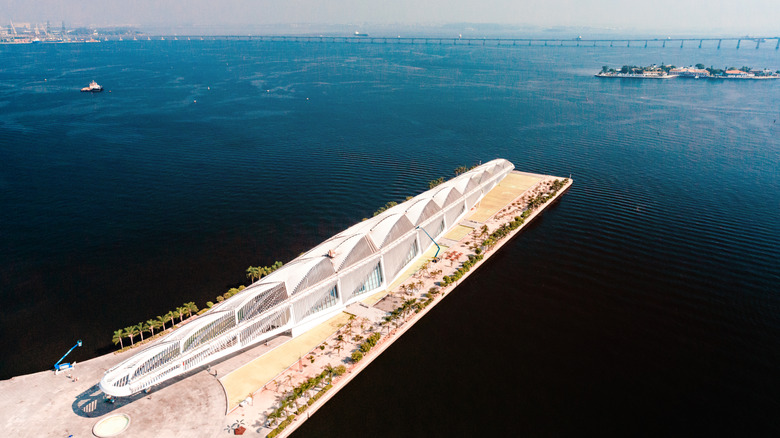
Interestingly, you don't have to be interested in science to enjoy the Museu do Amanhã. Architecture fans will also be in awe of this building, which was designed by the great Spanish architect Santiago Calatrava, who's style you might recognize from notable landmarks like the Oculus transit hub in New York City and the City of Arts and Sciences in the charming Mediterranean city of Valencia.
In Rio, the Museu do Amanhã stands out for its sustainable design, which incorporates recycled materials and energy-efficient systems — a fact that won it MIPIM's Best Innovative Green Building Award in 2017. Because of this, visitors can enjoy the Museu do Amanhã by admiring the interior and exterior of the structure, in addition to the many exciting exhibits on display.
Lagoa Rodrigo de Freitas (Rodrigo de Freitas Lagoon)

Although Rio de Janeiro might be home to some of the world's best beaches, that doesn't mean it doesn't boast a gorgeous lagoon as well. Situated right in the middle of the famous Zona Sul neighborhood, the Lagoa Rodrigo de Freitas adds a bit of natural charm to an otherwise chaotic urban environment. Although the water is not safe for swimmers, it is open to other activities like paddleboat rides. Rentals are available around the lagoon, as are various scenic platforms where photographers can take pictures. Foodies, meanwhile, can enjoy the many kiosks and snack bars where they can enjoy a caipirinha or a bowl of açaí with a view.
Even hikers and bikers have been known to enjoy an afternoon on Lagoa Rodrigo de Freitas, thanks to a 4.6 mile-long trail that winds along the shore. As you stroll along, you can enjoy views of the deep blue water — and a bit of people watching, too. Vendors sell coconuts and other treats, while friends meet up for picnics or drinks, kids practice skateboarding, and families hit the many excellent playgrounds in the area. Sure, Rio de Janeiro may be a busy city, but the lagoon is one of the top places locals go to relax.
Methodology
Compiling this list of the best destinations for first-time visitors in Rio de Janeiro, Brazil was not easy. Although I did have the benefit of my mother-in-law's guidance to make this list, I also struggled to narrow down my recommendations to just 10. Ultimately, I cross-referenced her favorite spots with traveler reviews to ensure that only the top-rated spots made the cut. I also made sure to focus on places that are reasonably safe to visit — as there are plenty of things tourists should just never do on a trip to Rio de Janeiro.
That said, I also wanted to include some lesser-known destinations among my suggestions. While the Cristo Redentor statue and Sugarloaf Mountain are world-famous symbols of the Brazilian nation, other spots get relatively little attention. For example, while the Real Gabinete Português de Leitura is considered among the most beautiful libraries in the world, it's hardly the most visited spot in Rio. Similarly, the Igreja Nossa Senhora de Bonsucesso is the oldest church in Rio, yet does not receive nearly as much fanfare. Even the Ilha da Gigóia is a hidden gem that many locals overlook.
The remaining spots are all well-loved among locals: the Lagoa Rodrigo de Freitas is a popular spot for walking, biking, and paddling, while Praia do Arpoador attracts Rio natives with its stunning sunsets. Parque Lage, the Jardim Botânico, and the Museu do Amanhã are all popular weekend spots as well.