

Turin, Italy Offers Plenty Of Amazing Tourist Attractions Worth Visiting
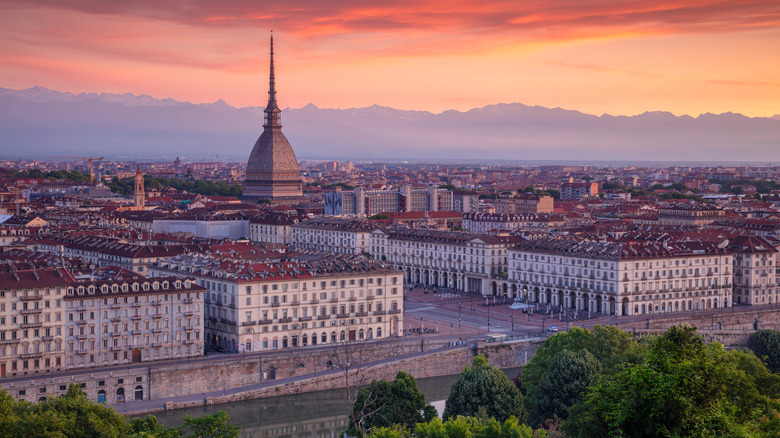
Turin is one of Italy's most magnificent cities. Founded in the third century B.C., this wildly underrated Italian city offers a romantic escape for travelers with Baroque palaces, historic cafes, and incredible museum collections rivaling those of cultural giants like Cairo's Grand Egyptian Museum and the British Museum.
Turin shone on the world stage when it hosted the 2006 Winter Olympics. Rather ironically, it was named Italy's most elegant destination by Vogue — beating fashion-forward Milan, which is set to host the 2026 Winter Games in February. Yet, despite this, it remains rather under the radar for many travelers.
This guide highlights 10 amazing tourist attractions that will help vacationers experience everything that Turin has to offer. These spots go beyond the ordinary, showcasing the distinct personality of Italy's fourth most populous metropolitan area. We'll visit royal residences and world-class museums, all while doing a little shopping along the way. Each stop on this list offers something unforgettable — because whether you're drawn to ancient history, Italian cinema, or some of the world's most ornate interiors, Turin delivers in spades. Let this roundup serve as a jumping-off point for exploring a city that should receive far more attention than it generally gets, and that will undoubtedly stay with you for years to come.
Mole Antonelliana Tower and the National Museum of Cinema
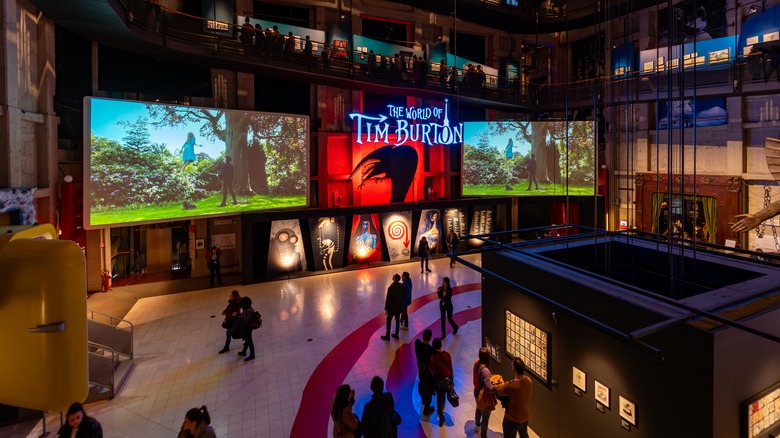
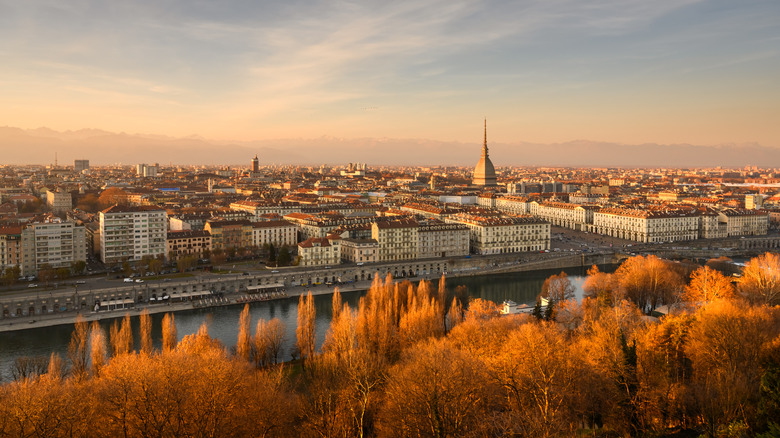
As Turin's most iconic building, the Mole Antonelliana Tower (often referred to as "the Mole") is a must-see stop for any traveler. No structure has historically defined Turin's skyline quite like this one. Its famous spire is visible from nearly everywhere, reminding visitors of just how lovely this city is. The Mole has a fascinating history. From its origin as a 19th-century synagogue to its function as a civic monument, this structure is now the home of Italy's National Museum of Cinema.
The immersive space will transport film buffs into the movie-making world with exhibits like "The Archaeology of Cinema," which celebrates the earliest days of filmmaking. Another highlight is "The Poster Gallery," where visitors can check out dozens of historic movie advertisements from films like "E.T.: The Extra-Terrestrial" and Rita Hayworth's "Gilda."
From Bela Lugosi's original "Dracula" coffin to costumes worn by Marilyn Monroe, and George Lucas' "Empire Strikes Back" storyboards, the museum's permanent collection is an ode to many of the world's most famous films and movie stars. Perhaps the most unforgettable part of the National Museum of Cinema, though, is "The Temple Hall." This space is reverent and awe-inspiring, comprised of a large central hall surrounded by ten smaller chambers that celebrate the film industry. Another key experience at the Mole is riding its glass elevator, which boasts stunning views of the Italian Alps at the top of the spire. Should one wish to skip the museum, lift-only tickets are available for about $8.
Palazzo Reale (Royal Palace of Turin)

Beginning in 1562, the House of Savoy used Turin as its seat of power. Of all the architectural projects that the family undertook during their reign, the Royal Palace of Turin is still one of the most dazzling. Unlike Versailles — where the Bourbons ruled from miles outside of Paris — the Palazzo Reale is located in the midst of the city's hustle and bustle. While its exterior is undeniably beautiful, visitors have to go inside to experience the full impact of this former royal residence.
With a standard ticket, guests are allowed in multiple areas of this palace, including the gilded personal apartments of King Victor Emmanuel III and Queen Elena. Another highlight is the Chapel of the Holy Shroud. This space is of particular interest to Catholic travelers who wish to view the Shroud of Turin, a relic that is believed to have covered Christ's body.
However, perhaps the best-known area included with a general ticket to the Royal Palace of Turin is its Royal Armory. This massive hall features an astounding collection of weaponry and suits of armor — including armor on model horses — with over 5,000 pieces in all. It is arranged in such a way that guests are literally surrounded by armored mannequins on all sides, which adds to the experience. The Armory also features ornate, painted ceilings and wall panels. Before you leave the area, the nearby Royal Library is worth a stop. This free attraction houses over 200,000 notable manuscripts and documents, including a Leonardo da Vinci self-portrait that is a major draw. For travelers who are passionate about architecture, history, or just love a bit of drama, the Palazzo Reale is a must-see. It's worth noting that the palace is closed on Mondays, so plan accordingly.
Museo Egizio (Egyptian Museum of Turin)
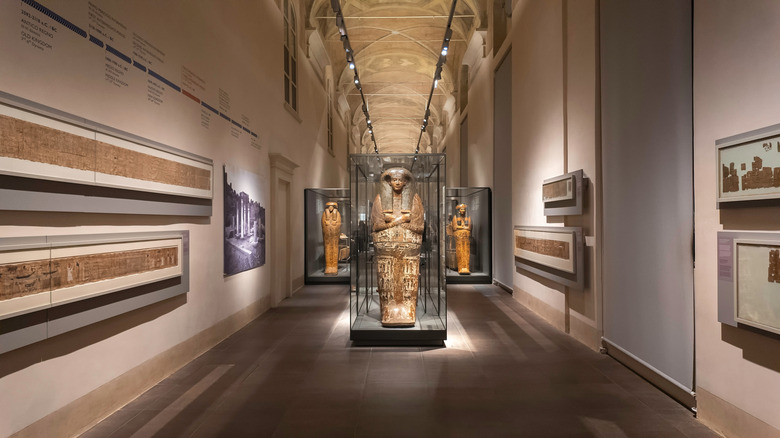
If you can't make it to the best attractions and destinations in Egypt, Turin offers a surprisingly great alternative. The Museo Egizio offers the country's largest display of Egyptian artifacts, allowing visitors to step back in time and experience what life was like thousands of years ago, nearly 3,000 miles away. As the world's first museum dedicated to Egyptian history and culture, the space celebrated its 200th anniversary in 2024. Following a major renovation in 2015, the Egyptian Museum now features five stories of exhibits that showcase pieces dating back over 4,000 years.
Among the museum's highlights are the Temple of Ellesiya, which was reconstructed on-site in the 1970s; the Tomb of Kha and Merit, considered one of the most intact examples of a complete Egyptian tomb; and the Statuary Collection, where the most monumental sculptures in the museum reside. For those interested in the day-to-day existence of ancient Egyptians, the Galleries of Material Culture will be of particular interest. These spaces feature items like canopic jars, small sculptures, and canisters that played a role in everyday activities. There are also a number of royal artifacts, such as a golden sarcophagus, in the museum's Royal Tombs area.
It is worth noting that the Grand Egyptian Museum in Cairo has pledged to bring home certain pieces, including Turin's famed statue of Ramses II that currently stands in the Statuary Collection. However, this situation is ongoing. All in all, the Museo Egizio is dedicated to educating both amateur and professional Egyptologists worldwide. Its vast online system even includes a free papyrus archive that gives would-be travelers a glimpse into the museum's collection before they ever travel to Turin.
Basilica di Superga
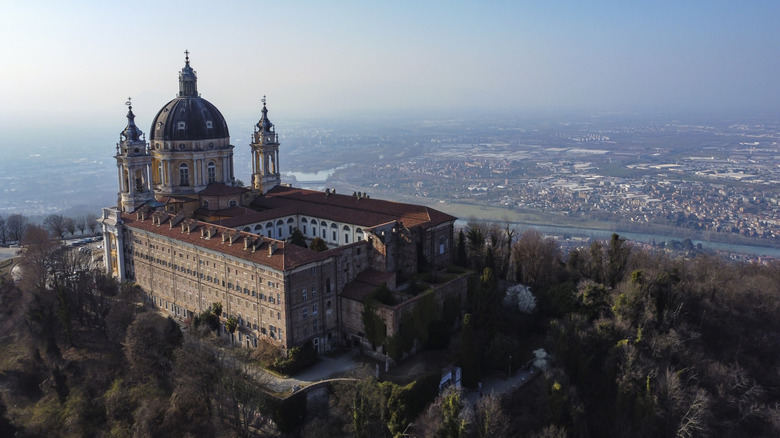
The existence of the Basilica di Superga is a case of "desperate times call for desperate measures." As the War of the Spanish Succession raged on, Duke Victor Amadeus II of Savoy made a deal with God to build a basilica if Turin was spared from destruction. His wish came to pass, and the Basilica di Superga is the result. Designed by architect Filippo Juvarra, this religious site has been in use since its completion in 1731, and plays a key role in preserving artwork and architectural history in Turin. From the church itself — which features three ornate altars dedicated to the Virgin Mary — to the Hall of the Popes, where 265 papal portraits hang, and the Furnishings and Artworks Collection, where a range of ornate pieces are preserved, the Basilica di Superga is a haven for art and culture aficionados.
Two major highlights here occur in the air and underground. After climbing 131 steps to reach the dome, visitors will find that an incredible view of the city's scenic Alpine mountain landscape awaits them. Better yet, the dome itself was inspired by some of Rome's most iconic tourist attractions, like the Pantheon. In the opposite direction beneath the church, travelers will find the Royal Tombs of the Savoy family. 61 members of the dynasty are interred here, including the aforementioned Victor Amadeus II and Anne Marie d'Orléans, who was once heir-presumptive to the English, Scottish, and Irish throne. To reach the hill where the Basilica di Superga is located, visitors can either hike or book passage on a historic tramway that offers a unique experience in and of itself.
Venaria Reale (The Palace of Venaria)
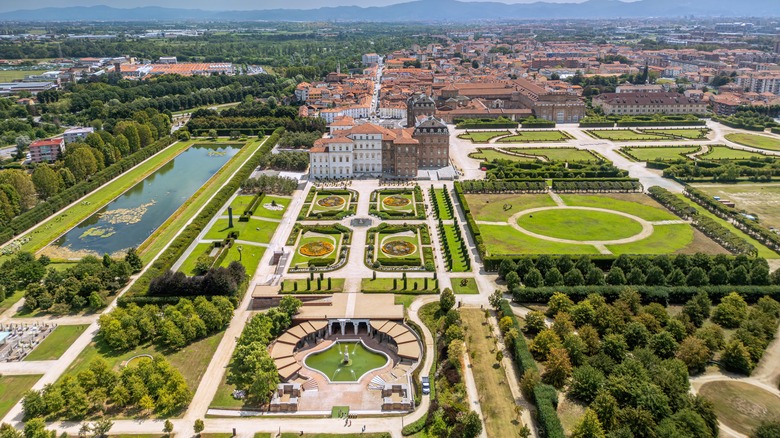
Turin is known for its French-inspired architecture, and the Venaria Reale is one of its most impressive examples. Another former Savoy residence, this one a hunting escape, stepping into this palace offers a once-in-a-lifetime opportunity to experience the Baroque lifestyle. The massive Venaria Reale complex is comprised of five sections: the Royal Palace, the Gardens, the Castle of La Mandria, the Ancient Village, and the Royal Residences of Savoy. All are grand, but the Reggia, or main palace, is where many visitors choose to begin their tour. Among the highlights here are the Hall of Diana — where grand balls once took place — and the Great Gallery, a cavernous and incredibly ornate black-and-white space designed by Juvarra, the same architect who created the Basilica di Superga.
Nearby, in the Castle of La Mandria, guests can explore 20 rooms that belonged to Vittorio Emanuele II of Savoy. In addition to masterminding the city's most famous basilica, Vittorio, much loved by his subjects, also played a key role in unifying Italy. Meanwhile, just outside Vittorio's retreat, the Gardens of Venaria are among Europe's most celebrated. Designed to evolve naturally, the landscaping here never remains static for long. For travelers who love royal history, palace architecture, or strolling through sprawling estates, the Palace of Venaria is a dream come true. For the most in-depth experience, consider booking one of the guided tour options, which range from one hour in the gardens only to three hours indoors and out.
Lingotto Building and Pinacoteca Agnelli
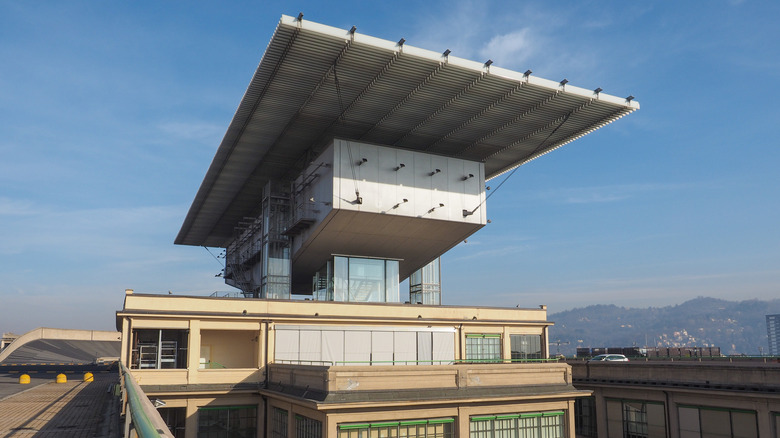
The Lingotto Building is one of the automotive industry's most fascinating transformations, from an early-20th-century Fiat factory to a contemporary art gallery. In its heyday in the 1920s, the Lingotto facility was famous for its remarkable rooftop test track, where all Fiats crafted in the building were sent for immediate testing 24 hours a day. Today, this modernist structure has been reimagined with the addition of the Pinacoteca Agnelli art museum. However, the legendary track — now called the Pista 500 — is still there and is still used for some Fiat testing nearly 100 years after its inception. The circuit is now surrounded by a rooftop garden where tourists can stroll.
Inside the Pinacoteca Agnelli museum, guests can enjoy an impressive collection. Among the most well-known masters featured in the permanent collection are Matisse, Picasso, Rothko, Manet, and Modigliani. The museum also hosts a variety of temporary exhibitions, including an Alice Neel showing that is available until early May 2026.
Finally, the Pinacoteca also honors Fiat's legacy with the Casa Fiat area. This section takes visitors on a journey through the auto brand's history — from vintage advertising to technical engineering details. The centerpiece is a full-size wooden model of the discontinued Fiat 500. The Lingotto Building is an exceptional example of Turin's ability to honor its storied automotive past while looking ahead to the future.
Porta Palazzo Market
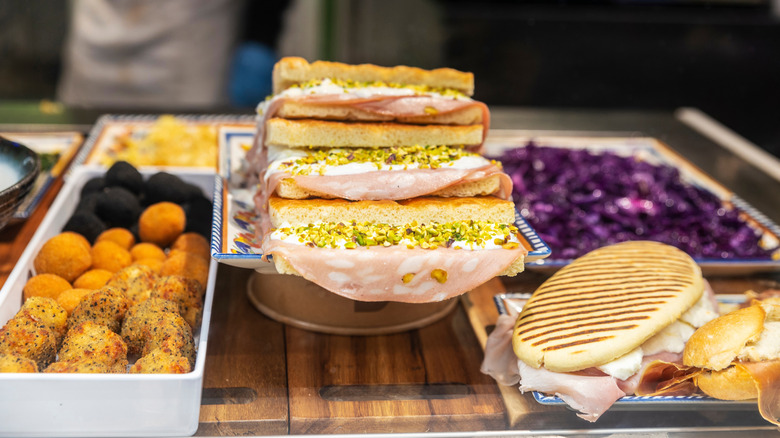
There are dozens of amazing food markets throughout Europe, but the largest open-air market on the continent is in Turin. Porta Palazzo is a uniquely Turinese cultural experience beloved by both locals and tourists alike. Open every day but Sunday, shoppers are invited to peruse nearly 5,000 square feet of stalls scattered across the Piazza della Repubblica. A multicultural hub of produce, artisan cheeses, pastries, spices, meats, and local specialties like white truffles can be found here. But Porta Palazzo isn't just about food. Some vendors also offer clothes, home decor, and various Italian souvenirs. To make things simple for consumers, this market is divided into areas. For Piedmontese beef and other fresh cuts of meat, check out the Butchers' Section. To brighten your hotel room with beautiful blooms, visit the Flower Market. And, to experience flavors from Africa to the furthest reaches of Asia, the International Market should be your first stop.
In 2019, the Mercato Centrale Torino opened, forever altering the footprint of Porta Palazzo. This modern mall features 23 shops, a brewery, the Lorenzo de' Medici Cooking School, and vendors that serve artisan food. Among the restaurants travelers can try here are Egidio Michelis' shop for fresh pasta; Bistrot dLanga, where Italian peasant dishes have been reimagined; and Flavors of Brazil, which brings a distinctly South American kick to Italy. Every day, Porta Palazzo and the Mercato Centrale unite local residents and world travelers to celebrate something that unites us all: really great food. This is truly a must-stop destination for anyone visiting Turin.
Museo dell'Automobile (Automobile Museum)

The "Turin Car Cluster," a group of auto manufacturers including Fiat (founded in 1899), is considered the closest thing to Detroit that early 20th-century Europe has to offer. Much like Motor City USA, Turin was a hotbed of the Italian automotive industry. Today, nowhere honors this legacy quite like the Museo dell'Automobile (MAUTO). This world-class museum, founded in 1933, follows the evolution of the automobile from early designs like the Benz Victoria to a glamorous 1929 Bugatti to, of course, numerous modern Ferrari and Alfa Romeo models. One of the best things about this museum is that it is engaging even for travelers who aren't devoted car enthusiasts. Even children, for example, can appreciate the excitement of seeing some of the world's sleekest sports cars up close. This makes the Museo dell'Automobile a great family destination.
Throughout the museum, 80 brands are represented across a collection of 200 cars, with a focus not just on speed and engineering (though this certainly matters), but on the history of specific vehicles. MAUTO's Fiat 3 ½ HP, for example, was the Italian auto giant's very first car. Then there's the Cisitalia 202, which was the first car model deemed worthy of being installed in the Museum of Modern Art's permanent collection. Each exhibit here expertly weaves Turin's industrial history into a story that is interesting to visitors of all ages and demographics. In addition to being an incredible attraction, the Museo dell'Automobile is a working restoration center. On-site automotive experts preserve the integrity of historic vehicles, such as a 1923 Fiat 519 S and a Bordino carriage that was once pulled by horses.
Valentino Park
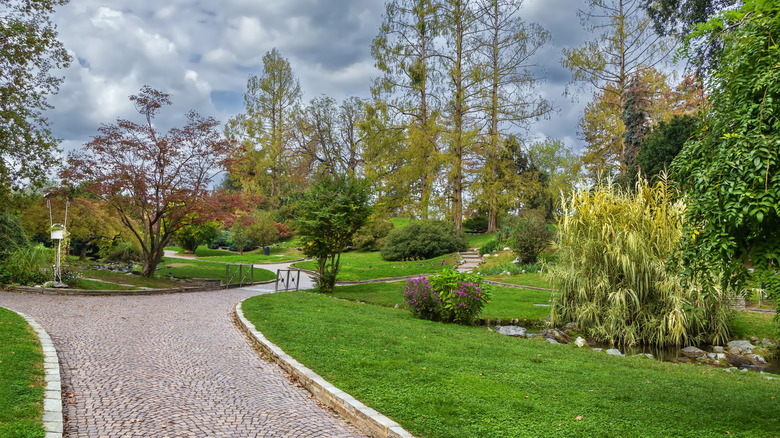
For travelers who love beautifully designed green spaces, Valentino Park is a lovely place to spend an afternoon. Located near the banks of the Po River, this park has existed, in some form or another, since the Middle Ages. In more recent eras, it has served as a site for national expositions, including the Turin 1911 International Exposition. One of the highlights here is the Castello del Valentino, an immaculately kept 16th-century residence. Inside, guests can explore the grand Sala delle Colonne on the first floor and multiple spaces where aristocrats once lived upstairs. Among the highlights are the aptly named Hunt Room — known for its ceiling mural depicting Diana, goddess of the hunt — and the Green Room, where the artwork largely celebrates Victor Amadeus II and his wife, Maria Cristina.
The park's most unique attraction, though, is the Borgo Medievale. This reconstruction of a medieval Piedmontese village was created for the 1884 Italian General Exhibition, and still remains popular among visitors today. Although it is not an actual site from the Middle Ages, every structure here was carefully built and decorated in 15th-century style. Note that the Borgo Medievale will reopen in June 2026 following ongoing renovations. Upon reopening, admission is free to those who wish to explore on their own. However, paid guided tours are available for those interested in a more immersive look at the borgo (the village), the rocca (the fortress), and the garden areas.
Palazzo Madama
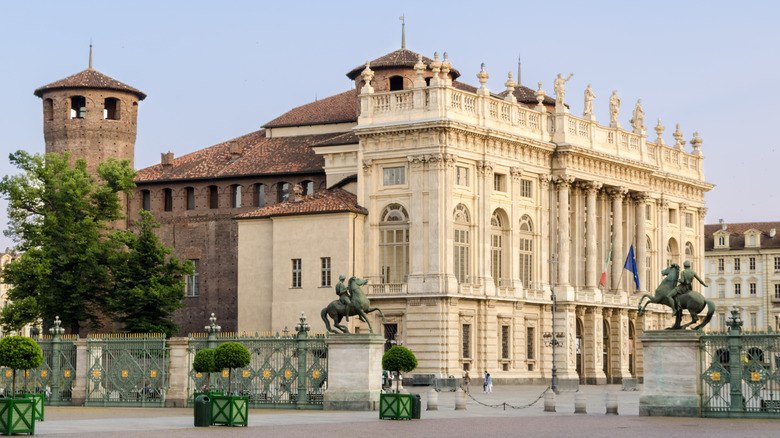
Turin's existing Palazzo Madama has had many purposes since it was constructed. Originally the site of a Roman Empire gateway, a fortress had been built on this location by the mid-13th century. In the mid 17th century, the fortress became a royal residence when it was converted into a palace for Christine, the widow of Victor Amadeus I. Then, in 1822, Turin's observatory was moved to the Palazzo, where it stayed for nearly 100 years until 1920. By 1950, the site had become something of a civic building when it hosted the inaugural international conference on plastic materials.
Today, it has morphed once again, functioning as the Civic Museum of Ancient Art, where visitors from around the world can enjoy gorgeous art and architecture. Boasting everything from Medieval art to Baroque pieces, ceramics, textiles, and glasswork, the museum's collection spans more than 70,000 works. One of the most notable pieces is the "Très belles Heures de Notre Dame" by Jean de Berry, an illuminated manuscript that has been divided into sections, with 28 pages ultimately finding their way to the Civic Museum.
Methodology
To compile this guide, we relied on high-authority sources to ensure accuracy. This included Italy's official tourism website, as well as the official webpages for attractions like Mole Antonelliana and the National Museum of Cinema, the Palazzo Reale, the Egyptian Museum of Turin, the Basilica di Superga, the Venaria Reale, the Lingotto Building, the Museo dell'Automobile, and the Borgo Medievale.
Additionally, we cross-referenced the information provided there with supporting details from reputable publishers like Airial Travel, Visit a City, Forbes, Lonely Planet. Specialty blogs were also consulted, like the Turin Italy Guide, The Best of Turin, and Wonderful Museums. The result is a comprehensive list of 10 must-see destinations travelers should check out on a trip to Turin.