

Zadar, Croatia's 13 Best Tourist Attractions To Add To Your Itinerary

Spanning a picturesque peninsula in the Adriatic Sea, Zadar is the oldest continually inhabited city in Croatia. The Adriatic is the northern stretch of the Mediterranean Sea that sits between Italy and Croatia, so you're bound to find a climate with hot, dry summers and mild winters. Zadar is sometimes overlooked in favor of other popular coastal destinations like Dubrovnik or Split, the second-largest city on Croatia's coast with breathtaking beauty and historic charm. However, thanks to its Mediterranean surroundings, it can still get busy in the summertime, especially in July and August. To skip the rush and still make the most of the sunshine and beaches, plan your trip during the shoulder seasons. Autumn is an especially great time to visit, as Croatia is considered the perfect place for a fall vacation in Europe with less crowds.
From its medieval architecture to the remains of a 2,000-year-old Roman settlement, Zadar brims with history. It's also famous for more recent additions like the Sea Organ and Greeting to the Sun, which merge artistic installations with waterfront scenery. A walk down Kalelarga — known officially as Široka ulica — is a stroll through the beating heart of this city. Here, you'll find all manner of shops, bars, coffee shops, and accommodations along a narrow, pedestrian-only stretch. Zadar's old town is pedestrian-only, making it very easy to get around on foot. Visit fantastic museums, churches, historic monuments, a local market, and more. Here are 14 attractions around the city that are essential for your itinerary, especially if it's your first time visiting.
Visit People's Square
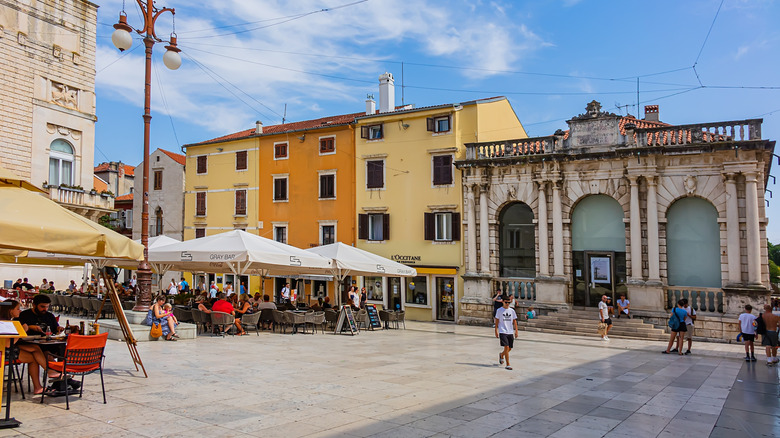
People's Square, or Narodni Trg in Croatian, is a picturesque public plaza that dates to the Middle Ages, with the neoclassical City Loggia dating possibly as far back as the 13th century. This iconic building sits across from the City Sentinel, which features a 16th-century clock tower that was installed in 1803. A nexus of the city for centuries, People's Square continues to be both a hub and major thoroughfare, as the bustling Kalelarga stretches onward from this spot.
If it's your first time in the city, a guided walking tour is a great way to acquaint yourself with its heritage, and many of these depart from People's Square. A tour provided by Art & Nature Travel, for example, runs daily at 10 a.m., 12p.m., and 6 p.m., and you can purchase a ticket directly from the guide when you arrive at People's Square, with no need to reserve ahead. Your guide will also introduce you to Maraschino liqueur and Pag cheese, both Croatian specialties. Once you've worked up an appetite, stop for some Mediterranean-inspired cuisine at Terracotta, just off the plaza, which is located inside of Art Hotel Kalelarga — a boutique 10-room hotel that puts you in the center of Zadar, while providing calming, contemporary accommodations.
Enjoy sensory installations at Paseo Maritimo
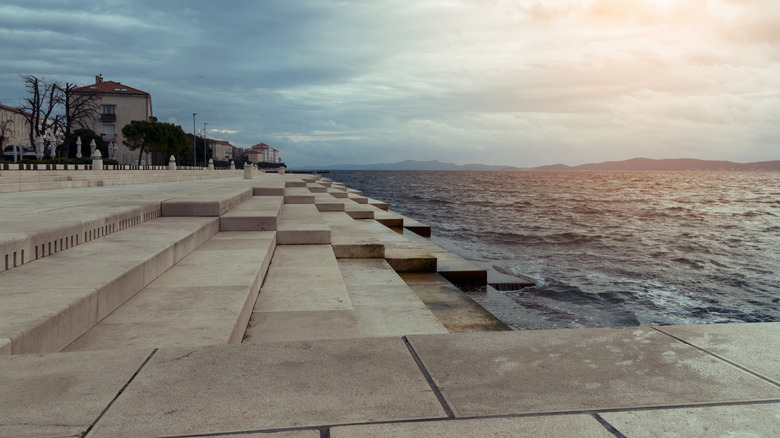
Part infrastructure and part art installation, Zadar's Sea Organ is a unique way to both take in the Adriatic Sea views and experience the saltwater expanse in a truly unique way. The structure — or shall we say, instrument — consists of a series of steps that drop down to the water level, with numerous pipes installed at each interval. When the water swells against this edge of the peninsula, air and water move through the pipes, producing otherworldly sounds from the openings built into the steps.
Zadar's Sea Organ is one of two popular installations along the picturesque Paseo Maritimo, a wide promenade that runs the western length of the peninsula. Nearby, a giant blue disk is embedded in the concrete at the angular pier. Called Greeting to the Sun, or Pozdrav Suncu in Croatian, this 72-foot-wide installation represents our solar system. It collects sunlight during the day by way of solar panels, then transforms into a colorful illuminated work of art after dark. Look a little closer and you'll notice that the glowing orbs represent the planets of our solar system, each one curated in precise, awe-inspiring proportion to the sun.
See the Church of St. Donatus
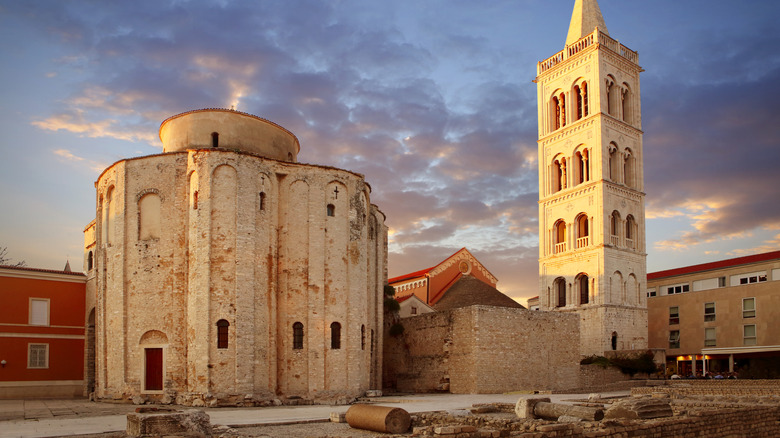
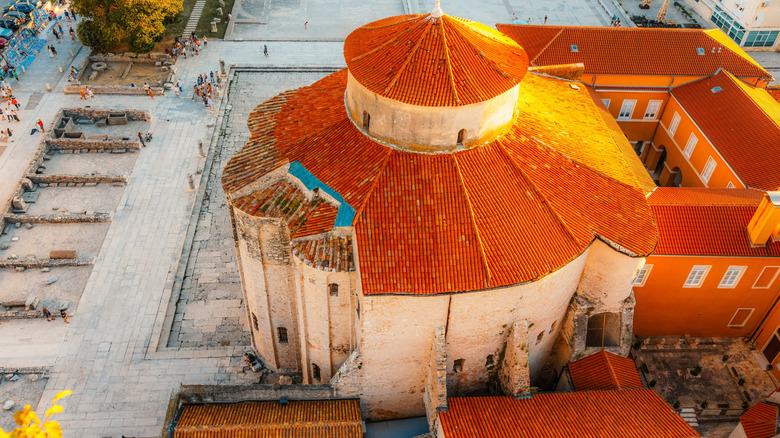
There are many breathtaking hidden gem churches across Europe, ranging from immense Baroque structures to Gothic masterpieces from the Middle Ages. Simpler structures, however, often have more nuanced stories to tell. Enter the Church of St. Donatus, an early medieval building dating to possibly as far back as the early 9th century. While its decor is relatively plain inside, this historic structure built in the Byzantine style has a distinctive circular shape, and it's an instantly recognizable feature of Zadar's old town. It's open daily for public visits from 9 a.m. to at least 5 p.m. and sometimes as late as 9 p.m., depending on the time of year, but closed altogether from December 31 to March 31. Standard admission for adults is €3.50, or close to $4 USD.
St. Donatus' foundations are even older than the church itself. Visible on the exterior, some stones and architectural elements were repurposed from earlier structures to build the new church. Among these fragments are the base of an ancient Roman altar inscribed to the deities Juno and Jupiter. Evidence of Roman occupation is also clear in the remnants of columns and other structures in the Roman Forum, which sits just outside of St. Donatus. Though far less expansive than the Roman Forum of Italy, one of its oldest attractions that blends divine geometry and celestial light, Zadar's version is impressive nonetheless. It highlights the period when the Roman Empire included the historical region of Dalmatia as one of its imperial provinces.
Gaze up at the Land Gate and historic City Walls
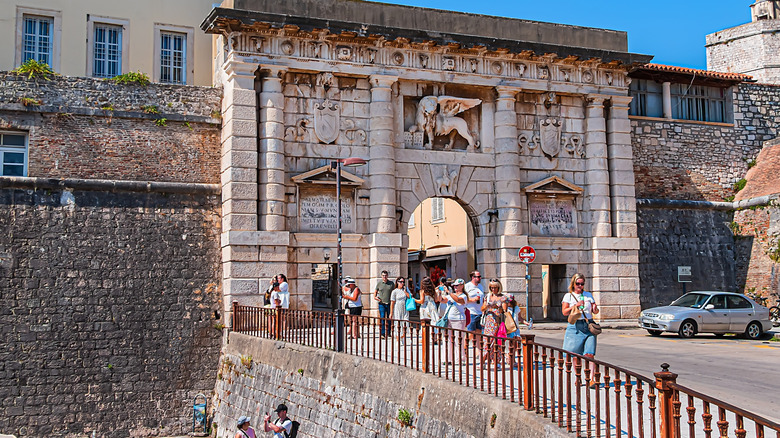
Like many historic cities that were vulnerable to attacks and invaders arriving by water, Zadar relied on protection from robust stone fortifications that continue to shape the city today. As weaponry became more powerful and sophisticated over the centuries, different types of barriers were required to stave off attacks. The Romans were responsible for establishing the grid-like layout of the city and its walls, and more security features, including a number of towers, were added over the following centuries. You can still visit the only remaining tower at Five Wells Square at the southern end of the old town. By the Renaissance period, when the Venetian Republic ruled Dalmatia, the stone walls were strengthened even further. Along with other examples of Venetian defensive walls in Europe, Zadar's are impressive enough to be designed a UNESCO World Heritage Site.
Punctuating the historic city walls were several gates, four of which remain in place today. These include the Sea Gate, Bridge Gate, St. Rocco Gate, and the Land Gate — the latter being the largest and most ornate of all. Conceived as a stunning triumphal arch, the Land Gate dates to 1543 and marks the main entrance to the old town of Zadar. While it would have been carefully guarded a few centuries ago, it's an invitingly open thoroughfare today, and there's no admission charge for visiting any part of the old city walls.
Stroll through the peninsula's glorious parks
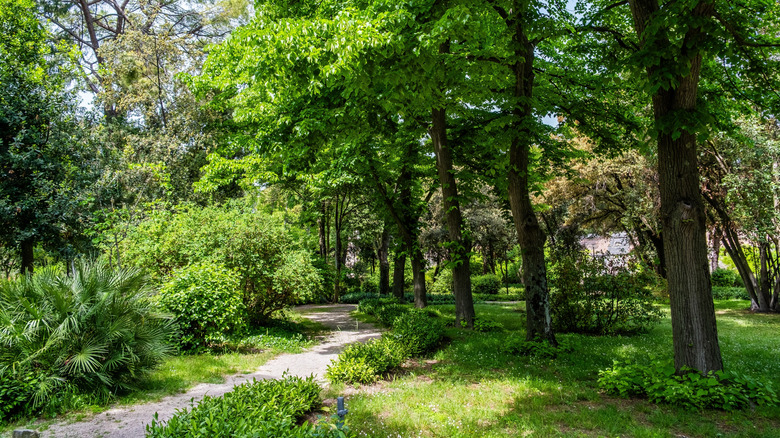
At the base of Zadar's thumb-shaped peninsula sits an expansive, lush green space brimming with peaceful paths, monuments, and secluded places to enjoy a picnic or relax with a good book. Vladimir Nazor Park is a sprawling garden established during the 19th century. It's accompanied by a couple of smaller parks called Park Zadar and Queen Jelena Madijevka Park, each of which is laced with walking paths and dotted with atmospheric monuments and points of interest.
Queen Jelena Madijevka Park was built around one of Zadar's historic bastions, which originally jutted out from the main outline of the city walls to provide extra defensive capabilities, so you'll encounter dramatic stone features as you walk around. Stroll directly from the park into Trg Pet Bunara, or Five Wells Square, which was built in the late 16th century and named after its — you guessed it — five wells, which were used as the city's primary water supply until the late 19th century.
Visit the Cathedral of St. Anastasia
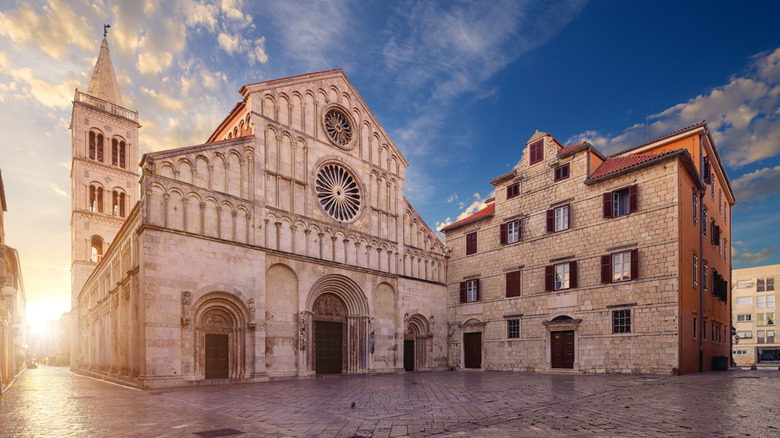
A beautiful if relatively simple Romanesque church, the Cathedral of St. Anastasia reigns over a picturesque square. Known as Katedrala sv. Stošije in Croatian, it's the largest church in historic Dalmatia and has architectural roots dating back to the 4th century. However, its style is more representative of the 1100s and 1200s, showcasing major restorations that were made in the 13th century after the Venetians besieged the city. It also fell victim to bombing during World War II, so much of what we see today is a 20th-century reconstruction.
One of St. Anastasia's most popular attractions is its tiered cake-like bell tower, an icon of the Zadar skyline. It's lovely to spot from different vantage points around town, but it is also a stunning scenic viewpoint itself. Climb up the nearly 200 steps to take in spectacular views over Zadar and the Adriatic Sea.
Explore the Museum of Ancient Glass
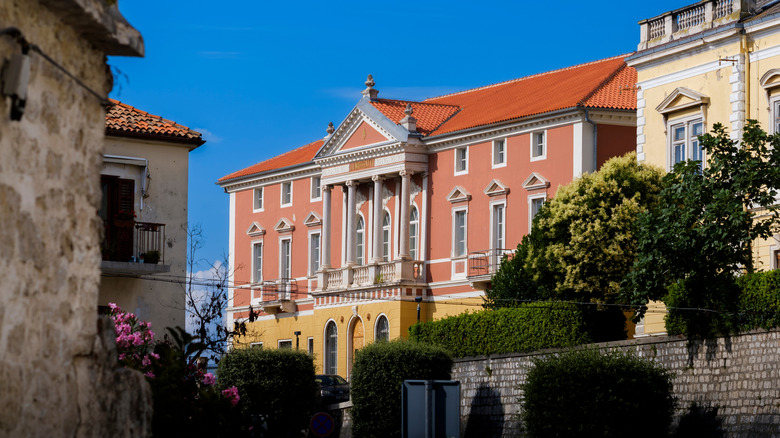
Atop another of the city's stone bastions sits a former palatial neoclassical residence from the late 19th century that belonged to the Cosmacendi family. Since 2006, the building has been in use as a unique museum dedicated to ancient artifacts — but, not just any old artifacts. Here, you'll find the Museum of Ancient Glass, highlighting more than 5,000 objects that range in date from the 1st century B.C. to the 5th century A.D. When you consider how fragile glass can be, it's pretty incredible that this impressive collection of ancient goblets, urns, bottles, amulets, and more has survived for so many years.
Throughout the year, the museum hosts special demonstrations and workshops to illustrate how glass is blown and fused to make jewelry and other objects. Stop into the gift shop to purchase handmade glassware to take home. The museum is open daily all year long, with summer hours from 9 a.m. to 9 p.m. and winter hours from 9 a.m. to 5 p.m. Standard admission to the museum is €6 for adults and €3 for children, or $7 and $3.50 USD, respectively. If you're in a group of five or more people, individual fares are €5, or just under $6 USD.
Take a day trip to Plitvice Lakes
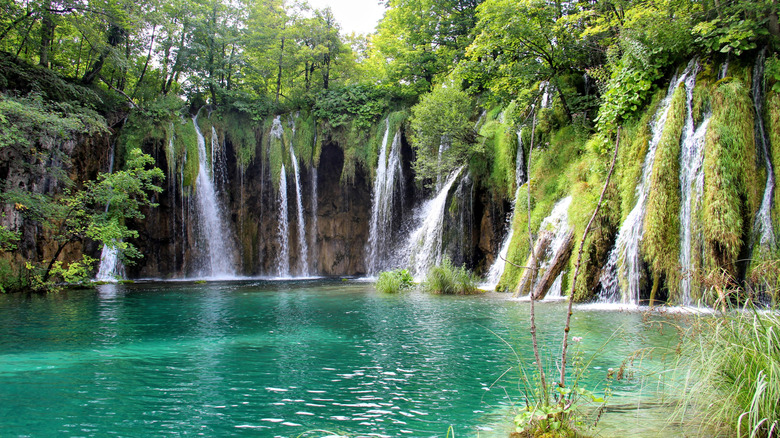
A designated UNESCO World Heritage site, Plitvice Lakes National Park is a splendid day trip destination from Zadar. Known for its natural travertine landforms and sparkling turquoise lakes dotted with waterfalls and caves, this brilliant escape into nature is a 90-minute drive from Zadar. On the way, you'll pass by rolling meadows, mountains, and a number of small villages. Once you've reached the park, set out on one of many scenic hiking routes, most of which are rated easy to moderate, so they're perfect for the whole family. One of the most popular is known as Walking Route A, a 2.1-mile loop that takes you past the park's largest waterfall.
One of the best ways to experience Croatia's first national park is with a guided tour from Zadar. Excursions provided by In & Out Zadar include transportation, a stop at a cafe along the way, and a guided tour of the national park with plenty of time to look around. Fares for these group tours are typically well under $100 USD, however, you may need some extra cash for the entrance fee to the national park. Admission to the park varies in price depending on the season and the number of people in your group. There are single-day and two-day tickets available, both of which include access to the park's boat rides and scenic train tours.
Take an island boat cruise
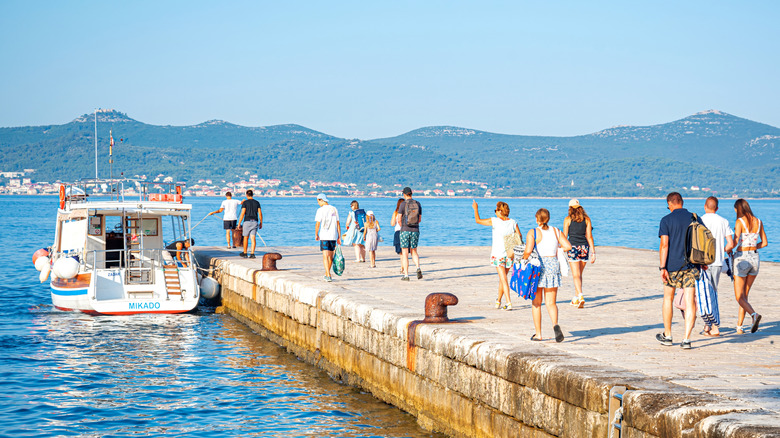
Zadar sits on the Croatian mainland at the edge of what's known as the Zadar Archipelago, a series of long, beautiful islands dotting this part of the Mediterranean. Small villages, olive groves, rocky shorelines, abundant seafood, and beautiful landscapes are just a few of the reasons to take a scenic detour to these islands during your trip to Zadar. Pašman and Ugljan are two connected islands right off the coast, with the latter being the one you see most prominently from the city. Iž is a serene haven that was historically a destination for well-to-do Zadar residents. Dugi Otok is a large island located farther to the west, known for its pristine beaches, forests, and some of the oldest archaeological remains found in Croatia. Then there's the iconic Galešnjak, known as the "Island of Love" for its distinctive heart shape.
Numerous villages dotting the Zadar Archipelago rely on a system of ferries, so it's possible to reach any of the islands fairly easily and inexpensively. Another way to experience the area, especially if your time is limited, is by booking a guided boat tour. Depending on the season, some cruises include snorkeling excursions and drinks. Another option is to hop on one of the city's iconic orange rowboat ferries, a service that has been running since at least the Middle Ages, and possibly much longer than that.
Soak up the sun at Kolovare Beach

Close to the old town of Zadar, family-friendly Kolovare Beach serves as a welcome refuge on hot summer days. While this is more of a city-adjacent oasis than one of the best beaches in all of Croatia, it's nonetheless a pleasant stop if you've had your fill of history and architecture, or simply want to dip your toes in the sea. Its shoreline is pebbly and paved in some areas, offering easy access to the stunning turquoise waters. You'll also find permanently-installed shade umbrellas you can snag — get there early for your best chance during the busier summer months. Free restrooms and showers are available, and refreshments can be purchased at several nearby restaurants and cafes.
Peruse Zadar's markets
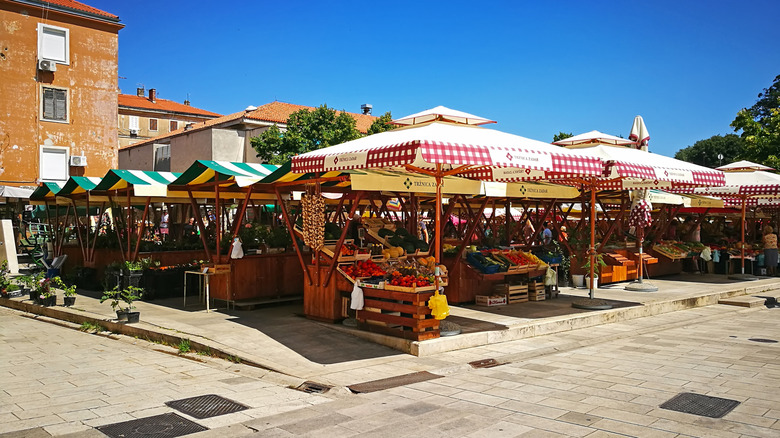
When it comes to finding keepsakes during your trip, Rick Steves says that the most important thing you can shop for while in Europe are cultural souvenirs. One excellent place to source unique gifts — along with snacks to take to the beach or back to the hotel — is a local market. Not only are you able to find regional delicacies, but you can feel good about supporting local suppliers and producers at the same time. Zadar's City Market is a pleasure to wander around, where you can peruse fresh fruits, vegetables, preserves, flowers, and more, arranged picturesquely under charming gingham canopies.
Located on the eastern side of the old town peninsula, you can also pop into the adjacent fish market for fresh-caught seafood. The market is open daily from 7 a.m. until 3 p.m., Monday through Saturday, and until noon on Sunday. In late November, the city transforms for its sprawling Christmas market, hosted at two squares —Trg Petra Zoranića and Trg Pet Bunara — bordering Queen Jelena Madijevka Park.
Go back in time at the Archaeological Museum of Zadar

Housed in a modern building overlooking the Roman Forum and situated directly across from the Church of St. Donatus, the Archaeological Museum of Zadar is a must-visit for enthusiasts of early civilizations, especially those based in northern Dalmatia. Founded in 1832, the museum now holds more than 100,000 artifacts that range from the Paleolithic period — also known as the Old Stone Age — to the 15th century.
Along with fascinating ancient pieces found in and around Croatia, you'll discover plenty of preserved Roman objects, monuments, and rare treasures from long-ago civilizations. Stop by the gift shop to grab a unique souvenir, including masterfully replicated ancient artifacts. The museum is open daily, and a standard admission ticket is €5 per adult, or just under $6 USD. If you'd like to see both the Archaeological Museum and the neighboring Church of St. Donatus, which is stewarded by the museum, combination tickets are also available.
Make a wish at the Zadar Sphinx

Located in the newer part of Zadar, in Parco di Villa Atilia, you'll find an early 20th-century curiosity in the form of a concrete sculpture of the Sphinx. Commissioned around 1918 by a local artist and conservator named Giovanni Smirich, this seemingly out-of-place monument was built in Smirich's garden as a way to honor his wife, who passed away that year. Built in tribute to their relationship, local lore says that the statue will grant love wishes. Surrounding the unique stone statue are historic Belle Epoque-style villas, built by Smirich as a summer vacation property for his family.
Methodology
To round up 13 of the best sights and destinations in and around Zadar, we drew from many of the region's most reputable tourism websites, including UnforgettableCroatia.com, Zadar.travel, and Zadar4Fun.com. For location-specific information, including opening hours, admission fees, current exhibitions, and history, we referred to official sources such as MAS-Zadar.hr, NP-Plitvicka-Jezera.hr, Zadar Archipelago.hr, TrznicaZadar.hr, AMZD.hr, and more. For supplementary details about each destination, including historical context, we consulted online encyclopedias, WorldHistory.org, Frommers.com, and UNESCO. To ensure that we highlighted truly standout attractions and experiences in Zadar, our guide also relies on traveler feedback and ratings published on trusted platforms such as Wanderlog, Get Your Guide, Tripadvisor, and Google Reviews.