

Amsterdam's 11 Must-Visit Tourist Attractions You Should Never Skip
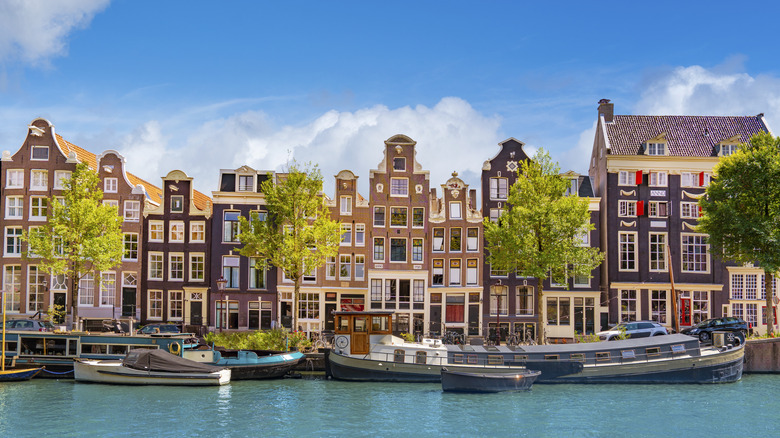
You probably don't need us to tell you why you should visit Amsterdam. Considering the city is one of the most-visited in Europe with 8.9 million annual visitors — a figure even more impressive considering its small size — you likely already know that this popular destination is as stunning as it is historic.
Filled with 60 miles of canals, charming architecture, and more than 30 lush parks, Amsterdam's postcard-worthy sights need no photoshopping. Plus, the city is also jam-packed with something for travelers of every interest — including beer (the city is the world's largest exporter of beer by volume), hearty Dutch food, history that dates back centuries, and museums ranging from those focusing on tulips to Vincent van Gogh's masterpieces.
However, what you might not know is how to trim down your itinerary so you can see the best that Amsterdam has to offer in a limited time. Thankfully, we did the hard work for you by evaluating the city's must-visit tourist destinations. Based on which spots have the most and best reviews on Tripadvisor, and which are the most famous and well-known all over, we assembled a list of the top 11 must-visit destinations you can't skip during your trip.
Amsterdam Tulip Museum
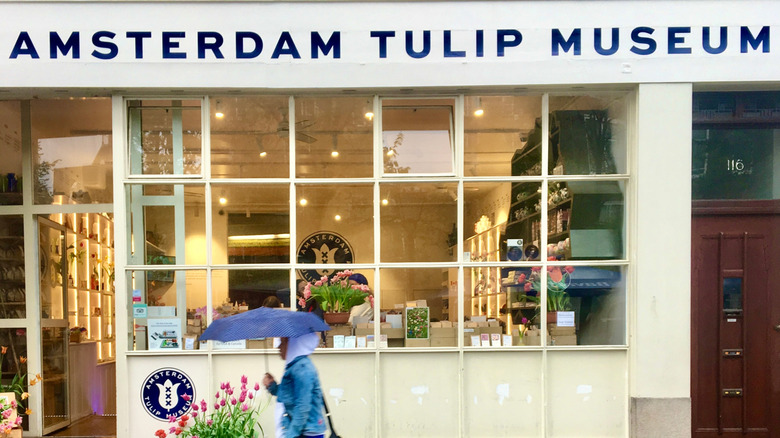
Even in bustling Amsterdam, you're bound to see countless colorful tulips brightening up the streets. That's no accident. This flower is a beloved cultural symbol, and people can delve into its past at the Amsterdam Tulip Museum. Better yet, visits can last less than an hour, so you can still make it to everything else on your itinerary.
Founded by tulip experts from the Noord-Holland region along the city's Prinsengracht canal, the museum shares four centuries of tulip history through exhibits, historic artifacts and documents, films, and more. Plus, its displays are suitable for people of all ages, which means even kids will get a kick out of a visit.
The museum explores everything from wild tulips to their rise to prominence during the Ottoman Empire, and present-day tulip-growing practices for around $8 per adult or roughly $18 for a family of two adults and two children under 15. One of the best museums in Amsterdam, it's definitely worth a visit. Afterward, check out the gift shop for tulip prints, locally-grown bulbs, books, Dutch souvenirs, and more.
Anne Frank House
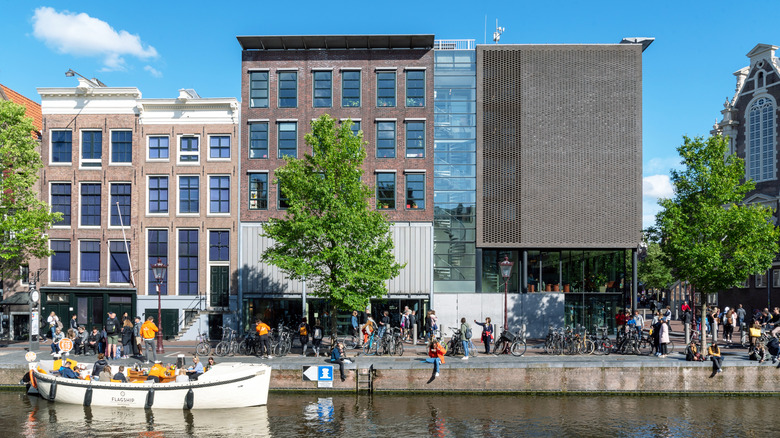
More than 30 million copies of Anne Frank's diary have been sold, chronicling the more-than two years she and her family spent hiding from the Nazis during World War II. At Prinsengracht 263 — which is now known as the Anne Frank House in Amsterdam — visitors can see where Frank wrote most of her "Diary of a Young Girl," tucked away within a secret annex that hid behind a hinged cabinet in her father's former office.
Items owned by Frank and her family, as well as the Van Pels family and Fritz Pfeffer, who the Franks hid with, remain in the annex — including Frank's red plaid diary. Within the tight space, visitors will feel what it was like to live in the annex every day, and learn about the atrocities committed against Jews through museum exhibits.
Visitors will also get to see Frank's bedroom, which she lined with postcards and photos of movie stars, reminding visitors she was a typical young girl who shouldn't have had to suffer. While here, look out for the spot where the parents marked their daughters' heights on a wall, and a map that the secret annex residents used to track the Allied Forces' position. More than one million people visit the Anne Frank House annually, and ticket prices range from $8 per child to around $19 for adults.
The Amsterdam canals
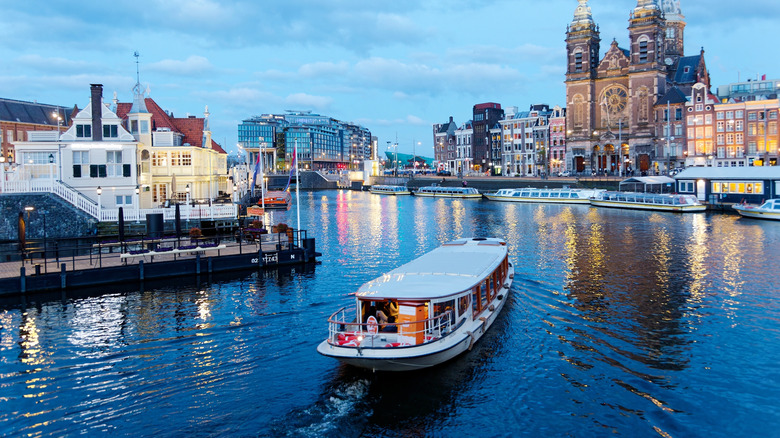
The canals are one sight in Amsterdam that you're going to see whether you set out to or not. Nearly 25 percent of the city is encompassed in water, making it the most watery city on the planet — so it's almost unfair that it's referred to as the Venice of the North. 62 miles of canals run through Amsterdam, most of which are used to get around the city and even live on, as a whopping 2,500 houseboats float in their waters. Despite the wide usage of the canals, they're cleaner than they have ever been and are home to fish, crabs, and birds.
When Amsterdam was founded in 1250, it was centered around the Aeme Stelle Redamme building, which translates to "dam in a watery area." The original Amsterdam canals were built for water management and protection, and were later used to move trade. However, as the years went on, almost half of the original canals were filled in order to construct streets and parking spaces.
To see the canals up close, rent a pedal boat, hop on a guided canal boat tour, or walk and bike along the water. In doing so, you'll get to meet some of Amsterdam's most iconic waterways — including the Herengracht Canal, which, commissioned in 1612, is the oldest canal in the city. Historically, only the wealthiest and most powerful Amsterdam residents called it home. Along with the other inner city canals, it's so imperative to Amsterdam that it's been designated a UNESCO World Heritage Site.
Dam Square
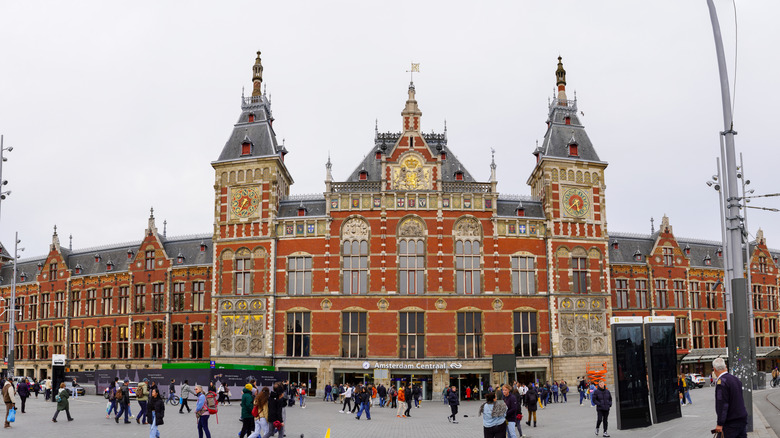
Just a 10-minute walk from Amsterdam's Central Station, Dam Square is another Amsterdam sight you're bound to see during your time in the city. And that's for the best, considering there is something to do here for travelers of all interests. From seeing the Royal Palace to the more family-friendly Madame Tussauds wax museum and Ripley's Believe It Or Not! outposts, the square is also filled with street performers, stores, restaurants, and food stands.
Visiting Dam Square is without a doubt one of the best things to do on a trip to Amsterdam. As the main square in the city, the area dates back to the 13th century, when a dam was built on the Amstel River and the surrounding space was used as a fish market. It later became the spot where the city's Royal Palace was completed in 1655, which was originally the town hall before the Dutch royal family moved in (that said, they no longer live there).
Other must-see sights include the Gothic-style Nieuwe Kerk (or New Church) — now used as a space to display art and exhibits — and the Beurs van Berlage concert hall. The National Monument, built in 1956 to commemorate people lost during World War II, also calls the square home. For those less interested in history, Dam Square is lined with modern shops, like a Swarovski and an H&M. Even more shopping can be had in Peek & Cloppenburg, a German department store, as well as De Bijenkorf, a Dutch department store, both housed in separate five-story buildings that date back more than a century.
Heineken Experience

Heineken is a household name around the world, but it got its start in the Dutch capital with its former brewery. Built in 1867, the space is now a tourist site that attracts one million people every year. Hailed as one of the best five things to do in Amsterdam if you don't have much time in the city, it all started when Gerard Adriaan Heineken — who was born and raised in Amsterdam — opened his namesake family-owned brewery after becoming a cutting-edge brewer.
Although the brewery closed in 1988, the space has been used for tours that walk visitors through the brand's history and brewing process since the 2000s. A basic 90-minute tour includes interactive exhibits and two Heineken beers. That said, visitors can upgrade their visit with another ticket option that also includes access to the brewery's rooftop, which offers all-encompassing views of the city, alongside three beers.
Alternatively, enjoy two iconic parts of Amsterdam — the Heineken brewery and the city's canals — with a brewery tour paired with a one-hour canal cruise and three beers. Finally, serious hopheads can also opt for the VIP tour led by a personal guide that leaves no bottle cap unturned in Heineken's storied past. It includes access to one of the brewery's secret bars and five beers, paired with small bites. Keep in mind, though, that all tours are only for people ages 18 and over.
Jordaan
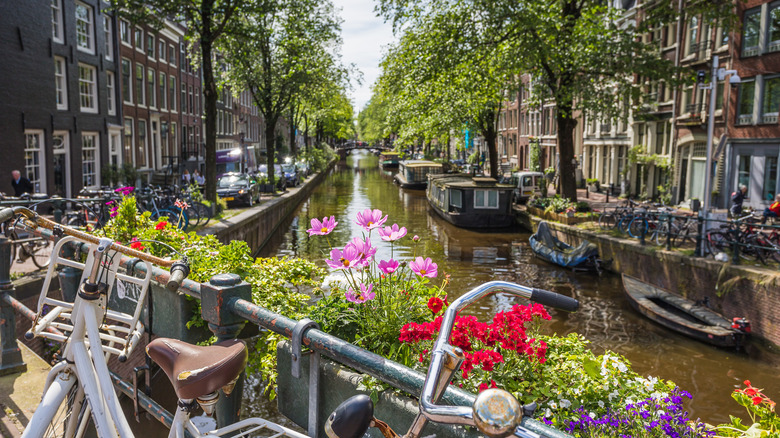
You'll explore several neighborhoods during your trek through Amsterdam, but none will be as picturesque or as beloved as the Jordaan. With tree-lined streets, glistening canals, quaint shops, chic restaurants, and amazing museums, it's the place to be in Amsterdam. Even its name is thought to reflect its beauty, as "Jordaan" is supposedly derived from "jardin", which means "garden" in French.
What's even more impressive is that the Jordaan used to be anything but Amsterdam's crown gem. When it was constructed in the 17th century, the area was intended for the city's many European immigrants and less well-off residents who needed cheap housing. There, people were crammed into small abodes without sewage systems or running water. However, over the past several decades, the area has gone through renovations by the Amsterdam government, as well as a resurgence courtesy of young professionals, artists, and students.
Some of the best things to do in the Jordaan include visiting its many museums — this includes the Anne Frank House, Amsterdam Tulip Museum, and Pianola Museum, which features musical instruments that play themselves. Meanwhile, art fiends can check out the neighborhood's countless contemporary art galleries. If all that exploring works up your appetite, make a reservation at one of the Jordaan's many restaurants — any of which are sure to satisfy your inner foodie while in Amsterdam. Considered some of the city's top-ranked spots, a few notable names include the LGBTQ-run R. de Rosa bar and café, which showcases the city's accepting attitude; and Toscanini, an Italian hotspot and an Amsterdam staple since 1985.
Noordermarkt
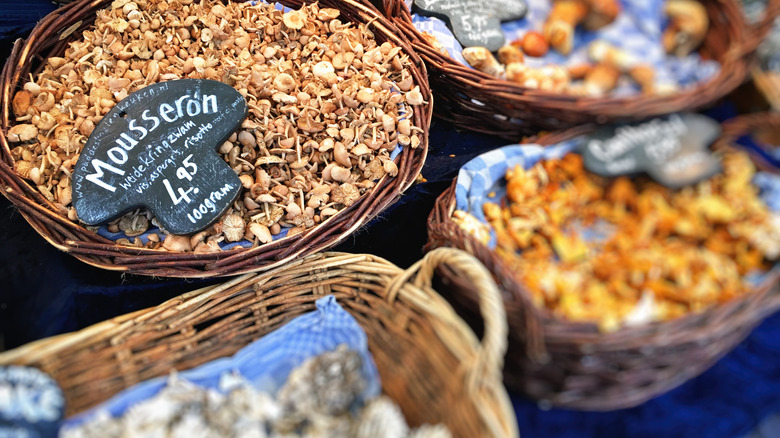
No matter if you're looking for books, antiques, tableware, or one-of-a-kind Amsterdam souvenirs, you'll find them at Noordermarkt. A 400-year-old outdoor market in the Jordaan, it runs from 9 a.m. to 4 p.m. every Saturday and 9 a.m. to 2 p.m. every Monday. That said, visitors looking for organic food should visit on Saturdays, while those looking for flea market finds, clothing, and accessories should stop by on Mondays. The entire gathering is centered around Noorderkerk, a Protestant church the market was named after, and surrounded by the Prinsengracht canal.
Now offering artisanal and handmade items, Noordermarkt had humble beginnings as a popular spot to buy practical kitchen necessities. Despite the market's simple roots and storied past — it is the second-oldest market in the city, after all — it's still an old-school spot visited by locals and tourists alike. People visit from throughout the country to check it out — especially the organic food market, which sells items like seafood, cheese, locally foraged mushrooms, bread, and even edible grass.
Our Lord in the Attic Museum
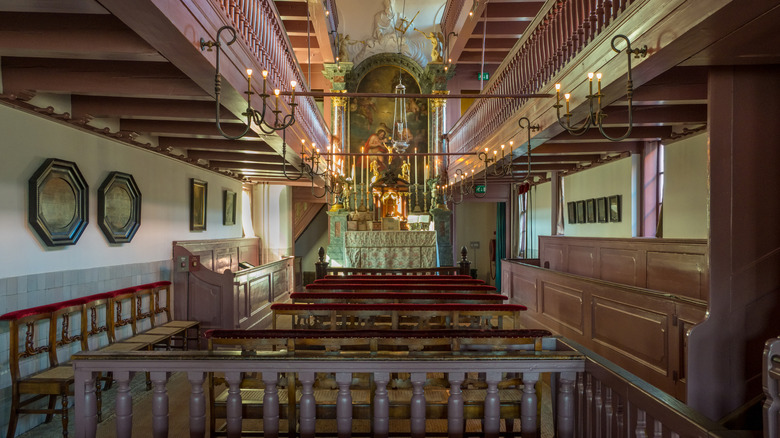
Many European cities have large, grand churches frequented by tourists. But one of Amsterdam's most famous churches couldn't be smaller. The Our Lord in the Attic Museum is a former church located in a 17th-century canal home's attic, commissioned by merchant and homeowner Jan Hartman. And seeing it is one of the 15 best experiences you can only have while in Amsterdam, according to travelers.
When Hartman, a Catholic, lived in the city, he wasn't allowed to worship his faith in public, since the local Protestant government had stipulated that religious freedom was permitted only if it was practiced discreetly and behind closed doors. As a result, Catholics resorted to building clandestine churches, also called schuilkerk, in order to worship freely. Hartman had his own church built across three floors of his home, and the space even had a live-in priest and could accommodate up to 150 people — although not comfortably.
Today, visitors can see the church and home, which looks much as it did centuries ago, complete with a kitchen, bedrooms, and a living room. It's the best example of a schuilkerk that still stands, and is one of just 68 sites on the European Union's cultural heritage list. The site, which has been a museum since 1888, also displays Dutch furniture, tableclocks, religious items, and silver.
Rijksmuseum
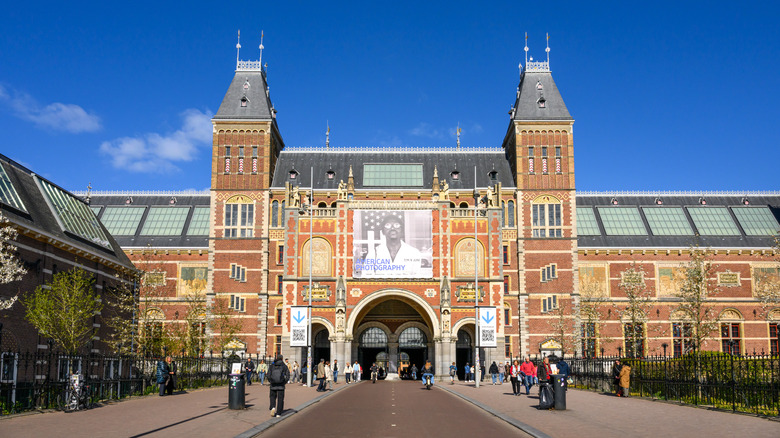
Inspired by world-famous art museums that celebrate national pride like the Louvre, the Rijksmuseum — whose name translates to the State Museum — is arguably one of the best art museums on the planet. Home to more than one million works, 8,000 of which are on display, it's a must-see for art lovers. A few notable masterpieces you can't miss include "The Night Watch" by Rembrandt, "Self-portrait" by Vincent Van Gogh, "The Milkmaid" by Johannes Vermeer, and "The Threatened Swan" by Jan Asselijn. Altogether, though, its collections span everything from 17th-century Dutch Golden Age works to etchings and drawings on paper by various artists, applied arts, and much more spread across four levels and nearly a mile of galleries.
Even the building that houses Rijksmuseum is a work of art. The original collection, which held 200 items, was first stored in various locations throughout the country — including Amsterdam's Royal Palace, at the demand of Louis Napoleon Bonaparte. Today, they're housed in a stunning building designed by architect Pierre Cuypers, who also designed Amsterdam's Central Station. The neo-Gothic and Dutch Renaissance-style building opened in 1885 after nearly a decade of construction, as well as debates over the architect's stylistic choices. Beyond the galleries, the site is also home to Michelin-starred restaurant Rijks, a gift shop, a greenhouse, and gardens that host rotating sculpture exhibitions.
Van Gogh Museum
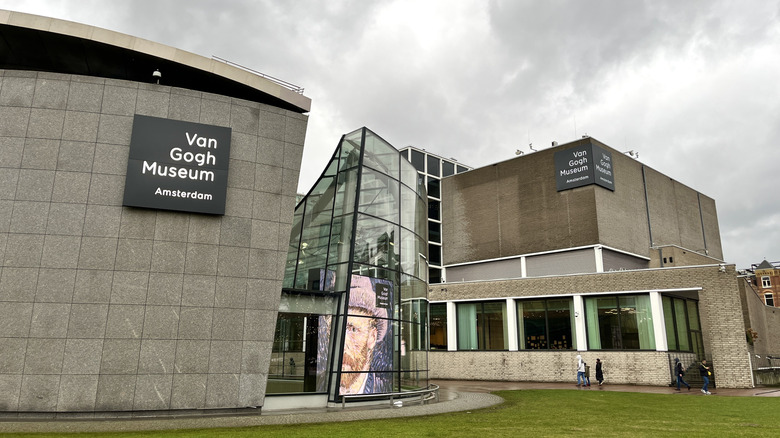
If works by Vincent van Gogh are what you're after, then Rijksmuseum shouldn't be your only art destination in Amsterdam. First opened in 1973, the city's Van Gogh Museum is home to the largest collection of the artist's works. This included some of his most famous pieces like "The Potato Eaters," "Almond Blossom," "Sunflowers," and the haunting "Wheatfield with Crows," one of the last pieces van Gogh painted before his death. All in all, the museum's collection spans 200 paintings, 500 drawings, and 700 letters.
Alongside van Gogh, visitors can also see works by other influential artists — including David Hockney, Etel Adnan, and Edvard Munch — since the museum often hosts rotating exhibits, as well as plenty of awe-inspiring permanent pieces from its permanent collection by other 19th-century artists.
It's recommended that visitors purchase their tickets in advance, as this is one of the most popular museums in the world, let alone in Amsterdam. In fact, according to travel pro Rick Steves, the Van Gogh Museum is one of Amsterdam's "big three" museums that you just can't (and shouldn't) skip.
Vondelpark
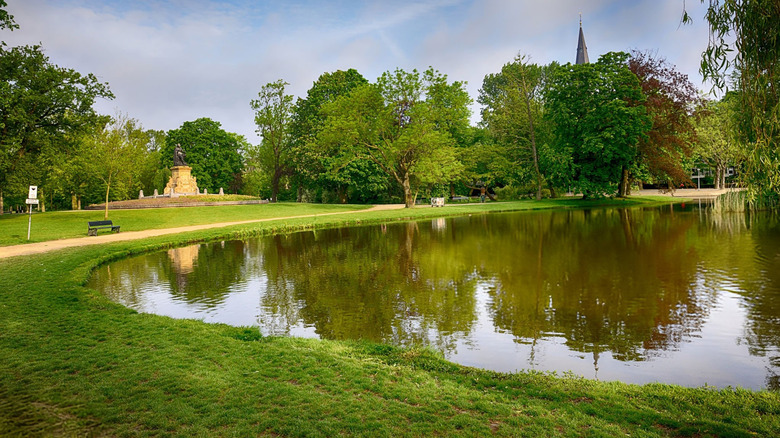
As a major tourist city, it's no secret that Amsterdam can get busy and congested. Thankfully, a green respite can be found at Vondelpark, which is considered the most famous city park in the country and the biggest in the city.
Spread across 116 acres, people can walk their dogs, cycle, picnic, roller skate, watch daily movie screenings, and enjoy outdoor summer weekend performances like comedy shows, plays, and concerts. Even if you don't have a specific activity in mind, you can relish in the park's 69 sculptures, including one by Pablo Picasso, and its rose garden filled with 70 types of roses, ponds, bridges, paths, and lawns. Once you get hungry, check out some of the on-site cafes, such as Blauwe Theehuis or Vondelpark3. If you don't even know where to start, hop on one of the park's guided 90-minute tours for a comprehensive overview.
With so much to do no matter the season or time of day, it's no surprise that 12 million people flock to this beloved park in the Old South neighborhood every year. And they're lucky to be able to. The now-public park — designed by architect Jan David Zocher — began as a private hideaway when it first opened in 1865. Two years later, the name Vondelpark began to stick instead after a statue of poet and playwright Joost van den Vondel was implemented. In 1953, the park went public and was later named as a national monument.
Methodology
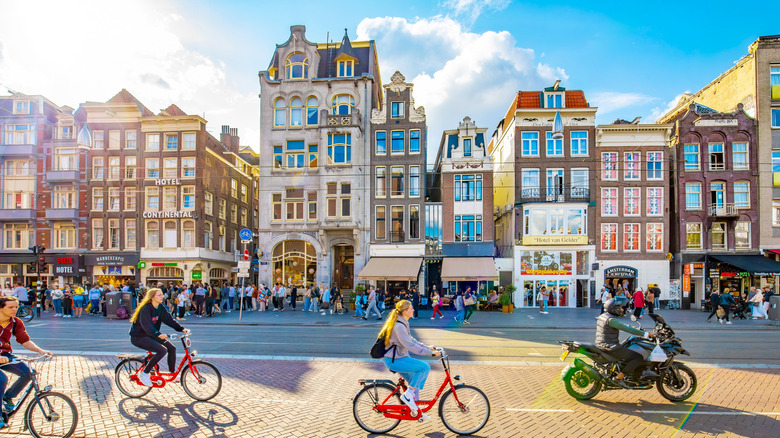
Make your way through any stacked-high Amsterdam guidebook and you're bound to feel overwhelmed. That's for good reason: This renowned city has enough to do to keep even the most ambitious tourist busy endlessly, let alone for the week or two that most allot. To help travelers avoid choice overload, we scoured through trusted publications and top-rated visitor platforms to whittle down the 11 best things you must do in Amsterdam.
To do so, we first evaluated which Amsterdam sites have the best and most reviews on Tripadvisor, ensuring visitors can feel confident they're choosing experiences that consistently impress travelers from around the world.
Additionally, we also considered which spots are the most famous and notorious, such as the Anne Frank House —as her story is deeply familiar to people all over the world — and the Van Gogh Museum, which is home to the largest collection of the artist's works on the planet. Overall, this helped us create a balanced list that reflects both global popularity and meaningful cultural value.