

Rick Steves Fell In Love With The Iconic Matterhorn In This Swiss Alps Destination
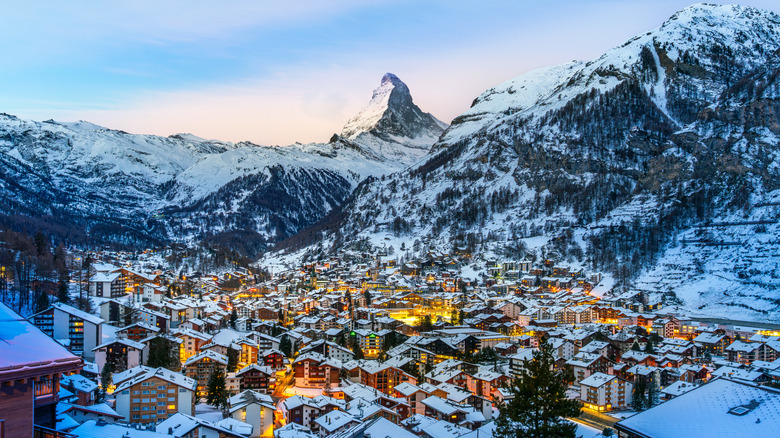
In his blog, travel writer and TV host Rick Steves calls the Matterhorn the "Stonehenge of Switzerland." Its mystical draw, he says, is one of many reasons he is unashamed to admit that he has fallen in love with the iconic mountain. However, it's the village of Zermatt that sealed the deal. This small yet charming town is the perfect companion to the mountainous star of the show, and Steves suggests that timing your visit with clear weather might offer unobstructed views of the Matterhorn's roughly 14,700-foot peak.
Zermatt is considered one of Switzerland's prettiest and most iconic destinations. And, as Steves points out in his blog, it didn't take long for residents to see the economic benefit of embracing mountain tourism. It's estimated that over 2 million visitors travel to Zermatt each year, and transportation within the city is regulated to official electric vehicles only. The lack of vehicles makes strolling the streets of Zermatt "a joy," Steves writes, pointing out that even bicycles are forbidden along the village's main street.
An old village, Zermatt's beginnings as a tourist destination date back to the 1860s, when Edward Whymper and his party became the first documented climbers to ascend the Matterhorn. When the first railways to carry passengers to Zermatt from the valley below opened in the 1890s, the village saw an increase in visitors in the summer. By the 1920s, hotels had opened in Zermatt, welcoming travelers throughout the year and transforming the sleepy village into a tourist destination Steves calls a "high-class mountain resort."
A charming village at the foot of the Matterhorn
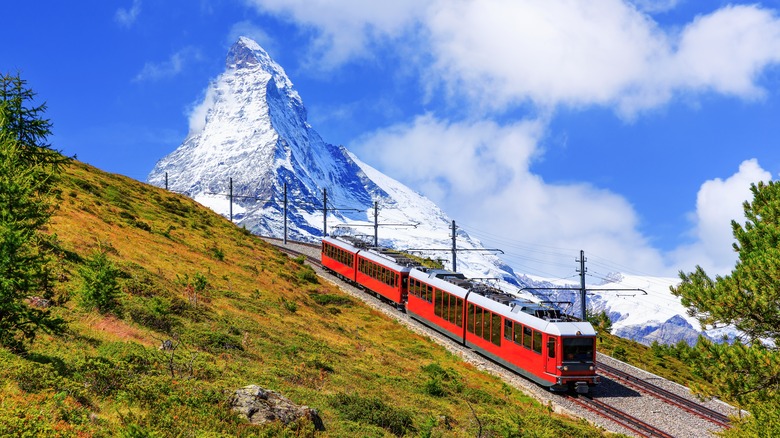
Part of the Valais Alps — which Steves considers Europe's greatest natural gift — the Matterhorn is the most photographed mountain in the world, and it's easy to see why. Better yet, the village of Zermatt, sitting near its base, is a convenient location for travelers hoping to see or even explore the iconic mountain. However, simply being in Zermatt does not guarantee you will catch a glimpse of the iconic peak, Steves says. In fact, during his first two visits, bad weather obstructed his long-awaited mountain views.
Nonetheless, that doesn't mean Zermatt's charm fades with the sun. Nearly 150 local shops are ready to welcome visitors looking for cheese and unique souvenirs, and more than 170 restaurants are available in or near the village for local bites. Sitting among them are a number of hotels, apartments, and lodges ready to host overnight guests. Along the town streets, cafes and bars also offer different experiences to diverse crowds. That said, it's important to remember that some of these establishments are only open during the warmer months, while others cater to winter crowds.
Steves recommends visiting Zermatt in mid-summer to early fall, adding that his spectacular views of the Matterhorn were captured in August. Meanwhile, in the winter months, Zermatt turns into the highest ski resort in Europe, welcoming skiers and snowboarders looking to conquer its many trails. Day and evening ski trips are available, which makes the snow experience near the Matterhorn one you'll always remember.
Planning your trip to Zermatt
Since no cars are allowed within Zermatt, traveling to the village is limited to trains and taxis from nearby Täsch. Don't worry, though: the ride is short and usually takes less than 15 minutes. The nearest airports offering international arrivals are Zurich (ZRH) and Geneva (GVA), both roughly 140 miles away. Steves jokes that Zermatt's location is "not quite on the way to anywhere," yet it remains a popular tourist destination.
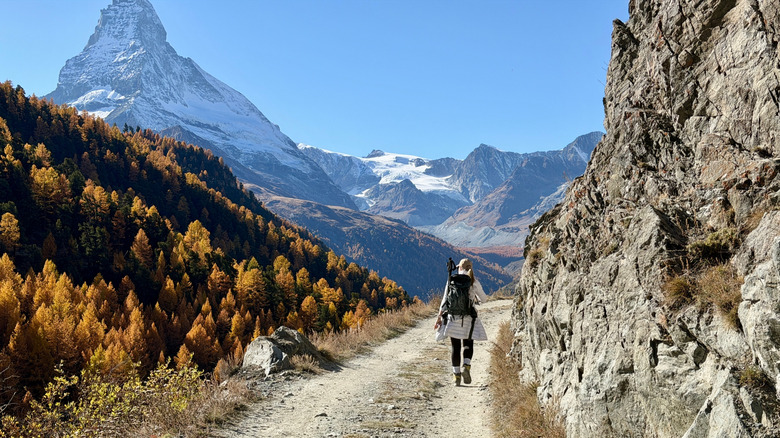
The village itself makes its beautiful surroundings easy to reach for its guests. Trails are clearly marked for explorers no matter the time of year they choose for their adventure. Additionally, multiple cable car and tram options offer tourists easy transport to surrounding summits and up-close views of the Matterhorn. The appropriately named Matterhorn Express, for example, has several routes from Zermatt. However, Steves personally recommends trips to Gornergrat, calling it a "best-of-all-worlds" experience.
Deciding what time of year to visit Zermatt depends on your individual interests. From December to February, cold weather and snowy landscapes are the norm. And although the beauty of winter is prevalent at this time of the year, so is the need for layered clothing and warm fireside moments. Meanwhile, June to September bring milder temperatures, with averages hovering around 60 degrees Fahrenheit accompanied by chirping birds and blossoming flowers. Locals say the worst time to visit is in January and February, when the holiday cheer has left the village and the cold, dark winter has fully set in.