

The One Thing You Should Never, Ever Say In Response To 'Thank You' Outside Of The US
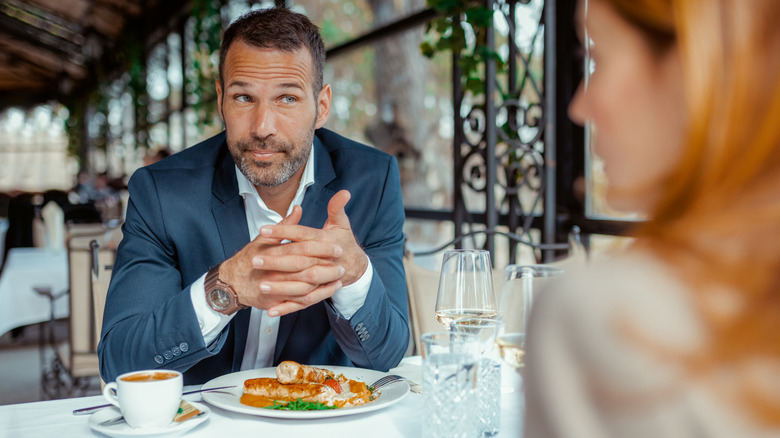
There are certain things that make Americans pretty easy to identify when we're out of our own country. We're commonly much louder than everyone else. We tend to tip in places where it isn't expected, or more than is typical. We may be wearing shirts with logos from our favorite sports teams. Unfortunately, however, we're also known for saying something that can be perceived as rude. In response to someone saying "thank you" to us, we'll often respond with "mm-hm," or "sure." There are plenty of variations like "no biggie," "it's all good," or simply a smile. While the casual response isn't something you likely think about in your daily life, many people from outside the country feel that it's dismissive. In fact, there have been a number of Tiktok videos about this topic, like the one from @shearingshedvologs, which you can check out below.
@shearingshedvlogs I thought she was being sarcastic but "mmm-hmm" is just how Americans say "your welcome" #losangeles #california #aussie #fyp #foryourpage
The poster also mentioned that some Americans may find it rude or passive aggressive to say, "you're welcome," which is something that is often pinned on Gen Z. While in America, the tone of your voice and the expression on your face may make an "mm-hm" as friendly as can be, it's not something that you should do if you're visiting another country. Respecting cultural differences while on vacation can make a huge difference in your experience.
What to say in response to 'thank you' in other countries

Sometimes things we do in America just don't fly in other countries. For instance, you may use the peace or victory sign with two fingers held up in a V in a photo. However, it's a good idea to avoid that common gesture in Great Britain, as holding your hands in a certain direction while doing it can be perceived as obscene. When traveling to other countries, if you're conversing in English, respond to "thank you" with a more formal, "you're welcome." In addition, learning the phrase in the local language is a good idea.
It's not that there is anything inherently wrong with the way we respond to "thank you" in the U.S. The idea of saying "mm-hm" or any other casual and informal response can put other people at ease in America. While Gen Z gets the brunt of the blame for this, Millennials and Gen X do it as well. In fact, another Tiktoker posted a response to an earlier video which spoke about the rudeness of the American "mm-hm" with a great explanation, saying that there is an "implied politeness" for younger Americans in the casual response to a "thank you." You can check out that video below.
@bookswithamanda212 "No problem" and "mhmm" are both equally polite ways to respond to "thank you" in the United States, especially among the younger generations (Gen Z, Millennials and most Gen X). At this point I should get an honorary doctorate in Anthropology and Sociology with all the work I'm putting in to discuss cultural differences between the USA and everyone else. #america #american #usa_tiktok #usa🇺🇸 #usa #culture #culturaldifference #politeness #australians #fypage #fyp
Still, when you're away from home, respecting the customs of the place you're visiting is just the right thing to do. We often expect the same when people visit America. Consider that we tend to speak differently to different people, like using more formal language with a boss or being more casual with friends. Being more formal with our response in other countries is simply polite. Finally, you may also want to look at common etiquette rules in Europe around dining if you're heading there so you know what to expect.