

14 Of Lisbon's Most Amazing Tourist Attractions To Add To Your Itinerary
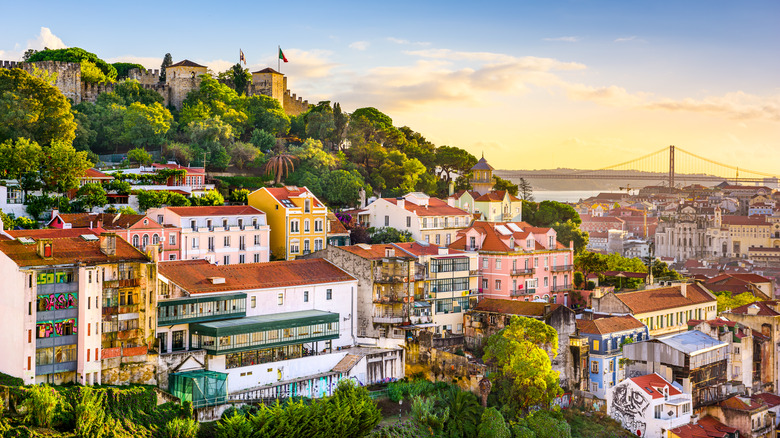
With its hilly neighborhoods, historic landmarks, and buildings clad in famously patterned tiles, Lisbon is a European city like no other. It's immanently walkable, yet known for its charming trams and funiculars. It has a little of everything — Praça do Comércio buzzes with people and energy, while the more underrated Madragoa is a secret pocket of color, cobblestones, and coastal vibes. Lisbon is Portugal's capital city, situated on the northern bank of the Tagus River. Ferries run across the river regularly to the artsy enclave of Barreiro, home to a former industrial park that has since been transformed into shops and art studios. It's also within easy distance to other popular places on the west coast of Portugal, like Sintra, Cascais, and Cabo da Roca, a little-known day trip destination that Rick Steves suggests for a unique sunset experience.
Humans have occupied modern-day Lisbon since at least 1200 B.C., when the ancient Phoenicians may have capitalized on the water access and strategic location to operate a trading post. But, it was the Romans who first seized control of the area in the year 205 BC. Over the centuries, power over Lisbon continued to change hands frequently, and its architectural heritage is a fantastic illustration of these layered histories. Whether it's your first visit to Lisbon or you're heading back for more, keep reading for 14 amazing tourist attractions to add to your itinerary.
Stroll around Alfama

Located centrally, just northeast of Praça do Comércio, Alfama is Lisbon's oldest neighborhood, brimming with historic architecture and steep, narrow streets. It's a must-visit for amazing views from the inclines, where you'll discover the glossy tiled facades of residences that line its stairwells and lanes. Cruzes da Sé is a cobbled stretch that's perfect for grabbing a bite to eat al fresco next to Lisbon Cathedral, known as Sé de Lisboa in Portuguese, with views over the rooftops. The Sé is a striking feature of Alfama, and it also holds the distinction of being Lisbon's oldest church, as it was first constructed in 1147.
Another impressive site, Castelo de São Jorge, crowns the top of a hill. Its current appearance dates to possibly as far back as the 11th century — more on that later. Then, climb to Miradouro de Santa Luzia for a stunning panoramic vista over the red roofs of the city and across the river, where a beautiful garden with decorative tile mosaics offers the perfect backdrop for a photo or two.
Tour Jerónimos Monastery

Rising like a meticulously iced cake from its gardens, Jerónimos Monastery is a truly astonishing and elaborate architectural gem near the Tagus River. Formally called the Royal Monastery of Santa Maria de Belém, the building was commissioned in 1502. It took about a century for the monastery to reach completion, which isn't much of a surprise when considering the immense amount of work and expertise that went into this late Gothic masterpiece.
Originally home to monks of the Order of St. Jerome, the monastery became abandoned in the 1830s, and was later used to hold the tombs of Portuguese royals. It's recognized as a UNESCO World Heritage Site, serving as an extraordinary example of Portuguese vernacular architecture. It's located near the Tower of Belém, a symbol of national pride that commemorates explorer Vasco de Gama, who was the first person to sail to India from Europe. The monastery's church and cloister are the most-visited heritage site in Portugal, making it a good idea to book a ticket in advance online. As of this writing, adult admission is €18, equivalent to nearly $21 USD. Seniors and young people between the ages of 13 and 24 are half-price, and children up to 12 years old can visit for free.
See Torre de Belém and the Monument to the Discoveries

In addition to celebrating Portugal's accomplishments, the monumental Tower of Belém is part of a fortification system completed in 1514 that was designed to protect Lisbon from invaders. Like the nearby Jerónimos Monastery, its Manueline — Portuguese late Gothic — style is a sculpted treasure at the edge of the water, complete with ornate turrets and crenellations. The tower is currently closed for major renovations, with a reopening date set for sometime in 2026.
A scenic 15-minute walk east of the Tower of Belém, around the picturesque marina, is the colossal — and climbable — Monument to the Discoveries. Also called the Padrão dos Descobrimentos, the giant memorial opened officially in 1960, but was actually first constructed for temporary use in 1940 for the Portuguese World Exhibition. Its design reflects a large ship, its prow manned by Henry the Navigator — a prince who sponsored numerous maritime expeditions — and accompanied by numerous notable explorers and mariners who helped cement Portugal's important role during the Age of Discovery. Standing 170 feet tall, the monument's observation deck boasts wonderful views of not only Lisbon, but also of the giant marble compass mosaic directly below the structure.
Ascend to Castelo de São Jorge

Castelo de São Jorge, or St. George Castle, is a striking hilltop fortification crowning Alfama. People have occupied this site for thousands of years, from an Iron Age settlement, to the ancient Romans, to Islamic communities — however, very little evidence remains of these early occupations. The castle that exists today is a product of the Middle Ages, featuring 10 massive turrets, a moat, and inscriptions that trace back to the medieval period.
Its elevated location unfortunately did very little to protect Castelo de São Jorge from a devastating earthquake that virtually leveled Lisbon in 1755. Even though seismic measuring equipment didn't yet exist, estimates put the strongest tremor at a magnitude of around 8.0. Buildings collapsed, fires spread, and a 20-foot tsunami took the lives of thousands. Like other important landmarks in the city, significant efforts were made to restore Castelo de São Jorge to its former glory. Today, you can visit its gardens, take in gorgeous views over the city, and join guided tours. The "Discovering the Castle" tour includes access to an archaeological site with evidence of settlements from as far back as the 7th century.
Explore Bairro Alto
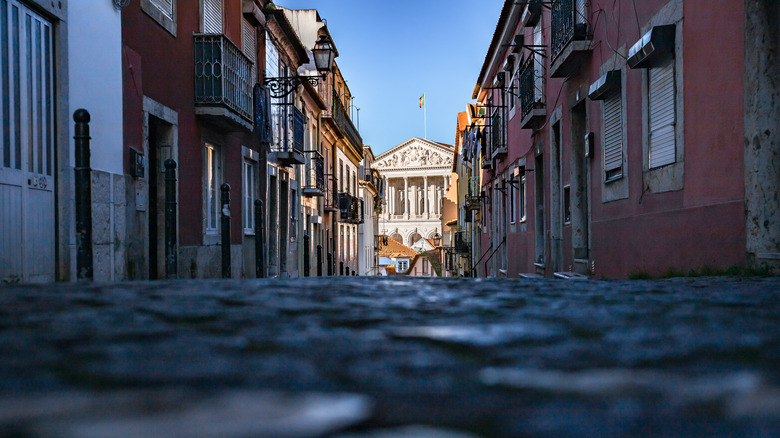
Perched high on a hill, the neighborhood of Bairro Alto is a picturesque district of Lisbon known for its artsy vibes and great nightlife. Its narrow streets are lined with cafes and bars where you can sip "ginjinha," a traditional Portuguese sour cherry liqueur. And while Bairro Alto is one of downtown's oldest neighborhoods, it's also long been considered the most hip. In the early 20th century, it was a hotspot for fans of a bohemian lifestyle, and it became well-known in the 1980s as a locus of exciting street parties on the weekends.
These days, Bairro Alto is a little more laid-back, but it remains a hub for great restaurants like A Nossa Casa, Taberna de Bairro Alto, and the lively Jam Club Restaurant Bar, which features live music. In fact, it's part of the reason why Rick Steves claims that Lisbon is a great destination for foodies. For beautiful views over Lisbon's hills, head to the São Pedro de Alcântara viewpoint, and take a peek inside the elaborate interiors of churches like Igreja de São Roque and Igreja de Santa Catarina. Then, take a little detour to Lisbon's most-photographed street in a bohemian neighborhood with iconic stairs and scenic overlooks.
Wander around Praça do Comércio
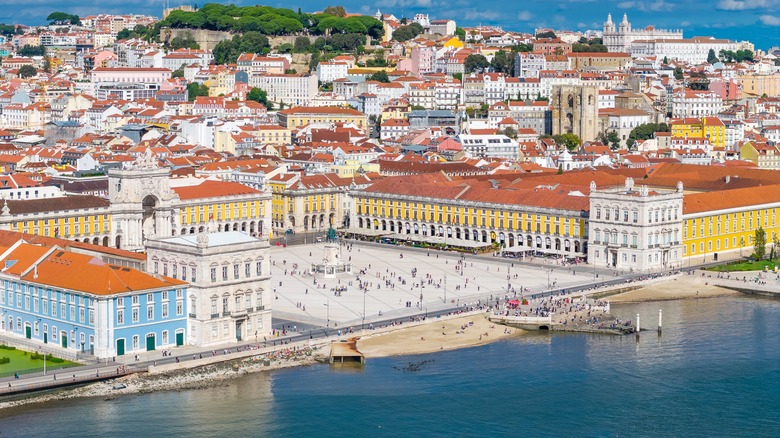
Before Lisbon's devastating earthquake in 1755, the Royal Palace sat in a waterfront location at the nexus of downtown. Rather than rebuild in the same spot, the city smartly turned the area into a central port that reflected the capital's — and by extension, all of Portugal's — strong emphasis on maritime trade. Praça do Comércio is surrounded by buildings on three sides, including a huge and ornate triumphal arch that welcomes pedestrians onto Rua Augusta, a busy shopping street. People-watch at one of many dining spots, including the Museu da Cerveja, or Beer Museum, which features more than 100 craft brews from around Portugal.
The open side of Praça do Comércio borders the northern bank of the Tagus, offering wonderful views over the water and providing a uniquely open feel. A statue of King José I on horseback stands sentry in the middle of Praça do Comércio, and a historic pier known as Cais das Colunas features two namesake columns that were part of a redesign following the 1755 earthquake, representing devotion and wisdom.
Delve into heritage at the National Tile Museum

Portugal has a long and influential history in the ceramics industry, especially in the form of "azulejos," or decorative tiles. Their historical roots go back to the 14th century, and a range of styles can be seen all over the city, often covering the facades of entire buildings, and in other cases, used to depict artistic or historical scenes in gardens and other sites. The National Tile Museum delves into the full backstory of this art form, with a vast collection of stunning glazed tiles produced from the latter part of the 15th century to the present day. The building itself is also a treasure, first founded in 1509 as a convent, making it a unique setting for an eclectic and aesthetically marvelous display of azulejos, which range from rare fragments to elaborate compositions.
As of this writing, the National Tile Museum is closed for renovations and is expected to reopen sometime in 2026. The museum has also teamed up with a heritage organization in São Luis, on the northeast coast of Brazil, to open a partner museum dedicated to the Portuguese colonial city's own tile heritage, which is scheduled to open in 2027.
Enjoy views at Miradouro da Senhora do Monte
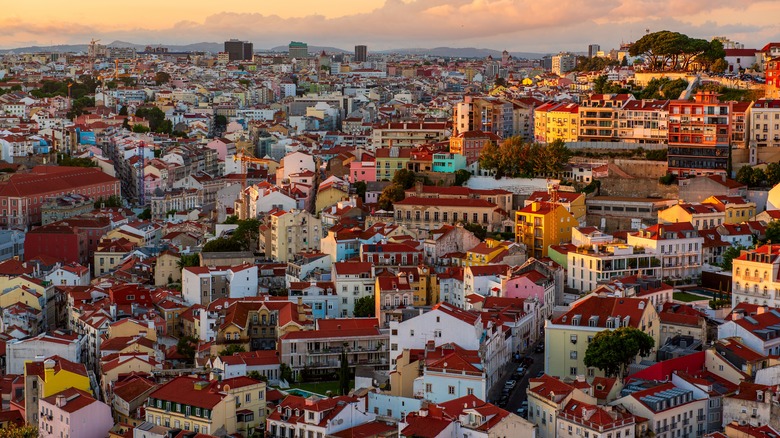
Lisbon is sometimes referred to as the "City of Seven Hills" for its number of rolling landforms, which make for some steep climbs and beautiful vistas from various outlooks. Some scenic viewpoints, like Miradouro de Santa Luzia, include lush gardens and tile artworks. Miradouro das Portas do Sol is located near Castelo de São Jorge and features a balcony with sweeping vistas of the rooftops of Alfama. Then there's the popular Miradouro da Senhora do Monte, a shady oasis that offers amazing views over the whole city. Many of the popular viewpoints in Lisbon can get busy during the day, but if you head there early for the sunrise, it's a treat to see the city wake up.
Sink your teeth into Portuguese tarts

Portugal is a haven for foodies, from its delicious fried sardines known as "petingas fritas," to the meaty "francesinha" sandwich that originated in Porto, a beautiful city with historic gardens, strutting peacocks, and river views. Then there's the "pastel de nata," a famous Portuguese egg custard tart that will undoubtedly satisfy your sweet tooth in Lisbon.
By far, the most popular place to try them is Pastéis de Belém, which serves the rich and flaky delicacies warm in a charming, vintage cafeteria-like setting. The bakery has been making pastéis de nata since 1837, based on a top-secret recipe from the nearby Jerónimos Monastery. Pastéis de Belém regularly has long queues, although they do move fast — they sling around 20,000 pastries every day. You can also take your pick from savory rolls and other assorted treats. Fortunately, there are also plenty of other places to grab a fresh pastel de nata, like Fábrica de Nata and Manteigaria, both of which have several locations around Lisbon.
Take a historic tram

One of the most iconic sights in Lisbon is its postcard-worthy bright yellow funiculars, which make their way up and down the city's steep inclines. One very popular tourist route is Tram 28, which curves through the downtown area and passes stops that boast amazing views, like Graça, Largo das Portas do Sol, and Estrela, where you can visit the gorgeous Basílica de Estrela. Tram 28 runs daily from morning to night and the service is frequent, with trains arriving every 9 to 12 minutes. The full ride lasts about an hour or less, making it a unique and affordable way to experience the city from the comfort of your seat. Fares are €3.20 per person, and tickets can be purchased directly from the driver with either cash or card.
It's worth noting that, at the time of this writing, Lisbon's funiculars are closed to the public following a disastrous crash that occurred in early September 2025 on the Glória trolley, due to a malfunctioning cable. An investigation and safety inspections remain underway.
If you plan to take advantage of Lisbon's public transportation system, a reloadable Viva Viagem Card or the tourist-friendly Lisboa Card provides unbeatable value. The latter includes unlimited transportation for up to 24, 48, or 72 hours, as well as free admission to more than 50 attractions.
Visit the Calouste Gulbenkian Museum
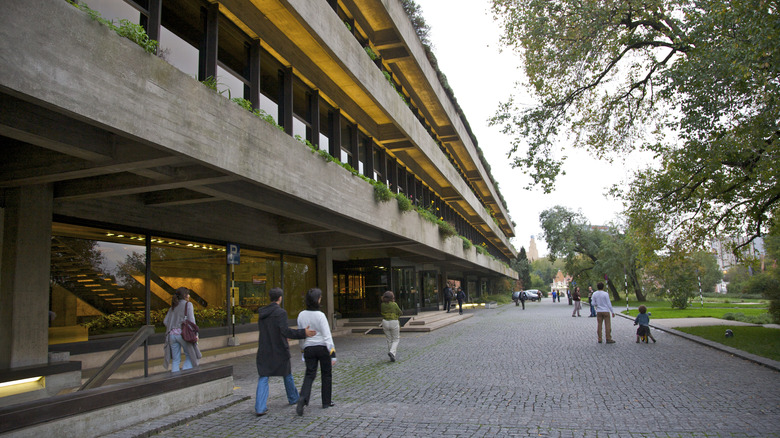
This respected art collection covers 5,000 years of human creativity, and it's all due to the personal vision of the museum's namesake, Armenian businessman Calouste Gulbenkian. Located in a sleek building within a modern garden, visitors will find everything from ancient Greek vessels and illuminated medieval manuscripts, to French decorative arts and portrait paintings. In addition to what's known as the Founder's Collection, the Calouste Gulbenkian Foundation also exhibits a large number of modern and contemporary pieces at Centro de Arte Moderna (CAM) with an emphasis on Portuguese artists.
The Founder's Collection is closed for renovations until July 2026. In the meantime, see a number of temporary exhibitions at the beautiful CAM building, or explore the serene surrounding gardens. A number of different ticket options are available, depending on how many exhibitions you plan to explore, with standard admission ranging from €8 to €14 per person.
Discover contemporary art and design at MAAT

Lisbon's Museum of Art, Architecture, and Technology (MAAT) is yet another marvel of engineering, with a dynamic program of rotating exhibitions by international artists and designers. Located right on the bank of the Tagus River with a striking view of 25 de Abril Bridge — the longest suspension bridge in Europe at 1.4 miles — the MAAT is a gleaming, white, high-tech structure. Its program consists of numerous exhibitions and events organized around a range of themes and visual mediums, including large-scale installations.
MAAT Café & Kitchen offers great views over the Tagus, whether you're in the mood for a coffee, lunch, dinner, or late-night cocktails. Unlike most museum restaurants, MAAT Café & Kitchen is open daily until the early morning hours. The MAAT exhibition spaces are open every day except for Tuesday, and standard admission is €15 for visitors and €11 for residents of Portugal.
Take a day trip to Sintra

Easily reached by train from the city, a visit to Sintra is a treat for its picturesque seaside vibes and the amazing Palacio da Pena, a historic Portuguese palace boasting one of the most unique designs in all of Europe. This spectacular, colorful castle sits on a hilltop and is among the area's most popular destinations, with stunning views over the surrounding landscape.
Near the old town center, another historic estate called Quinta da Regaleira, which dates back to the late 19th century, features ornate architectur, gardens, and a fascinating "Initiation Well." This mesmerizing curiosity drops nearly 90 feet below ground and can be accessed by a remarkable spiral staircase. Other historic sites well worth a visit include Castelo dos Mouros, which highlights the Islamic presence in Sintra by way of a military fort, and the Parque e Palácio de Monserrate, another stunning example of 19th-century Romanticism in its architectural and landscape design.
Sintra is less than an hour by train from Lisbon, or only about a half-hour drive. It is located within the expansive Parque Natural de Sintra-Cascais, a 36,000-acre territory dotted with charming villages and punctuated by the dramatic cliffs of Cabo da Roca on the Atlantic Ocean.
Learn about marine life at the Lisbon Oceanarium

Swimming around in more than 1.8 million gallons of saltwater, around 8,000 animals call the Lisbon Oceanarium home. You'll find all species of fish and invertebrates — alongside puffins, penguins, and sea otters — in this expansive aquarium, which is one of Portugal's most-visited attractions.
Located just northeast of the city center, Lisbon Oceanarium hovers at the edge of the Tagus River, peering out at the unique ecological region where the river empties into a huge estuary on its way to the Atlantic Ocean. A visit here is perfect for the whole family, and numerous ticket options are available depending on how you'd like to experience the aquarium, including guided tours. A standard ticket to visit Lisbon Oceanarium, as of this writing, is €25.
Methodology

Lisbon is a diverse, historic, and picturesque city with so much to discover. It's safe to say that one trip will leave you longing to return again and again. To gather the most essential attractions and destinations in Lisbon, we looked to the expertise of regional tourism websites like VisitLisboa.com, Lisbon.net, OffPathPortugal.com, and LisbonPortugalTourism.com. For location-specific information that is useful for visitors, such as ticket prices, opening hours, current exhibitions, and historical context, we referred to official websites such as CastelodeSaoJorge.pt, MuseusaoRoque.scml.pt, Gulbenkian.pt, MAAT.pt, Oceanario.pt, and many more. We also consulted HistoryHit.com, UNESCO, and online encyclopedias for additional background information. Along with the author's personal experiences while visiting Lisbon, this guide draws from trusted platforms such as Get Your Guide, Tripadvisor, and Google Reviews for feedback from previous visitors, focusing on the destinations with consistent high ratings and positive reviews.