

Malaysia's 10 Must-Visit Tourist Attractions To Add To Your Bucket List

Malaysia once sat at the crossroads of historic trading corridors, which created a fusion of Malay, Chinese, Indian, and indigenous communities. It truly is a country of diversity, and this shows in almost everything — from its famed cuisine to its mosaic of architecture. The country is a religious smorgasbord, too, but Islam represents the majority. And although Malaysia's strict rules around alcohol might surprise you, you'll still find it relatively easy to drink a cold beer or a glass of wine in places like Kuala Lumpur.
English is widely spoken, and Malaysians are genuine people who are all too willing to help. Plus, the varied and generally budget-friendly transportation infrastructure also contributes to the country's ease of travel. However, there is a catch: costs in Malaysia run a bit higher than in most other Southeast Asian nations.
That said, Malaysia still offers value, with food and quality accommodation available at surprisingly agreeable prices. The modern capital city is a shopping paradise, and outside of Kuala Lumpur, you'll find coastal retreats, vast areas of wilderness harboring unique wildlife, and an abundance of culture and history. Here are 10 of the best tourist attractions any traveler to Malaysia should add to their bucket list.
The Langkawi Sky Bridge and Cable Car
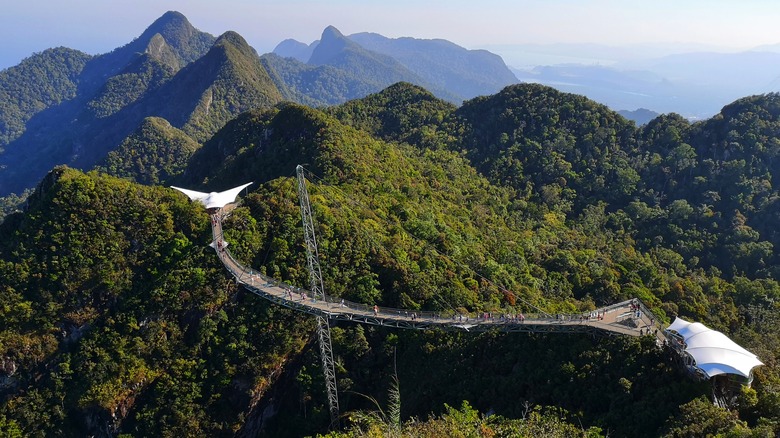
There are few undemanding experiences as exhilarating as treading your way along a walkway suspended over 2,000 feet above dense jungle spreading endlessly beneath. That's what you get at the Langkawi Sky Bridge, a 410-foot curved walkway that creates a thrilling crossing between two peaks. The vistas extend over deep ravines and thick forest that stretches for miles, and the adventure is suitable for the entire family.
Construction of the walkway was a monumental task, given the remote location of Mount Machinang. Each piece — including the bridge deck sections and its huge pillars — had to be airlifted to the summit by helicopter. But the end result was well worth it, because the Langkawi Sky Bridge is a popular attraction and a big earner. However, that does mean you'll want to arrive in the early morning to avoid the crowds, and forget about visiting during school holidays.
The world's longest freestanding glass sky deck, the Eagle's Nest Skywalk, is also nearby. It juts out dramatically from the verdant mountainside, with its bright red framework and eagle head sculpture extending over a backdrop of misty hills and blue sky. It's 125 feet long, and the transparent bottom looks straight down to the Machinchang rainforest below. The brave may proceed, and they'll be rewarded with 360-degree views of the whole Langkawi archipelago. But the thrills don't end there. The SkyCab cable car will sweep you on a continuous journey of panoramic vistas of far-off islands scattered across jade waters, chains of hills covered in thick forest, and the thundering Seven Wells waterfall, which tumbles down 300 feet through a series of stepped rock pools.
Food tours in George Town (Penang)

It's not often food is described as a tourist attraction, but when it comes to the cuisine in George Town, exceptions need to be made. The city is located on the island of Penang, which boasts other attractions like golden-sand beaches, incredible multicultural architecture, and gorgeous hiking trails. But for many, it's all about the diverse range of delectable dishes on offer. Unsurprisingly, the island easily ranks as one of the best foodie destinations across Asia.
Asam laksa is a delicious rice noodle bowl in a sharp tamarind fish stock, complemented by pineapple, onion, and ginger; while rice simmered in coconut milk and pandan leaves with anchovies, egg, fried peanuts, and a healthy serving of fried chicken makes up the famed nasi lemak. Then, there's the Fujianese-Hokkien oyster omelette called oh chien. Those plump oysters sit atop a crunchy egg batter, just waiting to be devoured with lashings of garlic chili sauce. Char Kway Teow brings flat white rice noodles stir-fried with chives, eggs, bean sprouts, and prawns, gaining its distinctive charred taste from charcoal cooking.
Apam balik pancakes and rainbow-striped kueh lapis cake rank among the island's favorite sweets, and Tau Sar Piah — a classic pastry stuffed with smooth mung bean filling — creates a salty-sweet balance between its flaky crust. The list is endless. And if you want a hack to find the best eateries, download the Michelin Guide app. Not only does it list the premium Michelin-starred restaurants, but it will also help you find your way around the best street food and budget-priced eateries with dishes to die for.
The Perhentian Islands' beaches
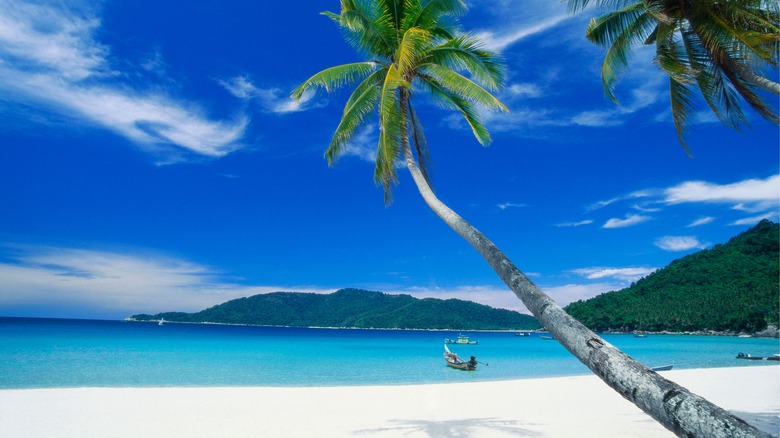
With jungle-covered slopes dropping down to peaceful turquoise waters and palm-lined beaches, the Perhentian Islands offer surreal beauty. Five small islands make up this tiny archipelago, with only two of them inhabited — Perhentian Kecil and Perhentian Besar. Each has its own personality, with Kecil one of the most beautiful Malaysian islands for a budget vacation. Meanwhile, Besar caters to honeymooners and families seeking a little solitude. That said, divers and snorkelers can choose either thanks to the abundance of pristine reefs, thriving coral gardens, and diverse marine life.
But the Perhentian Islands are, first and foremost, a beach lover's paradise. The soft, brilliant white stretches of sand are places where you can lounge all day, and the transparent waters are inviting and warm. Low-key bars and eateries dot the shores, offering cold smoothies and colorful cocktails, as well as classic Malay dishes and grilled seafood. Long Beach on Kecil is the liveliest. The water is crystalline, and there's always something happening. But you only need to cut 10 minutes through the jungle to get to the quieter Coral Bay, a west-facing beach where you can admire some colorful sky-drenching sunsets.
Over on Besar, things operate at an even slower rhythm. The waters at Tuna Bay are perfectly calm, while Teluk Keke further south feels almost untouched. The stunning reefs here are close to shore for snorkelers, and there's barely a soul around. From June to September, sea turtles nest at Turtle Beach, and nighttime visits may reveal mothers excavating and laying their eggs. Go at the right time, and you'll witness the hatchlings scrambling for the ocean. The best time to visit the Perhentians is between March and October, when the conditions are dry and sunny and the ocean is at its most pristine.
Hiking in the Cameron Highlands
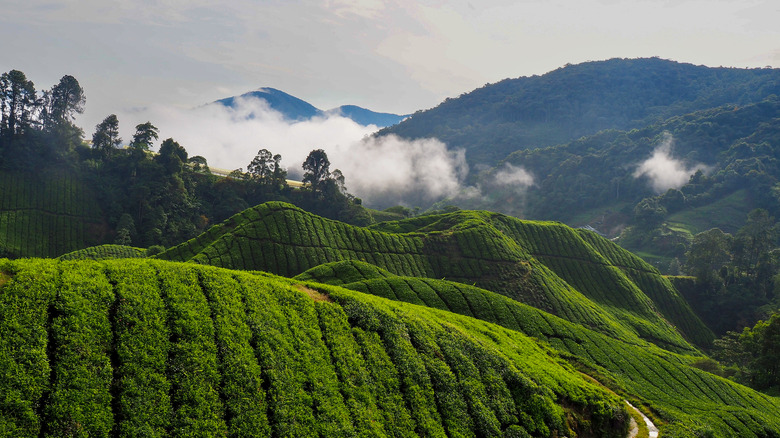
The Cameron Highlands is a major tea-growing region. The high elevation and cooler temperatures are ideal for cultivation, and people flock from the lowlands to escape the heat and enjoy the lush mountain landscapes. The conditions and terrain also mean it's popular with hikers — and if you're one for lacing up your boots and hitting the trails while harboring an appetite for tea and scones, add this destination to your itinerary.
The roughly 7-mile Gunung Jasar is a popular trail. That said, it can be tough in sections, with assisting ropes installed along the steepest and muddiest spots, while the summit rewards travelers with panoramic views over tea plantations and villages. Another top choice is the 2.6-mile out-and-back trail up Gunung Irau, which starts at the Mossy Forest Boardwalk, a popular spot for daytrippers. This eerie place has fog drifting between moss-draped trees, and you'll spot Rajah Brooke's Birdwing butterflies with their green and black swallowtails, while sunbirds and laughingthrushes add color and sound. Ferns, orchids, and carnivorous pitcher plants with their jug-shaped traps also dot the forest. From the peak, you'll enjoy panoramas spanning valleys and tea estates. Finally, the 6-mile hike to the Cameron Valley Tea House is a challenging climb with a 2,500-foot elevation gain that then drops down to the plantation where you can enjoy a cup of tea and a slice of pie.
Easier walks include a stroll to the Boh Plantation through beautiful green valleys and the one-mile walk to Robinson Falls, a picturesque spot where locals picnic. From there, you can continue on to Sam Poh Temple via a strenuous climb up Gunung Berembun's 6,037-foot summit. Whatever hikes you choose, visit between February and April for the absolute best weather and trail conditions.
The Petronas Towers (Kuala Lumpur)
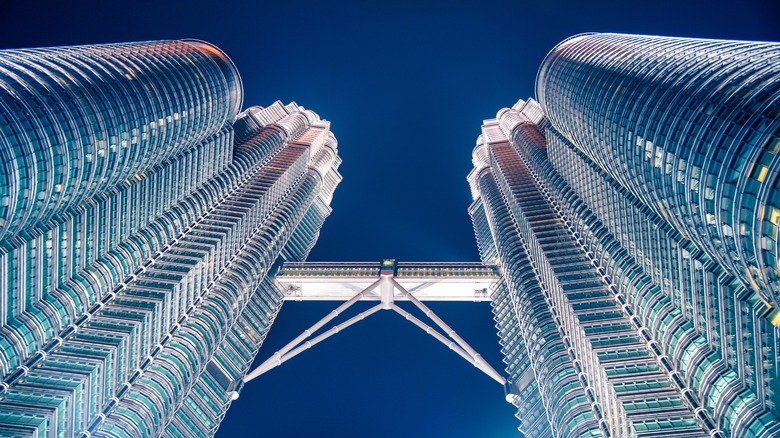
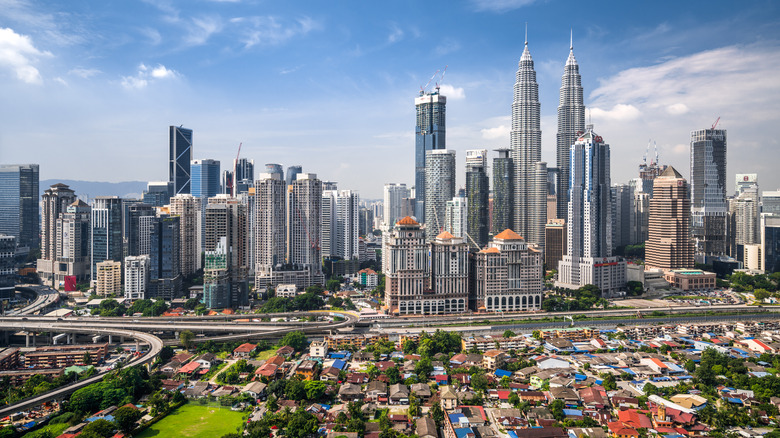
Kuala Lumpur is a multicultural hodgepodge of temples, shopping, street food, and architecture. But if anyone had to pick out a single tourist attraction that tops the lot, it would probably be the iconic Petronas Towers. These dual towers resemble giant, gleaming rockets patiently waiting for takeoff — and even after nearly three decades since their construction, they continue to anchor one of the world's most iconic and breathtaking skylines.
The towers are perfectly symmetrical, with each rising 88 floors in an eight-pointed star plan echoing traditional Islamic geometry. The buildings culminate in pyramidal caps and steel spires that push the structures to 1,483 feet. Those spires were added in 1996 before construction was complete, which made the towers the world's tallest building; although they lost that title in 2003 after the construction of Taipei 101 in Taiwan.
The towers are linked by a two-story skybridge between the 41st and 42nd floors, and 45-minute tours give you the opportunity to cross and look down through its glass walls. You'll then proceed to the observation deck on the 86th floor for epic views of Malaysia's capital city. Tickets are sold online and are best purchased in advance — otherwise, turn up early. Last entry is at 8:30 p.m. from Tuesday through Sunday for views of Kuala Lumpur lit up at night. Afterward, snap countless Instagram moments from the ground when the towers are brilliantly illuminated against the dark sky.
Diving at Sipadan Island (Sabah)
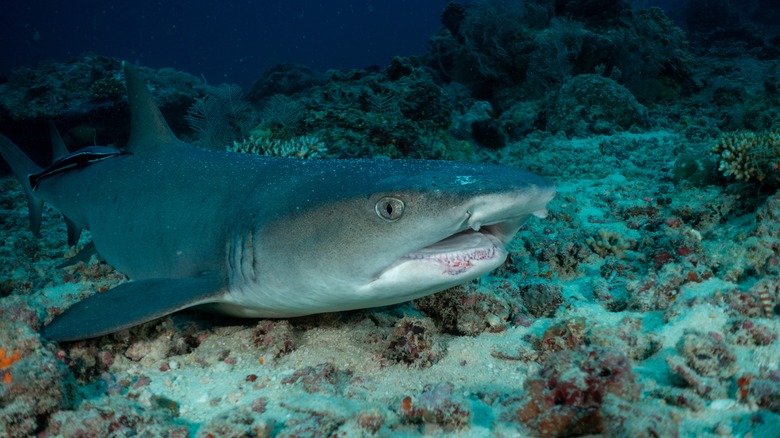
Sipadan is a tiny, idyllic island ringed in soft golden sand with a lush jungle interior just off the southeastern coast of Malaysian Borneo. Under normal circumstances, it would be a tropical paradise for tourists. However, it's now uninhabited after all resorts were forced to remove themselves in 2004 to protect the island's ecosystem. Nowadays, the only way to see it is to go diving, and it's rated as one of the world's best for underwater beauty.
Hawksbill and green turtles congregate in astonishing numbers, and you'll see all sorts of sharks — from white-tip reefs to hammerheads — on just about every dive. Rays also frequent the area, while mantas and even whale sharks show up when the currents bring juicy plankton. Fish schools are enormous, with Barracuda Point being one of the planet's premier dive locations. Meanwhile, the nearby islands of Kapalai and Mabul, where most resorts have now moved to, are excellent places for colorful crustaceans, seahorses, and a bewildering variety of unique fish.
To see this enchanting world, visitors must be in possession of an Advanced Open Water certification. You'll also need a permit, usually issued through your resort. Around 250 are allocated every day, so reserving a couple of months in advance is recommended. You might also want to plan to stay at your resort for up to five days to maximize diving opportunities, as only two dives per individual are permitted daily. Ideally, try to avoid major holidays like Christmas or the Lunar New Year, and plan your diving for the dry season from April to December. That said, forget about November: the island closes for the month at this time for reef recovery.
Climbing Mount Kinabalu (Sabah)
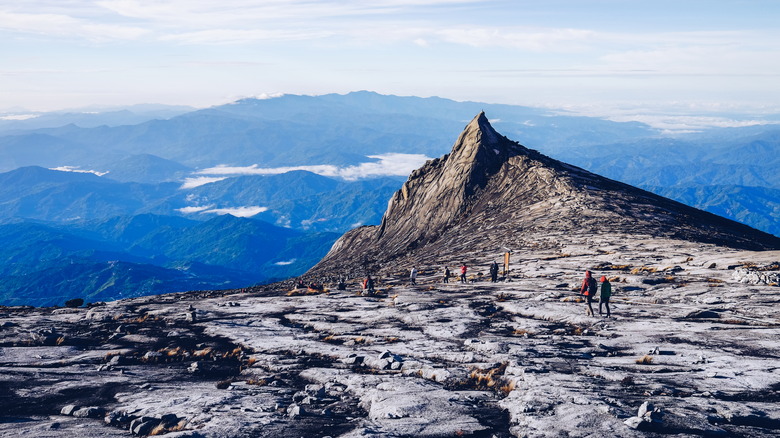
Another prime attraction in the province of Sabah is the 13,435-foot UNESCO-listed Mount Kinabalu. To climb this peak, you'll need a mandatory guide. You'll also need a permit, and only 163 are issued daily, so booking ahead is essential. It's a strenuous two-day climb to reach the top, ascending for almost 4 miles through steep rainforest for up to seven hours on the first day. Eventually, you'll reach Laban Rata Resthouse at 10,735 feet, where you'll sleep before the summit push at 2 a.m.
From there, you'll need to tackle almost 3,000 feet of steps before scaling steep slopes of rock with the assistance of ropes and ladders to catch the sublime peak sunrise. That last push can be brutal. Oxygen levels are lower up there, and you'll need frequent rest breaks. It can take up to six hours to get to the summit, but despite the difficulty, you don't need the lungs of a mountaineer to make it. A decent level of fitness and a huge amount of willpower will get you there — and the effort is very much worth it.
As the dawn breaks, the summit reveals itself like a moonscape of ancient rock with the mist-enshrouded Bornean rainforest extending in all directions below. As the sun casts its colors across the landscape, you'll be absorbed in a spellbinding, frigid instant of extraordinary beauty that more than justifies every punishing step it took to get there. The descent — if you can pull yourself away — is framed by the panoramic views you missed in the darkness on the way up. But don't expect mercy. Going down can be punishing on the knees, and you'll be grateful for those hiking poles you carried up.
Kinabatangan Wildlife Sanctuary (Sabah)
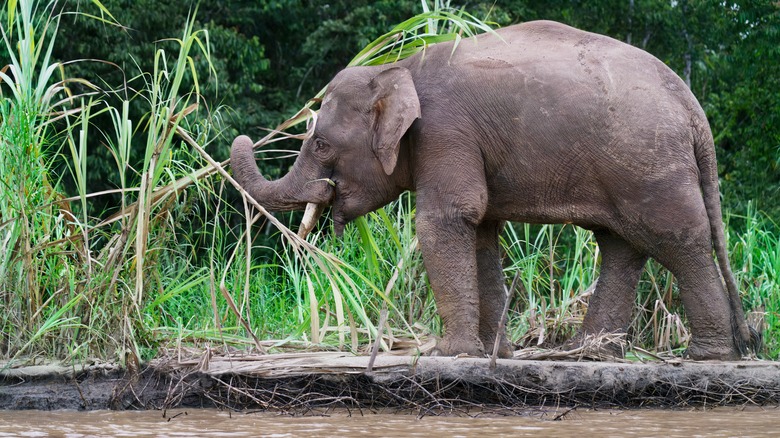
The Kinabatangan River is Malaysia's second-longest, flowing for 350 miles from southwest Sabah out into the Sulu Sea. It's also one of Asia's best lesser-known attractions. In 1997, after decades of logging and oil palm plantations, authorities designated a 64,000-acre area along its banks as the Kinabatangan Wildlife Sanctuary. Today, much of the surrounding area still accounts for oil palm cultivation, but conservationists are slowly working toward restoring the habitat through agroforestry and ecotourism.
The area is home to more than 300 bird species, with the iconic hornbill representing no less than eight. Primate species number 10, with the elusive orangutan and the comically big-nosed, gangly-legged proboscis monkey among the most memorable. The sanctuary also protects pygmy elephants, sun bears, and the Sunda clouded leopard; while on a motorized skiff tour, keep your eyes peeled for crocodiles and the Irrawaddy dolphin. Night trips bring out the nocturnal animals. You might catch a glimpse of the flying squirrel, while civets and different cat species come out to play after dusk.
You'll stay in the lodges of your tour operator, and there are a variety of packages spanning rustic backpacker accommodations to luxury riverside ecolodges. Transportation, meals, and guides are usually included, while most also give you the opportunity for nocturnal walks.
Melaka
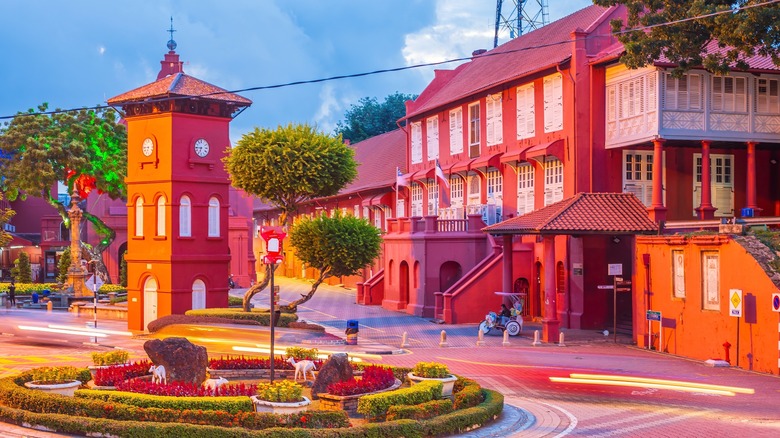
Around 1403, one of the earliest Malay sultanates was established in the city of Melaka. The port attracted a wealth of traders from as far away as Arabia, India, and China, the latter of which gave rise to Peranakan culture when Chinese merchants married local women. About a century later, the Portuguese conquest arrived, followed by a period of Dutch colonization, before the British added Malaysia to its vast empire. Today, Melaka still exhibits all those centuries of transition and evolution through its architecture, history, and culture, which makes it a vibrant hub for adventurous travelers.
Harmony Street, also known as Jalan Tokong, is one place to experience the city's religious coexistence. It is home to the Chen Hoon Temple, which was built in 1645 and is the oldest active Chinese temple in the country. A two-minute walk takes you to Kampung Kling Mosque, with its striking architectural fusion of Sumatran, Chinese, Hindu, Moorish, and Malay influences. A further minute down the road is Malaysia's oldest operating Hindu temple, the colorful and ornately decorated Sri Poyyatha Vinayagar Moorthy.
On Heeren Street, the Baba Nyonya Museum is housed in a grand Peranakan townhouse where collectors have assembled period furniture and family heirlooms. Then, there are the much photographed colonial buildings with their iconic red exteriors on Dutch Square (pictured above) — including the Stadthuys administrative building and Christ Church. Nearby, Jonker Street is a buzz of galleries and hawker stalls serving up local delicacies, and a climb up St. Paul's Hill gives access to the lone surviving gateway to the A'Famosa fortress. It sits alongside the roofless stone walls of the 16th-century St. Paul's Church, complemented by panoramic sight lines across Melaka's rooftops and the Strait beyond.
Batu Caves
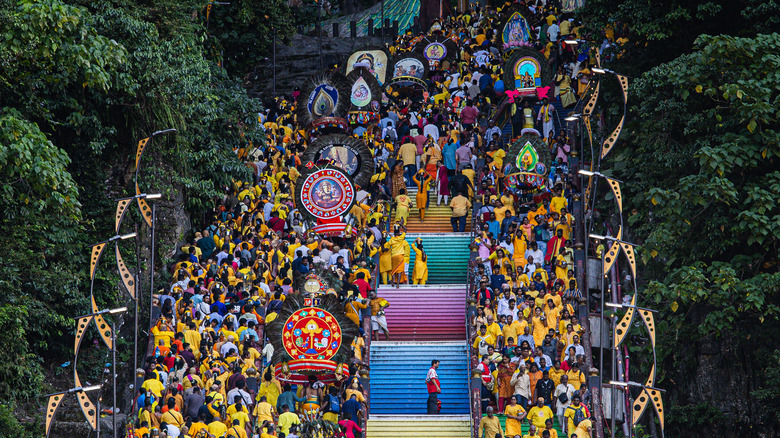
Just 7 miles north of the capital are the Batu Caves, an important religious site that can be visited throughout the year. However, many come for the annual Thaipusam festival in January or February. In fact, hundreds of thousands usually show up — with 2009 recording more than one million devotees and visitors, as reported by The Star. Be warned, though: it's not for the faint of heart. Thaipusam is a celebration of good triumphing over evil, with the Hindu deity of war and victory, Lord Murugan, at the center of it all.
The site was originally chosen by Tamil Hindu leader K. Thamboosamy Pillay in 1891, when he noticed that the cave entrance resembled Murugan's divine spear. He established a temple inside and organized the inaugural Thaipusam festival in 1892. In 1920, 272 steps were constructed leading up to the cave; today, this is still the annual climb pilgrims make. But it's not as easy as just climbing stairs. Devotees often carry kavadis — elaborate ceremonial structures of ornate metal frames decorated with peacock feathers that can weigh up to 90 pounds and attached through ritual body piercings.
You'll also witness piercings of cheeks and tongues with ceremonial skewers, while devotees enter into trance-like states through the combined effects of the piercings alongside fasting, prayer, and rhythmic drumming. The temple itself sits in a massive cathedral-sized chamber. At the bottom, a towering 140-foot golden Murugan statue was constructed in 2006. It's the tallest of its kind for this particular deity in the world, and it is quite a sight.
Methodology
To choose the top 10 destinations travelers to Malaysia simply can't miss, we researched trusted sources like National Geographic, Conde Nast, Lonely Planet, and Atlas Obscura. We also relied on reputable travel blogs, as well as review-based platforms like Tripadvisor. Finally, the author's personal experience from numerous visits to Malaysia also guided the final selection. Overall, we looked to cover a wide variety of locations offering different attractions and activities, including wildlife, diving, hiking, beaches, culture, and food.