

Portugal's Top 10 Sights And Destinations To Add To Your Itinerary
Portugal recently won the award for Europe's Leading Destination at the 2025 World Travel Awards, and the reason why is pretty clear. The country of Camões has a lot to offer — with a wide variety of activities ranging from historical palaces to delicious wine caves, and enchanting volcanic baths.
I had the privilege of getting to know the country's very best traits — first as a Portuguese & Brazilian Studies major in college, and later as a resident of Portugal. During the six years that I spent in the city of Porto, I explored my new home from the northern border town of Valença do Minho all the way down to the southern village of Carvoeiro. As I enjoyed my travels, I saw some of the most popular spots in Portugal, as well as a few of the country's best hidden gems.
Drawing on my own experiences as a former resident and dedicated traveler, I have compiled a list of some of Portugal's best destinations for thrilling and unique travel experiences. I have personally been to every single spot on this list and can vouch for the excellence of these places. That being said, in order to compile my recommendations, I cross-referenced my own preferences with traveler reviews to ensure the continued caliber of each spot. The result is a list that blends local recommendations with visitor satisfaction.
Lisbon's Alfama neighborhood
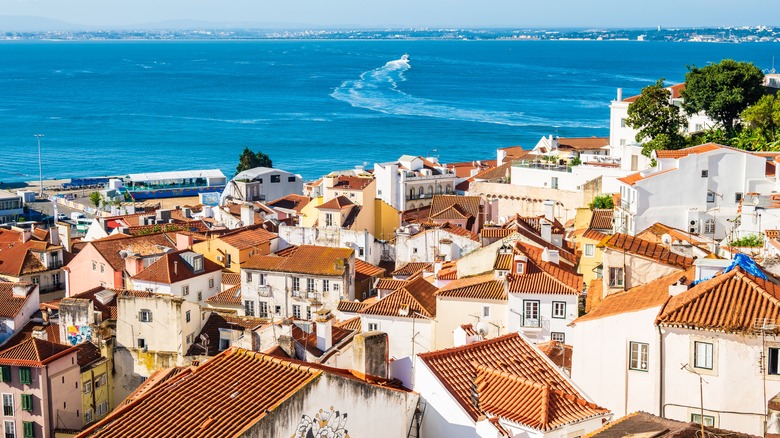
Clusters of whitewashed houses overlook the water in Lisbon's iconic Alfama neighborhood. Once inhabited by Roman and later Moorish residents, the area blends different architectural styles to create a truly eclectic destination. Wander the maze-like streets, step inside a local boutique, and grab a drink on one of the tiny restaurant balconies that dot the neighborhood.
While Alfama is definitely hilly enough to exhaust even the most energetic of visitors, it's totally worth hiking up to the Miradouro das Portas do Sol. This extensive balcony provides travelers with panoramic views of Alfama and the Rio Tejo river below. Gaze at the gorgeous contrast between the white historic buildings and the deep blue water, and don't forget to snap some pictures. Afterward, stop at the famous Portas do Sol kiosk for a cocktail, beer, or sparkling water.
Just a stone's throw from the Miradouro das Portas do Sol stands one of Alfama's most famous treasures. The Castelo de São Jorge is an imposing military castle that stands as a reminder of Lisbon's belligerent past. With walls dating back to the 13th and 14th centuries, the Castelo de São Jorge (St. George's Castle) provides fascinating insight into the struggle between Islamic and Christian rulers in the Middle Ages. Travelers can walk along fortified walls, enjoy scenic viewpoints of the Rio Tejo, and imagine what Alfama was like centuries before. Given Alfama's scenic beauty and rich history, it's no surprise that Lisbon was voted Europe's best getaway city.
The Port caves in Vila Nova de Gaia
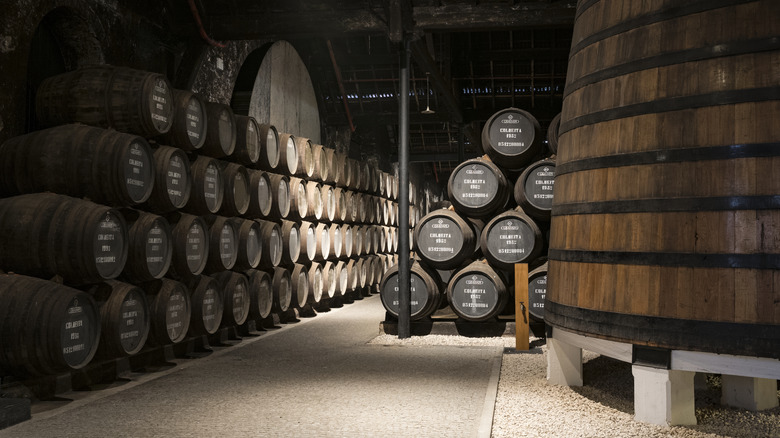
The rich, sweet goodness of Port wine hails from Portugal, and one of the best places to imbibe is in Vila Nova de Gaia. Located just across the Douro River from the town of Porto, Vila Nova de Gaia — or "Gaia," as locals call it — certainly receives less fame than its sister city. That being said, Gaia holds fame for being the historic home of the Port wine cellars. Back in the days before trains and trucks were used to move goods, Port wine was transported from the Douro Valley to the mouth of the river via wooden boat. The journey was treacherous, and sailors often lost their lives. Once they arrived in Gaia, they were able to unload the boat and store the wine in riverside cellars — where it would be aged in barrels and then eventually bottled.
In the 21st century, the Port wine transportation process has modernized completely. However, travelers can still visit the old cellars and learn about Port wine's history. Most cellars offer a complimentary wine tasting with every tour, making for a complete sensory experience.
As a former local, I have visited many of the cellars and can especially recommend Taylor's and Ferreira. The first stands out for its in-depth museum, which includes bottles and labels that date centuries back into the past. Ferreira, meanwhile, is unique in that it's the only Port wine house that's actually Portuguese owned.
The Ribeira do Porto riverside
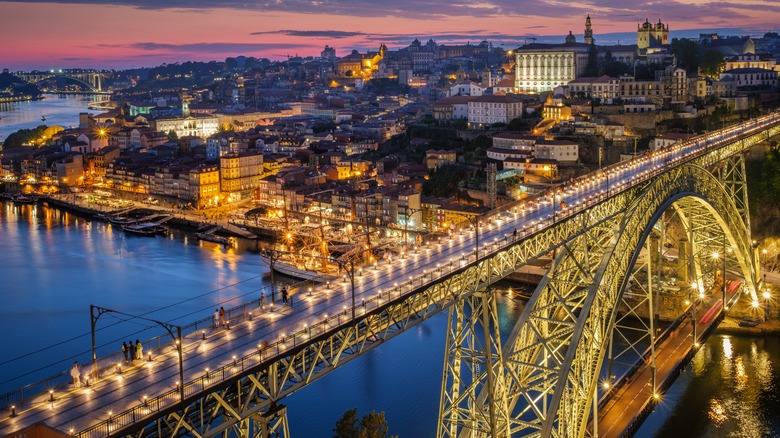
There are tons of iconic tourist attractions in Porto. After all, the city attracts a vibrant community of visitors and residents from around the world — a reality that is reflected in its popping restaurant and bar scene. To grab a bite to eat and taste some of Porto's famous cooking for yourself, head to the bank of the Douro River, or the Ribeira do Porto, as locals call it. Here, you will find dozens of cute riverside restaurants offering everything from a hearty Francesinha sandwich to a heavy plate of bacalhau à Brás cod. As you eat, soak up the riverside's fascinating history, which dates back 2,000 years to the Romans. The area is so unique that it's been recognized by UNESCO as a World Heritage Site.
The Ribeira do Porto is especially scenic at night, when the famous Dom Luís I Bridge is illuminated by striking yellow lights. The contrast between the dark water of the Douro and the bright metallic bridge creates the perfect photo opportunity. Stroll down the riverside, snap some pictures, and grab a drink. If you continue your walk eastward, you'll also see the spectacular Ponte Maria Pia Bridge. Designed by the famous Gustav Eiffel of the Eiffel Tower, this bridge opened in 1877, and its gorgeous metallic arches will entertain architecture fans and photographers alike.
The passadiços of Carvoeiro
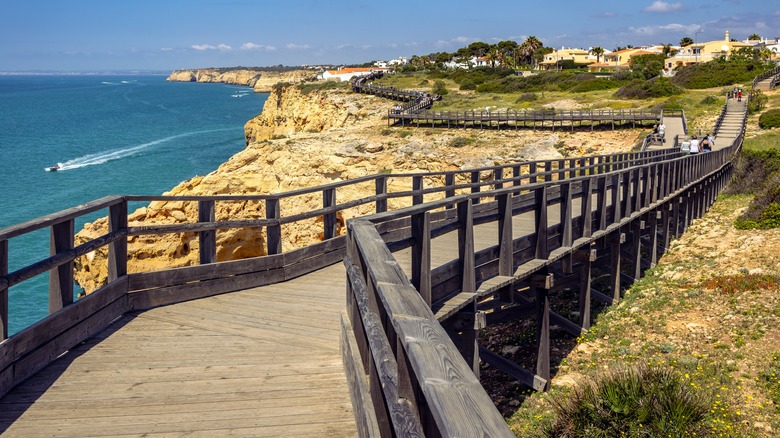
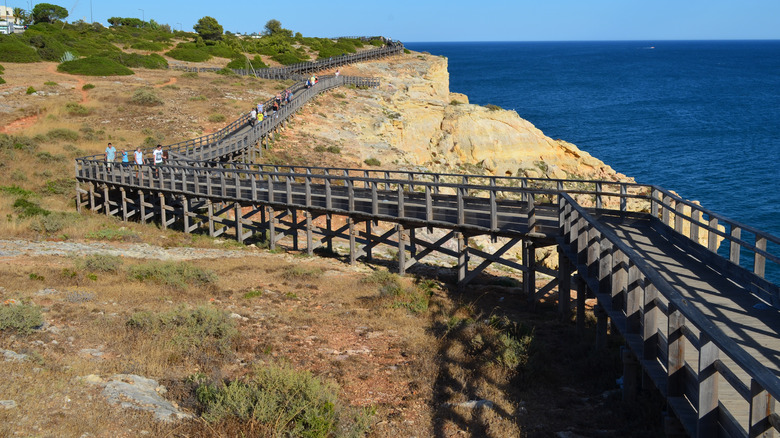
Walking is the number one pastime of the Portuguese people, according to a survey by MarkTest, and it's no wonder why. Passadiços — or wooden boardwalks — dot some of the most beautiful scenic ways in the country. And, some of the best hikes and trails in Portugal involve these incredible pathways. My personal favorites are the passadiços of Carvoeiro — an impressive 650-yard walkway that snakes alongside the jaw-dropping cliffs of Algarve, Portugal. Wheelchair accessible and stroller-friendly, this path is perfect for the whole family. As you stroll along, watch the waves crash against the limestone and sandstone rock formations below. The contrast between the deep blue of the Atlantic Ocean and the yellow geological structures is stunning, so don't forget to bring a camera.
The best part of the passadiços of Carvoeiro is that they link two of the area's most important touristic attractions. On the western end, explore the Fortaleza de Nossa Senhora da Encarnação — a hermitage that once belonged to a 17th century fortress that looks like something out of a storybook. With their whitewashed walls and tremendous ocean views, the remaining buildings exude a dreamy feeling that practically screams "vacation." On the eastern end of the passadiços, meanwhile, stands the Algar Seco, a series of rock formations and tide pools that are extremely high-rated among travelers. Swimmers love this spot, so bring a swimsuit just in case!
Évora's Roman Temple and Chapel of Bones
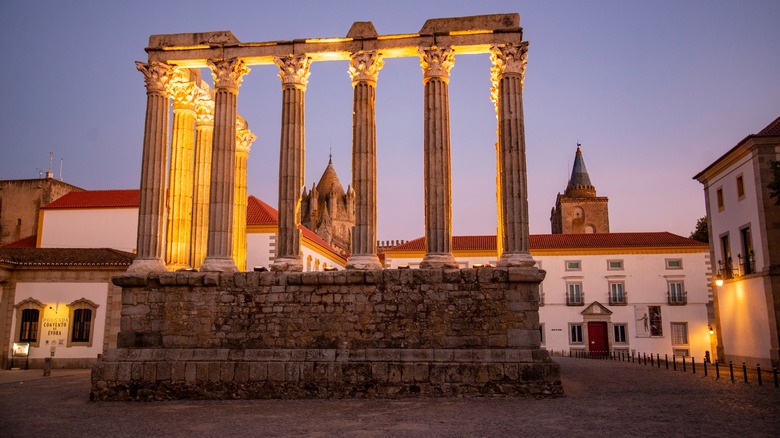
Located in Portugal's rural Alentejo region, the town of Évora stands as a tiny jewel in a state brimming with fields. Surrounded by olive groves and vineyards, Évora interrupts the local landscape with its cobblestone streets and historic town center. Its architecture fascinates visitors from all over the world, blending monuments from various eras — a fact that makes the town center a UNESCO World Heritage Site.
The oldest building in town is the Roman Temple of Évora, an old religious space that dates back to the first century A.D. Once believed to honor the Roman goddess, Diana, the temple actually celebrated the emperor Augustus, who craved attention from his people. Twenty-first century visitors can now enjoy this site by gazing upon these ruins.
The Roman Temple of Évora is not the only unusual building in the town's center. The Capela dos Ossos, or Chapel of Bones, is a Franciscan site of worship made almost entirely out of human bones. Constructed in the 17th century, this site is both haunting and impactful; its interior features roughly 5,000 skulls and countless bones gathered from local cemeteries and arranged along the chapel's inner walls. The idea was to convey the truth that all humans eventually die in a strikingly visual way. While a trip to the Chapel of Bones isn't exactly uplifting, it serves to educate modern audiences about medieval culture and the ideas that weighed on the people who lived before us.
Aveiro's charming channels
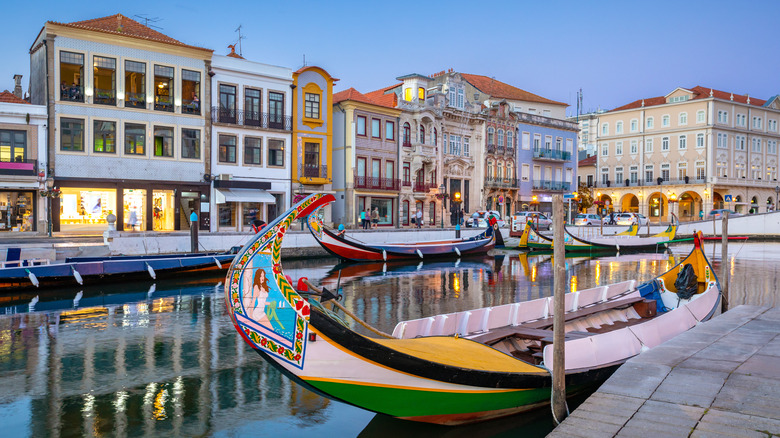
Europe is home to plenty of canal towns that aren't Venice — and Aveiro, Portugal, is arguably the most beautiful of them all. Nestled into the side of the Aveiro Lagoon, this picturesque town has a long history of living with the tides. Salt flats, oyster beds, and fishing waters have all contributed to the town's economy for generations. In the early 19th century, canals were created to control the impact of rising tides on the center of town. But, given Aveiro's oceanside economy, it didn't take long for locals to employ this network of water to transport goods like fish and salt into the city.
These days, the canals of Aveiro don't maintain their historic purpose as ways of transport, but they do remain as beautiful as ever. Travelers can now enjoy them by signing up for a gondola tour of Aveiro that will allow them to see each of the canals and learn something about their past purpose. Hop on a gorgeous painted wooden boat, listen to old Aveiro lore, and observe the local architecture. Aveiro is famous for the colorful Art Nouveau buildings — a sight that architecture lovers should not miss.
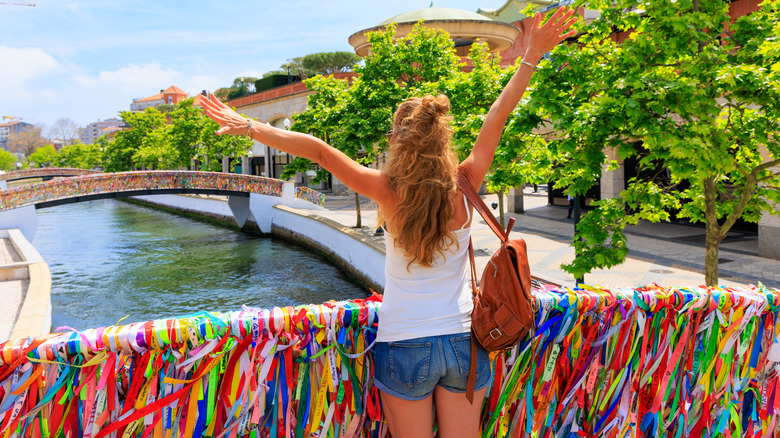
If you aren't a huge fan of boating, fear not: there are plenty of walkways that stretch beside the canals. Go for a stroll, tie a ribbon on a local bridge to symbolize a special friendship, and step inside the Art Nouveau Museum. Or, simply cozy up at a local restaurant and watch the gondolas float by.
Ride the chairlift at Serra da Estrela
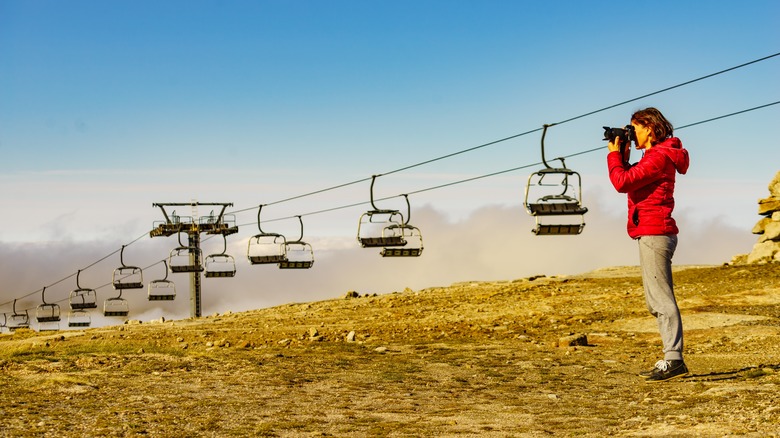
Portugal may not have a reputation for housing the most majestic mountains you need to see in your lifetime, but the southern European country does boast one adorable mountain range with a chairlift and a ski resort. Serra da Estrela's tower marks the highest point on continental Portugal. Reaching 6,535 feet into the sky, the summit offers gorgeous year-round views. During the winter, this is one of the best places in Portugal to see snow.
Skiers and snowboarders can carve their way down the mountain by purchasing day passes at the Serra da Estrela ski resort. With 23 runs to choose from and four lifts, the hill is suitable for all levels — or for folks who are simply craving a bit of novelty. Non-skiers, however, have been known to adore Serra da Estrela, as they are still welcome to take the chairlift up to Torre and enjoy the views of boulders, lakes, and sleet. An added bonus is the trenó — or sledding — area at the top of the hill.
Wintertime may be peak season at Serra da Estrela, but the fall is my favorite season to go. This time between the summer heat and the snowy season is ideal for soaking up the chairlift views without breaking a sweat or getting caught up in the crowds. Mountain biking, climbing, and hiking are all popular activities this time of year — and the fall colors are hard to beat.
The hot springs in the island of São Miguel
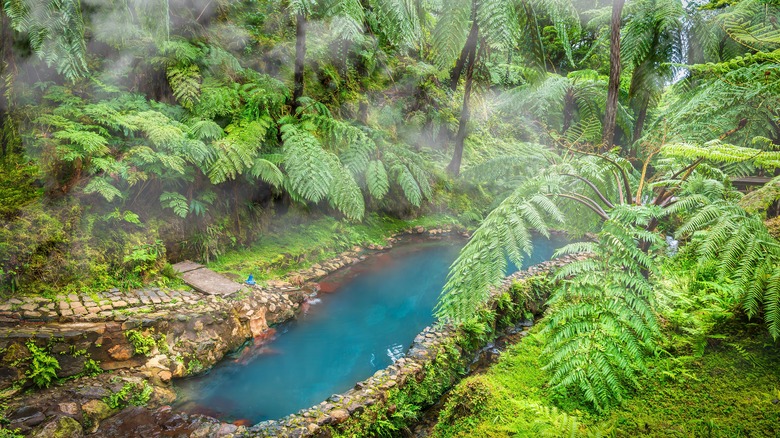
Known as the Hawaii of Portugal, the Azores are a collection of bright green volcanic islands located in the middle of the Atlantic Ocean. The most populated island, São Miguel, draws tourists who are interested in experiencing its geothermal activity on a closer level. Specifically, the Caldeira Velha offers incredible hot springs where visitors can take a relaxing dip. Surrounded by thick ferns and lush green trees, these naturally warm waters are the perfect place to enjoy proximity to nature. Visits to Caldeira Velha are organized in timed slots, and each session lasts 90 minutes. The best way to enjoy the springs without the crowds is to arrive for the first slot of the day, typically around 9:00 a.m.
Folks who are interested in the more scientific side of things will adore the Caldeira Velha Environmental Interpretation Center, which explains the ins and outs of the geological site. The building itself is also fascinating with a topographical-inspired design that architecture lovers are guaranteed to enjoy.
The Machado de Castro National Museum in Coimbra
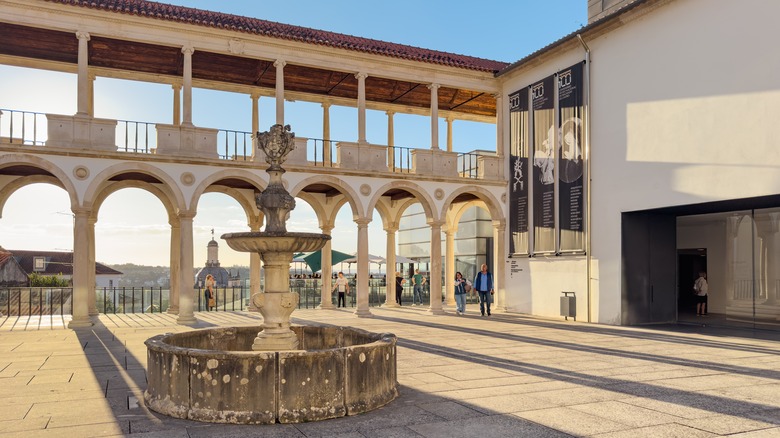
I like to think of the Machado de Castro National Museum in Coimbra as a miniature version of the Met without the crowds. Like the famous NYC attraction, the Machado Castro National Museum brings visitors from one ambiance to the next — with each display immersing you in a distinct era. The basement of the museum takes travelers into a maze of some of the best preserved Roman ruins in the world.
Start your visit by exploring this dimly-lit subterranean environment that once served as the foundation for the Roman Forum of Coimbra. Then, come up to the ground floor, where you will see everything from reconstructed church altars to the surviving archways of an old convent. There are even rooms full of Chinese artwork — a result of Portugal's colonial relationship with Macau.
The Museu Castro National Museum is, of course, nowhere nearly as large as the Met. However, its collection is vast enough that you may want to spend the whole day there. Luckily, the museum offers Loggia, a restaurant with a buffet lunch to keep you fortified during your visit. With an expansive terrace, this eatery provides sweeping views of the Coimbra skyline. Peruse the collection, enjoy a relaxing lunch of traditional Portuguese food, and then dive back into the museum. There may be no better way to experience a relaxing day in Portugal's Central region.
Sintra's National Palace of Pena
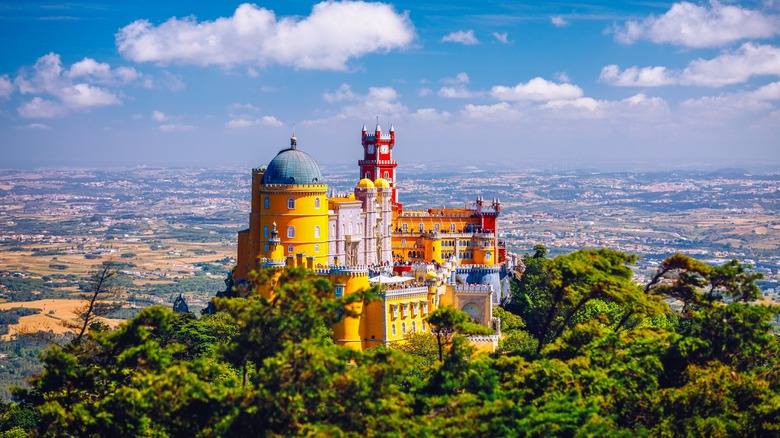
On the top of a hill in the town of Sintra stands a castle that marries blue, pink, and canary orange colors. If this sounds like the beginning of a fairy tale, think again. The National Palace of Pena brings surreal beauty to life in the form of a gorgeous 19th century castle set on a beautiful garden. Built by King Consort Ferdinand of Saxe-Coburg and Gotha, this palace was a passion project. Ferdinand was instantly enamored by the land where the Palace of Pena was eventually constructed. Once the grounds of a 12th century church and then a 16th century monastery, the estate was not only much loved but also ripe with history.
Modern visitors continue to enjoy this stunning space by visiting the palace and its grounds. Folks who are interested in wandering the castle's elaborate interior and admiring its rooms should buy the palace and park combo ticket. Those who are more interested in the palace's gardens, however, may prefer to purchase the less expensive park ticket, which only gives visitors access to the estate. Either way, travelers can expect to feel like they have stepped into a beautiful Portuguese storybook. Part of the UNESCO recognized cultural landscape of Sintra, the National Palace of Pena is one of the most important sites in the country.
Methodology
I really enjoyed creating this list of the best destinations in Portugal. As a former local, I made a lot of wonderful memories at these beautiful places, and recommending them to others is a joy. While crafting my selections, I was careful to focus on places from diverse regions of Portugal. While Porto and Vila Nova de Gaia are located in the country's stunning Northern region, the passadiços of Carvoeiro represent the south. Meanwhile, Lisbon's metropolitan area boast the stunning Alfama neighborhood and Palácio da Pena. Serra da Estrela and Évora both show the best of the deep interior, and Coimbra and Aveiro are considered among the most important cities in Centro. The hot springs, finally, are located in the Azores.
I also wanted to ensure that the places on this list reflect the very best of Portugal. Alfama is unique for being one of the most historically diverse neighborhoods in Lisbon. Vila Nova de Gaia's wine cellars are essential to the region's historic and cultural landscapes. The Ribeira do Porto, Pena Palace, and center of Évora were mentioned on the list of UNESCO World Heritage Sites. The hot springs in the Azores and the Machado de Castro National Museum are both considered spots of nationally recognizable importance. Serra da Estrela boasts the tallest point on continental Portugal, while Aveiro stands out as one of the few cities in Europe with such an intricate canal system.