

Malta's 12 Most Amazing Tourist Attractions To Add To Your Bucket List
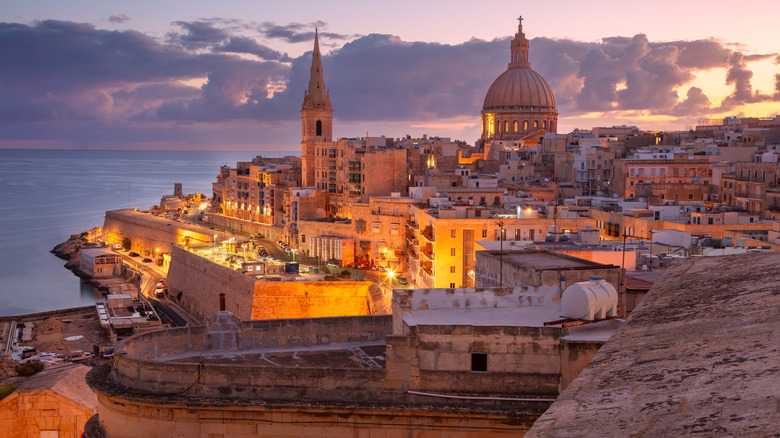
The sunny Mediterranean island nation of Malta is a memorable holiday destination not only for its amazing architecture, great food, beaches, and postcard-worthy scenery, but also as a cultural hub rich with history going back several millennia. Maltese people often speak a combination of three languages — Maltese, Italian, and English — and its cuisine is as diverse as its international influences. Thanks to its Mediterranean climate, Malta is mild in the winter and hot in the summer, making it enjoyable to visit any time of year and ideal for a laid-back beach vacation.
Malta's architectural heritage is like none other in the world, and the country is home to some of the oldest temples on Earth. Ġgantija, for example, sits on the island of Gozo and dates back to 3600 B.C. The Ħal Tarxien Prehistoric Complex is a major site that was originally built in the Neolithic period and later reconfigured in the early Bronze Age, illustrating how layers upon layers of civilization have shaped — and continue to shape — this one-of-a-kind destination. It's no wonder that this underrated Mediterranean island is the perfect destination for a historic getaway.
Malta's capital is Valletta, featuring walled gardens, immense fortifications, photo-worthy streets, and fantastic places to eat and shop. There's plenty to see and do in the city, but Malta's attractions certainly don't end there. Visit charming fishing villages, go for scenic hikes, take your pick from well over 300 churches, see fantastic art, and much more. Whether it's your first visit or you're back for more, here are 12 of the most amazing tourist attractions to add to your Malta itinerary.
Take a walking tour of Valletta
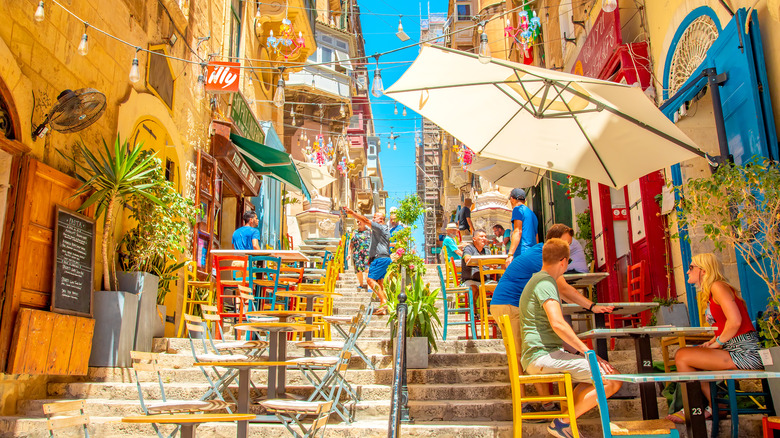
The entire old town area of Valletta is a fascinating place to explore, with unique architecture showcasing a fusion of cultural influences, quaint boutiques, bustling cafes, and picturesque public squares. You'll see many jewelry stores selling intricate silver filigree pieces, and charming doorways leading to atmospheric coffee shops. Bolthole cafes like Tal-Kafe' and Piadina Caffe sell delicious baked goods to enjoy with your espresso. Look for one of the most popular Maltese pastries, known as pastizz, made from flaky dough and stuffed with ricotta or mushy peas — choices that reflect Malta's influences from the U.K., Italy, and beyond.
Valletta brims with gorgeous views along rolling streets lined with residential buildings, tucked-away churches, monuments, fortifications, and more. Cat lovers will be charmed by the area's many strays. Barrakka Gardens, divided into an upper and lower area, is one of the most popular public parks, situated near Il-Berġa ta' Kastilja, or the Auburge de Castile — a prominent building where the prime minister's office is located. Upper Barrakka Gardens boasts beautiful views over the Grand Harbour and across to Vittorioso's Grand Harbour Marina, as well as the Magisterial Palace and Fort St. Angelo. From here, walk about 10 minutes northeast to Casa Rocca Piccola, the 16th-century residence of a noble Maltese family that's still lived in but open to the public for self-guided tours. Brimming with the family's collection of art and furniture, it's a unique glimpse of an opulent historic home. To really immerse yourself in luxury, book a room at the Casa Rocco Piccola B&B.
Gaze up — and down — at St. John's Co-Cathedral
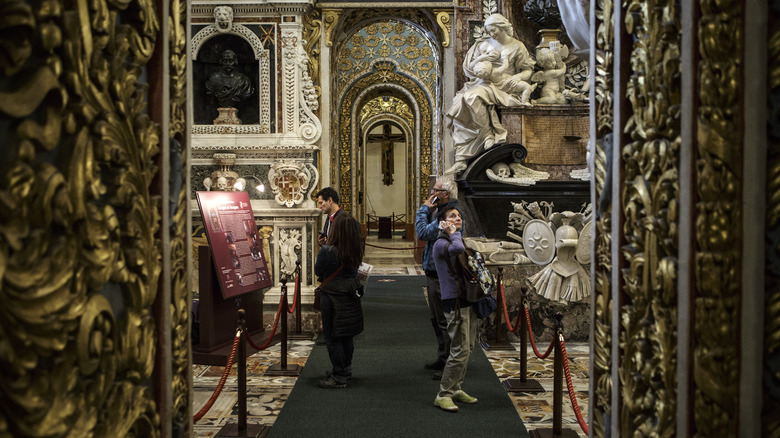
A truly awe-inspiring Baroque gem, St. John's Co-Cathedral is a must-visit in central Valletta. For those who don't know, a co-cathedral is one of a pair of cathedrals that serves as a bishop's seat in a diocese, and this archdiocese partnership also includes the marvelous St. Paul's Cathedral in Mdina. While churches of this size typically feature elaborate murals on the ceiling, St. John's Co-Cathedral is more of a sensory explosion with artwork on every surface. Its floors are covered with colorful marble tomb slabs for roughly 375 knights and grand-masters, along with ornate gilding and marble designs on its walls, barrel vault ceiling, and numerous chapels.
The cathedral is open to the public daily, and several services are offered on Sundays. Admission costs €15 per adult, or roughly $17.45 USD, at the time of writing. Children under 12 years old can visit for free. Tickets include an audio guide for a self-led tour, which illuminates points of interest around the cathedral. Make sure to check out two masterpieces by Late Renaissance painter Caravaggio, "The Beheading of St John the Baptist" and "St Jerome Writing," which were made when the artist spent some time in Malta after fleeing Rome. A notorious brawler, Caravaggio accidentally killed a man in Italy, so to escape a death warrant, he laid low in Malta for a while. It didn't last too long, though, as only about a year later, he was involved in another brawl and was imprisoned — the painter eventually escaped to Sicily.
See the Lascaris War Rooms
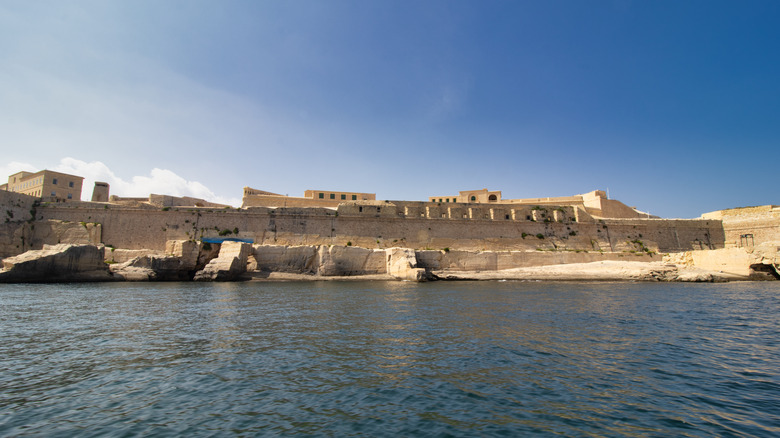
During World War II, the British carefully managed their strategic position in Malta, using a network of tunnels and rooms beneath Valletta's Upper Barrakka Gardens as a military headquarters. Malta faced a barrage of attacks from German and Italian air forces between 1940 and 1942, when the island nation was a British colony. Britain was in control from 1814 to 1964, which is the reason you'll find familiar northern details around the country, such as the 3-prong Type G electrical outlets, red postal boxes, and a penchant for tea among locals.
Military history enthusiasts won't want to miss a visit to the Lascaris War Rooms. This top-secret underground post served as a command center, housing operational areas like the Royal Air Force Sector Fighter Control Room, a Filter Room for monitoring radar, an Anti-Aircraft Gun Operations Room, and more. Used after World War II for other military programs until the late 1970s, when it shut down for good, it is now maintained by Fondazzjoni Wirt Artna, or the Malta Heritage Trust, which organizes special exhibits and keeps the tunnels and chambers open for public visits. Adult tickets are €20 each, or just over $23 USD. For an additional €17, you can join a pre-arranged guided tour, offered twice daily.
Wander the old city of Mdina
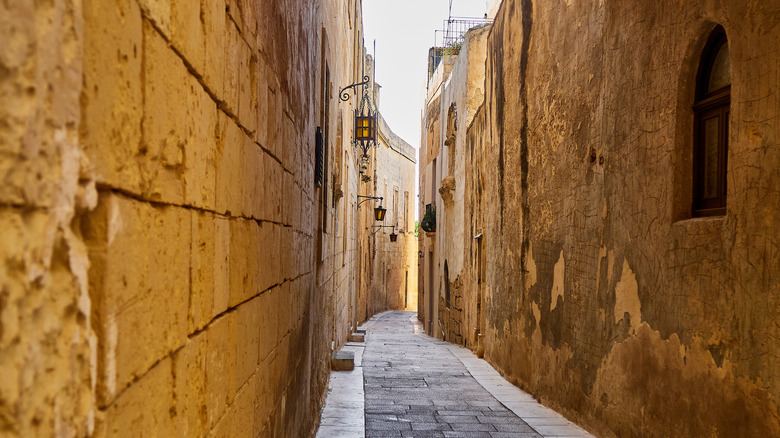
Mdina is a calm medieval metropolis with unique architecture, wine, and old charm. Even though it's been sitting on UNESCO's tentative list of world heritage sites since 1998, it's well deserving of the attention. The historic walled town sits high on a hill in the center of Malta and has been occupied in some way or another since the Bronze Age. Among its standout characteristics are its phenomenally high stone walls which make it a veritable fortress while also creating narrow, atmospheric passages inside that feel simultaneously beautiful and somewhat otherworldly. It rightly earns its nickname "the silent city" due to the absence of cars and its small size. Fans of the hit series "Game of Thrones" will recognize Mdina — especially its main gate — as one of numerous filming locations in Malta, serving as the setting for King's Landing.
Mdina is home to the remarkable 17th-century St. Paul's Cathedral, which is also accompanied by the Mdina Cathedral Museum. Full of art and sacred treasures, the museum boasts an impressive collection of more than 80 original woodcuts and engravings by the renowned German painter and printmaker Albrecht Dürer. History buffs will also enjoy a self-guided tour through the Palazzo Falson Historic House Museum, a 13th-century home that stewards a rich trove of art, armor, manuscripts, and more. On the rooftop, Gustav Café offers beautiful views over the city. And speaking of views, don't miss relaxing with a cuppa at Fontanella Tea Garden, which boasts sweeping vistas over the countryside.
Enjoy seafood at Marsaxlokk Habour
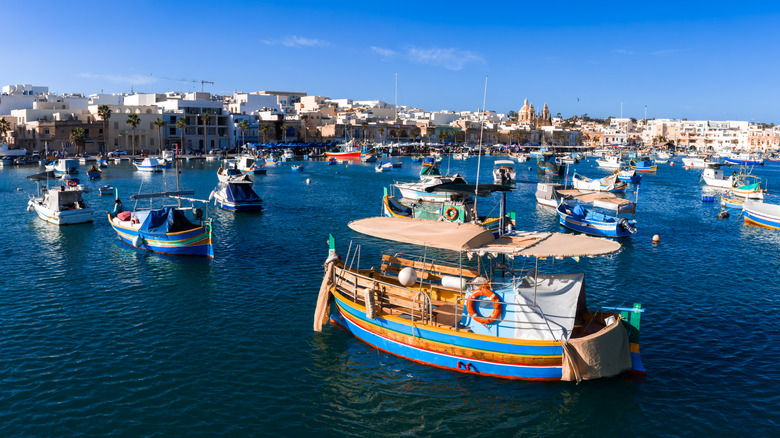
A popular day trip from Valletta, the seaside village of Marsaxlokk is known for its harbor — although it may be even more apt to say that it's known for its boats. Found in fishing ports around Malta, the vibrant wooden vessels are known as "luzzu," and are often painted bright yellow, blue, green, and red. They also have a pair of eyes on the bow, a practice which is said to date back to when the Phoenicians settled in the archipelago some 3,000 years ago. Fisherman adopted the ancient Egyptian symbol known as the Eye of Osiris, or Horus, as an emblem of protection to keep Maltese boats safe at sea.
The promenade of Marsaxlokk's harbor is walkable and picturesque — a perfect place to stop for lunch at one of several waterfront restaurants for fresh seafood. Roots Restaurant is a family-run destination overlooking the colorful boats, and the more upscale Liska Restaurant on the southern end of the harbor is highly recommended by visitors, especially for its local prawns and pan-seared octopus.
Soak up the sun at Mellieħa's beaches
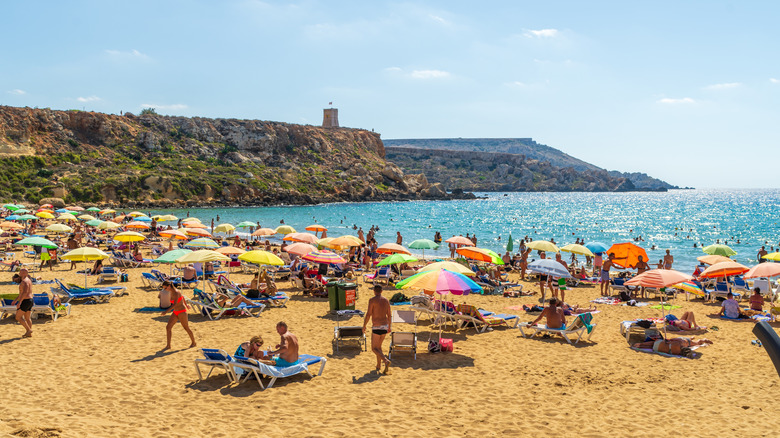
Malta is a beautiful Mediterranean island known for its gorgeous pebble beaches and perfect weather throughout the year. The island is generally pretty rocky, so sandy beaches aren't super common, but there are a few exceptions well worth checking out. On the northern side of the main island, encompassing a picturesque peninsula, Mellieħa is a coastal area known for its stunning Church of Our Lady of Victory, a historic film set known as Popeye Village, and a number of beautiful beaches.
Mellieħa Bay beach, which holds the distinction of being the longest beach in Malta, is located on the eastern side of the peninsula in the seafront neighborhood of Għadira. On the western side of the peninsula, head to Golden Bay, a comparatively smaller but equally beautiful beach perfect for sunbathing in the afternoon and sunset views in the evening. If smaller crowds are what you're after, check out White Tower Bay at the north end of the peninsula — however, keep in mind that facilities in the area are quite limited.
Travel through time at Ħal Tarxien Prehistoric Complex
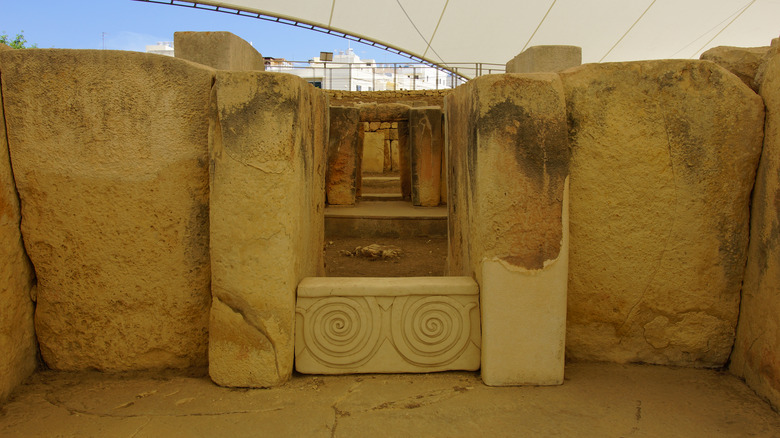
Malta is home to numerous ancient archaeological sites, thanks to its location in the Mediterranean Sea where ancient Greeks, Romans, Arab dynasties from North Africa, and others made settlements at one time or another. Thousands of years after they were constructed, the remains of megalithic temples still dot the island, now preserved by Heritage Malta and open for public visits. Check out major sites like the Ħal Tarxien Prehistoric Complex, Ħaġar Qim and Mnajdra Archaeological Park, and the Ħal Saflieni Hypogeum, among others.
The Tarxien Temples date back to the late Neolithic period, which lasted from about 5200 to 2500 B.C. in Malta. Archaeologists also discovered numerous artifacts dating to the early Bronze Age period, when the area was used as a cemetery with various objects left behind. Other ancient historic sites across Malta feature additional temples, a stone circle, catacombs, and a standing stone. In Valletta, visit the National Museum of Archaeology to see some of the artifacts discovered around the island, chronicling 5,000 years of human history.
Boat to the Blue Grotto
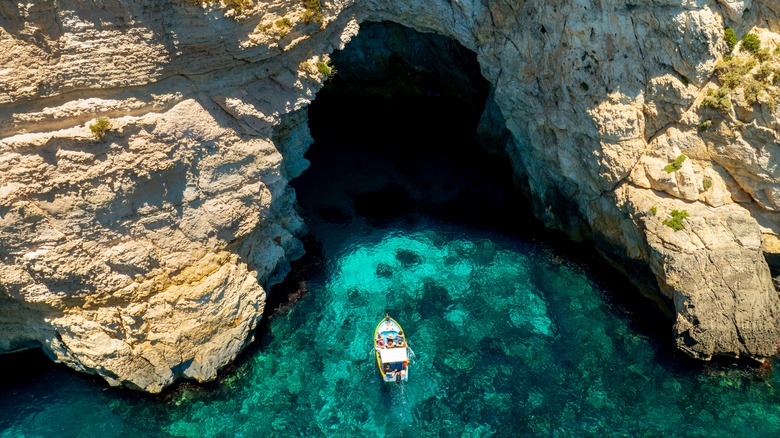
Not to be confused with another attraction called the Blue Grotto in Capri, one of Italy's most popular islands that Rick Steves says is full of tourist traps, head to Malta's natural landform with the same name for a unique coastal experience. Malta's Blue Grotto is just a five-minute drive south of the Ħaġar Qim Archaelogical Site, a megalithic temple complex that made the most of its seaside location near dramatic cliffs, overlooking beautiful blue water.
The Blue Grotto consists of six cliffside caves set in sparkling turquoise waters that are accessible by boat. Head above the village of Wied Iż-Żurrieq to look out from a panoramic viewpoint. The landscape is hilly, so prepare to climb a bit to walk around the village and get to the jetty for the boat tour. Some previous visitors have commented on Tripadvisor that the experience can feel a bit rushed and crowded, especially when tour buses arrive. "The caves you visit are spectacular. Too bad they are offered in a hurry," reads one review posted in August 2025. "Glad we went in October as it would have been manic in high season," says another. Parking can also get busy during peak times, so if you'd prefer a quieter experience, try to plan your visit early in the morning on a weekday.
Sample Maltese vintages at a wine festival
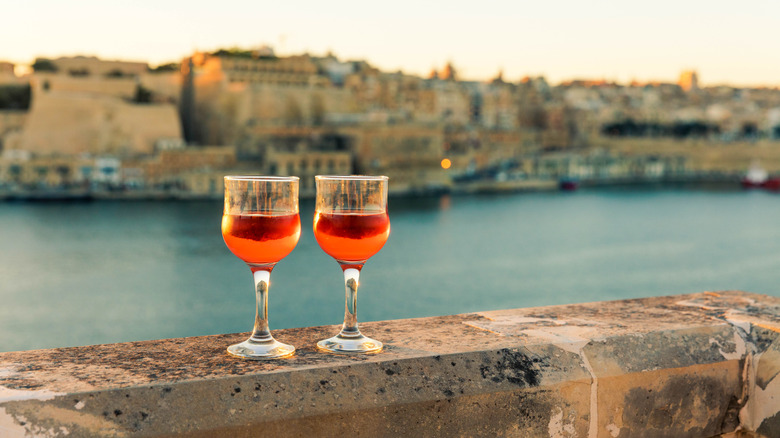
There are various factors to keep in mind when it comes to the best time of year to plan an adventure-filled trip to Malta. Summers are hot, so taking advantage of the Mediterranean beaches is a must. Winter is mild and less crowded with tourists — perfect for checking out museums and churches. But, you can also time your visit to coincide with one of numerous festivals. Valletta Baroque Festival celebrates classical music in mid-January, Il-Karnival Ta' Malta is the country's annual carnivalesque celebration in February, Malta International Arts Festival arrives in late June, and July sees both the national jazz and dance festivals. Other notable celebrations revolve around its local specialties — namely, delicious wine.
Malta is home to two wine festivals which, for a country that only has about 2,000 acres of vineyards and rarely exports its wines, is pretty spectacular. Delicata Classic Wine Festival is hosted by its namesake family winery, Delicata, which has been in business since 1907. This multi-day festival focuses on Maltese specialties like Girgentina and Ġellewża and takes place in August at Upper Barakka Gardens in Valletta. Then, it reprises in September amid the vineyards of Nadur on the nearby island of Gozo. There's also the Malta International Wine Festival in June, which highlights local wineries in addition to producers from other parts of the world. This event takes place in the Argotti Botanic Gardens in Floriana, which is only about a 20-minute walk from central Valletta, past the giant Tritons' Fountain.
Climb the Citadella on Gozo
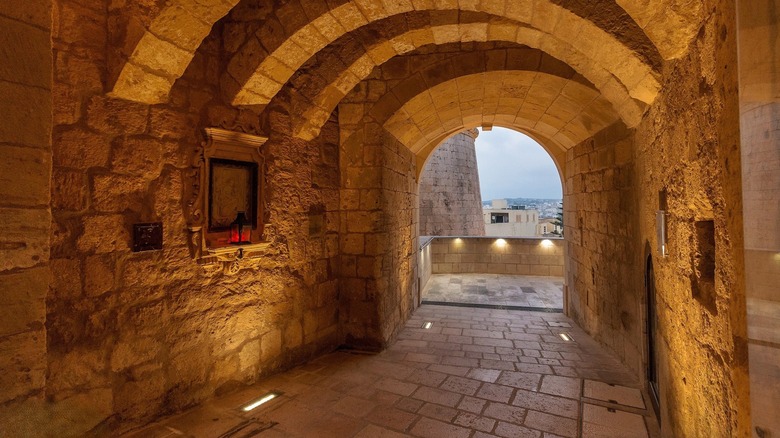
The archipelago of Malta consists of five islands, three of which are inhabited: Malta, Comino, and Gozo. Comino is the smallest of these, sparsely populated and great for hiking, and it sits between the other two. Gozo is a great weekend trip destination from the mainland, with regular ferry trips offered by Gozo Highspeed from Valletta to the harbor town of Mġarr. Also on Gozo, Marsalforn is a wildly underrated Mediterranean coastal town that offers an affordable getaway with fresh seafood. Gozo is an ideal place for long hikes throughout its rural countryside. Nestled in the center is a fascinating walled city known as the Citadel of Victoria, also called the Cittadella.
Like Mdina, the Citadella has been on the tentative list for a UNESCO World Heritage Site designation since 1998, and it's a great place to take in panoramic views of the island. The hill site has been occupied in some way since at least the Bronze Age, but it thrived throughout the Middle Ages and was later transformed into a military hub sometime during the 16th century, setting the stage for much of the architectural heritage we see today. Stop at the visitors' center for additional information and exhibits, and don't miss a wander around the breathtaking Cathedral of the Assumption and its museum.
Explore Ta' Pinu Basilica, Gozo
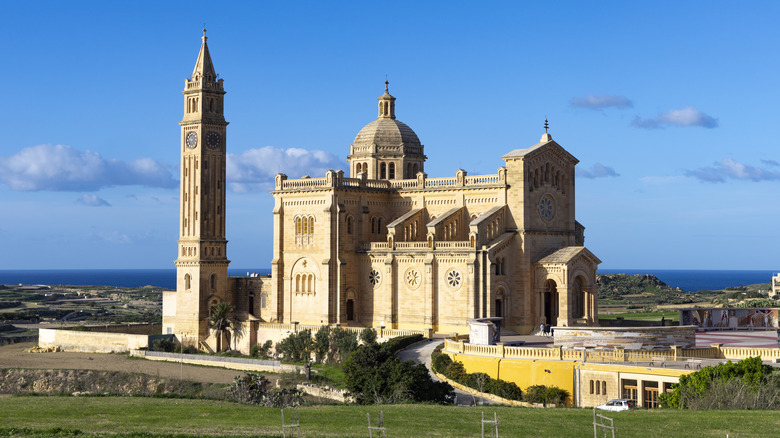
An atmospheric church on Malta's northern island of Gozo, the Basilica of the National Shrine of the Blessed Virgin of Ta' Pinu — often referred to simply as Ta' Pinu — is relatively new by Malta's standards. In 1883, a local woman named Karmela Grima, who regularly visited what was then a modest chapel, is said to have received a divine message from the Virgin Mary. News of this began to spread, and the chapel increasingly became a site of pilgrimage. As its popularity rose — and its crowds grew — the need for a larger church led to the commissioning of a new shrine in 1920 in the Romanesque Revival style. It opened to the public and was designated a Minor Basilica in 1935. Now, around a century later, the Shrine of Ta' Pinu continues to stand gracefully above Gozo's picturesque fields and terraces, approached by way of an elegant forecourt. The serene church is free to visit and explore outside of service times.
Play make-believe at Popeye Village
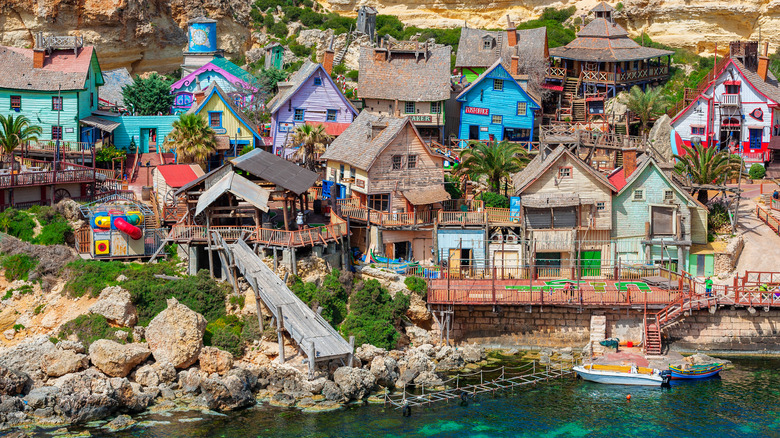
Originally constructed as a film set in the 1980s, Popeye Village is a charming little seaside theme park that's perfect for exploring, taking pictures, and soaking up a bit of Hollywood history in Malta. Located in Mellieħa on the northwestern edge of Malta's largest eponymous island, the set was used for filming the 1980 version of "Popeye," starring Robin Williams and Shelley Duvall. The life-size village was built by a 165-person international construction team, and most of the wood was imported from the Netherlands and Canada, then assembled into a quaint and idyllic seaside village.
Today, Popeye Village is a veritable playground, welcoming visitors to explore the film set, look out over Anchor Bay, or take a scenic boat cruise to see it from the water. Grab some nibbles and a glass of wine on the terrace of Tipsy & Son's winery, or eat lunch in the restaurant-bar adjacent to jump-around activities for kids. You'll find games, performances, guided tours, and interactive experiences with costumed "villagers," among other events and activities. Admission prices fluctuate depending on the season, ranging from €15 to €25 for adults and €12.50 to €16 for kids ages 3 to 12.
Methodology
To round up the 12 best attractions for your Malta itinerary, we drew from various sources, including local tourism boards such as VisitMalta.com, VisitGozo.com, and GuideMeMalta.com, as well as HeritageMalta.mt and Festivals.mt. For specific information about admission fees, opening hours, and historical context, we referred to official websites such as StJohnsCoCathedral.com, CasaRoccaPiccola.com, LascarisWarRooms.com, PalazzoFalson.com, and more. We also sourced additional data and historical information from UNESCO, History.State.gov, the Imperial War Museums, and Gov.mt. To ensure that we selected the best destinations and experiences, we relied on the author's personal experiences in Malta, along with those that were positively rated on trusted platforms such as Tripadvisor and Google Reviews.