22 Top Tourist Attractions & Places to Visit in Vancouver, BC
Author Michael Law has lived in Vancouver and returns frequently, usually adding on some time to ski at Whistler.
With its mountain backdrop and urban beaches, Vancouver has the rightly earned reputation of being one of the most beautiful cities in the world.
Downtown Vancouver is picturesquely situated on a peninsula in the Strait of Georgia, with the often snow-covered ranges of the Coast Mountains rising in behind. The setting is one of the city's main attractions.
With its extensive parks and agreeable climate keeping temperatures mild throughout the year, outdoor activities are high on the list of things to do in Vancouver. But it also boasts a busy cultural life, fantastic shopping, and incredible dining. This scenic city was showcased to the world when it hosted the 2010 Winter Olympics, in conjunction with nearby Whistler.
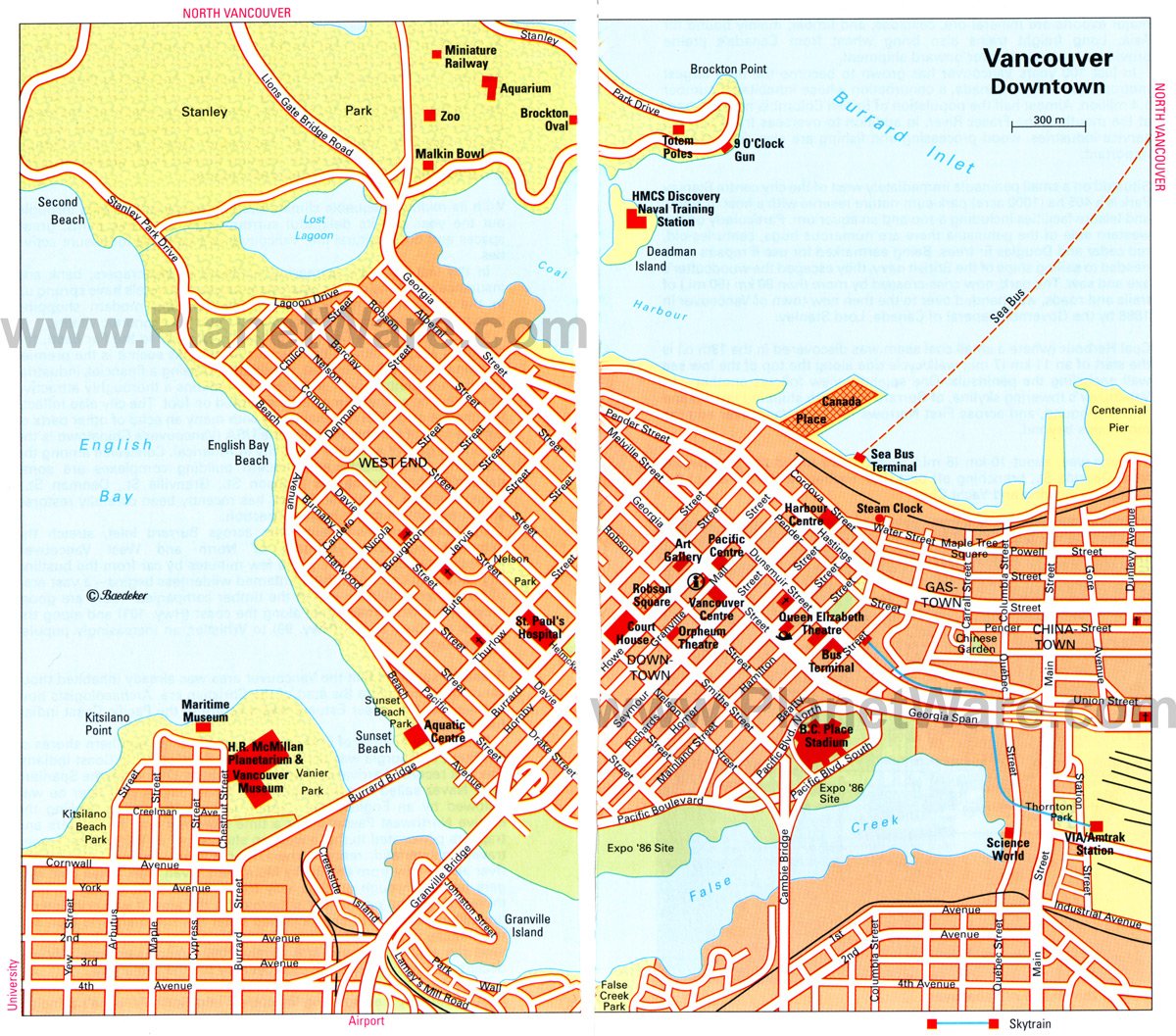
Find your way around the city with our list of attractions and things to do in Vancouver.
- 1. Go for a Walk in Stanley Park
- 2. Do Some Shopping on Granville Island
- 3. See the Brockton Point Totem Poles
- 4. Ski Grouse Mountain
- 5. Visit the Vancouver Aquarium
- 6. Visit the Museum of Anthropology
- 7. Relax on Kitsilano Beach
- 8. Explore Gastown
- 9. Tour Canada Place
- 10. Soak Up Some Culture in Chinatown
- 11. Go for a Stroll in English Bay
- 12. Walk across the Capilano Suspension Bridge
- 13. Take a Ride on the Aquabus
- 14. Shop Robson Street
- 15. Learn about History at the Museum of Vancouver
- 16. Queen Elizabeth Park
- 17. Take the Kids to Science World
- 18. Enjoy the Sights of Richmond
- 19. Go Whale Watching
- 20. VanDusen Botanical Garden
- 21. Vancouver Art Gallery
- 22. Day Trip to Whistler or the Gulf Islands
- Where to Stay in Vancouver for Sightseeing
- Tips and Tours: How to Make the Most of Your Visit to Vancouver
- Frequently Asked Questions
- When is the best time to visit Vancouver?
1. Go for a Walk in Stanley Park
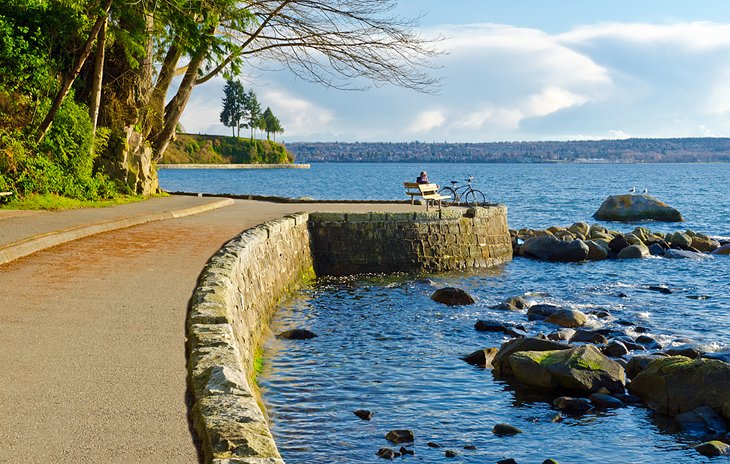
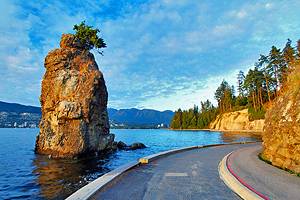
Stanley Park is a lush peninsula of huge trees adjacent to Downtown Vancouver. If you are looking to get outside and enjoy some nature, this is the best place to visit in Vancouver. A paved seawall path encircles the green space and is a wonderful place to explore on foot or by bicycle.
Inland, the park offers many things to do, and you can spend a full day exploring attractions like the totem poles at Brockton Point or the Vancouver Aquarium. Spectacular views are a standard throughout the park either back towards the city or out to the ocean.
Come spring, the park's gardens and shrubs burst into a rainbow of beautiful colors, led by the cherry trees and closely followed by the rhododendrons.
In the summer, an outdoor pool operates right at the edge of the ocean. This 80-meter pool is heated and is a popular spot for families because of its gently sloped entry.
2. Do Some Shopping on Granville Island
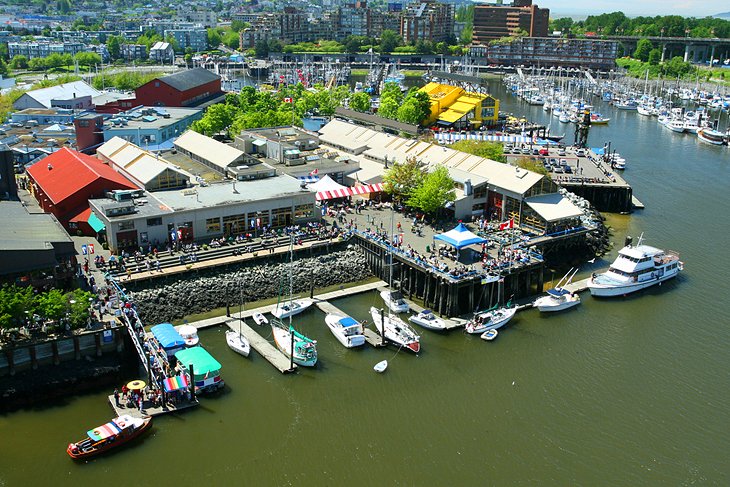
Once mainly industrial, Granville Island is now a thriving center of activity with a relaxed and distinctive atmosphere. Artists and retailers have moved into converted warehouses alongside houseboats, theaters, galleries, and restaurants.
The Granville Island Public Market is one of the most popular attractions selling fruit and vegetables, seafood, and a great variety of other specialties as well as ready-to-eat items. Not truly an island, the arts hub is linked to residential areas by one road and footbridges to the south, and to the Downtown peninsula (across False Creek) by ferry.
Location: South of and underneath the Granville Street Bridge
3. See the Brockton Point Totem Poles
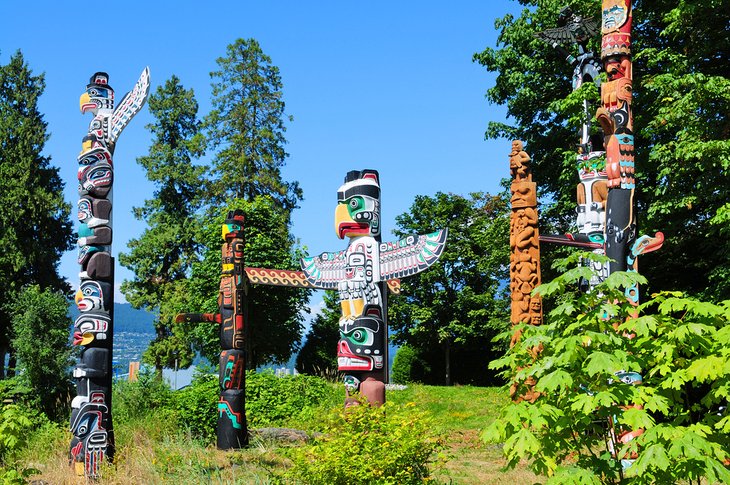
The Brockton Point Totem Poles are a must-see when visiting Stanley Park. These intricately carved poles are one of the top attractions in British Columbia. The totem poles were first placed in the park at a different location in the 1920s, and over the years, the collection grew and was eventually moved to Brockton Point.
Today you'll find nine totem poles carved from red cedar in addition to three gateway portals. The colorful totem poles line a wide walkway and are set back against tall evergreen trees. Nearby is a visitor center that provides additional insight into First Nations history and the totem poles themselves.
4. Ski Grouse Mountain
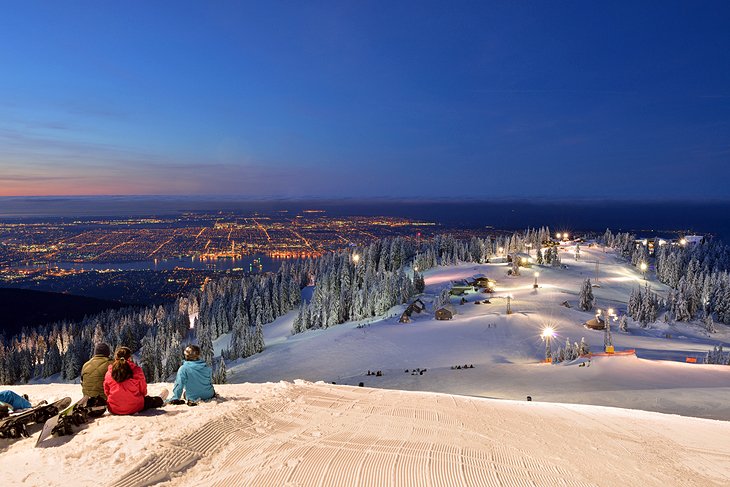
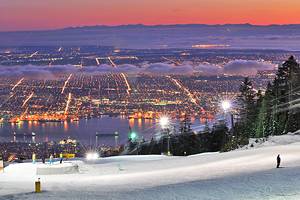
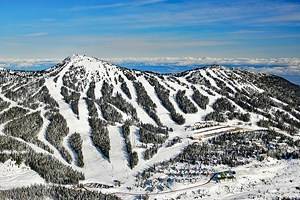
In both winter and summer, Grouse Mountain offers an unmatched panorama in clear weather. That's especially so in the evenings when the city lights are on.
A gondola operates daily running from street level to the summit, where dining, activities, and wildlife await mountaintop explorers year-round.
Skiing: When the snow flies, Grouse Mountain is a winter wonderland offering outdoor skating, snowshoeing, and some of the best skiing and snowboarding near Vancouver. The ski runs are not particularly difficult, and Grouse Mountain is a fun family outing. It's also a great place to learn how to ski.
Hiking: Come summer, Grouse Mountain is a hiker's paradise with trails, including the famed Grouse Grind - affectionately called Mother Nature's StairMaster.
Day Trip Tour: If you are staying downtown, consider this tour: North Shore Day Trip from Vancouver: Capilano Suspension Bridge & Grouse Mountain. On this 6.5-hour tour, you'll hit two of the major attractions on the North Shore.
Address: 6400 Nancy Greene Way, North Vancouver, British Columbia
5. Visit the Vancouver Aquarium
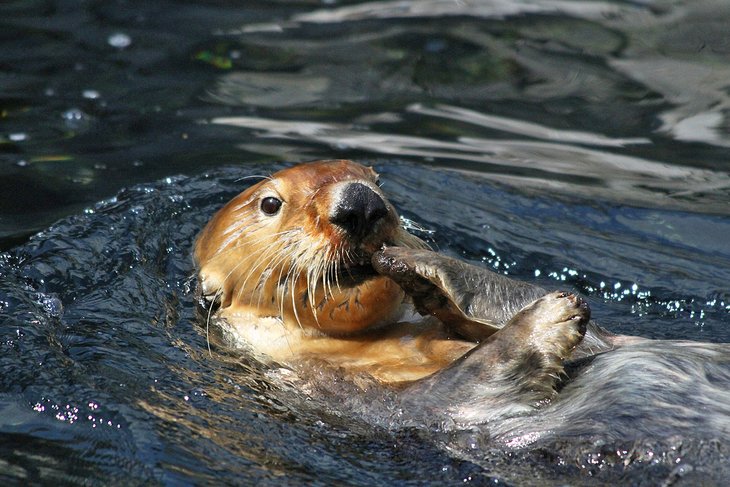
A trip with the family to Stanley Park for most folks would be incomplete without visiting the Vancouver Aquarium. This wonderful facility teaches young and old about the wonders of the ocean and how we can protect it.
Experiences: Fun and entertaining experiences include a cold-water touch tank; a wildlife rescue area complete with a Burmese tortoise; Penguin Cove, full of cute creatures; and the non-stop action of the sea otters in their habitat. One thing not to miss is the 4D Theatre Experience with special seats, effects, and a large screen that make you feel you are part of what you are seeing.
Exhibits in the aquarium educate visitors on the unique habitats of the Amazon, the tropics, and BC's Wild Coast.
In the past, the aquarium used to have whale performances and belugas; however, the animals have since died and have not been replaced, or they have been relocated.
Address: 845 Avison Way, Vancouver, British Columbia
6. Visit the Museum of Anthropology
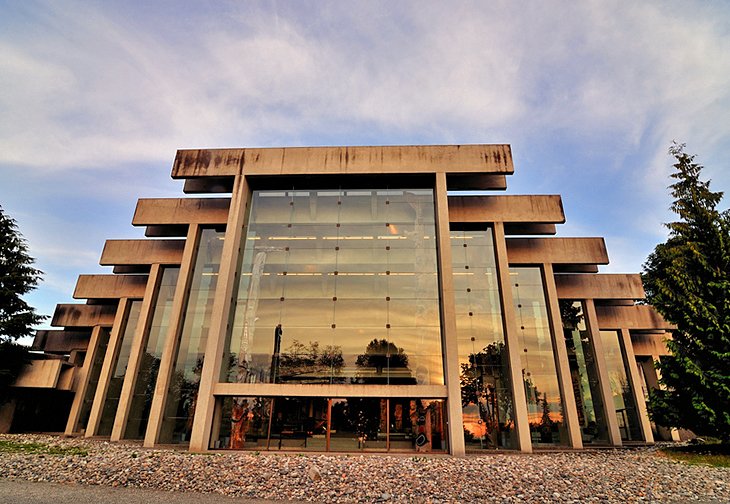
Part of the University of British Columbia, the Museum of Anthropology deals with cultures from around the world, but places particular emphasis on British Columbia First Nations.
Exhibits display native art, including large totem poles in the Great Hall. Other presentations explore ethnographic and archaeological objects representing Asia, the South Pacific, the Americas, Africa, and Europe.
The interesting building was originally part of a WWII-era fort, and local architect Arthur Erickson transformed the spaces into this world-class museum.
Other attractions on the university campus include the clothing-optional shoreline of Wreck Beach, the natural-history-focused Beaty Biodiversity Museum, and the rambling UBC Botanical Garden with its many interesting plantings and delicate Nitobe Japanese Garden.
Address: 6393 NW Marine Drive, Vancouver, British Columbia
7. Relax on Kitsilano Beach
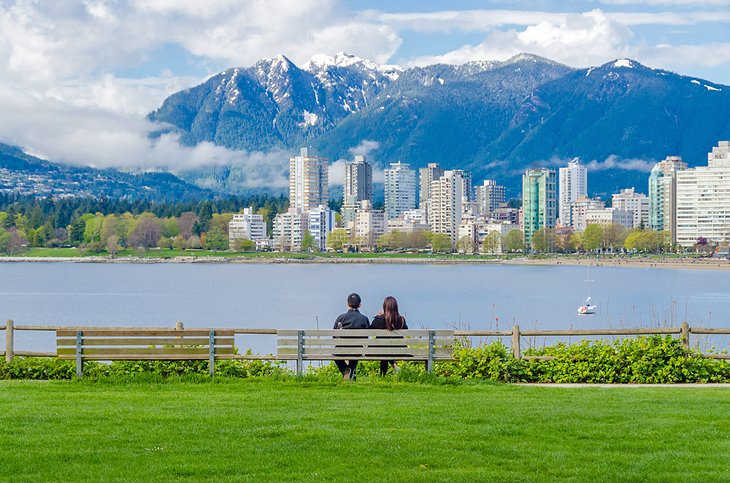
The sandy shoreline of Kitsilano Beach defines the laid-back, fun-loving Vancouver lifestyle. It's a place locals hang out with friends or take a dip in the outdoor heated seawater swimming pool. The wide beach here is popular with sun bathers in the summer.
Views from Kitsilano over the city center are wonderful. In addition to the beach and oceanfront, the area has a number of cafés and walking trails, and a vibrant shopping strip lies a few blocks south on West Fourth Avenue.
A short stroll to the east of Kitsilano is Vanier Park, where you'll find wide-open spaces and the Vancouver Maritime Museum. Catch a small Aquabus to downtown Vancouver or Granville Island from the docks located here.
Address: 2305 Cornwall Ave, Vancouver, British Columbia
- Read More: Best Beaches in Vancouver, BC
8. Explore Gastown
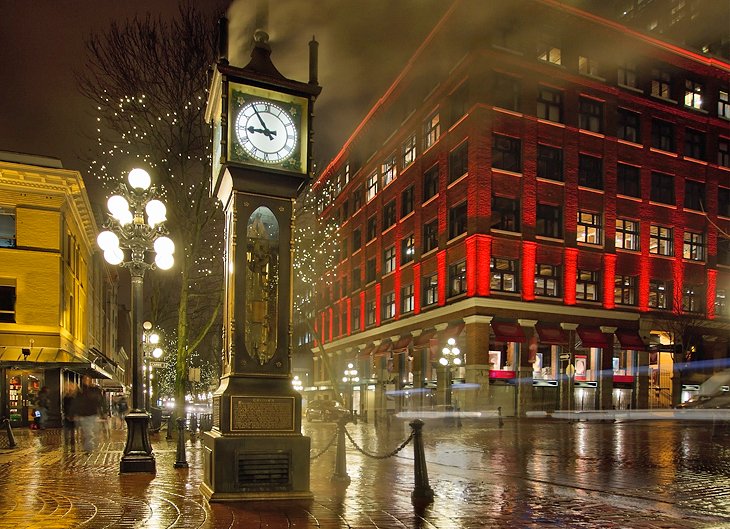
The oldest part of the city, Gastown is an area of restaurants, galleries, and shops set in carefully restored Victorian buildings. Heritage structures, cobblestone streets, and iron lampposts give the district its distinctive atmosphere. Gastown is a short walk from Canada Place.
Gastown came into existence in 1867 when a man called John Deighton arrived on the scene. Deighton had a habit of launching into lengthy stories and soon acquired the nickname "Gassy Jack." As a result, the vicinity became known as "Gassy's Town" or "Gastown."
A statue of the proprietor now watches over the neighborhood in Maple Tree Square. Tourists stop for photos with Gassy Jack, and also love to visit the nearby Steam Clock, which puffs steam-powered chimes every 15 minutes.
9. Tour Canada Place
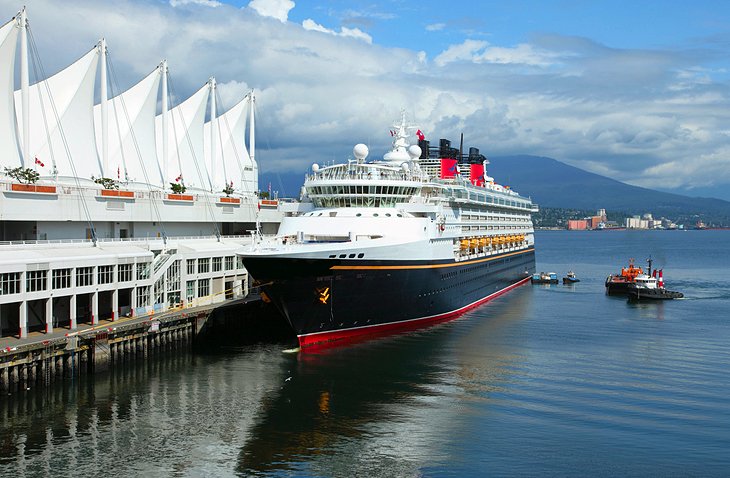
If you arrive in Vancouver on a cruise ship, Canada Place is where your trip begins. The unusual roof design creates the impression of a huge sailing vessel. The architecturally remarkable structure is part cruise ship terminal, part convention center and hotel, and part hub for sightseeing bus tours.
At the end of the pier are panoramic views and the Flyover Canada attraction - a flight simulator that assaults all your senses while giving you a Canadian geography lesson. Also nearby, Waterfront Station is a major transit hub with ferries departing for the public market at Lonsdale Quay in North Vancouver.
If you exit the building and turn right, a scenic waterfront walk towards Stanley Park begins. Along the way, you'll see the seaplanes take off and land, and massive seagoing container ships heading out to sea.
Address: 999 Canada Place, Vancouver
10. Soak Up Some Culture in Chinatown
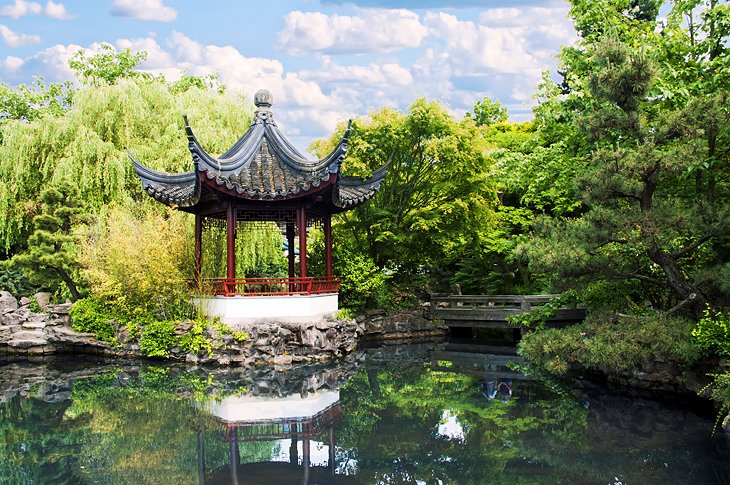
Beyond the ornate Millennium Gate marking its entrance, Vancouver's exotic and interesting Chinatown features modern buildings amid many older ones dating from Victorian times.
Signs at shops and restaurants are often written in Chinese characters, particularly along East Pender, Keefer, and Main streets – the main shopping areas. Local attractions include the pretty walled Dr. Sun Yat-Sen Classical Chinese Garden, modeled after a traditional garden from the Ming Dynasty.
Also worth seeing is the Sam Kee Building, which at barely two meters wide, claims to be the narrowest office building in the world. Every year, Chinese New Year is celebrated with an exuberant parade.
11. Go for a Stroll in English Bay
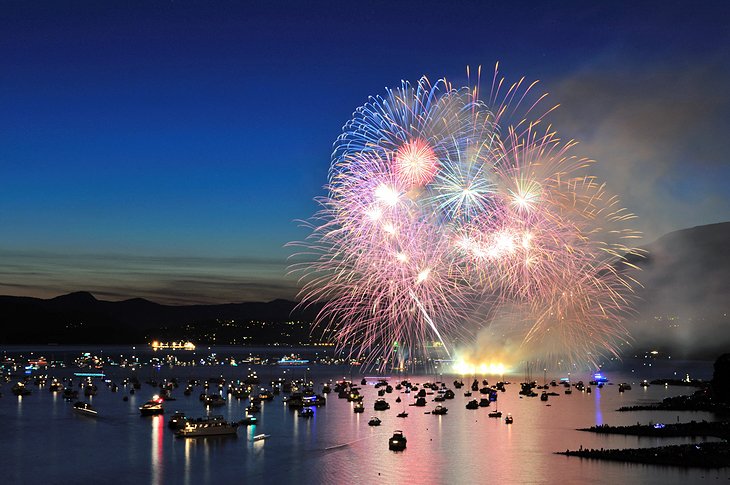
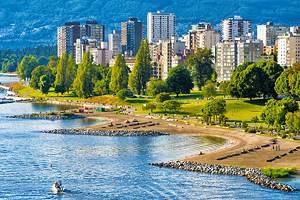
Oceanfront English Bay centers on one of the city's loveliest and busiest beaches. Part of the West End neighborhood, English Bay offers shopping and high-end restaurants, but is also a popular outdoor area where people come to walk, bike, rollerblade, or hang out with the public art installations.
English Bay is not far from Stanley Park, and a waterfront trail joins the two. The beach is strewn with large tree trunks, which make a perfect back rest for sunbathers.
One of the biggest events of the summer is Celebration of Light. Generally occurring around the last week of July, spectacular fireworks are set to music. Another popular event is the New Year's Day Polar Bear Swim, when hardy swimmers take a dip in the chilly Pacific waters.
12. Walk across the Capilano Suspension Bridge
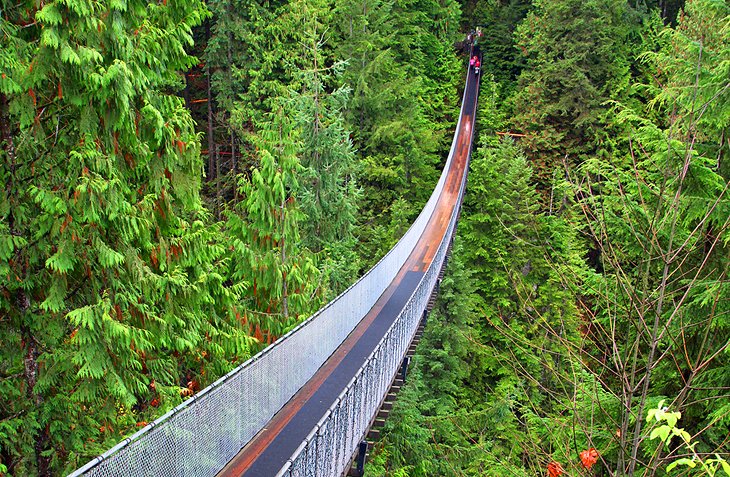
Vancouver's first tourist attraction, the Capilano Suspension Bridge opened in 1889 and has been thrilling visitors with its swaying bridge over a plummeting canyon ever since. The footbridge spans a 70-meter deep river canyon leading to an activity park filled with forest trails and a treetop walk through old-growth giants. There's also a collection of totem poles and a transparent suspended platform known as the Cliffwalk.
If you are staying in Vancouver and looking for an easy way to visit the bridge and see some city highlights, the Vancouver City Tour including Capilano Suspension Bridge is a convenient option. This trip includes a half-day tour of Vancouver, a visit to the Capilano Suspension Bridge, and a cliff walk adventure.
Also along Capilano Road, Capilano Salmon Hatchery is worth a visit (in fall especially) to spot flashing salmon as they try to swim upstream. The fish ladder - a series of staggered pools - allows fish to bypass Cleveland Dam. Check out the underwater windows for a first-hand look at their efforts.
Address: 3735 Capilano Road, North Vancouver, British Columbia
13. Take a Ride on the Aquabus
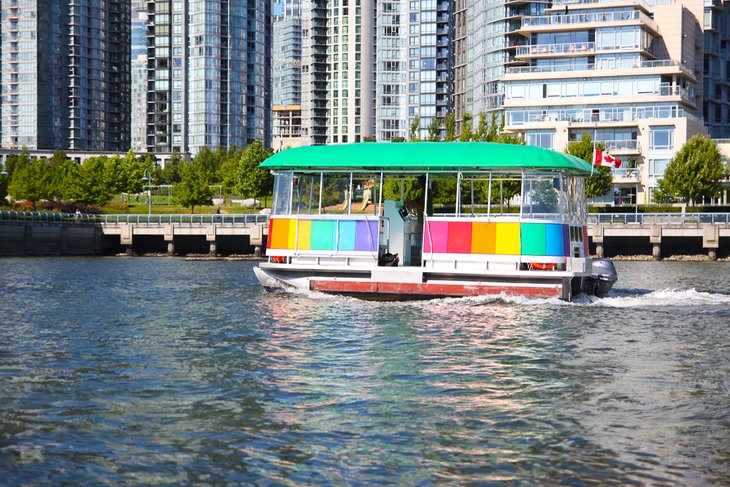
One of the best views of Vancouver is fortunately one of the cheapest. Jump on the small Aquabus and bob your way across and around False Creek while soaking up the incredible views. It's easy to get on board – eight pickup points are strategically placed around the downtown waterfront.
You'll never have to wait long, one of the colorfully painted 13 Aquabuses will be by to pick you up every 15 minutes. The boats are pet friendly, bike friendly, and can accommodate wheelchairs. The Aquabus is particularly handy if you are walking around downtown and would like to grab lunch or do a bit of shopping at Granville Island.
14. Shop Robson Street
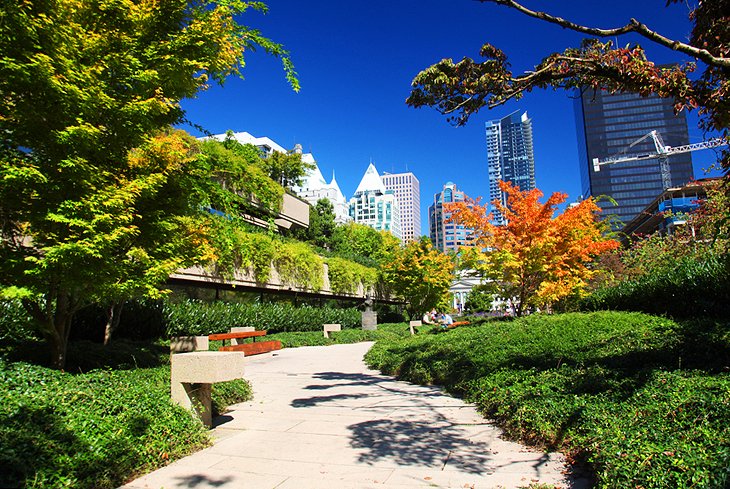
Robson Street is best known for shopping. But international brand names aside, it's also the setting for many inventive Vancouver happenings.
The main hub of activity on Robson Street is centered between Burrard and Jarvis Streets. Over these three blocks, you'll find over 150 stores and restaurants. Take a stroll up and down the street, and see if you can snag a patio seat to engage in some serious people watching.
Robson Street is central to many of the city's top attractions, so a visit here is easily combined with a stop at the Vancouver Art Gallery or nearby Robson Square.
Location: Robson Street at Hornby Street, Vancouver, British Columbia
15. Learn about History at the Museum of Vancouver
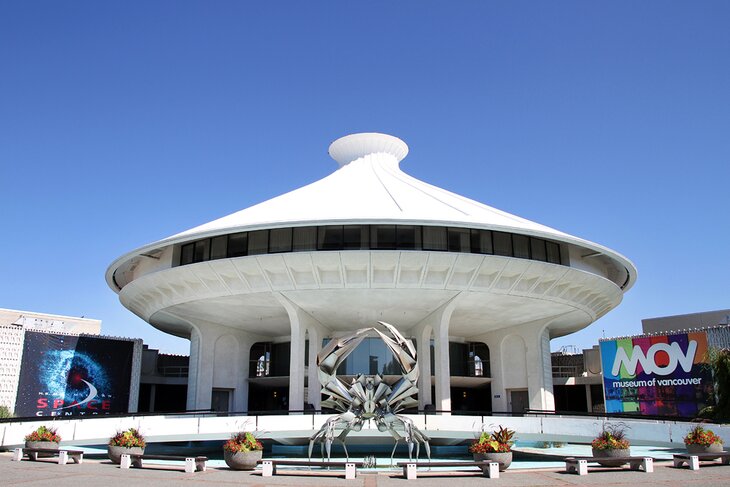
In Vanier Park near Burrard Bridge, the Museum of Vancouver is a large institution devoted to all things Vancouver. It covers the city history from the first Coast Salish communities to Japantown, Kitsilano hippie days, and urban development.
In the same building is the HR MacMillan Space Centre with its planetarium, an observatory, and the waterfront Maritime Museum, where splendid views capture English Bay with the North Shore mountains beyond.
If you are staying downtown, catch the Aquabus across False Creek to Vanier Park and get off at the Maritime Museum Ferry dock.
Address: 1100 Chestnut Street, Vancouver, British Columbia
16. Queen Elizabeth Park
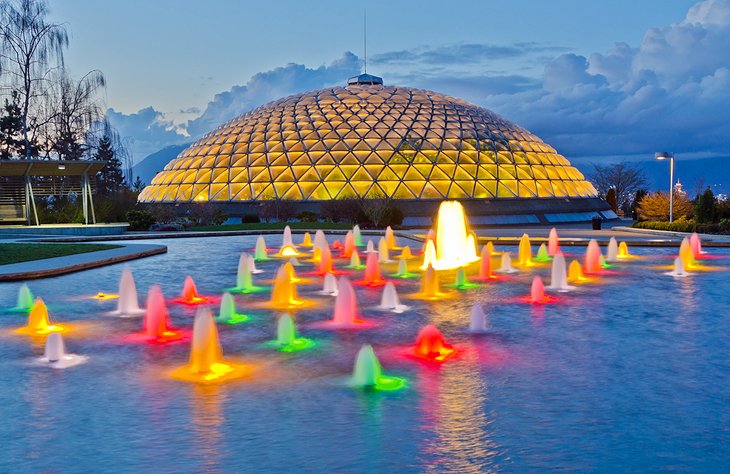
The center of Queen Elizabeth Park, Little Mountain, marks the highest point in Vancouver, and its elevated position affords excellent views of the city center and the mountains to the north.
Things to do in the park include pitch-and-putt golf, tennis, disc golf, and visiting the extensive outdoor arboretum. If the day is grey and cool, escape to the tropical environment of the Bloedel Conservatory.
Queen Elizabeth Park has an excellent restaurant called Seasons in the Park. Walk the park in the mid-morning, then stop in for lunch while you soak up the amazing views of downtown Vancouver.
The sunken Quarry Garden makes a lovely spot to stroll on a warm summer day. For more horticultural explorations, head a couple of blocks west to VanDusen Botanical Garden, where there is always something in bloom amid beds representing various regions and species.
Location: Cambie Street and West 33rd Ave, Vancouver, British Columbia
17. Take the Kids to Science World
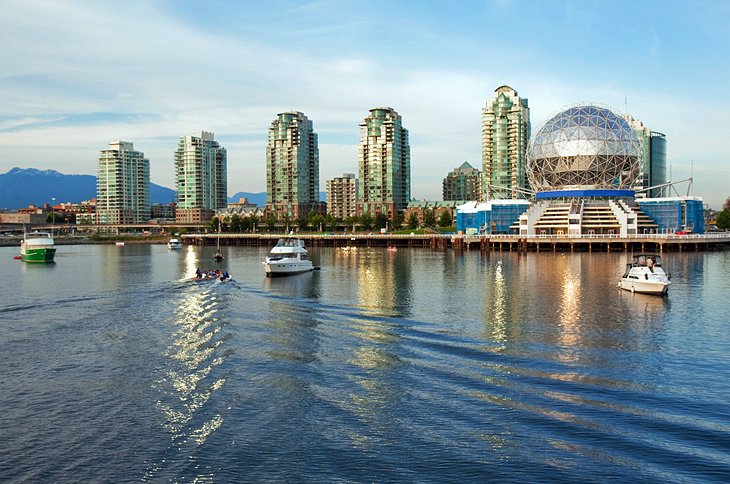
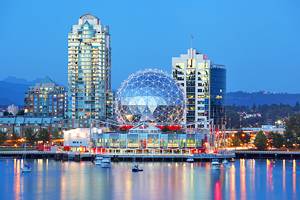
The futuristic sphere-like building of Science World is home to a child-friendly exploration center that explains phenomena through 12 hands-on exhibits and demonstrations. Themes include water, air, motion, and invention.
Visiting exhibits are often impressive and part of world tours. The building, which is an unmistakable waterfront landmark in Vancouver, was originally built for Expo 86, a World's Fair.
Address: 1455 Quebec Street, Vancouver, British Columbia
18. Enjoy the Sights of Richmond
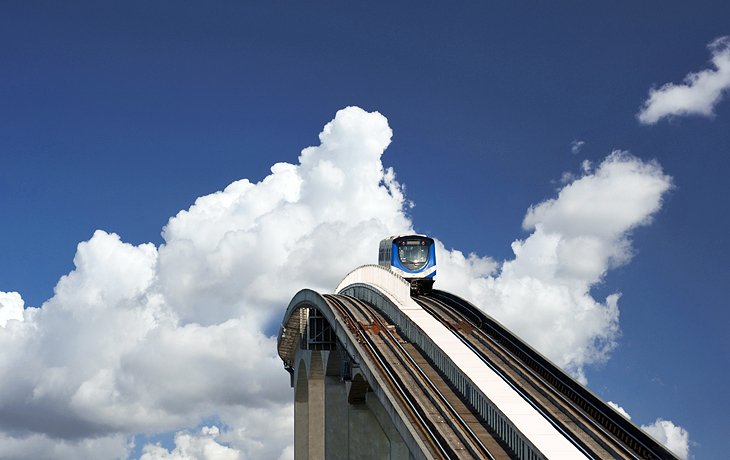
South of Vancouver, Richmond is Vancouver's second Chinatown, hence you'll see many shops with Chinese characters on their signs. If you crave authentic Chinese food, you are in the right spot. Hundreds of restaurants line the streets, serving delicious food.
Richmond is also packed with sightseeing attractions, from a renowned Buddhist temple to the picturesque former fishing village of Steveston where you'll find waterfront restaurants and shops in restored old boatsheds. Located in the latter, the Gulf of Georgia Cannery National Historic Site is one of the most historic settings in Richmond, and it relays the history of the West Coast fishing industry.
Once you've had your fill of tourist attractions, head to the malls to find imported Asian goods and much more. In the warmer weather, come down at night, when vibrant night markets take place and are similar in nature to ones you'd find in Hong Kong.
19. Go Whale Watching
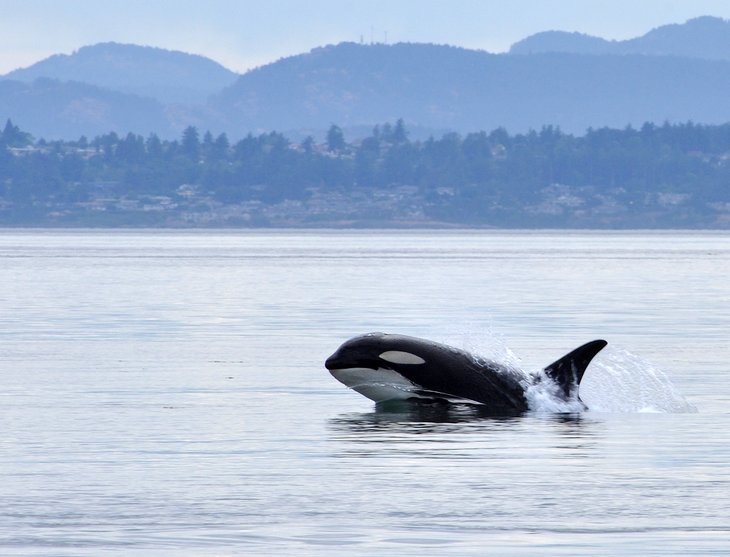
The waters off Vancouver's coastline, known as the Salish Sea, are an excellent place to see whales. Humpback and gray whales, along with smaller minke and orcas swim in these waters.
The main whale watching season runs from March through October. Options for seeing the whales range from aerial viewing from a float plane to Zodiac boats, or for those looking for a more stable platform, larger tour boats. If you are lucky, you might even spot a few whales from the BC ferries that transit between Vancouver and Victoria.
Strict regulations are in place that limit how close the boats can get to the whales. A popular option leaves from in front of the Westin Hotel in downtown Vancouver. The Half-Day Whale Watching Adventure from Vancouver takes you out on the Salish Sea Dream, an 80-foot double decker catamaran. Along the way, interesting commentary is provided. You'll have a good chance of sighting a whale from one of the multiple viewing decks.
20. VanDusen Botanical Garden
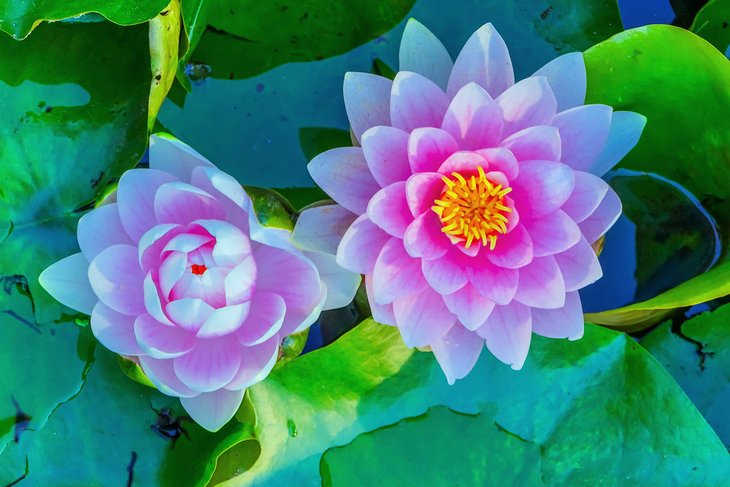
The British Columbia climate is ideal for producing spectacular displays of flowers, and there's no better place to see them in their full glory than the VanDusen Botanical Garden. The garden is handily located a short distance from downtown on Oak Street near the aforementioned Queen Elizabeth Park.
The garden is a pleasant place to wander, and something is always in bloom no matter when you visit. To maximize your enjoyment, be sure to check out the bloom guide that the gardens put out on their website prior to each season.
Highlights of any visit include the cherry trees bursting into color in the spring followed by the rhododendrons and laburnums, then the roses and hydrangeas putting on their show in the summer. Come fall, the Japanese maples, ginkgo trees, and rudbeckia step up and do their part in impressing guests.
21. Vancouver Art Gallery
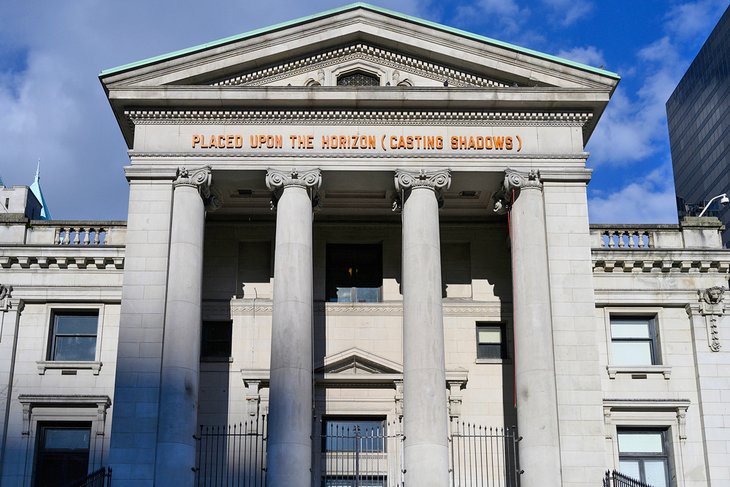
The Vancouver Art Gallery is the city's premier arts institution, located in Downtown Vancouver. The gallery presents innovative, world-class exhibitions year-round featuring the works of local and international artists on a rotating basis. The gallery's collection includes paintings by renowned BC artist Emily Carr (1871-1945), as well as contemporary works by Asia-Pacific and First Nations artists.
The façade of the building faces Robson Square, an interesting public space designed by Arthur Erickson, which includes a winter ice-skating rink and law courts.
The steps with their carved lions out front of the gallery are a popular meeting spot and demonstration site for whatever causes are in the news. The Vancouver Art Gallery is located on Hornby Street, not far from Robson Street, and a visit to both is easily accomplished.
22. Day Trip to Whistler or the Gulf Islands
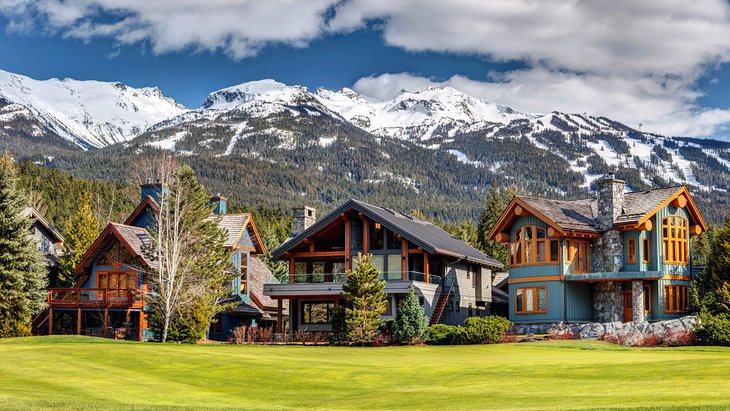
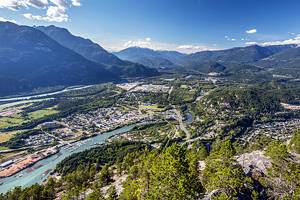
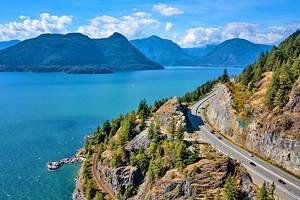
One of the most popular day trips is a drive along the Sea-to-Sky Highway to Whistler. If you want to do some sightseeing along the way, stop in at Squamish and Shannon Falls. Then, spend the afternoon wandering around Whistler Village, where you'll find shops, restaurants, and beautiful scenery around every corner. If you are a skier and you're visiting in winter, plan on a day of skiing here.
Other popular day trips from Vancouver include visiting some of the Gulf Islands, like Salt Spring Island, or taking a ferry all the way to Victoria on Vancouver Island. Ferries run regularly and the trip to Victoria is only about 1.5 hours.
Read More: From Vancouver to Victoria: Best Ways to Get There
Where to Stay in Vancouver for Sightseeing
To experience the best of Vancouver, it's a good idea to stay right downtown. Vancouver has a vibrant and active city center, where people live, work, and play. Many of the top attractions, including Stanley Park, English Bay, Robson Street, Gastown, and Granville Island, are located in the city center, along with great shopping and dining. Below are some highly-rated hotels in convenient locations:
Luxury Hotels:
- With a superb location, looking out over Vancouver Harbour, Stanley Park, and the North Shore Mountains, the Fairmont Pacific Rim is one of the city's finest hotels.
- Just off Robson Street near the famous Vancouver Public Library, the boutique L'Hermitage Hotel is a great luxury option for families or groups, with regular rooms and multi-room suites with kitchens.
- Near Robson Square, the Rosewood Hotel Georgia, first opened in 1927, is one of Vancouver's classic luxury hotels in the heart of downtown.
Mid-Range Hotels:
- True mid-range hotels are in scarce supply in the city center. At the top-end of mid-range, the centrally located Executive Hotel Le Soleil is a lovely boutique hotel with elegant suites.
- Near False Creek and Granville Island, the Residence Inn by Marriott Vancouver Downtown is an extended-stay hotel with studios, as well as suites with full kitchens.
- At the east end of downtown, close to Roger's Center, Science World, and Gastown, is the well-appointed Georgian Court Hotel, BW Premier Collection.
Budget Hotels:
- Located near Roger's Center, the non-profit YWCA Hotel Vancouver welcomes all travelers to their clean, modern, and comfortable rooms. All room revenue, less operating expenses, is put back towards social programs for women, children, and families.
- Near Gastown, is the Victorian Hotel, in a late 1800s Victorian-style building, with comfortable rooms and modern décor.
- In a very central location and within walking distance to the Vancouver Convention Center and the Olympic Cauldron is the basic but comfortable Days Inn by Wyndam Vancouver Downtown.
Tips and Tours: How to Make the Most of Your Visit to Vancouver
- Sightseeing: Vancouver is a big city, and it can be somewhat confusing with the water and bridges. A great way to see the attractions and get acquainted with the layout of the city is on a Hop-on Hop-off Bus Tour. The bus tour stops at 24 locations. Tickets are valid for either one or two days.
- Day Trips: Vancouver Island is one of Canada's most beautiful destinations, and it's less than two hours away by ferry from Vancouver. One of the easiest ways to see a bit of the island, including the beautiful provincial capital of Victoria, is on a Vancouver to Victoria and Butchart Gardens Tour. This tour takes you by bus and scenic ferry ride through the Gulf Islands to Victoria, where you'll have time to explore the city and see the famous Butchart Gardens, located just outside the city. This tour includes hotel pickup and drop-off, round-trip ferry, bus, and admission to the gardens.
Frequently Asked Questions
When is the best time to visit Vancouver?
| Average minimum and maximum temperatures for Vancouver, Canada in °C | |||||||||||
| J | F | M | A | M | J | J | A | S | O | N | D |
| 6 0 | 8 1 | 10 3 | 13 5 | 16 8 | 19 11 | 22 13 | 22 13 | 18 10 | 14 6 | 9 3 | 6 1 |
| PlanetWare.com | |||||||||||
| Average monthly precipitation totals for Vancouver, Canada in mm. | |||||||||||
| 150 | 125 | 109 | 76 | 61 | 46 | 36 | 38 | 64 | 114 | 170 | 178 |
| Average monthly snowfall totals for Vancouver, Canada in cm. | |||||||||||
| 21 | 9 | 4 | 1 | 0 | 0 | 0 | 0 | 0 | 0 | 3 | 19 |
| Average minimum and maximum temperatures for Vancouver, Canada in °F | |||||||||||
| J | F | M | A | M | J | J | A | S | O | N | D |
| 42 32 | 46 34 | 49 36 | 54 40 | 61 46 | 66 51 | 71 54 | 71 55 | 65 50 | 56 43 | 48 37 | 43 33 |
| PlanetWare.com | |||||||||||
| Average monthly precipitation totals for Vancouver, Canada in inches. | |||||||||||
| 5.9 | 4.9 | 4.3 | 3.0 | 2.4 | 1.8 | 1.4 | 1.5 | 2.5 | 4.5 | 6.7 | 7.0 |
| Average monthly snowfall totals for Vancouver, Canada in inches. | |||||||||||
| 8.1 | 3.4 | 1.6 | 0.2 | 0 | 0 | 0 | 0 | 0 | 0 | 1.0 | 7.3 |
Tourists tend to flock to Vancouver in the summer when the days are long and the sun is shining. The shoulder seasons of spring and fall are less busy, but the weather is a little less predictable. Even the winter — known for being dark and damp — has something to offer.
Spring: Vancouver experiences spring much earlier than the rest of Canada, and it is arguably when the city is at its most beautiful. It doesn't take long for the daffodils to poke out of the earth and for the infamous cherry blossoms to make an appearance, covering the city in delicate pink petals.
Of course, it takes rain to make flowers grow — and early spring can be a rainy time in Vancouver. Luckily, the temperatures this time of year are relatively warm, meaning it is still very pleasant to take in the sights of the city — though you may prefer to do so from under an umbrella.
In late spring, the rainy days become fewer, and the days get longer, but the crowds tend to stay away until the end of June. The late May to mid-June period offers the optimal conditions for a perfect Vancouver visit: great weather, but not too busy.
Summer: If you'd rather skip out on experiencing the notorious rain, then the summer months are your best bet for a visit to Vancouver. While there are no guarantees, the odds are good that you'll be treated to plenty of clear, sunny days in July and August, which are traditionally the warmest and driest months in Vancouver.
In the summer, the entire city tends to head outdoors. Whether exploring Stanley Park by bike, hiking the surrounding mountains, or just lounging at one of Vancouver's many beaches, there's simply no better way to experience summer in Vancouver than by being outside.
The fact that summer in Vancouver is spectacular is, unfortunately, not a very well-kept secret. Expect to pay a premium to enjoy summer in Vancouver, and always aim to show up early if you want to beat the crowds.
Fall: Fall in Vancouver can be somewhat hit or miss. If you happen to catch it on a "hit" day, then you're in for a real treat: crisp air, leaves changing colors, and clear views of the North Shore mountains as they get their first dusting of snow up top.
Hiking this time of year can be phenomenal. The bugs are a non-issue, the weather stays comfortable throughout the entire day, and the crowds of summer are long gone. Be mindful of hiking at elevation, as trails on the mountains can get covered in snow in the fall months. Always keep your eye on the time: as the daylight hours shrink, you are left with less time for those longer hikes.
Winter: While winter in the rest of Canada conjures up images of ice, snow, and bitter cold, that couldn't be further from winter in Vancouver. You'll want to dress properly if you visit Vancouver in the winter, but you're more likely to need to protect yourself from the rain than from the cold. The average temperature in Vancouver in January is 7 degrees Celsius (about 45 degrees Fahrenheit) — but the average rainfall for the month is about 140 millimeters (5.5 inches)!
While the rest of Canada is hibernating from the cold, people in Vancouver are able to get out and about thanks to its mild winters. The holiday season in Vancouver is, in a word, magical, with the Festival of Lights in VanDusen Gardens, the German-inspired Vancouver Christmas Market, and the spectacular Bright Nights at Vancouver's famous Stanley Park.
Though you're likely to experience at least some rain in the winter months, you also might get lucky with a few bluebird days. It isn't unusual to see people out on the golf course, even in the middle of winter!
If you're caught in a rainy spell, simply hop on a shuttle and head up to Whistler. Just two hours north of Vancouver, this world-renowned ski resort is best enjoyed in the winter months. If it's raining in Vancouver, chances are good that Whistler is getting covered in snow.