12 Top-Rated Attractions & Things to Do in Bodrum
Bodrum is Turkey's Turquoise Coast at its most vibrant. This unabashed summer vacation destination is known for its marina full of bobbing yachts ready to whisk you out onto the Aegean for a lazy day of coastal sightseeing between swimming stops; a handful of historic tourist attractions, if you're looking for more things to do off the beach; and a town filled with photogenic, old whitewashed houses.
Once the ancient city of Halicarnassus, Bodrum had turned into a simple fishing village by the late-Ottoman era, but all that changed in the mid-20th century, when tourism entered the fold.
Now during summer, this town is one of the best places to visit in Turkey for sun-and-sea vacations, and it buzzes with energy as tourists come from all over the world to soak up Bodrum's charm.
If you happen to visit out of season, though, you can still catch a hint of the old village atmosphere. Plan your time in Turkey's premier resort town with our list of the top tourist attractions and things to do in Bodrum.
See also: Where to Stay in Bodrum
- 1. Soak Up the Scenery on a Boat Trip
- 2. Visit the Castle of St. Peter
- 3. Explore History at the Museum of Underwater Archaeology
- 4. Sunbathe on the Bodrum Peninsula Beaches
- 5. See the Scant Remains of One of the Ancient Seven Wonders
- 6. Enjoy Water Sports on the Aegean
- 7. Explore Bodrum Old Town
- 8. Shop at the Bazaar
- 9. Take in the Best Sunset View from Bodrum's Historic Windmills Site
- 10. Day Trip to Stratonikeia
- 11. Visit Bodrum Theater
- 12. See Bodrum's Myndos Gate
- Where to Stay in Bodrum for Sightseeing
1. Soak Up the Scenery on a Boat Trip
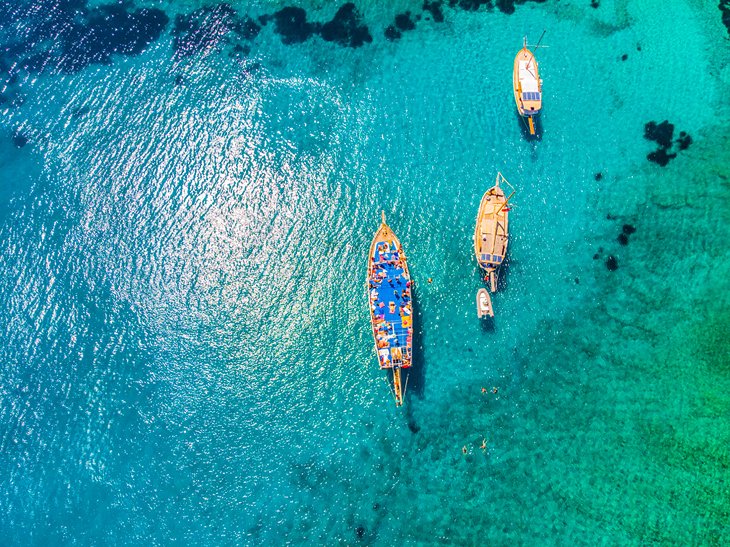
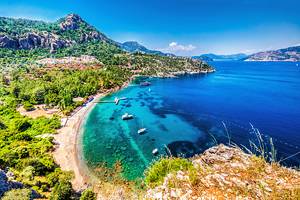
Bodrum is all about the sea. The vast amount of visitors that arrive are here for a lazy holiday of sun, sea, and sand, but when you feel the need for a change of scenery, the most popular way to sightsee is by boat.
Hundreds of boat tours are on offer during the summer months, ranging from a day trip sailing around the Bodrum Peninsula, stopping off at tiny inlets only accessible by boat for swimming, to multi-day yacht trips down the coast or across to the Greek Islands.
Bodrum's marina is where public and private yacht trip outfitters tout for business, though most visitors looking for a day-long or half-day boat trip prefer to book a recommended operator through their hotels.
Even on the short day and half-day trips, you'll be able to experience a good chunk of the Aegean's famed rocky coastline scenery and have hours of sunbathing on board, broken up by swimming stops.
When booking, check where your swimming stops will be. If possible you want to anchor off Orak Island, east off the coast of Bodrum Town, where the water is so clear, shallow, and shaded light turquoise that people nickname it the Turkish Maldives.
If you're on a private boat trip, so can curate your own itinerary, get to Orak Island before 10am or after 4pm to enjoy the bay at its quietest.
2. Visit the Castle of St. Peter
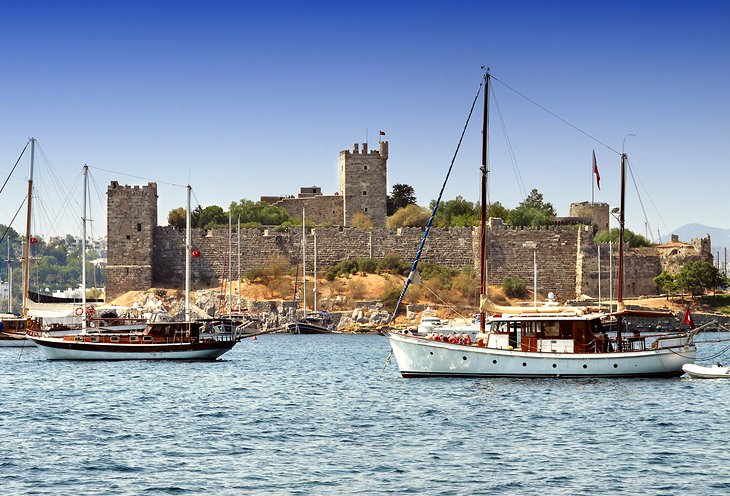
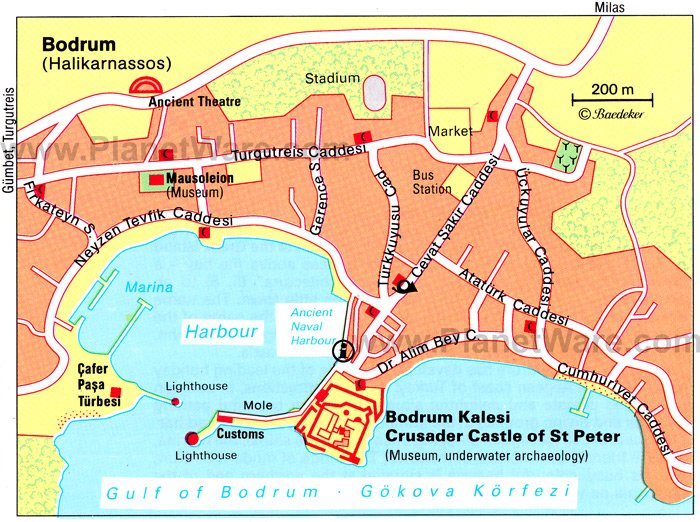
Lording over the seafront, the Castle of St. Peter is at the top of every visitor's things to do in Bodrum list.
The Knights Hospitallers of St. John built the structure between 1402 and 1437, and knights of the various nationalities of the order were entrusted with the defense of particular sections of the walls.
Among the various towers are the French Tower; the English Tower, with a sculpted lion on its west wall; and the Gatineau Tower, which leads to the dungeons.
During the reign of the Ottoman sultan Süleyman the Magnificent, the castle passed into Turkish hands and a mosque was built inside.
Today, many of the vast halls inside the castle display the exhibits of Bodrum's Museum of Underwater Archaeology.
Address: Kale Caddesi, Bodrum Town
3. Explore History at the Museum of Underwater Archaeology
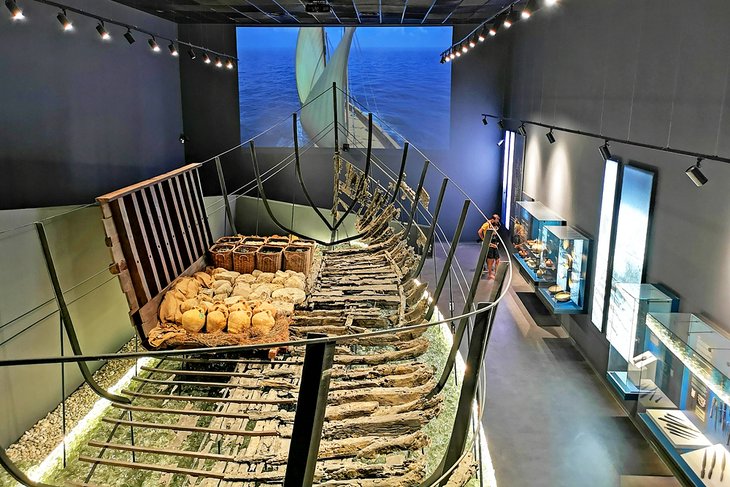
The absolutely brilliant Bodrum Underwater Archaeology Museum inside the Castle of St. Peter is a must-see attraction, even if you don't have an interest in underwater archaeology. It has been recently reorganized and renovated, with the exhibits displayed in various halls of the castle's upper level.
The artifact displays, which hail both from underwater discoveries off the coast here and excavations on the Bodrum Peninsula, are complemented by slick multimedia displays.
The museum's highlight is the Serçe Limanı Glass Wreck room, which displays a 16-meter Byzantine ship that sunk in 1026 CE. Some of its cargo, including amphorae and glass artifacts, is displayed artfully in the surrounding exhibit cases.
Other halls display finds recovered from several Bronze Age shipwrecks, a large collection of amphorae, and intricately decorated ceramic pieces uncovered from a Mycenaean-era necropolis near Ortakent on the peninsula.
Address: Castle of St. Peter, Kale Caddesi, Bodrum Town
4. Sunbathe on the Bodrum Peninsula Beaches

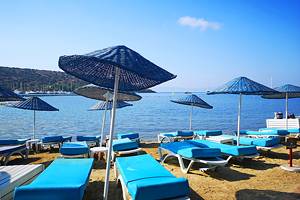
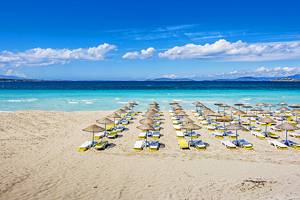
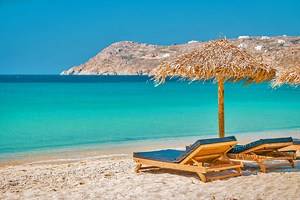
Outside Bodrum town, the Bodrum Peninsula's beaches are the main drawcard for visitors during summer, and from June through August, the shorefront is crammed full of sunbathers soaking up the heat.
The peninsula towns of Ortakent, Bitez, Gümbet, and Turgetreis have the most popular beaches, with free public beaches as well as private beach clubs that you can access for an entrance fee.
Bodrum Town itself also has two strips of beach right in the center of town for those that don't want to travel far for swimming and sunbathing.
The private beach clubs come with oodles of facilities on tap. If you're staying in town, or at any accommodation on the peninsula without its own beach, and want to check one of the beach clubs out, get up-to-date recommendations from your hotel. They should also be able to book a day pass for you, saving you the hassle.
Bodrum Peninsula's towns are connected to Bodrum Town by a regular dolmuş (local minibus) public transport network, so it's easy to hop between town and the main public beaches.
The entire peninsula is popular with both domestic and European tourists, so don't expect to find an isolated patch of sand. During the height of summer, this is one of Turkey's most popular places to visit, and going to the beach is the top thing to do.
5. See the Scant Remains of One of the Ancient Seven Wonders
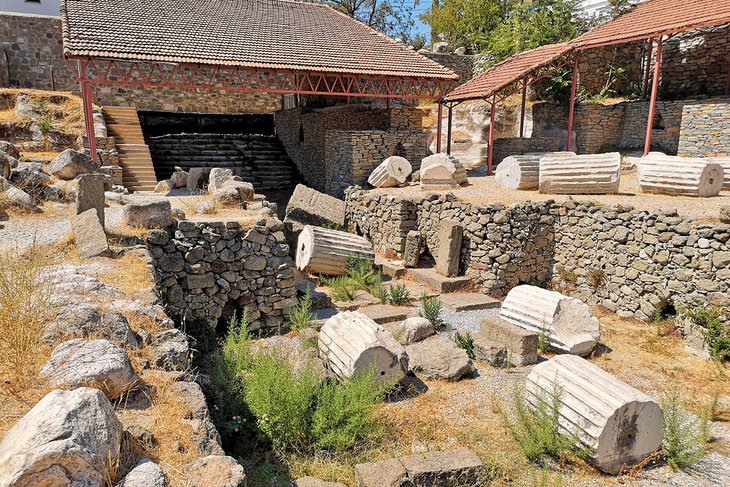
It doesn't look like much these days – you may need to put your imagination hat on – but this pile of ancient marble and rubble was once one of the seven wonders of the ancient world.
The Mausoleum of Mausolus, now known as Bodrum Mausoleum Museum, was built in Halicarnassus (Bodrum's ancient name) by the architect Pytheos as the final resting place of King Mausolus (376-353 BC).
When finished, the impressive, towering structure measured 46 meters high and was decorated with magnificent friezes by the most celebrated Greek sculptors of the day.
Despite damage by earthquakes over the centuries, it was only finally destroyed by the Knights Hospitallers, who used its stones to build the Castle of St. Peter.
The modern day site, in a peaceful garden setting, is worthy of a look if only just to say you've seen one of the seven ancient wonders. There's also a helpful scale model of the original mausoleum on site.
Address: Turgutreis Caddesi, Bodrum Town
6. Enjoy Water Sports on the Aegean
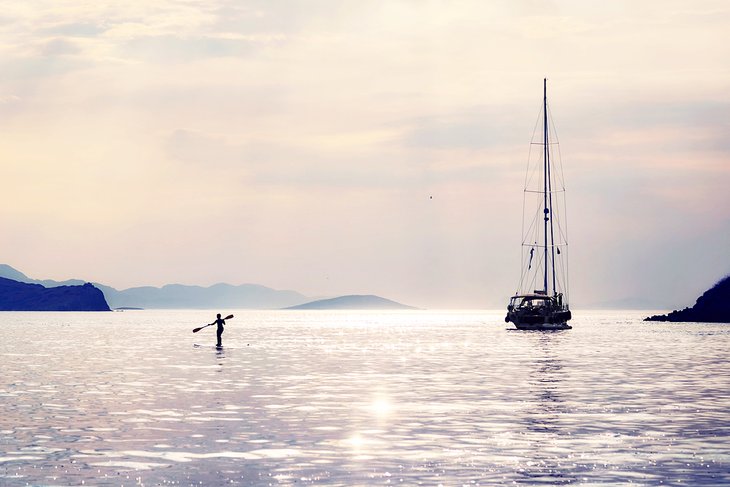
Boat trips may be the favored way to get out onto the water in Bodrum, but more active visitors can choose from a range of water sports offered at the different beaches of the peninsula.
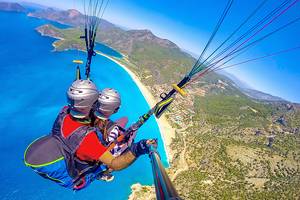
Kayak hire is popular at beaches such as Bitez, Ortakent, and Gümbet, while those looking for more thrills can opt to go parasailing at these three beaches as well. Paddleboarding has recently been gaining in popularity and is now offered at various beaches along the peninsula, including at Turgutreis and at Camel Beach in Ortakent.
There are also options for more specialist water sports, such as kiteboarding, with a couple of operators who work in the Bodrum area.
One of the most professional outfits is Kiteboard Bodrum which is based on Celebi Island, offshore from Ortakent. They offer kiteboarding lessons from beginner to advanced levels as well as equipment rental, with transfers to the island included in their prices.
7. Explore Bodrum Old Town
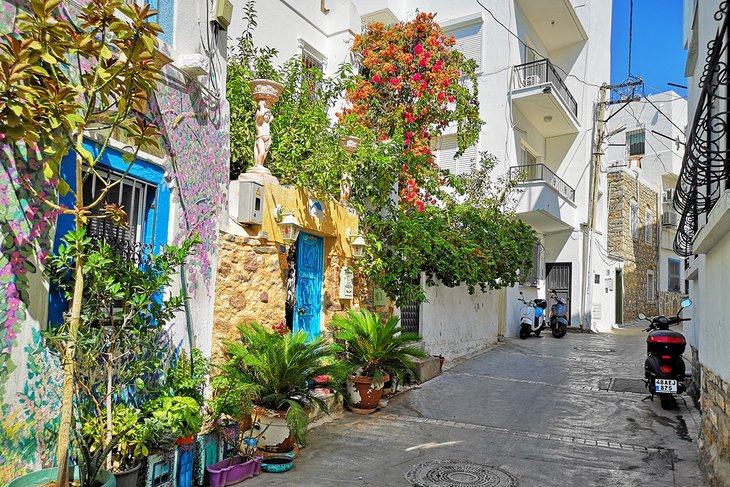
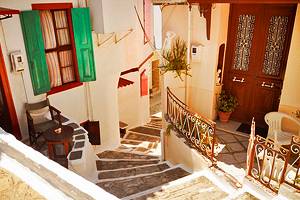
The narrow lanes that back the beach, bazaar, and marina area are Bodrum's most interesting area. The alleyways here are lined with bougainvillea-draped and vine-clad whitewashed cottages that give Bodrum its particular Aegean ambience and charm and make it stand out amid other coastal tourist centers, such as Fethiye, that have a more modern look.
For photographers, these rambling, winding lanes are the most interesting part of Bodrum to photograph, and you can still get a real feel for the fishing village it once was.
The best way to explore is to simply duck up the skinny lanes that lead off the waterfront and go for an aimless wander. The more central lanes are scattered with cafés and restaurants that make for great pit stops while you're strolling.
The cobblestone street of Saray Sokak, which runs from the waterfront harbor up to the Mausoleum of Mausolus is an easy stroll that gives you a taster of old Bodrum's ambience. If you're feeling energetic, you could continue on foot, up Kelerlik Sokak, all the way up the hill to Bodrum Theater.
8. Shop at the Bazaar
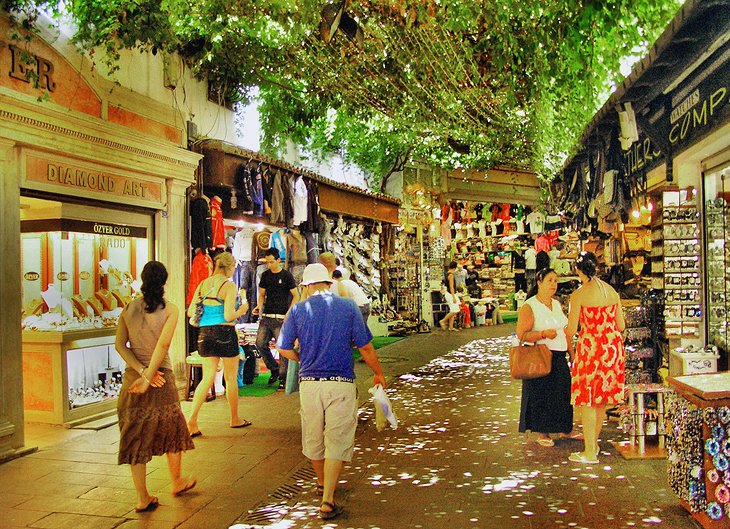
If you're looking for some retail therapy, Bodrum has it all. The modern bazaar area spreads out behind St. Peter's Castle in a series of shaded lanes. It's at its busiest after dark when restaurant-goers head here for an after-dinner stroll.
Bodrum's bazaar is an upmarket take on a typical Turkish market, with proper shops rather than stalls. It offers little room for bargaining, but what it loses in authenticity, it makes up for in choice.
There's everything here, from Turkish and Central Asian textiles, colorful local pottery, and hand-crafted woodwork to a bling-fest of gold shops, snazzy beachwear, and fashion.
Meandering between the shops after a day of sunbathing is what Bodrum is all about.
Head to the Tarihi Han (a restored historic caravanserai) in the bazaar area for coffee or tea in the shaded internal courtyard before browsing the local artisan stores that have set up shop on the han's upper level.
The sparse ruin site, with two remaining chunks of wall, you pass by on the eastern section of the bazaar district, is the remains of the 18th century Greek Orthodox Aya Nikola church.
The bazaar district is one of Bodrum Town's most buzzing areas for café life and dining, and you'll find plenty of restaurants, as well as ice cream and dessert shops scattered throughout the area.
9. Take in the Best Sunset View from Bodrum's Historic Windmills Site
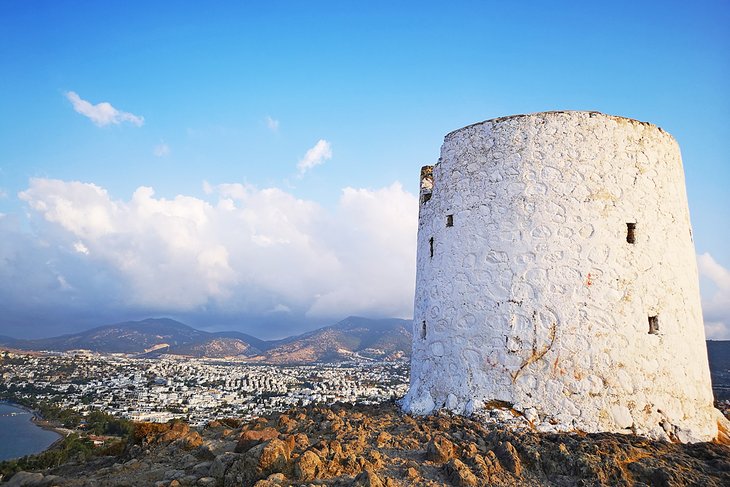
The hill that separates Bodrum Bay and Gümbet Bay is topped with the sparse remains of Bodrum's windmills.
The windmills themselves are not worth the visit, but the panoramic vistas that stretch across the bays of both Bodrum and Gümbet are, and it's a very popular spot to watch the sun set.
Though most people come here by car, the hilltop is an easy two-kilometer walk from Bodrum marina, up a medium slope. Don't try to walk it during the midday heat, though.
To walk here, head to the very western end of Bodrum marina and veer uphill on Osman Nuri Bilgin Caddesi. At the top of the hill, turn onto Haremtan Sokak and follow this summit road until you arrive at the windmills.
The best time for strolling up here is in the early morning, when fresh breezes make it a pleasant activity rather than a slog. The site is also at its quietest during this time, so you can soak up the Bodrum Bay vistas without the crowds.
Address: Haremtan Sokak, Bodrum Town
10. Day Trip to Stratonikeia
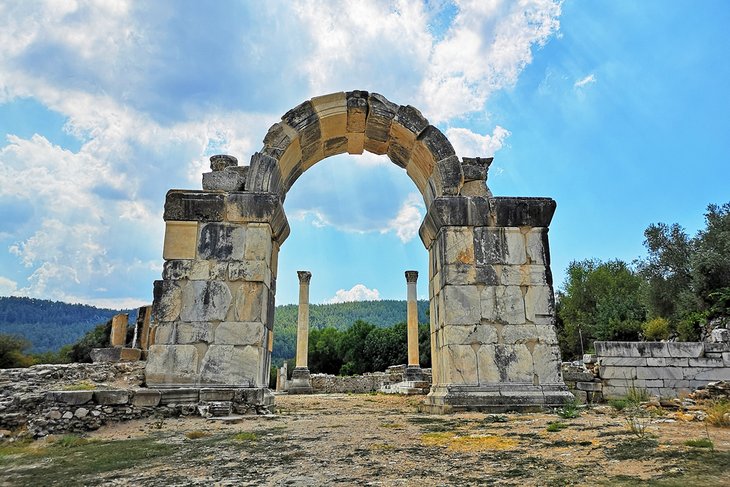
The ancient site of Statonikeia is within easy day-tripping distance from Bodrum, but surprisingly receives very few visitors. If you've visited more famous ancient cities, such as Ephesus, on your Turkey itinerary, a stroll around the ruins here with barely another visitor in sight makes for a refreshing change.
The site has been settled since the Bronze Age Hittite era, but the oldest monuments still standing today date from the Classical Age, when Stratonikeia became an important link on the local trade routes.
Unlike many Greco-Roman cities, Stratonikeia was continuously settled up until the early years of the modern Turkish Republic as the village of Eskihisar.
Although the village was eventually moved a couple of kilometers away from Stratonikeia, several families continue to inhabit the site itself, and several Ottoman-era monuments and mansions dating from the 19th century have been preserved, along with the older ruins.
This makes Stratonikeia a uniquely stratified site, where you can stroll from the Hellenistic theater, sliced into the hillside, through lanes lined with crumbling and derelict Ottoman-era stone houses, to the impressive double-arched northern gate.
Stratonikeia is along the main Bodrum-Muğla Highway, 75 kilometers northeast from Bodrum Town.
11. Visit Bodrum Theater
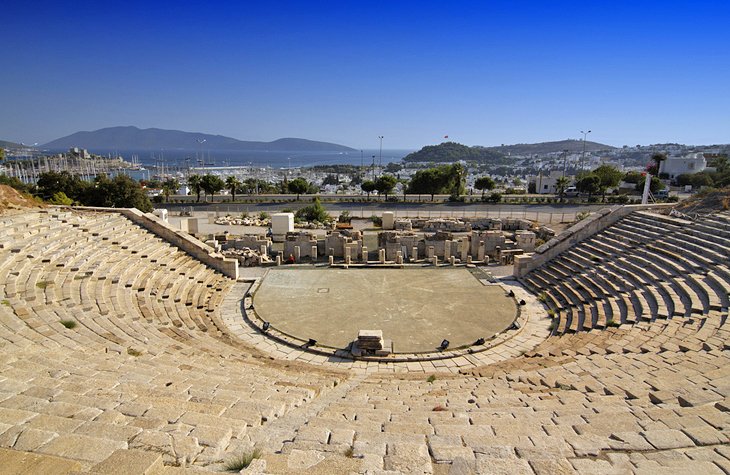
Bodrum Theater may be small by Roman standards, but it has been decently restored, and the views from the upper tiers, out towards Bodrum Bay, are superb.
In its heyday during the 4th century, it would have held 13,000 spectators.
If you're here in summer, Bodrum uses the theater for a program of events and concerts. Check out if there's anything on while you're in town, as seeing a performance within the theater is the best way of imagining how it would have been used in the grand era of Halicarnassus.
Directly across the road from the theater, you can get panoramic photos looking down onto central Bodrum.
Address: Kıbrıs Şehitleri Caddesi, Bodrum Town
12. See Bodrum's Myndos Gate
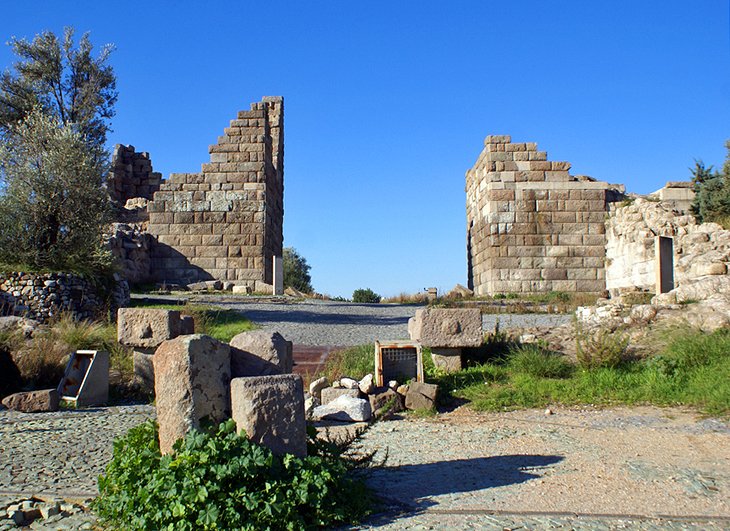
One for the supreme history fiends on a hunt for the remnants of Halicarnassus: this gate is the main still-standing chunk of King Mausolus' once sturdy fortress walls, which originally wrapped around the ancient city for seven kilometers.
Unless you are particularly interested in ancient history, this small set of ruins, which include a scattering of tomb and stele slabs and the sparse remnants of a 4th-century moat surrounding the gate fragments, are underwhelming.
The site, though, is easily combined with a stroll from the marina, up to the mausoleum and the theater, and then visiting this site on the way back.
Address: Cafer Paşa Caddesi, Bodrum Town
Where to Stay in Bodrum for Sightseeing
Luxury Hotels:
- El Vino Hotel & Suites is a four-star boutique hotel in a peaceful location but still only a walk into Bodrum town. It has a panoramic rooftop terrace with a pool, and breakfast is included.
- The Marmara is one of Bodrum's most high-class hotels with views across the entire town stretching out to the sea, a vast pool area, a top-end restaurant, and rooms bedecked with chic modern furnishings.
Mid-Range Hotels:
- The family-friendly Voyage Bodrum has a long private beachfront, a big pool area, a games room, and a popular spa and sauna offering a vast range of treatments.
- Another affordable resort is the Forever Club, always popular with tourists due to its welcoming staff, big private beach, outdoor pool, basketball court, and spa with traditional Turkish bath facilities.
Budget Hotels:
- In a great central position, near St. Peter's Castle, the friendly Hotel Istankoy Bodrum has a sociable pool area, good-sized rooms with excellent facilities, and a restaurant. Breakfast is included.
- On the main road in Bodrum Town, just a hop from the beach, Merih Hotel is known for its hospitable and friendly management, who go out of the way to help, and excellent included breakfast.
More Related Articles on PlanetWare.com
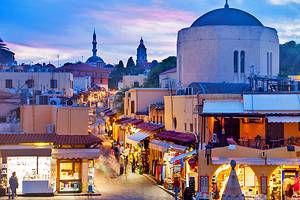
Island Hopping: With plenty of ferries heading to the Greek islands, Bodrum is a main entry or exit point to and from Turkey. If you want to combine a Turkey and Greece holiday, this is a great place to start. From Bodrum, you can catch regular ferries to Rhodes, with its main town of medieval walls and cobblestone alleys, as well as to Kos.
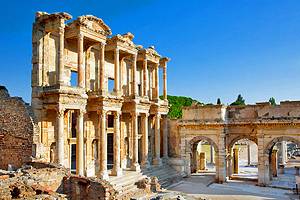
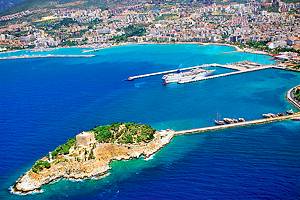
Heading up the Coast: From Bodrum, head north up the coast to visit one of the world's best preserved Roman city ruins at Ephesus, Turkey's most famous archaeological site. To visit the ruins, you could base yourself in Kusadasi, with its harbor, castle, and beach resorts, or in Selçuk, with its pretty cobblestone alleys, Byzantine and Roman ruins, and the excellent Ephesus Museum.