20 Top-Rated Day Trips from Valletta
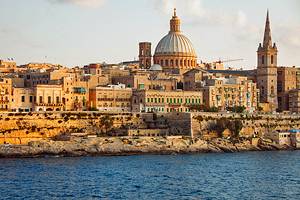
Brimming with cultural attractions, Malta's elegant capital city of Valletta provides the perfect starting point for exploring the Island of Malta.
Because Malta is so small, anywhere on the island is an easy day trip if you have a car. Even by bus from Valletta, you can visit most of the island's top tourist destinations.
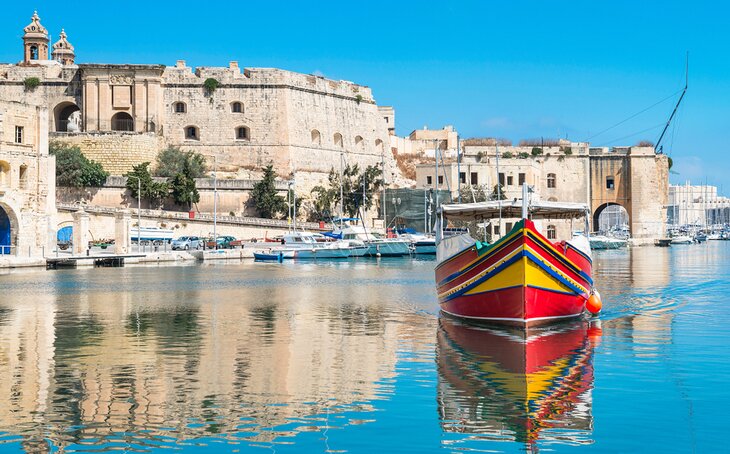
Driving across the island, from the two farthest points, takes less than an hour. To circle the entire coastline only requires a few hours of driving time.
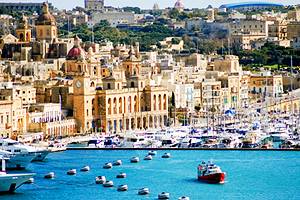
When creating your travel itinerary, be sure to include a few of Malta's beautiful waterfront towns. Not to be missed are the fortified cities on Valletta's Marsamxett Harbor that have a heritage tied to the Knights of Malta.
Further afield is the Blue Grotto, a gorgeous nature site on Malta's southern coast, and the fishing village of Marsaxlokk, a perfect place to visit for an authentic seafood lunch.
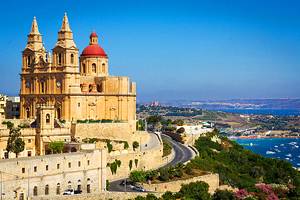
It's also worth exploring inland. The rural landscape is dotted with marvelous historic towns such as Mdina, a medieval citadel; Naxxar with its impressive aristocratic Maltese palace; and several enchanting country villages that offer a taste of Malta's traditional lifestyle.
There is so much to discover just a short distance from Malta's capital city. Find the best places to visit with our list of the top day trips from Valletta.
- 1. Blue Grotto
- 2. Medieval Walled City of Mdina
- 3. Vittoriosa: Maritime Capital with a Legacy of the Knights
- 4. The Invincible City of Senglea
- 5. Cospicua: Brave City of the Great Siege
- 6. The Fishing Village of Marsaxlokk
- 7. Archaeological and Nature Sites near Marsaxlokk
- 8. Beautiful Baroque Buildings in Naxxar
- 9. Hagar Qim Temples
- 10. Sliema: Waterfront Restaurants and Harbor Cruises
- 11. Mosta Rotunda
- 12. Zejtun's Historic Churches, Feast Days, and Olive Festival
- 13. Saint Paul's Bay
- 14. The Seaside Town of Marsaskala
- 15. Ta' Xbiex: A Tranquil Waterfront District
- 16. Trendy Restaurant Scene in Saint Julian's
- 17. Birzebbuga by the Sea
- 18. The Fishing Village of Kalkara
- 19. Antique Shops and Historic Churches in Birkirkara
- 20. Quiet Country Villages in Central Malta
- Map of Day Trips from Valletta
1. Blue Grotto
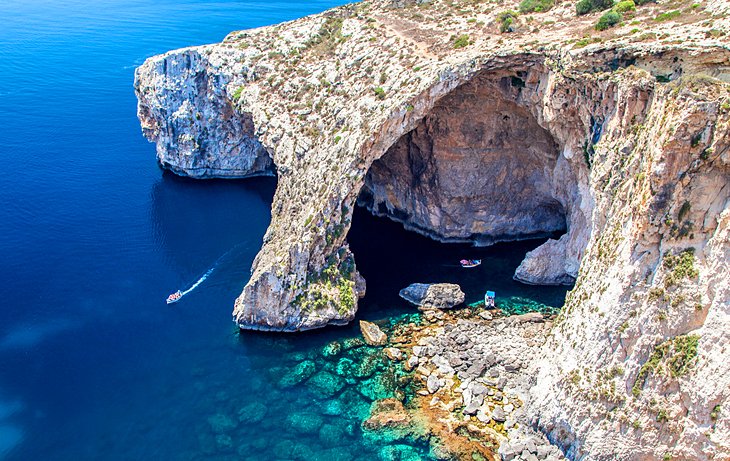
Malta's Blue Grotto dazzles you with its sparkling deep-blue waters and distinctive Mediterranean scenery. The sea-flooded cave is part of a system of six limestone caves that were created by the force of waves over millennia.
The Blue Grotto is found along the dramatic southern coast of Malta. A winding road alongside a sheer cliff leads to the little harbor in Wied iz-Zurrieq, where boats depart for guided tours of the Blue Grotto. The best time to visit is in the morning until about 1pm, when the direct sunlight gives the seawater a brilliant cobalt glow.
The serenity of Malta's Blue Grotto belies a storied past. On the eve of the Great Siege of 1565, a Maltese cavalry squadron defended against the Turkish Armada at this location. Today, tourists can expect nothing more turbulent to occur here than inclement weather that may cause Blue Grotto boating tours to be canceled.
2. Medieval Walled City of Mdina
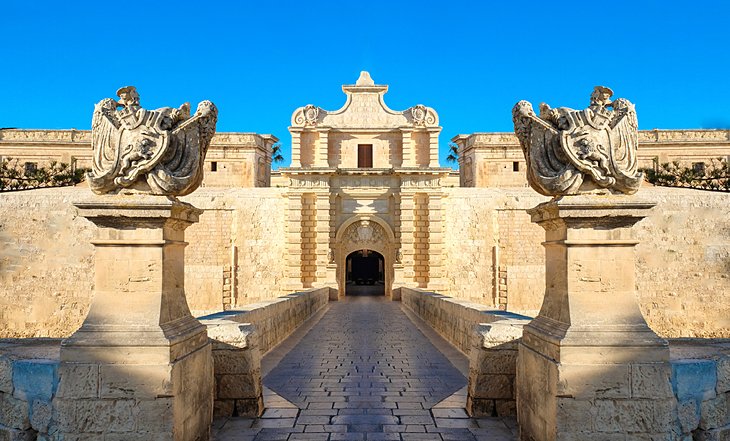
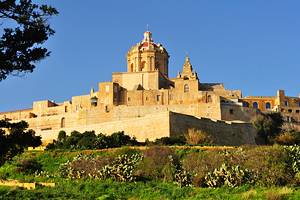
Step through the ornate Main Gate (Vilhena Gate) of Mdina to leave the modern world behind. Monumental golden-hued walls completely enclose the city, lending a lost-in-time feel. The historic ambience is palpable as you wander the narrow cobblestone lanes and echoing alleyways.
Every corner of the city, from the shaded courtyards to stately sandstone buildings, speaks volumes about the past. While the city's labyrinthine pedestrian street plan was developed during the Middle Ages, the newest buildings date to the 18th century.
Elegant aristocratic palaces reveal the town's former importance, when it was known as the Città Notabile (The Noble City). Beginning in the 12th century, Mdina became home to Malta's noble families of Norman, Sicilian, and Spanish lineage. Later, the Knights of Malta built graceful Baroque churches, with intricate facades, and palaces with luxuriant interiors.
Mdina has retained the glorious architecture of bygone eras, but most of the city's ancient palaces are now museums, with the exception of the 17th-century Carmelite Priory, still a functioning monastery.
The Carmelite Priory (Villegaignon Street) is open to the public Tuesday through Saturday. Visits must be arranged in advance. You may also attend a religious service or classical music concert, or participate in a retreat.
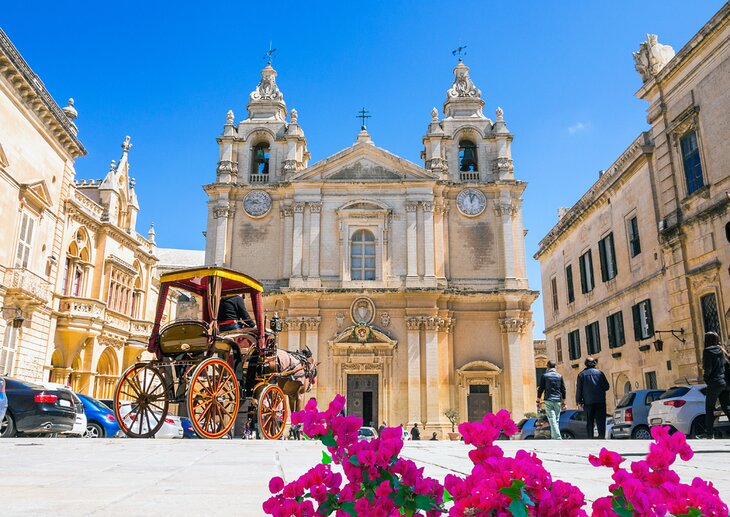
In a spacious courtyard at the center of the town, the Cathedral of Saint Paul exemplifies 17th-century Baroque architecture. The cathedral makes quite an impression with its extravagantly decorated sanctuary and breathtaking ceiling paintings. The Mdina Cathedral also has a museum (in a separate building) with a superb collection of religious art.
Just outside the city's ancient ramparts is a pastoral landscape of olive groves and vine-covered rolling hills. Sweeping vistas are found at Bastion Square as well as at the Palazzo Falson and the Palazzo de Piro museums, which both have cafés with outdoor terraces. On a sunny day, be sure to enjoy outdoor dining at one of those museum cafés.
3. Vittoriosa: Maritime Capital with a Legacy of the Knights
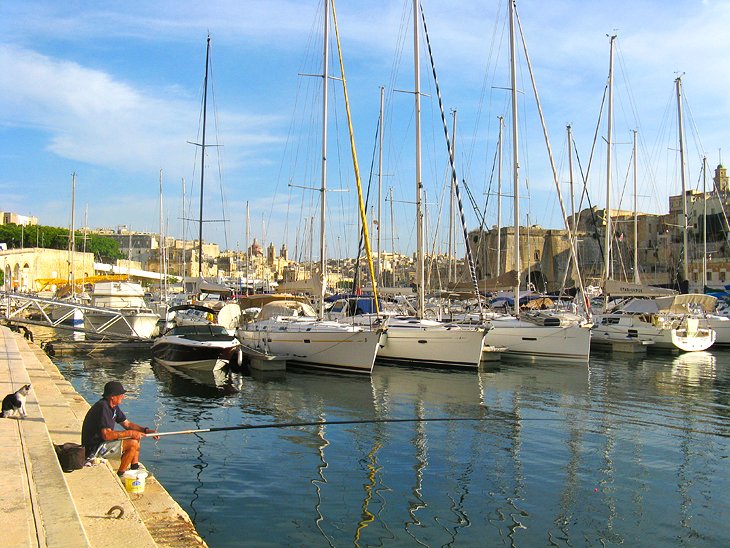
On a hilltop overlooking the Valletta harbor, Vittoriosa (also known as Birgu) is the most important of the Three Cities. These three towns were the original settlements of the Order of Saint John (Knights of Malta) until they built Valletta.
Vittoriosa was one of the earliest headquarters of the Knights of Malta. The Grand Master Juan de Homedes y Coscon created the bastions of Fort Saint Angelo, separated from the town by a moat with a drawbridge. This fort, together with Fort Saint-Elmo in Valletta and neighboring Fort Saint-Michael, allowed the Knights of Malta to defend against the Turkish attack during the Great Siege of 1565.
Vittoriosa has the authentic ambience of a small Maltese town. Neighbors socialize at church and at the cafés, and children play games in the village's hidden squares. While wandering the town's quiet pedestrian streets, you will be enticed to stop at a small café and then continue meandering down to the harbor.
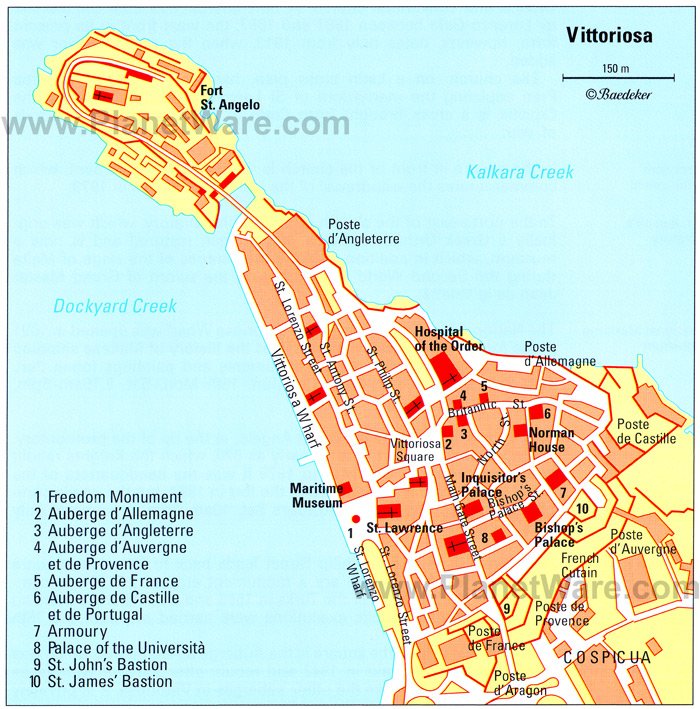
Noteworthy historic monuments await your discovery, such as The Inquisitor's Palace built in the 1530s (which now houses the National Museum of Ethnography) on Triq Il-Palazz Ta' L-Isqof and the Sicolo Norman House (open to the public free of charge) on Triq it-Tramuntana.
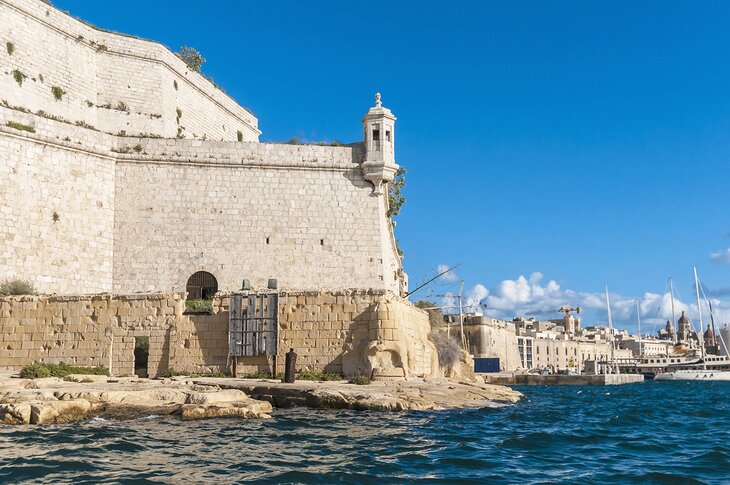
Several residences of the Knights of Malta are indicated by placards on the building facades: the Auberge de France (residence of the French Knights), with its palatial facade on Triq Hilda Tabone; the Auberge d'Auvergne et Provence (residence of Knights from the provinces of Auvergne and Provence); and the Auberge de Angleterre (residence of the Knights of England), which has been converted into a public library.
The Church of Saint Lawrence presides over the waterfront; this 16th-century church was designed by Malta's most renowned Baroque architect, Lorenzo Gafà, and was used as a place of worship by the Knights of Malta.
Another attraction on the Vittoriosa waterfront is the Malta Maritime Museum (housed in the old Naval Bakery), which tells the story of Malta's seafaring history.
If you're interested in WWII history, head to the Malta at War Museum. Housed in 18th-century army barracks at the Couvre Porte military complex, the museum presents exhibits about the Siege of Malta (Malta Blitz), which the people of Malta endured from 1940 until 1943, when the Maltese Islands suffered over 3,000 air raids. The museum contains underground bomb shelters that were used during the air raids.
4. The Invincible City of Senglea
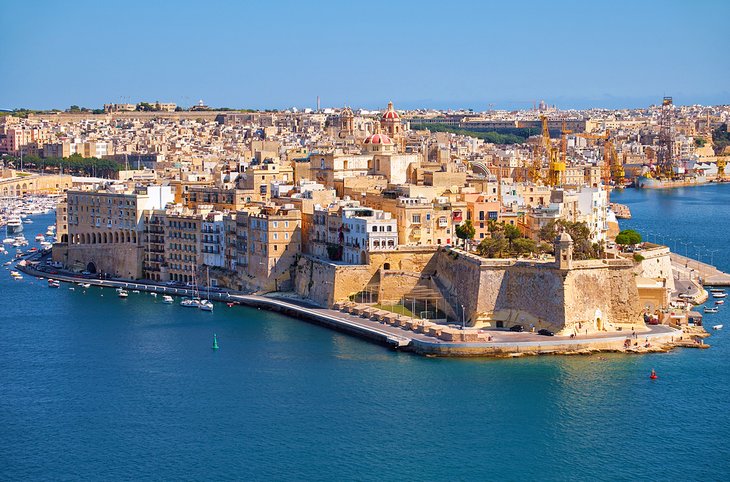
Senglea is one of the Three Cities (an early settlement of the Knights of Malta) and is also known by its Maltese name L-Isla.
The historic walled town of Senglea stands on a promontory jutting into the Grand Harbor. In 1551, the Grand Master Claude de la Sengle, the town's namesake, fortified the promontory.
The Fort Saint-Michael at the tip of Senglea's promontory, along with Fort Saint Angelo in Vittoriosa, protected the town from invading Turks during the Great Siege of 1565. Because of the residents' heroism during this battle, the Grand Master Jean de la Valette awarded Senglea the title of Città Invicta (Invincible City).
Senglea's 16th-century parish church is dedicated to the Nativity of the Virgin Mary. The church was built as a tribute to the victory after the Great Siege of 1565, and in 1921, Pope Benedict XV gave the church the title of a Basilica. The church was badly damaged during World War II. More than 15 years of renovation have restored the church to its original grandeur.
One of the highlights of Senglea is its breathtaking view over the harbor. An excellent viewpoint is found in Safe Haven Gardens at Senglea Point.
On the bastions of Senglea Point is a lookout tower known as Il-Gardjola, which features sculpted images of an eye and ear that symbolize vigilance. This watch tower, a relic of Fort Saint-Michael on the tip of the promontory, affords panoramas of the Grand Harbor, the skyline of Valletta, and the little towns surrounding the capital city.
5. Cospicua: Brave City of the Great Siege
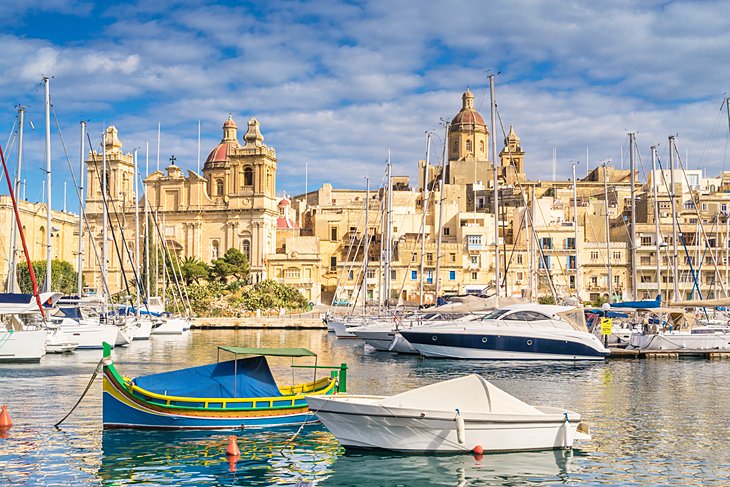
Just opposite Valletta, the town of Cospicua (also known as Bormla) is the largest of the Three Cities. The city was named after the Knights of Saint John because of their bravery during the Great Siege of 1565. (The word "cospicua" means "brave".)
Cospicua was once home to an important dockyard and now has a picturesque yacht marina.
The top tourist attraction is the Church of the Immaculate Conception, a richly adorned Baroque monument built in the 16th and 17th centuries. Take time to admire the Madonna and Child painting by Polidoro Veneziano, found above the high altar.
During World War II, much of Cospicua was severely damaged. The Firenzuola Fortifications and the Margherita Lines, the immense fortifications surrounding Three Cities, are the only part of the old town that survived heavy bombing during the Second World War.
6. The Fishing Village of Marsaxlokk
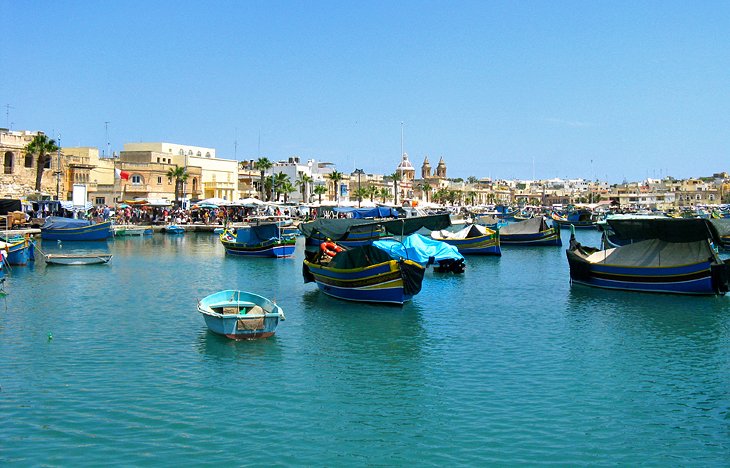
To experience a quintessential Maltese fishing village, head to Marsaxlokk on the southeast coast, just 10 kilometers from Valletta. The sun-drenched waterfront town shelters a vibrant harbor, where hundreds of fishing boats bob and sway in gentle turquoise waters.
These traditional Maltese fishing boats, called luzzu, are painted vibrant primary colors and feature two "Eyes of Osiris" in front. The eyes are meant to ward off evil spirits, a custom that dates back to the Phoenician era.
The town's architecture reveals a North African influence: weathered stucco houses with shutters and doors in bright shades of red, green, and yellow. Hints of the proximity to Tunisia can also be felt in the balmy sea breezes and the ribbon of palm trees lining the port.
Marsaxlokk is currently the fishing capital of Malta, yet strong traditions and a tightly knit community have preserved its old-world village charm. The village centers around a lovely Baroque church and bustling town square overlooking the harbor.
An interesting time to visit Marsaxlokk is during the Fish Market on Sunday mornings (until about 12:30pm), when fish vendors and souvenir stands set up shop along the waterfront. The market gets very crowded, with locals coming out to pick up fresh catches, and tourists enjoying a glimpse of everyday Maltese life.
After visiting the Fish Market, you will want to stop for lunch at one of the seafood restaurants in the town square or at the waterfront. Tartarun Restaurant treats patrons to fresh-caught fish, prepared simply in Maltese style. This elegant family-run restaurant also serves delicious Italian pasta dishes and international specialties.
Other dining options include La Nostra Padrona restaurant and Pisces Restaurant, which both have outdoor seating with stunning harbor views.
7. Archaeological and Nature Sites near Marsaxlokk
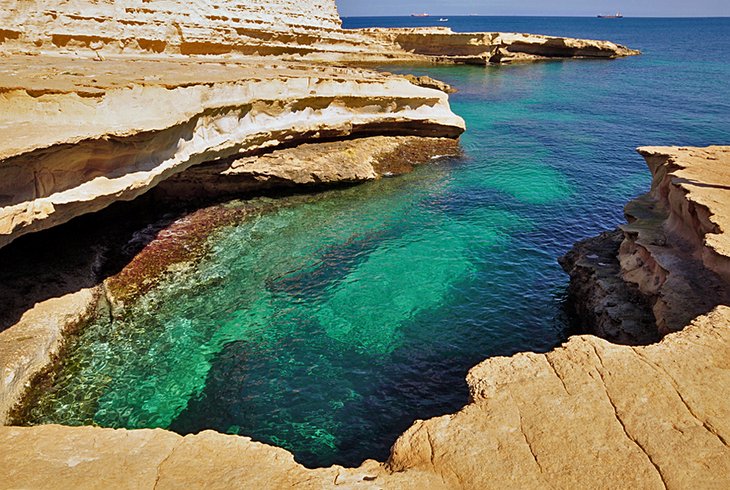
To discover some of Malta's most distinctive seaside scenery, continue two kilometers away from Marsaxlokk to Saint Peter's Pool. This secluded spot, with its natural swimming pool, is a (not-so-well-hidden) treasure of the southwest coast.
The crystal-clear emerald waters are perfect for swimming and snorkeling. Ladders offer access to the sea. Smooth flat rocks around Saint Peter's Pool provide sunbathing areas, and there are shaded areas as well.
Saint Peter's Pool is popular with locals, but tourists should keep in mind that this is an undeveloped nature site with no facilities (no restrooms and no lifeguard).
The site is only accessible by car. It is recommended to park on the main road and not on the poorly maintained road at the top of the cliff.
Reservations are required to visit the nearby archaeological site of Tas-Silġ on a hilltop overlooking Marsaxlokk Bay. The Tas-Silġ site includes ruins of four different historical periods: a Bronze Age temple of the Tarxien period (3000 BCE to 2500 BCE), a Greco-Punic temple dedicated to the Goddess Astarte, and an early Christian chapel (1st century CE).
The pottery, ivory, and stoneware uncovered on the Tas-Silġ site indicate that the Greco-Punic temple may have been the Temple of Juno, which was looted by Verres, the Roman governor of Sicily and Malta around 70 BCE.
8. Beautiful Baroque Buildings in Naxxar
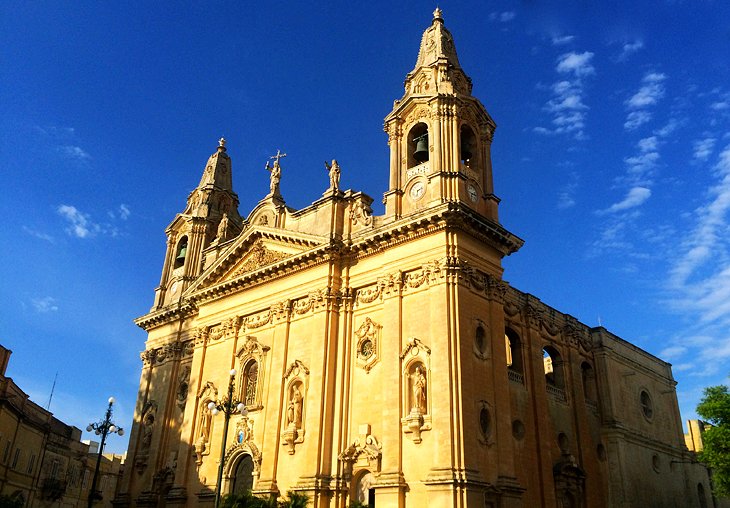
Naxxar was once a sleepy farming village, but urbanization expanded the town and has linked Mosta and Naxxar together (a short bus ride or drive away).
Legend has it that Saint Paul first received and dried his robes here after his shipwreck. (Naxxar means "to hang clothes to dry.") In the saint's honor, at the center of town, the 17th-century Church of Saint Paul features a grand Baroque facade and an elaborate Neoclassical interior.
The top tourist attraction in Naxxar is the Palazzo Parisio, a magnificent Italian-style palace built for the Grand Master António Manoel de Vilhena in 1733.
Palazzo Parisio is still a private home owned by an aristocratic Maltese family but is open for visits. This gem of Baroque architecture wows you with its opulent interior, including a grand staircase crafted from solid Carrara marble.
The ornately gilded ballroom is a popular wedding venue. In the music room, the chaise lounges are gilded with 24-carat gold music motifs. Frescoes, inspired by those found in villas of ancient Pompeii, adorn the dining room.
Save time to explore the grounds of Palazzo Parisio. You'll be enchanted by the exquisite Italianate Garden, set behind an ironwork gate and stone walls. This terraced outdoor space is immaculately landscaped with leafy trees, Mediterranean shrubs, fragrant orange blossoms, and roses. The garden is listed among the Grandi Giardini Italiani Association (a group of renowned gardens in and around Italy) and was landscaped by gardeners from Sicily.
The Palazzo Parisio also has an elegant fine-dining restaurant, Luna, which serves haute cuisine on weekend evenings. Luna has won "Top Ambience" awards because of its romantic setting. The palace also offers a traditional English afternoon tea experience (Tuesday through Sunday) with handmade pastries and dainty finger sandwiches served on three-tiered towers.
During the summer months, families with kids flock to the Splash & Fun Water Park in the seaside community of Bahar Ic-Caghaq (five kilometers from Naxxar). The park features exciting water slides, a dive pool, and children's pool. Parents will appreciate the casual restaurant and barbecue nights.
9. Hagar Qim Temples
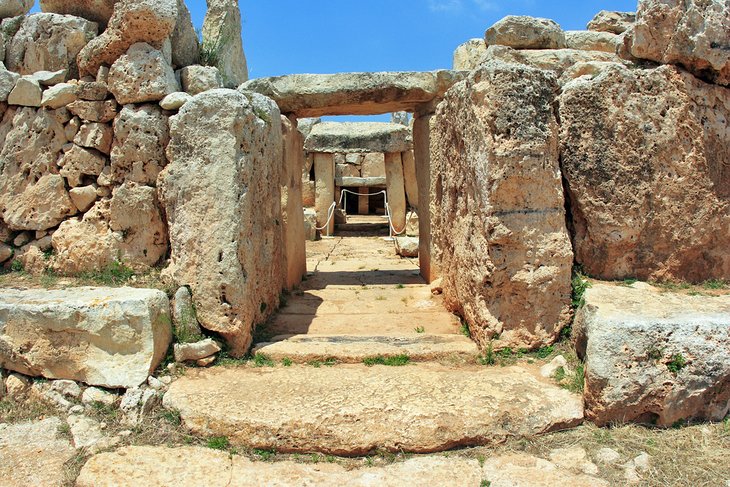
This prehistoric megalithic site is one of the most fascinating places to visit in Malta. Constructed between 3600 BCE and 3200 BCE (predating the Pyramids of Egypt and Stonehenge in England), the Hagar Qim Temples are designated as a UNESCO World Heritage Site.
Standing on a rocky promontory with amazing views of the Mediterranean Sea, the site evokes a sense of mystery and awe. Monumental stone blocks (as tall as five meters) attest to the gigantic proportion of the ancient temples. One of the megaliths weighs nearly 20 tons.
The archaeological site includes the remains of a main building (consisting of multiple chambers) and two other structures. One of the chambers features an elliptical-shaped hole that aligns with the sunrise on the summer solstice.
A visitor center presents information about the archaeological site. The interactive exhibits are educational and engaging.
The Hagar Qim Temples are 15 kilometers (a 25-minute drive) from Valletta, and less than two kilometers away from the Blue Grotto.
Address: Hagar Qim Street, Qrendi
10. Sliema: Waterfront Restaurants and Harbor Cruises
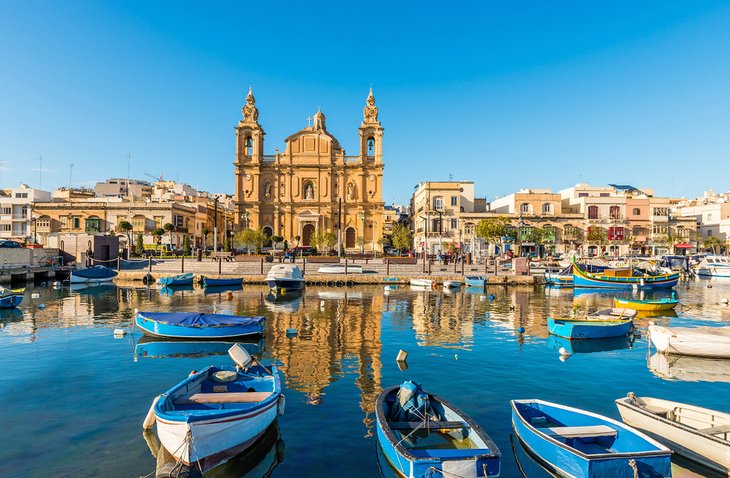
Sliema has a wide selection of dining options and a lively atmosphere but offers little in the way of charm or historical value. Once a small fishing village, Sliema has become a touristy holiday destination overdeveloped with modern high-rise hotels.
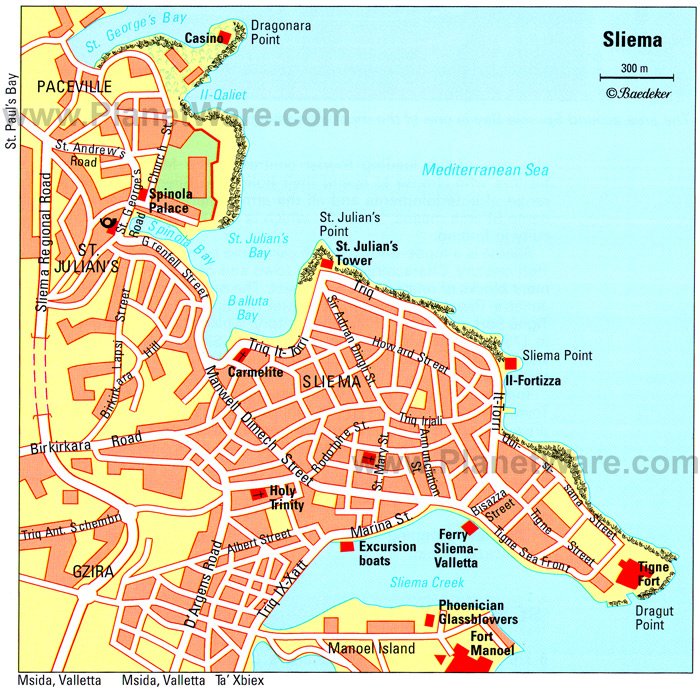
Sliema's main attraction is its Strand, the seaside promenade lined with hotels, restaurants, shops, and cafés. The Strand is a good place to take a walk or enjoy a meal at a waterfront terrace. There are no real beaches, only rocky areas for sunbathing. Some spots have ladders leading to the sea and cordoned-off swimming areas.
The Sliema waterfront is the departure point for the ferry to Valletta and for boat trips to other locations in Malta such as the Blue Grotto, the Island of Gozo, and the Blue Lagoon on the island of Comino.
For an in-depth tour of the Valletta Grand Harbor, take a Grand Harbor Tour that departs from the Sliema Ferries dock. This sightseeing cruise gives tourists a view of Valletta's impressive defense fortifications and bastions, the towns around Valletta, and the scenic yacht marinas within the creeks of the Grand Harbor.
Noteworthy monuments in Sliema are Saint Julian's Tower, a coastal watchtower, and the Baroque-style Parish Church of St. Julian, originally built in 1682 and enlarged in 1848.
The town celebrates the Feast of Saint Julian the last weekend of August. This religious festival includes several days of marching band parades and fireworks. You will not want to miss the festival's street stalls that sell Maltese delicacies such as nougat and other sweets.
11. Mosta Rotunda
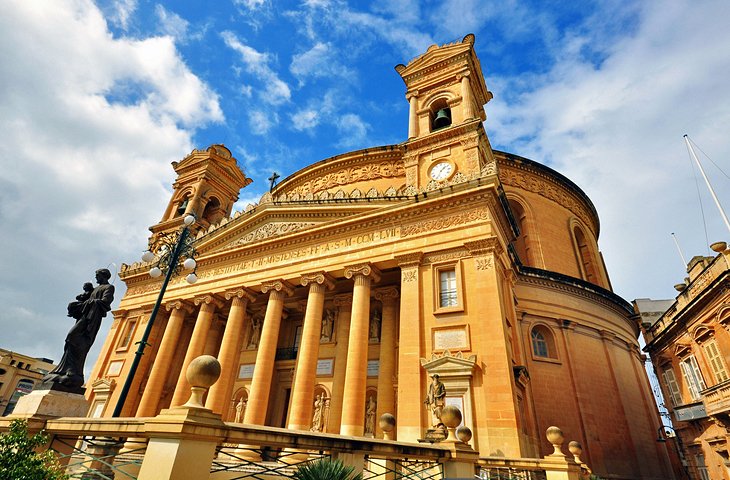
Mosta's only tourist attraction is its parish church, but it is certainly worth the journey to visit. The Parish Church of Saint Mary takes its name from the dome, which is one of the largest in the world. The immense dome is visible from many different points on the island of Malta.
This spectacular Neoclassical church was designed by Grognet de Vassé. Construction began in 1833 and took 27 years to complete. The entire dome was built without the use of scaffolding.
The exterior and interior of the church come close to being a replica of the Pantheon in Rome, except that the Mosta Dome is ornately decorated and brighter. The interior features a ceiling pattern that mimics the geometric pattern of the ancient Pantheon, albeit with gilded and pastel-blue painted details.
With sunlight flooding through the 16 ceiling windows, the airy sanctuary has an inspiring celestial ambience. The floor of the church reveals intricate marble inlays that weave an interplay of patterns, to mirror the ceiling. Evocative religious art and lavish wall paintings are displayed throughout the chapels of the sanctuary. The murals were painted by Guiseppe Calì.
During World War II in April 1942, a large Luftwaffe bomb pierced through the dome but did not explode. At that moment, more than 300 people were in the sanctuary for an evening Mass. This event is known as the "Miracle of Mosta." The spot where the bomb entered the dome is still visible in the ceiling, and a replica of the bomb is displayed in the Sacristy.
Address: Rotunda Square, Mosta
12. Zejtun's Historic Churches, Feast Days, and Olive Festival
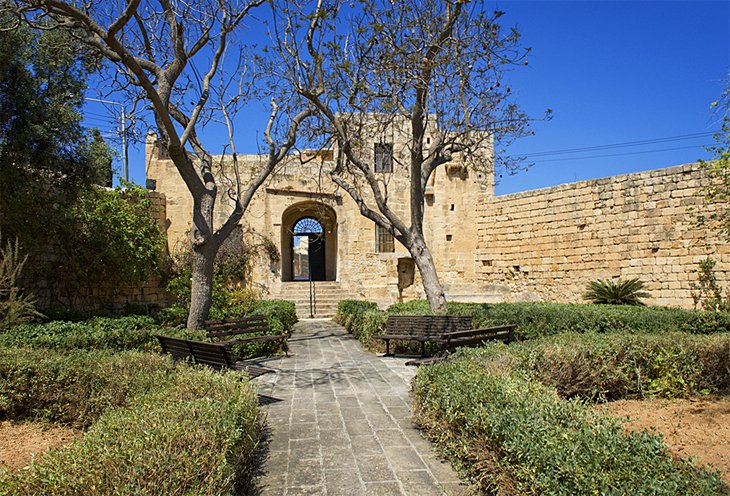
This slow-paced country village boasts a rich heritage of producing olive oil since the 7th century. The town's name derives from the Arabic word "zejt," which means oil.
At the end of September, when the olive harvest begins, Zejtun hosts an Olive Festival, called Zejt iz-Zejtun in Maltese. The festival includes folk music, traditional dance performances, and a market featuring olive oil and local specialties made with olives. The market also has stalls selling arts and crafts created by residents of Zejtun.
At the main square of Zejtun is the 17th-century Baroque Parish Church of Saint Catherine, considered one of the finest accomplishments of architect Lorenzo Gafà. Brightened by its internal dome, the interior has a harmonious quality.
Every year on the third Sunday of June, the parish church hosts Saint Catherine's Feast Day with marching band competitions, processions, and fireworks.
Zejtun has another remarkable house of worship, the Church of Saint Gregory, an austere medieval church with a hidden door that was probably used centuries ago during pirate raids.
The church is only open for special occasions, such as Saint Gregory's Feast Day, the first Wednesday after Easter. The festival begins with a procession in Zejtun and continues with an excursion to the nearby village of Marsaxlokk, about two and a half kilometers away. Participants enjoy regional foods and folk music in Marsaxlokk. A few hearty souls take a swim in Marsaxlokk, even though the water is quite cold at this time of year.
13. Saint Paul's Bay
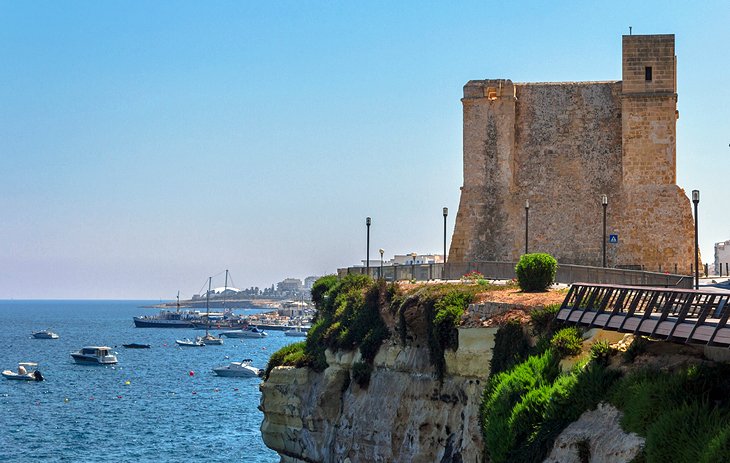
This scenic bay has deep spiritual and historical importance tied to Saint Paul, who is considered the Father of the Christian Church in Malta. Saint Paul was shipwrecked on an island in the bay in 60 CE during his journey from Caesarea (near present-day Haifa in Israel) to Rome.
The Maltese people believe that it was Saint Paul himself who introduced Christianity to the local population. There is a Statue of Saint Paul near the spot where the Apostle was thought to be shipwrecked.
Saint Paul's Bay was once a little fishing village but has expanded to include the communities of Qawra, Bugibba, Xemxija, and San Martin. The bay offers beautiful natural areas and splendid coastal views of the open sea. A waterfront promenade runs the entire course of the bay, ideal for a leisurely walk.
Close to Saint Paul's Bay on the Wardija Ridge, tourists can find the mysterious Cart Ruts that reveal the island's ancient heritage.
14. The Seaside Town of Marsaskala
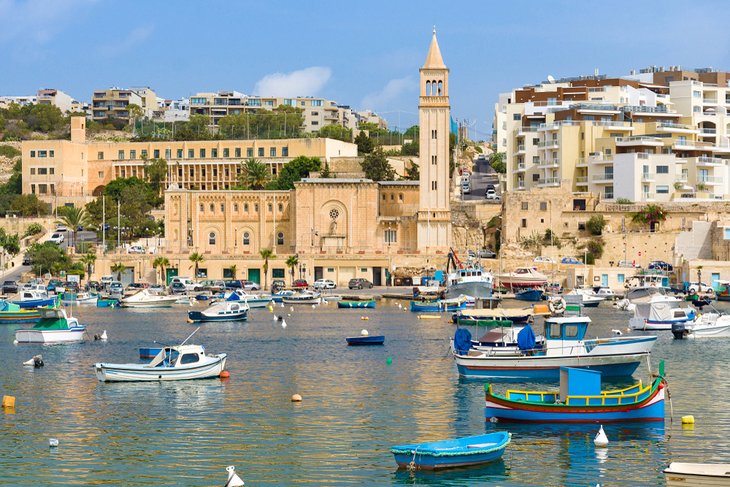
Just five kilometers from Marsaxlokk, this old Sicilian fishing village has a quaint seaside charm. The town was built around a picturesque bay, where fishing boats and yachts are docked in the calm waters.
One of the most enjoyable things to do in Marsaskala is take a stroll along the waterfront. The wide selection of restaurants tempt visitors to stay for a meal. It's an obvious choice to try the fresh seafood that is locally caught and prepared in traditional Maltese style.
15. Ta' Xbiex: A Tranquil Waterfront District
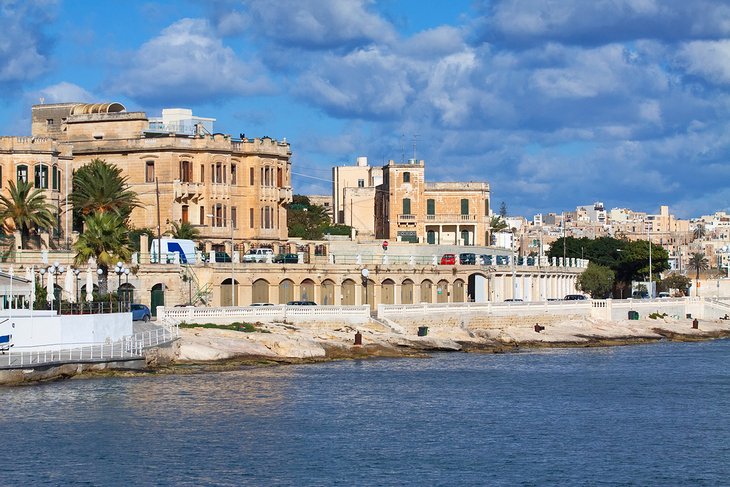
Just outside of Valletta, this pleasant small town overlooks the Marsamxetto Harbor. The name for Ta' Xbiex comes from the Maltese word "tbexbix" meaning "sunrise".
Ta' Xbiex is home to many embassies and a noteworthy yacht marina. Some of the most expensive yachts are docked at the marina. The Royal Malta Yacht Club in Ta' Xbiex has a restaurant with sea views and hosts events throughout the year.
The touristic appeal of Ta' Xbiex is the waterfront promenade. You can take a walk along the quays to stroll past the stately villas and fancy yachts. The promenade runs all the way from Ta' Xbiex to Saint Julian's. Along the way are many restaurants with outdoor terraces that take advantage of the serene seaside location.
16. Trendy Restaurant Scene in Saint Julian's
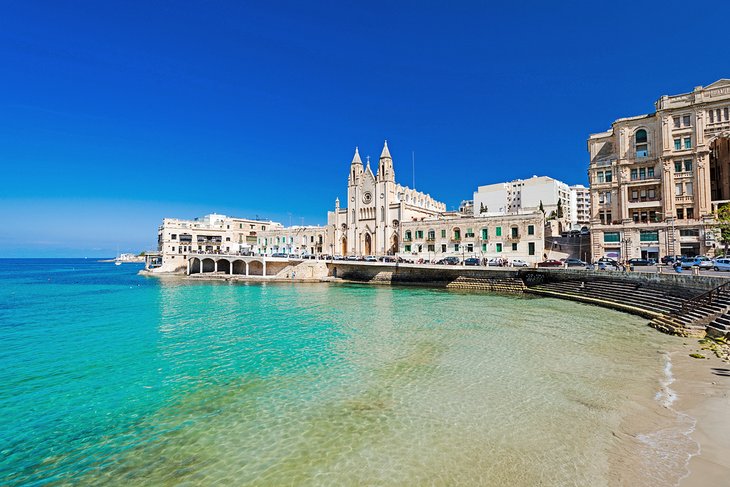
In a small bay immediately north of Sliema, Saint Julian's district was once just a humble little fishing village with a chapel dedicated to Saint Julian. Today, the district is a very popular resort area near Valletta (less than 10 kilometers away).
Saint Julian's is especially bustling during the holiday high season and on summer nights, when a young and hip crowd hits the trendy restaurant scene. Like Sliema, Saint Julian's offers plenty of accommodations with a wide variety of hotels, from budget to upscale.
The upscale Saint George's Bay area of Saint Julian's district appeals to a well-heeled clientele because of its luxury hotels and private beach clubs.
Saint George's Bay also has a large public beach with a sandy shoreline. Originally the beach was rocky, but the local council shipped in sand to improve the beach. The beach has a "Blue Flag" designation thanks to its clean, calm waters, which are ideal for swimming. Lifeguards are on duty during the summertime.
Nearby, around Balluta Bay, is a tiny narrow beach beneath the promenade that extends from St. Julian's to Sliema. You can swim or wade in the gentle waters or sunbathe on the small sandy shoreline. The area is also known for its top-notch restaurants and cafés frequented by locals.
Read More: Best Beaches in Malta
17. Birzebbuga by the Sea
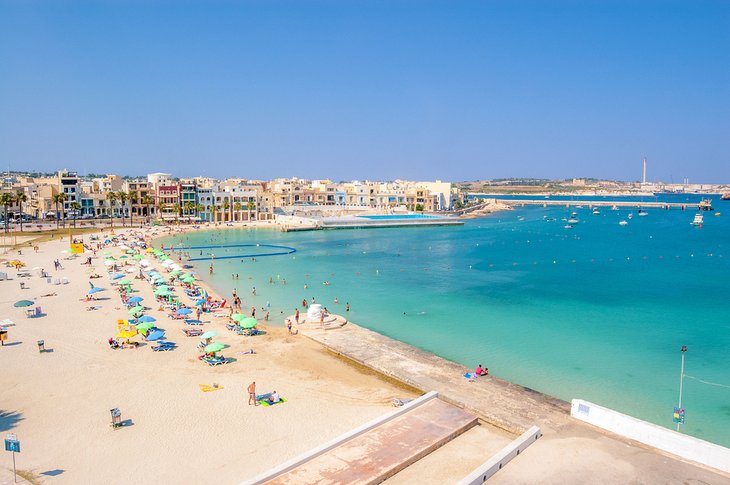
Birzebbuga began its life as a typical Maltese fishing village. Now, it is a popular seaside resort in southeast Malta, about four kilometers from Marsaxlokk. The town was built around the Pretty Bay, which has an attractive sandy beach as well as many waterfront cafés, restaurants, and shops.
The first weekend of August, the town celebrates the Feast of Saint Peter at the Parish Church. Festivities include fireworks, a marching band parade, a procession in which Saint Peter's statue is carried around the town's streets, and kiosks selling Maltese treats like nougat and other local specialties.
In a tranquil valley just outside the village of Birzebbuga is a fascinating archaeological site, Ghar Dalam. This prehistoric cave dates back to the Neolithic era (7,400 years ago) and is the earliest evidence of human inhabitants in Malta. There is also another prehistoric cave nearby, the Borg in-Nadur Cave, that dates back to the Bronze Period.
18. The Fishing Village of Kalkara
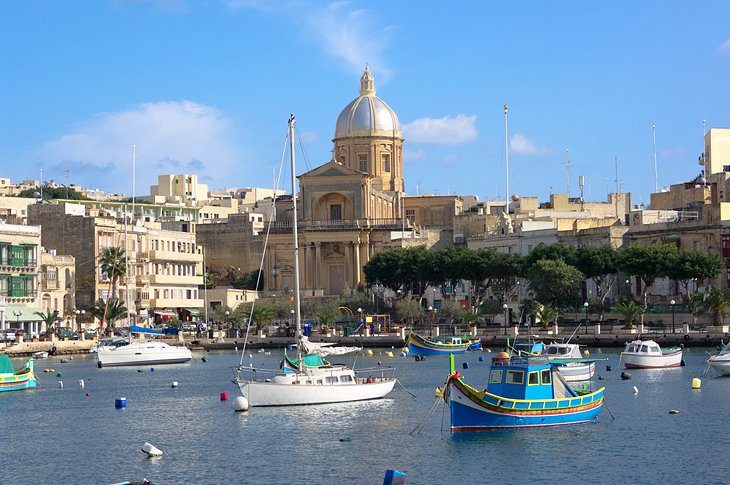
This characteristic Maltese fishing village nestles along the Kalkara Creek, next to Vittoriosa and across from Valletta. The Kalkara Creek harbor is filled with dghajjes, the brightly painted traditional Maltese boats used for transportation to Valletta.
A popular tourist attraction in Kalkara, the 19th-century Fort Rinella boasts the world's largest cannon. The 100-ton cannon was developed by the Victorian-era Lord William Armstrong of Newcastle, England. The cannon can fire a one-ton shell up to 12 kilometers in distance.
Fort Rinella is open to the public for visits and features historical reenactments that include "soldiers" (outfitted in British uniforms of the First World War) engaged in military drills.
To the north of Fort Rinella is the Fort Ricasoli, which has been pictured in several movies (Gladiator and Troy) and TV shows (Game of Thrones). Fort Ricasoli was built in the 17th century for the Order of Saint John knights and is the largest fort in Malta.
19. Antique Shops and Historic Churches in Birkirkara
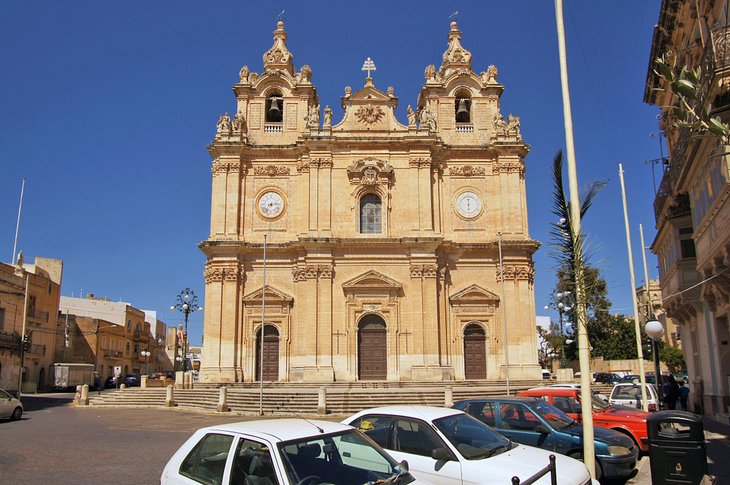
At the center of Malta about six kilometers from Valletta, the town of Birkirkara is known for its antique shops and numerous churches. Most of Birkirkara is modern, but the historic part of town has atmospheric narrow streets and alleyways.
The Parish Church of Saint Helen's is considered one of Malta's finest Baroque churches. This grandiose church was built between 1727 and 1745 towards the end of the Maltese Baroque period. Intricate details distinguish the Sicilian-influenced exterior, with its decorative classical pilasters on the facade. The spacious Latin-plan interior is adorned with rich frescoes.
Every year in August, the Feast of Saint Helen is celebrated at the parish church. This lively festival includes religious processions, marching bands, and fireworks.
Another noteworthy house of worship in Birkirkara is the Parish Church of Saint Mary designed by Vittorio Cassar in the early 1600s, when Renaissance architecture began to incorporate elements of Baroque style.
20. Quiet Country Villages in Central Malta
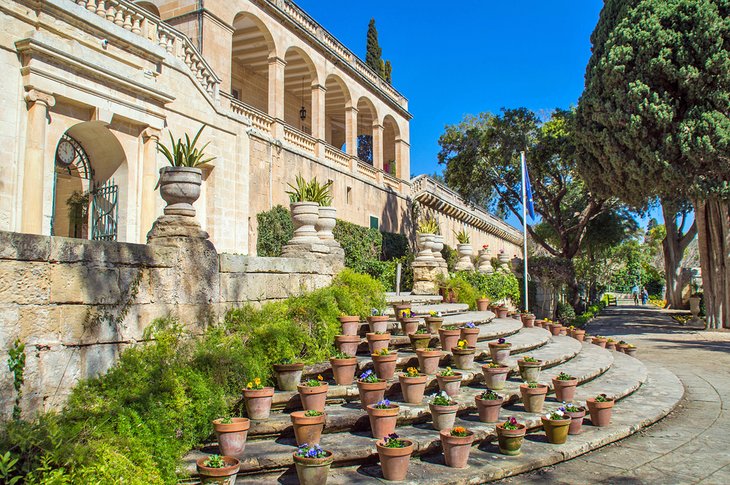
About 10 kilometers from Valletta, the small medieval village of Gharghur has an appealing old-world atmosphere. Take a stroll around the maze of ancient streets to discover the village's charm
Gharghur has two noteworthy churches: the 17th-century Parish Church of Saint Bartholomew, designed by Tommaso Dingli, and the Church of the Assumption, originally built in 1560 and rebuilt in 1650.
If you enjoy outdoor activities, Gharghur is a good place to visit. Just outside the village, you can embark on cycling and hiking expeditions and countryside walks.
An easy six-kilometer walk begins at Gharghur and leads to the nearby village of Attard, surrounded by a profusion of orchards. This quiet village lives up to its motto Florigera Rosis Halo (which translates to "Perfuming the Air with Blossoms") because of its wonderful gardens.
Attard's Sant'Anton Palace, the official residence of the Maltese President, features an expansive botanical garden (open to the public daily year-round). San Anton Garden is landscaped with walking paths, fountains, palms, bougainvillea, roses, orchids, and other flowers. Park benches are placed beneath leafy trees. Adding to the exotic ambience, peacocks can be seen roaming the grounds.
Get a glimpse of Malta's aristocratic past at the Villa Bologna in Attard. This gorgeous country house was built in 1745 for an aristocratic Maltese family, and descendants still live here. The estate has a lush Mediterranean garden that is used as a venue for weddings, private parties, and special events. Private guided tours of the villa's interior and garden are available for groups of ten or more.