19 Top-Rated Attractions & Things to Do in Bern
The first time many visitors see Bern, they are stunned by the beauty of its setting. The capital of Switzerland is built on a sandstone ridge, encircled on three sides by the Aare flowing through a valley. High-level bridges link the city with the high ground on the right bank and with the newer parts of the city.
Houses and shops, with their street-level arcades and projecting roofs, reflect the prosperity of the citizens of Bern in the 17th and 18th centuries. And this charming character of the well-preserved old town is integrated into the everyday life of the city, causing it to be recognized by UNESCO as a World Heritage Site.
Bern is rich in culture with year-round events such as the Summer and Winter Jazz Festivals; the Buskers Festival; and the Gurtenfestival, held in mid-July. Numerous museums and theaters cover a variety of interests, and visitors can enjoy street-side sightseeing such as the Zytglogge, a medieval clock tower with moving puppets.
Plan your visit with our list of top tourist attractions and things to do in Bern.
See also: Where to Stay in Bern
- 1. Stroll through the Old Town
- 2. See World-Class Art at the Kunstmuseum
- 3. Visit the Einstein Museum and the Historical Museum of Bern
- 4. Take a Tour of the Einstein Haus
- 5. Spend an Afternoon at the Rosengarten
- 6. Discover the Berner Münster
- 7. Admire the Clock Tower
- 8. Browse Art at the Paul Klee Center (Zentrum Paul Klee)
- 9. Check Out the Town's Ancient Fountains
- 10. Stroll through the Botanical Garden
- 11. Explore the Trails on the Gurten
- 12. Pose in Front of the Fountain at the Bundeshaus
- 13. Take in the Wonders at the Natural History Museum
- 14. Play with Technology at the Communication Museum
- 15. Shop at the Weekly Markets
- 16. Enjoy a Wealth of Activities at the Aare River
- 17. Visit the Bear Park
- 18. Explore the Many Sides of the Granary (Kornhaus)
- 19. Drop in at the French Church
- Where to Stay in Bern for Sightseeing
- Day Trips from Bern
- 1. Interlaken
- 2. Thun
- 3. Biel
- 4. Murten
- 5. Fribourg
- 6. Lucerne
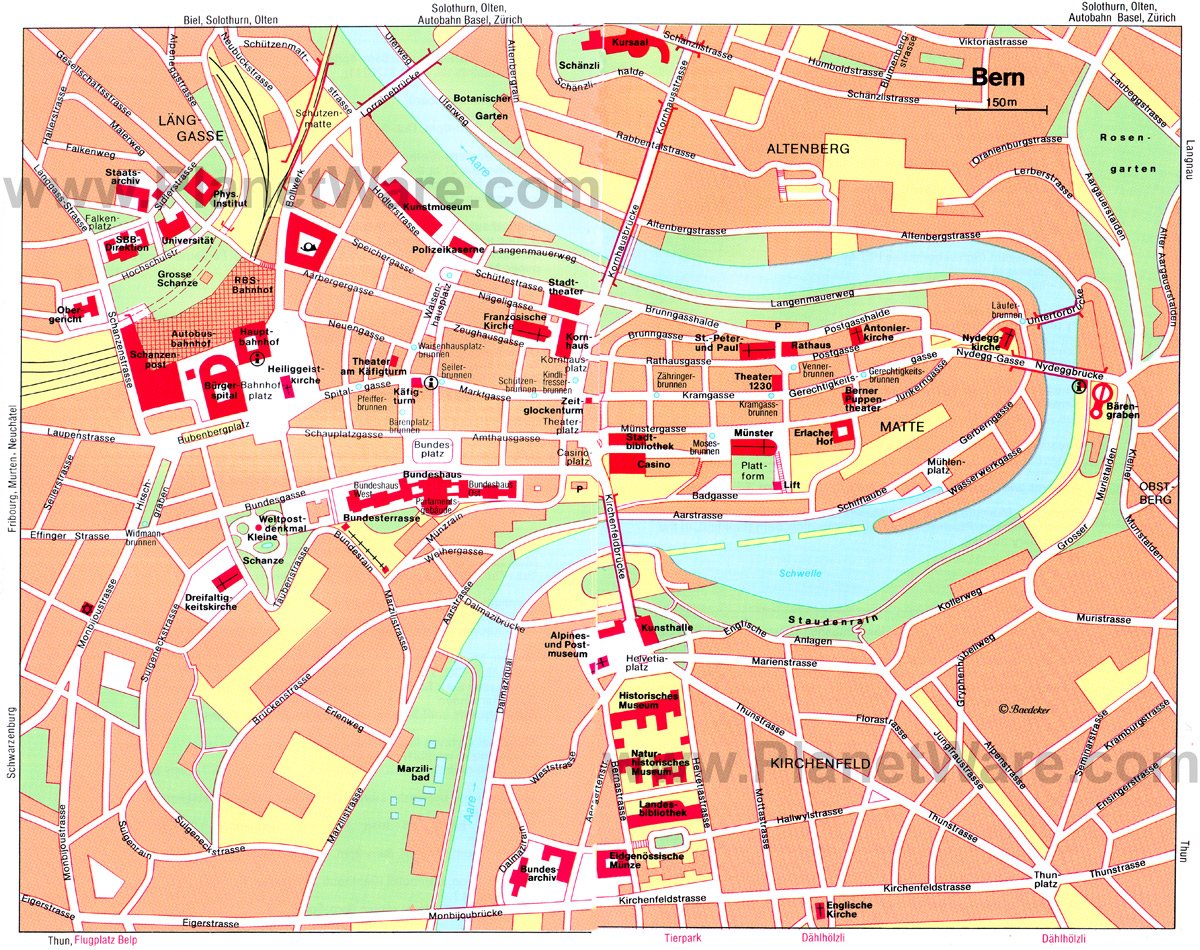
- Map of Attractions & Things to Do in Bern
- Bern, Switzerland - Climate Chart
1. Stroll through the Old Town
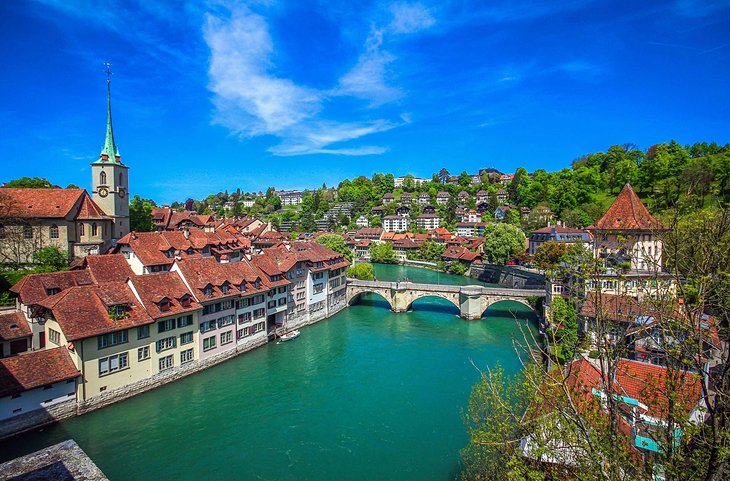
The old town of Bern is more than worthy of its status as a UNESCO World Heritage Site. Situated on a cliff surrounded on three sides by the stunning aquamarine waters of the Aare River, the old town has preserved much of its medieval character. The streets are cobbled and bordered by covered, arcade sidewalks that snake on for miles. On the lower levels of the buildings are shops, cafés, bookstores, and restaurants, while the upper floors are apartments.
This old area is where many of the best places to visit and things to do are located, including all of the bridges across the Aare, public fountains, old statues, towers, and the famous Clock Tower. Several days can be passed quite happily just strolling around the old town.
2. See World-Class Art at the Kunstmuseum
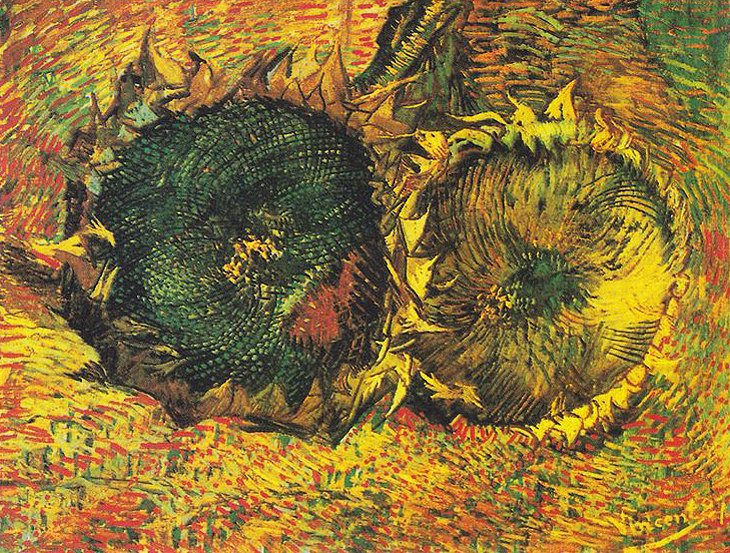
To the west of Waisenhausplatz, on the Hodlerstrasse, is the famed Kunstmuseum (Museum of Art). This massive and impressive art museum is home to more than 51,000 paintings, sculptures, drawings, prints, photographs, and films. It is the oldest art museum in Switzerland, built in 1879, and holds an international reputation.
The collection comprises art from the Italian Trecento (Duccio, Fra Angelico); Swiss art since the 15th century (Niklaus Manuel, Albert Anker, Ferdinand Hodler, Cuno Amiet); and international painting from the 19th and early 20th centuries (Impressionism, Cubism, Expressionism, Blaue Reiter, Surrealism); with particular focus on Paul Klee, Wassily Kandinsky, and Pablo Picasso.
Both national art trends (Meret Oppenheim, Franz Gertsch, Markus Raetz) and international ones from Jackson Pollock to the present are also represented. Other exhibitions rotate in and out. Be sure to check the excellent website for the latest details. The museum offers both public and private tours.
Address: Hodlerstrasse 8-12, Bern
Official site: http://www.kunstmuseumbern.ch/
3. Visit the Einstein Museum and the Historical Museum of Bern
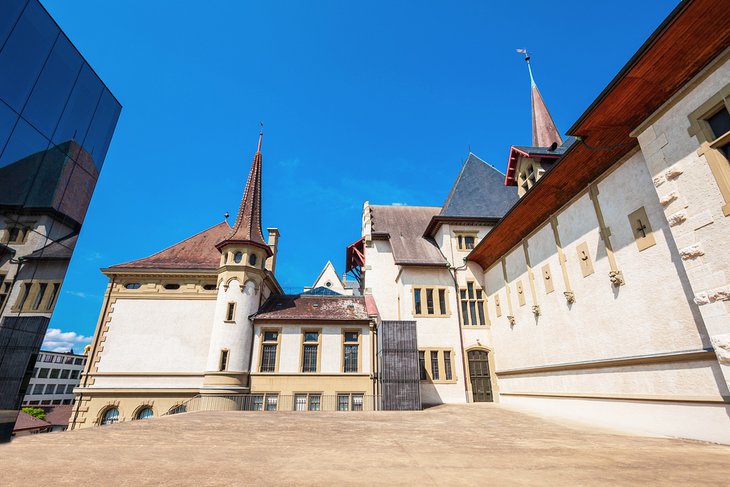
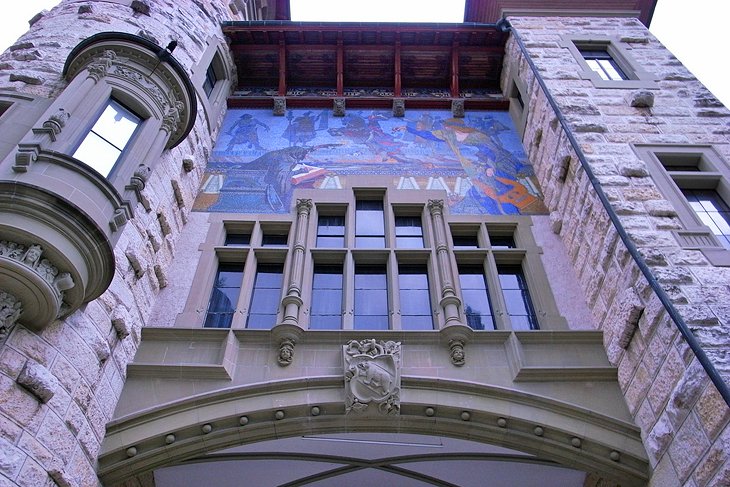
Housed in a 130-year-old Andre-Lambert-designed building based on 15th-century castles, the Historical Museum of Bern combines with the Einstein Museum to form the second largest museum in Switzerland. Displays encompass more than half a million objects dating from the Stone Age through the Celts, Romans, Middle Ages, Napoleonic era, and into the 19th and 20th centuries. Objects from Alpine Stone Age burials are as impressive as 15th-century Flemish tapestries and the famous Königsfelden diptych painted for the King of Hungary.
The Einstein Museum is focused on the life of the great scientist, demonstrating how he lived, through dozens of old films, original objects, and letters. Even his 1921 Nobel Prize certificate is on display. And for those of us who are not genius physicists, animated films help the layperson understand Einstein's pioneering theories. The museum is found on the Helvetiaplatz just across the Aare from the Old Town.
Official site: http://www.bhm.ch/en/
4. Take a Tour of the Einstein Haus
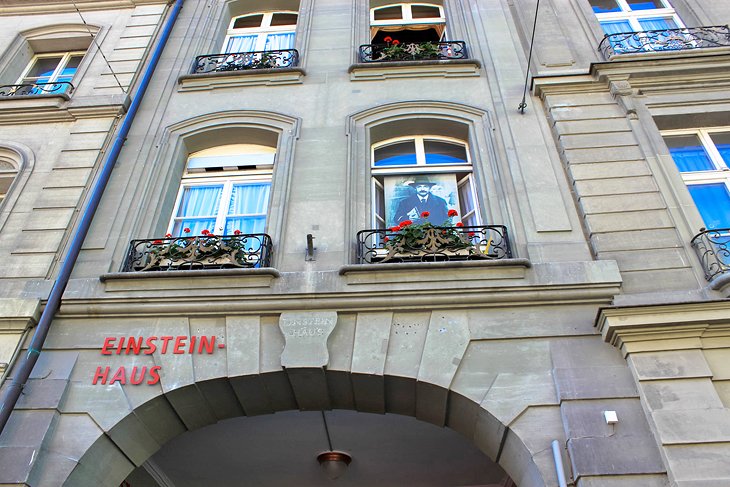
If you've already visited the Einstein Museum, stopping by Einstein's former residence will give you some nice extra insight into the life of the genius scientist. Einstein lived at this second-floor apartment with his physicist wife Mileva Maric and their son Hans between 1903 and 1905. He did some of his most impressive work while living here, including writing the Annus Mirabilis papers on the photoelectric effect, the Brownian motion, the special theory of relativity, and E = mc2.
The apartment has been restored with period furniture, and a walk through the space gives you a good idea of how Einstein and his family were living at the time he wrote the paper that would change the course of science forever. A small exhibition on the third floor of the building showcases Einstein's work in plain words for the non-scientists, as well as presents interesting information about his life and achievements.
Address: Kramgasse 49, Bern
Official site: https://www.einstein-bern.ch/
5. Spend an Afternoon at the Rosengarten
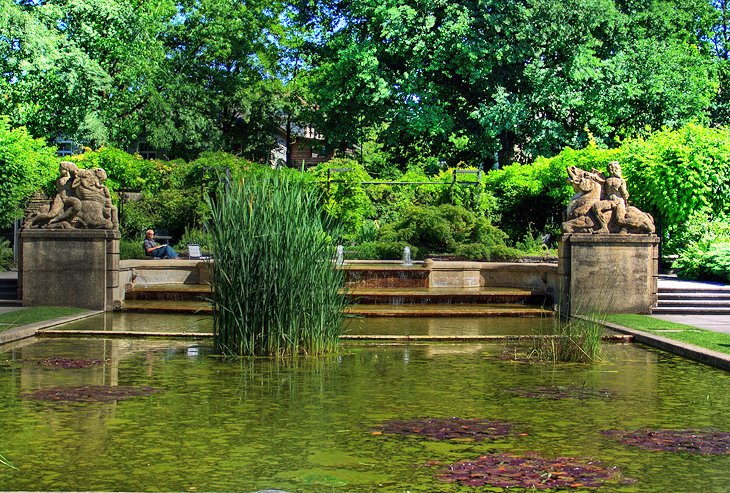
One of the most peaceful and beautiful places in Bern with impressive views of the city. The Rose Garden Park (Rosengarten) is a large open area sitting on a hill slope just across the river from the center of town. Originally a cemetery (1765-1877), the area became a public park in 1913.
It was redesigned in the late 1950s and now sports more than 200 types of roses and another 200 species of irises, azaleas, and rhododendrons. There is also a large, splendid pond; a pavilion; restaurant; and picnic areas.
6. Discover the Berner Münster
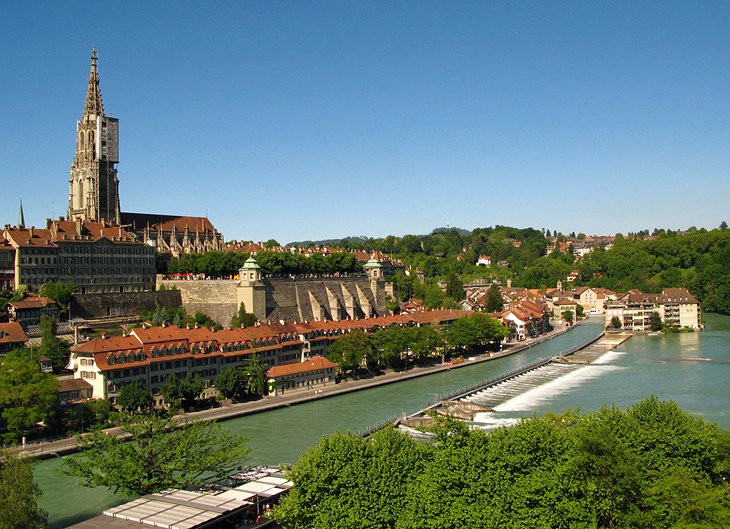
Perhaps the most famous building in Bern, the Berner Münster is also known as the Bern Cathedral or the Cathedral of St. Vincent. The cathedral is Switzerland's largest church from the late Middle Ages, and played a vital role in the overall development of the city's architecture. The late Gothic creation is a three-aisled, pillared basilica that was under construction from 1421 until 1893, when the addition of the octagonal upper section and the openwork spire was completed.
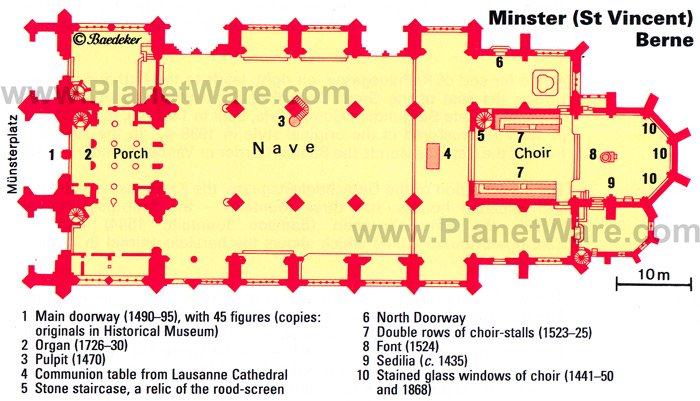
The west doorway of Bern Minster is richly decorated with sculpture (now copies); in the tympanum is a Last Judgment (completed in 1495) containing a number of figures, and on the side walls are paintings of the Fall and the Annunciation.
The nave and the choir of Bern's St. Vincent Minster have reticulated vaulting with fine 16th-century coats-of-arms. The finely carved choir stalls (1523) were the first Renaissance work of art in Bern. In the apse are a Gothic font (1524) and beautiful stained glass (1441-50).
At the end of the south aisle is a monument to Berchtold von Zähringen (1601), incorporating a coat-of-arms. In the Matter chapel (seventh bay in the south aisle) is the Dance of Death window (1917), with 20 scenes from the Dance of Death (1516-19) by Niklaus Manuel-Deutsch. There is a magnificent Baroque organ (1726-30), with 5,404 pipes, and fine modern stained glass (1947) in the south aisle.
From the tree-planted Bern Minster terrace, there is an attractive view down into the Aare valley; and if you can make it up the 254 steps of the tower, the views over the city are outstanding - especially on a clear day when the Alps appear as a backdrop.
7. Admire the Clock Tower
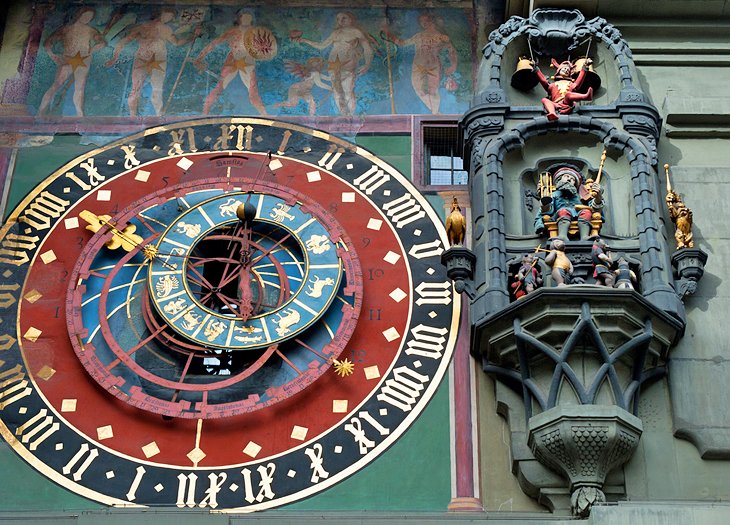
The 800-year-old Clock Tower (Zytglogge) is one of Bern's most famous landmarks - and is well worth the visit (the clock dates to 1530). Just above the western gate tower in the old section of town, this 23-meter tower is decorated with an immense astronomical clock.
Beginning at just three minutes before every hour, a circus of mechanical creatures (The Fool, The Knight, The Rooster, The Piper, and more) come out to put on a little show. Inside, you can see the popularity of this ancient structure from the 130 worn stone steps. Visitors are welcome to climb to the observation platform, which sports some impressive views. Guided tours are excellent and informative.
8. Browse Art at the Paul Klee Center (Zentrum Paul Klee)
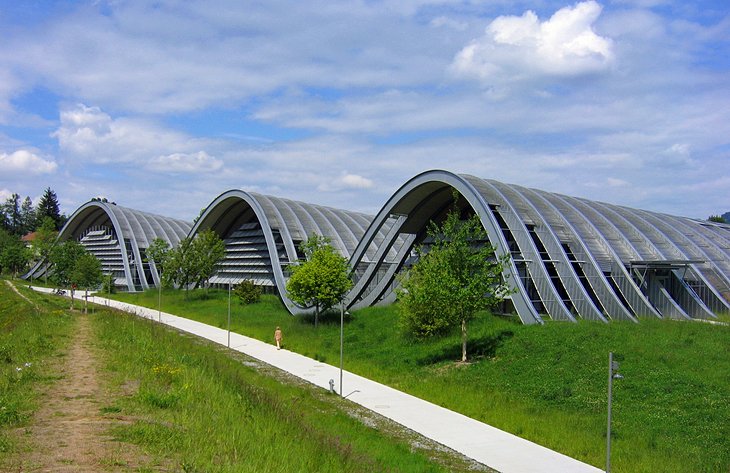
German-Swiss painter Paul Klee's work is perhaps some of the most recognizable and famous of all paintings from the first part of the 20th century. Transcending the zeitgeist of his age (surrealism, cubism, abstraction), Klee regularly combined various media into his works. His Writings on Form and Design Theory is considered one of the most important theoretical works on art ever written.
The center contains about 4,000 works by Klee including the famous Dame mit Sonnenschirm (Woman with Parasol), In den Häusern von St. Germain (Houses of St. Germain) and Tod und Feuer (Death and Fire). The building itself is outstanding. Designed by architect Renzo Piano, it takes the form of a rolling, hilly landscape. It is wide and open, light and airy, and a work of art in and of itself.
Official site: http://www.zpk.org/
9. Check Out the Town's Ancient Fountains
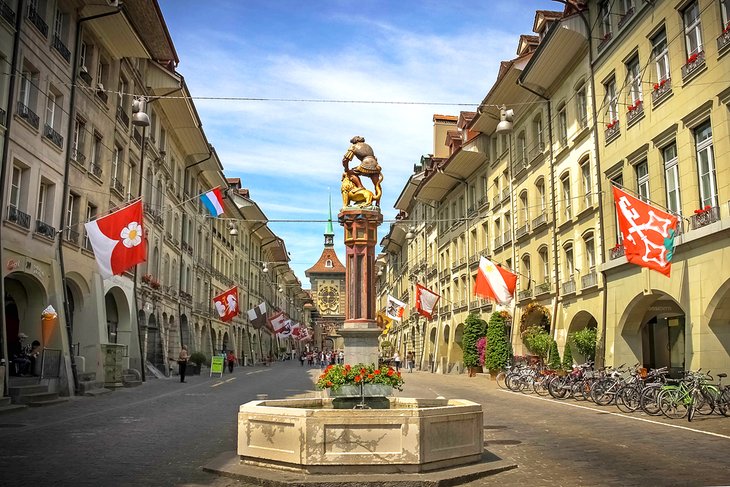
Scattered about the old town are a number of ancient public fountains. Installed in the 16th century, the fountains were topped with statues of ideas or biblical scenes such as Samson killing a lion. Others still sport statues praising the power of Bern, such as the Zähringerbrunnen (a bear in full armor) and the Läuferbrunnen (the Runner Fountain).
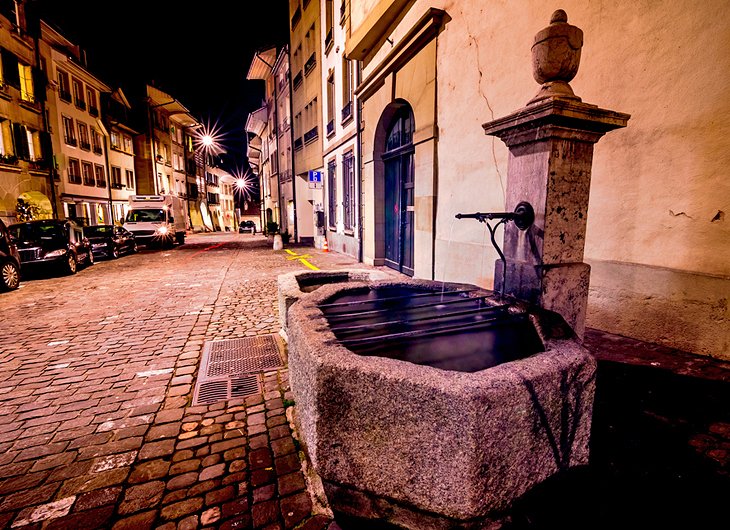
These fountains replaced wooden ones at a time when the city was rapidly gaining wealth. There are 100 fountains. Eleven retain the original statues and all are carefully maintained and frequently repainted. And, yes, the water is still potable.
10. Stroll through the Botanical Garden
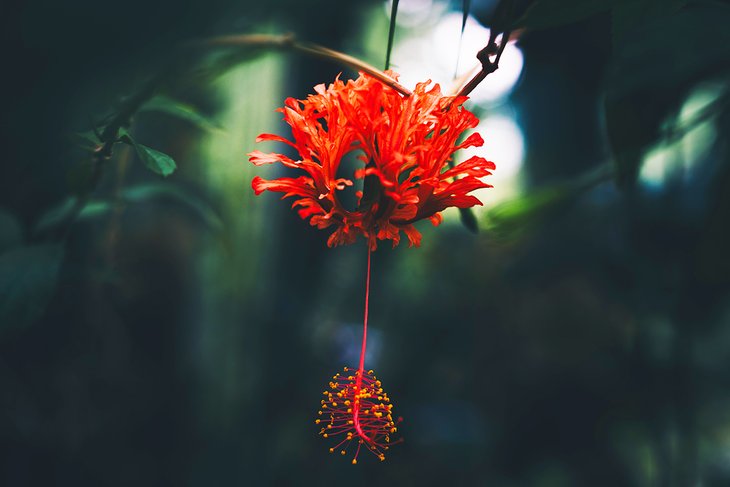
The beautiful botanical garden is not to be missed. It will impress even those that might not think they are interested in plants and flowers. The garden contains several sections. The Alpinum focuses on montane ecosystems hosting mountain plants from Europe, Asia, and North America with a special focus on Swiss flora. There is also an interesting display on endangered species.
Three other buildings cover desert, tropical, and subtropical vegetation and environments. The Palm House is particularly interesting as it focuses on tropical food-producing plants such as bananas, coconuts, and coffee.
11. Explore the Trails on the Gurten
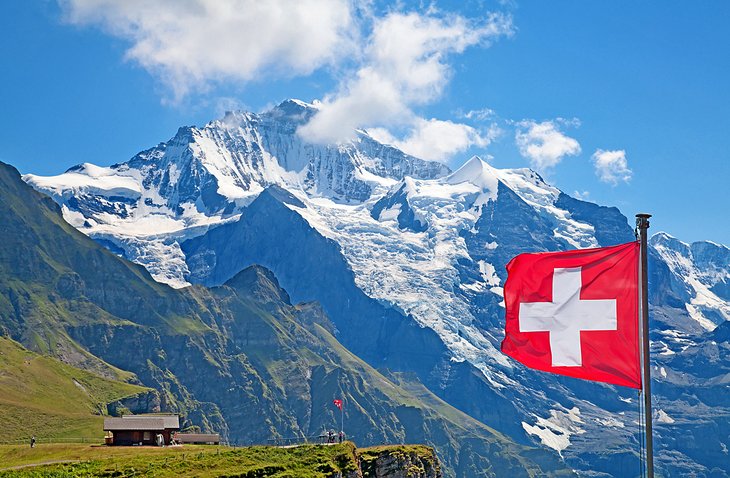
This is perhaps a favorite place in all of Bern. Just to the south of the center of the city, the Gurten is a high mountain (864 meters) with a 360-degree view. Below lies the gorgeous city with its towers and domes, while the spiky Alps jut from the countryside beyond. You can also see across the Three Lakes Region all the way to the Jura mountains.
Be sure to climb up the tower-it's free, and the views improve with every step. Several trails around the mountain offer leisurely hikes through flowery meadows and into thick forests.
In the winter, the mountain offers kids' skiing and toboggan runs. Finally, after all that activity, choose from one of several venues and enjoy a high-quality meal right on the mountain. The Gurtenfestival, a music festival, is held every year in the middle of July. The Gurten is easily accessible from the train station via buses or trams, but don't miss the chance to ride the century-old funicular up to the mountain.
12. Pose in Front of the Fountain at the Bundeshaus
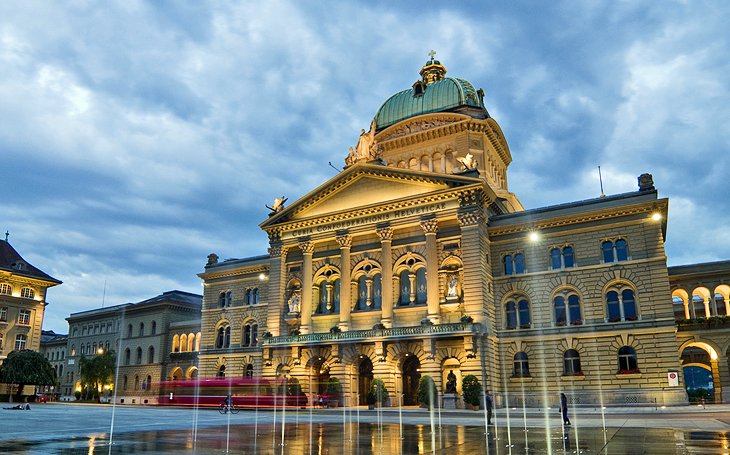
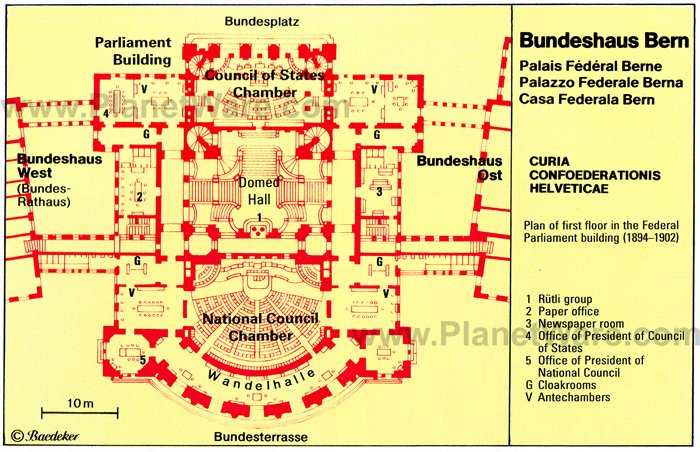
Bern's Renaissance-style Bundeshaus (Parliament building) stands on the edge of the high ground above the Aare River. The domed central block contains the two chambers of the Swiss Parliament, the meeting places of the National Council, and the Council of States; in the east wing and west wings are various federal agencies and the federal library.
The entire place is open to visitors. Access is slightly restricted when Parliament is in session. From the Bundesterrasse, which rests on massive retaining walls, there are awesome views of the river Aare below and the Alps beyond.
All around the square are cafés, shops, and Renaissance-style buildings as well as the Banknote Museum. Just beyond is the Little Redoubt, a popular viewpoint in Bern, with an orientation map pointing out important sites. Next to this old structure are the gardens and a monument to Oskar Bider, who made the first flight over the Alps in 1913.
The Theaterplatz, to the east of the Bundesplatz, is where you will find the Hôtel de Musique, the Assembly and Concert Hall, and the Municipal and University Library.
13. Take in the Wonders at the Natural History Museum
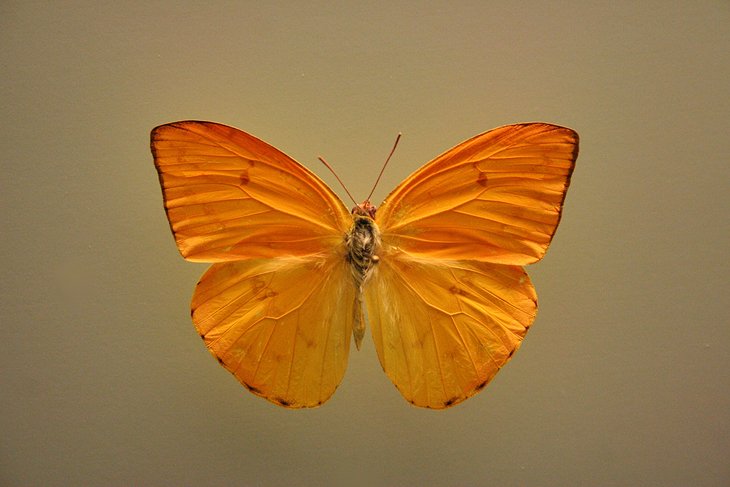
A part of the University of Bern, the Natural History Museum was born in 1832 and includes more than 200 dioramas, including a 200-year-old preserved St. Bernard rescue dog named Barry. The dioramas are impressive even if they are outdated in a way. It is fascinating to see how museums were constructed in the mid-1800s.
Some of the preserved big game is impressive, as are the skeletons of The Big Bone Show. Don't miss the Stones of the Earth display where you can see Alpine gold, meteorites, and gigantic crystals. And the beetle and evolution exhibits are educational for all ages.
Address: Bernastrasse 15, Bern
Official site: http://www.nmbe.ch/
14. Play with Technology at the Communication Museum
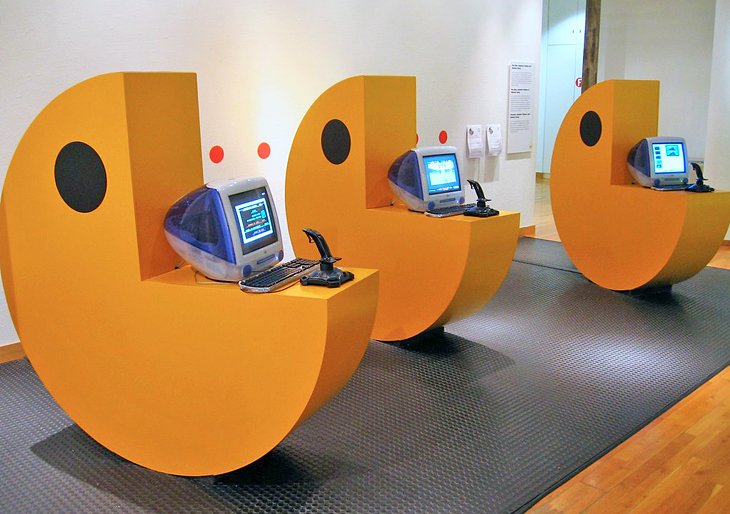
Founded in 1907, this unusual museum offers permanent exhibitions that showcase the history of human communication through the centuries. It comprises everything from sign language and speaking to postal services, the telegraph, telephone, and the Internet. This isn't so much a museum about technological advances in communication, but a museum about the relationship between men and how different cultures handle forms of communication.
Interactive displays, games, and workshops make the museum accessible and interesting for both children and adults.
Official site: http://www.mfk.ch
15. Shop at the Weekly Markets
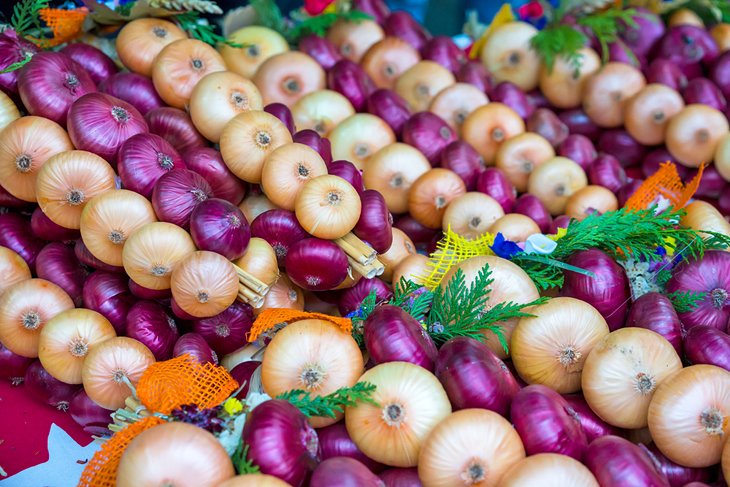
Bern is home to many markets-from flowers and food to flea markets and some magnificent Christmas marketplaces, the city has something for everyone. Just outside the Bundeshaus is the Bundesplatz, where an impressive vegetable and flower market takes place on Tuesday and Saturday mornings. Bern's largest flea market (perfect for finding a treasure or two) takes place on the Mühleplatz in the Matte every third Saturday during the warm months.
Bern has two Christmas markets that run the entire month of December: one at the Waisenhausplatz and one on the Münsterplatz. And for a unique market you won't find anywhere else, there's also the Zibelemärit or Onion Market, which happens only once a year, on the fourth Monday in November, and it celebrates all things onion, including food but also artful onion wreaths, ready-to-eat meals, and even kitchen decor featuring onions.
16. Enjoy a Wealth of Activities at the Aare River
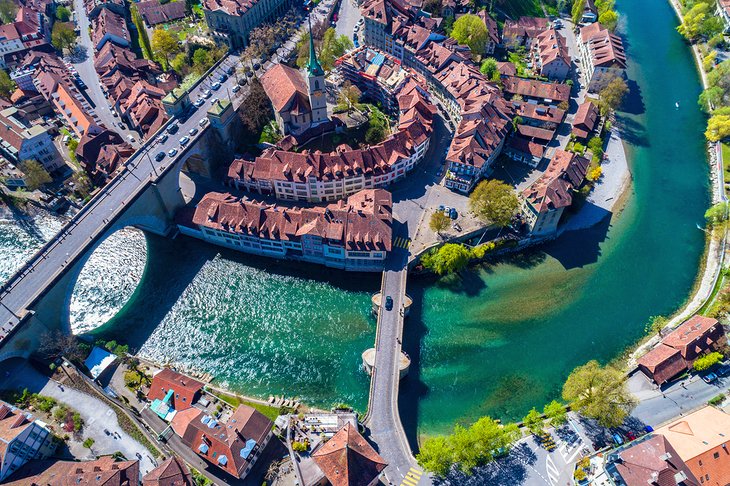
The Aare River is an intrinsic part of Bern, a beautiful mass of crystal-clear turquoise waters that have shaped the city's life and landscape. While the river is stunning all year long-and a great place to take a stroll next to as a fresh coating of snow falls on the city-it becomes the center of activities during summer.
As soon as the temperatures start to rise, you'll find the locals swimming in the Aare. There are also several outdoor swimming pools on the banks of the river, including the famous Marzili pool complex, which offers several pools and beautiful views of the Parliament Building.
Both rafting and canoeing are popular in the Aare-and there's plenty to see from the water. If you're up for a real challenge, you can take on the Uttiger Schwelle rapids; otherwise, a popular route is to take the train to Thun and then drift down the river until you get back to Bern.
For the best views of the Aare, head to the Nydeggbrücke bridge, Bern's most famous and beloved bridge, which connects the old and new parts of town and offers fairy-tale views over red rooftops.
17. Visit the Bear Park
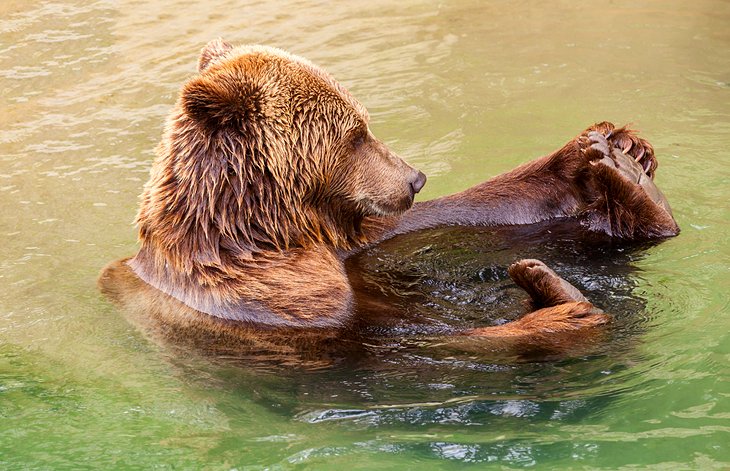
Since the bear is the symbol of Bern, it's perhaps no surprise that the city has kept bears in a large compound for years. The area around the bears' compound is graced by an array of walking paths, many of which lead down to the river, and an inclined elevator now connects the lower area by the river to the top of the enclosure.
The bears' habitat was modernized in 2009 with the addition of a second, larger green enclosure that connects to the original one through a tunnel. The second enclosure also includes a section of the river, where the bears can safely take a dip when temperatures go up.
18. Explore the Many Sides of the Granary (Kornhaus)
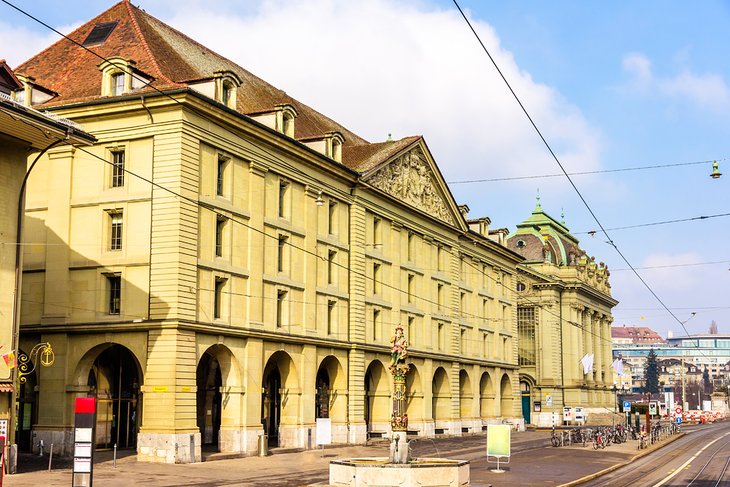
This impressive multi-use cultural space houses the City Theater's Kornhausbühne; the Kornhaus Library; the Library for Design; the Forum for Media and Design; and two renowned restaurants: the Kornhauskeller and Kornhauscafé. You might never guess it by looking at it today, but this building was originally used for grain storage.
The interior is decorated with twelve pillars featuring the traditional dress of Bernese women, as well as representations of more than two dozen musicians dressed in Swiss attire from the Renaissance period. It is like looking at a book.
19. Drop in at the French Church
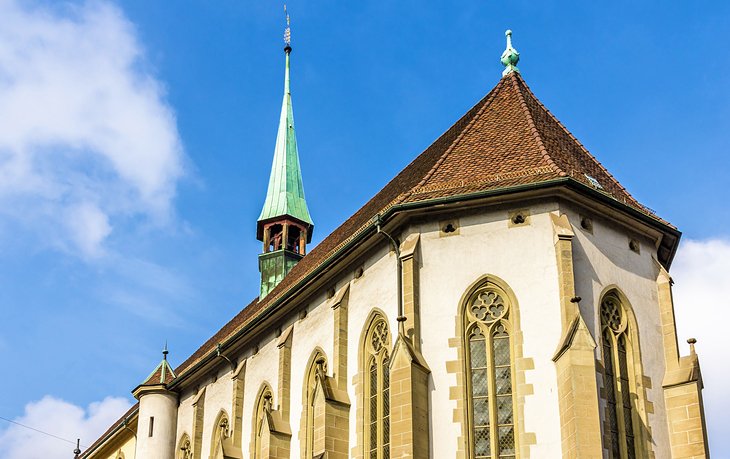
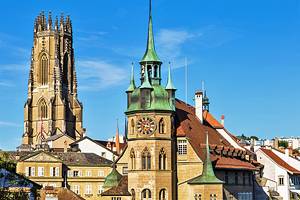
Just behind the Granary is the French Church, the oldest church in the city, with frescoes by a group of painters known as the "Master of the Carnation." It was originally built on the foundations of an even older church that dates back to the 13th century. The final construction took several centuries, with new facades and frescoes added until its completion in 1754.
After 1623, French-speaking Protestants became the main worshippers in the church-a big change from the church's origins as a Dominican monastery. Huguenot (French Calvinists) took refuge here starting in 1685 when fleeing prosecution.
Where to Stay in Bern for Sightseeing
Bern's picturesque Old Town sits inside a long loop in the River Aare, almost completely surrounded by water. Most of the major attractions-the magnificent Munster, the clock tower, and several museums and churches-are close together on this finger of land, and the famous Bear Park and large Rose Garden are just across the bridge at the end of the Old Town. Prime locations for sightseeing are in the Old Town itself or across the river behind the Rose Garden, near a tram line. Here are some highly rated hotels in Bern:
Luxury Hotels:
- Leading Hotels of the World member Hotel Schweizerhof Bern is near the train station and the top attractions of the Old Town.
- Elegant guest rooms at the historic grand hotel BELLEVUE PALACE Bern overlook the river and mountain views.
- At the tip of the old center, near the Bear Park, Hotel Belle Epoque is a boutique hotel full of character.
Mid-Range Hotels:
- Hotel Alpenblick, in an elegant old building on a quiet residential street, is a pleasant walk away from the Rose Garden in the Old Town.
- Overlooking a garden in a park-filled neighborhood, Hotel Jardin Bern is near a tram line and close to the center.
- The Bristol is a boutique hotel located in the heart of Bern offering modern rooms with a quirky touch.
Budget Hotels:
- Across the bridge from the Old Town, Hotel Landhaus is a good choice for those arriving by car as there is adjacent parking.
- Ibis Bern Expo is opposite the Bern Expo Center, on a tram line directly to the Old Town and rail station.
- A 10-minute walk from the center and on a tram line, Bed & Breakfast Wildrose provides guests with tram tickets.
Day Trips from Bern
1. Interlaken
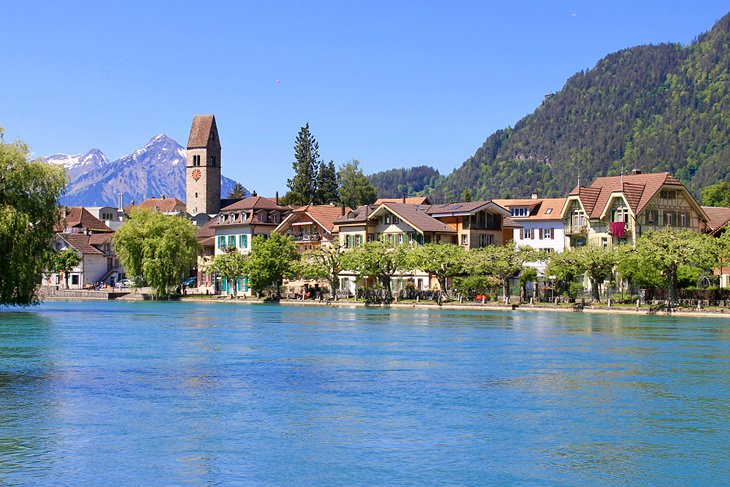
Beautiful Interlaken is world-famous. About 60 kilometers from Bern in the Bernese-Oberland section of the Alps, the town and region is the gateway to a land of mountains, lakes, and rushing rivers. Found between Lake Thun and Lake Brienz, the town sits on the river that links the two bodies of water.
For centuries, Interlaken was known for its watchmaking and printing expertise, while today it is popular for its outdoor recreation. Visitors come around for mountain paragliding, canyon jumping, and hiking, as well as for Interlaken's many spas and wellness centers.
2. Thun
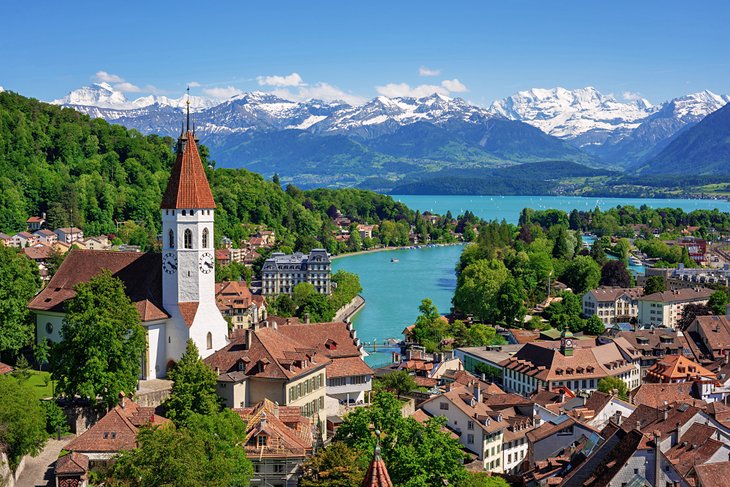
Perhaps the most charming town in the country, Thun sits where the Aar River flows from Lake Thun-just 30 kilometers south of Bern. A castle dominates the town, while its flower-lined pedestrian walkways make the town stand out. This is a gateway to outdoor recreation in the mountains beyond, but be sure not to miss the castle, the old town hall, a walk along the lake, the Panzer Museum, and the Wocher Panorama - the oldest surviving panorama in the world.

3. Biel
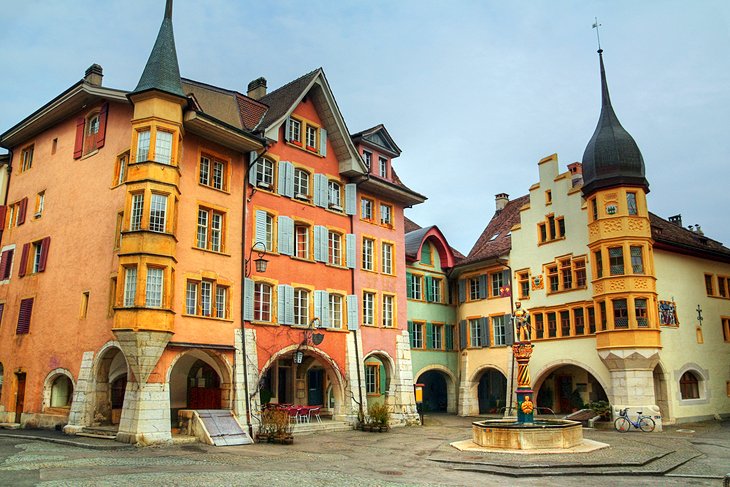
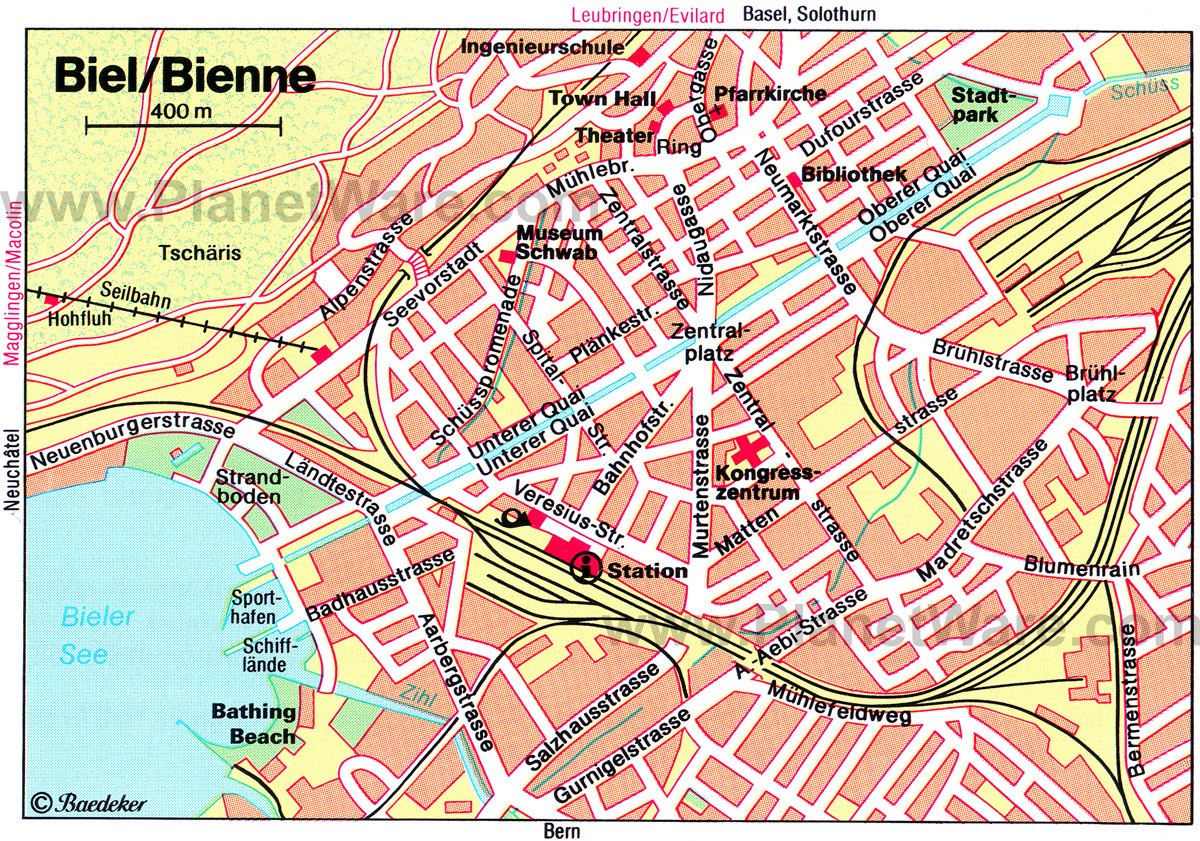
At the foot of the Jura Mountains on the eastern end of long Lake Biel lies the center of Swiss watchmaking. The little town of Biel maintains its historic center and has a charming bilingual tradition. With excellent museums, restaurants, and cafés, Biel is delightful in and of itself, but also be sure to explore the surrounding lake region.
4. Murten
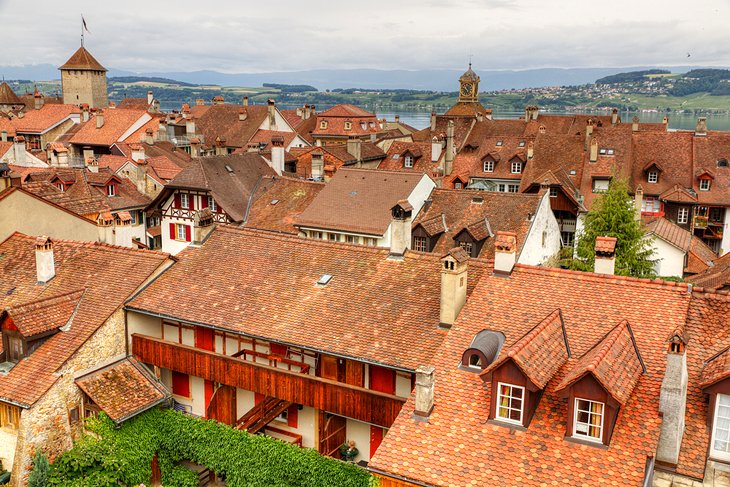
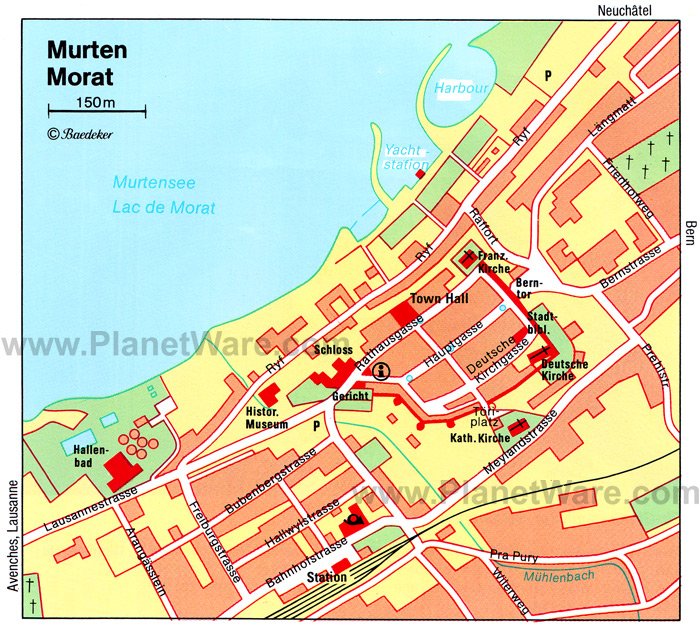
On the southeast shore of Lake Murten, the tiny medieval town of Murten sits on the ridge of hills that mark the linguistic boundary between German and French-speaking Switzerland. First mentioned in 515, Murten town is well preserved and picturesque. In fact, it is arguably the best-preserved medieval town in Europe, even retaining the medieval circuit of walls.
The town is known for water sports and cultural activities (surprisingly numerous for such a small town), but it's also a great place to take a peaceful stroll along the lake for a stunning view and a moment of quiet.
5. Fribourg
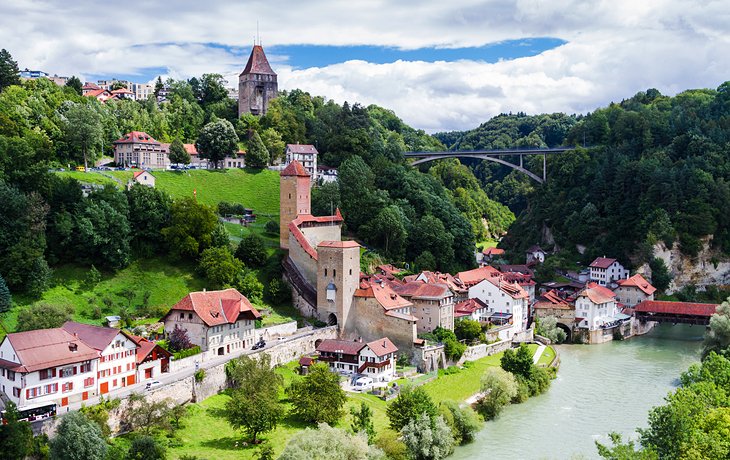
About 35 kilometers from Bern, Fribourg (in German Freiburg) is one of the finest medieval towns in Switzerland. It lies on the River Sarine (German Saane), which flows in a deep valley through the Mittelland and straddles the cultural border between German and French Switzerland. As a result, it offers a fascinating blend of cultures.
The Auge and Bourg quarters leading to the upper town perch in a picturesque location above the rocky banks of a bend in the river; in the lower town are the districts of Neuveville, on the left bank, and Planche, on the right bank.
Highlights here are the well-maintained old town with the Gothic Cathedral of St. Nicholas built from the 14th to the 15th centuries on the former site of a Romanesque building and renowned for its modern stained glass by Joseph de Mehoffer, as well as gold and ivory treasures from the 15th to 20th centuries. Fribourg is also home to an impressive clutch of museums, including the Natural History Museum, Musee Gutenberg, the Art and History Museum, and even a sewing machine museum.

6. Lucerne
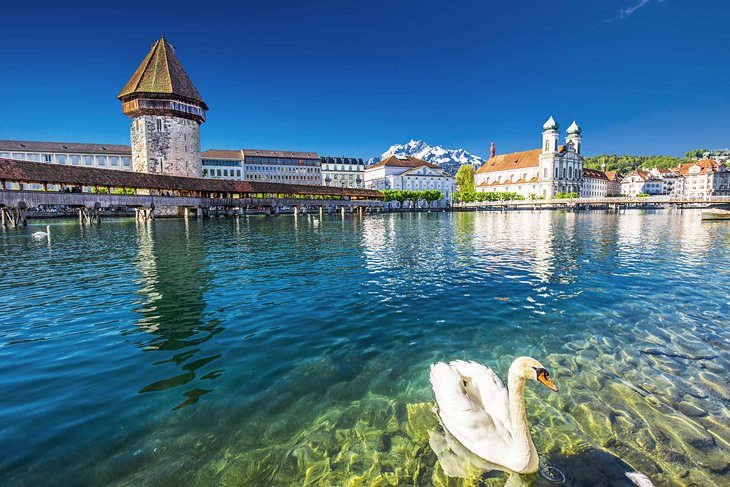
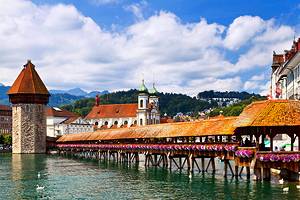
About 90 minutes away by train and surrounded by snow-capped peaks is Lucerne. A town with stunning medieval architecture where time doesn't seem to move quite as fast as everywhere else, Lucerne is well-known for its wooden Chapel Bridge, originally built in the 14th century.
Visitors can catch a paddle steamer cruise on Lake Lucerne or get on the "Dragon Ride" aerial cableway to reach the top of Mount Pilatus. Lucerne's historic core, Old Town, is car-free and a great place to explore on foot while admiring the stunning 17th-century architecture.
- Read More: Top-Rated Tourist Attractions in Lucerne
Map of Attractions & Things to Do in Bern
Bern, Switzerland - Climate Chart
| Average minimum and maximum temperatures for Bern, Switzerland in °C | |||||||||||
| J | F | M | A | M | J | J | A | S | O | N | D |
| 2 -3 | 4 -2 | 9 1 | 12 4 | 18 8 | 21 12 | 24 14 | 24 14 | 20 11 | 14 7 | 7 2 | 3 -1 |
| PlanetWare.com | |||||||||||
| Average minimum and maximum temperatures for Bern, Switzerland in °F | |||||||||||
| J | F | M | A | M | J | J | A | S | O | N | D |
| 36 27 | 40 29 | 49 34 | 54 39 | 64 47 | 70 54 | 75 57 | 75 57 | 68 51 | 57 44 | 45 35 | 38 30 |
| PlanetWare.com | |||||||||||
More Related Articles on PlanetWare.com
Exploring Switzerland: While Switzerland has much to offer to visitors in any season, winter is when this small country truly shines. For an overview of the best places to get your fill of snow, check out our article on the Top-Rated Ski Resorts in Switzerland. Once you're done with your visit to Bern, see what other destinations are worth a visit in our article, Top-Rated Tourist Attractions in Switzerland.