12 Top Tourist Attractions in Santiago de Cuba
Santiago de Cuba is the second largest city in Cuba and a historical and cultural treasure. The city is often regarded as the root of the Cuban Revolution, and the many museums here retrace key events from this important period of Cuba's history.
Unlike Trinidad, which seems frozen in time, Santiago de Cuba mixes modern architecture and industrial developments with its colorful colonial gems and historic fort. This bustling metropolis is also home to one of the country's most prominent universities, giving it a young and vibrant edge.
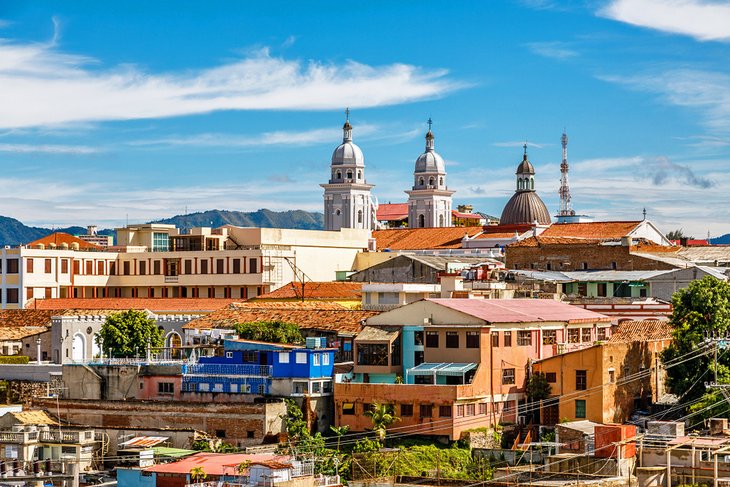
Shaped by its rich mix of cultures and Afro-Caribbean heritage, the city is often said to be the most Caribbean city in the country. Today, you can experience this multicultural vibe in the eclectic music, diverse architecture, art galleries, and lively festivals. Hotels in Santiago de Cuba also reflect the city's rich culture and history, from grand colonial-style properties to charming guesthouses.
Short trips to nearby attractions are appealing from here, too. Not far from the city, you can visit a famous pilgrimage site, or hike to the top of a rocky summit for inspiring views across mist-shrouded peaks. Discover more places to visit in and around this historic city with our list of the top attractions and things to do in Santiago de Cuba.
- 1. Castillo de San Pedro de la Roca del Morro
- 2. Parque Cespedes
- 3. Cathedral of Our Lady of the Assumption (Catedral de Nuestra Señora de la Asunción)
- 4. Santa Ifigenia Cemetery (Cementerio de Santa Ifigenia)
- 5. Casa de Diego Velazquez (Museo de Ambiente Historico Cubano)
- 6. Cuartel Moncada (Museo Historico 26 de Julio)
- 7. Revolution Plaza (Plaza de la Revolucion)
- 8. Emilio Bacardi Moreau Museum (Museo Municipal Emilio Bacardi Moreau)
- 9. Vista Alegre
- 10. Museum of the Clandestine Struggle
- 11. Gran Piedra (Jardin Botanico)
- 12. Basilica de Nuestra Senora de la Caridad del Cobre
- Map of Tourist Attractions in Santiago de Cuba
- Santiago de Cuba - Climate Chart
1. Castillo de San Pedro de la Roca del Morro
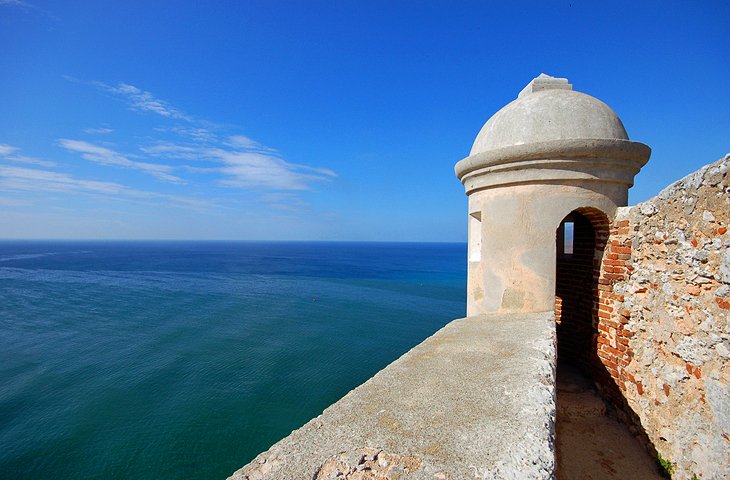
A UNESCO World Heritage Site, Castillo del Morro enjoys a reputation as one of the best-preserved Spanish fortresses of the 17th century. The huge fortress, at the entrance to the Bay of Santiago, lies about 10 kilometers southwest of Santiago de Cuba.
Perched upon a cliff top, the structure took decades to build and was finally completed at the end of the 17th century. Italian engineer, Giovanni Battista Antonelli designed the original plans in 1587, although construction did not begin for almost 45 years.
Castillo de San Pedro del Morro was originally intended to protect against pirate attacks, but also served as a prison in the late 1700s before being once again converted into a fortress.
Today, this elegant fort is open to the public and contains a small naval museum with displays on piracy and the history of the area. After exploring the fortress, head to the roof and terrace restaurant, where you can enjoy breathtaking views over the bay.
The best time to visit the fort is about an hour before sunset, which allows time to explore the fort and snap some photos before the cannon firing ceremony at sundown.
2. Parque Cespedes
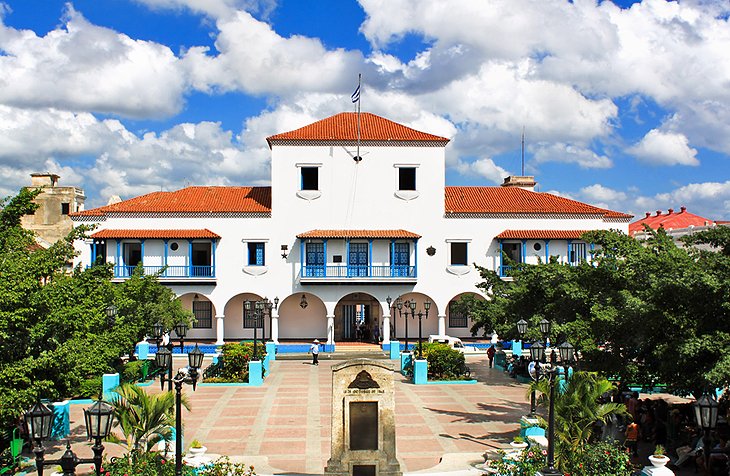
At the heart of the city, Parque Cespedes is an excellent starting point for sightseeing tours. Many of Santiago de Cuba's most notable buildings surround the square, including the Casa de Diego Velazquez and the Cathedral of Our Lady of the Assumption (Catedral de Nuestra Señora de la Asunción).
Although Parque Cespedes is more of a plaza than a park, it's a popular meeting spot for locals and tourists at any time of the day or evening. Music fills the air, and a lively feeling prevails. It's also a great place to relax with a coffee or a cool drink and watch the world go by.
3. Cathedral of Our Lady of the Assumption (Catedral de Nuestra Señora de la Asunción)
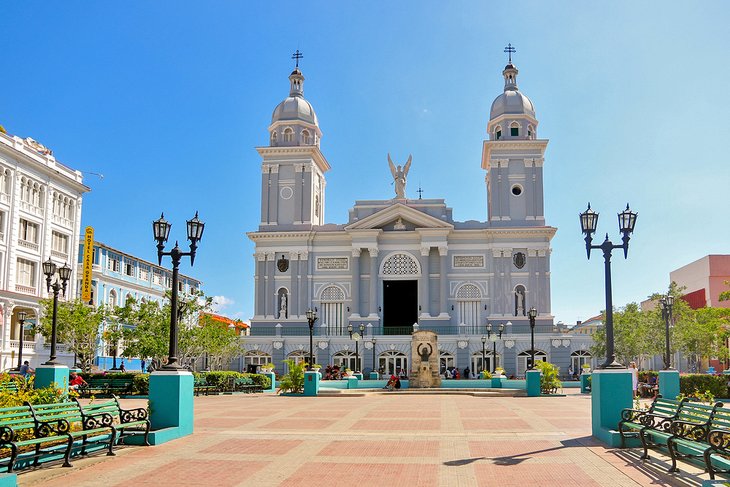
You can't miss this magnificent structure. Gracing the south side of Cespedes Park, the Cathedral of Our Lady of the Assumption is one of the most eye-catching landmarks and top places to visit around this buzzing plaza.
The church was completed in 1526 and, thanks to pirate attacks, earthquakes, and renovations, it has undergone many reconstructions over the years. In 1958, it became a national monument of Cuba. Most recently, Hurricane Sandy damaged parts of the buildings
The impressive facade features two tall bell towers and marble statues peeking out from niches. Look up to admire Michael the Archangel, perched between the towers, before you enter.
Inside, highlights include the exquisite blue and white domed ceiling, beautiful frescoes, and the hand-carved choir stall. You can also explore the Museo Eclesiastico, with a number of religious art pieces and sacred musical scores.
Before you leave, be sure to climb the tower and enjoy beautiful views of the city.
4. Santa Ifigenia Cemetery (Cementerio de Santa Ifigenia)
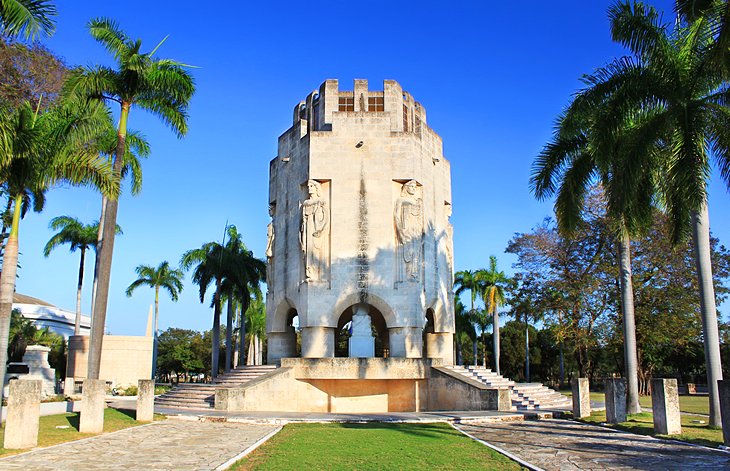
The Cementerio de Santa Ifigenia in Santiago de Cuba is home to the remains of some of Cuba's most famous military figures, as well as people of wealth and notoriety.
Some of the monuments marking the tombs are spectacular works of art. One of the most impressive features in the cemetery is the Mausoleum of Jose Marti. This huge structure towers over the surroundings and was designed to allow a stream of light to enter in during morning hours.
The Cementerio de Santa Ifigenia also contains the tombs of Carlos Manuel de Cespedes, Emilio Bacardi, and Frank Pais. Famous Cubans are still being buried here, including musician Compay Segundo, who was laid to rest here in 2003. Every 30 minutes, a changing of the guard ceremony takes place. Guides are highly recommended to shed light on all the history here.
5. Casa de Diego Velazquez (Museo de Ambiente Historico Cubano)
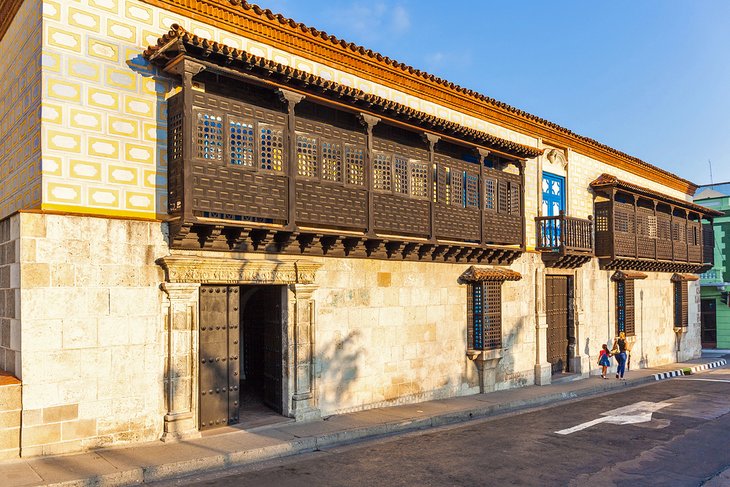
Presiding over Parque Cespedes, the Casa de Diego Velazquez offers a fascinating glimpse of a Spanish conquistador's former residence. Built in the early 1500s, the building is thought to be the oldest residence in Cuba, and now houses the Museo de Ambiente Historico Cubano.
The conquistador and governor, Diego Velazquez, lived in the upstairs portion of the house, while the lower level was used as a gold foundry; the furnace used for melting gold still stands. Seeing the building's intricately carved ceilings, thick walls, and solid construction gives a sense of the wealth and power of the Spanish empire.
Beginning in 1965, the house underwent restoration work and is now the Museo de Ambiente Historico Cubano. The museum displays a large furniture collection from the 16th to 19th centuries. Each room shows a different time period, and the collections are impressive, with exquisite porcelain, glass, and other household items, which complement the antique furniture.
For those who don't speak Spanish, guided tours in English are recommended to get the most out of a visit here.
6. Cuartel Moncada (Museo Historico 26 de Julio)
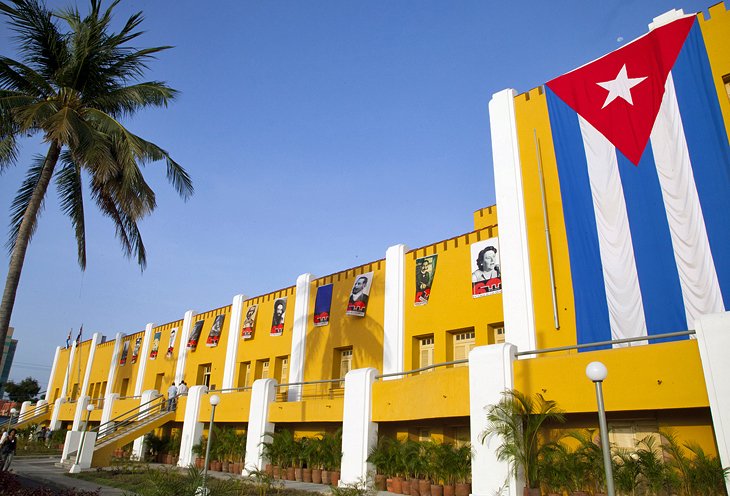
History buffs interested in the Revolution should make time for a visit to this historic attack site and macabre museum. On July 26th, 1953 during carnival celebrations, rebel forces led by Fidel Castro, Raul Castro, and Che Guevara attacked these concrete barracks to seize weapons. The attempt failed, but the revolutionaries gained much recognition from their efforts, and many people consider this incident to mark the beginning of the Revolution.
Today, visitors to the Moncada Barracks can see the bullet holes from the attacks and explore the museum, which describes the history of Cuba from the 1500s onward. The exhibits focus on the events of the 1950s, including the fateful attack on July 26. Part of the building is used as a school, so you might also see students on the grounds during your visit.
7. Revolution Plaza (Plaza de la Revolucion)
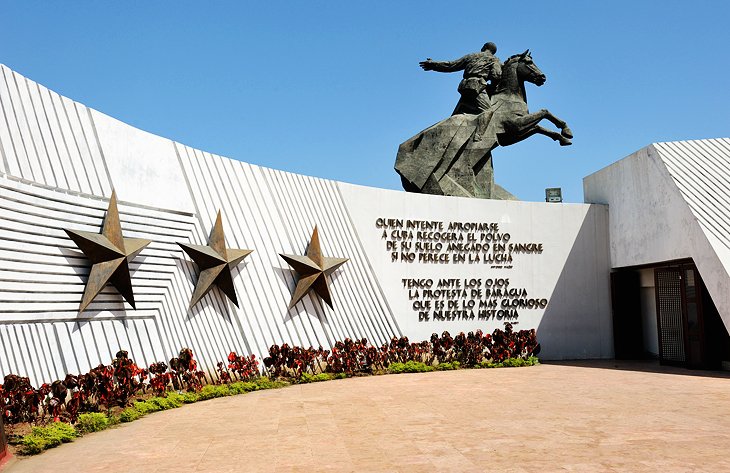
Northeast of the city center, the Plaza de la Revolucion is the famous site of many important events. Here, Fidel Castro delivered speeches, the Pope celebrated mass during his visit to Cuba in 1998, and many protests have taken place.
The most striking feature of this large square is the dramatic monument dedicated to the 19th-century war hero, General Antonio Maceo. Saw-toothed machetes rise from the grass and surround a large sculpture of the General on horseback. A local artist, Alberto Lezcay, created this impressive work of art, and it was erected in the 1990s.
8. Emilio Bacardi Moreau Museum (Museo Municipal Emilio Bacardi Moreau)
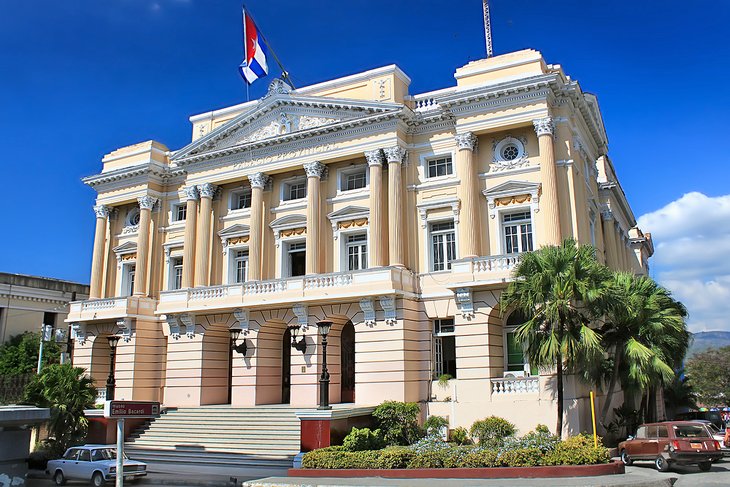
In an elegant 1929 Neoclassical building, the Emilio Bacardi Moreau Museum is among the oldest museums in Cuba, with an impressive diversity of art and collectibles from around the world.
The collection spans prehistory, the Spanish Conquest, the wars of independence, and the Revolution. Emilio Bacardi Moreau, a Cuban politician and writer, obtained most of the items and even traveled to Egypt in 1912 to purchase a mummy.
Among the things to see are artifacts from the Amerindians, the conquistadors, and the slave trade, as well as personal items of national heroes such as Carlos Manuel Cespedes and Jose Marti.
Perhaps the most impressive portion of the museum is the art exhibit featuring national and international artists, while the archeological section features Egyptian and Peruvian mummies and shrunken heads from the Amazon.
Address: Calle Pío Rosado at Aguilera
9. Vista Alegre
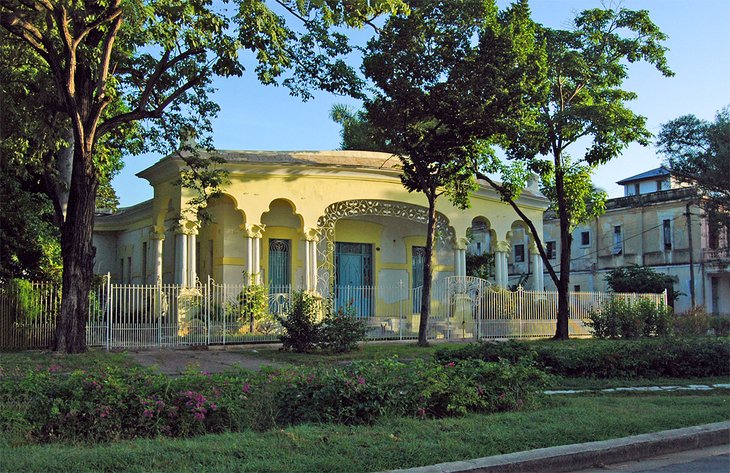
The Vista Alegre section of Santiago de Cuba is the former upscale residential area of the town. Much of the architecture in this area dates from the 1920s and 1930s with several Neoclassical mansions. You can stroll along the wide tree-lined streets here and imagine how life must have been for the wealthy Cubans who once lived in these grand homes. Many of them have been converted into offices, restaurants, and schools.
Besides the architecture, other tourist attractions in Vista Alegre include the tiny Museo de Imagen, with displays on the history of photography in Cuba, and the Casa del Caribe, a cultural research center, which hosts concert nights and festivals.
10. Museum of the Clandestine Struggle
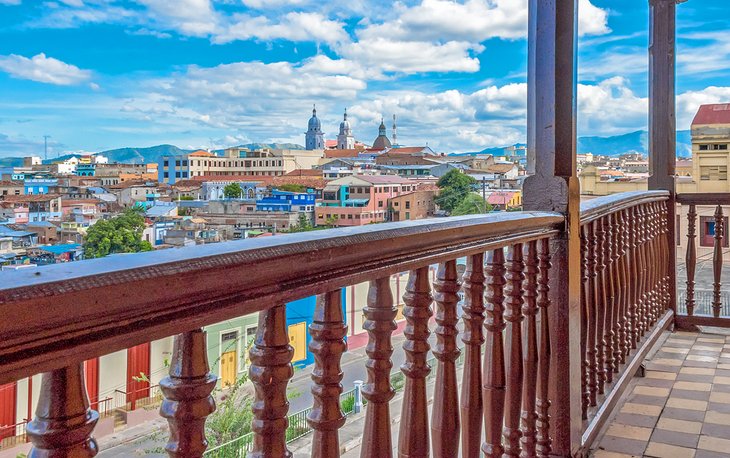
Housed in the old police headquarters, the yellow Museo de la Lucha Clandestina (Museum of the Clandestine Struggle) presents another intriguing chapter of the Revolution.
The museum depicts the history of the movement, led by Frank Pais, against the Batista regime and offers insight into the history of this time period as it relates to Santiago de Cuba and the role of the local residents in the Revolution. Pais along with other revolutionaries set fire to this building in 1956.
Today, it is beautifully restored and features a splendid courtyard, as well as fine views over Santiago de Cuba from the balcony.
11. Gran Piedra (Jardin Botanico)
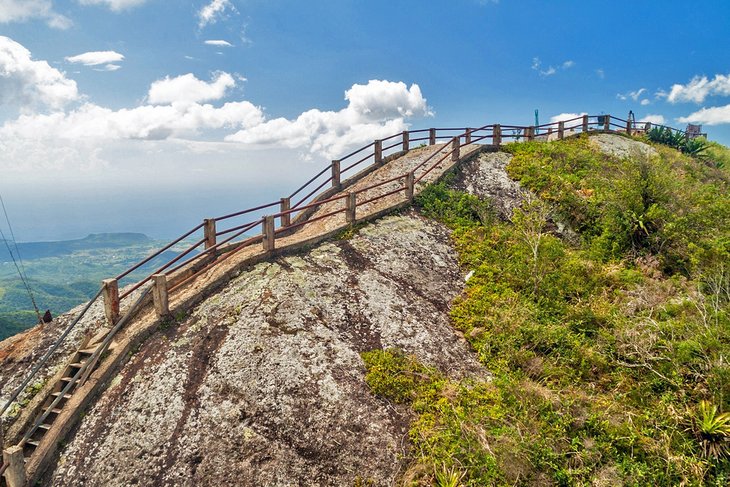
About 25 kilometers southeast from the city, Gran Piedra (Grand Stone) is a large volcanic rock perched atop a mountain, with spectacular views over misty peaks and coastal plains.
The drive to Gran Piedra, though a little hair-raising, is worth the effort. A 12-kilometer road winds up to the Jardin Botanico from the main coastal road in Parque Baconao, a UNESCO Biosphere Reserve of lushly cloaked mountains and golden-sand beaches that are much more picturesque than the beaches in Santiago de Cuba. You can also see a variety of orchids and other tropical plants here.
At the end of the Jardin Botanico is a seemingly never-ending set of stairs that leads up to the 1,234-meter-high peak of Gran Piedra and breathtaking views. The area is sometimes hazy in the afternoon, so it's best to plan an ascent during the morning hours.
12. Basilica de Nuestra Senora de la Caridad del Cobre
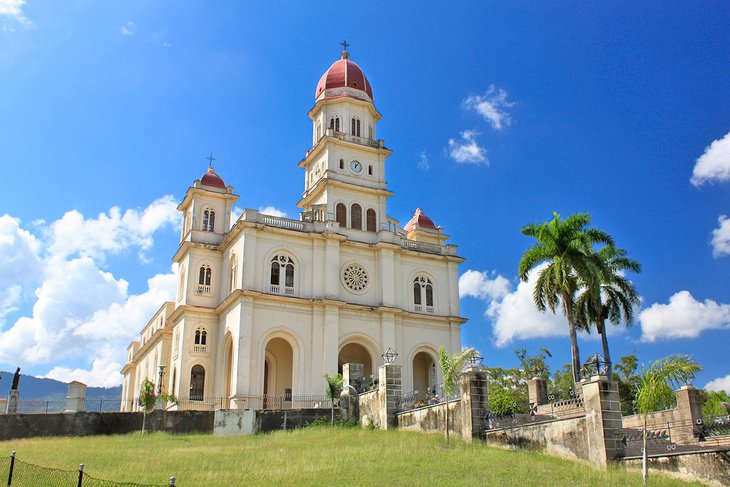
The old mining town of Cobre, about 18 kilometers northwest of Santiago de Cuba, is home to the Basilica de Nuestra Senora de la Caridad del Cobre, one of Cuba's most famous churches. Standing out against a lush backdrop, the church and its red-domed towers is a beautiful sight.
The basilica is actually best known for a statue it contains. Adorned with precious jewels, the statue of the Virgen de la Caridad del Cobra (Our Lady of Charity), Cuba's patron saint, is a black Madonna wearing a lavish yellow dress. She carries a diamond and amethyst cross and is crowned with diamonds, rubies, and emeralds.
Each year on September 8, the Virgen is extracted from her air-conditioned glass enclosure inside the Basilica for an annual public procession. She was blessed by Pope John Paul II in 1998.
This magnificent church is a pilgrimage site and attracts people from all over Cuba who come seeking the Virgin's purported healing powers.
Map of Tourist Attractions in Santiago de Cuba
Santiago de Cuba - Climate Chart
| Average minimum and maximum temperatures for Santiago de Cuba in °C | |||||||||||
| J | F | M | A | M | J | J | A | S | O | N | D |
| 28 21 | 28 21 | 28 22 | 28 23 | 29 23 | 30 24 | 31 25 | 31 25 | 31 24 | 30 24 | 29 23 | 28 22 |
| PlanetWare.com | |||||||||||
| Average monthly precipitation totals for Santiago de Cuba in mm. | |||||||||||
| 74 | 43 | 53 | 58 | 140 | 102 | 69 | 94 | 107 | 193 | 94 | 81 |
| Average minimum and maximum temperatures for Santiago de Cuba in °F | |||||||||||
| J | F | M | A | M | J | J | A | S | O | N | D |
| 82 70 | 82 70 | 82 71 | 83 73 | 84 74 | 86 76 | 87 77 | 87 77 | 87 76 | 86 75 | 85 73 | 83 71 |
| PlanetWare.com | |||||||||||
| Average monthly precipitation totals for Santiago de Cuba in inches. | |||||||||||
| 2.9 | 1.7 | 2.1 | 2.3 | 5.5 | 4.0 | 2.7 | 3.7 | 4.2 | 7.6 | 3.7 | 3.2 |