Exploring Saqqara: A Visitor's Guide
For many travelers, the pyramids mean only Giza's famed monuments, but there's another group of pyramids within day-tripping distance of Cairo.
Thirty kilometers south of the capital, the vast necropolis site of Saqqara and the nearby sites of Dahshur and Abu Sir are where pyramid building in Egypt first began.
Here, the Step Pyramid, the Bent Pyramid, and the Red Pyramid are magnificent reminders of the early architecture of the pharaohs and some of the Old Kingdom's most dazzling treasures.
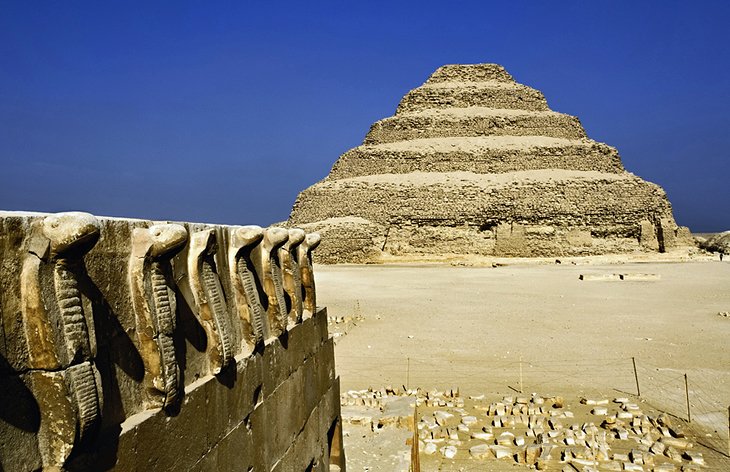
In recent years, Saqqara has become headline-grabbing archaeological news as more discoveries are made during ongoing archaeological work here.
The most recent finds of the funerary tomb of Queen Nearit - wife of 6th Dynasty Pharaoh Teti - and 52 burial shafts with over 50 coffins are only the latest in a mind-boggling array of discoveries.
For history fans, a day trip here is a must-do while in Cairo.
On This Page:
Necropolis of Saqqara
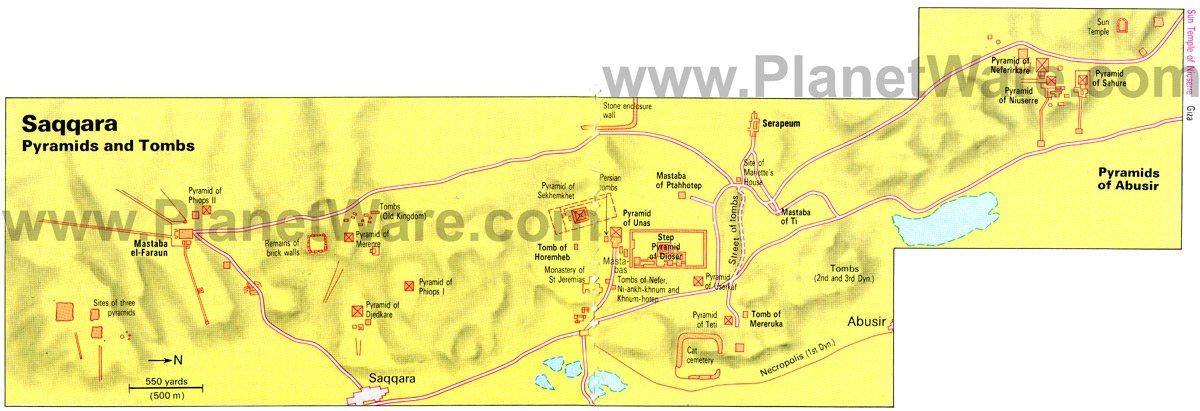
Saqqara covers a mammoth area, so if you're short on time, limit your sightseeing to the Imhotep Museum, the Step Pyramid, the Pyramid of Teti, the Serapeum, and the Mastaba of Ti to see the best of Saqqara.
Imhotep Museum
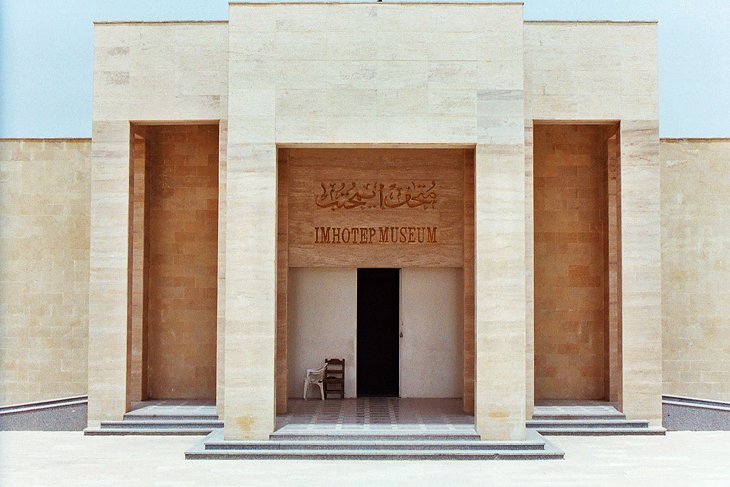
At the foot of the Saqqara Necropolis, the Imhotep Museum opened in 2006 and is dedicated to the Egyptian architect, Imhotep.
There are five halls within the museum with a variety of beautifully presented displays of finds from throughout the necropolis area.
This is the best place to begin any exploration of the Saqqara necropolis.
Step Pyramid of Djoser
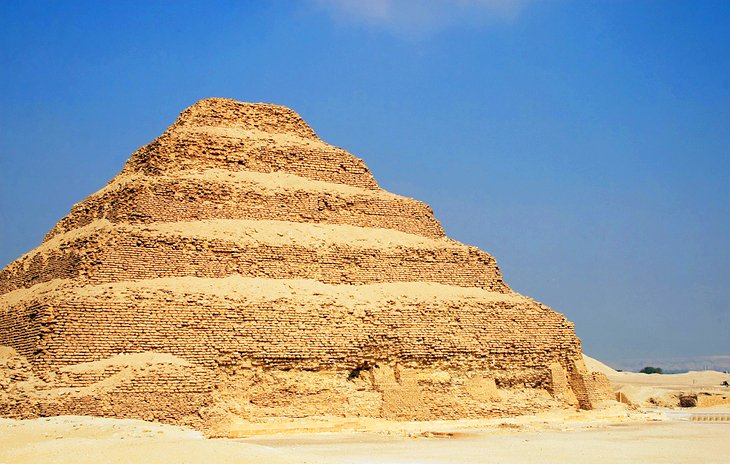
The most conspicuous landmark of Saqqara is the Step Pyramid, the tomb of the third Dynasty ruler Djoser or Zoser, built by Imhotep and thought to be the earliest major stone structure erected in Egypt.
The form of the pyramid can be explained as a development of the large mastabas (mud-brick tombs) of the First and Second Dynasties; the six steps, each smaller than the one below, having been produced by the addition to the original mastaba of successive new layers of masonry, accompanied by the enlargement of the lower stages.
The Step Pyramid stands 60 meters high and is built of locally quarried clay sandstone of poor quality.
After 17 years of restoration, the Step Pyramid's interior has opened its doors to visitors again. The chambers and passages in the interior of the pyramid served partly for the burial of close relatives of the pharaoh (in particular those of his sons who died in childhood) and partly for storing grave-goods for the use of the dead.

Pyramid of Unas
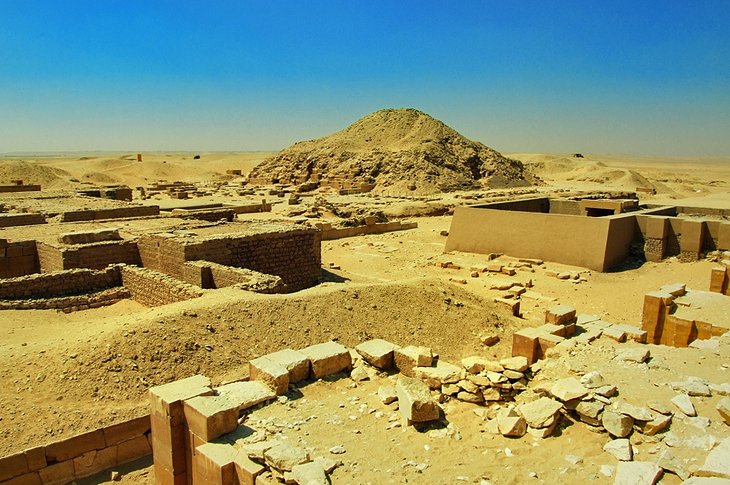
Southwest of the Step Pyramid is the Pyramid of Unas or Onnos, last pharaoh of the Fifth Dynasty.
The interior of the pyramid, which was opened in 1881, is open to visitors.
From the north side, a sloping passage, the entrance to which was originally concealed under the paving, leads to an antechamber, from which a horizontal corridor, originally barred by three trapdoors at the far end, continues to a central chamber.
The walls of the central chamber and the tomb chamber are covered with inscriptions from the "Pyramid Texts," the oldest known Egyptian religious texts, relating to the life after death in which the incised hieroglyphs are filled in with blue pigment.
Against the west wall of the tomb chamber is the pharaoh's sarcophagus with alabaster false doors to the right and left.
On the south side of the Pyramid of Unas are three shaft tombs of the Persian period, all broadly similar in layout.
A square vertical shaft descends to the tomb chamber, constructed of stone blocks, at the foot of a larger shaft sunk during the building of the chamber and later filled in.
The tombs are now accessible by a spiral staircase and are connected with one another by tunnels.
Tomb of Nefer-her-ptah
Some 300 meters east of the Pyramid of Unas is the small Tomb of Nefer-her-ptah, overseer of the Palace, Royal Wigmaker, and confidant of an unidentified pharaoh.
It consists only of an entrance corridor and a single chamber but contains preliminary drawings of high artistic quality for reliefs, which were never executed.
They depict scenes from everyday life, farming, and hunting.
Double Mastaba of Nebet and Khenut
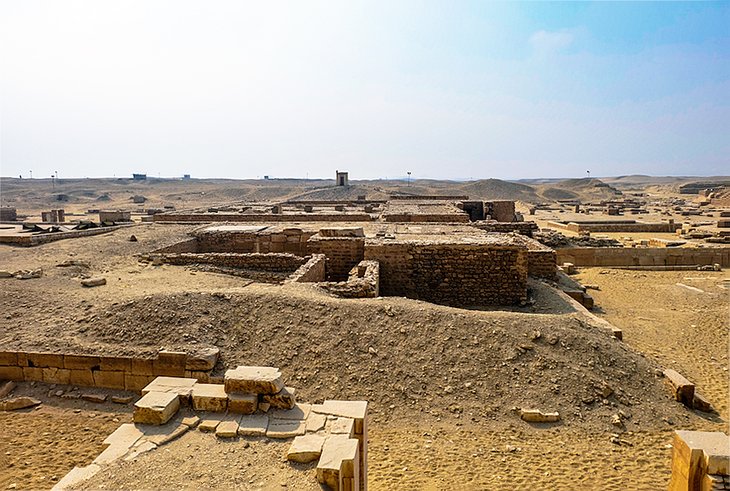
To the northeast of the Pyramid of Unas is the large Double Mastaba of Nebet and Khenut, Unas's wives.
Both tombs have the same ground plan and layout, reflecting the equal status of the two occupants.
Khenut's tomb, to the west, is much ruined, but Nebet's is well preserved and well worth a look.
The entrance, on the southeast side, leads into an antechamber of some size, the walls of which are decorated with reliefs of the dead Queen sailing in a boat through the marshes.
To the left (west) of this chamber is a spacious open court, without decoration, and straight on is a second smaller antechamber with highly unusual mural reliefs showing Nebet with servants bringing in food and sledges laden with large jars.
On the north wall, above the door, Nebet is shown seated in front of votive offerings.
Tomb of Nefer and Companions
On the south side of the causeway leading to the Pyramid of Unas is the Tomb of Nefer and Companions (Fifth Dynasty), probably the family or communal tomb of a guild of singers.
It has a single chamber, eight meters long, with nine tomb shafts. In one of these was found the mummy of a naked man, adorned only with a necklace of blue beads, lying on his side with his legs slightly bent, as if asleep.
The walls, faced with plaster, display a rich variety of reliefs.
On the left-hand wall are five rows of scenes from everyday life, including woodworkers, farming scenes, and a rare and informative scene depicting the launching of a boat.
On the right-hand wall, the dead men are depicted with their wives at a funeral banquet.
Double Tomb of Niankhkhnum and Khnumhotep
To the east of the Tomb of Nefer and Companions, under the causeway (which was constructed over it), is the Double Tomb of Niankhkhnum and Khnumhotep (Fifth Dynasty), two friends or relatives who were priests of Re in Niuserre's Sun Temple and Court manicurists.
The tomb is partly hewn from the rock, partly masonry built, and the front part is faced with fine-grained limestone.
The rich decoration of painted reliefs is well preserved in the stone-built front part.
On the walls of the portico are reliefs depicting the funeral rituals, and on both sides of the entrance are the dead men with their eldest sons.
Within the doorway, the mummy is seen being conveyed to the tomb, accompanied by offering bearers.
The portico leads into an antechamber with excellently preserved reliefs in five rows, alternately referring to Niankhkhnum and Khnumhotep.
On the north and east walls are scenes of farming life and of the dead men's professional activities.
On the south wall, various methods of catching fish and birds are depicted.
Tomb of Iru-kaptah Khenu
To the east of the Pyramid of Unas is the rock cut Tomb of Iru-kaptah (Fifth Dynasty), Superintendent of the Royal Slaughterhouses. This, too, has a single chamber at the end of a narrow corridor.
On the left-hand and rear walls of the chamber are ten figures of the dead man carved from the rock in high relief.
On the right-hand wall are similar figures of three young men and a woman who were also buried in the tomb.
Monastery of St. Jeremias
To the east from the tombs, a path leads to the nearby ruins of the Monastery of St. Jeremias (Jeremiah), excavated by JE Quibell in 1907-09.
Founded in the second half of the fifth century and destroyed by the Arabs about AD 960, the monastery buildings include two churches, a refectory, a bakery, an oil press and other offices, the room occupied by St. Jeremias, and cells for the monks.
Pyramid of Userkaf
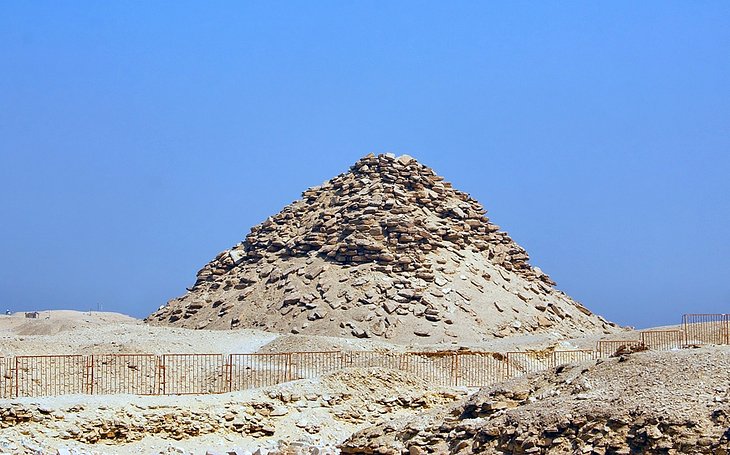
Northeast of the Step Pyramid of Djoser is the mound of rubble, which represents the Pyramid of Userkaf, founder of the Fifth Dynasty.
The pyramid was relatively small, with an original base measurement of 75 meters, and lay within a correspondingly small precinct.
The mortuary temple was on the south side, and to the southwest of this are the remains of a subsidiary pyramid.
In the area south of Userkaf's Pyramid are mastabas of the Old Kingdom.
Pyramid of Teti
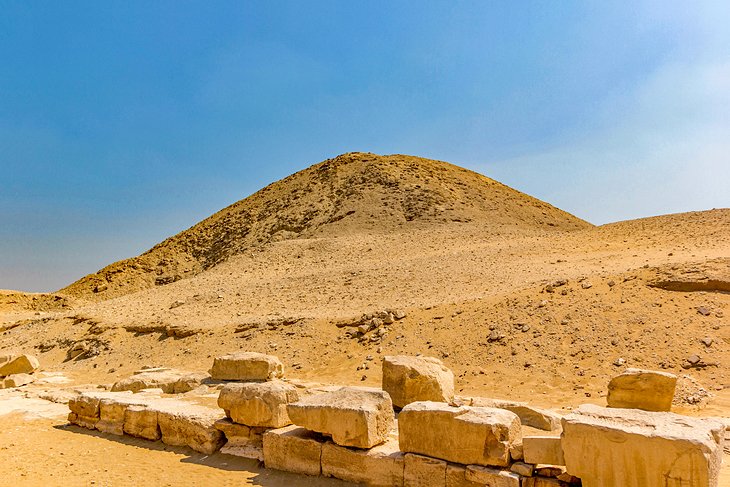
Some 500 meters northeast of Djoser's Pyramid is the mound of earth, which marks the site of the Pyramid of Teti, founder of the Sixth Dynasty.
On its east side are the scanty remains of the mortuary temple, remains of an alabaster altar, and many table-like statue bases.
Farther east is a confused tangle of structures ranging in date from the Old Kingdom to the Ptolemaic period.
Tomb of Mereruka
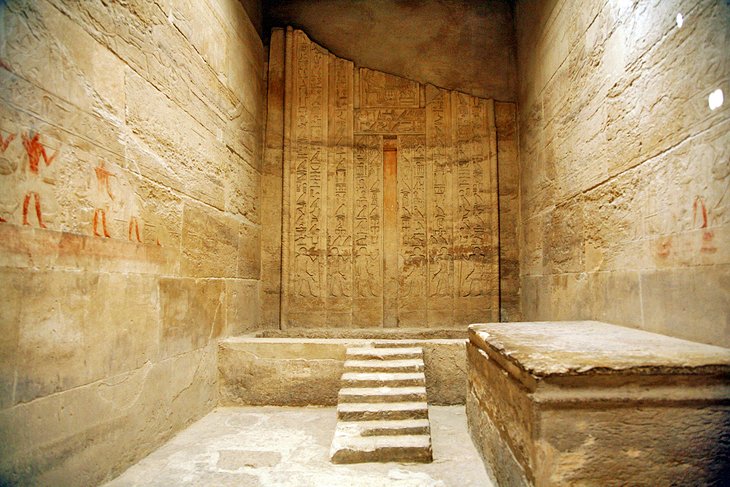
The area on the northern side of the Pyramid of Teti is home to a group of interesting tombs decorated with fine reliefs.
The Tomb of Mereruka features unique paintings detailing the deceased involved in daily activities like fishing and inspecting workmen.
Some of the best wall paintings are in the first (northern) room, where you can see Mereruka and his wife inspecting various operations, goldsmiths making necklaces and vessels, three statues being drawn to the tomb while a priest burns incense, and carpenters making beds.
In the large sacrificial chamber, the reliefs on the north wall show Mereruka inspecting domestic animals; a boat building scene; and Mereruka carried in a litter with a large retinue, including two dwarfs leading dogs.
Mastaba of Kagemni
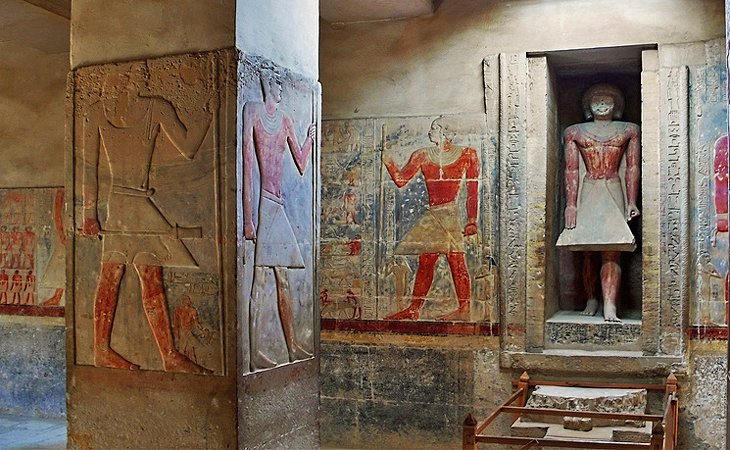
Immediately east of Mereruka's tomb stands the large Mastaba of Kagemni, a Vizier and Judge under three pharaohs of the Fifth and Sixth Dynasties, which was discovered in 1893.
At the south end of the east front, the entrance has an inscription giving the name and titles of the dead man.
It leads into a vestibule with reliefs of fishermen and offering bearers, beyond which is a hall with three pillars containing an attractive series of scenes featuring dancing girls, hunting in the marshes, a farmyard, and cattle crossing a ford.
Mastaba of Ptahhotep
Heading west towards the Serapeum and Mastaba of Ti, stop off at the Mastaba of Ptahhotep, which is most noteworthy for the mural reliefs that adorn the walls of the offering room.
The entrance on the north side leads into a corridor, the walls of which are covered with interesting sketches for reliefs and unfinished reliefs.
To the right is a large square hall with four pillars from which a door at the southeast corner leads through a vestibule into the offering room.
The mural reliefs here are regarded as among the highest achievements of Egyptian art at its zenith, some of them surpassing even the reliefs in the Mastaba of Ti. The colors here are extremely well preserved.
Serapeum
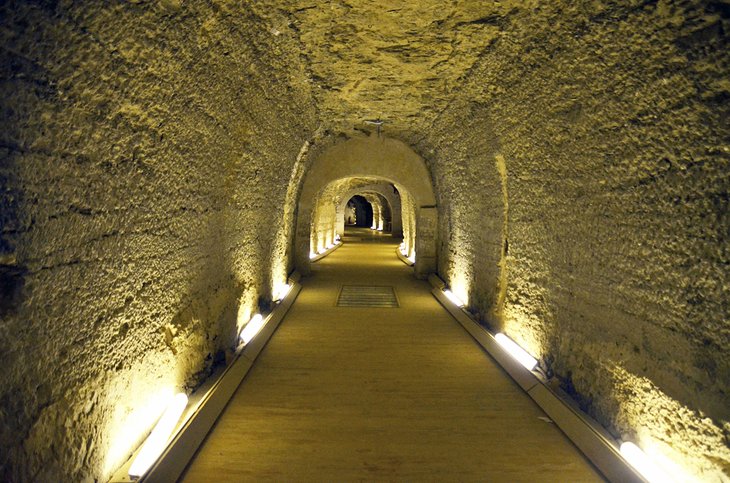
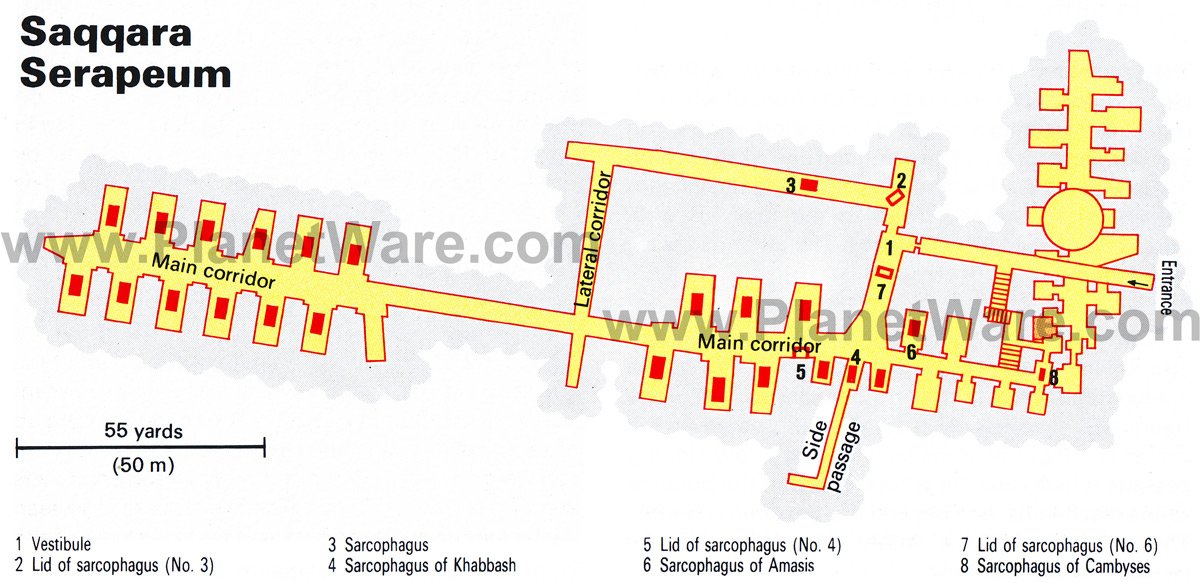
The Serapeum houses the rock-cut underground burial chambers of the Apis bulls.
Apis, the sacred bull of the god Ptah, was worshiped in a temple of his own, and after his death was embalmed and buried with great pomp.
From the time of Amenophis III, and probably earlier, the Apis tombs consisted of an underground chamber entered by a sloping shaft.
In the reign of Ramses II, Prince Khaemweset constructed a common burial place for all the Apis bulls, consisting of an underground corridor 100 meters long flanked on both sides by chambers in which the wooden coffins of the bulls were enclosed.
Twenty of the chambers here still contain the sarcophagi of polished black or red granite, each hewn from a single block where the Apis bull mummies were housed. They average some four meters in length and are estimated to weigh 65 tons.
Mastaba of Ti
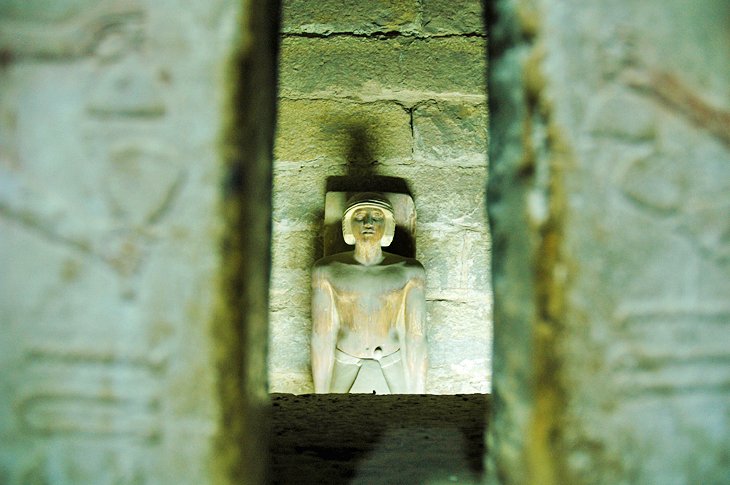
Northeast of the Serapeum is one of the principal sights of Saqqara, the Mastaba of Ti, belonging to a high court official and wealthy landowner of the early Fifth Dynasty.
Its mural reliefs are among the finest and best preserved of the Old Kingdom, as well as the most interesting in terms of subject matter.
The entrance opens into a small vestibule with two pillars, on the front of which Ti is depicted wearing a long wig and a short, wide apron and holding a long staff in one hand and a kind of club in the other.
A doorway flanked by figures of the dead man and inscriptions leads into a large pillared hall, with a modern timber roof borne on 12 square ancient pillars in which offerings were presented.
In the center is a flight of steps leading into a low, sloping passage, which runs the whole length of the building to an antechamber and beyond this, the tomb chamber. The sarcophagus, now empty, completely fills the recess in which it stands.
A door at the far corner of the pillared hall leads into a corridor with reliefs of servants bearing gifts of all kinds into the tomb.
Another door opens into a second corridor with paintings of sacrificial animals being slaughtered, and on the right-hand wall, the arrival of the ships in which Ti has inspected his estates in the Delta (note the curious steering gear).
Above the entrance door, you can see Ti and his wife in a boat in a thicket of papyrus, while over the door into the chapel, female dancers and singers are depicted.
A door on the right leads into a side room, in which the colors of the reliefs are excellently preserved.
In the chapel are two well-preserved and several damaged shipbuilding scenes: shaping the tree trunks; sawing them into planks; construction of the ship, with workmen using adzes, mallets, and crowbars and others fitting the planks together; and Ti standing in one of the ships, inspecting the work. The simple tools used by the workmen (a saw, axe, adze, and drill) are of great interest.
While on the south side of the chapel are numerous paintings depicting everyday scenes, including men blowing through long tubes into a furnace in which gold is smelted, sculptors and makers of stone vessels, and a market scene (one man has two jars of oil for sale, another a wallet for which he is being offered a pair of sandals in exchange).
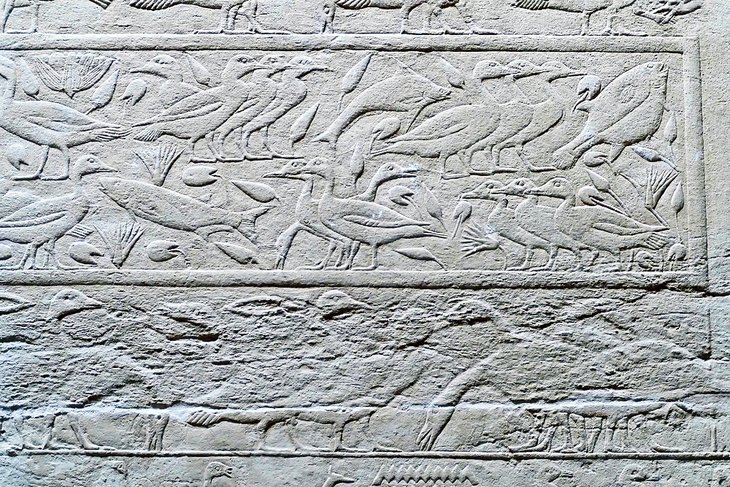
The reliefs on the north side of the chapel depict life in the marshes of the Delta.
A narrow strip running along the foot of the north wall depicts 36 peasant women bearing offerings of meat, poultry, vegetables, fruit, and drink from Ti's various estates, the names of which are given.
Southern Necropolis
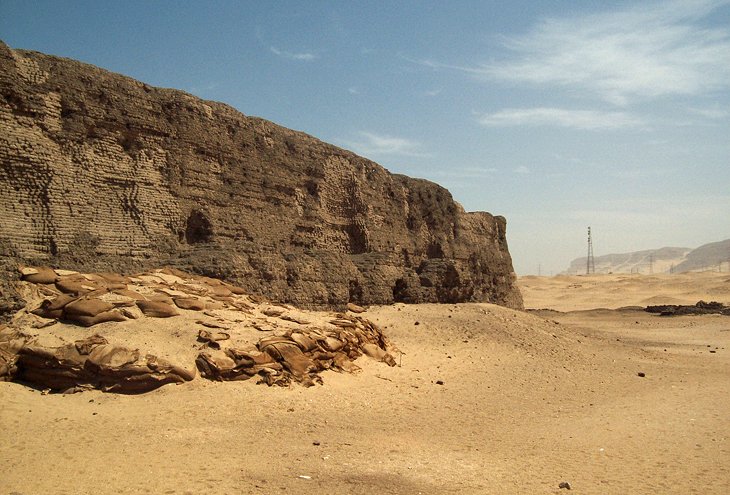
Saqqara's Southern Necropolis also contains some interesting monuments, including the remains of the Pyramids of Phiops (Pepi) I, Djedkare, and Merenre, which are all in a much dilapidated state as a result of their use as convenient quarries of building stone.
Mastaba el-Fara'un
In Saqqara's Southern Necropolis, the Mastaba el-Fara'un is the most important monument.
Originally 100 meters long and 73.5 meters wide, it is in the form of a gigantic coffin with a barrel roof built of massive blocks and faced with Tura limestone. It is the Tomb of Shepseskaf, last pharaoh of the Fourth Dynasty.
The layout of the passages in the interior is similar to that of the pyramids of Unas and his successors.
From the entrance, on the north side, a very narrow passage, only 1.3 meters high and 20 meters long, originally faced with granite slabs, descends to the chambers seven meters below the base of the mastaba.
Built entirely of granite, these were closed off by three stone portcullises.
The tomb chamber had been thoroughly ransacked by tomb robbers and yielded only a few fragments of the sarcophagus.
Saqqara History: The Necropolis of Ancient Memphis
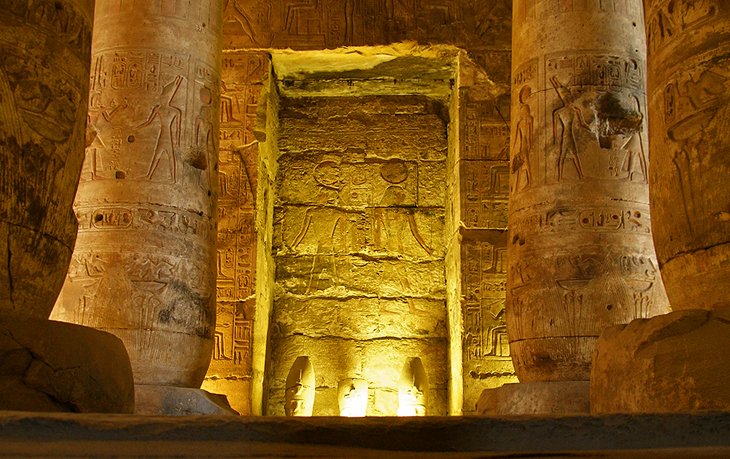
The vast necropolis of Saqqara, the cemetery area of ancient Memphis, lies on the edge of the Western Desert, on the west bank of the Nile, some 15 kilometers south of the Pyramids of Giza.
Extending over an area of almost seven kilometers from north to south, it contains tombs from almost every period of Egyptian history.
The whole necropolis has been repeatedly prospected and plundered from an early period down to modern times, notably under the Byzantine Emperors and the Islamic era's Caliphs.
Nevertheless, modern scientific excavations, most recently those directed by Walter B Emery in 1936-56 and by the Egyptian Department of Antiquities since 1965, have still been able to recover much new material, which has made important contributions to knowledge.
Around Saqqara
Pyramids of Dahshur
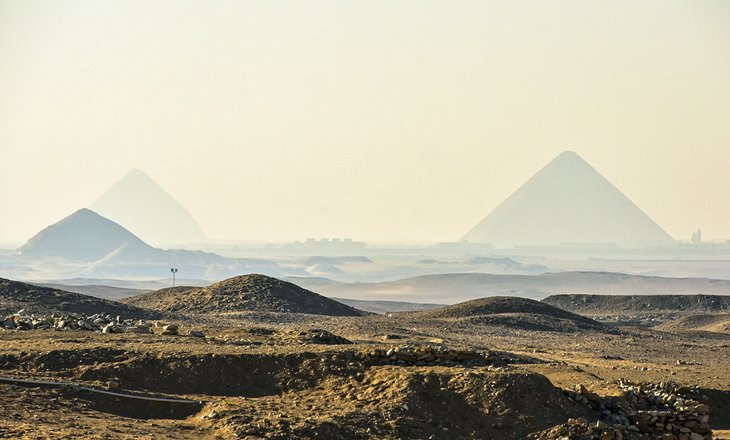
The Pyramids of Dahshur lie about two kilometers from the south side of the Saqqara necropolis and the Mastaba el-Fara'un. Scattered over an area some three kilometers long by 1.5 kilometers across on the edge of the desert are five pyramids and the remains of subsidiary tombs and temples.
Red Pyramid
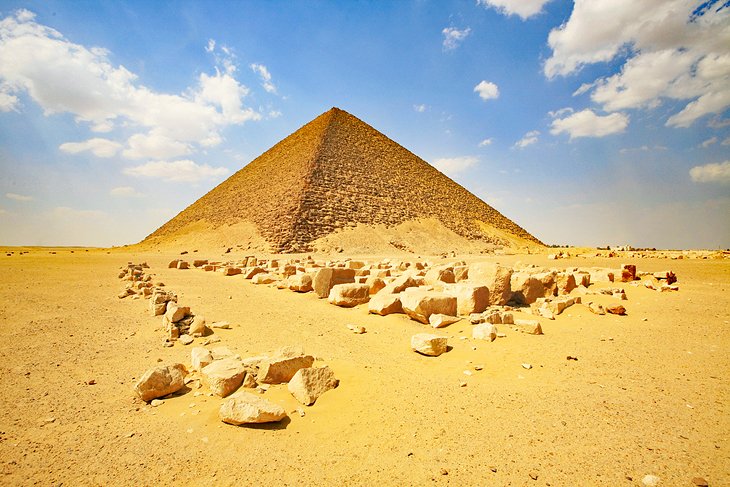
The Northern Stone Pyramid (more commonly known as the Red Pyramid after the reddish tint of the horizontally coursed limestone blocks of which it is constructed) is Dahshur's most impressive monument.
It has a height of 101.15 meters and is approximately the same size as the Pyramid of Cheops at Giza.
The Red Pyramid is thought to have been built by Sneferu, founder of the Fourth Dynasty and father of Cheops, who reigned gloriously for 24 years and conducted victorious wars in Libya and Nubia.
The Red Pyramid is the oldest royal tomb in pure pyramid form, providing a model followed in later royal burials.
From the entrance on the north side, a shaft leads down to three chambers in the heart of the structure, the third of which was the tomb chamber, although Sneferu was not in fact buried here.
Bent Pyramid
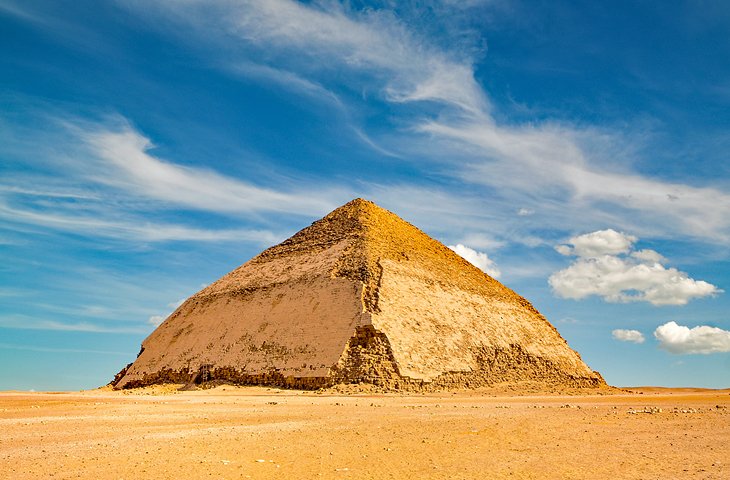
The imposing Bent Pyramid, sitting to the south of the Red Pyramid, was built in the reign of Sneferu, probably before the Red Pyramid, and apparently planned as a normal pyramid with straight sides and with the usual valley temple, causeway, subsidiary pyramid, and enclosure wall.
The well-preserved casing, constructed of slabs of Tura limestone slightly inclined downwards, gives a good idea of the original external appearance of other pyramids.
The reason for the change of angle halfway up the pyramid, from 54° 31 in the lower part to 43° 21, is unknown.
Two theories have been put forward: either some unforeseen event may have made it necessary to complete the pyramid quickly, or as plaster-filled cracks in the interior and traces of timber supports suggests, there were fears for the stability of the pyramid during its construction, and the upper part was given a less steep angle to reduce the weight of stone.
Black Pyramid
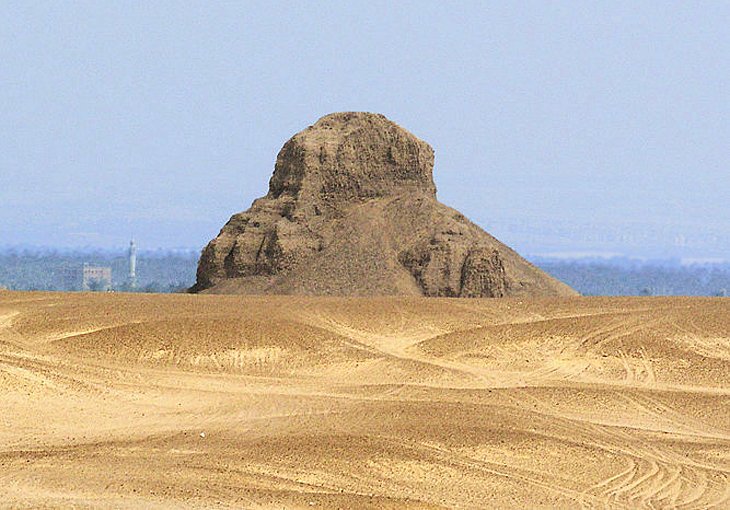
Dahshur's third major sight is the Black Pyramid, believed to be the tomb of Sesostris III (12th Dynasty).
It originally stood 65 meters high and was faced with marble slabs, none of which now remain.
In the tomb chamber, the Pharaoh's empty granite sarcophagus was found.
To the north of the pyramid, but still within the enclosure wall that originally surrounded it, two underground galleries were found containing tomb chambers belonging to female members of the royal family, with costly grave furnishings, which can now be seen in the Egyptian Museum in Cairo.
Pyramids of Abusir
The Pyramids of Abusir stand on a low bluff above the west bank of the Nile, near their namesake village, roughly halfway between the Pyramids of Giza and the Step Pyramid of Djoser at Saqqara. They were erected by three pharaohs of the Fifth Dynasty: Sahure (2455-2443), Neferirkare (2443-2423), and Niuserre (2416-2392).
If you're not getting pyramid-fatigue by the time you've visited the more famous monuments of Saqqara and Dahshur, this set of small pyramids are worth tagging on to your visit.
These mortuary temples are similar to those of earlier rulers, with the only new feature being an extraordinary profusion of relief decoration. This has unfortunately been decimated by stone robbery, and most of the reliefs still surviving when the monuments were excavated were removed and are now in museums, mostly in Europe.
Pyramid of Sahure
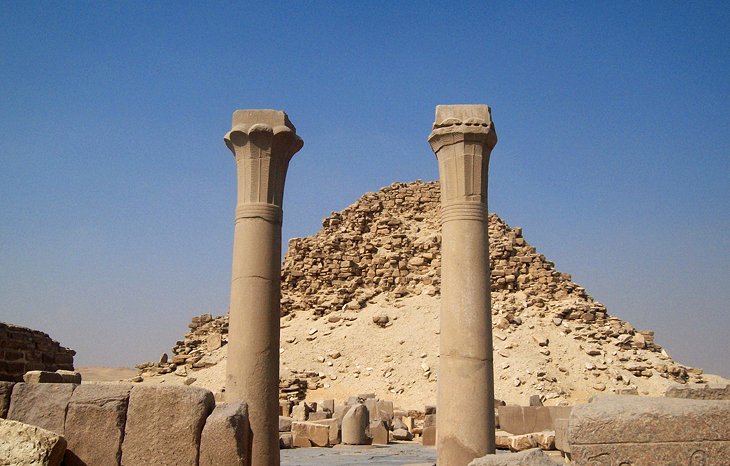
If you only have time to stop and admire one of the Abusir pyramids, this is the one to pick, though be aware that all the Abusir pyramids have suffered major damage over the centuries.
As the earliest of the three pharaohs, Sahure selected the best site for his pyramid, a low-lying area within convenient reach of the north Nile Valley. It was originally faced with smooth marble slabs and probably had a cap of red Aswan granite with the pharaoh's cartouche.
From the north side of the pyramid, a passage walled and paved with granite led down to the tomb chamber (now destroyed) containing the royal sarcophagus.
Pyramid of Niuserre
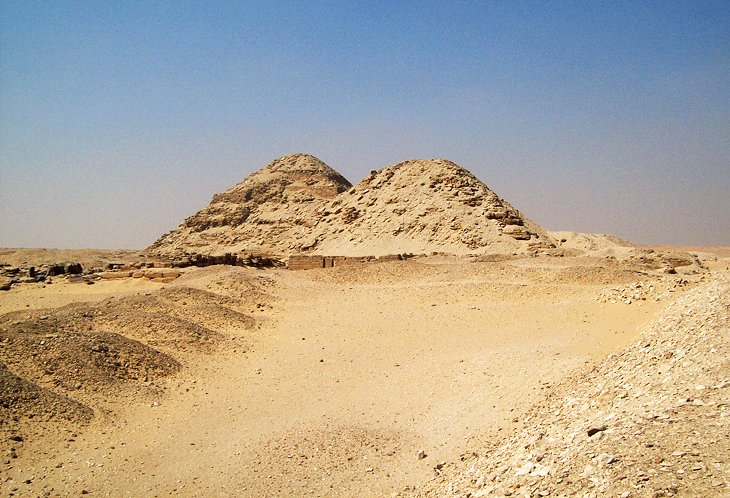
South of the Pyramid of Sahure is the Pyramid of Niuserre.
The layout of the funerary complex is similar to that of Sahure, but the structures are in a much worse state of preservation.
From the valley temple, of which practically nothing is left, a covered causeway led up to the Pyramid of Neferirkare, perhaps making use of the earlier causeway leading to that pyramid - and then, reaching the higher ground, turned towards Niuserre's Mortuary Temple.
A massive precinct wall enclosed the pyramid, the mortuary temple to the east of the pyramid, and a smaller subsidiary pyramid at its southeast corner. The causeway led into a forecourt with store rooms on either side.
Little trace is left of the temple itself. To the north, outside the enclosure wall, are large mastabas (mud-brick tombs) for female members of the Royal House and high dignitaries.
In the Mastaba of Userkaf-Ankh (a High Priest and Court official), which stood close to the temple, a statue of Userkaf-Ankh himself was found (it is now in the Liebieghaus in Frankfurt).
Pyramid of Neferirkare
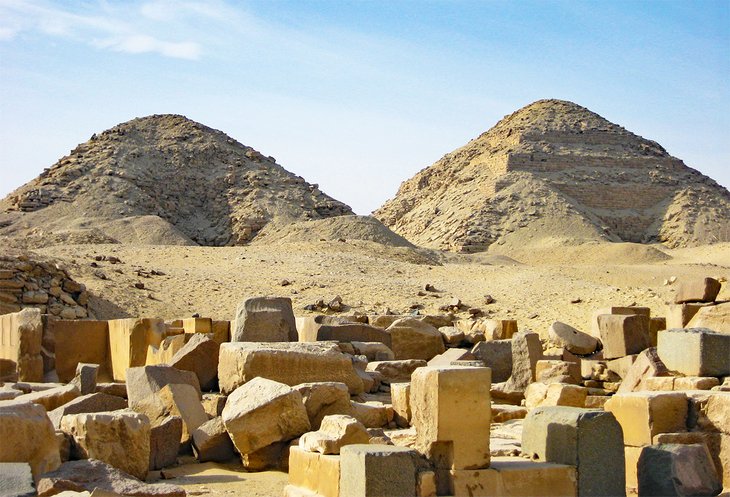
A short distance southwest of the Pyramid of Niuserre stands the Pyramid of Neferirkare, the largest of the Abusir group.
It originally had a height of 69 meters (now 50 meters). On the east side are remains of the mortuary temple, built of freestone and brick.
Tips and Tactics: How to Make the Most of Your Visit to Saqqara
- You Really Can't See All of the Area on One Trip: Saqqara and the desert plateau scattered with various other pyramid sites, such as Dahshur and Abusir, are vast. This is one area where it makes sense to make a rough plan of what you really want to see before heading out.
- You'll Need Private Transport: There's no public transport, and the distance between monument groups is quite large. If you only want to splash out on one day trip from Cairo, this is the one to hire a taxi for.
More Related Articles on PlanetWare.com
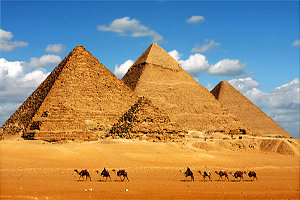
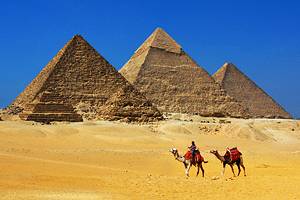
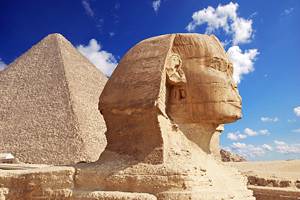
More History: Saqqara is usually visited from Cairo. For history fans, Egypt's capital is full of more attractions, from Coptic churches to Mamluke mosques and madrassas and excellent museums. The big historical sight is, of course, the Pyramids of Giza, home to the Sphinx and the three pyramids that together are the last standing "wonder" of the ancient world.
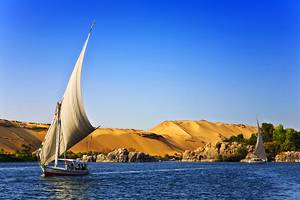
After Cairo: Most traveler itineraries head south from the capital to Luxor to visit the glut of tombs and temples of Ancient Thebes and then trip farther south to Aswan to experience the languid beauty of the Nile.