

12 Of Prague's Best Tourist Attractions For First-Time Visitors
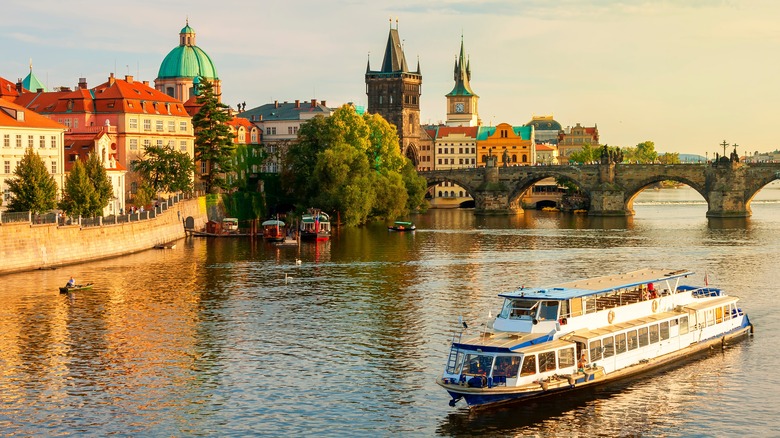
The city of Prague, Czechia (or the Czech Republic), is the stuff of fairy tales. The dreamy "City of a Hundred Spires" managed to escape devastating World War II bombing, meaning its medieval center is beautifully intact. And while part of Prague's charm is that it's the capital of one of Europe's safest countries, it's also simply one of the most beautiful cities in the world.
If you've never been to this city, you're in for a treat. Situated along the picturesque Vltava River and crowned by a castle — and with over a thousand years of history — there's no shortage of things to see and do in Prague. This includes a UNESCO-listed historical center, elegant squares, cobblestoned streets, ornate bridges, cozy pubs, beer gardens, romantic cafés, and more. That said, choosing where to go can prove a little difficult.
Thankfully, we've done the hard work for you, rounding up the top 12 best tourist attractions for first-time visitors you can't miss. Combining personal experience with expert advice and traveler reviews, we aimed to choose both well-known destinations as well as more off-the-beaten-path attractions. All of which came together to provide an overview of this amazing city.
Prague Castle
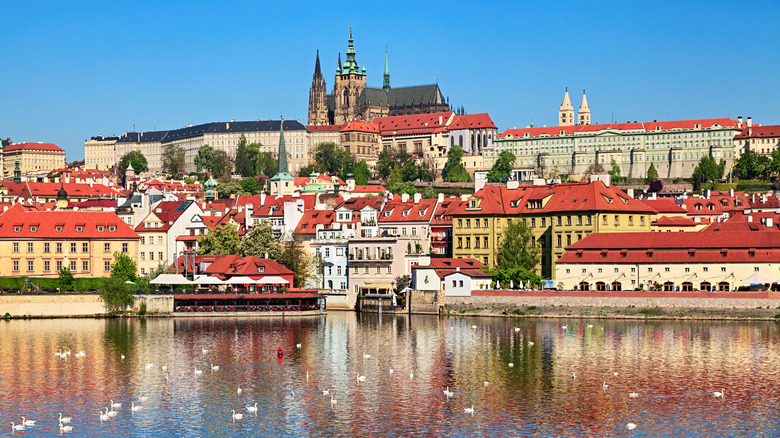
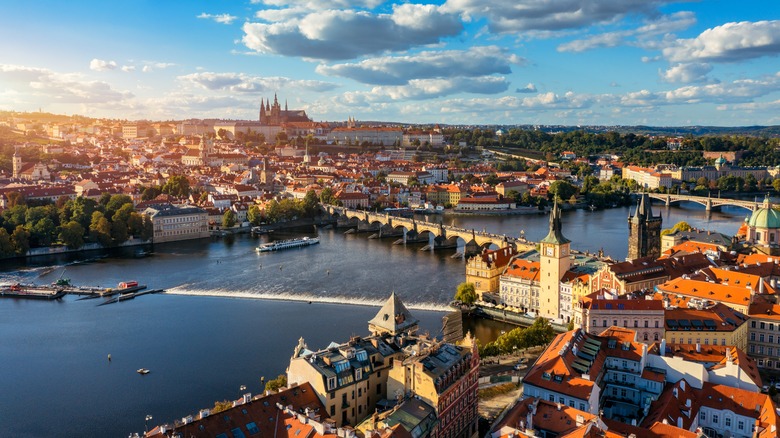
The jewel of Prague's skyline is, no doubt, the Prague Castle, one of the most awe-inspiring castles in Europe. Towering over the Vltava River, the Old Town (Staré Mĕsto), and Prague's Lesser Quarter (Malá Strana), the UNESCO World Heritage Site sprawls over an area of 750,000 square feet and dates back to at least AD 879. The largest ancient castle in the world, Prague Castle has seen some of the most important moments in Czech history — from the crowning of Bohemian kings to the Habsburg rule, the starting point for the Thirty Years' War, the founding of Czechoslovakia, the Nazi occupation, and the election of the first Democratic president, Vaclav Havel. Today, it remains the seat of the Czech president, and also safeguards the nation's treasures — including the crown jewels, which go on display once a year.
The castle itself, which is free to enter, is a warren of streets and buildings, grand churches, and incredible views. The star of the show is the St. Vitus Cathedral, a masterpiece of Gothic architecture dating back to 1344 that does require an entrance fee. Another highlight is Golden Lane, a charming street lined with historic buildings that once housed castle workers, including goldsmiths — hence the name.
For a hidden gem of Prague Castle, the park surrounding the building — also known as the Deer Moat (Jelení Příkop), since it was once home to stags for royal hunts — is now a beautiful, public path. It follows the entire north edge of the castle, traversing through a tunnel, woods, over stone steps and wooden bridges, and past ancient relics and streams with peekaboo views of the castle that few get to experience.
Charles Bridge
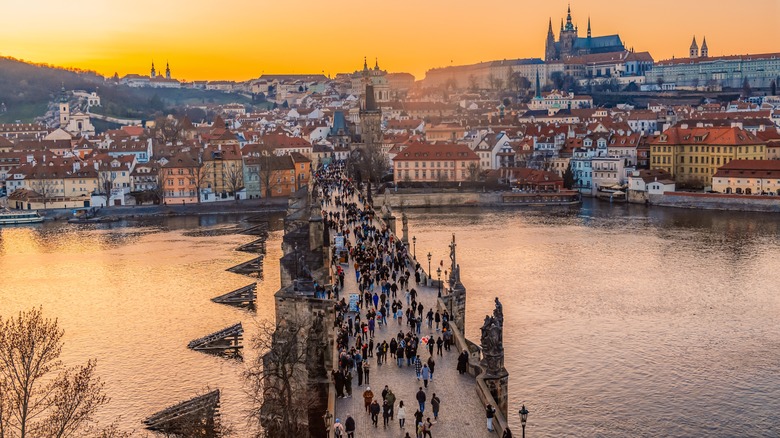
One of Prague's most iconic landmarks is the historic, pedestrian-only Charles Bridge (Karlův Most), which crosses over the Vltava River. Built in the mid-14th century, the bridge offers some of the city's best views. That said, to avoid the crowds in Prague — especially on the famously packed Charles Bridge — you'll either want to stop by early in the morning or late at night. A must-see for any visitor, the bridge is also a vital link between two of Prague's most famous neighborhoods: Old Town and the Lesser Quarter.
Thanks to its hardy construction of stone and (legend has it) egg yolks, the UNESCO-listed bridge withstood years of wheeled traffic up until World War II, as well as floods, wars, and roughly 2 million annual visitors — not to mention all the painters, musicians, photographers, vendors who set up along its length every day.
Better yet, the bridge is bookended by two towers you can climb for a fee if you're hoping for a bird's-eye view. As you walk across the Charles Bridge, keep an eye out for the many elegant statues lining the balustrades, some of which date back to the 17th century. And don't miss the imposing statue of St. John of Nepomuk— legend says that rubbing the bronze plaque will ensure you return to Prague one day.
The Old Town Square and Astronomical Clock
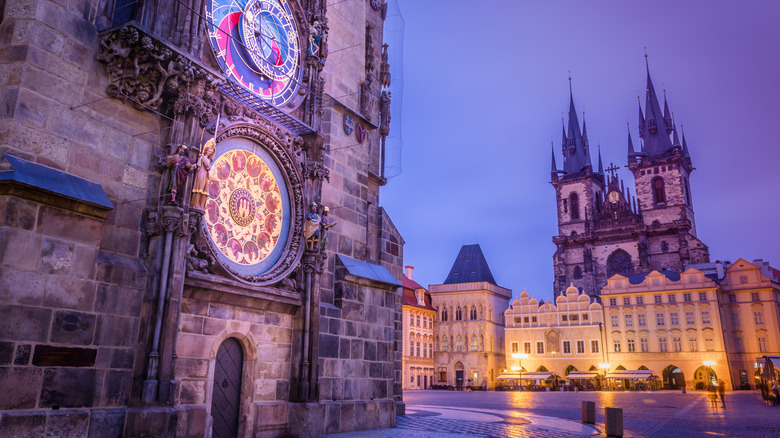
Part of the reason Prague is a once-in-a-lifetime vacation destination is due to its incredible Old Town Square (Staroměstské Náměstí). With a history dating back to the 10th century, the square's many restaurants, lively vibes, and idyllic Christmas and Easter markets make it a favorite for visitors year-round.
On the side of the imposing Old Town Hall sits another one of Prague's most well-known landmarks: the Astronomical Clock, or Orloj. The world's oldest functioning clock of its kind — originally installed in 1410 — it's an intricate masterpiece of engineering and design. Legend has it that the clockmaker, Mikuláš from Kadaň, impressed so many people with his creation that other countries wanted one for themselves. To prevent this from happening, Prague's councilors allegedly had him blinded — and, in despair, he threw himself into the clock's machinery. Though this act is said to have cursed it, the clock has continued to click for more than 600 years.
At the top of the hour, join the growing crowd to appreciate this beautiful work of art in motion. Along with the time, the clock also displays the moon's phases, current zodiac constellations, months, and weeks, along with symbolic figures and 12 rotating apostles. Pro tip: camp out with a drink (or two) at one of the cafes in front of the clock, where you'll still have a decent view without getting lost in the crowd.
Malostranske Namesti in Malá Strana (Lesser Quarter)
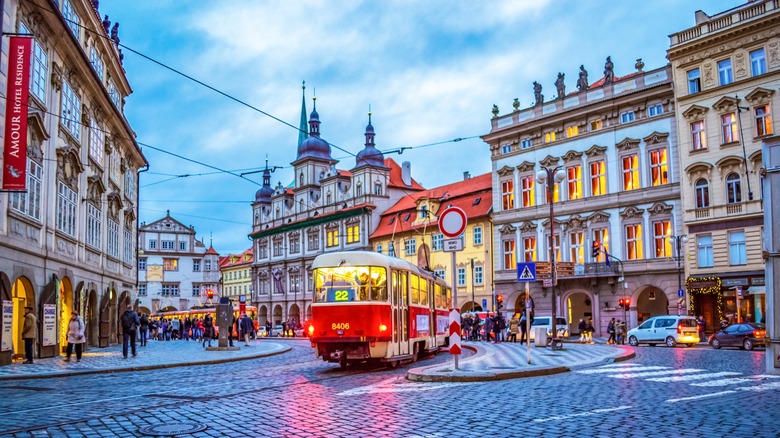
Crossing the Charles Bridge away from Prague's famous Old Town is Malá Strana, or Lesser Quarter, one of the city's most quaint districts. Malostranské Náměstí, the main square, is the neighborhood's beating heart, buzzing with people, trams, and cafes dotted along gorgeous building facades. Situated just below Prague Castle, Malostranské Náměstí is split into two parts by the imposing, 18th-century St. Nicholas Church — a gorgeous Baroque structure with an iconic green dome where Mozart himself once played the piano.
Along with the square itself, Malá Strana is also a must-see neighborhood. Brimming with cobbled streets, cafes under arches, and access to some of Prague's best sites, make sure you take some time wandering through its lanes, people watching, souvenir shopping, and sampling some delicious Czech food. As a tip, we suggest you try svíčková, a famous beef dish served with a creamy vegetable sauce and bread dumplings.
Wenceslas Square
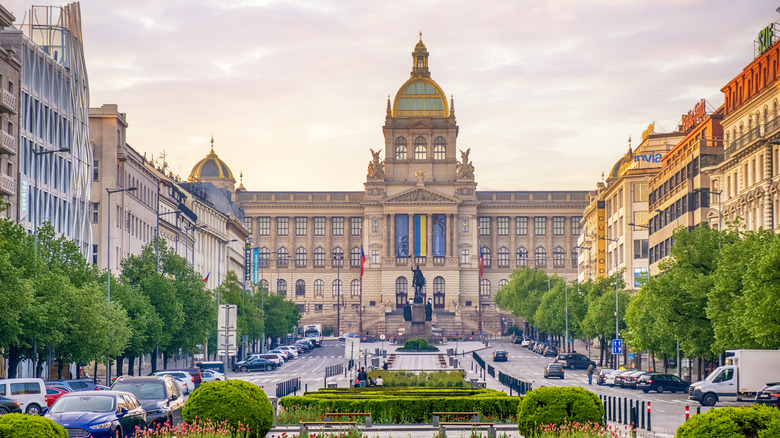
The most prominent square in Prague's New Town, as well as the site of many key historical moments, Wenceslas Square is a must for any first-time visitor to Prague. Originally established as a horse market, the boulevard dates back to 1348, when Prague's "New Town" was founded. Named after the city's patron saint, Wenceslas — yes, from the classic Christmas carol "Good King Wenceslas" — it's been the site of major Czech events over the years. A few notable moments include the founding of Czechoslovakia in 1918, anticommunist protests in the 1960s, the Velvet Revolution in 1989, and more.
Beyond this, Wenceslas Square is also the banking center of Prague, as well as a place of public gathering where huge screens project important hockey and football games. Along the boulevard, you'll find cafes, shopping options, hotels, and entertainment. And sitting near upper end, the grand National Museum stands as a proud landmark. Perhaps the most famous part of the square, however, is the giant statue of St. Wenceslas atop a horse — so iconic that locals know exactly where to go when you say "Let's meet at the horse."
Petřín Hill
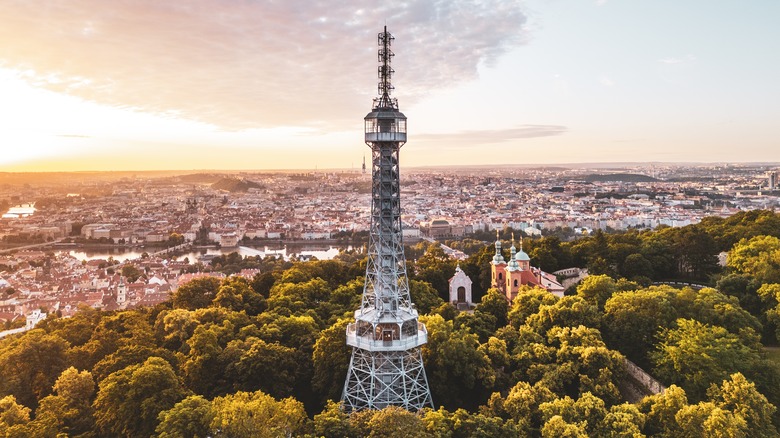
If you're looking for panoramic Prague views, head up Petřín Hill. Not only will you be treated to sweeping views, but you'll also get to enjoy a funicular ride — though keep in mind that it's currently closed for renovations until mid-2026. At the top, you'll also have access to Petřín Tower, an Eiffel Tower-inspired structure boasting even better views if you're up for climbing its 299 steps. Alternatively, active travelers can forgo the funicular ride altogether and walk the whole way there.
Especially gorgeous in the fall when the leaves turn vibrant, or in the spring when cherry blossoms bloom, Petřín Hill has a host of other things to do and see. Once made up of several gardens now linked together, these include the Kinsky Garden, Rose Park, and the Strahov Garden. Near the Kinsky Garden, for example, visitors will find the former Kinsky Summer Palace. Constructed by a Czech noble family in 1831 as a city getaway, the building is now home to the Ethnographic Museum, with exhibits dedicated to Czech traditions and customs.
Another garden, Lobkowicz, features an impressive underground tunnel you can explore. One of 18 total tunnels previously used for mining, the space has been turned into an exhibit hall of sorts, featuring photos from "Underground Prague." Also on Petřín Hill is a mirror maze that dates back to 1891, the same year Petřín Tower was built. Finally, not far from the maze is Štefánik's Observatory, where visitors can peer through telescopes for a closer look at the sky.
Strahov Monastery and Library
For some truly breathtaking views of Prague, walk the path from Petřín Hill to the Strahov Monastery. This should take about ten minutes along a meandering trail. After pausing to take in the mind-blowing panoramas, head into the monastery to explore.
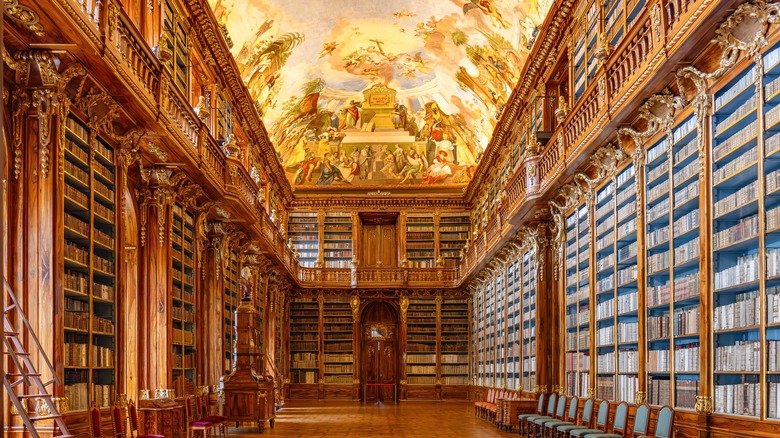
While there, make sure to peek into the famous fairytale Strahov Library. One of Prague's most enchanting tourist attractions, the ornate Baroque library — which visitors can only view from outside the room — is split into two halls: the Theological Hall and the Philosophical Hall, which together, hold over 200,000 volumes, many of them rare or ancient. The Theological Hall was completed in 1674, and the two-story Philosophical Hall in 1794. Both are decorated with exquisitely carved wooden railings, shelves, and beautiful frescoes so delicate that even a little humidity could cause extensive damage — hence why the doors remained closed to the public.
The rest of the monastery is worth your time, too. Founded in 1140, it's free to wander the grounds, visit the main church, and pop into the Norbert Brewery — once operated by the monks (about 75 still live here today). While the monks no longer brew the beer themselves, it's still crafted locally using many of the same techniques employed many moons ago. There's also an on-site restaurant, Na Pekle, with a cozy beer garden that serves local specialties alongside the famous monastery beer.
Vyšehrad
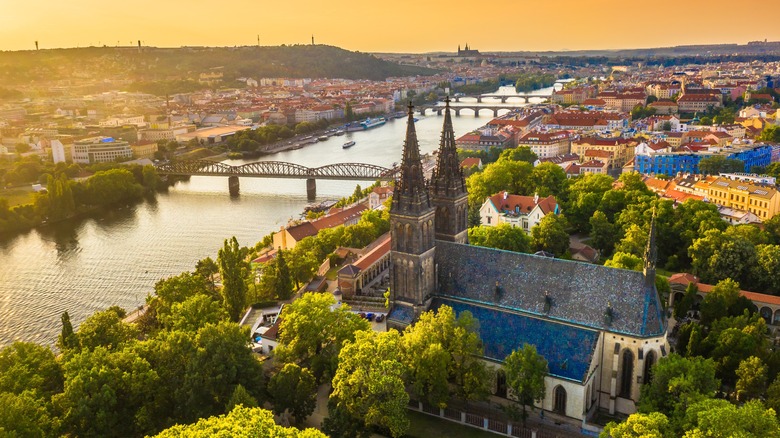
For more views a little further outside Prague's main core, head to Vyšehrad — a historic fort and castle complex just down the Vltava River. Legend has it that this was where Prague was originally established. And although this claim has been debated, Vyšehrad is certainly historic. Home to ancient buildings, a gorgeous church, and a cemetery full of prominent Czechs, it's a peaceful oasis within easy reach of the city.
While Vyšehrad is well-known to locals — it's actually a popular place to celebrate New Year's Eve — it remains just far enough off the beaten path that many tourists tend to overlook it. However, dating back to the mid-10th century, the complex is a treasure: part peaceful grounds, part relic of both modern and historic Prague.
Once there, make your way to the top of Vyšehrad Hill for a closer look at the spires of the Basilica of Sts. Peter and Paul, which rise above the surrounding landscape. Another key building within the fortress walls is the unique Rotunda of St. Martin, a circular structure built in the 11th century. While exploring Vyšehrad, make sure to also stop by the Vyšehrad Cemetery — the final resting place of many of the Czech Republic's most celebrated figures, including composer Antonín Dvořák.
Kampa Island
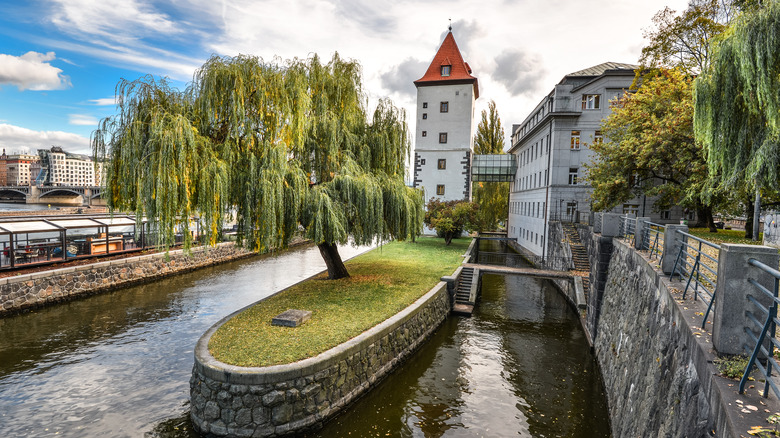
An artificial island in the Vltava River created in the 12th century, Kampa Island is a picturesque corner of Prague known as the "Venice of Prague." Located near the Charles Bridge in the city's Lesser Quarter, Kampa sits between the Vltava and a small canal known as the "Devil's Stream" (Čertovka) — named after a mad woman who lived nearby. Once home to many milling wheels along the channel, only two remain today, the most famous being the Grand Priory Mill.
Kampa Island is small but full of tiny, cobblestoned alleys you could easily get lost in. As such, it's somewhat surprising that this historic gem is also home to some of Prague's most famous — or infamous, depending on your point of view — modern art. This includes the famed graffiti-covered John Lennon Wall, in nearby Malá Strana. Originally created as a tribute to the famous Beatles frontman after his assassination in 1980, the wall was soon overtaken by graffiti. Over time, it became a canvas for anti-communist sentiments alongside other political messaging. Despite repeated efforts by authorities to repaint it, the graffiti remains to this day — and visitors are welcome to add their own message.
Also on Kampa Island is the Museum Kampa, which houses modern and contemporary art — including the two giant, faceless baby sculptures by Czech artist David Černý. You'll also find the pretty Kampa Park along the river, as well as the Kafka Museum, dedicated to the renowned Czech writer.
The Jewish Quarter and Cemetery
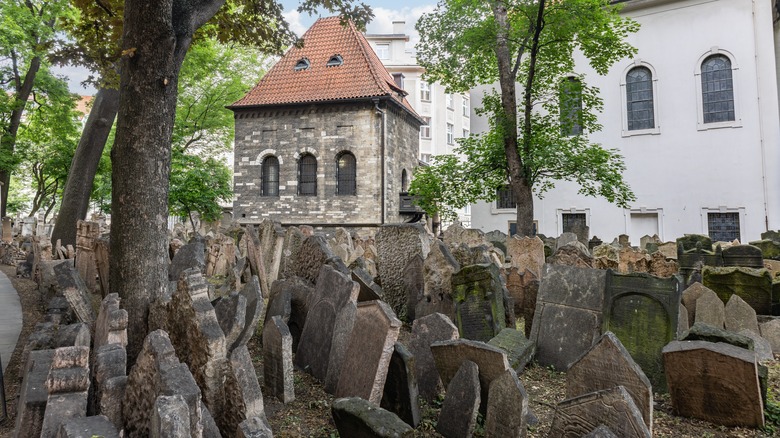
Prague's Jewish Quarter, also known as Josefov, has a long and turbulent history. Until World War II, it was the city's "Jewish Town," before most of the city's Jewish population was forced out or killed. Today, Jewish heritage lives on through the Prague Jewish Museum, which encompasses the Old Jewish Cemetery, four historic synagogues, and the Ceremonial Hall. The museum also holds one of the largest collections of Jewish artifacts in the world — largely because, during the war, Nazis who were destroying Jewish culture across Europe sent many items to Prague, where it's said that Hitler intended to create a so-called "museum of an extinct race." With the fall of the Third Reich, that plan was abandoned — but the collected artifacts remained.
While visiting a cemetery can offer a glimpse into a more macabre side of Europe, it can also serve as an invaluable window into its history and culture. This is certainly true of Prague's Old Jewish Cemetery. Dating back to at least the 15th century, it's considered Europe's oldest surviving Jewish burial ground. With roughly 12,000 headstones clustered together, the space already seems far too small — yet it's estimated that as many as 100,000 bodies are buried here, layered up to 12 deep in some sections.
Today, Josefov stands as a reminder of one of the darkest periods in European and world history. While it's certainly one of Prague's most sobering sights, the Jewish Quarter is also one of the most essential for any visitor.
Letná Beer Garden
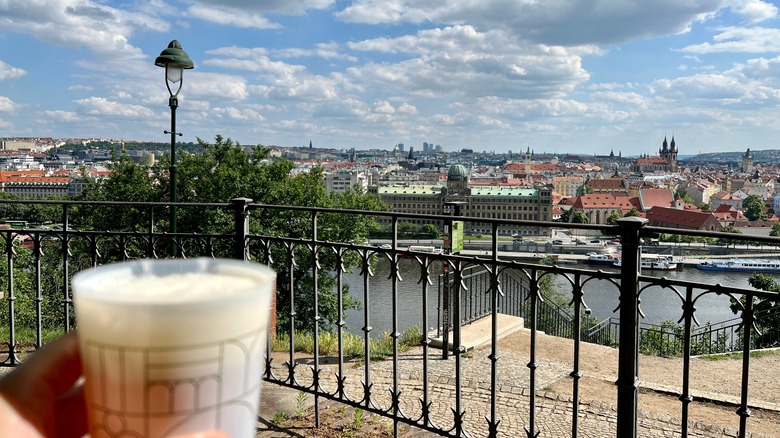
Since Prague is often called the "Beer Capital of Europe," you'll definitely need to try some beer during your visit (if you drink, of course). One of the best places to do that is at a beer garden — specifically, the Letná Beer Garden. One of Prague's true hidden gems, it sits high above the river in the green oasis of Letná Park (Letenské Sady). With stellar views, cheap but delicious beer, and immaculate vibes, it's a must-visit during the spring, summer, or early fall. Be sure to try a Kozel — a darker Czech beer — with a side of fries, or save your money and bring your own food.
If you can tear yourself away from the beer garden, its views, and its beer, Letná Park is a lovely place to explore. Stop at the Hanavský Pavilon lookout for even more panoramas, check out the giant Metronome statue (which stands where a statue of Stalin once loomed), wander through one of the many flower gardens, or head into the surrounding neighborhoods — full of Prague charm but quite short on tourists.
Wallenstein Gardens and Palace
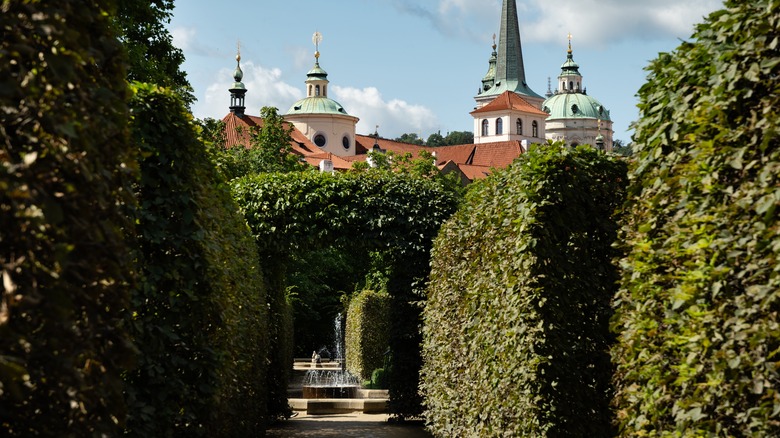
The Wallenstein Gardens (and the adjacent Wallenstein Palace, also known as Waldstein) are often overlooked as tourists head toward Prague Castle and its surroundings — but they shouldn't be. In fact, there's truly nowhere else like them in the city. A seasonal attraction open from April to October, the unique Baroque gardens are free to enter and offer excellent views, along with the eerie Dripstone Wall — a rock wall of faces — mazes of hedges, and even a few roaming peacocks.
Located in Prague's Lesser Quarter, below Prague Castle, the complex also features an artificial grotto covered in faces, lovely ponds, a pavilion, an aviary, and a collection of bronze statues. Adjacent to the gardens is the red-roofed Wallenstein Palace — less known than the gardens, but definitely worth a look, as it's home to the Czech Senate.
Methodology
To land on our selection of the top 12 tourist attractions for first-time visitors to Prague, we drew on information gathered from local sources, personal experiences, and trusted travel experts such as Rick Steves and Lonely Planet. We also reviewed discussions on popular forums like TripAdvisor and Reddit, where previous travelers shared their firsthand tips and insights. Finally, we consulted local travel experts and tourism boards to further research each destination in detail and ensure accuracy.
By combining all of this information, we compiled an in-depth list of Prague's most visited — and most beloved — tourist attractions, focusing on places that truly capture the essence of the city.