24 Top Attractions & Places to Visit in Cape Town
Authors Becca Blond and Carri Wilbanks consider Cape Town their second home. They have visited dozen times and Becca has written guidebooks on South Africa.
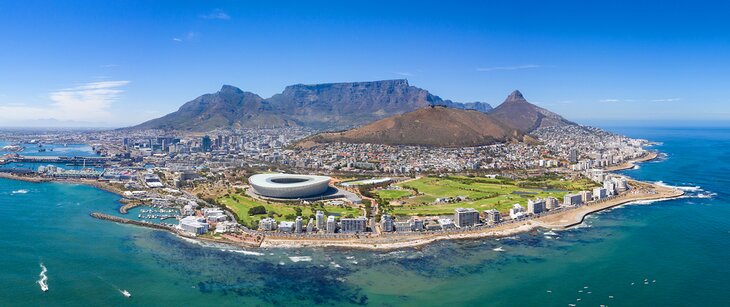
Set between mountains and the sea, Cape Town flaunts its natural beauty with pride. Iconic Table Mountain is one of the city's most famous attractions, botanical gardens beckon from its slopes, and the city's long stretches of beautiful beaches are some of South Africa's best.
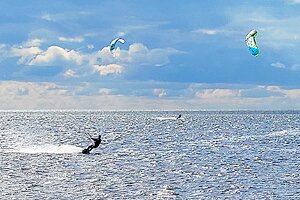
Travelers can enjoy a range of outdoor fun, from hiking, biking, surfing, and paragliding to whale-watching trips and cage dives with great white sharks. You'll find no shortage of things to do here but the type of activities may depend on the time of year.
As the oldest European settlement in Africa, Cape Town has a rich and, at times, turbulent past. At Robben Island, history buffs can see where Nelson Mandela was incarcerated for 18 years. In the hinterland, elegant Stellenbosch is a Nirvana for foodies.
Along the rugged coast, scenic drives offer a chance to see penguins waddle on pristine beaches, and Cape Point is part of a UNESCO World Heritage Site with one of the richest floral kingdoms in the world.
Explore the best things to do in the "Mother City" of South Africa with our list of the top tourist attractions in Cape Town.
- 1. Climb Table Mountain
- 2. Wander Kirstenbosch National Botanical Gardens
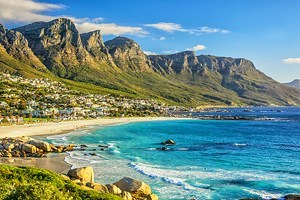
- 3. Sunbathe at Clifton and Camps Bay Beaches
- 4. Shop The Victoria & Alfred Waterfront
- 5. Ride the Cape Wheel
- 6. Pay Respect at Robben Island
- 7. Cruise along Chapman's Peak Drive
- 8. Sunset at Signal Hill and the Noon Gun
- 9. Indulge at the Old Biscuit Mill
- 10. Cage Dive with Great White Sharks
- 11. See City Hall & the Castle of Good Hope
- 12. Browse the Canal Walk Shopping Center
- 13. The Heart of Cape Town Museum
- 14. Iziko Museums of South Africa
- 15. The District Six Museum
- 16. Zeitz MOCAA
- 17. Explore Bo-Kaap
- 18. Surf Muizenberg
- 19. Snap Pics with Penguins at Boulders Bay
- 20. Take a Day Trip to Cape Point
- 21. Go Whale Watching at Hermanus
- 22. Picnic at Llandudno Beach
- 23. Explore Stellenbosch: A Foodie's Dream
- 24. Splash in the Tidal Pools at St. James
- Where to Stay in Cape Town for Sightseeing
- Cape Town, South Africa - Climate Chart
1. Climb Table Mountain
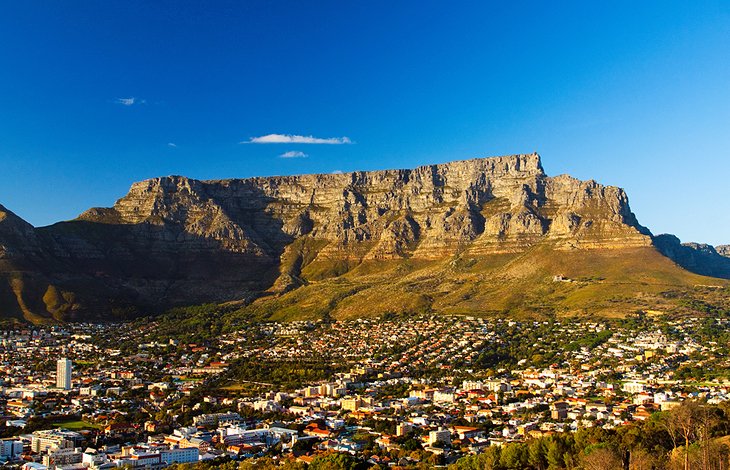
Highlight: Cape Town's most iconic landmark, you can either hike to the top or take a cable car for amazing views
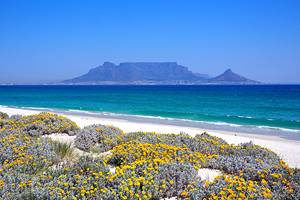
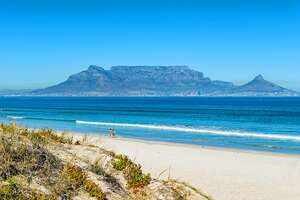
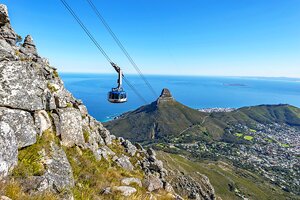
Rising 1,087 meters south of the city center, flat-topped Table Mountain is the most photographed landmark in South Africa and a constant reminder that nature is queen in this stunning seaside city. The mountain forms the northern end of the Cape Peninsula and lies within Table Mountain National Park.
The park protects an astounding diversity of plants and more than 1,470 flower species, as well as animals such as cute snub-nosed dassies (rock hyraxes), caracals, and baboons. Within the park, Devil's Peak flanks the mountain on the east, and Lion's Head on the west, while the crags known as the Twelve Apostles loom over the beach resorts on the Atlantic coast.
A layer of clouds, called the "tablecloth" frequently cloaks the mountain's peak, but when the clouds clear, visitors can enjoy spectacular views of Cape Town and the entire Cape Peninsula from the summit. Bring a sweater as it can be cold and windy at the top.
For those short on time, and energy, a revolving cableway climbs to the summit, covering the distance of 1,244 meters in seven minutes. The cableway runs daily — except in high winds, so it's a good idea to check the website or call for current conditions before heading out. Also to avoid long lines, try booking tickets online.
At the upper station of the cableway, a café features a small viewing terrace and serves as the starting point of three short walks, which highlight the gigantic scale of the landscape. Those wishing to summit the mountain on foot can choose between more than 350 different routes varying in difficulty.
Depending on the starting point, the climb takes between two to four hours. For superb views of Table Mountain and the best vantage point to photograph this iconic landmark, hike or drive up Signal Hill or Lion's Head — both offer stunning views from their summits.
2. Wander Kirstenbosch National Botanical Gardens
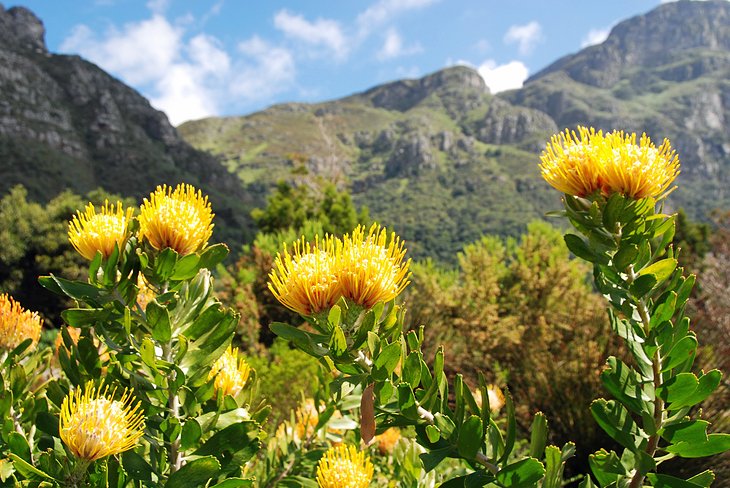
Highlights: Home to more than 20,000 native South African plants, set on a sprawling reserve with walking trails
In a beautiful setting on the eastern slopes of Table Mountain, Kirstenbosch Botanical Gardens are part of the Cape Floristic Region UNESCO World Heritage site. The site was bequeathed to the state by Cecil Rhodes in 1902 and the gardens were established in 1913 to preserve the country's indigenous flora — one of the first botanical gardens in the world with this mission.
More than 20,000 native South African plant species are collected, grown, and studied in the hilly 528-hectare nature reserve of indigenous forest and fynbos.
Of particular historical interest are a hedge of wild almond trees planted by Jan van Riebeeck in 1660 and an avenue of camphor and fig trees planted by Cecil Rhodes in 1898. The flowers, shrubs, and trees are arranged so that a show of blossoms and color brightens the gardens throughout the year.
Don't miss the proteas; the scented garden; the impressive collection of cycads; the Sculpture Garden; and the Botanical Society Conservatory, a custom-built greenhouse with plants from arid regions. Well-marked trails thread through the wooded slopes, and the Tree Canopy Walkway provides panoramic views across the mountain-backed gardens. One of the trails leads through a ravine to the summit of Table Mountain. In summer, the gardens make an evocative venue for outdoor concerts.
Green thumbs and garden lovers should also visit Company's Garden, an oasis of exotic trees, flowers, aviaries, and ponds in the heart of the city. While here, visitors can also explore the Iziko South African Museum and Planetarium and the Iziko National Gallery.
Address: Rhodes Drive, Newlands, Cape Town
3. Sunbathe at Clifton and Camps Bay Beaches
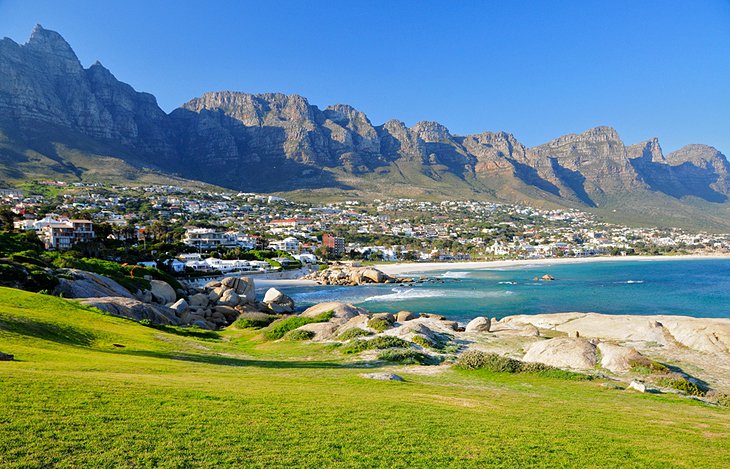
Highlights: Clifton's four beaches are Cape Town's most impressive; located in coves accessed via a long set of stairs, they are sheltered from the wind
About six kilometers from the city center, the beaches of Camps Bay and Clifton lure the buff, the bronzed, and the beautiful — as well as the big bucks. At Clifton, Cape Town's St. Tropez, some of the city's priciest real estate overlooks four gleaming white-sand beaches flanked by smooth granite boulders and washed by sparkling, but crisp, blue seas.
First Beach is a favorite volleyball venue and offers decent surf when the conditions are right. Just south of Clifton, trendy Camp's Bay sports another stunning beach, backed by the magnificent Twelve Apostles and the distinctive peak of Lion's Head.
People-watching is an art along this pretty palm-lined stretch as well as at the chic cafes and boutiques fringing Victoria Street — especially during weekends and holidays when locals and tourists throng here to soak up the scene.
Camp's Bay and Clifton's Fourth Beach boast coveted Blue Flag status awarded for clean water, safety, and environmental management making them a great choice for families as well.
4. Shop The Victoria & Alfred Waterfront
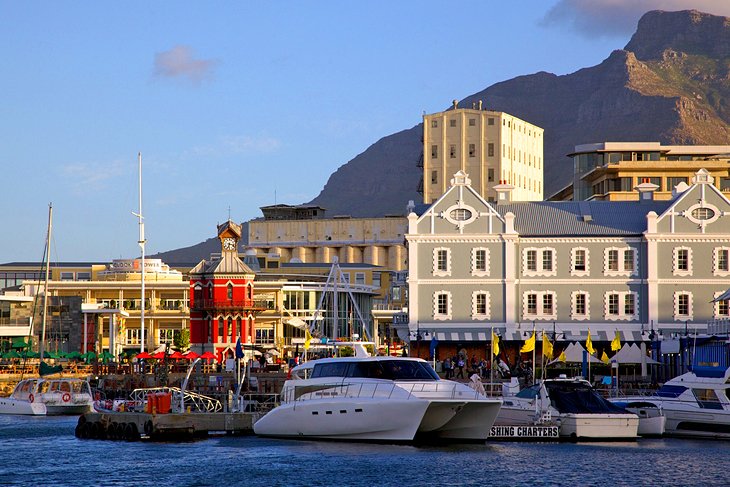
Highlights: One of Cape Town's top tourist attractions, it's a wonderful place to spend an afternoon shopping, dining, and wandering
Stretching around two harbor basins, the Victoria and Alfred Waterfront is a buzzing entertainment quarter reminiscent of Fisherman's Wharf in San Francisco.
Once a scruffy fishing harbor, this reimagined waterfront district is now one of the city's top tourist attractions, and many of the old buildings have been preserved and restored. Millions of visitors a year flock here to the shops, jazz venues, restaurants, hotels, theaters, drama school, cinemas, and museums.
Sports fans will love the Springbok Experience Rugby Museum, which traces the story of South African Rugby through interactive exhibits.
Two Oceans Aquarium features more than 300 species of fish from the Atlantic and Indian oceans, in particular from the area around the Cape of Good Hope. Highlights include a touch tank, penguin encounter, predator exhibit, and diving experiences, which allow visitors to view fascinating marine creatures up close.
Trips to Robben Island leave from the Nelson Mandela Gateway on the waterfront, but anyone is welcome to explore the museum exhibits here.
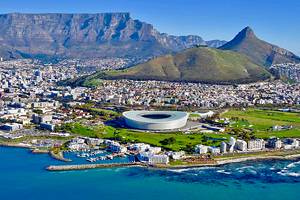
West of the waterfront, the trendy Green Point precinct is also home to the lovely Green Point Urban Park with its biodiversity garden as well as the Cape Town Stadium, which hosted many FIFA World Cup matches in 2010.
Address: 19 Dock Road, V&A Waterfront, Cape Town
5. Ride the Cape Wheel
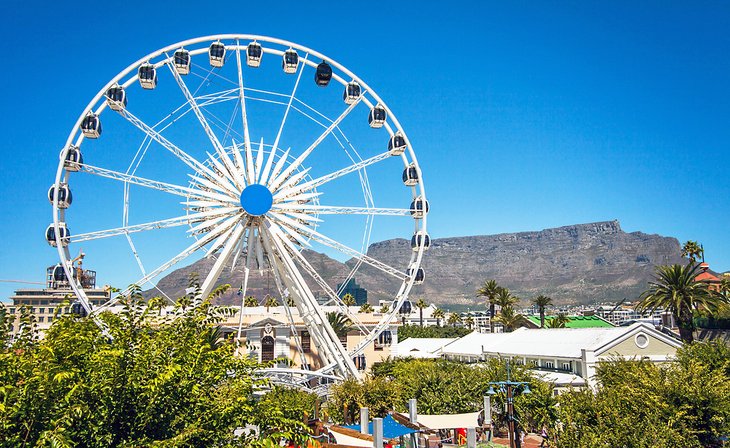
Highlight: Riding the giant Cape Wheel with 360-degree bird's eye city views
Walking around the Victoria & Alfred Waterfront, it is impossible to miss the Cape Wheel in the Market Square area. The giant wheel features 30 fully enclosed cabins with air-conditioning that take you on about a 15-minute ride in four loops with 360-degree bird's-eye views.
At the top of the wheel, you'll be about 120 feet above the ground, and the panoramic views of Cape Town's city center and harbor, Table Mountain, the Cape Town Stadium in nearby Green Point, and even the Paarl Mountains is stunning on a clear day.
The Cape Wheel is also wheelchair accessible, with two specially adapted cabins. The wheel operates daily from 9am to 7pm.
6. Pay Respect at Robben Island
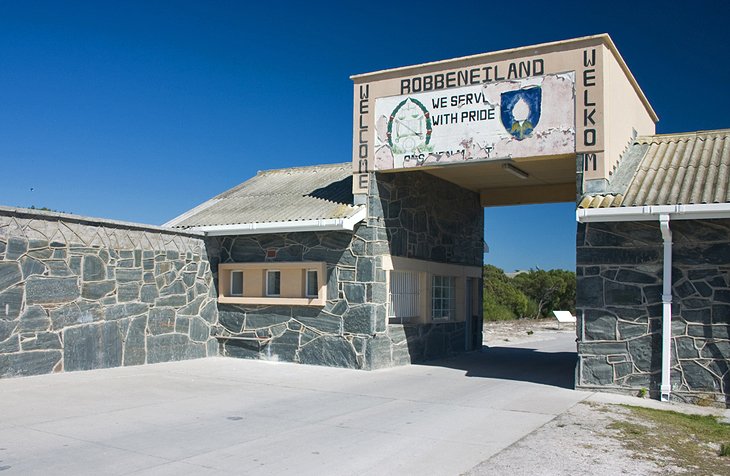
Highlight: It's a somber highlight, but important to visit the UNESCO World Heritage Site preserving the cell at the brutal prison where Nelson Mandela spent 18 years during the apartheid era
For nearly 400 years, Robben Island in Table Bay, was a brutal prison where Nelson Mandela spent 18 years in a tiny cell during the apartheid era. Today, the island is a UNESCO World Heritage Site and a must-see attraction for anyone interested in South African history.
Tours to the island begin with multimedia exhibits in the museum at the Nelson Mandela Gateway on the Victoria and Alfred Waterfront before travelers board vessels to the island. The boat trip takes about 30 minutes to an hour depending on weather conditions and can be rough during big swells.
While on the island, visitors tour the maximum security prison, Mandela's former cell, and the lime quarry where prisoners were forced to endure back-breaking labor. The interesting part about the tour is that the guides are former prisoners of Robben Island who share their experiences and offer insight into the atrocities of apartheid and the power of forgiveness.
After leaving this hellish six-square-kilometer island, Mandela said, "As I walked out the door toward the gate that would lead to my freedom, I knew if I didn't leave my bitterness and hatred behind, I'd still be in prison." These wise words are even more potent after a tour here.
The Cape Town Townships Tour including Robben Island, gives visitors an overview of South Africa's past and present. The full-day small group guided tour includes a round-trip ferry ride to Robben Island, a visit to Cape Town's District Six Museum, and the communities of nearby townships of Langa and Gugulethu.
7. Cruise along Chapman's Peak Drive
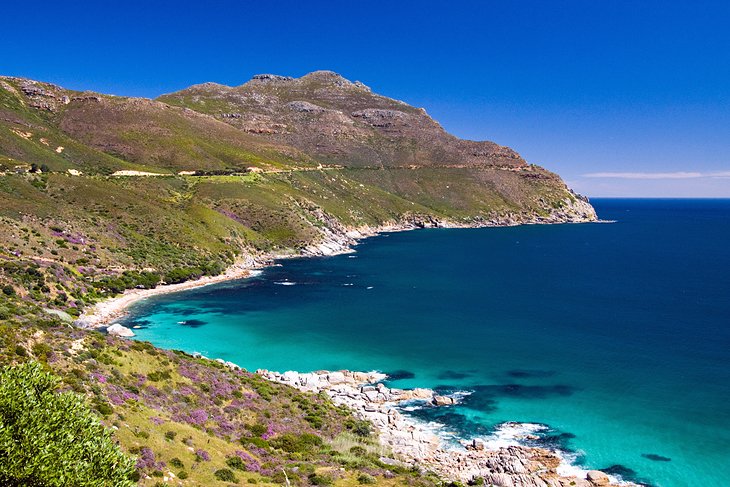
Highlight: Drive it at sunset when the panoramic viewpoints are made even more stunning by the fire show in the sky
About 25 kilometers from the city center, Chapman's Peak Drive, affectionately called "Chappies" by the locals, is one of the most jaw-dropping driving routes in the world.
Cut into the sheer face of Chapman's Peak, which plunges to the sea, this spectacular toll road snakes its way for about nine kilometers between Noordhoek and Hout Bay passing panoramic Chapman's Peak point along the way. With 114 curves carved into the rock face, some perched more than 500 meters above the sea, this is not a route for those prone to motion sickness.
Around sunset, cars cram along the panoramic viewpoints as sightseers stake a spot to watch the sun sink while sipping a cool drink in the time-honored South African tradition known as "sundowners." Look for southern right whales and dolphins in the sparkling Atlantic Ocean below, and drive slowly and carefully. The road was closed on and off for several years due to rockfall dangers, but it has now been stabilized and is open every day — except during severe weather events.
As well as being used as a location for TV commercials, Chapman's Peak Drive is the setting for the popular Cape Argus Cycle Race and Two Oceans Marathon. After admiring the magnificent sea views, hungry travelers can feast on fresh fish at one of the excellent seafood restaurants in Hout Bay.
8. Sunset at Signal Hill and the Noon Gun
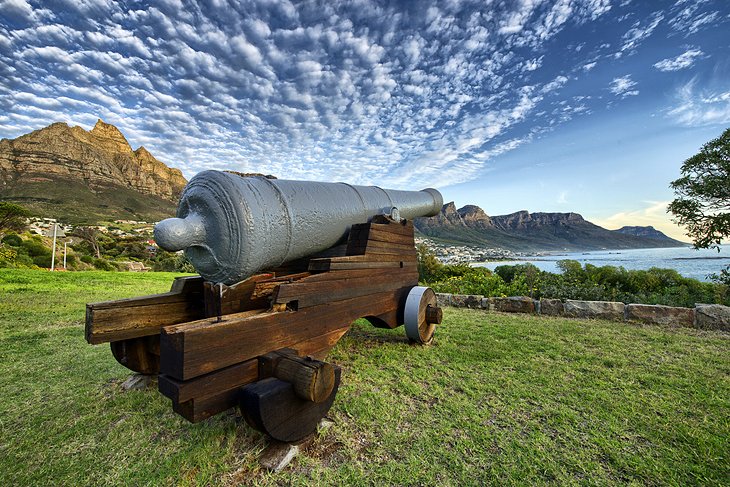
Highlights: Stunning views of the Atlantic Ocean, Cape Town, and Table Bay from the top; come for sunset
Five minutes drive west of the city center, Signal Hill offers stunning views over Cape Town, Table Bay, and the glittering Atlantic Ocean from its 350-meter summit. The hill forms the body of the adjacent Lion's Head peak and was named for its historical use when signal flags were flown from here to send messages to approaching ships.
Many locals and visitors drive up to watch the sunset and stay to see the shimmering lights of Cape Town ignite after dark. At noon every day (except Sundays and public holidays), a cannon activated by an electronic impulse from the Observatory fires a single shot.
In earlier days this "noon gun" served to give the exact time to ships anchored in the bay. Tourists are welcome to attend a free presentation on the history of the Noon Gun at the Lion Battery and then stay to watch the firing.
Those headed to the top of the hill for sunset views should take a jacket as it can be chilly after the sun dips. On busy weekends and holidays go early to score a parking spot.
9. Indulge at the Old Biscuit Mill
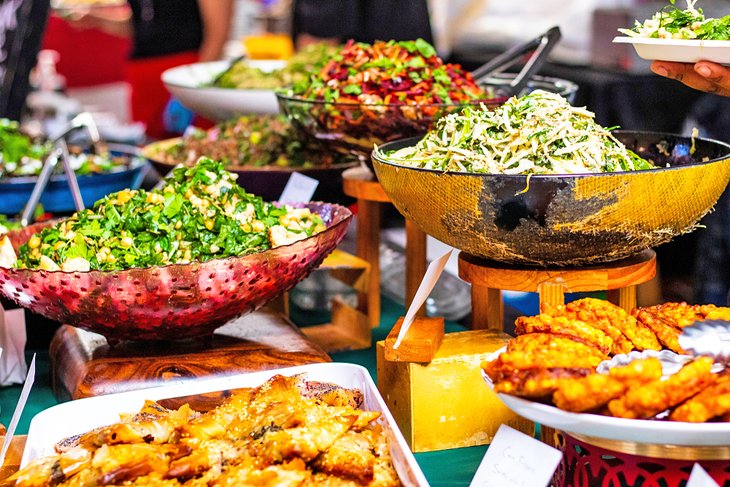
Highlight: Visit on the weekend for the Neighbourgoods Market, where you can buy directly from local designers and artisans
Located in the heart of Cape Town's trendy college neighborhood, Woodstock, the Old Biscuit Mill is open all week but is especially lively on weekends when the Neighbourgoods Market happens.
Self-described as a community for talented people to collaborate and share their passions, from food and art to clothing and homemade goods, the Old Biscuit Mill is where you'll find some of South Africa's most creative artists and designers.
On the grounds, you'll find a range of one-of-a-kind restaurants, food stalls, workshop spaces, and designer stores. Every Saturday and Sunday from 9am, the Neighbourgoods Market takes over the parking lots.
It offers a full market vibe, with local artisans and designers selling their creations. There are also a host of food and drink vendors. Festivals also happen throughout the year at the Old Biscuit Mill.
Address: 375 Albert Road, Cape Town
10. Cage Dive with Great White Sharks
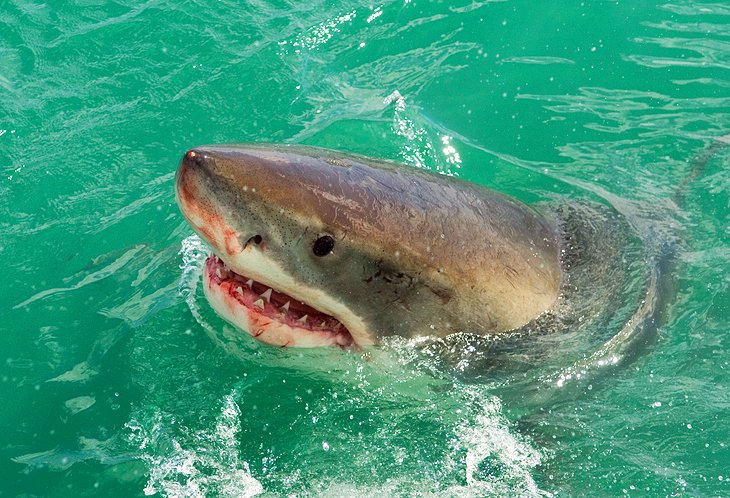
Highlight: It's an adrenaline rush to come face-to-face with great white sharks, but the diving is a controversial subject
In the chilly waters off Cape Town's coast, thrill seekers can come face-to-face with one of the ocean's most feared predators: great white sharks. Protected by the thick bars of an iron cage, divers score a hefty dose of adrenaline as these magnificent creatures swim within inches of the bars.
Tour operators in Cape Town offer shark cage dives in areas such as Simon's Town, Dyer Island, Mossel Bay, Seal Island, and Gansbaai, the "Great White Shark Capital of the World." The best time to see these magnificent creatures is between April and October. No diving certification is needed, since divers are enclosed in the custom-built cages, and part of the funds go towards shark research and conservation.
Those who prefer to appreciate these awe-inspiring creatures from a distance can watch all the excitement from the boat. Seal, dolphin, penguin, and whale-watching tours are also available for less daring animal lovers.
11. See City Hall & the Castle of Good Hope
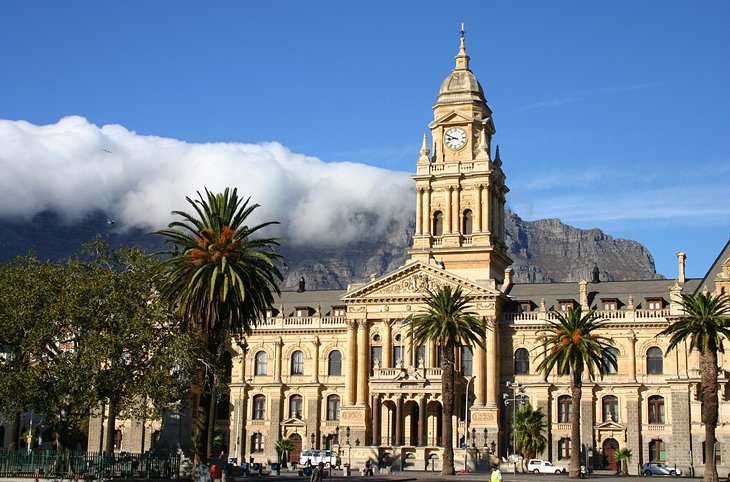
Highlights: Shopping Greenmarket Square for African handicrafts like wooden giraffes, stone sculptures, and colorful batiks
History buffs can visit two notable historic buildings within five minutes' walk of each other in central Cape Town. Built in 1905, Cape Town City Hall is a striking mix of Italian Neo-Renaissance and British colonial style. The 60-meter-high bell tower, with a carillon installed in 1923, was modeled on Big Ben in London.
Highlights of the interior include the beautiful mosaic floors, marble staircase, and impressive stained glass. Notice the balcony overlooking Grand Parade where Nelson Mandela, the country's future president, addressed a jubilant crowd in 1990 after 27 years in prison. Music lovers should also try to attend a performance by the Cape Philharmonic Orchestra based here.
Across the road from the Grand Parade, The Castle of Good Hope is the oldest surviving stone building in South Africa. It was built in 1666-79 as the residence of the Governor and for the protection of the early settlers, but the castle, which is in the form of a five-pointed star, was never exposed to attack. A highlight here is the William Fehr Collection, which includes pictures, porcelain, fine glass, ceramics, and furniture of the 17th to 19th centuries from South Africa, Europe, and Asia.
A short walk from the fort up the shopping hub of Longmarket Street leads to Greenmarket Square, an atmospheric little cobbled plaza, with a number of Art Deco buildings as a backdrop. Shoppers can browse the small flea market held every day of the week here except Sunday.
12. Browse the Canal Walk Shopping Center
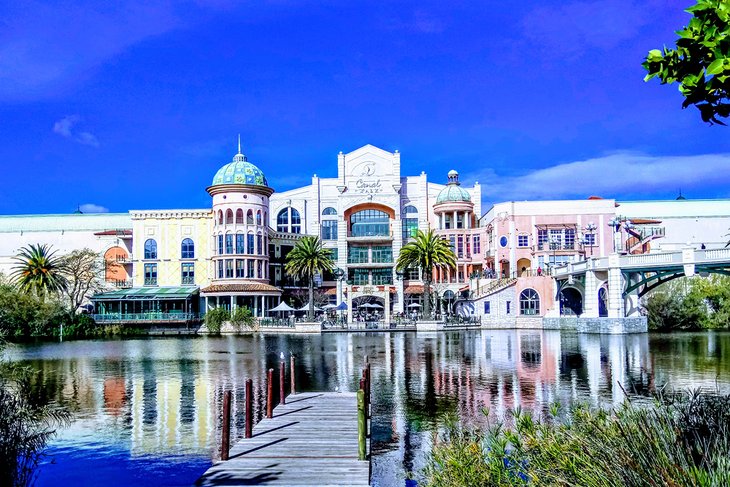
Highlight: Head here on a rainy day to peruse some 400 shops selling everything from clothing to kids' toys
South Africa's third largest shopping center, Canal Walk is located just off the N1 in Cape Town's Century City suburb. With around 400 shops selling everything from clothing to jewelry, homewares to music, and kids' toys, there is no shortage of products on sale here.
Wandering around the mall is a pleasant way to spend an afternoon, especially if the weather isn't great. The mall has an opulent vibe and is bustling inside. If you are in the mood for a film, there is a movie theater here. Dining options are also varied. Grab a quick bite at the Food Court or a sit-down meal at one of the many restaurants spread around the mall.
Address: 490 Century Blvd, Century City, Cape Town
13. The Heart of Cape Town Museum
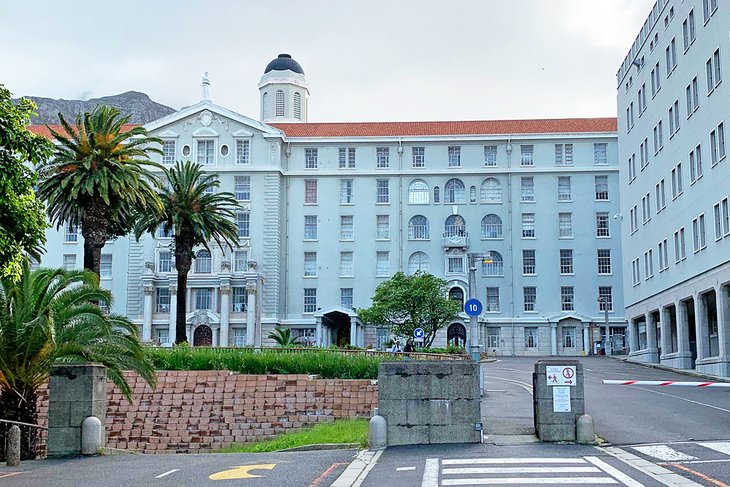
Highlight: The world's first heart transplant took place in Cape Town; this museum honors the world-changing medical procedure
In the Groote Schuur Hospital, The Heart of Cape Town Museum opened in 2007 to honor the 40th anniversary of the first heart transplant performed here by Christiaan Barnard. Knowledgeable docents take visitors on a fascinating two-hour tour to see recreations of the operating facilities in the actual rooms where the surgery took place.
The tours also explore everything from the ethical implications of the time to the history of the recipient and the donor. Even visitors with no medical background appreciate learning about the history of this life-saving procedure.
14. Iziko Museums of South Africa
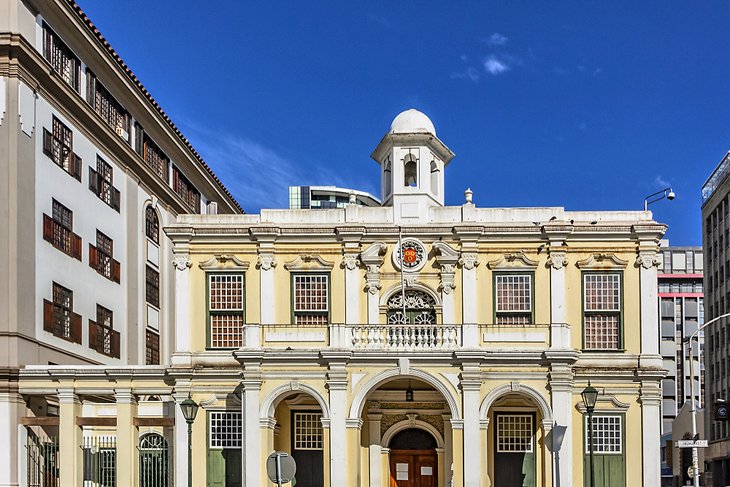
Highlight: The Bo-Kaap Museum illustrates 19th-century Muslim life in Cape Town
Iziko Museums of South Africa comprises 11 museums governed by a council appointed by the Minister of Arts and Culture.
A top museum in this group is the Bo-Kaap Museum in the Bo-Kaap District, an old Malay quarter with brightly-painted two-story houses that are still occupied by the descendants of slaves who were brought to the Cape from the East Indies in the second half of the 17th century. This excellent museum illustrates aspects of 19th-century Muslim life in a rare early Cape-Dutch house circa 1763. A room on the premises houses a collection of carts and carriages.
The Old Town House is another popular attraction in the museum group. It was originally built in 1755 in a Dutch-Rococo style and lies in Cape Town's hub on the west side of Green Market Square. Formerly Cape Town's City Hall, the Old Town House now displays a collection of pictures presented to the country by Sir Max Michaelis in 1914, consisting mainly of works by 17th-century Dutch and Flemish masters, including Frans Hals, Jan Steen, Jacob van Ruysdael, and Jan van Goyen.
Another highlight of the group is the Koopmans-de Wet House, built in 1701 on a U-shaped ground-plan, with a façade by Louis Thibault (1771). The original interior has been preserved and gives a vivid impression of the lifestyle of a successful 18th-century businessman. Also in the group, the South African Museum and Planetarium and the National Gallery, in Company's Garden, are worth a visit for natural history buffs and budding astronomers.
15. The District Six Museum
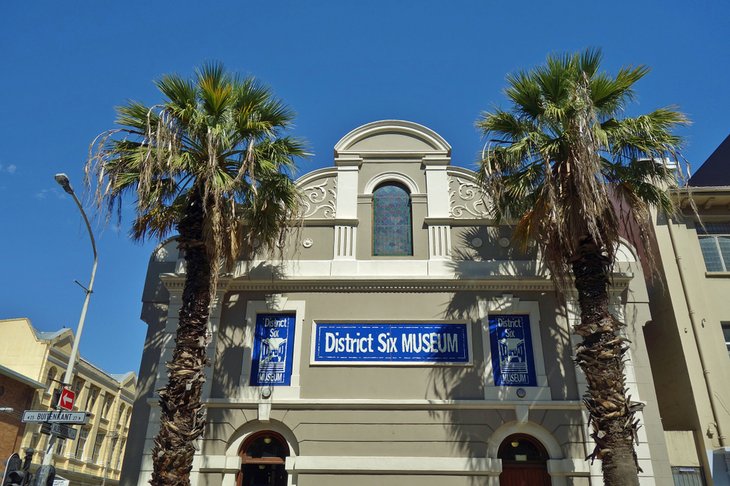
Highlight: Uses multi-media documentary style and sound to introduce guests to this vanished neighborhood's history
In 1966, 70,000 residents of multi-ethnic District Six were displaced when the South African government decided the community was to be a white one.
This poignant District Six Museum honors the people of this now-vanished district. On the museum's floor is a large-scale map where former residents are encouraged to label their old homes and features of their neighborhood.
The museum's permanent exhibit is known as Digging Deeper and is focused on documenting various parts of District Six life through a moving visual experience that incorporates multi-media documentary, digital, and sound elements. The exhibit introduces guests to the area's former residents, and tells their life histories through various themes.
Address: 25A Buitenkant Street, Cape Town
16. Zeitz MOCAA
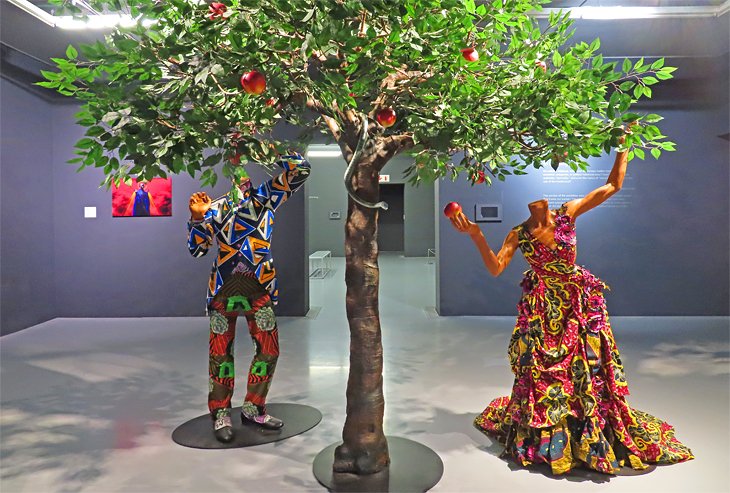
Highlight: Home to the world's largest collection of African contemporary art
Opened in late 2017, the Zeitz MOCAA (Museum of Contemporary Art Africa) is the largest museum on the continent dedicated to African contemporary art in the world. Housed in a converted 9,500-square-meter grain silo with the backdrop of the iconic Table Mountain on the Victoria and Alfred waterfront, this visually stunning museum has nine floors with over 100 galleries.
This world-class museum, on par with New York's MoMA or London's Tate, features 21st-century art from all around Africa and its diaspora, including the private collection of Jochen Zeitz, German-born former CEO of Puma and conservationist.
Some of the most outstanding collections include a series of photographs featuring intriguing eyewear from Kenyan Cyrus Kabiru, colorful and playful imagery from South African Athi-Patra Ruga, and a fantastic woven wall installation made from discarded materials by Ghana-born El Anatsui.
The museum also houses centers for photography, performing arts, and the moving image; an art education institute; a curatorial training program; and a Costume Institute. Entrance is half-price from 4pm to 9pm every first Friday of the month.
17. Explore Bo-Kaap
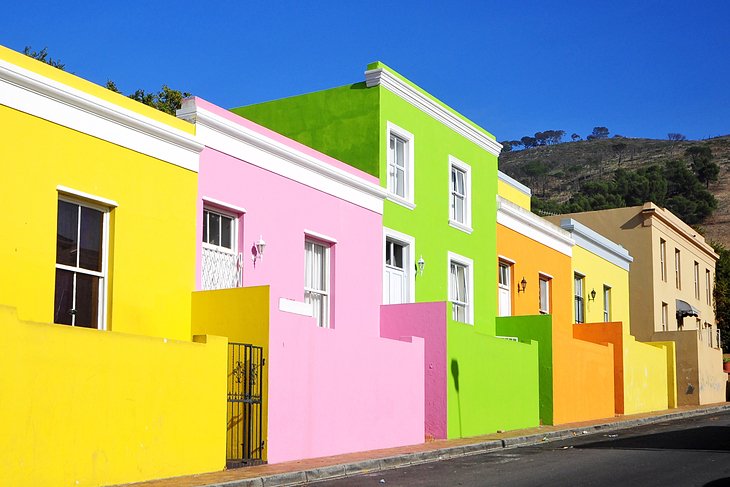
Highlight: Strolling the hilly neighborhood looking at the brightly colored houses
Gently rolling streets lined with brightly colored houses greet visitors in the Cape Malay (commonly referred to as Bo-Kaap) neighborhood.
Located in the heart of the city at the foot of Signal Hill, this vibrant area is home to Cape Town's Muslim community, consisting of those who have descended from the "Cape Malays," slaves brought by Dutch settlers from Indonesia, Malaysia, and other African countries.
The residents are passionate about preserving their history and the buildings, and visitors often see signs stating, "This Heritage Site is Under Threat," in an attempt to discourage gentrification.
Learn about the neighborhood's origin at the Bo-Kaap Museum, housed in the neighborhood's oldest building. Enjoy authentic Malay curry at a local restaurant and cool off with ice cream before hitting some stores for a little shopping.
Don't miss taking Instagram-worthy shots in front of the colorful houses (as long as you aren't capturing the residents in your pictures). Bo-Kaap can be reached by foot from downtown Cape Town or the Victoria & Alfred Waterfront or by cab from other areas.
18. Surf Muizenberg
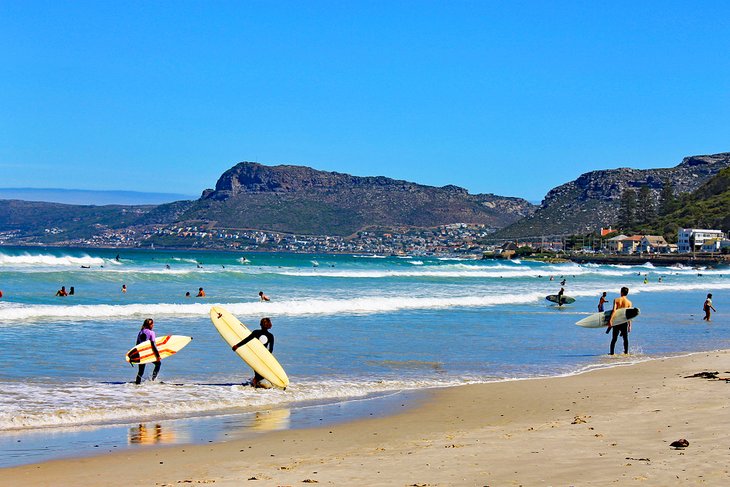
Highlights: Surfing Muizenberg's consistent waves; the water here is slightly warmer than on the Atlantic side
Famous for its brightly colored beach huts and excellent surfing, Muizenberg is about a 30-minute drive from downtown Cape Town. It is located on the False Bay side of the peninsula, so the water here is marginally warmer than at Camps Bay Beach for instance.
The beach is Blue-Flag-rated and one of the best places to visit for beginner surfers to practice riding waves — the surf here is consistent, and the waves aren't huge.
You'll still likely want to wear a wet suit, however, as the water is still very cold, even in summer. These can be rented at a number of shops in the town set behind the long beachfront. You can also rent surfboards and book lessons from a number of companies around town.
The colorful beach huts that you've likely seen in photos on social media are actually known as bathing boxes. They were originally used in the Victorian era, when women would use them for privacy to change into chin-to-ankle bathing suits.
19. Snap Pics with Penguins at Boulders Bay
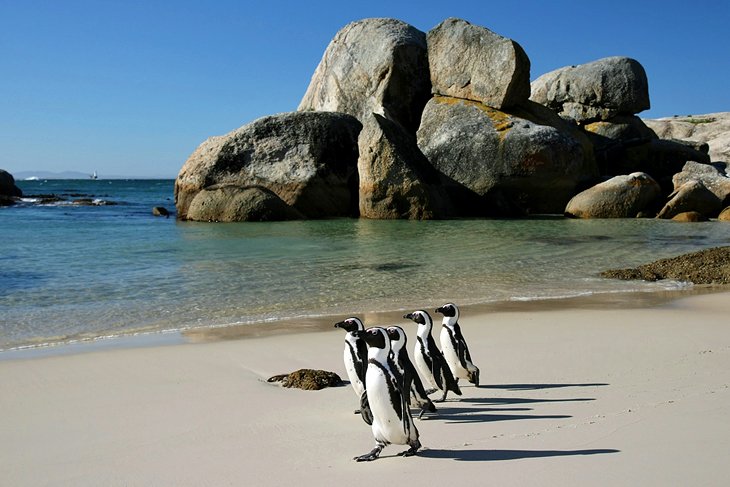
Highlights: Seeing thousands of penguins waddling down a white sand beach or swimming amidst boulders
Penguins are adorable in any setting, but seeing them waddle around in their natural environment is a particular thrill for wildlife lovers.
About an hour's drive from Cape Town, Boulder's Bay in Simon's Town shelters a breeding colony of more than 2,000 endangered African Penguins. This beautiful wind-sheltered, white-sand beach belongs to the Table Mountain National Park Marine Protected Area, and the park charges an entrance fee to access these shores. But it's worth it.
Visitors can enjoy close-up encounters with these charismatic creatures, all in a stunning setting with giant granite boulders, rock pools, calm bays, and blissfully uncrowded patches of gleaming sand. A short walk from here, Foxy Beach is also great for viewing the penguins with a walkway that leads past the prime sites. This is a fantastic family-friendly excursion for animal lovers and beach lovers alike.
Take a private tour of the Cape of Good Hope and Cape Point from Cape Town to experience the fascinating wildlife of the Cape Peninsula. The tour gives visitors a choose-your-own-adventure option to either visit the penguins at Boulders Beach or explore the Cape of Good Hope Nature Reserve, home to hundreds of species of birds, as well as bucks, baboons, and Cape zebra.
20. Take a Day Trip to Cape Point
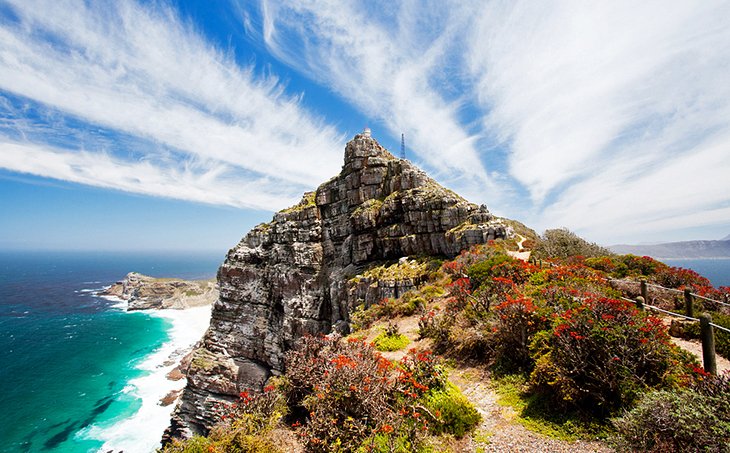
Highlight: Driving to Cape Point via Chapman's Peak Drive, one of the world's most stunning stretches of pavement
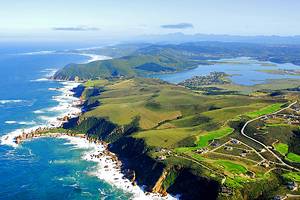
About 60 kilometers from Cape Town, Cape Point lies within the southernmost tip of Table Mountains National Park and is part of the Cape Floral Region, a UNESCO World Heritage Site and one of the richest areas of flora in the world.
The scenic drive from Cape Town along the Cape Peninsula takes travelers past the surf breaks of Muizenberg, and the pretty seaside town of Kalk Bay, as well as the prime-penguin-viewing beaches at Simon's Town.
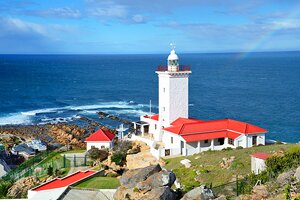
Wildlife is also diverse on this soaring seacliff. About 250 species of birds are found here as well as eland, Cape zebra, reptiles, and troops of brazen baboons. Visitors can enjoy the view from the Cape Point lighthouse by taking the Flying Dutchman funicular or hiking up the many stairs to the top. Other things to do include whale watching, shipwreck spotting from the beach, and nature walks.
For a twist on this eye-popping seaside scenery on the return trip, drive along the 114 bends of Chapman's Peak drive, and stop for a succulent seafood feast at Hout Bay or Noordhoek.
Cape Point is the most southwesterly tip of Africa, not to be confused with Cape Agulhas, about 150 kilometers away, which is the most southerly tip of the continent where the currents of the two oceans, the Indian and the Atlantic, meet.
21. Go Whale Watching at Hermanus
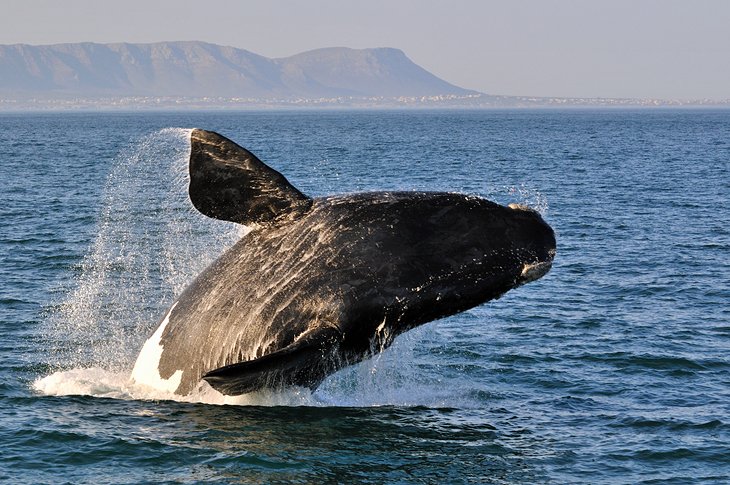
Highlight: Seeing large numbers of southern right whales migrating through the waters off Hermanus
About 120 kilometers east of Cape Town, Hermanus is one of the world's whale-watching hotspots. From July through November, large numbers of southern right whales migrate through these waters, and visitors can even spot them from shore — especially during the prime months of September, October, and November.
On foot, the best places to visit to see these magnificent creatures are the 12-kilometer-long Cliff Path, the Old Harbour viewing terraces, and Sievers Point. Alternatively, sightseers can join a guided sea kayak trip, hop aboard one of the popular whale-watching cruises, or enjoy a scenic flight for a bird's eye view.
Hermanus celebrates these magnificent creatures with an annual whale festival in September, and the town is also popular for its beautiful beaches and many water sports, including fishing, swimming, and shark cage diving.
22. Picnic at Llandudno Beach
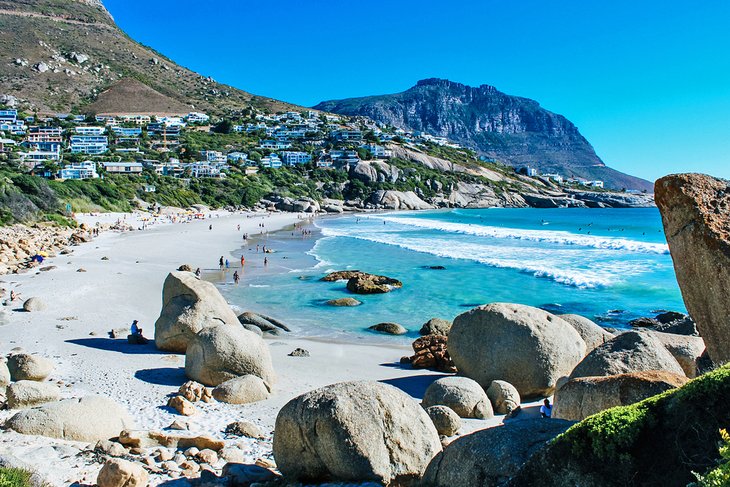
Highlights: Less-crowded beach about 20 minutes' drive from downtown; a local favorite with great sunsets
Most tourists head to Camps Bay or Clifton Beaches when they visit Cape Town. But continue south of the city towards Hout Bay for about 20 kilometers to reach Llandudno Beach. This is the spot locals head to when they want to escape the crowds on summer days.
The ocean is definitely going to be cold here. The current comes up from Antarctica just like it does on Cape Town's beaches, but when it's really hot, the chilly water can feel refreshing. There can be good surfing here, as well as body boarding, but you might want to wear a wet suit to stay in long.
Pack a picnic, as there are no restaurants here. There are also no shops, so you'll want to bring everything you need for the day with you, including beach loungers and umbrellas if you want them. The beach is located down a narrow and winding road, and there is a small parking lot. Since the beach faces in a westerly direction, the sunsets are often stunning.
23. Explore Stellenbosch: A Foodie's Dream
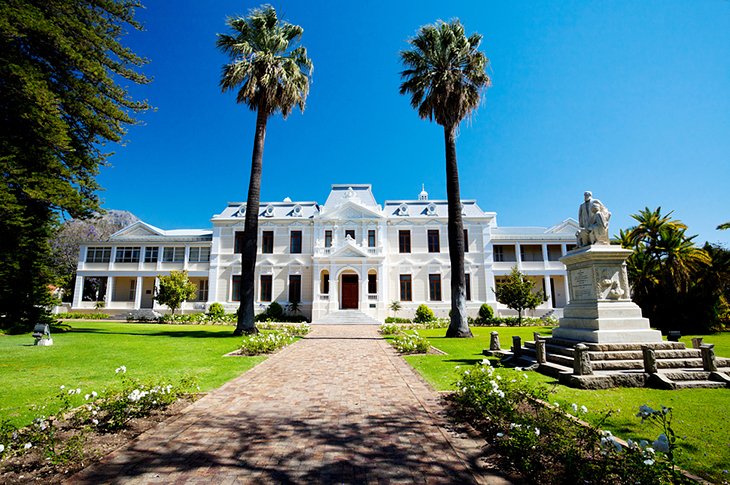
Highlight: Strolling through the pretty university town with its elegant Cape Dutch architecture
About 53 kilometers east of Cape Town, Stellenbosch is one of South Africa's prettiest towns. Elegant Cape Dutch estates rise amid a patchwork of vine-cloaked fields and ancient oaks backed by mountains.
This lively university town resides in a picturesque valley, and its fertile soils nurture some of the country's best produce, which the town showcases at its acclaimed restaurants, atmospheric alfresco cafes, and popular markets.
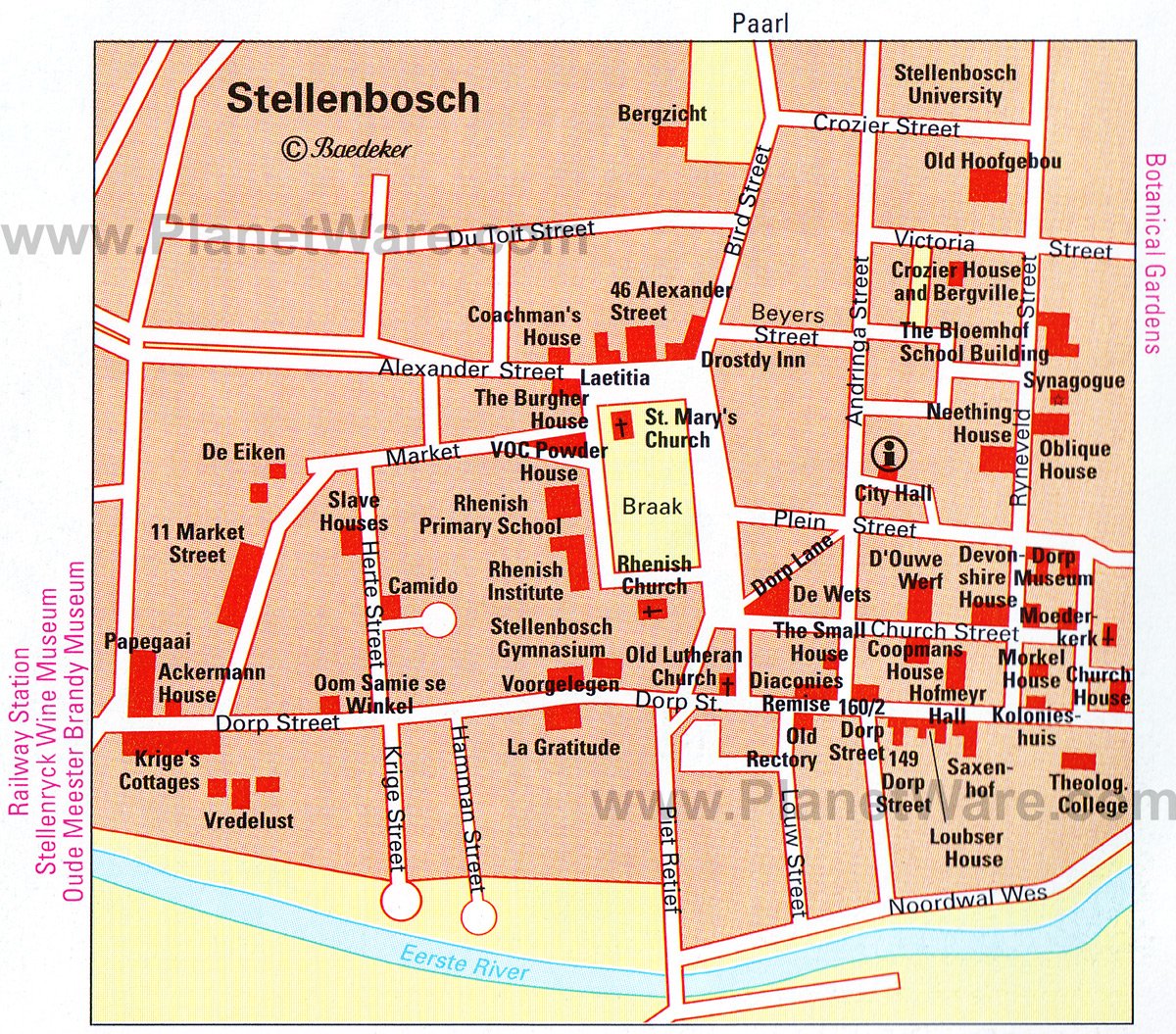
To soak up some of the region's history, visit the Village Museum, a group of four restored houses and gardens dating from 1709 to 1850.
Rupert Museum spotlights works by South African artists, and the Botanic Garden at the University of Stellenbosch is a lovely spot to stroll and relax with an organic tea at the cafe. Outdoor adventures await in the beautiful Jonkershoek Nature Reserve where nature lovers can hike and bike on the wilderness trails.
North of Stellenbosch, Paarl also boasts beautiful scenery and a rich agricultural heritage, while the charming town of Franschhoek, about 35 minutes from Stellenbosch, is known as South Africa's culinary capital. Closer to Cape Town, the Constantia Valley is another hotspot for foodies.
24. Splash in the Tidal Pools at St. James
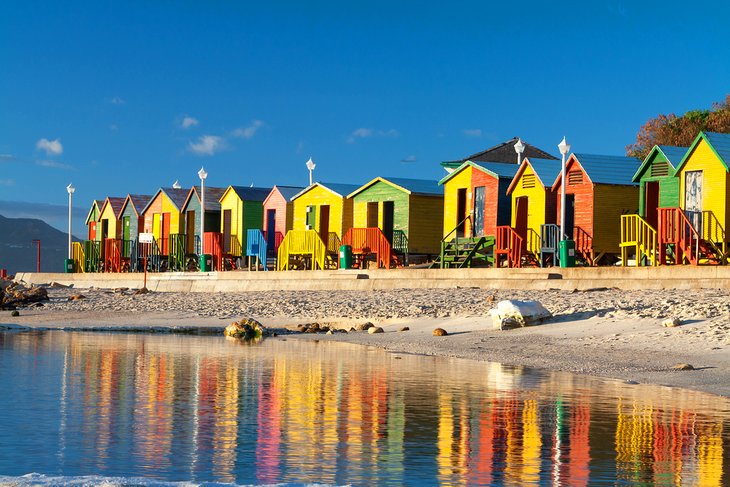
Highlights: A family-friendly beach with freshwater tidal pools and colorful beach huts
Located between the fishing village of Kalk Bay and the surfing town of Muizenberg, St. James Beach is about a 30-minute drive from Cape Town. Here, you'll find one of the most famous freshwater tidal pools around The Mother City.
It is a great spot for kids to splash around, as the tidal pool is protected from the open ocean and crashing waves by rock or concrete barriers (it's like a natural swimming pool). The pools fill with the tides.
St. James Beach is also very family-friendly, as the surf and sand here are sheltered from the wind by a cove — although, there is also decent surfing on the reef if you want to ride some waves. During summer, the beach can get very busy, especially on weekends, so head out early to take a dip with fewer people.
Also like at Muizenberg, St. James Beach is home to the colorful bathing huts that have become such a popular social media backdrop. After you are done playing in the sea, you can grab lunch or check out the shops in Kalk Bay, which is about a 15-minute walk or a quick drive away.
Where to Stay in Cape Town for Sightseeing
We recommend these convenient hotels in Cape Town with easy access to top attractions like Table Mountain and the Victoria & Alfred Waterfront:
Luxury Hotels:
- Cape Grace is a beautiful waterfront property with luxury accommodations, situated between the Victoria & Alfred Waterfront and the international yacht marina.
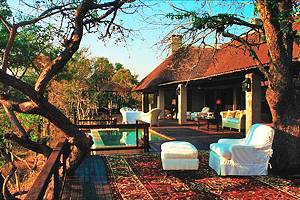
- South Beach Camps Bay Boutique Hotel is the top luxury boutique property in Camps Bay. Just across the street from the trendy beach and within walking distance of numerous restaurants, it has a minimalist modern ambience throughout and impeccable 5-star hotel service. The views are also awesome.
Mid-Range Hotels:
- Situated below Signal Hill, Blackheath Lodge is a Victorian guest house with wonderful staff, a heated pool, and native gardens.
- Derwent House Boutique Hotel is a charming guesthouse located in the vibrant Tamboerskloof/Gardens neighborhood, with rooms celebrating African design.
Budget Hotels:
- Victorian-style Antrim Villa features Afro-Scandinavian accents, and has affordable rates and a saltwater pool; it's conveniently located in Green Point.
- Centrally located Holiday Inn Express Cape Town City Centre is a modern high-rise with budget-friendly rates and a complimentary breakfast.
Cape Town, South Africa - Climate Chart
| Average minimum and maximum temperatures for Cape Town, South Africa in °C | |||||||||||
| J | F | M | A | M | J | J | A | S | O | N | D |
| 25 17 | 26 17 | 24 16 | 22 13 | 19 11 | 18 9 | 17 8 | 17 9 | 18 11 | 21 12 | 22 14 | 24 16 |
| PlanetWare.com | |||||||||||
| Average monthly precipitation totals for Cape Town, South Africa in mm. | |||||||||||
| 15 | 15 | 20 | 41 | 69 | 94 | 84 | 76 | 41 | 3 | 0 | 18 |
| Average minimum and maximum temperatures for Cape Town, South Africa in °F | |||||||||||
| J | F | M | A | M | J | J | A | S | O | N | D |
| 77 63 | 78 63 | 76 60 | 72 56 | 67 52 | 64 48 | 62 47 | 63 48 | 65 51 | 69 54 | 72 58 | 75 61 |
| PlanetWare.com | |||||||||||
| Average monthly precipitation totals for Cape Town, South Africa in inches. | |||||||||||
| 0.6 | 0.6 | 0.8 | 1.6 | 2.7 | 3.7 | 3.3 | 3.0 | 1.6 | 0.1 | 0 | 0.7 |
The best time to visit Cape Town is during December, January, and February. The summer months bring the warmest air and sea temperatures, and the city has a fun vibe during this time.
Thanks to a current that comes directly from Antarctica, the water off Cape Town's beaches remains frigid year-round, especially on its Atlantic coast side. The summer months are also the driest months, and you'll find days are often sunny with clear blue skies.
June and July are the coldest and rainiest months of the year. You still get lots of sunny days, but there is a chill in the air and some days can feel downright cold when the rain falls. If you aren't concerned about beach weather, however, you can score some great hotel deals visiting in the winter.
The swing season months of March, April, and May and August and September are also great times to explore Cape Town. Attractions are less crowded and the weather is usually decent.