10 Top-Rated Tourist Attractions in the Balearic Islands
Azure blue seas, powdery white-sand beaches, and a sunny Mediterranean landscape set the stage for a dream vacation. Spain's Balearic Islands include four gorgeous islands, each with its own special character.
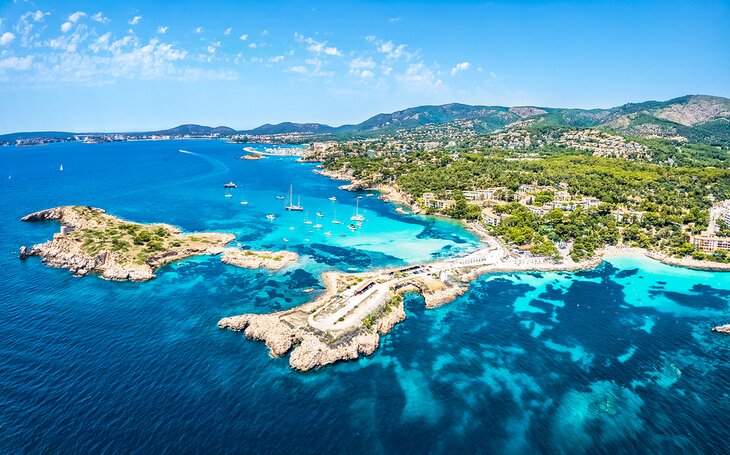
The Island of Mallorca has glorious churches, ancient villages, and inspiring monasteries, as well as pristine sandy shores. Smaller and more laid-back, Menorca Island offers a quiet escape for those who love the seaside and nature.
Ibiza Island is famous for its lively ambience, as well as beautiful beaches. Another attraction of Ibiza is its UNESCO-listed Old Town, a fortified medieval city that is a charming place for a stroll.
For those who appreciate relatively undiscovered destinations, Formentera Island has an unspoiled coastline and a nature reserve that conceals one of the finest beaches on the Balearic Islands.
Discover the best places to visit and things to do with our list of the top tourist attractions in the Balearic Islands.
- 1. The UNESCO-Listed Old Town of Eivissa (Ibiza Island)
- 2. Palma de Mallorca (Mallorca Island)
- 3. Beautiful Beaches on Formentera Island
- 4. The Medieval Walled Town of Alcúdia (Mallorca Island)
- 5. Real Cartuja de Valldemossa (Mallorca Island)
- 6. Parc Natural de Ses Salines (Formentera Island and Ibiza Island)
- 7. Mahón: Capital of Menorca Island
- 8. The Chic Seaside Resort of Puerto Portals (Mallorca Island)
- 9. Cala Portinatx Beach Resort (Ibiza Island)
- 10. The Prehistoric Site of Talatí de Dalt (Menorca Island)
- 11. Ciutadella de Menorca (Menorca Island)
- 12. Port de Valldemossa (Mallorca Island)
- 13. Parque Natural de la Península de Llevant (Mallorca Island)
- 14. Sant Francesc de Formentera (Formentera Island)
- Map of Tourist Attractions in the Balearic Islands
1. The UNESCO-Listed Old Town of Eivissa (Ibiza Island)
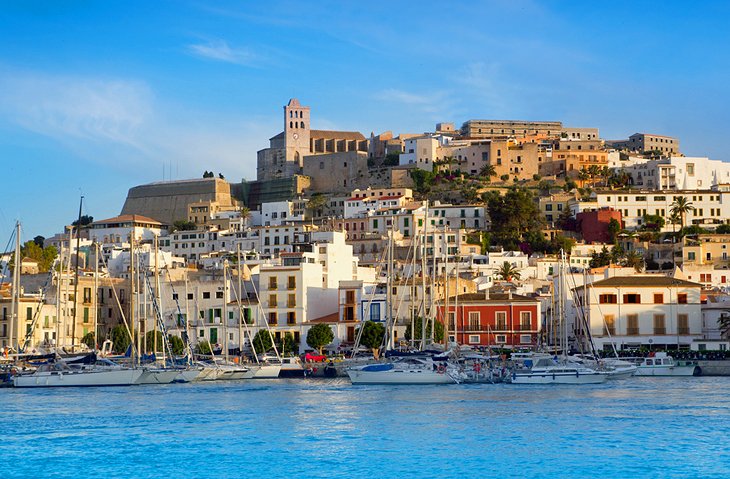
Postcard-perfect from every angle, the Old Town of Eivissa is a UNESCO World Heritage Site. You will be enchanted by the labyrinth of narrow cobblestone streets, pedestrian staircases, and quaint tree-shaded squares. Bright bougainvillea trims whitewashed houses, and stunning sea views take you by surprise.
This walled hilltop town has fortifications that date to the 16th century. The main entrance gate is the Puerta de las Tablas featuring the coat of arms of King Philip II.
One of the fortifications' old bastions now houses part of the Museu d'Art Contemporani d'Eivissa (Museum of Contemporary Art). This collection presents works created on the island of Ibiza since the 1960s.
The Old Town's crowning glory, the Catedral de Nuestra Señora de las Nieves soars above all the city's other monuments. Also known as the Catedral de Santa María La Mayor, the church was built in the 14th century on the site of an old mosque.
From the terrace on the south side of the cathedral, you can take in the marvelous views of the bay. The cathedral celebrates its feast day on August 8th.
2. Palma de Mallorca (Mallorca Island)
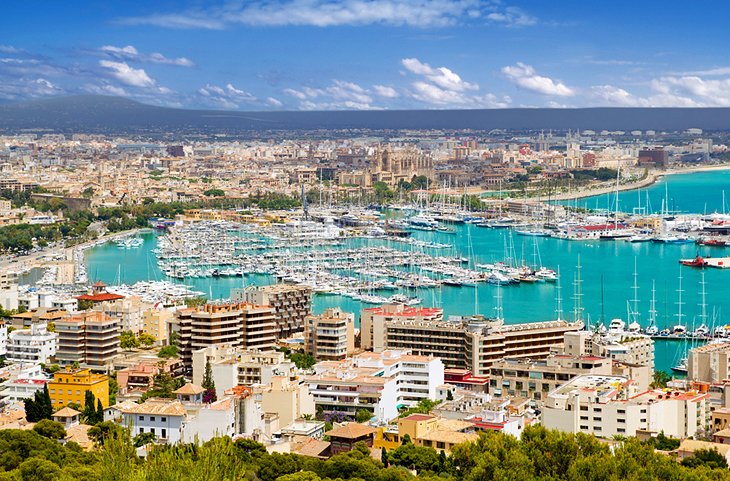
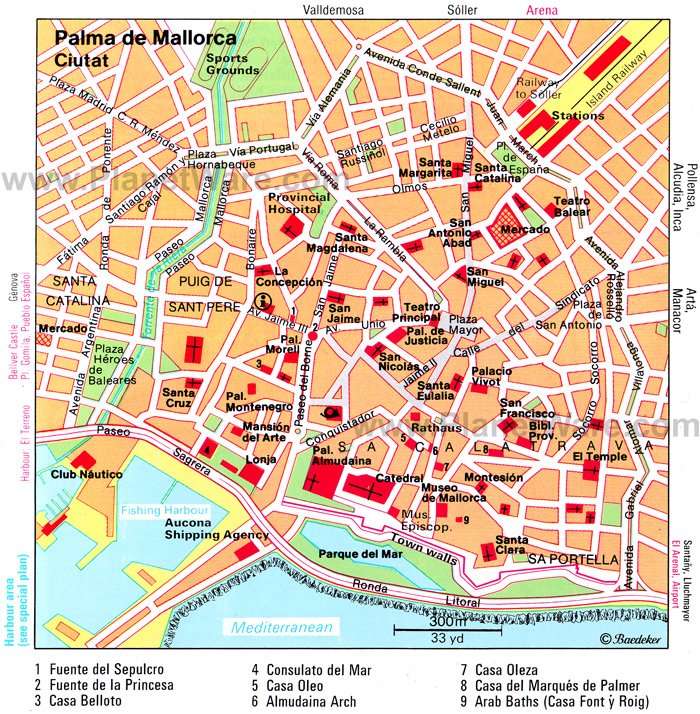
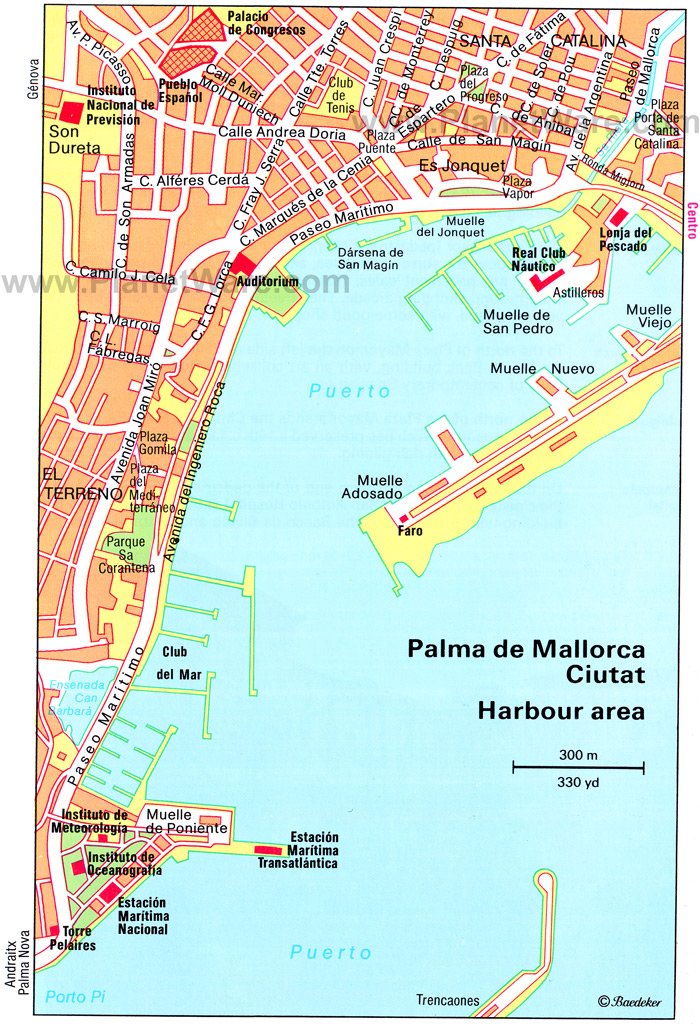
Nestled along a picturesque bay, this elegant capital city is one of the top attractions on the Island of Mallorca. The city offers culture as well as beaches. With its year-round balmy weather, Palma de Mallorca is a perfect place for a seaside holiday.
Palma de Mallorca boasts two important monuments dating to the 14th century, the Castillo de Bellver (castle) and the Catedral de Mallorca (cathedral).
The Catedral de Mallorca creates a striking impression from across the bay with its spires and towers soaring high above town. You may visit the cathedral Monday through Saturday, and audio guides are available. Mass is celebrated here daily.
Not to be missed in the Old Town is the 14th-century Palacio Real de La Almudaina, an old Moorish fortress that was converted to a royal palace for the Catholic monarchs. Today the Royal Palace of La Almudaina is an official residence of the King and Queen of Spain. The palace is open to the public for visits daily, except Mondays.
Save time to explore the Old Town's maze of atmospheric narrow streets while browsing the enticing boutiques (especially on Carrer de Sant Feliu) and perhaps stopping at an outdoor café or relaxing in one of the pleasant squares.
If you appreciate art, must-see attractions are the Museu de Mallorca (which displays collections of archaeology, fine arts, and Modernist ceramics) and the Fundació Miró Mallorca, a cultural center that presents the work of Joan Miró, the famous Surrealist painter.
3. Beautiful Beaches on Formentera Island
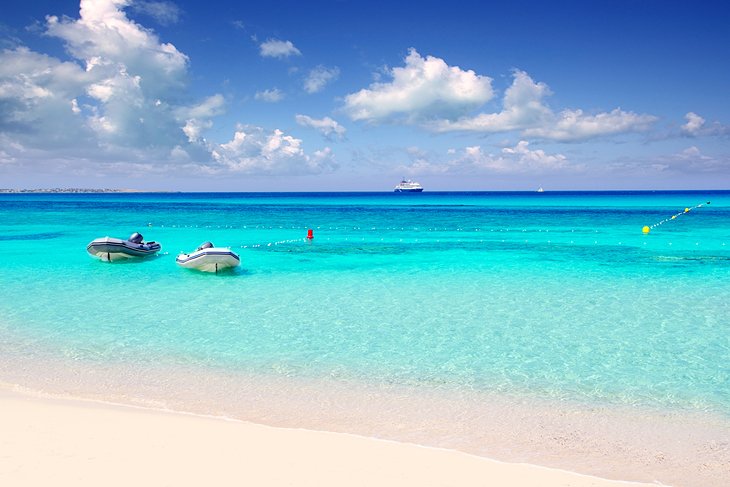
Less touristy than Ibiza and Mallorca, the idyllic Island of Formentera offers a blissful escape to nature. This tiny island's pristine coastline has beautiful secluded beaches and an unspoiled environment, ideal for relaxation.
The island's most famous beach is the Playa de Ses Illetes (four kilometers from La Savina), a sandy beach with views across the sea to the Island of Ibiza. The beach has translucent turquoise waters and a shallow seabed resembling a swimming pool. The gentle waves make this beach perfect for swimming, windsurfing, and sailing.
Near the Playa de Ses Illetes, the secluded Playa de Llevant (about three kilometers from La Savina) has a fine white-sand shoreline and calm, crystal-clear waters that attract sunbathers and water sports enthusiasts. Although this beach is isolated, it has snack bars and beach equipment rentals (sun parasols and lounge chairs).
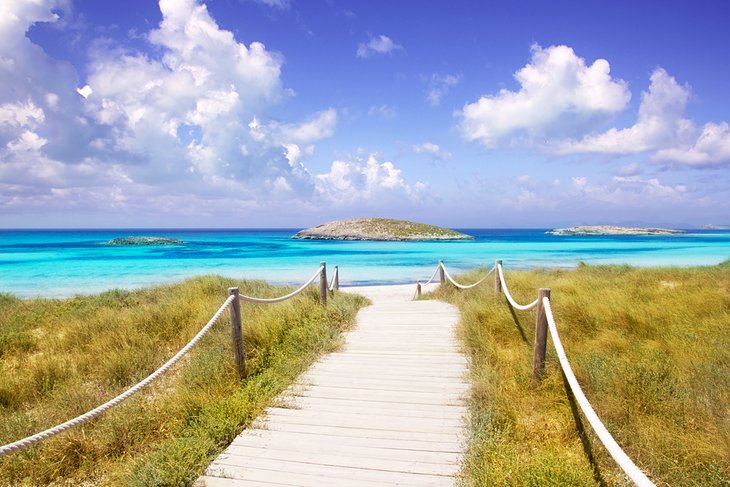
Cala Saona is a small sheltered beach found on the west coast, in a peaceful bay surrounded by cliffs. This beach has a wide, sandy shoreline and crystalline waters with almost no waves. The water is only about knee-deep for a long distance from the shoreline. It's a good place to visit for water sports, especially snorkeling, paddle boarding, and kayaking.
For overnight accommodations, Es Pujols is a great place to stay. This relaxing yet lively town has many restaurants and shops. Es Pujols Beach has a wide shoreline of fine white sand and tranquil waters ideal for swimming, as well as water sports. Alongside the beach is a promenade where people take evening strolls.
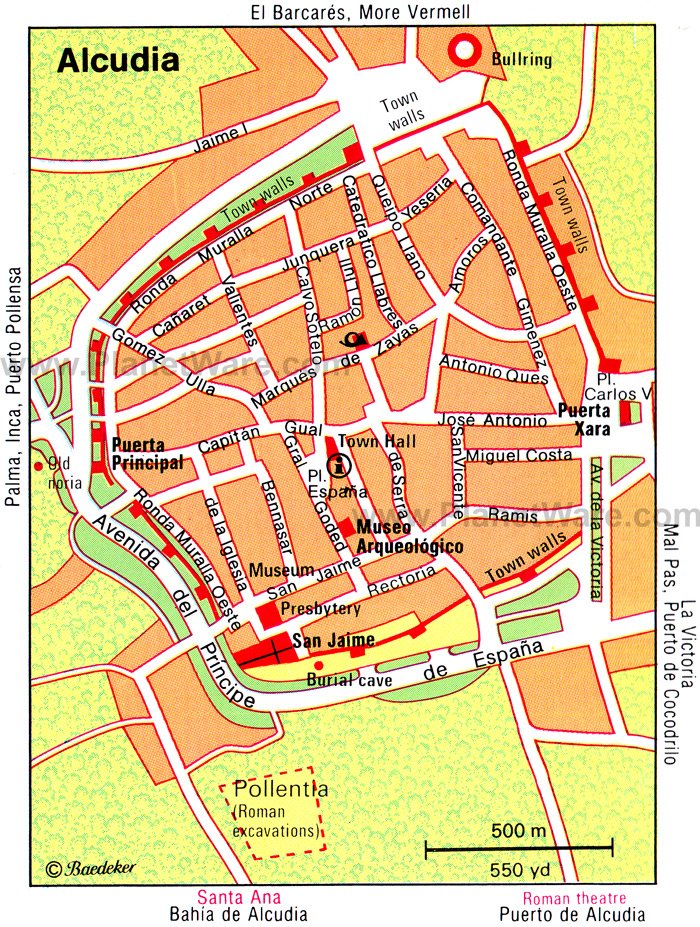
4. The Medieval Walled Town of Alcúdia (Mallorca Island)
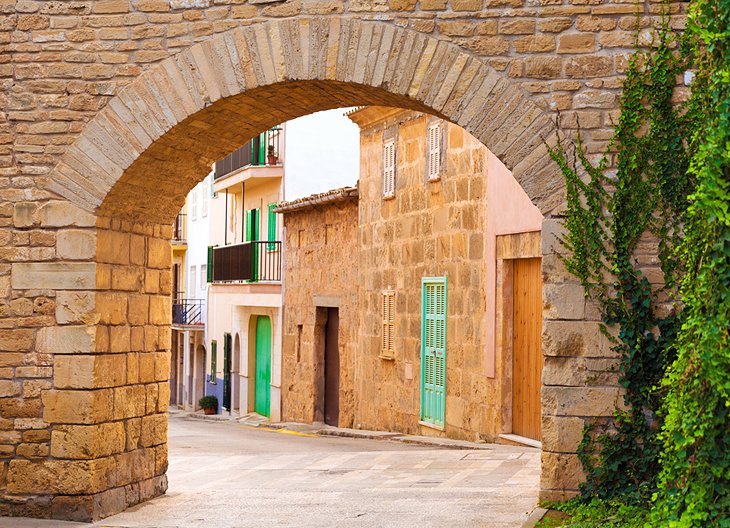
This well-preserved medieval town brims with old-world charm. The walled historic center is an enchanting warren of winding cobblestone streets and handsome stone buildings.
While strolling the narrow pedestrian lanes, you will notice many beautiful churches, as well as stately aristocratic houses featuring coats of arms and windows adorned with Renaissance-era decorations.
A history-focused tour should begin at La Ciutat Romana de Pol·lèntia, the archaeological site that represents the 1st-century Roman city of Pollentia. The site includes the Roman Theater, which is still used for theater performances during summertime; and the Museu Monogràfic de Pol·lèntia, which displays a collection of ancient Roman jewelry, kitchen utensils, sculptures, and architectural elements.
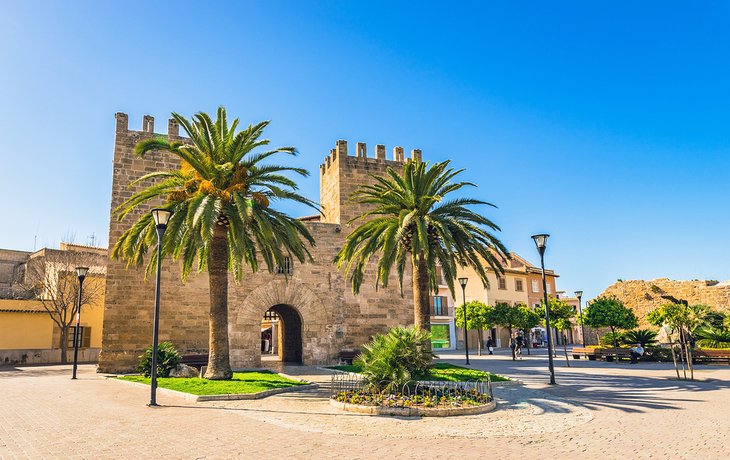
After sightseeing, you can wander the town and find a spot to relax. Alcúdia has many inviting restaurants and cafés with pleasant outdoor terraces.
Alcúdia hosts many cultural and religious events, such as the Holy Week festivities during Easter; the Via Fora street theater (historical reenactments) in July and August, the Festival de Teatro Clásico, which presents theatrical performances at the Roman Theater in July; and the Fiestas de Sant Jaume, held every year at the end of July to honor the town's patron saint.
On Tuesdays and Sundays (8am to 1:30pm), the colorful Alcúdia Market brings together vendors of fresh fruits and vegetables from local farms, as well as clothes, jewelry, and other products.
About three kilometers away from Alcúdia, the Port d'Alcúdia is a family-friendly seaside resort with a wide variety of hotels and a lovely sandy beach. The old fishing harbor features a promenade and waterfront restaurants that serve authentic regional cuisine and fresh seafood.
5. Real Cartuja de Valldemossa (Mallorca Island)
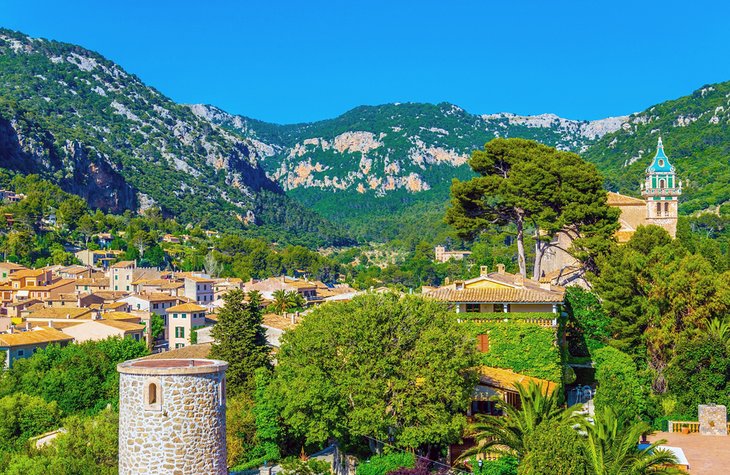
The quaint country village of Valldemossa is tucked away in a valley of the Tramuntana Mountains, surrounded by woodlands, orchards, and olive groves. The village features narrow cobblestone lanes and old stone buildings with bright green shutters. Many of the pedestrian streets are lined with things to do and see, including restaurants, cafés, bakeries, souvenir shops, and artisan craft boutiques.
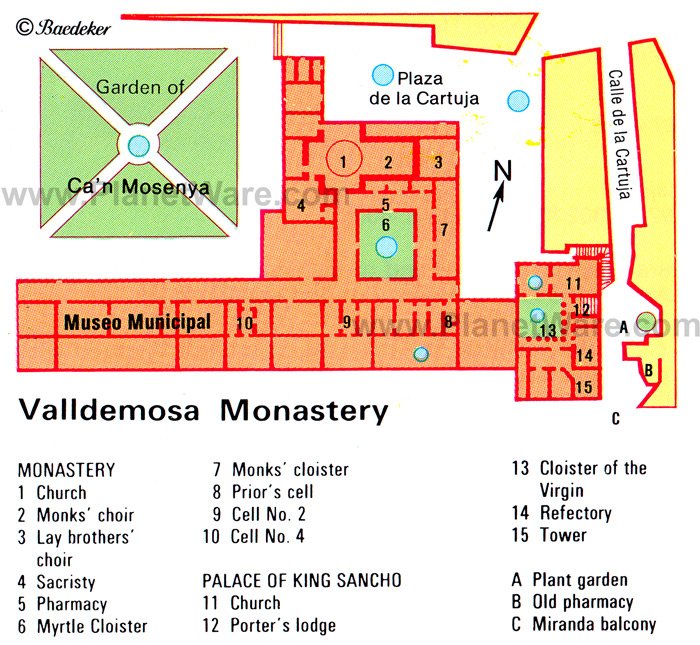
The must-see sight of Valldemossa is the Real Cartuja de Valldemossa (Royal Carthusian Monastery), originally built as a royal residence in the 13th century. The famous composer Chopin rented a room here with novelist Aurore Dupin (George Sand) during the winter of 1838-1839; they both were inspired artistically by the beauty of the monastery and its serene natural setting.
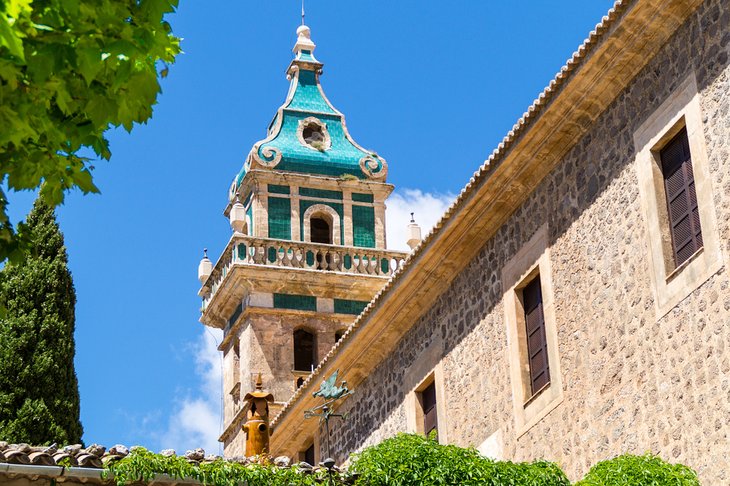
During the summer, the Carthusian Monastery hosts the Chopin Festival, which invites high-caliber pianists to perform works by Chopin, as well as other classical music pieces.
The landscape around Valldemossa, the UNESCO-listed Serra de Tramuntana, inspires hikers and nature lovers.
You can begin a hike in the village of Valldemossa: the Archduke's Trail (created by the Austrian Archduke Ludwig Salvator). This challenging 17-kilometer loop trail (without signposts) traverses rugged mountainous terrain, oak groves, and pine forests. The trail affords breathtaking panoramic vistas of the dramatic coastline and Tramuntana Mountains.
6. Parc Natural de Ses Salines (Formentera Island and Ibiza Island)
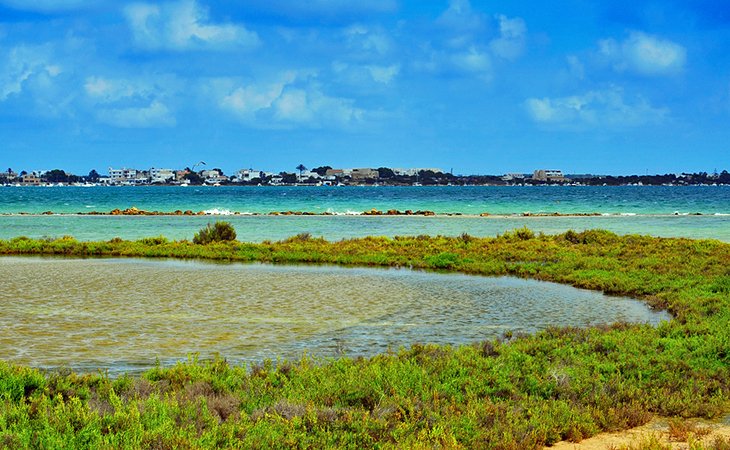
Listed as a UNESCO-World Heritage Site, the Parc Natural de Ses Salines is a nature reserve that encompasses salt flats, wetlands, sand dunes, beaches, and forests in southern Ibiza Island and northern Formentera Island, as well as the sea channel in between the two islands.
The Welcome Center of Ses Salines Natural Park is located in Can Marroig on Formentera Island.
On Ibiza Island, the Interpretation Center in Sant Francesc de s'Estany (housed in the 18th-century Iglesia de Sant Francesc) presents exhibits about the park's flora and fauna. Nearby is a bird-watching viewing platform. The interpretation center also loans binoculars for bird-watching.
Bird watchers will be delighted by the chance to view more than 200 different species of birds. Pink flamingos, Audouin's gulls, and the Balearic shearwater can be spotted here.
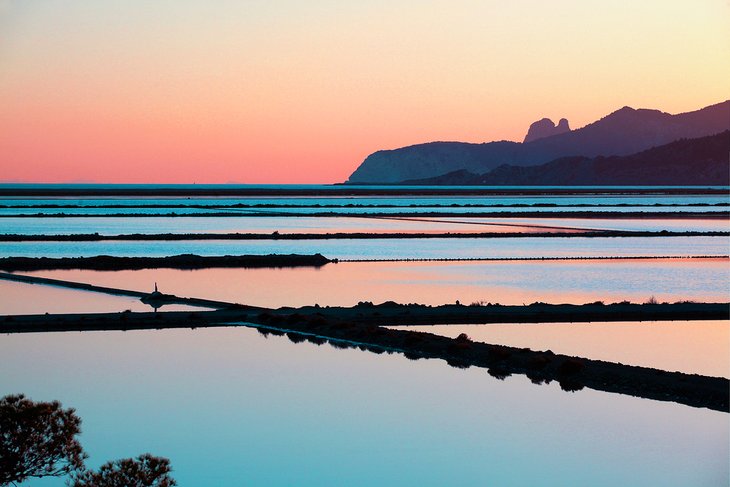
The Parque Natural de Ses Salines includes the historic salt flats that have been used to produce salt for centuries (the revenues helped to build the Dalt Vila of Ibiza Island). The best place to see the salt fields is in Las Salinas (near the Playa de Ses Salines) on Ibiza Island.
Within the nature reserve is one of Ibiza Island's top beaches, the Playa de Ses Salines. Crystal-clear waters lap up against the expansive swath of fine powdery sand. Although this pine tree-fringed beach seems remote, it gets very crowded during summertime.
The beach of Ses Salines caters to sun-worshipping visitors with restaurants, shops, and snack bars. Similar to most Ibiza beaches, DJs spin electronic dance music at the beach clubs and beachfront cafés. Lounge chairs, sun umbrellas, and water sports equipment are available. Lifeguards survey the beach during the high season.
7. Mahón: Capital of Menorca Island
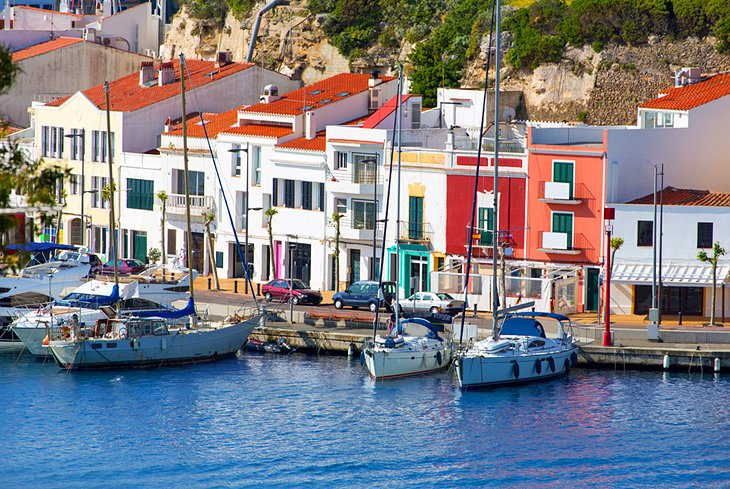
At the eastern end of Menorca Island, the capital city of Mahón (Maó) stands on a steep hillside above a large natural harbor. If you are arriving by sea, you will be delighted by the scenery as the boat makes its way past old forts, islands, and coves toward the harbor.
Mahón is a laid-back town with a slow pace. You can take leisurely strolls through the atmospheric cobblestone streets while admiring the sea views.
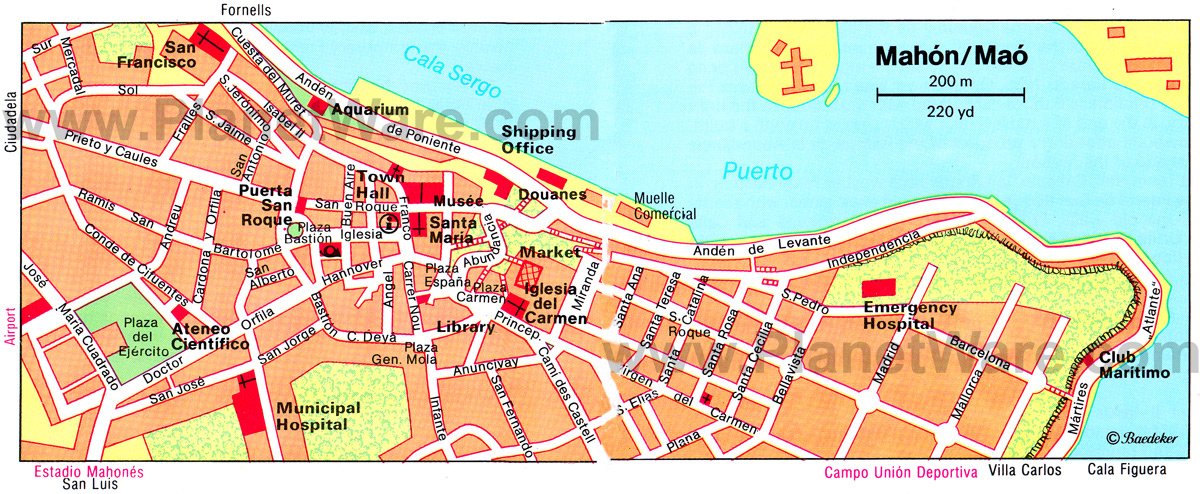
At the center of Mahón, is the Plaza de España (town square), which can be reached via a pedestrian staircase from the port. The Plaza de España branches out to many streets lined with shops and restaurants. A favorite aspect of the Plaza de España is its fresh fish market (the Mercat del Peix). A section of the market offers delicious tapas along with a convivial ambience.
Just a few steps away from the Plaza de España is the Iglesia del Carmen, a Carmelite church with an adjoining cloister. The arcades of the cloister are now used as a venue for the Mercat des Claustre (held daily), a traditional open-air market with stalls selling fruits, vegetables, cheese, bread, pastries, and specialty foods, as well as clothing.
In the beginning of September, Mahón celebrates the Fiestas de La Mare de Déu de Gràcia de Maò. A joyous several-day event honoring the Virgen de Gràcia, the festival features parades, a children's fair, musical entertainment, dancing, street parties, and fireworks.
8. The Chic Seaside Resort of Puerto Portals (Mallorca Island)
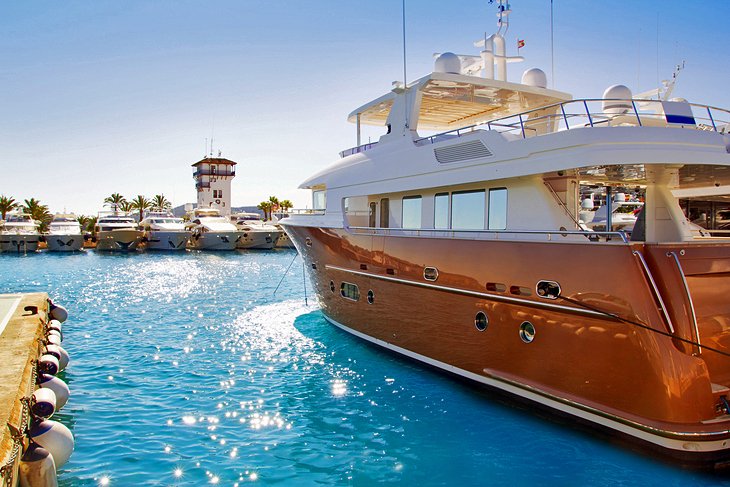
This glamorous seaside resort on the Bay of Palma (10 kilometers from Palma de Mallorca) appeals to a chic clientele who appreciate flashy cars, fancy yachts, fashionable dining, and designer boutiques. Drawing a stylish international crowd, Puerto Portals has the glitzy feel of Monte Carlo in Monaco.
Along the picturesque marina, you will find hundreds of luxury yachts, a yacht club, and many upscale restaurants. Excellent dining options include Ritzi, a trendy restaurant with an outdoor terrace by the marina, and Cappuccino Grand Café, which also has a dining patio with views of the marina.
An incredible culinary experience awaits, just three kilometers outside of Puerto Portals, at Es Fum in Costa d'en Blanes. This Michelin-starred gastronomic restaurant at The St. Regis Mardavall Mallorca Resort serves exquisite seasonal cuisine in an elegant dining room or on a garden terrace overlooking the Mediterranean Sea. The resort also has two casual restaurants.
Near the Puerto Portals marina is a stretch of golden-sand beach. During summertime, the beach is covered with lounge chairs and sun parasols.
Just a short drive (one kilometer) from Puerto Portals is a small but popular beach, the Playa d'Oratori (Cala Portals Nous). Tucked into a sheltered cove, this Blue Flag beach has gentle crystal-clear waters. It's a great spot for water sports such as kayaking, windsurfing, and paddle boating. Amenities include snack bars, cafés, and water sports gear rentals.
9. Cala Portinatx Beach Resort (Ibiza Island)
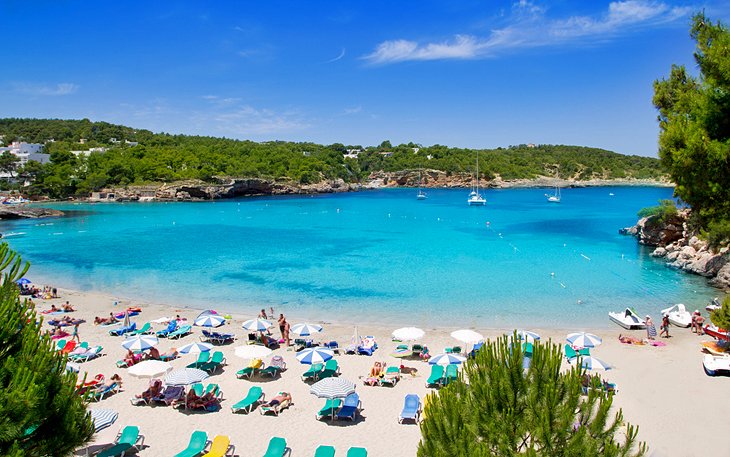
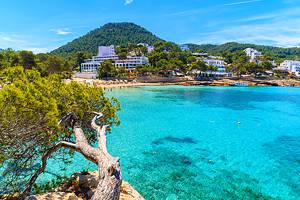
Cala Portinatx, on the northern tip of Ibiza Island, boasts some of the best beaches of Ibiza. The coastline features sandy shores, gentle waves, and turquoise waters that appear tropical. This family-friendly resort area also has a wide selection of hotels and top-notch facilities.
The Cala Portinatx bay is sheltered from the open sea by a rock barrier, protecting against tidal action and waves. The calm waters make swimming safe. Snorkelers and scuba divers also appreciate the tranquil sea and prize the crystal-clear waters.
Cala Portinatx has three popular sandy beaches. The Playa s'Arenal Gros is the largest, a 125-meter-long stretch of fine white sand. The only beach on Cala Portinatx with lifeguards, s'Arenal Gros is an ideal place for swimming, boating, and waterskiing. Families with kids will love the waterslide park.
The Playa de s'Arenal Petit is a smaller beach with a shallow seabed, which makes the waters safe for children to splash around. This well-equipped beach welcomes vacation-goers with a wide array of amenities: public restrooms, showers, and lounge chair and sun umbrella rentals. Nearby are many hotels, restaurants, and shops.
The Playa Porto is a quiet beach tucked into a small cove (a little fishing port), surrounded by a grove of pine trees. The area around this beach features scenic hiking paths with marvelous views.
Ferry boats sail from Cala Portinatx to the sandy beach of Puerto de San Miguel and the trendy resort of San Antonio, which has many cafés and beach clubs with a legendary nightlife scene.
10. The Prehistoric Site of Talatí de Dalt (Menorca Island)
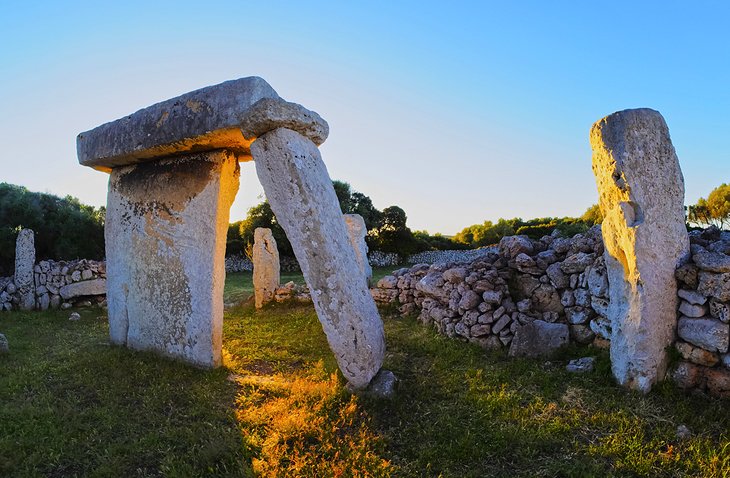
This rare prehistoric site is five kilometers west of Mahón in a rural landscape of stunning beauty. The megalithic monument, Talatí de Dalt, is a taula (T-shaped structure) topped with a thick stone slab supported by a central monolith and partially surrounded by a cyclopean wall.
Built around 1300 BCE, the Talatí de Dalt is a prehistoric sanctuary that belonged to one of the most important Bronze Age settlements on the Island of Menorca. The site also features underground chambers that may have been used as dwellings.
Visiting the Talatí de Dalt requires a car (no public transportation is available). The site is open daily from April through October and charges a small admission fee.
11. Ciutadella de Menorca (Menorca Island)
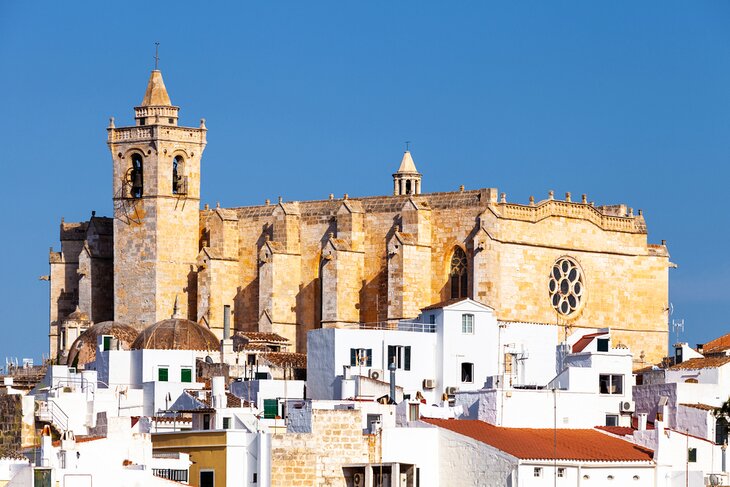
Step back in time to discover a captivating medieval world. The Ciutadella de Menorca represents the historic capital city of Menorca Island, formerly a fortified citadel. You can see the delineation of the old ramparts by taking a walk on the Contramurada path, which separates the ancient citadel from the modern part of town.
Get ready to do some walking, because the Ciutadella de Menorca is best explored by foot. Quaint stone-paved pedestrian streets lead to bustling squares lined with restaurants and boutiques.
The entire historic center of the Ciutadella de Menorca is designated as a Bien de Interés Cultural (Asset of Cultural Interest). This treasure trove of Menorca's cultural heritage includes Neoclassical palaces and the Catalan Gothic Cathedral of Santa Maria, which was built in the 14th century on the site of a Moorish mosque and incorporated the original minaret.
12. Port de Valldemossa (Mallorca Island)
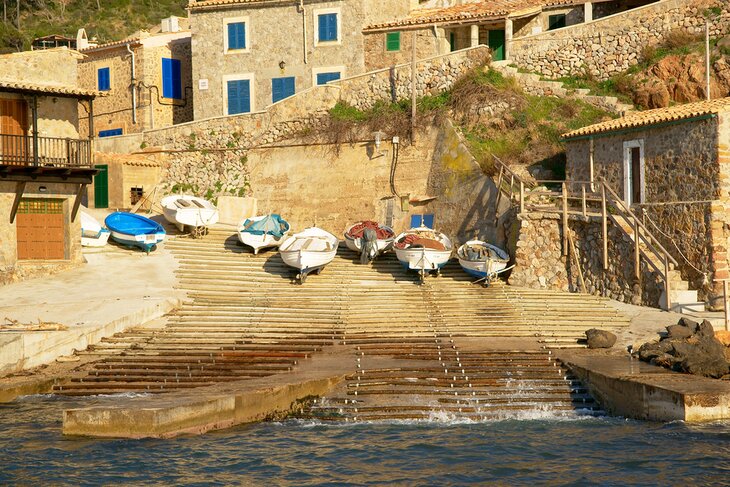
Seven kilometers from Valledemossa, the Port de Valldemossa is an old fishing village with a lovely harbor and a tiny pebble beach. This area is known for its superb cuisine. Locally caught fish is combined with fresh produce from the surrounding farms, creating tantalizing dishes.
The Port de Valldemossa has several excellent restaurants hidden on quiet side streets. Right on the harbor, the Restaurante Es Port is a popular establishment renowned for its high-quality seafood and traditional Spanish dishes.
Continuing 10 kilometers from Valldemossa is the alluring mountain town of Deià nestled in a valley above the sea. This quaint village has attracted artists and writers since the 1930s.
13. Parque Natural de la Península de Llevant (Mallorca Island)
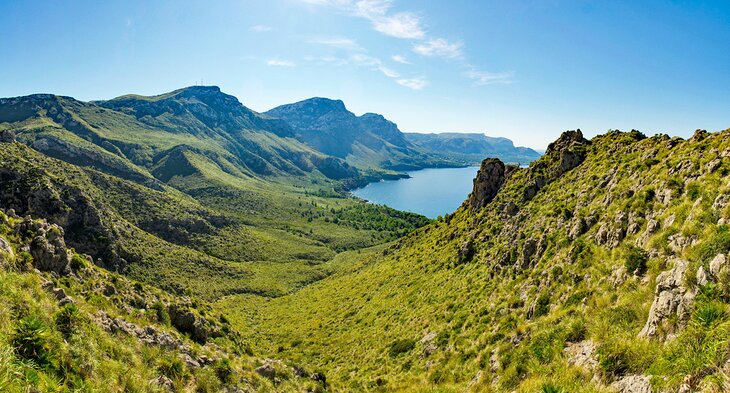
About a one-hour drive from Alcúdia is the Parque Natural de la Península de Llevant, which has many fabulous hiking trails.
A truly spectacular hike is the five-kilometer climb from the village of Betlem to the Ermita de Betlem through a rugged Mediterranean landscape in the Serra de Llevant mountain range. The challenging, narrow, winding path rewards you with exceptional vistas from the hilltop hermitage, at 300 meters above the sea.
14. Sant Francesc de Formentera (Formentera Island)
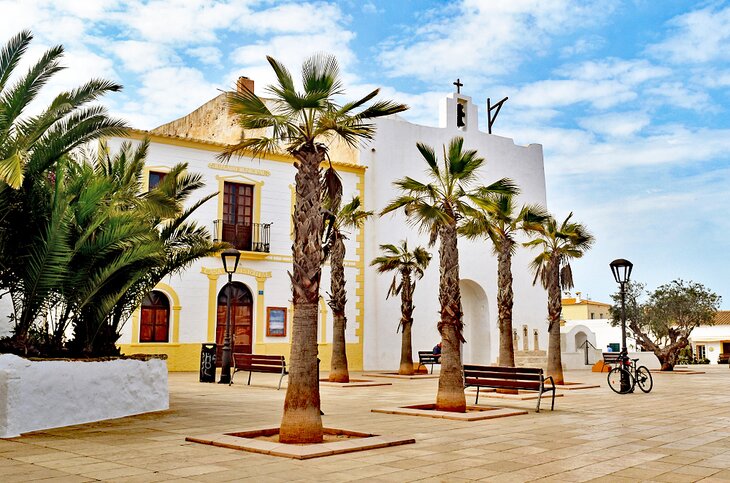
The main port of Formentera Island is La Savina, where the ferry arrives from Eivissa on Ibiza Island. Near La Savina (about four kilometers away) is the town of Sant Francesc, which has an interesting historic center.
The town's 18th-century parish church, the Iglesia de Sant Francesc stands out for its austere architecture. The somber unembellished exterior has the look of a fortress, explained by the fact that the church provided shelter during pirate raids. The church is open for visits Tuesday through Saturday from 10am until 2pm.
Sant Francesc de Formentera also has an Ethnography Museum (Carrer Santa Maria) and many boutiques and restaurants in the center of town.
Map of Tourist Attractions in the Balearic Islands
More Related Articles on PlanetWare.com
Cultural Attractions and Idyllic Scenery: About 250 kilometers off the coast of mainland Spain, the Balearic Islands owe their beauty to a mountainous landscape and the dreamy deep-blue Mediterranean Sea. The Island of Mallorca offers interesting cultural attractions and gorgeous beaches.
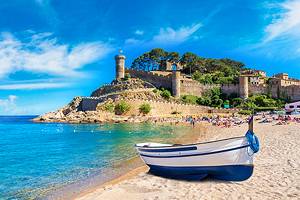
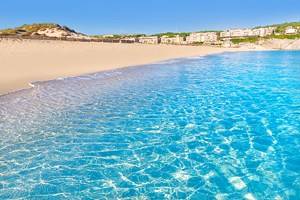
Top Destinations for Beach Lovers: Several of Spain's top beaches are found on the Balearic Islands, including Es Pujols Beach on the Island of Formentera and the beach at Cala Mesquida on the Island of Mallorca. The ultimate place for a happening seaside holiday is the beach lovers' paradise of Ibiza Island. For a more relaxing vacation, the Island of Formentera is a less-touristy destination with an unspoiled coastline and pristine beaches.