11 Top-Rated Attractions & Things to Do in Cefalu
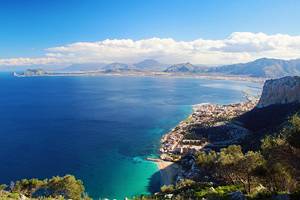
Cefalù has a beautiful setting, at the foot of a towering rock halfway along the north coast of Sicily. The pretty little fishing harbor and old town streets are dominated by its Norman cathedral, and a long sandy beach right below the old town has made Cefalù a popular holiday resort.
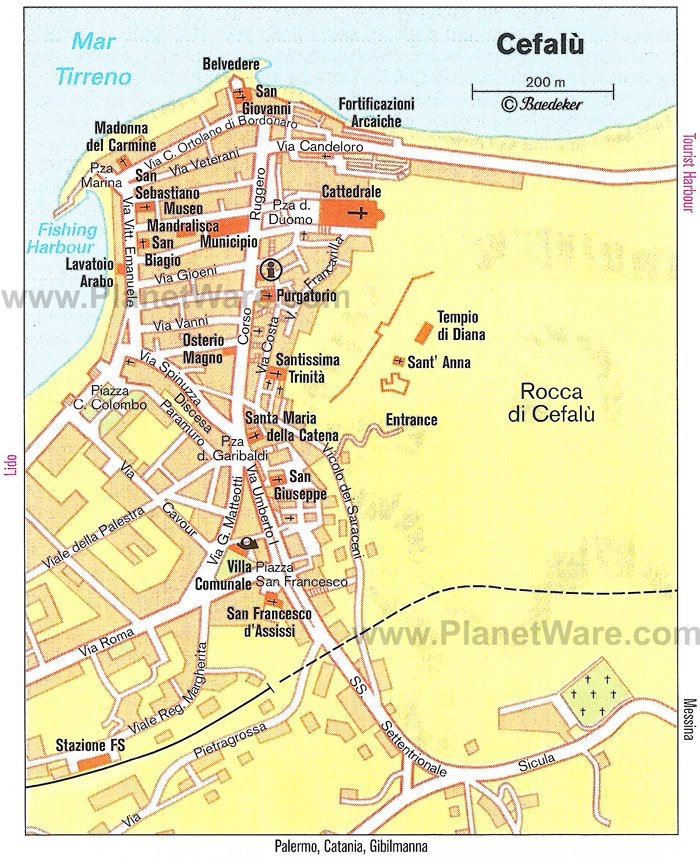
Parallel to the beach, Corso Ruggero is the town's traffic-free main street, with restaurants and shopping and the Lungomare Giuseppe Giardina backs the entire length of the town's beach.
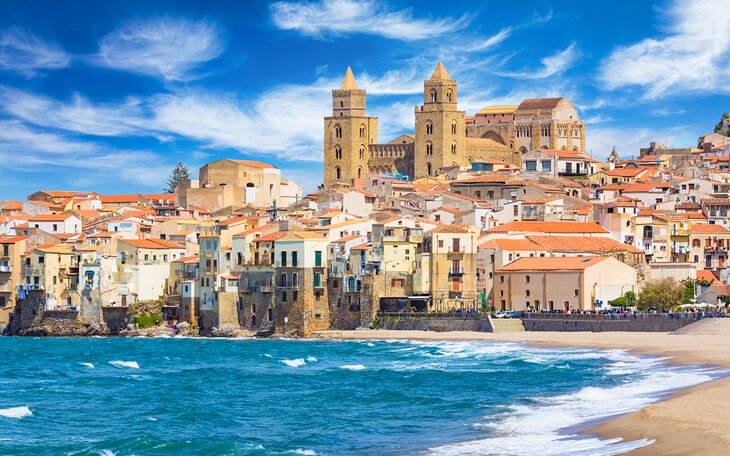
The original settlement was built atop the Rocca di Cefalù, possibly as early as Phoenician times, and the city was ruled successively by the Romans, the Byzantines, the Arabs, and the Normans, who moved the settlement down to the base of the rock in 1131 and started work on the majestic cathedral.
While sightseeing in Cefalù, you'll find reminders of each of those past cultures. Discover the best places to visit and things to do with our list of the top attractions in Cefalù.
See also: Where to Stay in Cefalù
- 1. Cathedral
- 2. Beach
- 3. Museo Mandralisca
- 4. Tempio di Diana
- 5. La Rocca
- 6. Lavatoio (Medieval Laundry)
- 7. Santo Stefano
- 8. Boat Excursions and Water Sports
- 9. Chiesa di Marta SS della Catena
- 10. Gibilmanna
- 11. Osterio Magno
- Where to Stay in Cefalù for Sightseeing
- Map of Attractions & Things to Do in Cefalu
1. Cathedral
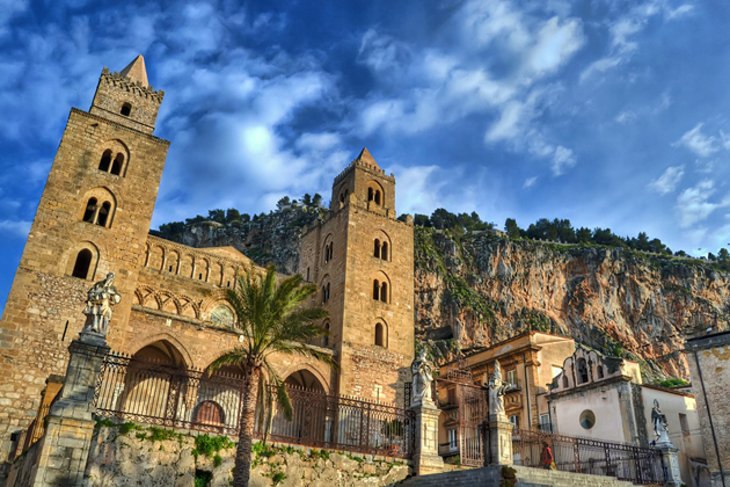
The main tourist attraction in Cefalù is the cathedral, one of the most interesting medieval buildings in Sicily. According to legend, the Norman King Roger II was caught in a storm at sea and vowed to build a church if he were saved. Progress in completing the cathedral was slow and it was not consecrated until 1267, so the newer parts of the building departed considerably from the monumental proportions of the original plans.
The church reflects the various influences of Sicilian history - Norman, Latin, Greek, and Arab. The nave has two rows of granite columns with Byzantine capitals supporting arches, above which are richly painted wooden beams. There is a 12th-century font in the right side aisle and a 16th-century statue of Mary by Italian Renaissance sculptor Antonello Gagini in the left.
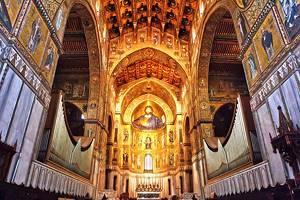
In the choir, the side walls are embellished with ornamental plasterwork, and there are also 15th-century statues, but it is the mosaics on their gold background that will immediately draw your attention. From the original cathedral, they are the work of Byzantine artists hired by Roger II, and they are dominated by the mosaic of Christ giving the blessing as ruler of the world, which lines the semi-circular dome of the apse.
Despite frequent restoration work since the 15th century, the mosaics of Cefalù are among the best-preserved in Sicily.
Address: Piazza del Duomo, Cefalù
2. Beach
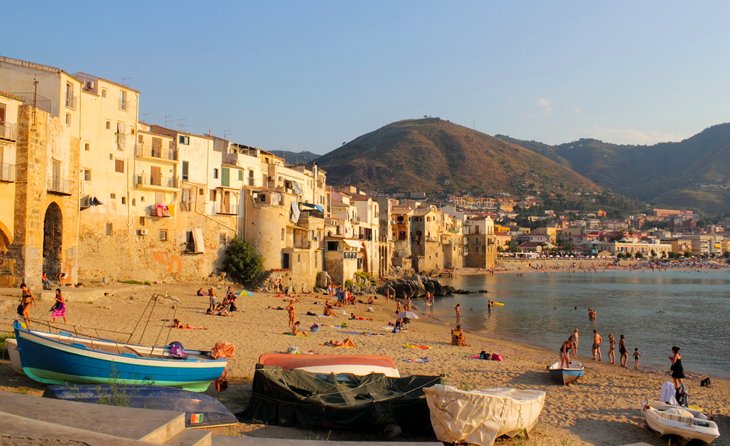
Backed by a promenade, the Lungomare Giuseppe Giardina, Cefalù's long beach lies in a curve below the old town and is one of the best beaches in Sicily. Use it as the locals do, for an afternoon stroll, as a place to visit to sit on a bench and watch the sea roll in, or as a place to sun and swim.
Part of the beach is free and part is set up with lidos — sunbeds and umbrellas for rent. The Lungamare Giuseppe Giardina is lined with shops, cafés, and restaurants. Although there are parking lots at either end of the beach, these fill quickly, especially on weekends.
A breakwater protects the beach from swells. At the breakwater end of the beach, the only remaining town gate, Porta Pescara, was used by fishermen to bring their catch into town.
Today it's a favorite spot for iconic photos in the early morning or in the light of the setting sun, and as a frame for views of the sea and coast. The small former fishermen's beach at its base is now popular for swimming.
3. Museo Mandralisca
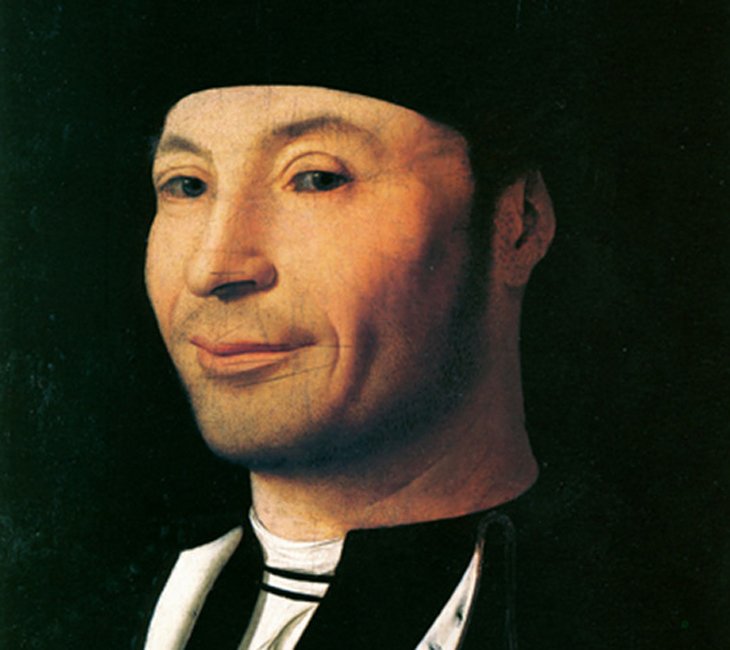
Close to Piazza del Duomo, the Museo Mandralisca contains a wide range of collections covering archaeology, natural history, paintings, and decorative arts. Especially fine are the Arab and Greek vases, which include a piece with a decoration depicting a tuna fish seller and a number of exquisitely decorated ceramics and other artifacts recovered in excavations at Lipari, Tindari, and Cefalù.
The collections of decorative objets d'arte include porcelain, bronze, Murano glass, marble, painted wood, and other media; look especially for the beautiful set of painted wooden chapel doors from the 18th century. In the art gallery, the highlight is the celebrated Portrait of a Man by Antonello da Messina, painted in 1465.
Address: Via Mandralisca 13, Cefalù
4. Tempio di Diana
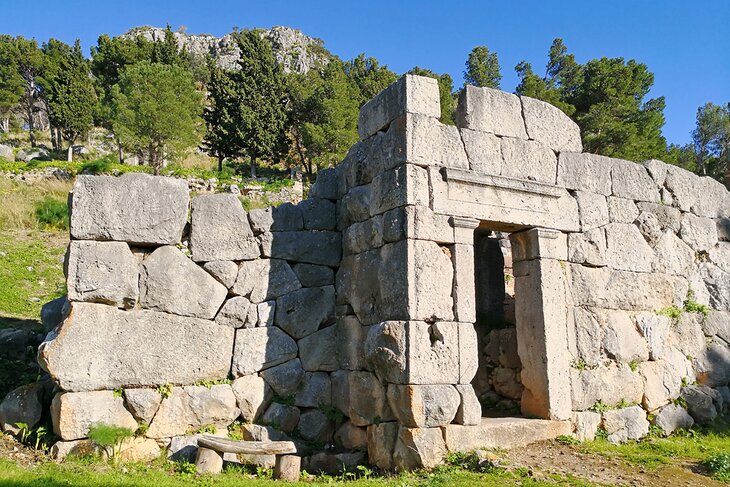
High on the rock above Cefalù, you can see the remains of a megalithic temple to Diana, dating from at least the ninth century BC. It is built of interlocking dry stones and is among the earliest known places of worship in Europe.
The earliest known temple built by the Sicans (early native people in Sicily), this megalithic site was added onto in Greek and Roman times, when it was thought to have been used by the cult of Hercules. It was used as a chapel in the 12th century, and you can see remains of arched windows and an apse from that time.
Address: La Rocca, Cefalù
5. La Rocca
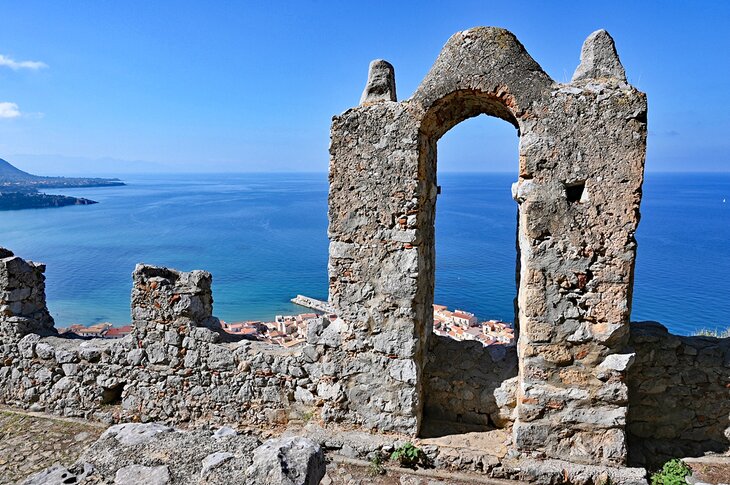
The north end of the Corso Ruggero is the starting point for the one-hour climb up the crag known as the Rocca. This 269-meter rock outcrop is composed almost entirely of fossils, and much of it is covered in pines.
Its top is surrounded by medieval walls, most of which are original, and at the very summit are the remains (some of which are reconstructions) of battlements from a Norman castle. You'll also find a large cistern and remains of barracks and storehouses. The signage is good, describing the fort and its history.
The views over the town, which lies almost directly below, and the coast are spectacular and reach on clear days to the Aeolian Islands. You can sometimes watch peregrine falcons from here. This is a climb for good sturdy shoes, as the path is rocky and irregular; the fort is also a good spot for a picnic lunch.
6. Lavatoio (Medieval Laundry)
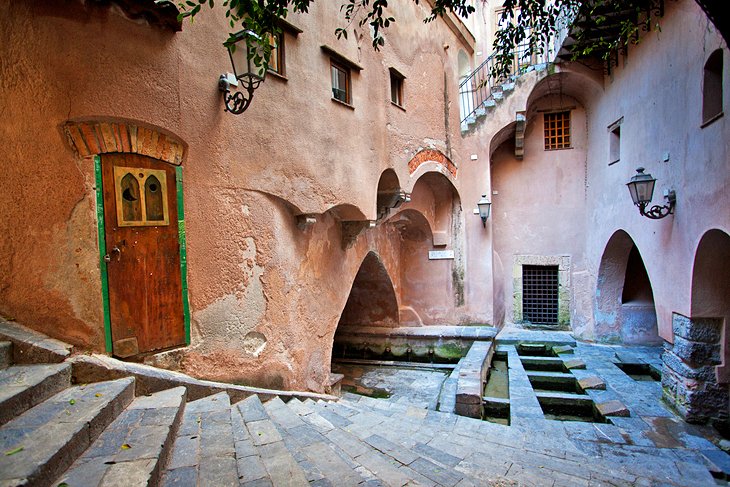
The public laundry was built in the Middle Ages, in the heart of the old city where women could gather to wash and rinse clothing - and perhaps also bathe — in a series of large basins that line up in an unusual stepped sequence.
A staircase of lava stones leads down to this area under wide arches, where the basins are filled with water coming from 22 spigots. The overflow water runs through a channel into the sea below. At the foot of the stairs is engraved a verse written in 1655 by Vincenzo Auria: "Here flows Cefalino, more salubrious than any other river, purer than silver, colder than snow."
Address: Via Vittorio Emanuele, Cefalù
7. Santo Stefano
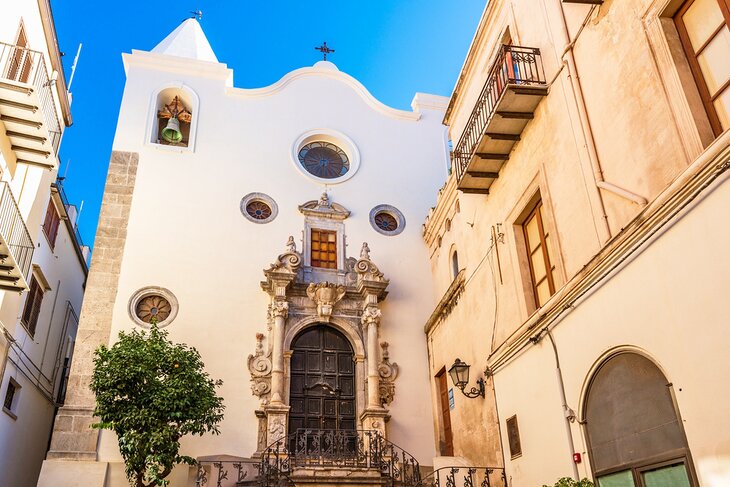
Also known as the church of Purgatory, Santo Stefano has one of the most beautiful facades in Cefalù. It's delicately carved Baroque portal looks out onto a small square from atop a graceful double staircase with iron balustrades. Greenery and flowers make the square even more intimate.
Its two names tell a bit of the church's history. The original structure was built by the Brotherhood of St. Stephen, which in 1596 became the Brotherhood of the Souls in Purgatory. That fraternity bought adjacent property and built the new church, finishing it in 1668. Two centuries later, the pavement in the square was lowered, accounting for the double staircase.
The interior has a large altarpiece picturing Christ giving the Eucharist to souls in Purgatory, and a magnificent wooden organ loft.
Address: Piazza Giovani Battista Spinola, Cefalù
8. Boat Excursions and Water Sports
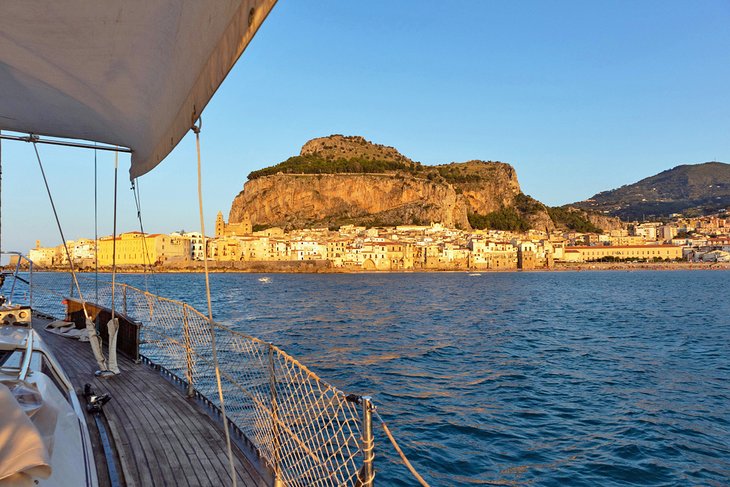
The beautiful Mediterranean waters around Cefalù, as well as the scenic coastline around it, make water sports and boat excursions among the most popular things to do here. At the marina, you can sign up for day trips for snorkeling in the crystal waters, sailing cruises for sightseeing along the coast, or even paddleboard tours. On the latter, you can often explore some of the sea caves that pierce the coastal cliffs.
9. Chiesa di Marta SS della Catena
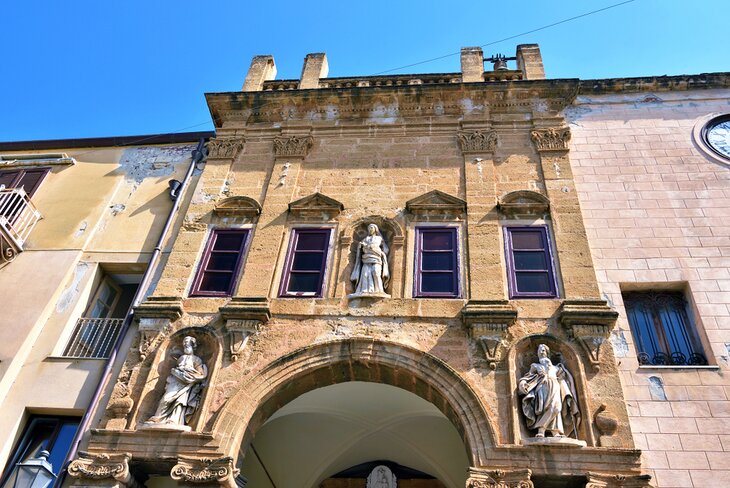
This church was completed in 1780, and its campanile is built in the remains of megalithic walls whose stones you can see at its base. It is also unusual for the placement of its two clocks. The flat façade has a loggia of golden stone with niches holding statues.
The interior is quite simple, with a single nave and an altar installed in 1902, and a statue dedicated to Santa Maria della Catena in memory of a 14th-century miracle in Palermo. At the base of the bell tower is a memorial to the local patriot, Salvatore Spinuzza, who was executed in this square in 1857, during the revolt for the liberation of Sicily from the Bourbons.
Address: Piazza Garibaldi, Cefalù
10. Gibilmanna
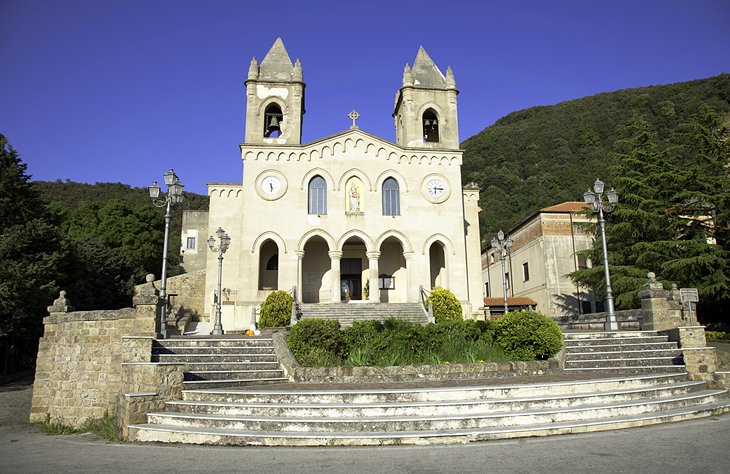
A winding, scenic road leads from Cefalù southwards to Gibilmanna, on the slopes of the 1,081-meter-high Pizzo Sant'Angelo, in the Madonie Mountains. In this beautiful wooded setting, you'll find the pilgrimage convent of Gibilmanna.
The church was built in the 17th and 18th centuries and houses a Madonna by Italian Renaissance sculptor Antonello Gagini (1478-1536) that is particularly revered. Every year on September 8, the festival of the birth of the Virgin Mary pilgrims come to the sanctuary from all over Sicily.
11. Osterio Magno
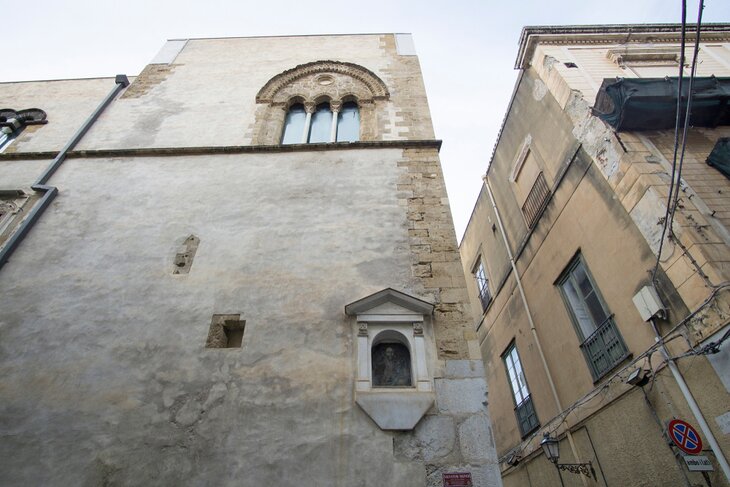
At the junction of Via Amendola and Corso Ruggero, which branches off from the Piazza del Duomo, stands the Hosterium Magnum. This imposing building with double and triple arched windows was, according to tradition, the residence of the Norman King Roger II in the 14th century.
Its two sections date from different eras. The older section facing Via Amendola is built of tufa and golden limestone and has two windows. The newer square tower has an elegant mullioned window. The name means "fortified construction" and there is a similar one in Palermo called Hosterium Magnum, the same name in Latin.
Address: Corso Ruggero, Cefalù
Where to Stay in Cefalù for Sightseeing
Several highly rated hotels in Cefalù overlook the beach, and others are in the center of town near shops and restaurants. Cefalù is fairly small, so any of these hotels is handy to the top tourist attractions.
Luxury & Mid-Range Hotels:
- Sitting above the town and surrounded by greenery, Hotel Alberi Del Paradiso in a former manor house with the ambience of a fine home, but all the tourist amenities, including a swimming pool and restaurant. The hotel has its own private sandy beach and a regular shuttle bus to take guests there. The hotel is a 15-minute walk from Corso Ruggero.
- The contemporary-style Cefalu Sea Palace sits right at the beachfront, with its own pool, a rooftop terrace, and restaurant. Concierge and room service are only two of the luxury amenities, and free parking is included.
- Victoria Palace Cefalu is almost equidistant from the Lungomare Cristoforo Colombo and Corso Ruggero and has its own private beach for guests, with complimentary beach parasols. Enjoy breakfast on the rooftop terrace overlooking the sea; the hotel has a restaurant and room service.
Budget Hotels:
- Hotel Kalura is a good choice for families, with a playground, a large swimming pool, and a separate pool for children. The hotel has its own beach with complimentary umbrellas and beach chairs. The restaurant has a spacious terrace with sea views, and parking is included in the rate.
- Near the rail station and a five-minute walk from the Lungomare Cristoforo Colombo and beach, Hotel Mediterraneo is right in the midst of town, close to several restaurants and shopping. Guests with a lot of luggage should note that there are steep stairs.
- A block from the beach and within walking distance of the train station, the charming Lirma B&B has individually decorated ground-floor guest rooms opening onto a flower garden. The traditional Sicilian breakfast includes homemade breads and cakes.
Map of Attractions & Things to Do in Cefalu
More Related Articles on PlanetWare.com
More Places to Visit in Sicily: Many of the attractions of Sicily are found in its capital, Palermo. Some of these include the Palazzo dei Normanni (Norman Palace) and the cathedral. You can learn about the highlights with the help of our pages on the top tourist attractions of Palermo, and nearby Monreale Cathedral.
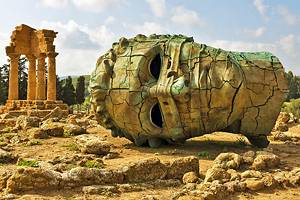
Exploring the Ancient Sites of Sicily: You'll find Greek and Roman theaters and ancient quarries among the tourist attractions of Syracuse, and at Enna is the Villa Romana with spectacular mosaic floors. Agrigento has a phenomenal number of temples.