18 Top-Rated Tourist Attractions in Austria
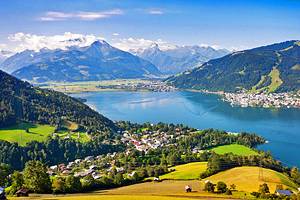
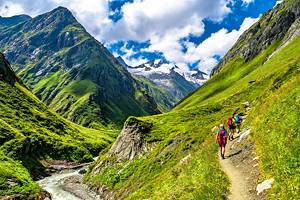
Austria, one of Europe's most popular holiday destinations, attracts tourists year-round with places to visit in both summer and winter. In fact, with some of Europe's finest skiing, winter is almost as busy as summer in the country's spectacular mountain regions.
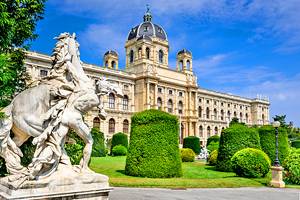
Visitors are drawn as much for the scenic beauty of this Alpine republic's provinces as they are for splendid cities like Vienna (Wien), the historic capital, and beautiful Salzburg, birthplace of Wolfgang Amadeus Mozart.
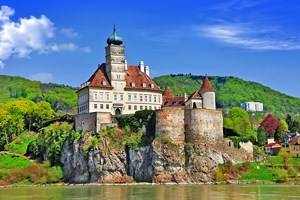
One of Europe's smallest countries, Austria is predominantly a nation of upland areas and high mountains, with the Eastern Alps occupying a good 60 percent of its territory. The River Danube flows for about 350 kilometers from west to east through the northern part of the country, adding to its allure as a tourist destination.
Find the best sightseeing opportunities and things to do with this list of the top tourist attractions in Austria.
- 1. The Vienna Hofburg: Austria's Imperial Palace
- 2. Salzburg Altstadt, a UNESCO World Heritage Site
- 3. The Spanish Riding School, Vienna
- 4. Schönbrunn Palace, Vienna
- 5. Innsbruck's Hofburg and Hofkirche
- 6. Melk Benedictine Abbey
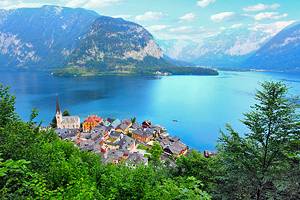
- 7. Hallstatt and the Dachstein Salzkammergut
- 8. Skiing at Kitzbühel and Kitzbüheler Horn
- 9. Belvedere Palace, Vienna
- 10. Medieval Burg Hochosterwitz
- 11. The Grossglockner Road to Franz-Josefs-Höhe
- 12. St. Stephen's Cathedral in Vienna
- 13. Klosterneuburg Abbey and the Verdun Altar
- 14. Maria Saal Cathedral
- 15. Krimmler Ache: Austria's Tallest Waterfalls
- 16. Eisriesenwelt: The World of the Ice Giants
- 17. The Styrian Armoury (Landeszeughaus)
- 18. Old Town Innsbruck & the Golden Roof
- Map of Tourist Attractions in Austria
- Best Time to Visit Austria
1. The Vienna Hofburg: Austria's Imperial Palace
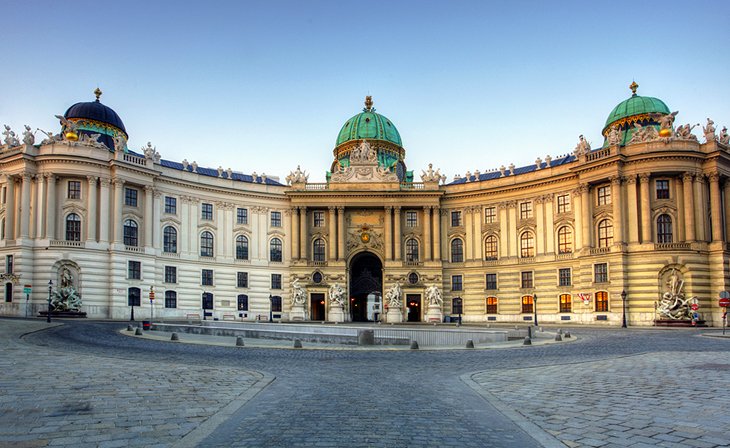
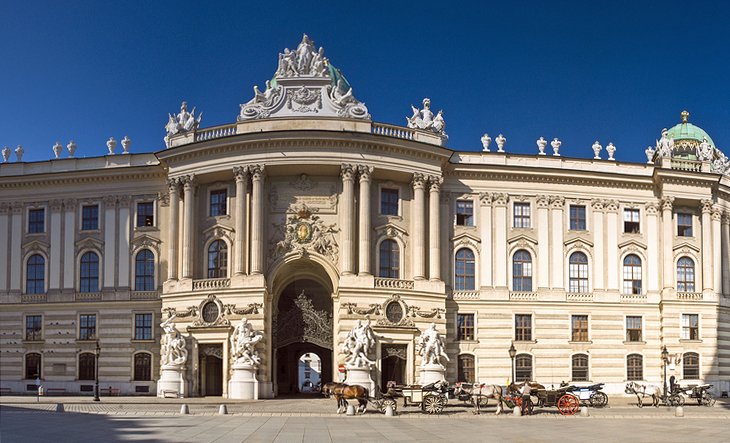
The spectacular Hofburg Palace in Vienna was for centuries the seat of Austria's monarchy, the powerful Habsburgs. Visiting this palace is one of the top things to do in Austria.
Now the President conducts state business in the same rooms that once belonged to Emperor Joseph II. Nearly every Austrian ruler since 1275 ordered additions or alterations, resulting in many different architectural influences, including Gothic, Renaissance, Baroque, Rococo, and Classicism.
Together with its many attractive squares and gardens, the entire Hofburg complex occupies 59 acres encompassing 19 courtyards and 2,600 rooms. Highlights of a visit include the Imperial Silver Collection and an array of dining services giving a taste of the lavish imperial banquets that once took place here.
Also worth seeing are the Sisi Museum, focusing on the life and times of Empress Elisabeth, and the Imperial Apartments, a series of 19 rooms once occupied by Emperor Franz Joseph and his wife.
Address: Michaelerkuppel, 1010 Vienna
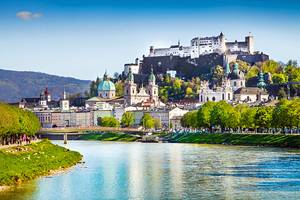
2. Salzburg Altstadt, a UNESCO World Heritage Site
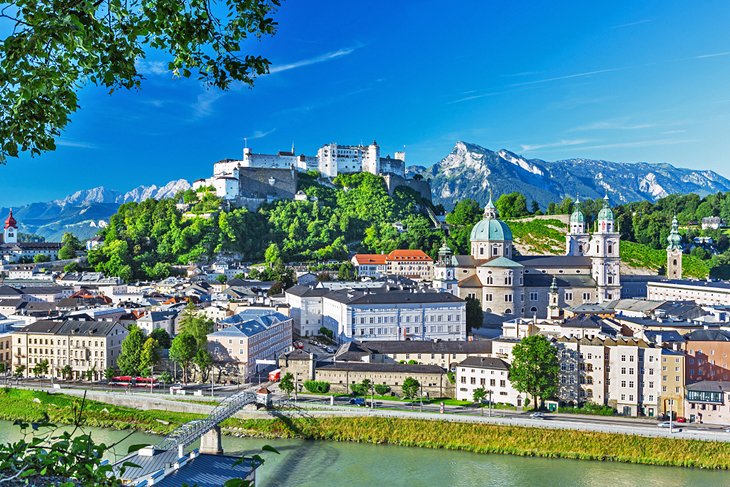
As the residence of Prince Archbishops, Salzburg was a spiritual center from the earliest days of Christianity in Europe. The Benedictine Abbey of St. Peter, in the heart of the Altstadt (Old Town) was founded by St. Rupert in AD 690 and served as the residence of the Archbishops until the early 1100s.
The Prince Archbishops employed some of the finest artists and architects of their times to build and decorate their churches, residences, and monasteries, and although these have been "updated" in the tastes of successive centuries, the medieval and Baroque buildings combine to form a beautiful old quarter to explore.
Highlights are St. Peter's Abbey and its church, along with the beautiful cemetery and its catacombs, instantly recognizable as a filming site for The Sound of Music.
Nearby is the cathedral, and wandering among its colorful Baroque burgher houses, you'll find charming squares and attractions that include the birthplace of Wolfgang Amadeus Mozart, now a museum. Above the beautiful spires and cupolas soars Salzburg's castle of Hohensalzburg, which you can reach by a funicular.
3. The Spanish Riding School, Vienna
The Spanish Riding School dates back to the time of Emperor Maximilian II, the man responsible for introducing the famous Lipizzaner horses into Austria in 1562.
Today, it's one of the only places where the classical style of riding preferred by aristocracy is still practiced. Viewing the famous equestrian displays in the Baroque Winter Riding School – held here since the time of Charles VI – is one of the top things to do in Vienna.
Built in 1735, the magnificent hall was designed for the nobility to demonstrate their riding skills. Tickets to watch these magnificent animals perform their ballet are highly sought after, so book online as far in advance as possible.
Address: Michaelerplatz 1, 1010 Vienna
4. Schönbrunn Palace, Vienna
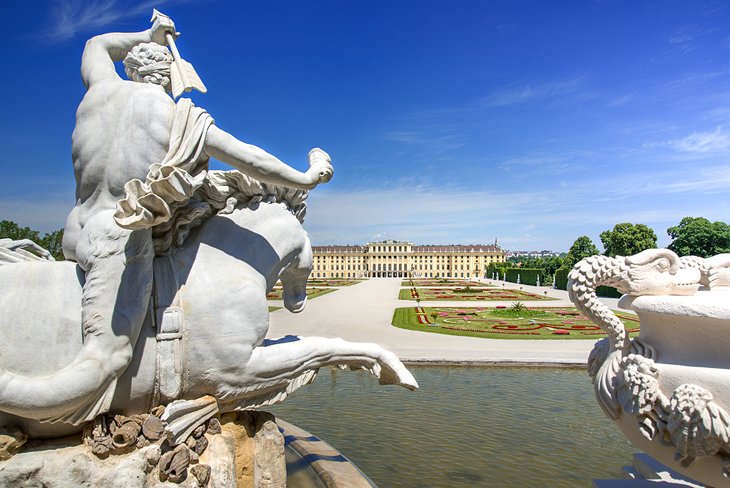
Located on Vienna's outskirts, the Baroque Schönbrunn Palace was completed in the early 1700s and was later converted into a summer residence by Empress Maria Theresa.
Highlights of a tour through the 40 rooms of the palace that are open to the public are the Royal apartments, the Great Gallery with its ornate ceiling paintings, the Million Room, and Maria Theresa's salon with its carved and gilded rosewood panels. You'll also see the spectacular Hall of Mirrors, with its gold Rococo-framed mirrors. Behind the 1,441-room palace stretch 500 acres of parks and gardens, also in the 18th-century Baroque style.
Your visit to Schönbrunn should include the many attractions spread throughout these grounds: formal gardens; a labyrinth; the Palm House, filled with tropical and exotic plants and butterflies; an Alpine garden with a farmhouse; Europe's oldest zoo; and the Classical Gloriette, a grand marble structure crowning a hill above the gardens.
A carriage museum in the former Winter Riding School displays dozens of historical state coaches and sleighs. The entire palace and gardens complex is a UNESCO World Heritage Site.
Address: Schönbrunner Schloßstraße 47, 1130 Vienna
5. Innsbruck's Hofburg and Hofkirche
The Emperor Maximilian I, who reigned in the late 1400s and early 1500s, made Innsbruck the main residence and the seat of the Hapsburg government and, as a result, a focal point of Europe. His palace, the Hofburg, was remodeled by Empress Maria Theresa in 18th-century Baroque and Rococo styles. Highlights of a tour are the chance to view the sumptuous royal apartments, the marble Giant Hall (Riesensaal), and the painted ceilings throughout.
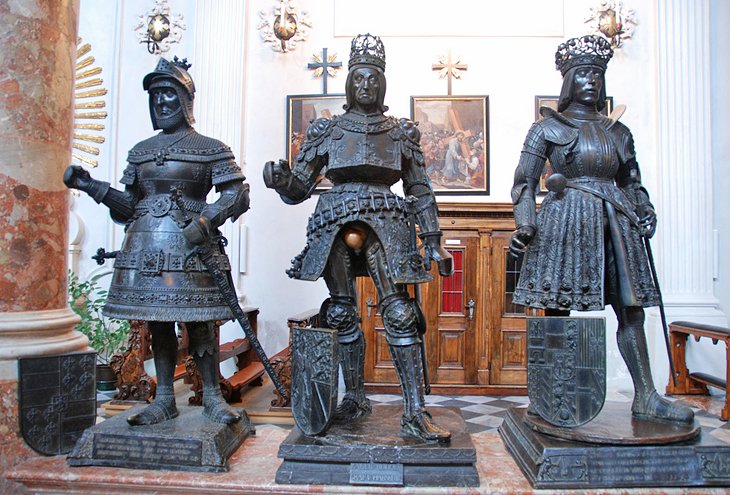
The highlight of the Hofkirche, or Court Church, is the spectacular Tomb of Emperor Maximilian I, who died in 1519. Widely considered the finest work of German Renaissance sculpture, the monument's central feature is the massive black marble sarcophagus with a bronze figure of the Emperor. On the sides of the sarcophagus are 24 marble reliefs depicting events in the Emperor's life, and around it stand 28 larger-than-life-size bronze statues of the Emperor's ancestors and contemporaries (look out for King Arthur).
Other pieces of sculpture include 23 bronze statues of saints from the Habsburg family and 20 bronze busts of Roman emperors.
Address: Rennweg 1/3, 6020 Innsbruck
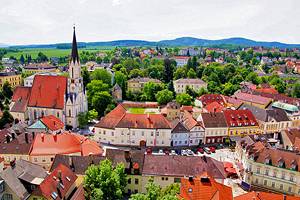
6. Melk Benedictine Abbey
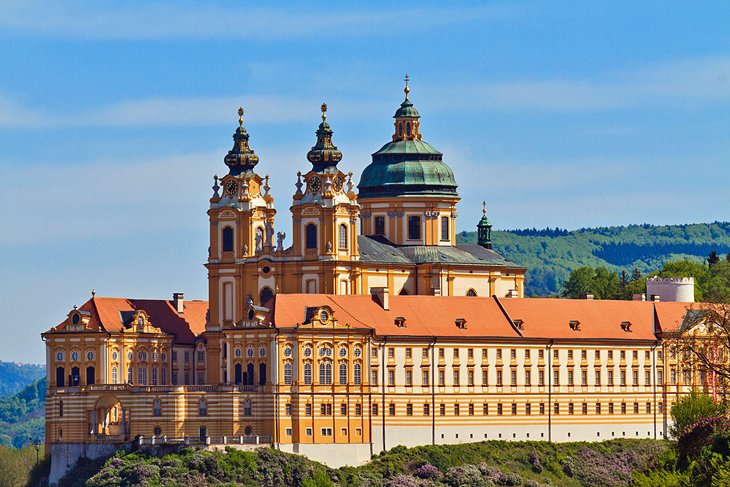
Melk Abbey is one of the world's most famous monastic sites, and its spectacular buildings are laid out around seven courtyards. The most prominent part of this massive 325-meter-long complex is the west end and its twin-towered church rising above a semicircular terrace range.
Perched on a rocky outcrop high above the town of Melk and overlooking the Danube, the abbey contains numerous other great reasons to spend a few hours touring it. These include the tomb of Saint Coloman of Stockerau; the remains of Austria's first ruling family; the House of Babenberg; and the superb 196-meter-long Imperial Corridor with its portraits of Austria's rulers, including one of the Empress Maria Theresa.
Along the way, you'll also see the Imperial Rooms with their displays relating to the abbey's history, along with statues and paintings.
Address: Abt-Berthold-Dietmayr-Straße 1, 3390 Melk
- Read More: Top-Rated Tourist Attractions in Melk
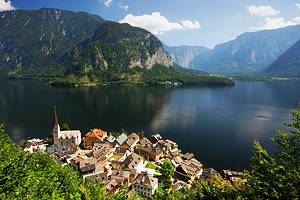
7. Hallstatt and the Dachstein Salzkammergut
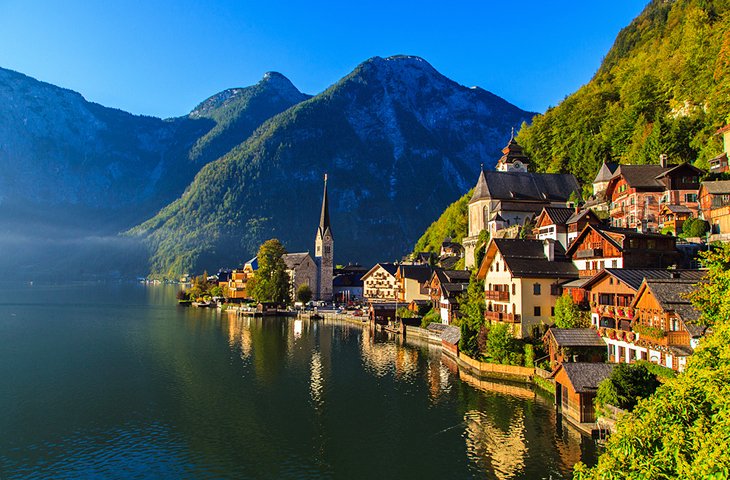
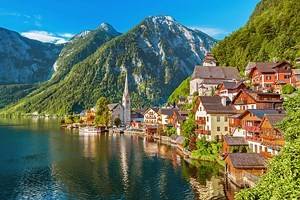
Hallstatt is undoubtedly one of the most picturesque small towns in Austria, if not Europe. It's also a good place from which to explore the spectacular Dachstein Salzkammergut region, a UNESCO World Heritage site.
The beautiful Baroque architecture testifies to Hallstatt's wealth, which is based on its long history of salt production from prehistoric times.
You can also visit the underground salt lake in the nearby Hörnerwerk cavern, or explore the Dachstein Caves, one of Europe's most impressive cavern networks, which are, in places, up to 1,174 meters deep. Highlights include the Giant Ice Cave, with its sub-zero summer temperatures and huge caverns with magnificent frozen waterfalls, and the Mammoth Cave, with its huge pipe-shaped galleries formed by an ancient underground river.
Above ground, visitors can tackle the superb 5 Fingers viewing platform, an incredible metal structure hanging over a 400-meter sheer drop with excellent views of the surrounding Alps.
8. Skiing at Kitzbühel and Kitzbüheler Horn
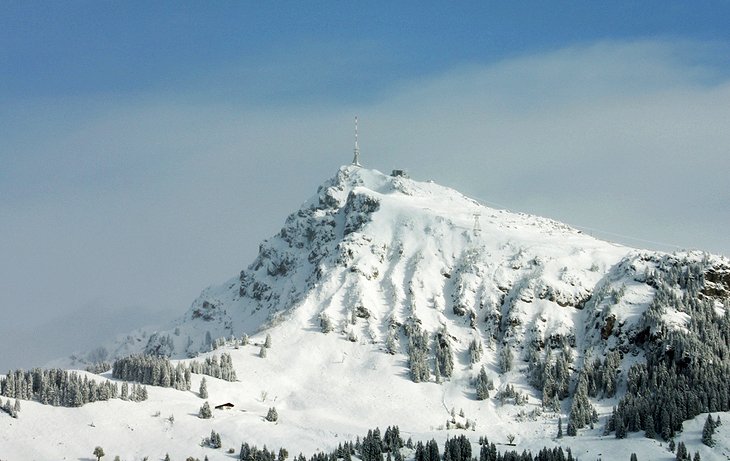
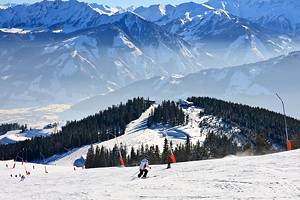
One of the best places to ski in Austria, the famed resort town of Kitzbühel spoils snow lovers with its 170 kilometers of skiable pistes and slopes dotted with little mountain huts, where they can stop for traditional Alpine snacks and warming drinks.
Although it's the site of the annual Hahnenkamm, the toughest of all downhill ski races, Kitzbühel has plenty of terrain for all skill levels in its three skiing areas, and the smallest of these, Bichlalm, is dedicated to freeriders.
But Kitzbühel is not just for skiers. With its walls and frescoed houses, and snow-covered Alps for a backdrop, the town is as pretty as Alpine villages get.
The 1,998-meter Kitzbüheler Horn that delights skiers in the winter is a favorite for mountain hikers in the summer, and you can also reach the summit by cable car via the Pletzeralm. It's considered one of the finest summit views in the Tyrol: to the south from the Radstädter Tauern to the Ötztal Alps; to the north, the nearby Kaisergebirge; to the west, the Lechtal Alps; and to the east, the Hochkönig.
To the south of the Kitzbüheler Horn rises the 1,772-meter-high Hornköpfli, also reached by cableway. In addition to the great views, on the summit, you'll find the Gipfelhaus, a unique mountaintop home; a chapel; a restaurant; and an Alpine garden.
9. Belvedere Palace, Vienna
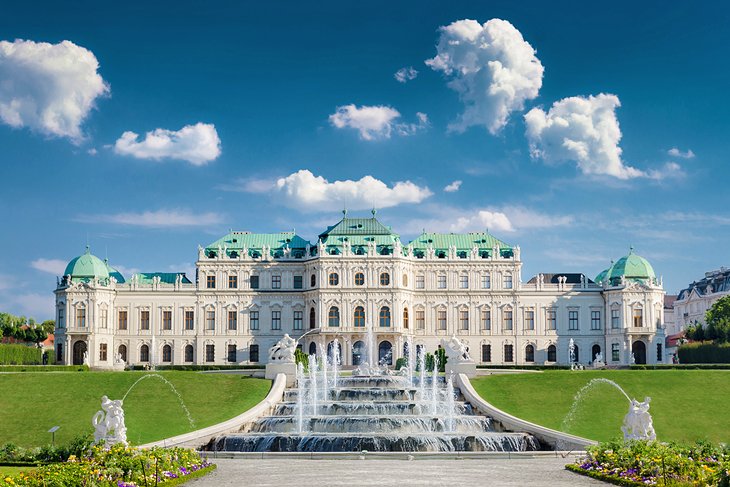
Another of Austria's most-visited palaces – and one that should definitely be included on your Vienna travel itinerary – is the spectacular Belvedere Palace (Schloss Belvedere). Referred to most often simply as "The Belvedere," this important historic site is split into two major sections: the Upper (Oberes) and Lower (Unteres) Palaces.
If you've only got time to explore one, make it the Upper Palace. Here, you'll find the largest portion of the attraction's impressive collection of artworks, as well as have the chance to view one of the country's best preserved architectural gems. Highlights include Sala Terrena, the main hall, notable for its statues and stucco vaulted ceiling; the Carlone Hall, with its ceiling fresco; the two-story Marble Hall, with its many sculptures and paintings; and the impressive Ceremonial Staircase.
The Lower Palace is no less worthy of a visit. Highlights include the Marble Gallery, with its collection of statues; the Grotesque Hall, with its numerous fine wall paintings; and a second Marble Hall, this one known for its fascinating ceiling fresco.
If you're here for the day (you should plan on it!), the palace boasts a great café and restaurant, three shops, and a great Christmas Market for those traveling in the winter months.
Address: Prinz Eugen-Straße 27, 1030 Vienna
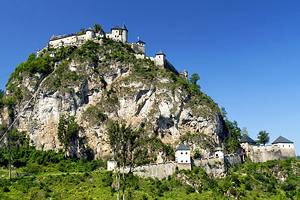
10. Medieval Burg Hochosterwitz
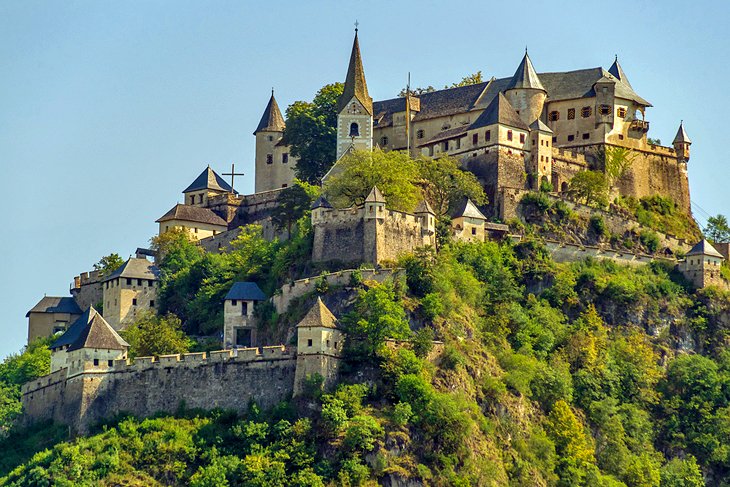
To the east of St. Veit, on a crag rising some 160-meters above the valley, sprawls the imposing Burg Hochosterwitz, Austria's most important medieval castle. After a turbulent history, the castle-first mentioned in 860 AD-was captured by the Khevenhüllers, and was enlarged in 1570 in the face of Turkish invaders. Never captured by a foe, the castle has remained in the Khevenhüller family since.
The steep access road to the castle, the Burgweg, winds its way up through the 14 defensive gates to the beautiful arcaded courtyard where you'll find the little chapel with its wall and ceiling paintings from 1570 and the church at the southwestern end of the castle with its high altar dating from 1729.
Address: Hochosterwitz 1, 9314 Launsdorf
11. The Grossglockner Road to Franz-Josefs-Höhe
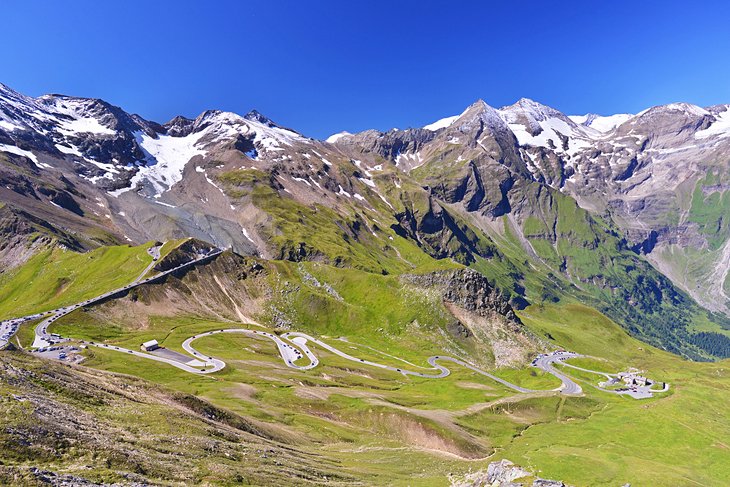
The Grossglockner Hochalpenstrasse from Bruck, in the Pinzgau, to Heiligenblut, at the foot of the Grossglockner, was constructed between 1930 and 1935. Following the route of an old Roman road, it is one of the most magnificent mountain roads in Europe.
Although its importance as a route through the Alps has declined, it's still a splendid highway through the Hohe Tauern, Austria's highest mountain massif and one of the country's outstanding attractions. Running for 22 kilometers through the mountains at an altitude of more than 2,000 meters, the road consists of a long succession of turns leading up to the summit tunnel on the Hochtor at 2,506 meters and then down into the valley on the far side.
The road is the access to the massive Hohe Tauern mountain range, where Franz-Josefs-Höhe is famous across Europe for its spectacular views. Named after a visit paid by Kaiser Franz-Josef in 1856, this wonderful vantage point stands 2,422 meters above sea level and offers incredible vistas of the surrounding country. Prominent in the view is the Grossglockner which, at 3,798 meters, is Austria's highest mountain.
Be sure to stop at the visitor center for its detailed displays relating to the area's history, as well as exhibits focusing on its glaciers and general tourist information.
Official site: www.grossglockner.at/gg/en/index
12. St. Stephen's Cathedral in Vienna
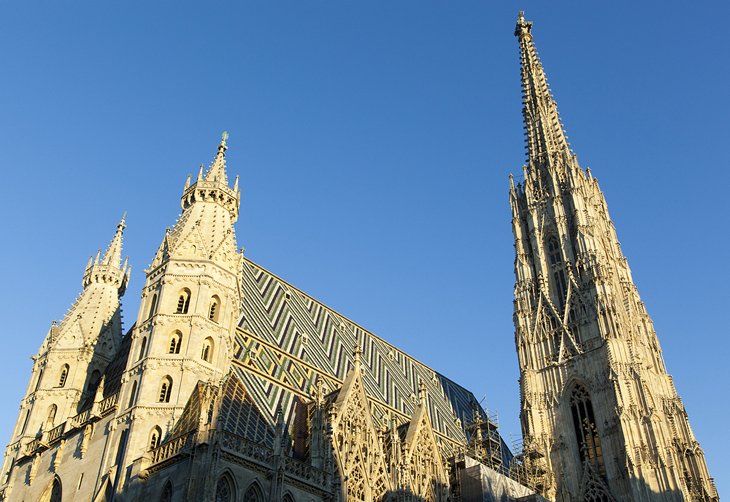
The imposing Gothic cathedral of St. Stephen's (Stephansdom) is a landmark inside Vienna's old city center. The original 12th-century Romanesque church was replaced in the 13th century by a Late Romanesque church, of which the massive gate and the Heathen Towers (Heidentürme) survive.
The later Gothic reconstruction in the 14th century added the choir and the Chapels of St. Eligius, St. Tirna, and St. Catherine, and in the following century, the famous 137-meter-high South Tower (Steffl) was constructed. After significant damage in World War II, the church was rebuilt.
The views from the Watch Room at the top of the Steffl are worth climbing its 343 steps, but you can take an elevator to a viewing platform on the North Tower, home to the massive Pummerin Bell. You won't want to miss the 14th-century catacombs and the cathedral treasury, where some of the cathedral's most important objects are displayed.
Address: Stephansplatz 3, 1010 Vienna
- Read More: Exploring St. Stephen's Cathedral, Vienna
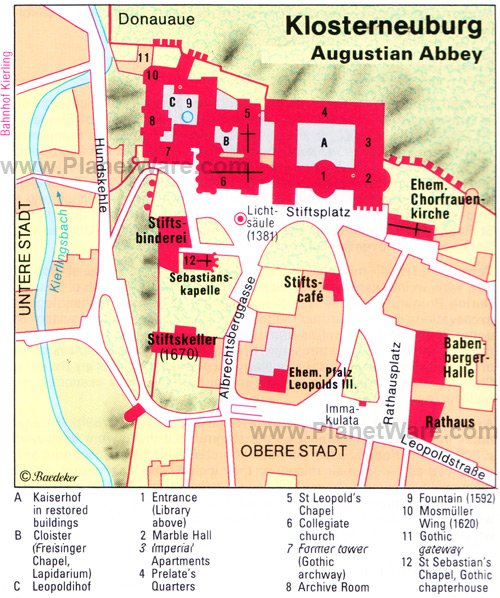
13. Klosterneuburg Abbey and the Verdun Altar
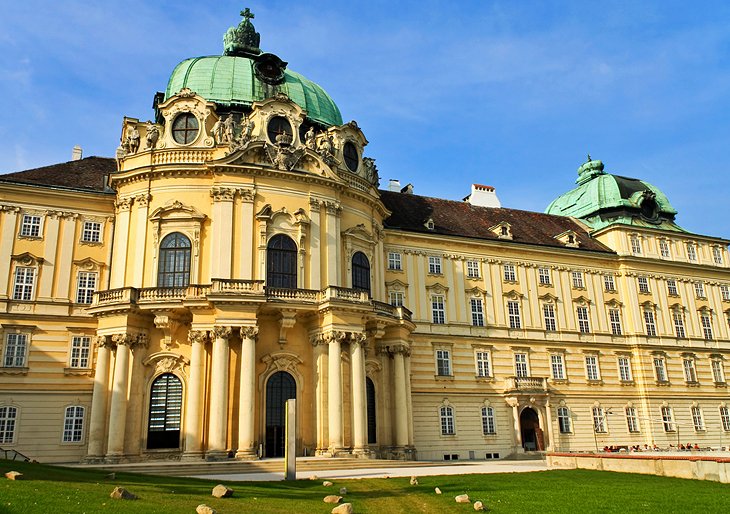
A flight of steps in lovely Klosterneuburg Abbey leads down to the 12th-century St. Leopold's Chapel where Leopold III is buried. It's also where you'll find the famous Verdun Altar. Perhaps the finest existing example of medieval enamel work, the altar consists of 51 panels of champlevé work on gilded copper depicting Biblical scenes by Nicholas of Verdun from around 1181.
Originally on the reading pulpit of the former Romanesque church, the panels were put together to form the present winged altarpiece after a fire in 1329. Four painted panels affixed to the altar in 1331 and the oldest in Austria-they were painted in Vienna before 1329-are now in the Abbey Museum.
Address: Stiftsplatz 1, 3400 Klosterneuburg
14. Maria Saal Cathedral
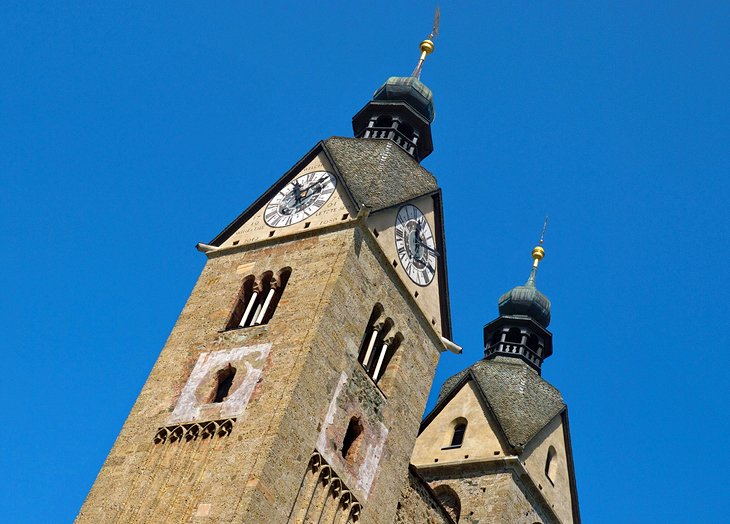
The Church of Maria Saal-more often than not referred to as Maria Saal Cathedral-is perched on a hill high above the Zollfeld and is one of the leading places of pilgrimage in the state of Carinthia in southern Austria. It was here around 750 AD that Bishop Modestus consecrated a church from which the surrounding area was Christianized.
The present twin-towered church was built in Gothic style in the first half of the 15th century on the foundations of a Roman basilica and was remodeled during the Renaissance and Baroque periods.
Highlights include the west facade with twin towers and its fine old gravestones. Particularly interesting are the 16th-century Keutschach Epitaph depicting the Coronation of Our Lady, and a Roman stone relief from around AD 300.
15. Krimmler Ache: Austria's Tallest Waterfalls
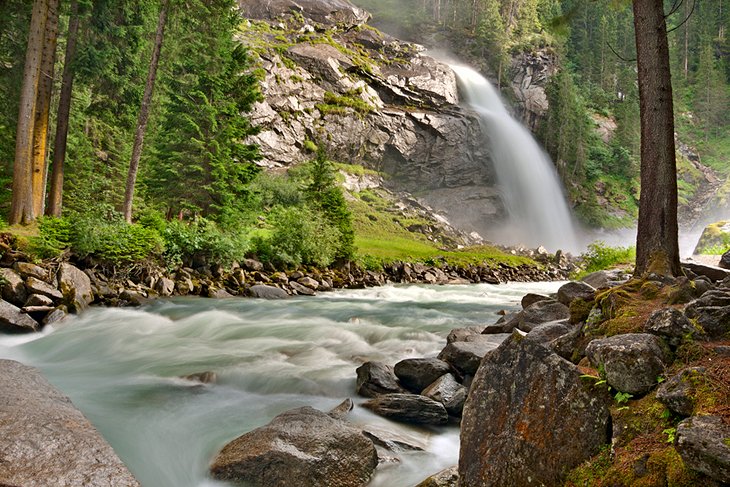
The Krimmler Ache plunges 380 meters in three tremendous cascades and makes for an excellent excursion from the nearby village of Krimml. At an altitude of 1,076 meters, Krimml-perched high above the Salzachtal in a wooded valley-is a wonderful place to stop for a few days if you're into hiking.
In addition to various excellent walks to the waterfalls, there's a rewarding climb to the Schettbrücke and continuing to the spectacular Krimmler Tauernhaus. From here, expert climbers can tackle the 2,911-meter-high Glockenkarkopf on the Italian frontier.
16. Eisriesenwelt: The World of the Ice Giants
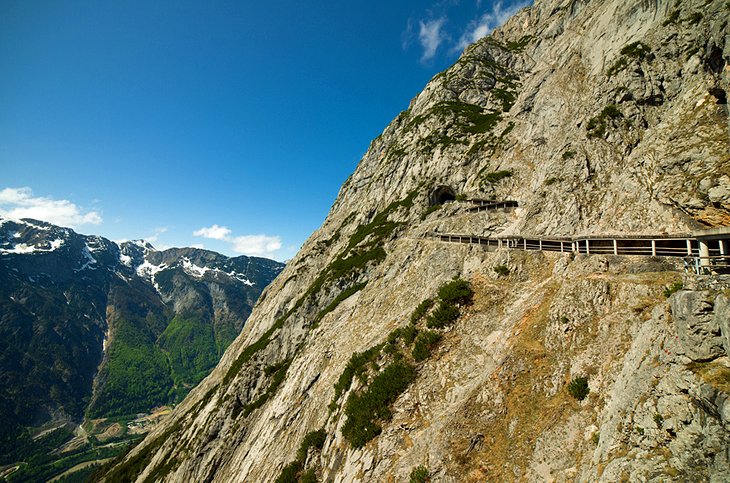
Found on the western edge of the Tennengebirge, the spectacular World of the Ice Giants is the largest system of ice caves in the world. Covering some 30,000 square meters, the caves were carved by an underground river in the Tertiary period. Discovered in 1879, they were opened to the public in 1912, and to date, an amazing 45 kilometers of the network has been explored.
After winding along the Great Ice Wall, you'll be confronted by the massive Hymir Hall with its impressive ice formations and icicles. Stone steps lead to the Eistor, or Ice Gate, a spectacular 1,775-meter-high wall of ice, and the great Ice Palace. Conducted tours last two hours, and the trip to and from the caves takes a few hours, so expect to spend the best part of a day exploring the area.
17. The Styrian Armoury (Landeszeughaus)
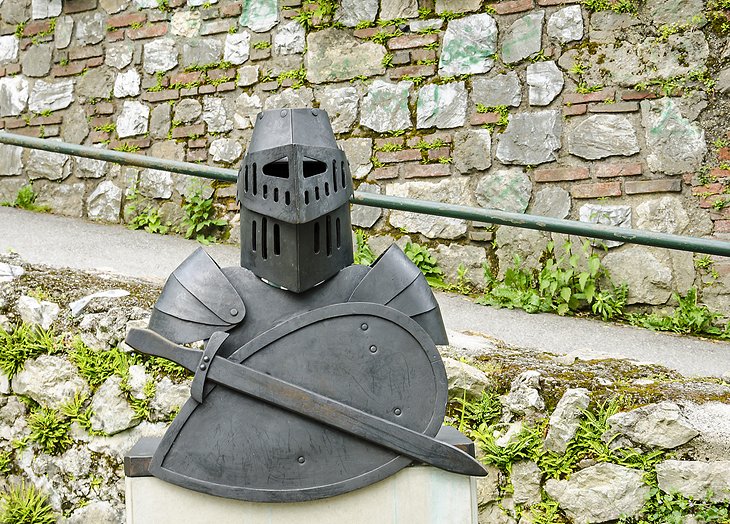
In the heart of Graz is the Landeszeughaus, the Styrian Arsenal. Built in 1644, the building houses a spectacular collection of completely preserved 17th-century arms and armor-enough, in fact, to arm 32,000 men, including helmets and weaponry.
While in Graz, you should also visit the Landhaus. Built in Renaissance style in 1557-65, its main facade is dominated by rounded windows and a veranda. The lovely arcaded courtyard has three-storied pergolas on two sides and a Renaissance fountain, while in the Knights' Hall there's a splendid stucco ceiling from 1746.
18. Old Town Innsbruck & the Golden Roof
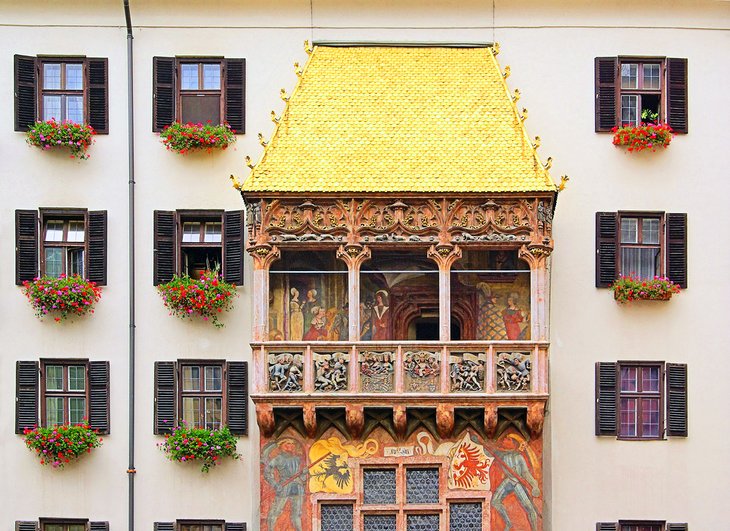
The beautiful Austrian city of Innsbruck is not only home to some of the country's best preserved architecture, it's also home to some of the most unusual and unique historic buildings. Perhaps the best known of Innsbruck's points of interest is the Golden Roof (Goldenes Dachl).
This relic from the city's rich Hapsburg past is located in the heart of Innsbruck Old Town (Altstadt), and adorns a Late Gothic oriel window of a former palace, the Neuer Hof, which was used by royalty. You can't miss this perfect selfie spot as you wander along the arcaded Herzog-Friedrich-Strasse. If you time it right (when the sun shines), the roof really does appear to glow.
Consisting of no less than 2,657 gilded copper tiles, the Golden Roof dates back to 1496, when it was added to the building to mark the marriage of Holy Roman Emperor Maximilian I, and served as a royal box, so the couple could enjoy the celebrations in the square to mark the occasion. After taking some pics, be sure to visit the Golden Roof Museum that deals with the Emperor's lasting legacy.
Be sure to spend some time wandering the winding, narrow, streets and alleys around this iconic Innsbruck attraction. In addition to the many fine old buildings here, you'll also enjoy great vistas of the many mountains that surround this beautiful Austrian city.
Address: Herzog-Friedrich-Straße 15, 6020 Innsbruck
Map of Tourist Attractions in Austria
Best Time to Visit Austria
Cities or countryside? Skiing or hiking? Your plans will determine when is the best time of the year to visit Austria.
Spring: Spring can be chilly in Austria, with temperatures in the 10 to 15 degrees Celsius range in cities and much lower in the mountains. Because the season is short and only truly lasts two months (April and May), most avid outdoor enthusiasts take full advantage of it by heading to the mountains, picnicking near lakes, and discovering small towns full of history and heritage. Although spring sees lots of sunshine, the weather is also highly unpredictable, meaning you should carry an umbrella, especially during the month of April.
One of the best places to visit in Austria in April and May is the Lienz Dolomites. Hiking in this area is very popular because there are options for all levels of experience and fitness. Experienced hikers can find both short and long-distance trails, including multiple-day hikes like the Long Törlweg hike, which takes several days and requires stays in one of the alpine huts, and ups and downs across six summits with stunning panoramic views over the snowcapped peaks.
Summer: Summer is high season in Austria, with temperatures usually in the low to mid-20s Celsius, plenty of sunshine, and crisp evenings perfect for a stroll through the many picturesque towns. Flocks of tourists head to Austria during this season, which results in expensive flights, overbooked hotels, and higher prices everywhere you go.
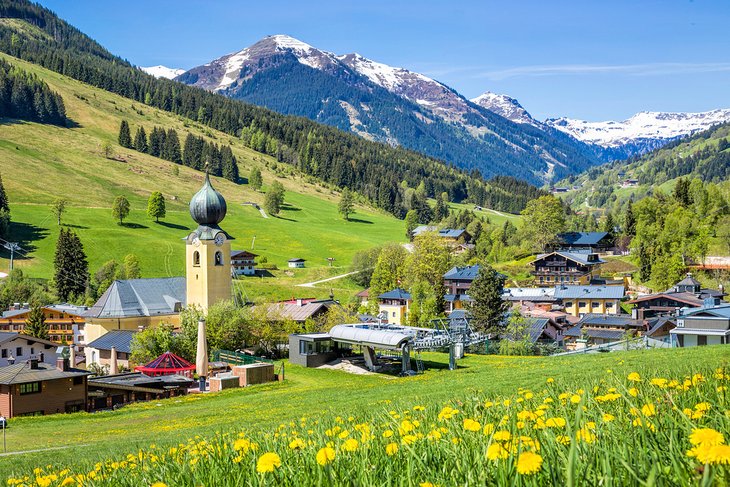
On the plus side, the sky remains blue, and the air is filled with the smell of flowering meadows. There's no better time to photograph the Alps than in summer, as the visibility is excellent, and the snowcapped mountains can be seen from very far away.
June is the wettest of all warm months but also the one with the most festivals, including the Midsummer Night Celebration, which includes bonfires lit under the light of the moon. July brings the best weather of the Austrian summer — it's mostly dry, it's not scorching hot, and you'll get plenty of sunshine.
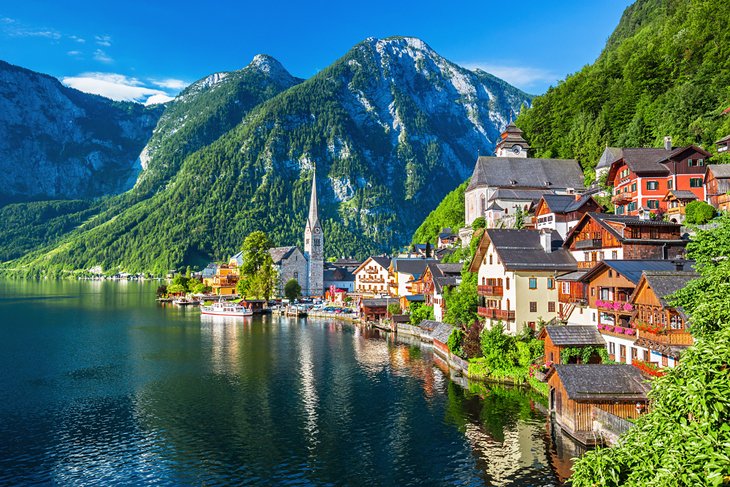
August heats up significantly, so it's a favorite time among Austrians to go swimming. Lake destinations such as Lake Plansee and Lake Hallstatt are very crowded and very expensive, and hotels are often booked a year in advance.
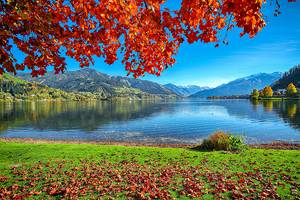
Fall: September and October are chilly in Austria but still not cold, with temperatures very similar to spring, except that while spring is rainy and unpredictable, autumn is actually drier and with clear skies. This is the season for cycling tours, hiking, and boating, as the trees are changing into shades of reds and yellow, and the valleys and mountains are stunning everywhere.
If you arrive in early September, you'll get warmer temperatures but without the summer crowds, as everybody is heading back home for school and work. November, though technically part of autumn, can be very cold, with temperatures in the low single digits.
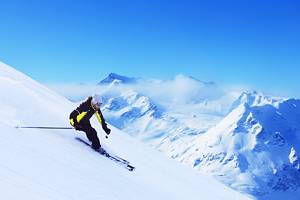
Winter: Winter is technically low season in Austria, as long as you stick to the cities or even small mountain towns-the best time to go to Austria if you're looking for discounts and deals on hotels and flights. Because Austria is a major skiing destination, however, don't expect prices to go down if you're heading to the Alps or have an active outdoorsy vacation planned.
The winter season in Austria starts in November and lasts until March, with temperatures regularly in the minus because of the proximity to the Alps. The air is chilly, even when the sun is out, and snowfall is common and can be very abundant. The weeks surrounding Christmas and New Year's are busy, crowded, and much more expensive.