Denmark Travel Guide
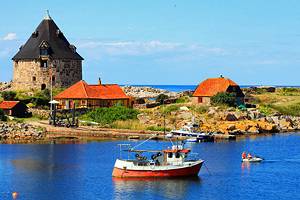
For a relatively small country, Denmark offers a delightful mix of things to see and do. Possibilities range from exploring the shops and culture of city life, to touring old castles, and visiting the small towns and offshore islands. While tourists sometimes fail to venture beyond the capital city of Copenhagen, the country also has lovely rural areas with interesting towns and sights. Visitors will definitely want to take some time to explore the capital, but those with more than just a day or two should also head out to other areas.
Read More
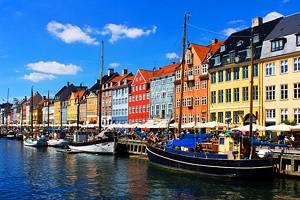
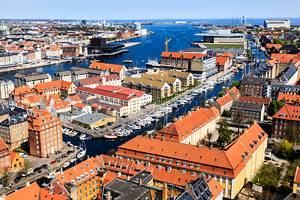
Copenhagen offers a wealth of interesting tourist attractions, but is also a great place to simply enjoy a relaxing afternoon in a café or a stroll along the Stroget Pedestrian Zone to see the latest fashions. Some of the most popular sights in Copenhagen are the palaces; the queens residence known as Amalienborg Palace, the Christiansborg Palace which holds the seat of the Danish Government, and the Rosenborg Palace, the seasonal residence of the Royal Family. Other top attractions include the National Museum, the Round Tower, the Little Mermaid, and the Tivoli amusement park, to name just a few.
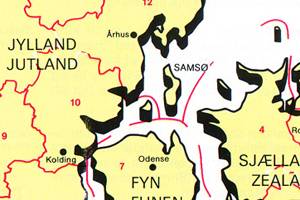
Nearby on the island of Funen is the city of Odense, an industrial town, most well known for being the birthplace of Hans Christian Andersen. The Hans Christian Andersen Museum, located in the house where he was born, is one of the main attractions, showcasing the life and works of this famous writer. Also of interest is the Art Hall, found in an old textile factory which now holds the Arts Center, as well as shops and restaurants.
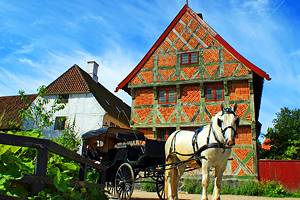
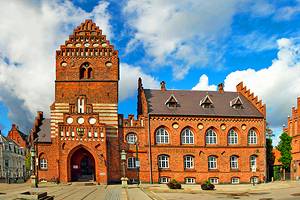
Other popular trips in Denmark include Roskilde, one of the country's oldest towns, the city of Arhus with a lovely Gothic church and an Open-Air Museum, and the port town of Svendborg. From Svendborg visitors can catch a ferry to the island of Ærø and spend some time in the old merchants' town of Aeroskobing, strolling past well preserved 17th and 18th C houses. Ultimately, there are many interesting day trips and extended trips to be had in Denmark for those who make the time to see more of the country than just Copenhagen.