18 Top-Rated Tourist Attractions in the Czech Republic
Although one of the continent's smaller nations, the Czech Republic won't disappoint travelers looking for some of the best places to visit in central Europe. Given its size – and thanks to a first-rate public transit system – it's an easy country to get around, particularly for those planning on spending the bulk of their time exploring the nation's beautiful capital, Prague, which has nearly endless sightseeing opportunities and things to do.
Yet while Prague boasts an inordinate number of excellent attractions, there are enough out-of-the-way attractions to warrant exploring by car. Highlights of a trip to the Czech countryside include many excellent national parks and conservation areas. One of the most popular is aptly named Bohemian Paradise, an area of outstanding natural beauty characterized by numerous splendid rock formations and many fine old castles.
Another area worth visiting is Podyjí National Park in Moravia, popular for its large, unspoiled forests. Along the way, you'll stumble across numerous old villages and towns, many unchanged since medieval times and home to fine old churches, palaces, and public squares, all of them worth a visit. For ideas on the best places to visit, read our list of the top tourist attractions in the Czech Republic.
- 1. Prague Castle
- 2. Prague's Charles Bridge
- 3. St. Vitus Cathedral
- 4. Prague's Old Town Square & Wenceslas Square
- 5. Ceský Krumlov Castle
- 6. Brno's Cathedral of St. Peter and Paul
- 7. Bone Collectors: Czech Crypts, Tombs, and Cemeteries
- 8. The Colonnades and Spas of Karlovy Vary
- 9. Spectacular Libraries: The Clementinum and Strahov Monastery
- 10. Glassworks of Karlovy Vary
- 11. Kutná Hora
- 12. The Bohemian Paradise
- 13. Konopiste Chateau and the Archduke's Trophies
- 14. Hluboká Castle
- 15. Karlstejn Castle
- 16. Pruhonice Park
- 17. Šumava National Park
- 18. Castle Ruins
1. Prague Castle
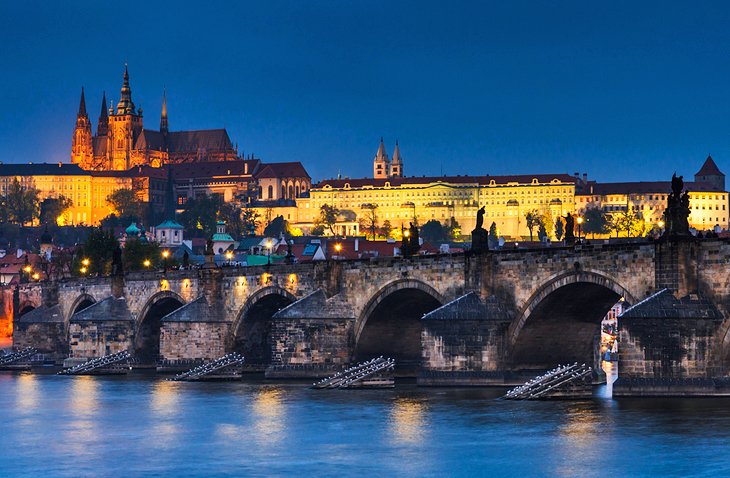
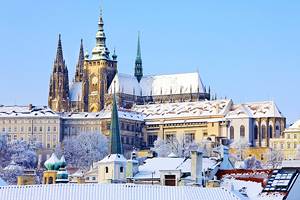
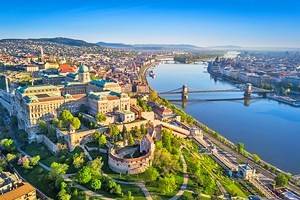
For most travelers, the focal point of a visit to the Czech Republic is Prague Castle (Pražský hrad). It's on all Prague itineraries. Located in the city's Hradcany neighborhood and dating from the late 10th century, Prague Castle has been central to Eastern European history for centuries, and has been home to Holy Roman Emperors, the Habsburgs, Bohemian kings and, more recently, the Czech Republic's President.
Over the course of its 1,000-year history, the castle - the largest in the world in terms of area - has undergone many dramatic changes in architectural style, evidence of which can be seen in the numerous buildings constructed within its walls through the centuries.
Highlights of the castle include beautiful St. Vitus Cathedral, St. George's Basilica, the Powder Tower, and the Golden Lane with its medieval workshops. Of particular note is the Old Royal Palace with its magnificent Vladislav Hall, so big it was used to host knightly jousting tournaments, as well as the adjoining 16th-century Royal Garden with its spectacular Singing Fountain. English language guided tours and audio-guides are available.
Address: 119 08 Prague 1
- Read More: Top-Rated Tourist Attractions in Prague
2. Prague's Charles Bridge
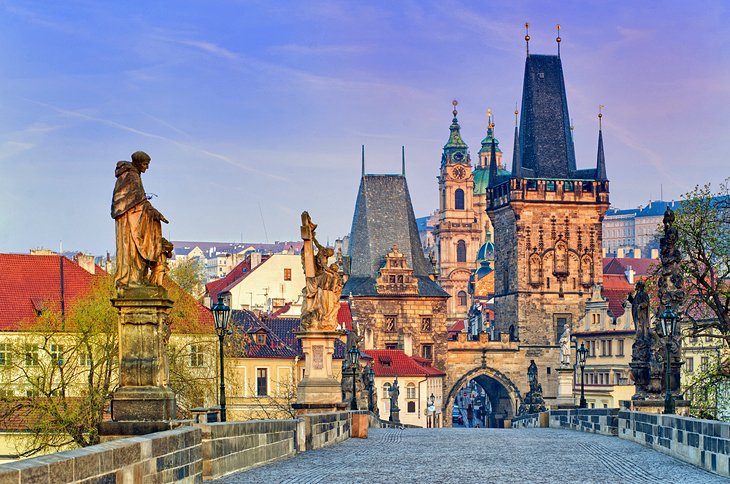
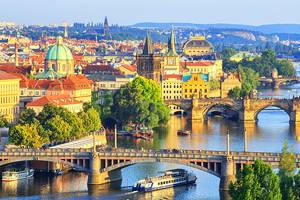
It's impossible to visit Prague without taking the time to traverse the city's most important river crossing, the spectacular Charles Bridge (Karluv Most).
This famous structure spanning the River Vltava was built in 1357 and has many unique points of interest along its 520-meter span, including numerous fine statues. Perhaps the most famous are those of the bridge's namesake, Holy Roman Emperor Charles IV, as well as the 1683 statue of John of Nepomuk, which honors the country's most revered saint who, ironically, was deliberately drowned in the Vltava.
The bridge is extremely popular with tourists and a fantastic place for photographers for its fine views. Some of the best views are actually captured during off-peak hours, at dawn and at dusk, making for a much less crowded visit.
3. St. Vitus Cathedral
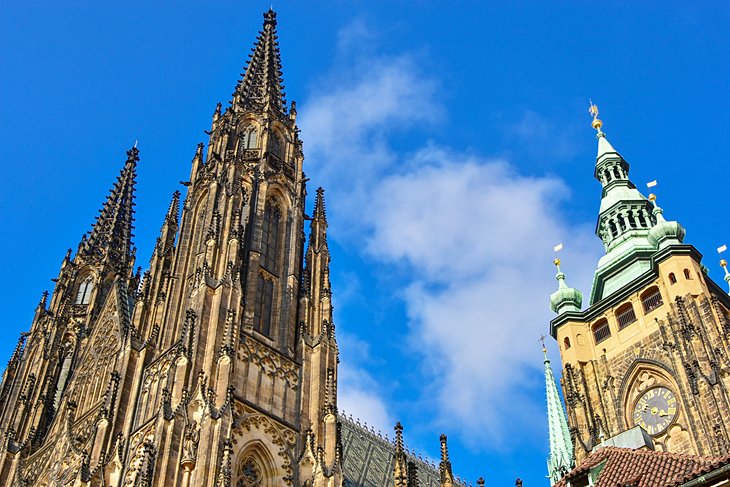
Part of the Prague Castle complex, St. Vitus Cathedral is best known as the home of the Bohemian Coronation Jewels, as well as the tomb of the Czech people's most revered saint, St. Wenceslas.
The cathedral has a long history. Dating back to the year 925, when Prince Wenceslas built a chapel on the site, the building grew along with Prague's importance, and it soon became a basilica after the Prague bishopric was established. There was another period of expansion between 1344 and 1419 when it began its transformation into a Gothic cathedral, and the St. Wenceslas Chapel was built. Construction and repairs resumed in the late 18th century, adding neo-Gothic elements.
Highlights of a visit include seeing the bronze doors adorned with reliefs of the cathedral's history, ornate stained glass windows in the chapels, and the Royal Mausoleum. Tourists should be sure to visit St. Wenceslas Chapel to admire the murals, which are original 14th-century depictions of the stations of the cross, as well as scenes depicting the life of St. Wenceslas.
Official site: www.katedralasvatehovita.cz/en
4. Prague's Old Town Square & Wenceslas Square
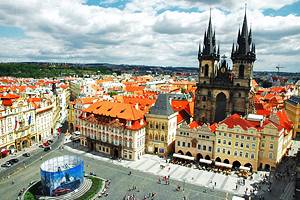
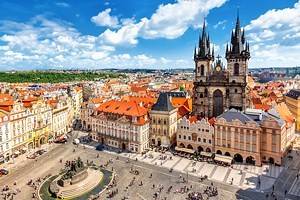
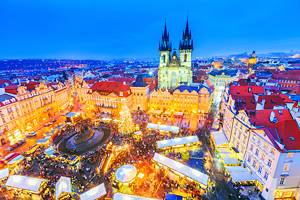
Prague's Old Town Square was the city's first market. Situated at the intersection of trade routes, it still has buildings dating back to the 10th century. In addition to its many medieval houses, the square is home to significant historic landmarks, including Old Town City Hall, which holds the Astronomical Clock, as well as St. Nicholas Church.
This square has been the site of many defining moments in Czech history, including public executions and political protests. A statue of Protestant reformer Jan Hus stands in the center, and this is a popular sightseeing area that hosts Prague's traditional Christmas markets each December.
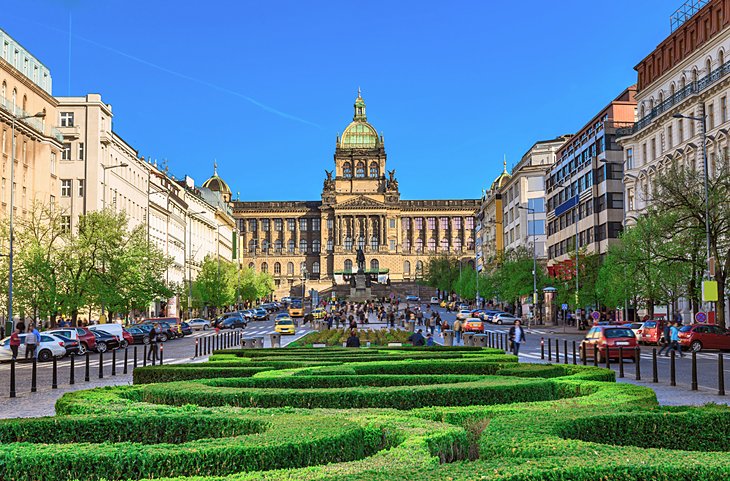
Just a five-minute walk from the Old Town Square sits Wenceslas Square in the heart of New Town. Not as new as it sounds, this large public space was laid out in the 14th century as a horse market. Today, it is used for parades, festivals, and at times, demonstrations. This is a popular tourist area that is filled with hotels, restaurants, shopping, and entertainment. The National Museum's main building makes for a stunning background to the square and is one of the city's most popular attractions, with a collection of 14 million items.
Address; Staromestské nám., 110 00 Staré Mesto
5. Ceský Krumlov Castle
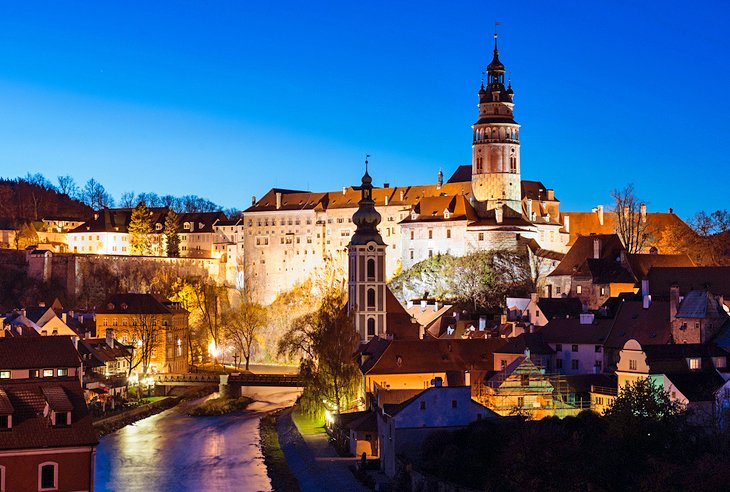
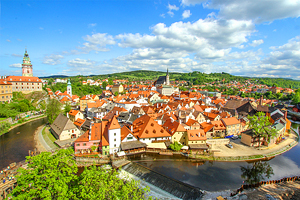
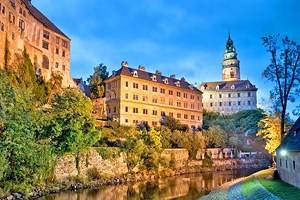
Dominating the old town after which it's named, Ceský Krumlov Castle is remarkably well preserved given its age. Dating from the 13th century, much of what stands today in this UNESCO World Heritage Site stems from the 17th century, including the Rosenberg Ballroom and the Renaissance Hall, the Royal Apartments, and the Chapel of St. George. Also worth seeing is the castle's old Baroque theater. Built in 1682, it's still used for special performances.
Other highlights include historic collections of paintings and tapestries, along with fine décor and period furniture. The Ceský Krumlov Castle complex comprises 40 buildings, including fine old palaces, castle courts, and gardens. Tourists could easily spend several days wandering the grounds, although those who want to see the highlights may enjoy one of the English-language guided tours that are available.
You can visit Ceský Krumlov on a day trip from Prague. Depending on the method of transportation, you can reach the town in about 2.5 to three hours. If you get an early start, this can be an enjoyable outing.
6. Brno's Cathedral of St. Peter and Paul
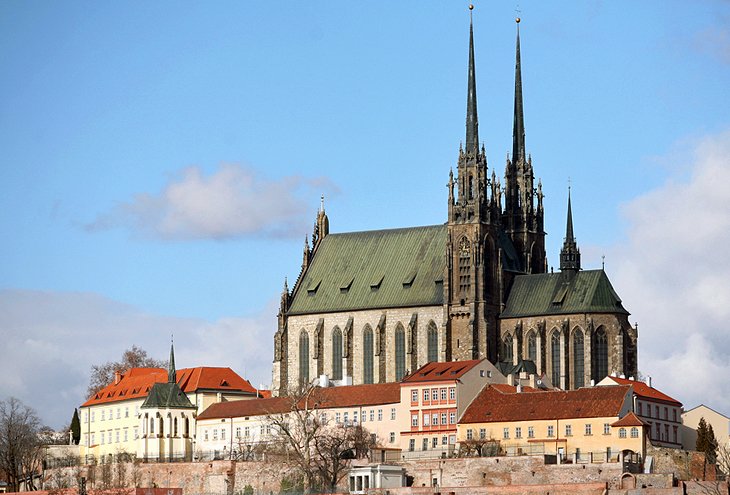
High above the old city of Brno is the beautiful Cathedral of St. Peter and Paul, one of the Czech Republic's most important national monuments. The site of the cathedral first held an 11th-century Romanesque chapel that was later expanded to include a crypt and a basilica, the remains of which can still be seen.
Eventually rebuilt as a Gothic cathedral during the 18th century, the interior is a Baroque masterpiece designed by architect Moric Grimm. Among its most remarkable features are the Kapistránka pulpit and the crypt, which is home to not only tombs but the remnants of Brno's original city walls.
Added in the early 20th century, the building's two 84-meter-high towers are home to the church bell that rings each day at 11am, instead of noon. This tradition has been carried on to remember the city's successful attempt to trick an attacking army into abandoning their siege after the general had announced that they would give up if they had not taken the town by noon.
Also in Brno is the 13th-century Spilberk Castle (hrad Spilberk), home to the Brno City Museum, as well as the fascinating Tugendhat Villa, built in 1930 and one of the most important examples of modern architecture from the early 20th century in Europe.
7. Bone Collectors: Czech Crypts, Tombs, and Cemeteries
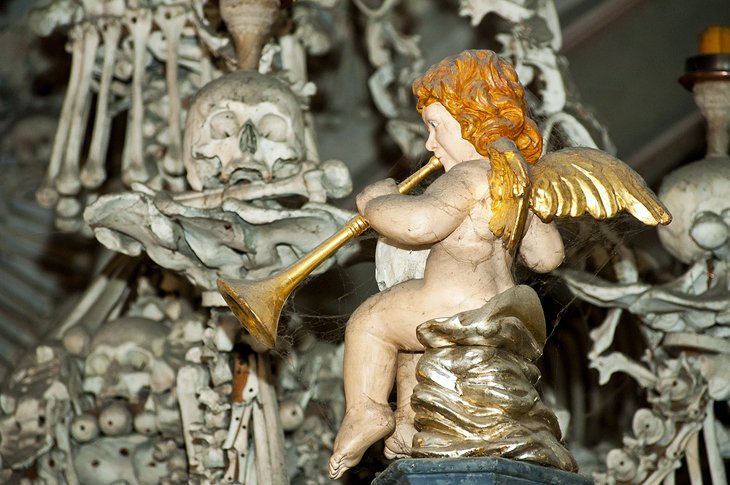
Spread across the Czech Republic are a number of fascinating locations dedicated to preserving the remains of those slain in war or killed by diseases such as the terrible plagues that gripped Europe in medieval times. But what makes these places even more interesting are the often bizarre ways in which these centuries-old human relics are displayed.
Nowhere is this more evident than in the small town of Sedlec, home to the famous "Bone Church," the Gothic All Saints Chapel. Here in the Sedlec Ossuary, the curious will be rewarded with a chance to see the remains of people who died between the 14th and 16th centuries displayed in rather chilling artistic fashion, including coats of arms, chandeliers, chalices, and bells.
A similar effect was created at the Brno Ossuary where the remains of some 50,000 people were found stacked in heaps in archways and used as decorative displays and ornamentation. A little less spooky but impressive for its sheer size is the spectacular Schwartzenberg Tomb, a huge crypt dedicated to one of the country's most powerful dynasties.
Official site: www.sedlec.info/en/
8. The Colonnades and Spas of Karlovy Vary
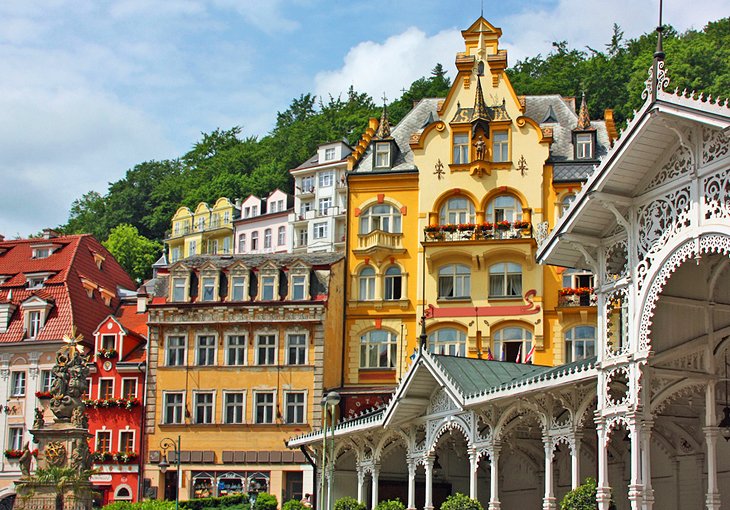
Often referred to by its old German name of Karlsbad, Karlovy Vary is a must-visit for anyone interested in an authentic European spa experience. Established in 1358, Karlovy Vary has for centuries been a popular destination for Europe's elite, from royalty like Peter the Great to famous composers and writers including Beethoven, Chopin, and Goethe. Evidence of the town's 13 main springs, not to mention its countless smaller springs, is everywhere.
In addition to the large spa resorts, the town is filled with Neoclassical and Art Nouveau colonnades with drinking and bathing fountains. A magnificent fountain sits in the midst of the Tepla River, shooting jets of water 14 meters into the air.
The town is also an important cultural destination, home to a number of art galleries and museums, as well as the popular Karlovy Vary International Film Festival, one of the oldest film festivals in Europe.
9. Spectacular Libraries: The Clementinum and Strahov Monastery
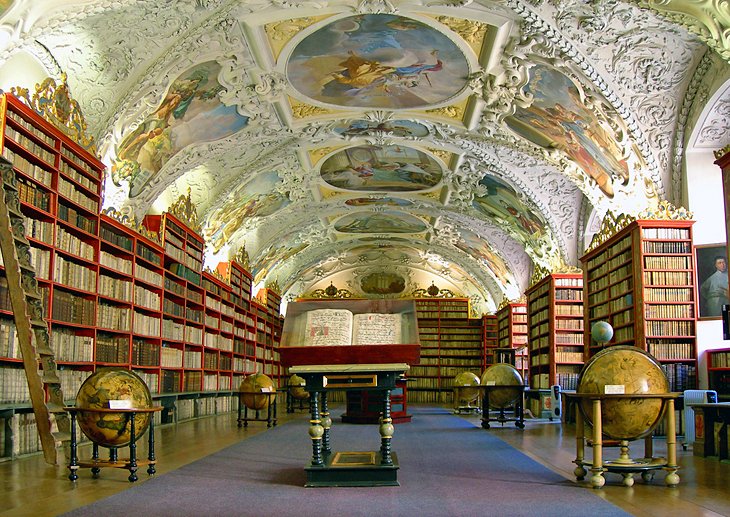
Three of Europe's loveliest and oldest libraries can be found in Prague. The largest, the National Library of the Czech Republic, is in the magnificent Clementinum (Klementinum), which sits in the center of historic Prague next to the Charles Bridge. This sprawling complex of historic Baroque buildings is one of the largest in Europe, and is home to several points of interest. Library Hall is best known for its frescoed ceiling, and the Astronomical Tower resides here as well, from which tourists can enjoy lovely views.
The 12th-century Strahov Monastery (Strahovsky kláster) contains two magnificent libraries, including the Philosophical Library, with its exquisite furnishings and ceiling paintings, and the Baroque Theological Library, which features excellent frescoes and stucco work. These libraries also house numerous rare manuscripts, including the nearly 1,200-year-old Strahov Gospel.
10. Glassworks of Karlovy Vary
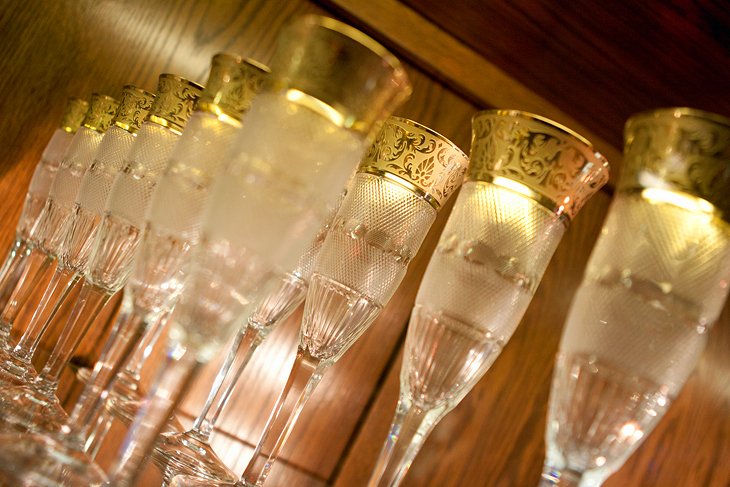
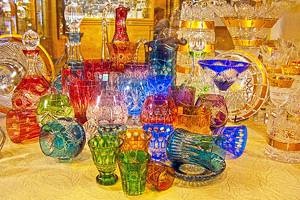
In addition to its many fine spa resorts, the lovely town of Karlovy Vary remains one of Europe's most prominent glassmaking centers, an industry that has thrived here for more than 150 years. A fascinating excursion is to the Moser Visitor Centre, part of the Moser glassworks, which was established in 1857.
Thanks to the skills and craftsmanship of the local glassmakers it employs, it is widely considered one of the world's leading manufacturers of decorative glass. Tours of the facility include a chance to learn about the history of glassmaking, visit the factory floor to watch glassblowers at work, and see some 2,000 fine examples of glass creations in the Glass Museum. English-language guided tours are available.
11. Kutná Hora
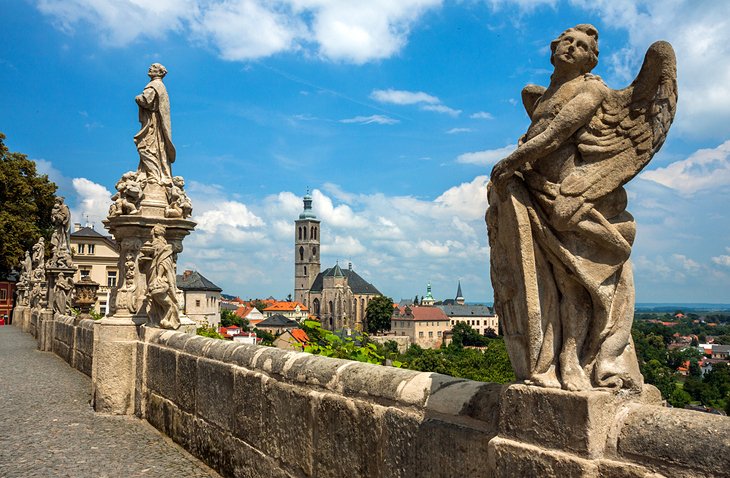
If you're able to visit just one Czech town apart from Prague, you couldn't do much better than choose Kutná Hora, now a UNESCO World Heritage Site. Just 80 kilometers east of the capital, Kutná Hora was once home to one of Europe's leading silver mines, the wealth from which helped finance many of the town's most beautiful structures.
Highlights include the Baroque St. Barbara's Cathedral. Built in 1338, it's notable for its beautifully decorated interior and frescoes that include not only religious themes like the mural entitled The Vision of St. Ignatius, but also references to the mining industry that funded construction.
The Czech Museum of Silver contains exhibits about the medieval mining industry, as well as the Stone House, which explores daily life during those times. Guided tours take visitors six floors underground to explore a medieval mine, walking through narrow passageways as you cross through deep caverns and around deep water shafts.
Tourists can also visit the town's old mint, housed in the splendid Italian Court (Vlassky dvur), the former palace of Bohemian King Vaclav IV, and the Gothic Sedlec Ossuary.
Read More: From Prague to Kutna Hora: The Complete Day Trip Guide
12. The Bohemian Paradise
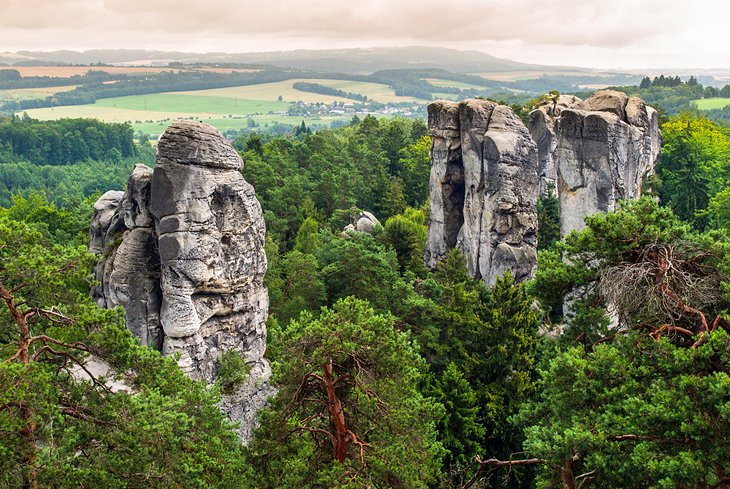
One of the most beautiful corners of the Czech Republic, Eastern Bohemia is home to the spectacular Bohemian Paradise (Ceský ráj). This area of outstanding natural beauty is famous for its many massive rock formations that protrude from the ground like spikes and pillars, formed by tens of thousands of years of erosion by the elements.
Now a UNESCO Geopark, the region draws hikers and sightseers from across Europe for its stunning sandstone hills, natural bridges, and tall basalt columns and outcroppings, all accessible by a network of trails and scenic drives.
The region also has many old castles, including Kost Castle and Trosky Castle. Start your adventure in the town of Turnov, home to the Bohemian Paradise Visitor Center, where you can find a great deal of tourist information and maps of the region.
Official site: www.cesky-raj.info/en/
13. Konopiste Chateau and the Archduke's Trophies
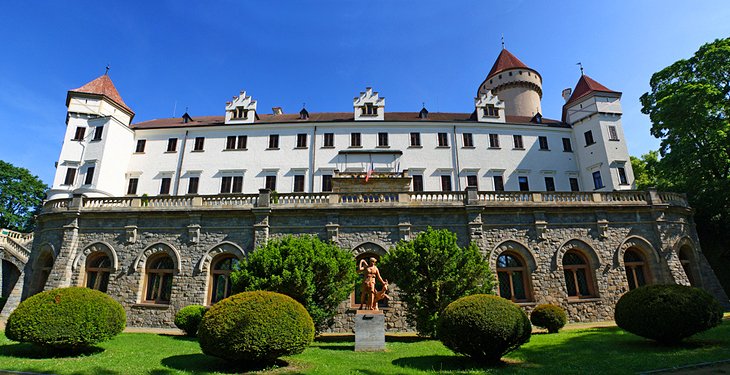
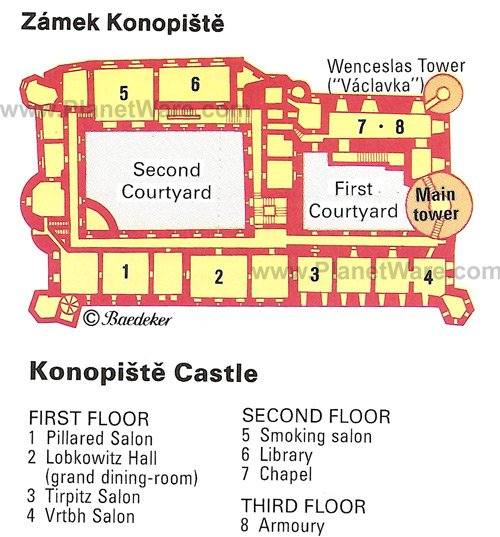
One of the Czech Republic's loveliest palaces, Konopiste Chateau is just 50 kilometers southeast of Prague. Established in the 13th century and given its current Baroque form in the 18th century, this superb French-style four-winged chateau is famous as the final residence of Austrian Archduke Franz Ferdinand, whose untimely assassination is credited as having started WWI.
The bullet that killed him is on display in the chateau's museum, as are many of the Archduke's animal trophies and many original artifacts he once owned. Other highlights include a superb collection of ancient weapons and armor, an indoor shooting range complete with moving targets, and a lovely garden with numerous statues and outbuildings.
Address: 256 01 Benesov
Official site: www.zamek-konopiste.cz/en/
14. Hluboká Castle
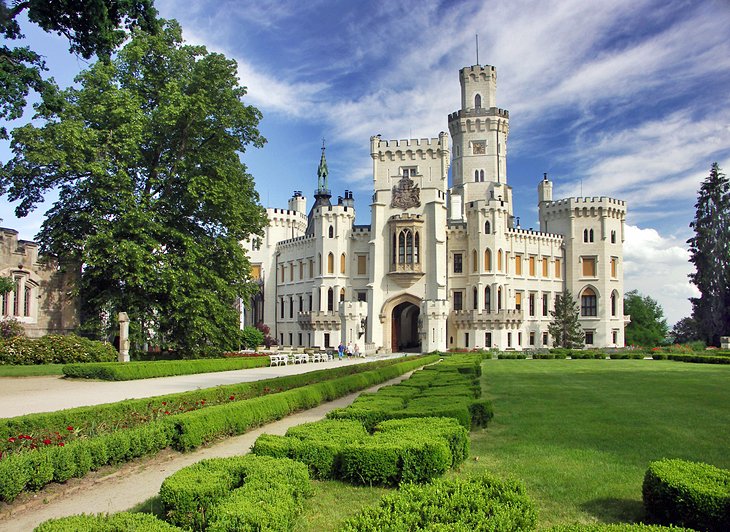
A short drive north of the city of Ceské Budejovice, the huge white Neo-Gothic Hluboká Castle (Hluboká nad Vltavou) is said to be the most beautiful of the Czech Republic's many fine castles. Built on the site of an older 13th-century fortress, the current castle was constructed in the 1660s and was given its present Gothic Tudor style - loosely based upon that of England's famous Windsor Castle - in subsequent extensive renovations.
Highlights of a visit include its huge hedge mazes and lush foliage, along with its fine interior woodwork, stained glass windows, and furnishings. The castle also houses an extensive collection of art, including numerous pieces by leading Czech artists.
There are many English-language tours available at the castle, including a spectacular tour of the chateau's massive kitchen. Very modern by 19th-century standards, the kitchen is divided into sections to allow for the preparation of hot food, cold food, and confectionary.
It's also possible to tour the private apartments of the Schwarzenberg family (the last official residents of the castle); climb the main tower for stunning views of the countryside; or explore the "social" rooms, which include a morning room, a reading room, a smoking room, and a large library.
Address: 373 41 Hluboká nad Vltavou
Official site: www.zamek-hluboka.eu/en/
15. Karlstejn Castle
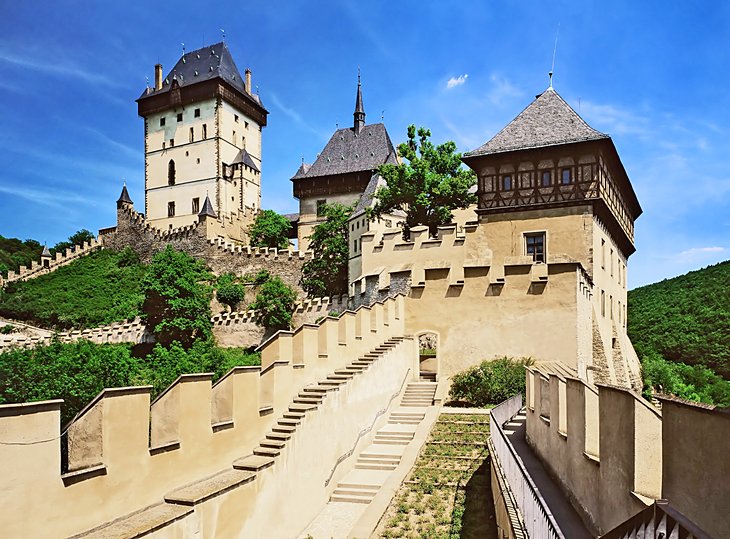
Karlstejn Castle was built between 1348 and 1365 for Charles IV, who was both the Czech king and the emperor of the Holy Roman Empire. The grounds are arranged in a physical hierarchy, with the sacred Chapel of the Holy Cross located in the Great Tower.
It is in this chapel that Charles IV stored his most precious possessions, including the crown jewels of the Roman Empire, as well as his personal collection of artifacts, including bones of saints. The interior of the chapel can be viewed by guided tour, and includes extensive frescoes by Master Theodoric.
Other highlights include the Imperial Palace and Marian Tower, both of which are complete with period furnishings. Also, be sure to see the castle prison, the Well Tower, and replicas of the Roman and Czech crown jewels.
Address: 267 18 Karlstejn
Official site: www.hrad-karlstejn.cz/en
16. Pruhonice Park
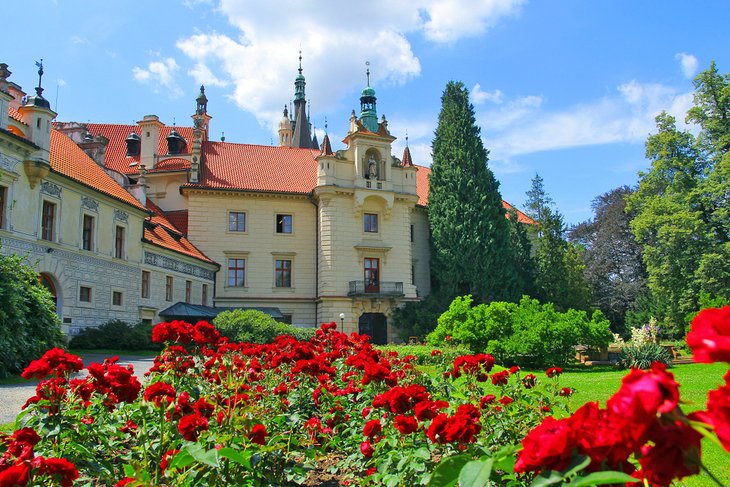
Pruhonice Park, which is also home to Pruhonice Castle, is a UNESCO World Heritage Site located only 15 kilometers south of Prague. With a total area of 250 hectares, the expansive property includes formal gardens, wooded areas, streams, ponds, and 25 kilometers of walking paths. Among its 1,600 species of plants are a collection of more than 100 types of rhododendrons, with 8,000 specimens total. The park is open year-round and is particularly stunning during the fall season.
The Greater Castle, with sections dating back to the 12th century, forms a semicircle that faces the lake and gardens. Most of the castle itself is closed to the public and occupied by The Institute of Botany of the ASCR, which conducts research here. Its courtyard features frescoes, statues, and a replica of the fountain found in Old Market Square in Prague.
Address: 252 43 Pruhonice
Official site: www.pruhonickypark.cz/en
17. Šumava National Park
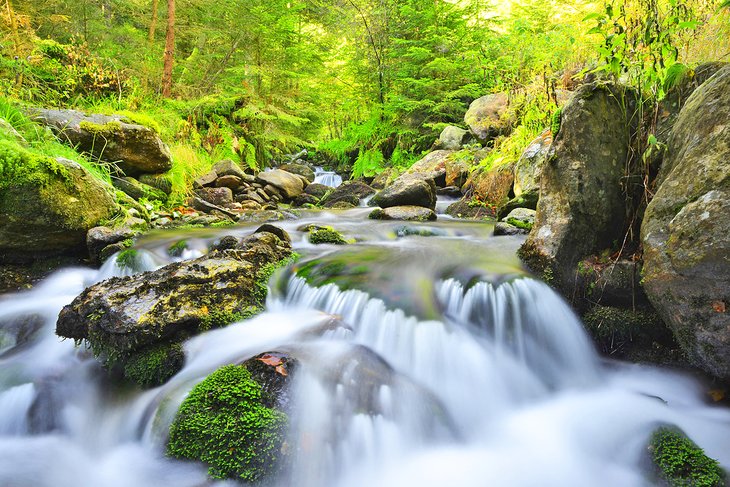
One of the largest natural spaces in the Czech Republic, Šumava National Park sits along the border with Germany and Austria. The park is home to a massive mountain range covered by extensive forest and crisscrossed by thousands of kilometers of hiking trails. As one of the most diverse national parks in Europe, Šumava is also home to glacial lakes, a large population of lynxes, peat bogs, and centuries-old primeval forests.
Because of its many hills, there are stunning viewpoints everywhere within the park, but the lookout tower on Poledník mountain and the top of Plechý Hill (sitting over a massive glacial lake) are particularly worth a mention. In addition to hikers who come here for the stunning giant boulders and lakeside paths, the park also attracts cyclists, river rafting enthusiasts, and people interested in bird-watching.
Many perfectly groomed trails are accessible during winter for cross-country skiing and snowshoeing. And since Šumava is one of the first areas in the country to see snow every winter, it is a popular destination also for skiing – the park offers 36 kilometers of slopes and plenty of ski resorts to enjoy a winter getaway.
18. Castle Ruins
The Czech Republic has plenty of restored castles and chateaus to experience the stunning beauty of royal living at its best. But for a different take on history, nothing beats hiking up forested trails to explore castle ruins – and the country has plenty of that to offer as well.
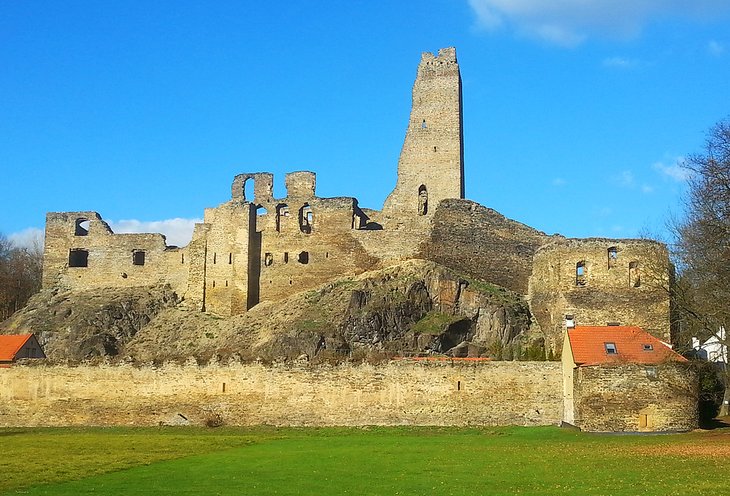
Okoř castle, just 15 kilometers outside Prague, was first founded in 1359 and rebuilt and expanded throughout the years until it was finally abandoned in the 18th century. Only the outside walls remain today, but you can climb part of the tower and then hike the little paths behind the structure.
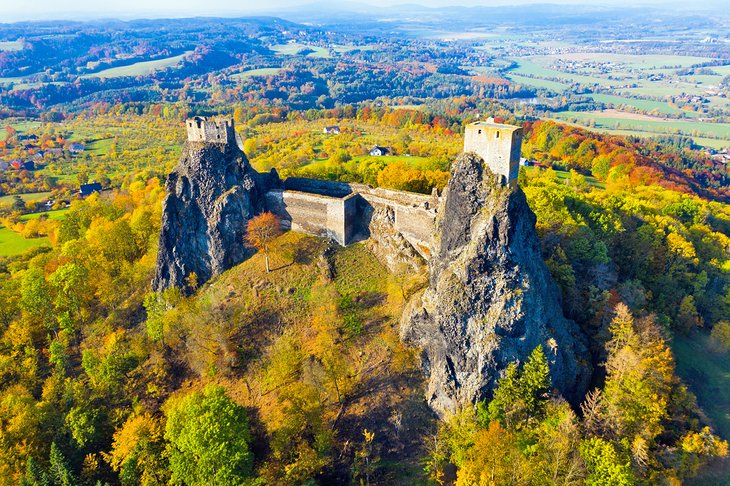
The 14th-century Trosky castle ruins in the Liberec Region consist of two towers built on top of steep rock cliffs, with buildings and corridors connecting them. It's a hard climb to the ruins, but the views from the top are worthy, plus this is one of very few ruins that offer guided night tours.
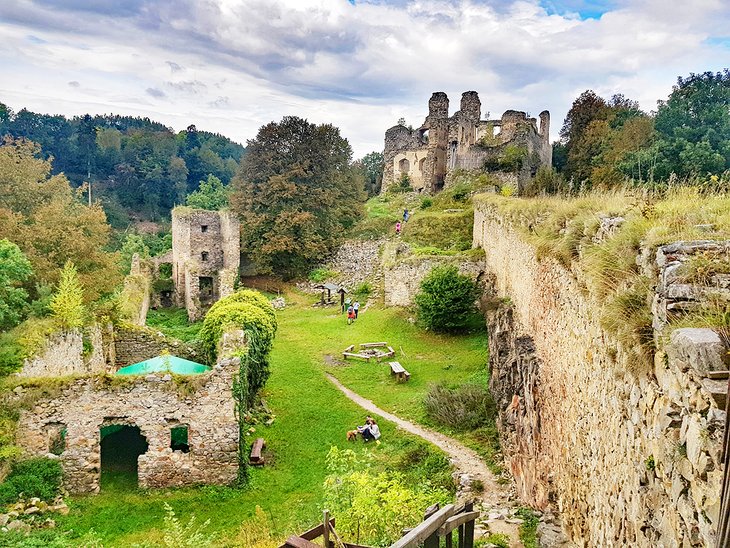
Rabí is one of the best-preserved and the largest castle ruins in the Czech Republic. Located in the Šumava region, this massive structure was heavily damaged during the Thirty Years' War and eventually abandoned. There's also Zviretice castle, easily accessible and featuring a half-preserved cylindrical tower, and Divci Kamen (Maiden Stone) castle, one of the best-preserved medieval monuments in the country, where a stunning lookout offers views of the Vltava River and the forest around.