22 Best Places to Visit in Portugal
For such a small country, Portugal packs a punch. From cosmopolitan cities and out-of-the-way towns and villages to lively beach resorts and spectacular national parks, this diminutive nation offers an incredibly diverse range of visitor attractions.
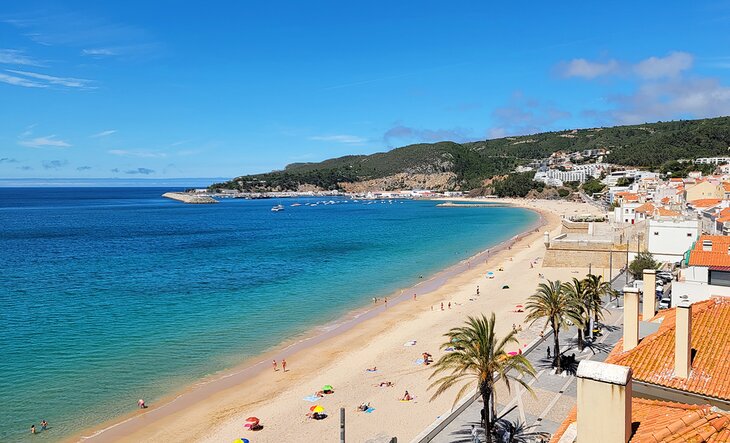
Occupying a wedge of Iberia and sharing a border with Spain and a fantastic coastline with the Atlantic Ocean, Portugal's location in this sun-kissed corner of Western Europe lends it a singular appeal.
Its southern reaches remain a compelling vacation destination, renowned for gloriously sandy beaches and world-class golf courses. The country's interior, meanwhile, offers a wealth of contrast: rolling plains; broad rivers; deep, verdant valleys; and remote mountain ranges.
More far-flung parts of Portugal, namely the Azores and Madeira offer off-the-beaten-track destinations showcasing nature at its best and a different cultural and gastronomical experience.
Defining Portugal's history is an amazing collection of monuments and historic buildings, many of them recognized by UNESCO as World Heritage Sites. And underpinning the country's personality is its people - open, friendly, and hospitable. Spend some time traveling the country, and you'll be enamored by the color, flavor, and warmth of its character.
For help planning your trip, see our list of the best places to visit in Portugal.
- 1. Lisbon
- 2. Sintra
- 3. Porto
- 4. Évora
- 5. Óbidos
- 6. Tavira
- 7. Parque Natural da Ria Formosa
- 8. Coimbra
- 9. Parque Natural da Serra da Estrela
- 10. Elvas
- 11. Guimarães
- 12. Madeira
- 13. Braga
- 14. Parque Nacional da Peneda-Gerês
- 15. Bragança
- 16. Mértola
- 17. Lagos
- 18. The Azores
- 19. Faro
- 20. Aveiro
- 21. Beja
- 22. Parque Natural da Arrábida
1. Lisbon
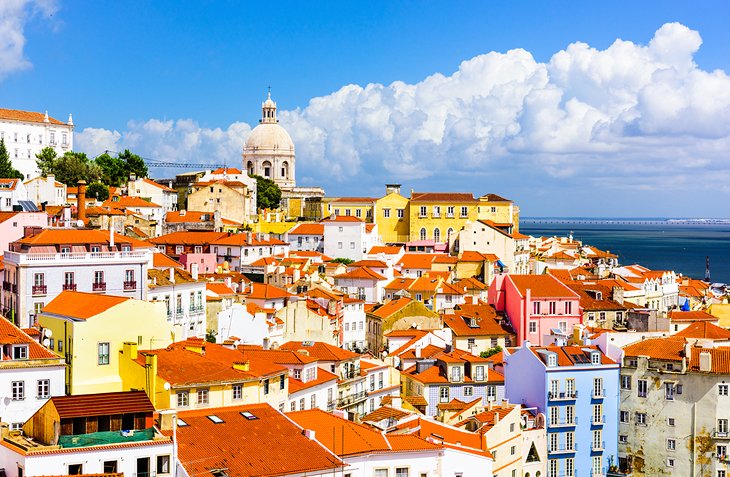
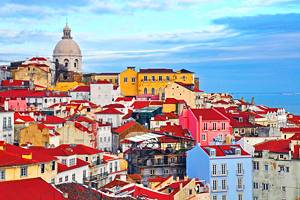
Lisbon, the capital of Portugal, is one of Europe's most alluring cities. Set on the banks of the River Tagus, this vibrant Atlantic port is scattered over a series of hills that heighten its splendid waterfront location. Exploring the city's historic core is a journey into its fascinating past - a heritage exemplified by celebrated visitor attractions, such as the mighty Castelo de São Jorge and Alfama, the oldest part of Lisbon.
A collection of world-class museums extends the cultural experience. To the east, away from the city center, you can marvel at the modernity of Parque das Nações and its crowd-pulling sites such as the brilliant Oceanário.
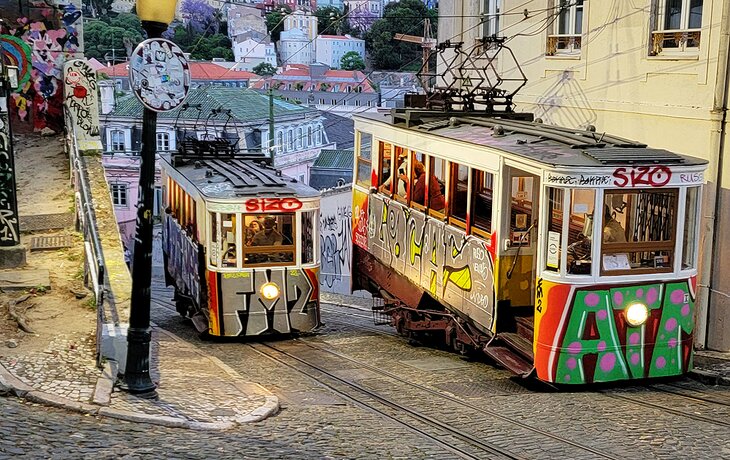
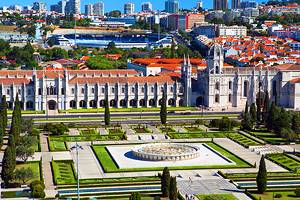
Across to the west in Belém, Portugal's golden Age of Discovery is mirrored in the magnificent Mosteiro dos Jerónimos and the quirky Torre de Belém, both UNESCO World Heritage Sites.
In between, you can amble across handsome tree-lined squares; stroll along broad, riverfront esplanades; or take in jaw-dropping panoramas from the various miradouros, or viewpoints, dotted across the city.
2. Sintra
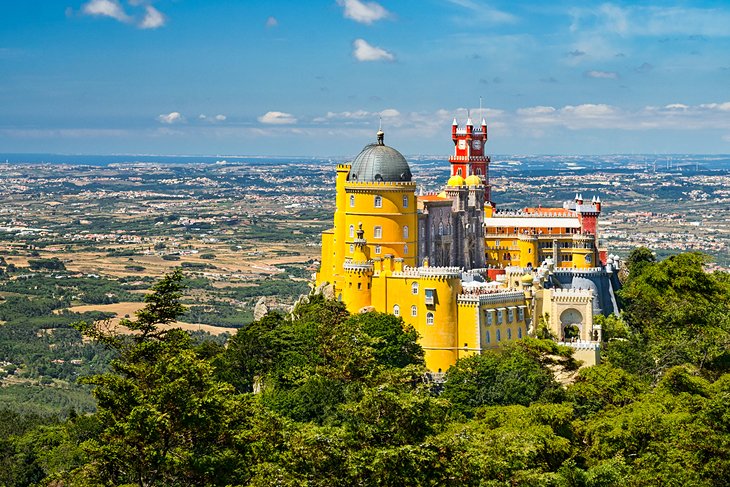
Enchanting Sintra is one of the gems in Portugal's glittering sightseeing crown. Recognised by UNESCO for its remarkable cultural landscape, this historic and captivating town is definitely worth putting aside a full day to absorb. It's one of the most popular day trips from Lisbon.
Clustered under the lip of the wooded Serra da Sintra hills, the town is dominated by the landmark Palácio Nacional, its signature twin chimneys looming over a pretty square edged with houses painted in a palette of pale pink and ochre with splashes of yellow.
Peering down over this picture postcard setting is the ancient Castelo dos Mouros, seemingly hewn out of the granite escarpment it runs along. Crowning the highest hill is the bewitching Palácio da Pena, used in the 19th century as a summer retreat by the Portuguese royal family.
Sintra offers plenty of hiking trails for the avid walker, but you'll need a stout pair of legs to conquer the demanding hills surrounding the town. The highest points of the serra offer breathtaking views across the Atlantic coastline and distant Cascais.
- Read More:
- Top-Rated Tourist Attractions in Sintra
3. Porto
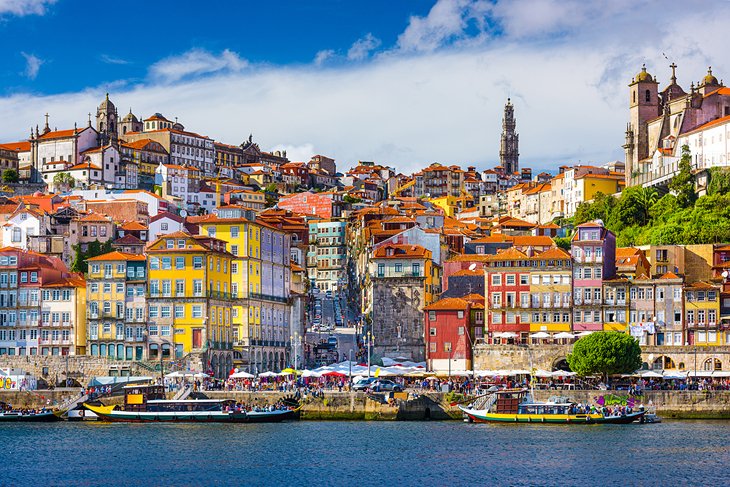
With its robust granite architecture and commercial disposition, Oporto (or "Porto"), Portugal's second city, rewards visitors with a very different experience to that of the capital.
Sited at the mouth of the River Douro and blessed with a waterfront - the Ribeira - acknowledged by UNESCO as a World Heritage Site, Porto is a destination endowed with Baroque churches and Neoclassical buildings that number some of the best examples of their kind in the country. Of particular note are the needle-like Torre dos Clérigos and the imposing Sé, the city's cathedral.
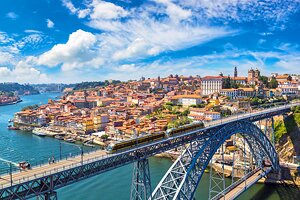
Another landmark structure is the iconic Ponte Dom Luís I, the spectacular double-decked iron bridge that spans the Douro and connects the city with Vila Nova de Gaia. A leisurely stroll along the Ribeira delivers a tangible sense of history, where you can breath in the briny atmosphere of the place.
The river provides a scenic route to the Douro Valley, a verdant landscape of terraced hillsides dotted with hamlets and villages. A popular sightseeing option is to join one of the many cruises that ply the meandering waterway.
- Read More:Top-Rated Tourist Attractions in Porto
4. Évora
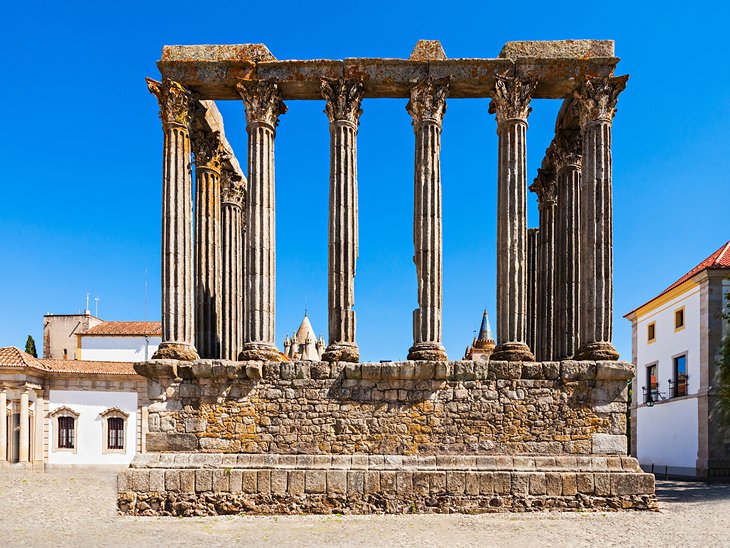
Deep in the heart of the Alentejo is Évora, one of the most beguiling destinations in Portugal. Renowned for its amazing ensemble of well-preserved monuments, Évora deserves close and unhurried scrutiny.
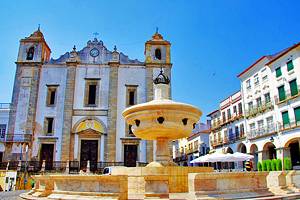
Its medieval walls enclose centuries of history, a timeline illustrated by the impressive Templo Romano, which dates from around the second century, and the brooding but compelling 12th-century Sé (cathedral). Another tourist highlight is the 16th-century Igreja de São Francisco, with its morbid Capela dos Ossos, where the walls are lined with skulls and bones.
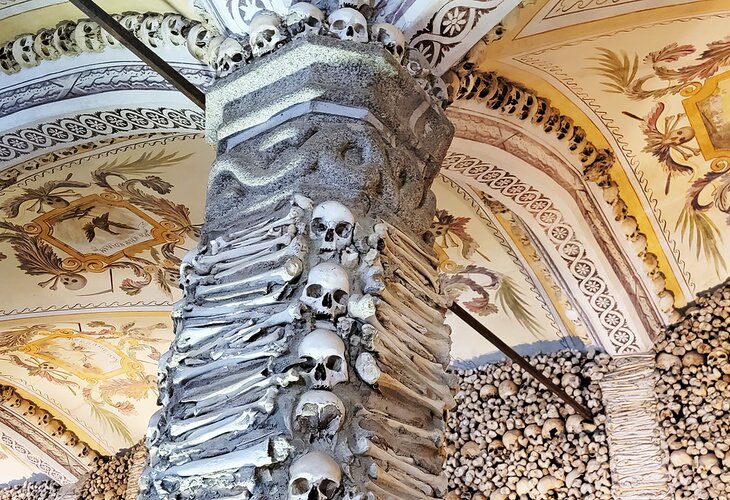
The historical significance of Évora and the unspoiled condition of its architectural treasures has won it coveted UNESCO World Heritage Site status. But you'll also be taken with the city's delightful market-town ambience and down-to-earth personality: it's a pleasure to wander and shop through its Moorish alleys; browse engaging museums; and lunch in attractive squares, where you're considered a guest rather than a tourist.
5. Óbidos
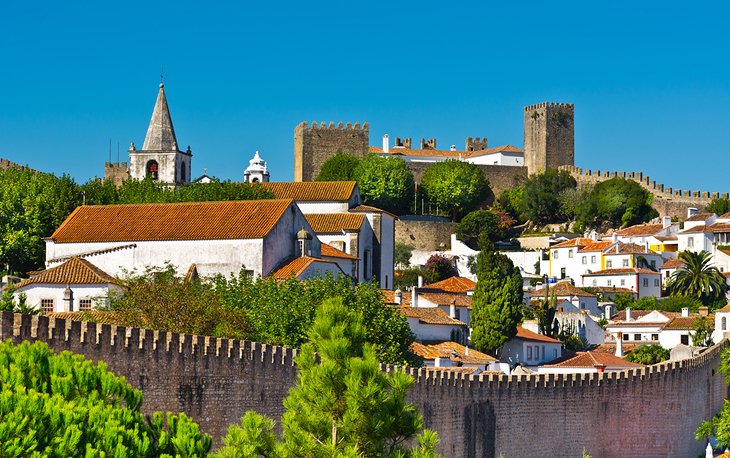
What does a king give his queen for a wedding present? For the lucky queens of Portugal, it was the achingly pretty town of Óbidos, a custom that prevailed for hundreds of years. These days, it's gifted to the general public, and it's certainly worth the hour's drive north out of Lisbon to reach it.
Óbidos is an artist's dream. An assortment of whitewashed cottages, cafés, and handicraft stores lining a series of narrow, cobbled streets are completely enclosed by sturdy medieval walls.
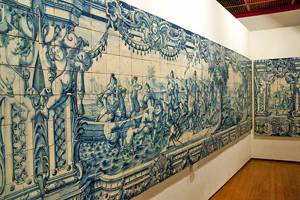
There's also the Igreja De Santa Maria, which features a wonderful interior of blue and white 17th-century azulejos (tiles).
A museum on the town's attractive square includes rare works of art by the 17th-century painter, Josefa de Óbidos.
You can walk along the top of the battlements for lovely views over the terra-cotta rooftops and the lush plains beyond. The fortifications form part of the landmark castle, whose keep looms guardian-like over the charming scene below. The castle itself is now a pousada, an upscale period hotel.
6. Tavira
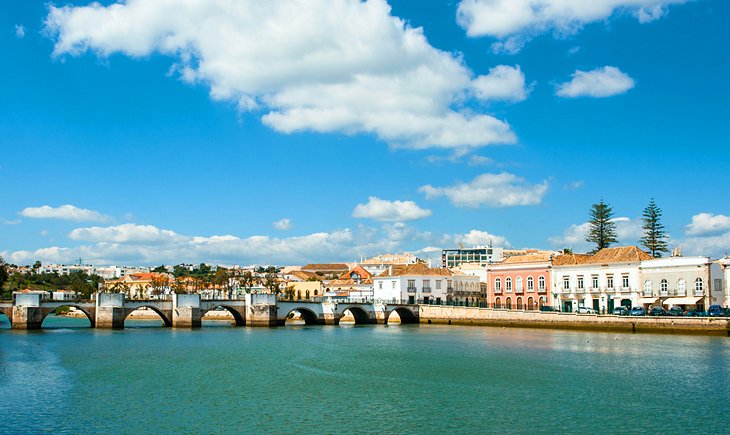
Cited by many a guidebook as the most captivating town in the Algarve, Tavira does indeed tick all the scenic boxes. The Rio Gilão cuts a smile through this pleasantly laid-back town, with a Roman footbridge connecting one side with the other.
The waterfront makes for a wonderful walk, before or after you've uncovered the rest of Tavira's historic treasures. The castle walls provide glorious views across the old town and the nearby coast. You can also explore the Igreja de Santa do Castelo, the grandiose church where warrior knights are entombed.
The town also boasts a fascinating museum, the Núcleo Islâmico. Highlights include a rare 11th-century figurative vase.
An appealing option, especially during the hot summer months, is to visit the offshore Ilha de Tavira, an enormous beach that, even in high season, has plenty of room to spare. It's reached by passenger ferry from a jetty at Quatro Águas.
7. Parque Natural da Ria Formosa
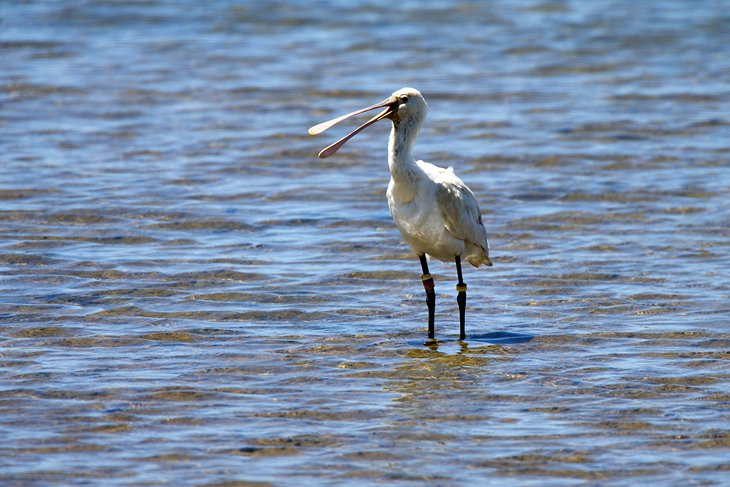
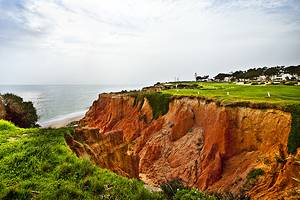
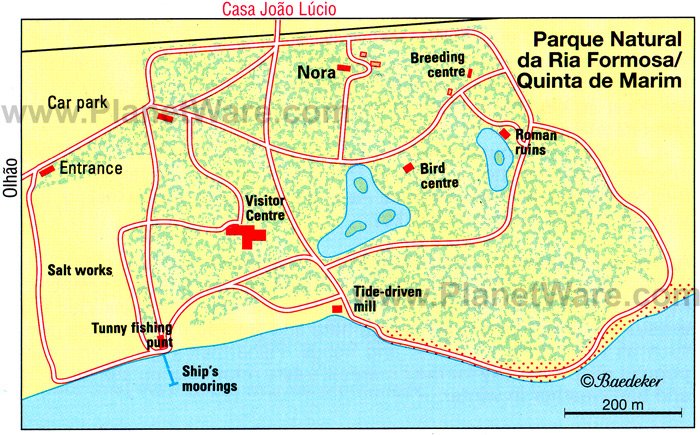
The Algarve is justly famous for its pristine coastline, and one of its natural wonders is the Parque Natural da Ria Formosa. This protected marine habitat constitutes a 60-kilometer stretch of marshland, saltpans, shallow water lagoons, and sand dune islands that run from Quinta do Lago east past Faro all the way to Cacela Velha.
A haven for an abundance of flora and fauna, the park is crisscrossed by a series of nature trails with proximity to some of the animals associated with this region of Portugal. From observation hides built on the lakes, bird-watchers can spy species like the rare purple gallinule, while out on the mudflats, flocks of greater flamingo can be admired. On land, look out for the delicate sea daffodil and flourishing goosefoot and, if you're lucky, the Mediterranean chameleon.
One of the walks passes the renowned San Lorenzo golf course, itself a draw for all sorts of birdlife. The park's headquarters are near Olhão, where visitors can pick up maps and information leaflets.
8. Coimbra
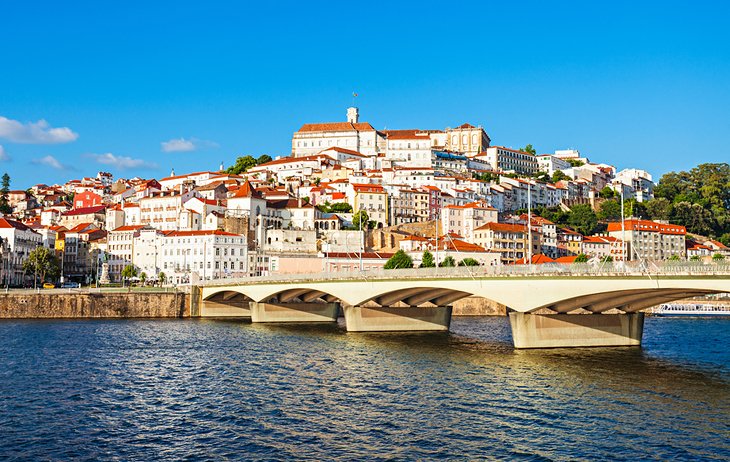
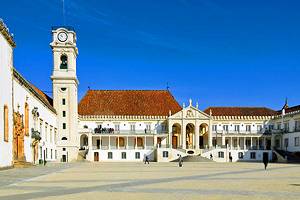
The historic hilltop university in Coimbra is just one reason to visit this venerated Portuguese city. But the wealth of additional visitor attractions, much of them clustered around the Velha Universidade, classified by UNESCO as a World Heritage Site, merits a full day's sightseeing.
The undoubted highlight of a tour of the old university campus is the stunning Biblioteca Joanina, a Baroque gem of gilded and marbled wood and frescoed ceilings. You can also climb to the top of the 18th-century clock tower for a giddy perspective over the entire area. Your exploration should include the imposing late 12th-century Se Velha (old cathedral).
Back in the old town below, there are further historic buildings to discover, among them two former convents and the Igreja de Santa Cruz, consecrated in 1131, which contains the tomb of Portugal's first king, Afonso Henriques.
Elsewhere are a number of interesting museums; a botanical garden; and the fun-filled Portugal dos Pequenitos, a park containing scale models of the country's most prominent traditional buildings.
And the river itself is a pleasant diversion, with a broad esplanade flanking both banks - great territory for long, lazy walks.
9. Parque Natural da Serra da Estrela
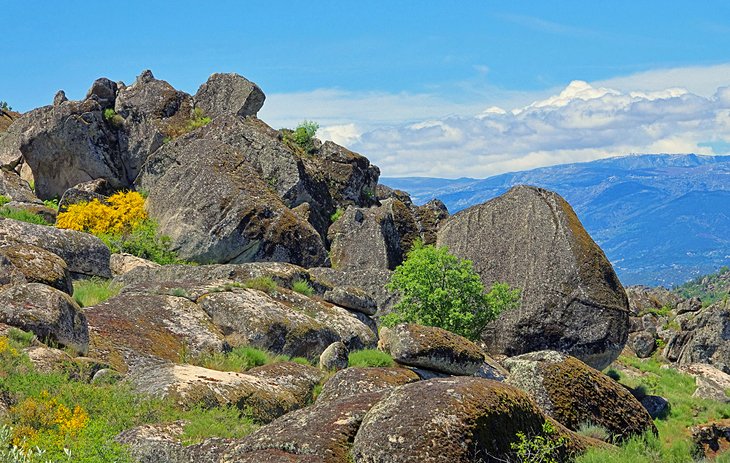
For good reason, the highest peaks on mainland Portugal, the Serra da Estrela, are called the "star mountains." Rising to 1,993 meters above sea level at its highest point, the range, or more precisely the plateau, is a dramatic natural feature of central Portugal. It is often snowcapped in winter, when opportunistic skiers take advantage of what is probably the shortest ski season in Europe.
Otherwise, the granite escarpments and glacier-cut valleys are classic hiking country, with a network of signed long-distance paths and tracks covering the terrain. Along the way, walkers can take in some absolutely stunning countryside and absorb the traditional character of the place, epitomized in villages like Linhares and Valezim.
The mountains are home to the Serra da Estrela sheepdog, a breed unique to Portugal. You are bound to come across proud locals walking one of these powerful but mild-mannered dogs. The area is also known for the deliciously rich and creamy Serra cheese - arguably Portugal's finest cheese. Look for it on sale in the stores that serve many a local village.
10. Elvas
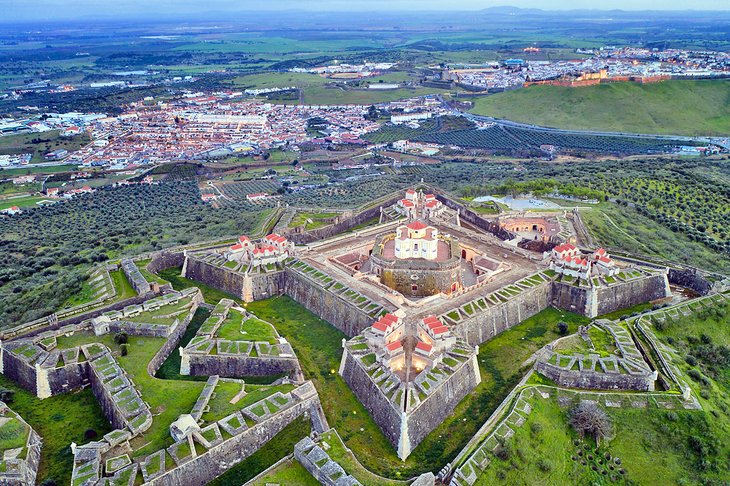
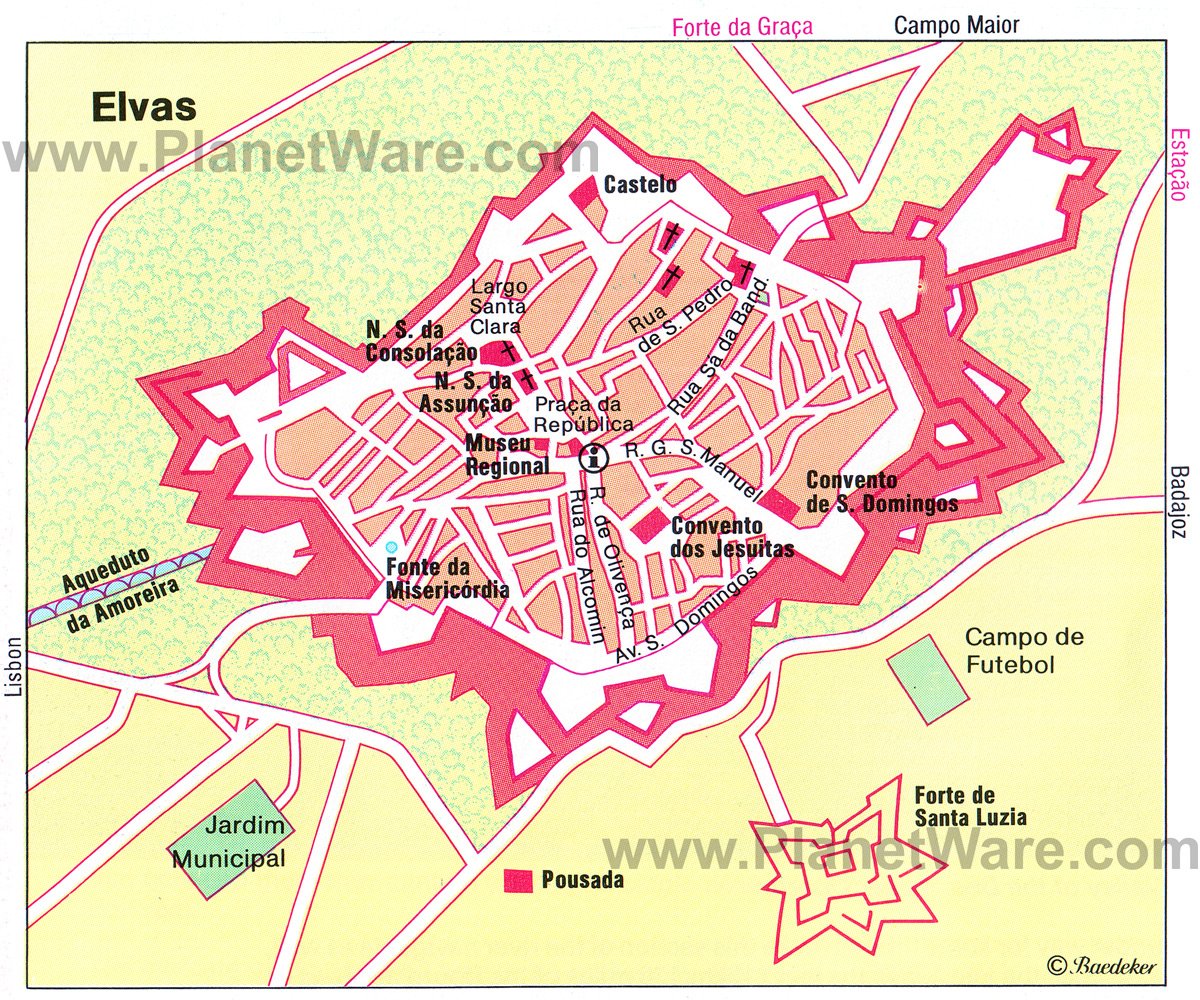
The heavy, star-shaped walls that make up the military fortifications surrounding Elvas are among the best-preserved examples of military architecture in Europe. In fact this frontier town, set on a hilltop in the Alentejo, 15 kilometers from the border with Spain, is so remarkable for its mid-17th-century defences that UNESCO has declared Elvas a World Heritage Site.
It's a long drive east (and should perhaps be combined with a visit to the nearby Spanish city of Badajoz), but those making the effort to reach this fascinating destination will be rewarded with a truly imposing circuit of walls, deep moats, and star-shaped ramparts. Within this impregnable ring lies a warren of steep, cobbled streets and a number of worthy visitor attractions, notably the Igreja de Nossa Senhora da Consolação, whose nondescript façade belies a truly glittering interior.
A castle, set on the north wall, affords fine views over the area and takes in two smaller outlying forts and the Aqueduto da Amoreira, the town's impressive 16th-century aqueduct.
11. Guimarães
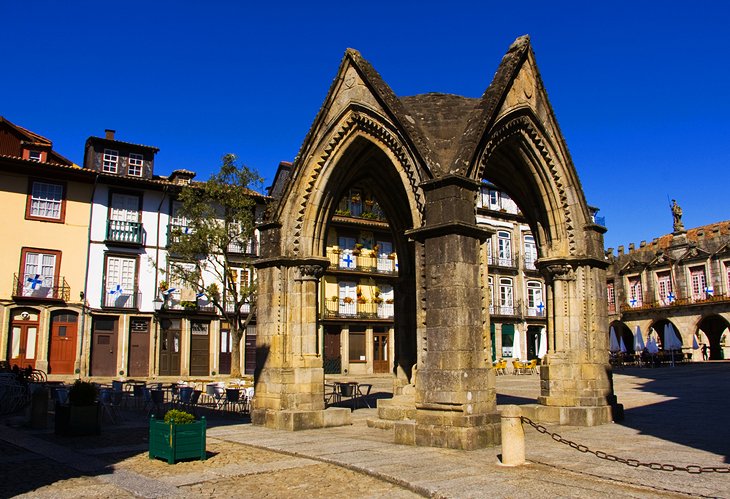
It's fitting that the old center of Guimarães is a UNESCO World Heritage Site, given that this noble city was once the capital of Portugal. That was during the 12th century, when the country's first king, Afonso Henriques, proclaimed this northern city the birthplace of the nation.
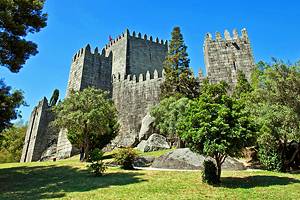
A hugely evocative place, Guimarães is the location of a number of important historic monuments, not least the castle, where Afonso was reputedly baptized. The equally significant Paço dos Duques, the royal palace, houses an engaging museum, although the Museu de Alberto Sampaio, which is in the Romanesque cloister of Nossa Senhora da Oliveira, on Largo da Oliveira, has a no less outstanding collection of artifacts.
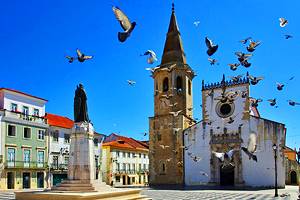
Actually, Guimarães's famous main square appears straight out of the Middle Ages, with its elaborately carved granite facades; ornate statuary; and the Padrão do Salado, a 14th-century shrine standing in front of the monastery.
After re-living all this history, you should browse the medieval quarter by exploring on foot the maze of narrow cobbled streets past several wonderfully preserved old town houses.
- Read More: Top-Rated Tourist Attractions in Guimarães
12. Madeira
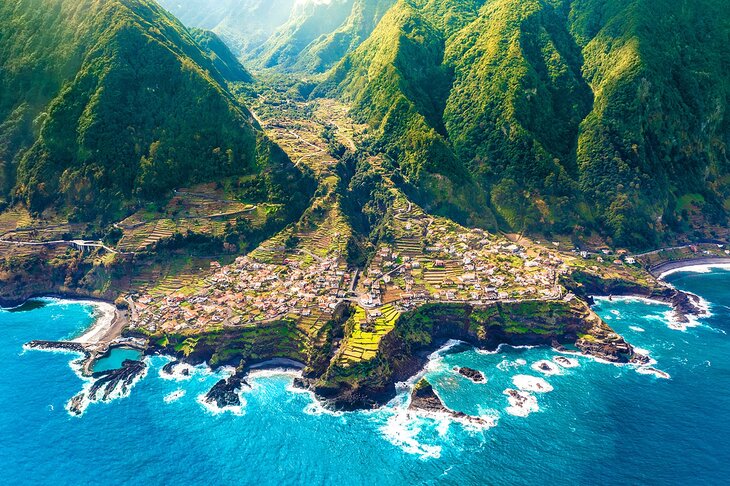
The Madeira Archipelago is a set of four volcanic islands located off the northwestern coast of Africa that have long drawn visitors to their sunny shores. Known by the nickname "Pearl of the Atlantic", the islands are striking, with rugged coastlines, razorback mountains, and subtropical vegetation.
Discover the wonders of the islands, where gastronomy reigns supreme. Indulge in the freshest vegetables and seafood, thanks to the unique microclimate and abundance of the ocean. The capital city of Funchal is a true gem, full of charm and excitement. Wander through its cobblestone streets, admire the old homes and vibrant public gardens, and soak up the lively atmosphere of the harbor.
A delight for outdoor adventurers, hiking trails (or levadas as they are known locally), follow historic irrigation channels to dramatic lookouts. Other more traditional hiking trails wind their way back into the mountains through dense forests to hidden waterfalls.
Although the islands may conjure up visions of golden sand beaches, be aware that Madeira has black pebbly shorelines that are not conducive to strolling in your bare feet or laying out on a towel.
Madeira is a popular port of call for cruise ships and can also be easily accessed by plane in less than two hours from Lisbon or less than four hours from the United Kingdom.
Travelers often ask if they should go to the Azores or Madeira. One big advantage Madeira has over the Azores is its mild year-round climate due to its southern position. While the Azores are a great summer destination, winters are cool and wet. Madeira's daytime highs in winter are around 20 degrees Celcius, and upper 20s in summer.
13. Braga
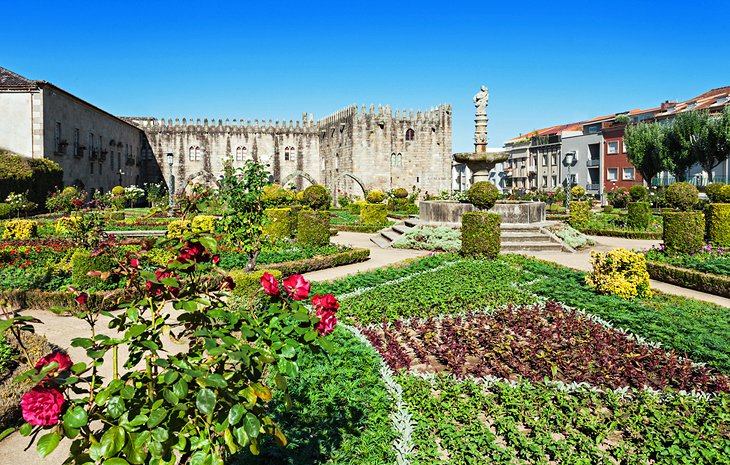
Braga is one of Portugal's grandest cities. Located in the north of the country, the destination has a long history as a religious and commercial center. To wander Braga's historic quarter is to enter a predominantly 18th-century world of handsome mansions, imposing churches, and striking palaces. A number of spruce parks and gardens break up the austere granite veneer that characterizes much of the architecture.
Begun in the 11th century, Braga's cathedral, the Sé, is an obvious visitor attraction and symbolizes the fact that the city remains the ecclesiastical capital of Portugal. The city's central square is a wonderfully atmospheric place to linger, perhaps in one of the cafés housed under the arcades. The adjoining 14th-century Torre de Menagem is all that remains of Braga's original fortifications.
A worthwhile diversion is the Bom Jesus do Monte, the spectacular religious sanctuary located 1.5 kilometers east of the city. Pack a picnic and expect large crowds at weekends.
14. Parque Nacional da Peneda-Gerês
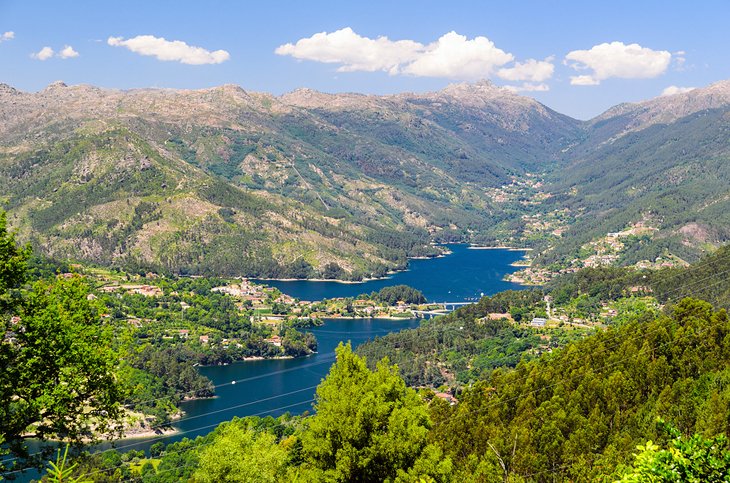
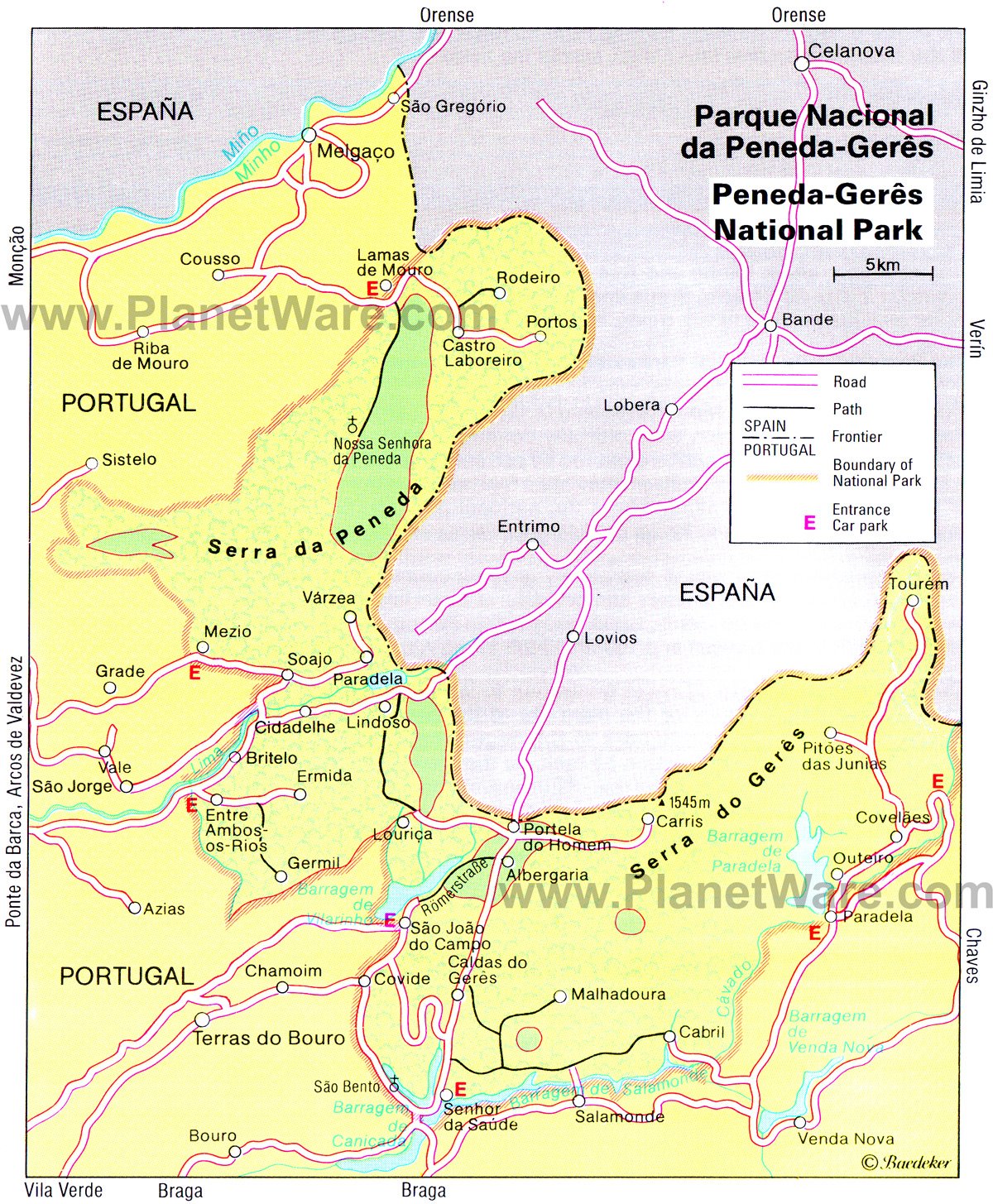
Portugal's only national park, the magnificent Parque Nacional da Peneda-Gerês is one of the country's greatest natural wonders. Occupying more than 700 square kilometers in Portugal's northeast Minho region, near the border with Spain, the rocky terrain encompasses dramatic mountain scenery; lush, yawning valleys; tumbling waterfalls; and deep, crystal-clear lakes.
Traditional villages, hamlets cut from granite and even an old spa resort, Caldas do Gerês, add personality to this bleak but beautiful landscape.
Wolves and wild boar still roam the park's more remote regions, while above, golden eagles spiral effortlessly on mighty thermals rising over dramatic peaks.
The park is a magnet for outdoor enthusiasts. Waymarked trails offer plenty of hiking opportunities, from two-hour romps to day treks. Scattered rural guesthouses and a few designated camping sites provide basic accommodation, though there are hotels in larger towns.
Spring is an ideal time to visit, with the countryside already bursting into full bloom. But even in midwinter, this outstanding destination remains a very special place.
15. Bragança
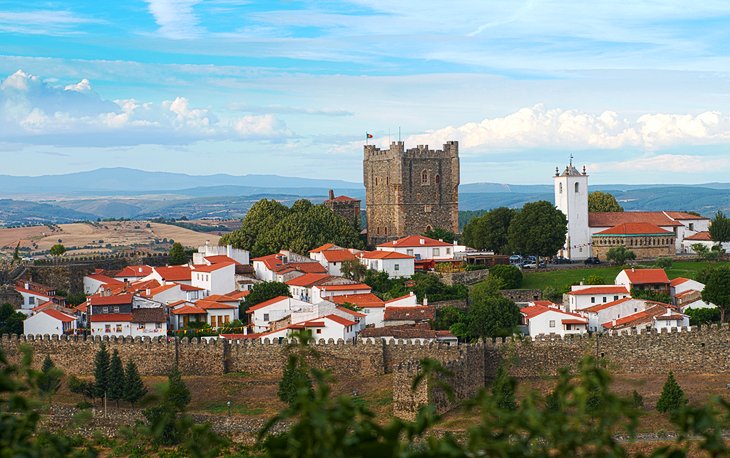
The most remote city in Portugal is also one of its most enticing because you literally do have to travel to the farthest corner of the country to get to Bragança. The old town is especially compelling in that it's completely enclosed by a ribbon of imposing granite walls.
By exploring this walled Cidadela, or "citadel," which dates from 1130, you can glean a tangible sense of the Middle Ages. The ancient streets are lined with squat, whitewashed cottages, and the church of Santa Maria features a striking painted ceiling. But it's the brooding castle and its sturdy keep that really catches the imagination.
Another highlight is the Domus Municipalis, an odd pentagonal council chamber that dates from the 15th century. It's the only surviving example of Romanesque civic architecture in Portugal. Because of the distances involved, it's worth planning an overnight in Bragança, and while the Cidadela is the obvious attraction, the outlying Parque Natural de Montesinho, a 70,000-hectare reserve lying between the city and the border with Spain, is an enticing alternative.
16. Mértola
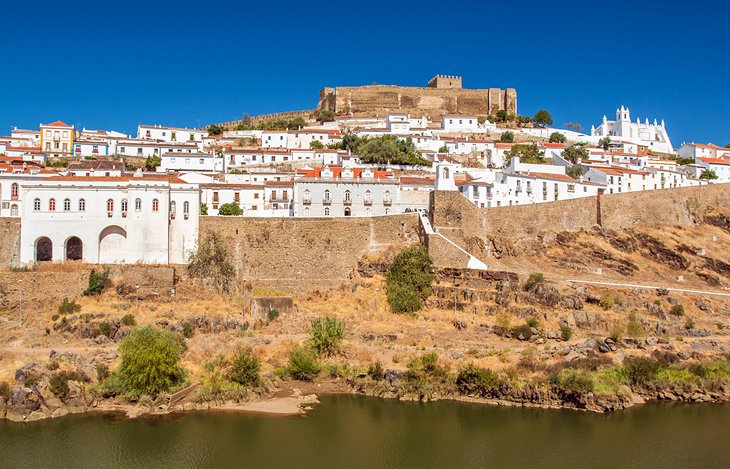
The Alentejo has its fair share of hilltop towns, but few are as appealing as Mértola. Furthermore, this whitewashed smudge of a community sits over the River Guadiana, and the scene is quite idyllic. But what really sets this destination apart is the fact that the whole place has been designated a Vila Museu - a museum site.
Mértola's origins date back to the Phoenicians, who created a bustling river port, a facility later used by the Romans and then the Moors. This diverse and colorful timeline is the basis for the cluster of excellent mini-museums dotted in and around the old town, with each one devoted to a separate epoch.
Helping to illustrate the Arab's residency is the landmark 13th-century castle strategically perched on the top of a hill. The views from the keep command a glorious panorama of the surrounding countryside.
The castle grounds feature an excavated site, where you can admire evidence of Moorish, Roman, and Christian occupation. Not surprisingly, Mértola's church, sited just outside the castle walls, used to be a mosque.
17. Lagos
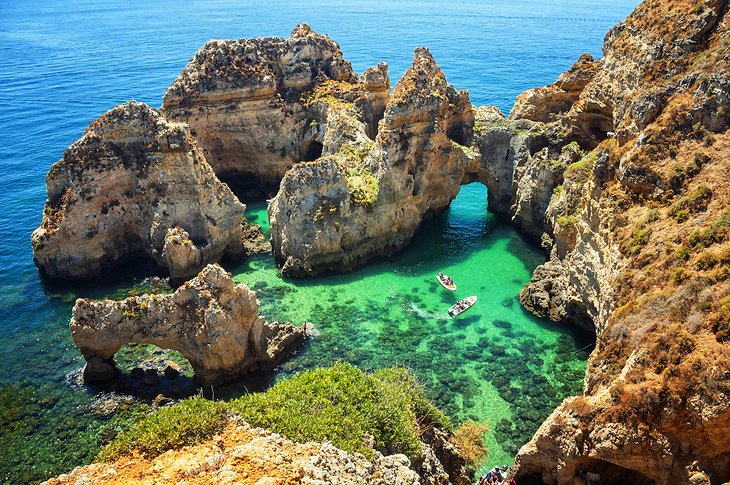
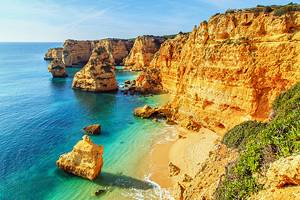
One of the premier resort towns in Portugal, Lagos basks in the warmth of the Algarve sun and is the preferred vacation destination for thousands of visitors, who flock to the country's south coast every year.
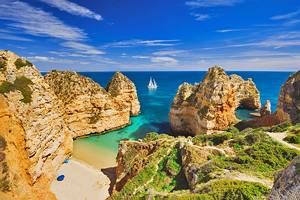
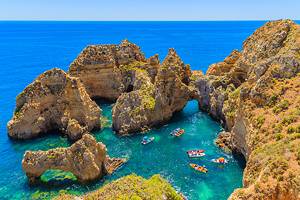
Known for the fabulous beaches that flank the town either side of its international marina, Lagos is also home to some truly magical rock formations, sandstone cliffs that tower over a series of sea caves and weirdly shaped grottoes. If you can lure yourself away from the sand, these can be visited as part of a fun-filled sightseeing cruise, among numerous other water sports options.
Back on terra firma, Lagos' cultural draws include the remarkable Museu Municipal and its adjoining Igreja de Santo António, the interior of which is one of the most lavishly decorated in the entire region.
And if you appreciate sunsets, you'll love Ponta da Piedade: the lighthouse is a favorite spot to watch the sun dip below the Atlantic horizon.
- Read More: Top-Rated Tourist Attractions in Lagos
18. The Azores
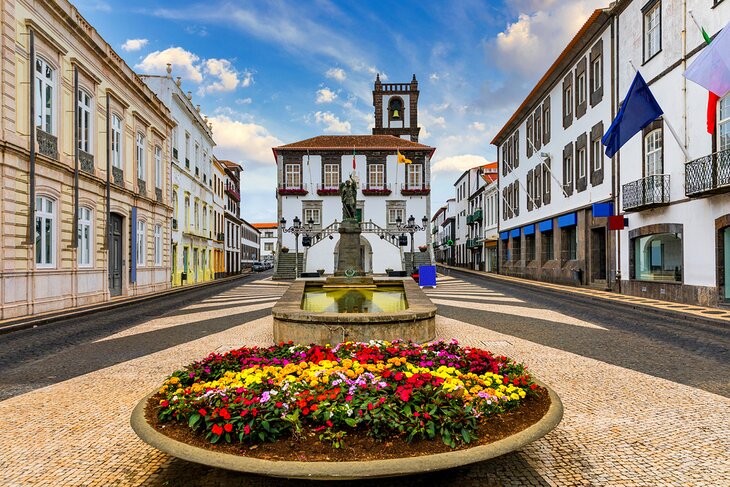
The Azores archipelago is a hidden gem of nine volcanic islands located in the mid-Atlantic. They boast a breathtaking landscape of verdant mountains, meandering rivers, thermal hot springs, crystal-clear crater lakes, and magnificent coastlines.
It's a nature lover's playground with an almost endless array of things to see and do ranging from terrestrial pursuits like birdwatching, hiking, road biking, canyoning, and visiting volcanoes, right through to aquatic options including diving, swimming, fishing, and whale watching.
Layer on top of all that the warm and hospitable Azorean culture of enjoying dining, festivals, and even bullfighting, and it's a heady mix of fun. The epicenter of the good times is the capital city of Ponta Delgada with its lively waterfront, the historical quarter full of beautiful 18th- and 19th-century buildings, and the 16th-century Forte de São Brás.
The Azores are easily reached via a two-hour flight from Lisbon. It's also possible to do a free stopover here from North America on your way to mainland Europe via Azores Airlines. The Azores are also a major cruise stop for trans-Atlantic and European operators.
19. Faro
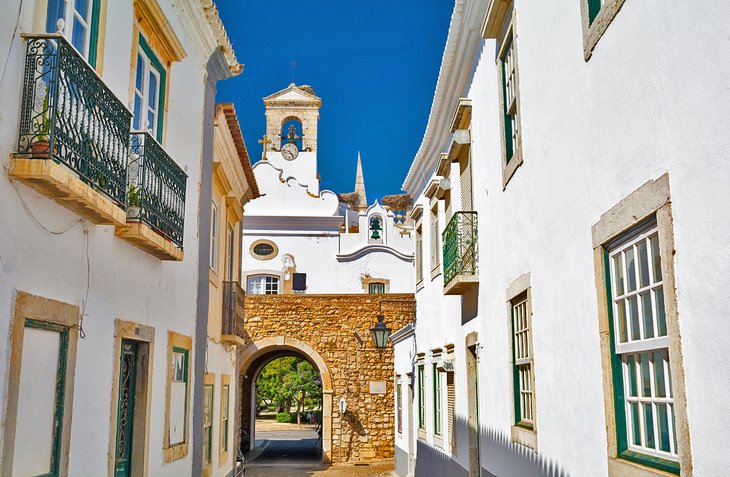
The largest city in the Algarve and the regional capital, Faro has more to offer the visitor than often meets the eye. With its international airport, imposing shopping mall, and sea of concrete high-rises, first impressions are of a nondescript urban sprawl. But peel away the modern veneer, and this is a city with lots to see and much to tell.
Faro's Cidade Velha (Old Town) is the historic core and where tourists should head for. Ringed in part by 16th-century walls built on Roman foundations, the Old Town's centerpiece is the impressive Sé (cathedral). Dating back to the 13th century, this venerable building boasts a dazzling Baroque interior of gilded and lacquered woodcarvings, inlaid marble, and fine azulejo tiling. A highlight is climbing the narrow staircase to the top of the medieval tower, where you can admire sweeping views across the quarter and the Parque Natural da Ria Formosa.
Other Old Town standouts include the fascinating Museu Municipal de Faro, itself set within the hallowed confines of the serene Convent of Our Lady of the Assumption. Beyond the walls is Igreja do Carmo. The church is known for its spooky Capela dos Ossos (Bone Chapel), lined with the skulls and bones of more than 1,000 monks.
20. Aveiro
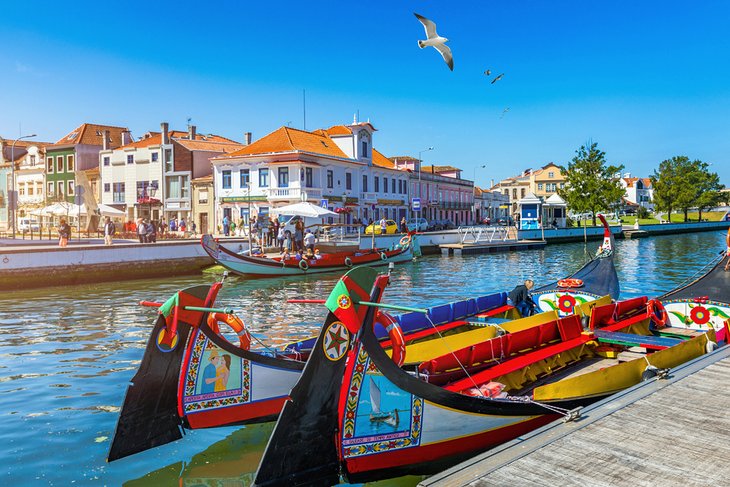
Not for nothing is Aveiro called the "Venice of Portugal." This attractive city set in the country's Beira Litoral region lies on the edge of a system of coastal lagoons and is crisscrossed by a series of canals that have become the destination's distinguishing feature. Colorful gondola-like boats called barcos moliceiros, traditionally used to harvest seaweed but today used as novel sightseeing vessels, navigate these narrow waterways.
The city is famed for its Art Nouveau architecture - embellishing the picturesque waterside are dozens of shops, restaurants, and houses featuring this early 20th-century decorative style. In fact, there's a museum dedicated to this artistic expression, the Museu Arte Nova.
But for a broader picture of the city's culture and heritage, spend time browsing the Museu de Aveiro. Occupying the 15th-century Convento de Jesus, the museum's fascinating collection includes exhibits relating to Santa Joana, a daughter of King Afonso V who lived in the convent from 1472 until her death in 1489.
Luring visitors beyond the city center is the Vista Alegre porcelain works. Established in 1842 and a hallmark of fine craftsmanship, Vista Alegre exports its products around the world. A museum, the founder's palace, and a shop selling discounted merchandise are all worth discovering.
21. Beja
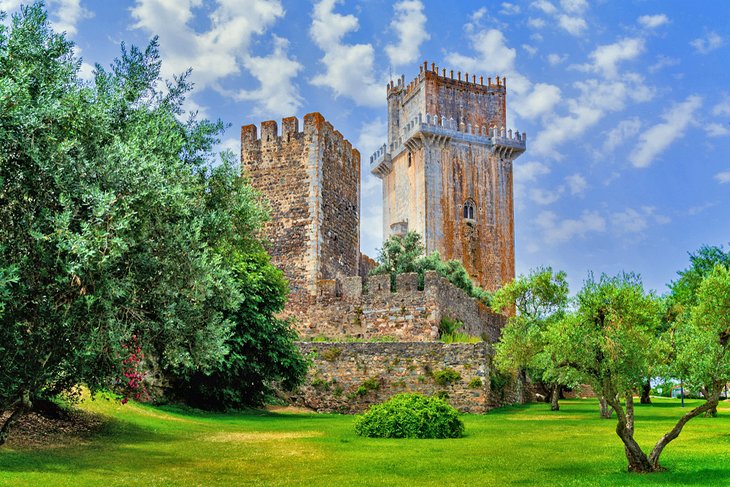
Rural sun-drenched Beja is the main town of the Baixa Alentejo (Lower Altenjo). Commanding a strategic position in the center of a vast region of golden plains, Beja was founded as Pax Julia by Julius Caesar in 48 BC and grew into an important and prosperous city.
Roman influence is still evident today in and around the destination, notably at the Ruinas Romanas de São Cucufate, the ruins of a villa complex located to the north of Beja.
Most of Beja's monuments, however, are clustered together in the historic old town. A rewarding introduction to the city's illustrious past is to visit the Museu Regional. Housed in the impressive Convento de Nossa Senhora da Conceição, the museum is noted for its Roman artifacts and Flemish paintings. History buffs should also spend time in the Museu Visigótico, set outside the castle walls within the Visigoth-era Igreja de Santo Amaro.
The castle itself is always worth a detour, not least for its 40-meter-high keep, the Torre de Menagem. You can climb a steep flight of stairs to reach the top and admire a truly inspiring panorama.
22. Parque Natural da Arrábida
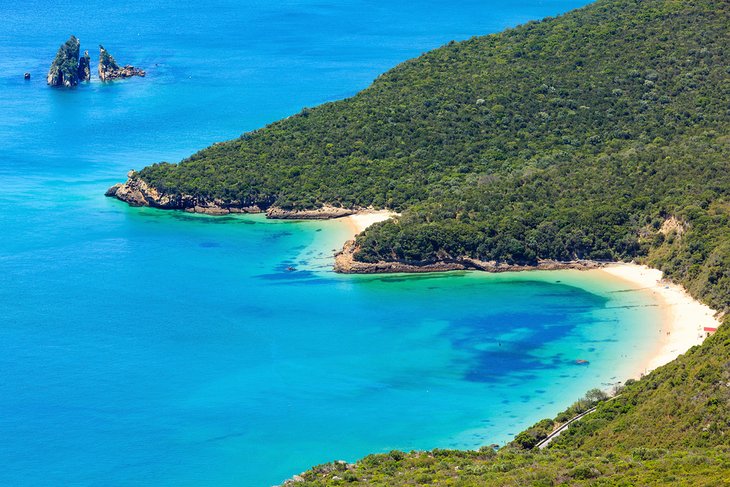
The Arrábida Natural Park is just 40 kilometers south of Lisbon but a world away from the urban clamor that is the Portuguese capital.
Hugging a wedge of coastline between the city of Setúbal and the town of Sesimbra, this verdant swathe of scrub and woodland blankets the craggy slopes of the Serra da Arrábida mountain range, a stunningly beautiful environment separated from the Atlantic Ocean by ribbons of golden sand.
The park is a haven for wildlife and perfect for biking, hiking, and other outdoor pursuits. Meanwhile, the truly adventurous can indulge in coasteering - climbing, walking, jumping, and swimming Arrábida's rocky coastline.
In fact, the coast is dotted with a number of superb cove beaches. Praia do Ribeiro do Cavalo is especially scenic, framed as it is by outcrops of limestone rock formations and ideal for swimming, diving, or snorkeling.
Inland, cultural curiosity can be satisfied by advance booking a tour of the Convento da Arrábida. Hidden away in dense shrubland, this enigmatic convent was built by Franciscan monks in 1542. Tours take in the monastery building, gardens, shrines, and cells.
To recuperate from a busy day's sightseeing, head for the achingly pretty harbor village of Portinho da Arrábida. Here, you'll find a cluster of quaint waterfront restaurants that face the crystalline waters of the Bay of Setúbal.
More Related Articles on PlanetWare.com
Planning Your Portugal Itinerary: Once you have figured out what you want to see and the places you want to visit, it's time to start thinking about a routing and what's practical. Depending on the amount of time you have, you may want to focus on just one or two areas, or you may decide to see it all. For help planning, see our article on Where to Go in Portugal: 7 Great Itineraries.