Elat Attractions
Characteristics
Elat (Eilat) is the most southerly town in Israel, situated at the northern tip of the Red Sea. Founded only in 1949, it rapidly developed from a police post into a town which at first preserved something of the atmosphere of a pioneer town but is now a major tourist resort. With its dry, hot climate (only eight days with rain a year, minimum winter temperature 10°C/50°F, summer temperature over 40°C/104°F), Elat now attracts holidaymakers both from Israel and from abroad. It can be reached either by driving through the Negev or by air.
Lying on a coastal strip only 11km/7mi long between Mount Sinai in the west and the hills of Edom to the east which was incorporated in the new state of Israel in 1949, Elat has had since 1964 a harbor capable of handling ocean-going vessels, now an important oil terminal linked by a pipeline with Ashqelon on the Mediterranean coast. Although Elat has no ancient remains, the surrounding area, with the adjoining Jordanian port of Aqaba, has a history going far back into the past.
History
After leaving Egypt under the leadership of Moses the Israelites wandered through Sinai and "the way of the plain from Elath, and from Ezion-gaber" and then into the wilderness of Moab, which was held by the "children of Lot" (Deuteronomy 2,8-9). Thus it is clear that the two towns of Eilath (probably on the site of present-day Aqaba) and Ezion-gaber or -geber (excavated in 1934 on Tell el-Khalayfa in Jordan) were already in existence in pre-Israelite times. Ezion-geber, "Solomon's port", is thought to have been founded by the Edomites or by the Midianites who lived to the south of them, on the Saudi Arabian coast. It was also visited by Egyptian ships transporting copper from the mines of Timna. In the 10th century B.C. Solomon had ships built at Ezion-geber and manned them with his own people and with Phoenicians supplied by King Hiram of Tyre. These ships "came to Ophir and fetched from thence gold, four hundred and twenty talents, and brought it to king Solomon" (1 Kings 9,26-28). Here too the Queen of Sheba landed on her way to visit Solomon in Jerusalem and "try him with hard questions" (1 Kings 10,1 ff.).
In the eighth century B.C. the Israelites lost the port. In the third century B.C. it passed to the Ptolemies who then ruled Egypt, then to the Nabataeans and finally to the Romans, to whom it was known as Aila. The architect who built the monastery of St Catherine on Sinai in the sixth century was a native of Aila. In 1116, during the reign of King Baldwin I of Jerusalem, the Crusaders built a castle on the island lying off present-day Elat. The castle was taken by Saladin in 1170, recovered by Reynald of Ch[a-circum]tillon and thereafter was finally incorporated in the Muslim dominions, being held first by the Mamelukes and later by the Turks. After the First World War Elat lay within the British mandated territory, and in 1949 became part of Israel. In that year was founded a new Jewish settlement, the kibbutz of Elot, which was later moved 3km/2mi inland.
Free trade zone
In order to give a boost to the town's economy it was declared a free trade zone in 1985. The exemption from value-added tax and customs duties makes most goods, services and hotel tariffs considerably (about 15%) cheaper than in the rest of Israel.
The town
Elat is a modern town which is continually extending farther up the slopes of the surrounding hills. Most of the hotels (which in comparison with hotels in other parts of Israel are exceedingly luxurious) are on or near the North Beach, where there are also shopping arcades, a promenade and a yacht harbor which is already too small. The real center of Elat, with numerous shops and restaurants, the tourist information office and the Town Hall, is northwest of the North Beach on Hatmarim Street. To the south of the town are the Old and New Harbors, which extend down the coast to Coral Beach. In the center of the town is its airport, with an alarmingly short runway, which is at present used only by El Al flights; charter flights normally use the military airport of Uvda, 60km/37mi away. There are plans to build a new airport a few kilometers north of Elat; when this is brought into service the present terminal building will become part of a large shopping center with boutiques and pavement cafes, and new hotels will be built on the runway.
Beaches
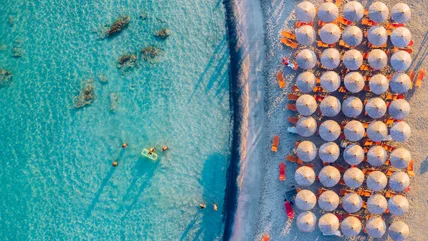
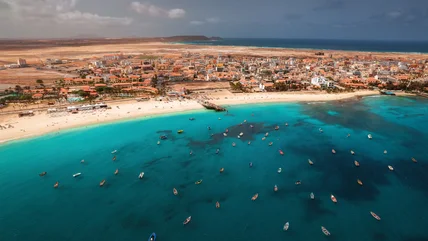
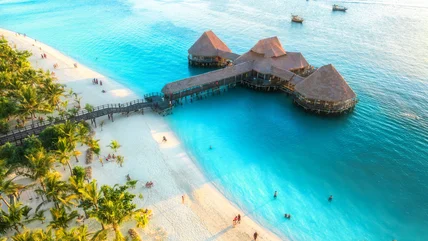
The North Beach (shingle) with its numerous hotels is usually crowded. Some of the hotels have their own stretches of beach, for residents only. On the beaches open to the public there are beach umbrellas and deck-chairs (loungers) for hire. Much more beautiful is Coral Beach (5km/3mi south of Elat) with its fine sand. It is part of the Coral Beach Nature Reserve (admission charge). Here swimmers, snorkellers and scuba divers can explore the fascinating underwater world of the banks of coral; there are underwater signposts drawing attention to the various species of coral and marine plants.
Elat (Eilat) is the most southerly town in Israel, situated at the northern tip of the Red Sea. Founded only in 1949, it rapidly developed from a police post into a town which at first preserved something of the atmosphere of a pioneer town but is now a major tourist resort. With its dry, hot climate (only eight days with rain a year, minimum winter temperature 10°C/50°F, summer temperature over 40°C/104°F), Elat now attracts holidaymakers both from Israel and from abroad. It can be reached either by driving through the Negev or by air.
Lying on a coastal strip only 11km/7mi long between Mount Sinai in the west and the hills of Edom to the east which was incorporated in the new state of Israel in 1949, Elat has had since 1964 a harbor capable of handling ocean-going vessels, now an important oil terminal linked by a pipeline with Ashqelon on the Mediterranean coast. Although Elat has no ancient remains, the surrounding area, with the adjoining Jordanian port of Aqaba, has a history going far back into the past.
History
After leaving Egypt under the leadership of Moses the Israelites wandered through Sinai and "the way of the plain from Elath, and from Ezion-gaber" and then into the wilderness of Moab, which was held by the "children of Lot" (Deuteronomy 2,8-9). Thus it is clear that the two towns of Eilath (probably on the site of present-day Aqaba) and Ezion-gaber or -geber (excavated in 1934 on Tell el-Khalayfa in Jordan) were already in existence in pre-Israelite times. Ezion-geber, "Solomon's port", is thought to have been founded by the Edomites or by the Midianites who lived to the south of them, on the Saudi Arabian coast. It was also visited by Egyptian ships transporting copper from the mines of Timna. In the 10th century B.C. Solomon had ships built at Ezion-geber and manned them with his own people and with Phoenicians supplied by King Hiram of Tyre. These ships "came to Ophir and fetched from thence gold, four hundred and twenty talents, and brought it to king Solomon" (1 Kings 9,26-28). Here too the Queen of Sheba landed on her way to visit Solomon in Jerusalem and "try him with hard questions" (1 Kings 10,1 ff.).
In the eighth century B.C. the Israelites lost the port. In the third century B.C. it passed to the Ptolemies who then ruled Egypt, then to the Nabataeans and finally to the Romans, to whom it was known as Aila. The architect who built the monastery of St Catherine on Sinai in the sixth century was a native of Aila. In 1116, during the reign of King Baldwin I of Jerusalem, the Crusaders built a castle on the island lying off present-day Elat. The castle was taken by Saladin in 1170, recovered by Reynald of Ch[a-circum]tillon and thereafter was finally incorporated in the Muslim dominions, being held first by the Mamelukes and later by the Turks. After the First World War Elat lay within the British mandated territory, and in 1949 became part of Israel. In that year was founded a new Jewish settlement, the kibbutz of Elot, which was later moved 3km/2mi inland.
Free trade zone
In order to give a boost to the town's economy it was declared a free trade zone in 1985. The exemption from value-added tax and customs duties makes most goods, services and hotel tariffs considerably (about 15%) cheaper than in the rest of Israel.
The town
Elat is a modern town which is continually extending farther up the slopes of the surrounding hills. Most of the hotels (which in comparison with hotels in other parts of Israel are exceedingly luxurious) are on or near the North Beach, where there are also shopping arcades, a promenade and a yacht harbor which is already too small. The real center of Elat, with numerous shops and restaurants, the tourist information office and the Town Hall, is northwest of the North Beach on Hatmarim Street. To the south of the town are the Old and New Harbors, which extend down the coast to Coral Beach. In the center of the town is its airport, with an alarmingly short runway, which is at present used only by El Al flights; charter flights normally use the military airport of Uvda, 60km/37mi away. There are plans to build a new airport a few kilometers north of Elat; when this is brought into service the present terminal building will become part of a large shopping center with boutiques and pavement cafes, and new hotels will be built on the runway.
Beaches
The North Beach (shingle) with its numerous hotels is usually crowded. Some of the hotels have their own stretches of beach, for residents only. On the beaches open to the public there are beach umbrellas and deck-chairs (loungers) for hire. Much more beautiful is Coral Beach (5km/3mi south of Elat) with its fine sand. It is part of the Coral Beach Nature Reserve (admission charge). Here swimmers, snorkellers and scuba divers can explore the fascinating underwater world of the banks of coral; there are underwater signposts drawing attention to the various species of coral and marine plants.
Read More
Underwater Observatory
The Underwater Observatory at Elat provides a glimpse of the teeming marine life that exists in the Red Sea. Also on site is a shark pool, a turtle pool, and an aquarium.
Read More
Hai Bar Nature Reserve
This 10,000 acre reserve was established in 1963 to protect the traditional desert animals that inhabit the area.
Read More
Solomon's Pillars
(Timna Park)
Solomon's Pillars is a natural sandstone wall, eroded into the form of large pillars.
Bird-watching
For bird-watchers there are guided walks on special paths in Elat with hides at intervals. These are particularly interesting in spring, when large numbers of migrant birds pass through the Elat area on their way from Africa to Europe.
Another migration occurs in the fall while the birds are heading for Africa.
Eilat - Dolphin Reef Eilat
Dolphin Reef Eilat is located on the Red Sea and offers a unique opportunity to mingle with dolphins Visitors can observe bottlenose dolphins which are free to come and go as the please but choose to interact with humans near the shoreline. Options for visitors include viewing the dolphins from floating walk ways that lead out from the shore or going on a guided swim.
The site also includes a beautiful stretch of beach where visitors can sit and enjoy the views and beautiful surroundings.
Hours
| Mon | Tue | Wed | Thu | Fri | Sat | Sun | |
|---|---|---|---|---|---|---|---|
| Open | 9:00 | 9:00 | 9:00 | 9:00 | 9:00 | 9:00 | 9:00 |
| Close | 17:00 | 17:00 | 17:00 | 17:00 | 16:30 | 16:30 | 17:00 |
En Netafim
10km/6mi northwest of Elat is the spring of En Netafim. It is reached by turning off the road to Moon Valley, some 10km/6mi from Elat, into an unsurfaced road signposted to En Netafim. In 800m (half a mi) the road comes to a car park, from which it is a 10-minute walk to En Netafim. It is the only spring in this area which flows throughout the year. The water gushes over a rock and falls into a pool below.
Gorge of the Inscriptions
The Gorge of the Inscriptions, named after the numerous Nabataean, Hebrew and Greek inscriptions on its rock walls, is reached on a road (all-terrain vehicles only) which branches off the Moon Valley road on the left (22km/13.5mi from Elat).
Israel Palace, Doll Museum (closed)
On the lagoon to the east of Elat, in the Caesar Hotel, is the Israel Palace Doll Museum, with a series of dioramas illustrating the life of the Jewish people in the past and present.
ATTRACTION IS CLOSED.
Ostrich Farm
On the Ostrich Farm to the south of Elat, a little way inland, there are thirty ostriches, with periodic ostrich-riding shows. There are also a cafeteria and a souvenir shop.
Taba
The dispute between Egypt and Israel over the Taba enclave, 8km/5mi southwest of Elat, was settled in 1989. This strip of land covering an area of 1 sq.km/250 acres, with a luxury hotel and a holiday village, now belongs to Egypt. The nude bathing which was formerly common here is now banned. For a trip to Taba and farther along the Sinai peninsula regard must be had to the Egyptian entry regulations.
Texas Ranch
Opposite the landing-stage used by the glass-bottomed boats in Elat is the Texas Ranch, which was originally built as a film set. Here visitors can live the life of the Wild West - or at any rate the organizers' version of it. Attached to the ranch is a riding school.
On site entertainment includes a shop, court house, as well as horse and camel riding.
Yotvata
Some 20km/12.5mi north of the turning for Timna is the oasis (date-palms) of the kibbutz of Yotvata, originally founded in 1951 as an army post. It is watered by an abundant spring, En Yotvata (Arabic Ain Radian), which is mentioned in the Old Testament ("Jotbath, a land of rivers of waters": Deuteronomy 10,7). The kibbutz's visitor center puts on an audio-visual show which illustrates the geography and way of life of the region. There is also an exhibition on the flora and fauna, the geology and history of the desert region.
Attractions in Other Popular Destinations