18 Top-Rated Attractions & Things to Do in Alexandria
Alexander the Great founded it. Queen Cleopatra lorded over it. Alexandria's birth and early history is a calling card of famous names.
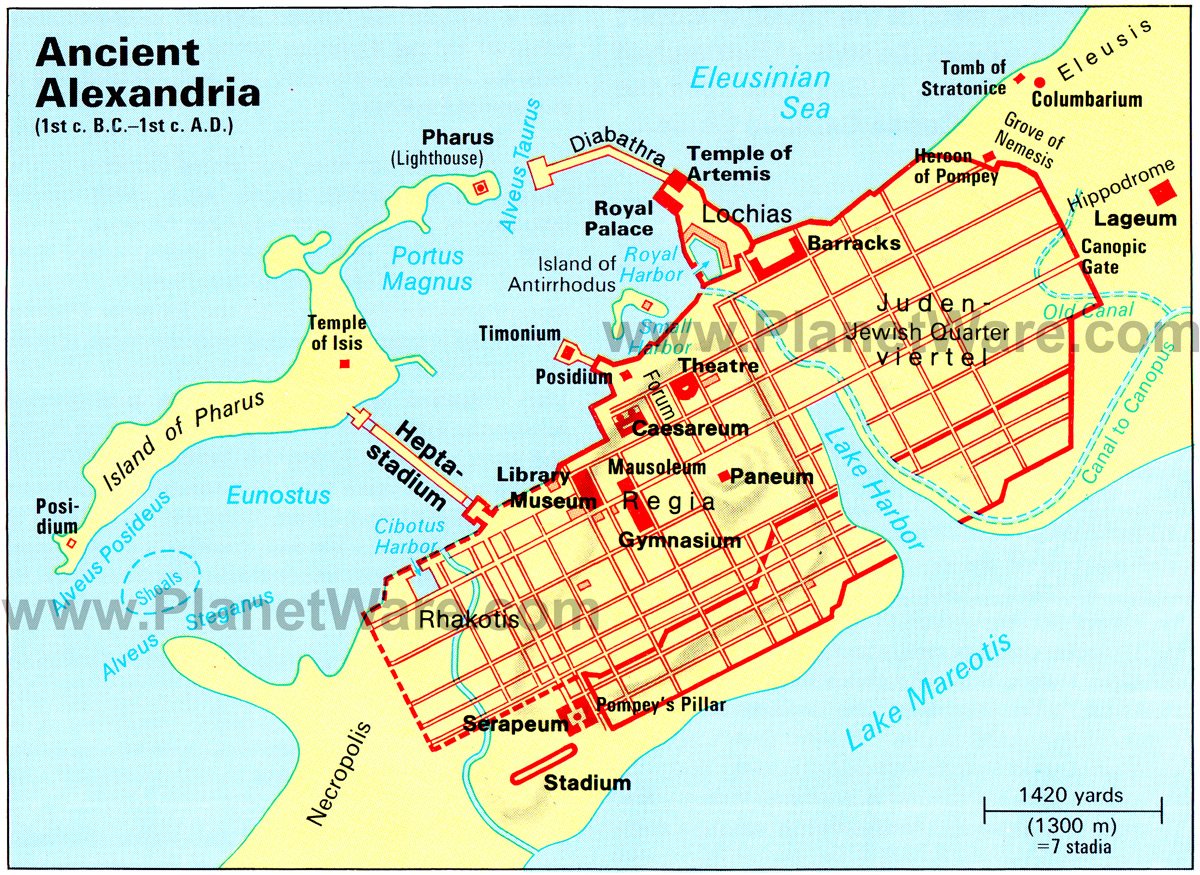
This was the Mediterranean's dazzling jewel of a city, home to the Great Library of Alexandria and the colossal Pharos Lighthouse – one of the seven wonders of the ancient world.
In more recent times, from the late 19th century up until the 1950s, Alexandria was something of a bohemian tourist attraction, with a glittering cast of writers, poets, and artists who made the city their home.
Although today, unlike Cairo and Luxor, there are few actual historic monuments and things to do, Alexandria is one of the best places to visit in Egypt to capture a sense of days-gone-by grandeur.
Plan your sightseeing with our list of the top attractions and things to do in Alexandria.
See also: Where to Stay in Alexandria
- 1. Explore the Museums of the Bibliotheca Alexandrina
- 2. Stroll the Corniche
- 3. Head Underground at the Catacombs of Kom el-Shuqqafa
- 4. Fort Qaitbey
- 5. Kom el-Dikka
- 6. Pompey's Pillar
- 7. Dive Alexandria's Underwater Ruins
- 8. Alexandria National Museum
- 9. Montazah Gardens
- 10. Dine Out in Alexandria's Fish Restaurants
- 11. Ras el-Tin Palace
- 12. Search for Bargains in Alex's Main Souk Area
- 13. Abu Abbas al-Mursi Mosque
- 14. Day Trip to the El Alamein War Memorials
- 15. Royal Jewelry Museum
- 16. View the Art inside Mahmoud Said Museum
- 17. Visit Aboukir
- 18. Cavafy Museum
- Where to Stay in Alexandria for Sightseeing
- Tips and Tours: How to Make the Most of Your Visit to Alexandria
1. Explore the Museums of the Bibliotheca Alexandrina
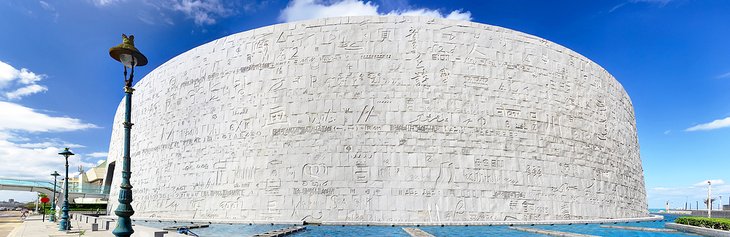
Most visitors to Alexandria beeline first to this modern re-imagining of Alexandria's ancient Great Library.
The Bibliotheca Alexandrina is one of Egypt's most important contemporary landmarks and the cultural heart of the city.
It contains one of the modern world's most ambitious libraries and a host of museums exploring Alexandria's history and heritage.
Its architecture is centered around a giant sun disk, which presides over the waterfront Corniche. Inside, the huge main library and its reading room can hold eight million volumes.
For visitors, though, the main tourist attractions are the beautifully curated exhibition spaces below the main library.
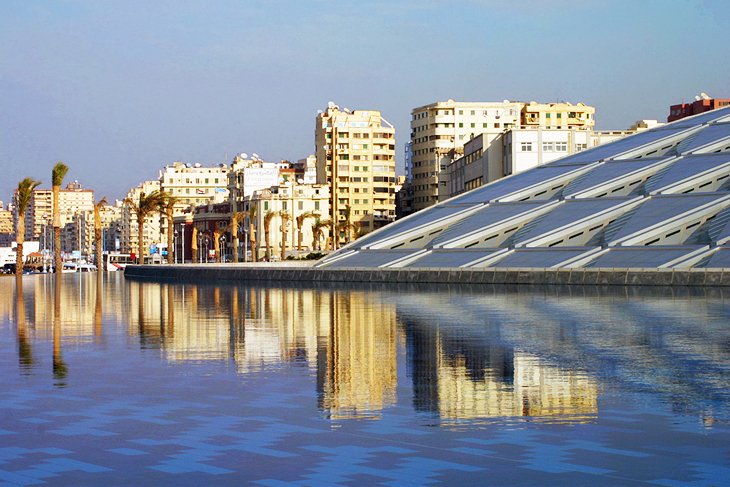
Here, Alexandria's Antiquities Museum holds a collection that romps from Ancient Egypt through to the Greco-Roman era, with its highlight exhibits displaying statuary found during underwater archaeological excavations in the harbor.
Also below the library is the Manuscript Museum, displaying a collection of ancient texts and scrolls.
There are also various halls hosting rotating contemporary art exhibitions, a permanent Egyptian folk art collection, and a Science Museum and Planetarium that are aimed squarely at children.
Official site: www.bibalex.org
2. Stroll the Corniche
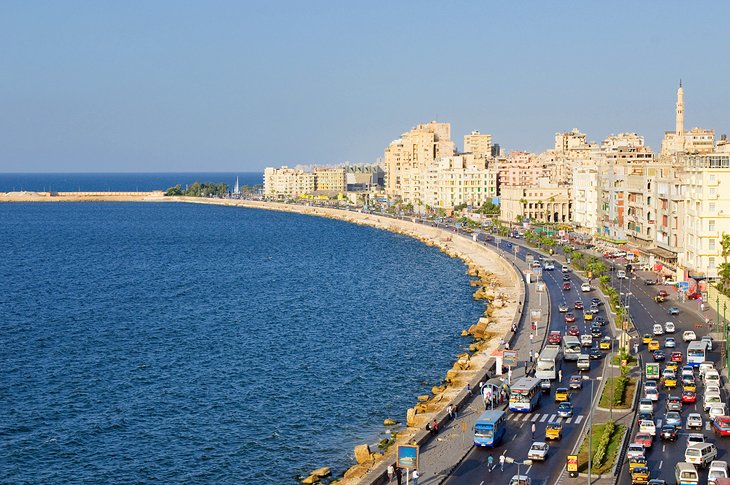
Downtown Alexandria's wide, waterfront Corniche Road is as much a symbol of the city as any of its monuments.
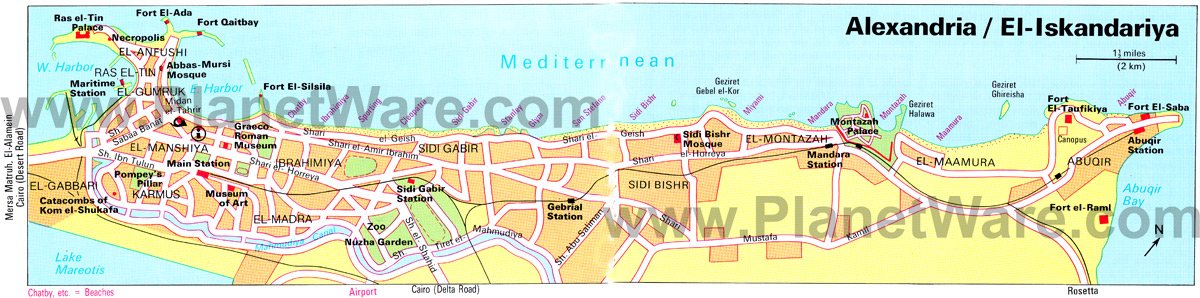
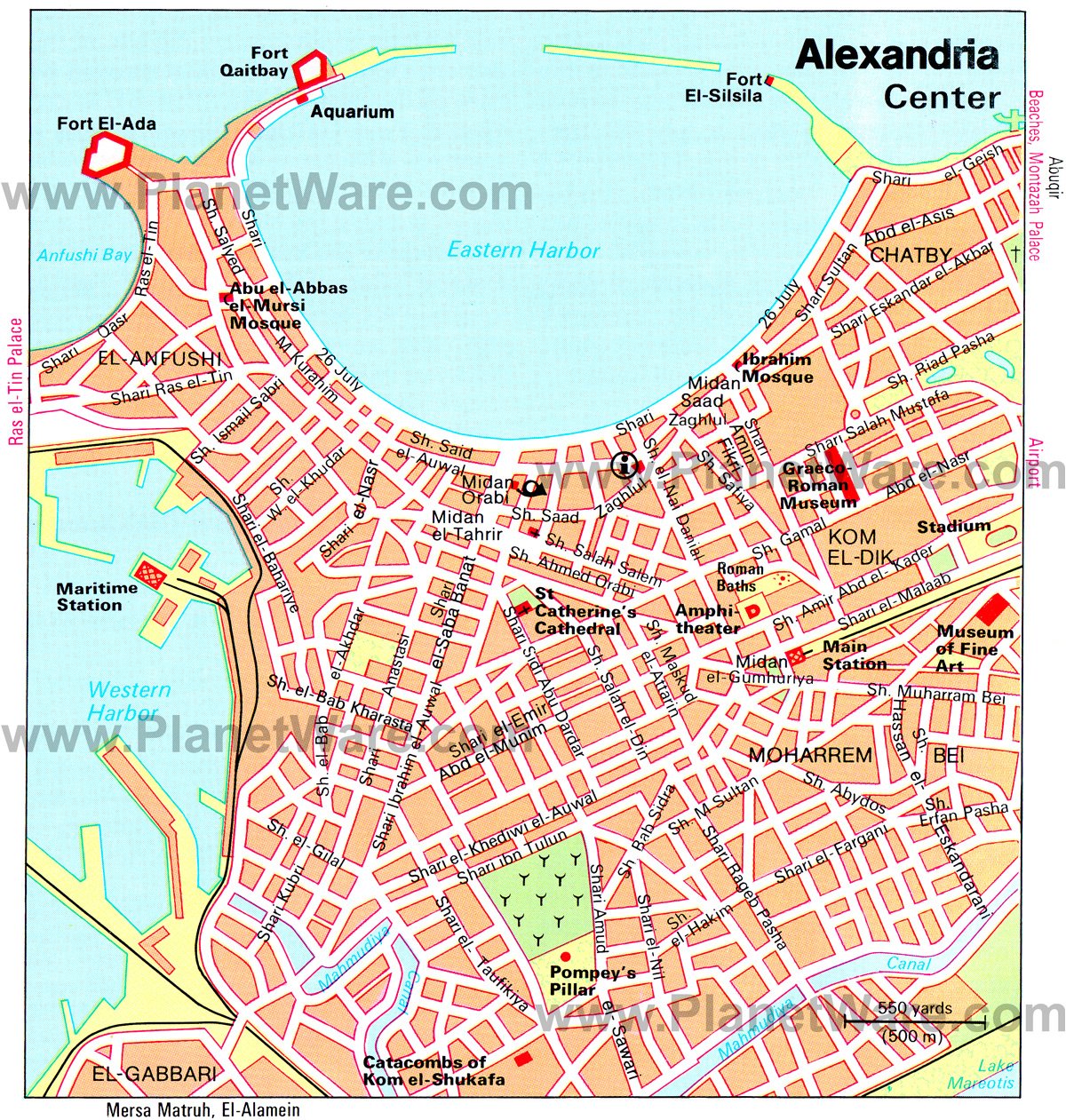
Strolling the Corniche, particularly the section between the main shorefront square of Midan Saad Zaghloul to Fort Qaitbey on the Eastern Harbor's western tip, gives you a real feel for the era of cosmopolitan elegance and decadence that marked this city in the late 19th and early 20th centuries.
Much of the architecture from this era still stands along the Corniche, though these days, much of it is heavily dilapidated and falling into disrepair.
During your stroll, the most famous landmarks along this stretch include the multiple-domed Abu Abbas al-Mursi Mosque and the still-standing heritage hotels, the Steigenberger Cecil Hotel and Paradise Inn Windsor Palace Hotel.
These were once the grandest addresses in town, and both are featured in Lawrence Durrell's classic Alexandria Quartet novels that are set in the city.
The Cecil, in its hey-day, is also famous for playing host to mystery author Agatha Christie, the British Secret Service and Winston Churchill during WWII, and Egypt's beloved singer Umm Khalthoum.
3. Head Underground at the Catacombs of Kom el-Shuqqafa
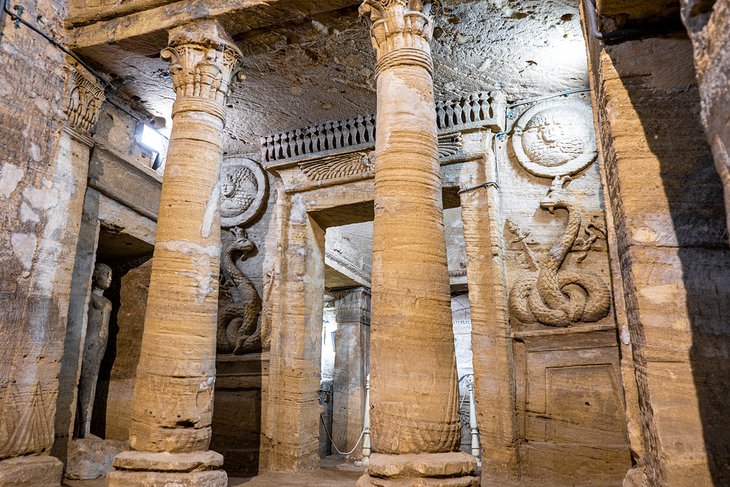
The Catacombs of Kom el-Shuqqafa are hewn from the rock on the southern slopes of a hill, in the Carmous district.
Thought to date from the 2nd century CE, they offer an admirable example of the characteristic Alexandrian fusion of Egyptian and Greco-Roman styles.
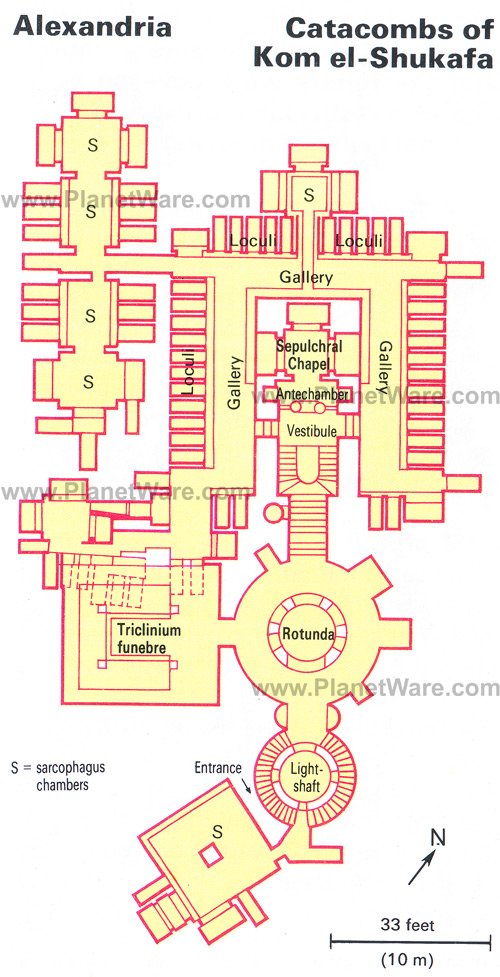
Discovered in 1900 (thanks to a donkey falling into them) they are laid out on several levels of sarcophagi and loculi (shelf tomb) chambers.
A spiral staircase leads down into the ground to the main rotunda.
To the right, you can enter the main burial chamber and also the Sepulchral Chapel with 91 loculi, each large enough to accommodate three or four mummies.
To the left is a large room known as the Triclinium Funebre, which would have been used for banquets in honor of the dead.
Address: El-Nasareya Street, Carmous
4. Fort Qaitbey
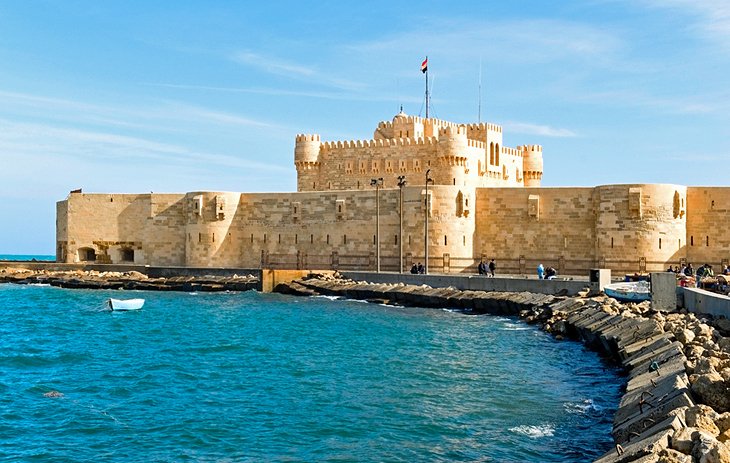
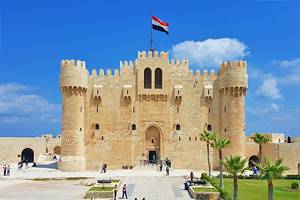
Walk the long shorefront Corniche road of the Eastern Harbor heading west, and you'll finally arrive at Fort Qaitbey.
It may be a poor substitute for what was once the site of the mighty Pharos Lighthouse–one of the seven wonders of the ancient world, which was toppled by a violent earthquake in 1303–but this squat fort has been standing guard over Alexandria since 1480.
Fort Qaitbey was built by Mamluke Sultan Qaitbey in an effort to fortify this important Egyptian port from attack, and rubble from the toppled lighthouse was used in its construction.
Inside, you can explore the series of stone-walled chambers and climb up to the roof to look out over the Mediterranean.
Address: Corniche, Eastern Harbour
5. Kom el-Dikka

Nobody thought much of the ancient rubble mound in central Alexandria until, in the 1960s, they decided to clear the site to make way for new housing.
As work commenced, the area known as Kom el-Dikka ("Mound of Rubble") revealed a whole swag of ancient ruins buried beneath, including a small Roman theater.
Today the area is a small archaeological park with remains from Alexandria's Greco-Roman period.
As well as the theater, there are remnants of a Ptolemaic temple, a Roman bathhouse, and various Roman-era villas.
Excavation work on the Villa of the Birds here unearthed well-preserved 3rd-century mosaic floors, which have been kept in situ.
Address: Yousri Street, Alexandria
6. Pompey's Pillar
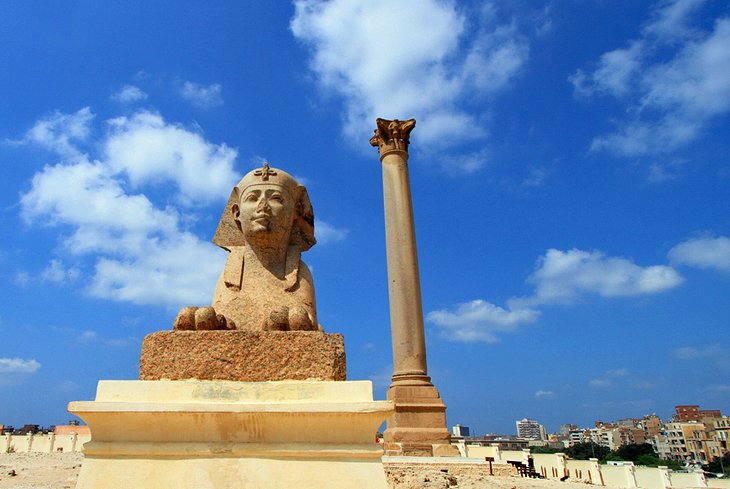
In Carmous, near the Catacombs of Kom el-Shuqqafa, is a hill littered with the remains of ancient walls, architectural fragments, and rubble on which Alexandria's only fully intact ancient monument is left standing.
Pompey's Pillar rises from the ruins of the ancient and famous Serapeion (Temple of Serapis), which was once used to store the overflow of manuscripts from the Great Library of Alexandria.
This column of red Aswan granite with a Corinthian capital, rising to a height of almost 27 meters, actually has nothing to do with Pompey and was instead set up in 292 CE in honor of Diocletian, who supplied food for the starving population after the siege of the city.
Underneath, there is not much to see of the badly ruined Serapeion, but you can clamber down some staircases into a substructure of chambers.
Address: Abu Mandour Street, Carmous
7. Dive Alexandria's Underwater Ruins
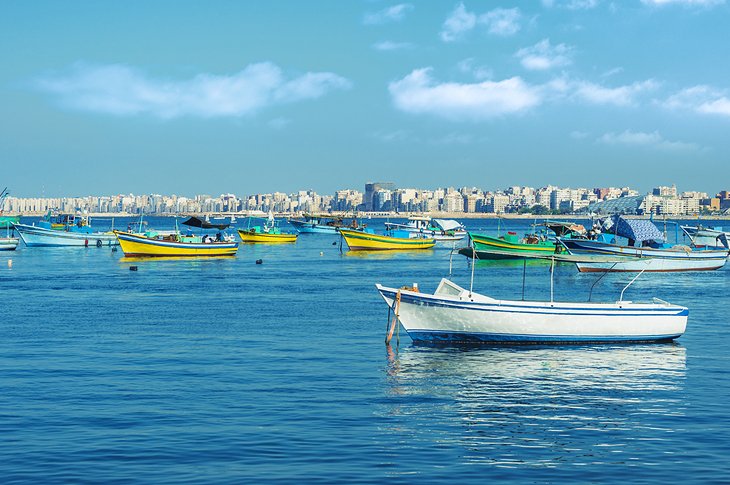
Unlike diving in the Red Sea, dives in Alexandria are not about colorful coral reefs and fish life. Instead, dive sites in the Eastern Harbor area are all about ancient underwater ruins.
For divers, Alexandria provides a unique opportunity to dive amid the toppled statues and columns of the ancient city.
Be aware that underwater visibility is low when diving in Alexandria.
For underwater archaeologists, the waters off the coast here have provided plenty of riches in recent years.
To the northeast of the city, in the bay of Aboukir, archaeologists discovered the port city of Heracleion-Thonis and have brought many of the treasures to the surface, now on display in Alexandria's museums.
For now, though, most of the recreational diving opportunities are still centered around the Eastern Harbor.
The most popular Eastern Harbor site has been (unsurprisingly) nicknamed "Cleopatra's Palace" and indeed was once a palace area - though if the great lady herself was ever in residence, we'll never know.
There are sphinxes and tumbled columns and statuary galore still in situ here, which makes for a fascinating underwater experience.
8. Alexandria National Museum
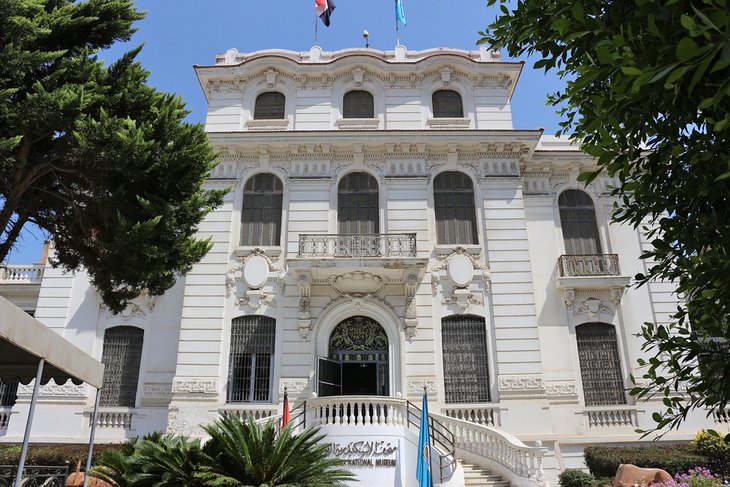
Alexandria's National Museum is a must-stop if you want to get to grips with the vast history of this famed city.
Inside, the collection guides you from the Pharaonic era (in the basement), to the Hellenistic heyday, when Alexandria and Egypt were governed by the Ptolemy dynasty begun by Alexander the Great (on the ground floor), and up to the Byzantine and Islamic periods (on the 1st floor).
The ground floor's exhibits of statuary and artifacts from the underwater archaeological explorations of the sunken port city of Heracleion-Thonis in Aboukir Bay are the museum's major highlight.
The museum does a fantastic job of bringing ancient Alexandria to life, including excellent map drawing exhibits that imagine what the classical city would have looked like, helping visitors understand the changing face of this city.
Address: Tariq al-Horreya Street, Alexandria
9. Montazah Gardens
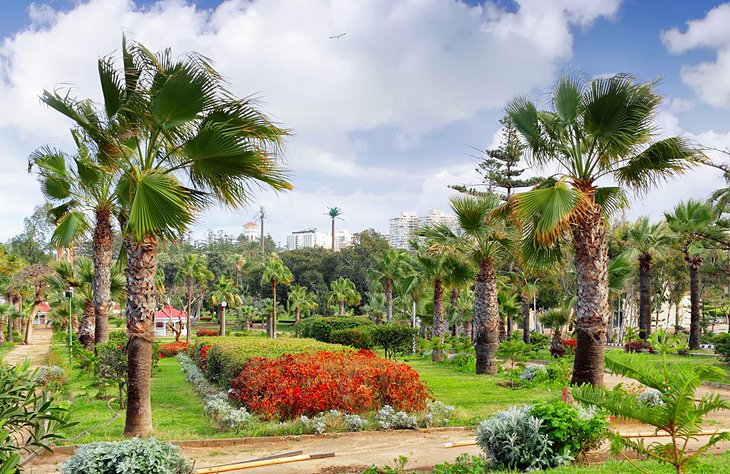
An oasis of calm on the city's eastern edge, Montazah is a lush haven of tall palm trees, trimmed lawns, and blossoming flowers that was once off-limits to all but the royal court and their hangers-on.
Built as a hunting lodge in the 1890s by Khedive Abbas Hilmi, it was later extended substantially by King Fuad and replaced Ras el-Tin Palace as the royal family's summer house.
The eccentrically designed Montazah Palace, with its ornate Florentine-inspired towers and Rococo flourishes, is not open to the public, but everyone is welcome to stroll within the sprawling gardens, which can be a welcome slice of nature after a day spent within Alexandria's hustle.
On the coastal end of the park is a small beach with a peculiarly whimsical bridge to a small island.
If you need a dose of tranquility, a trip to Montazah is just the ticket to restore your sanity before diving back into the inner city fray.
Minibuses heading west up the shore-front Corniche road all pass by Montazah. They charge between 1-2 EGP depending on where you board.
10. Dine Out in Alexandria's Fish Restaurants
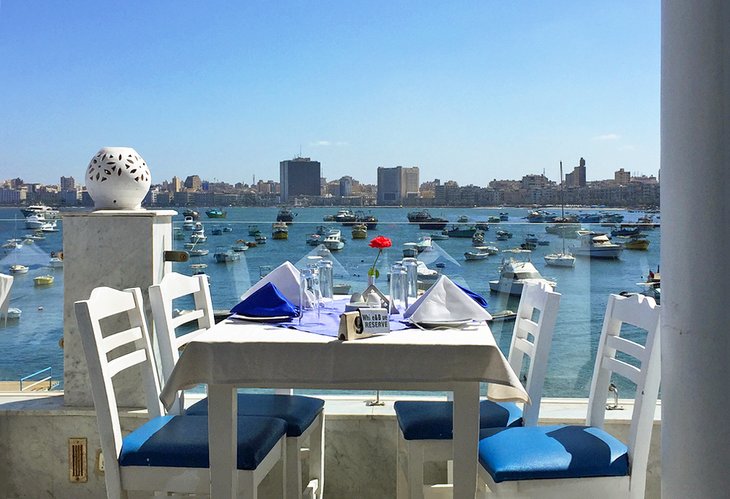
Many visitors come to Alexandria primely to dine on the city's fresh seafood.
The two best areas for restaurants serving fresh fish are the harborfront, where you get sea views with your meal, and the working-class district of Anfushi, which stretches west from Fort Qaitbey and the harbor in a warren of lanes.
Just after sunset, Anfushi is the city's liveliest area, with traditional coffeehouses spilling out onto the street, and the scent of sheesha (water-pipes) and grilled fish hanging in the air.
It's worthwhile exploring Anfushi beyond its restaurant scene. On Qasr Ras el-Tin Street are the city's shipyards, while farther along the street is the bustling Alexandria fish market, which is prime territory for photographers in the mornings, when the haggling is at full throttle.
11. Ras el-Tin Palace
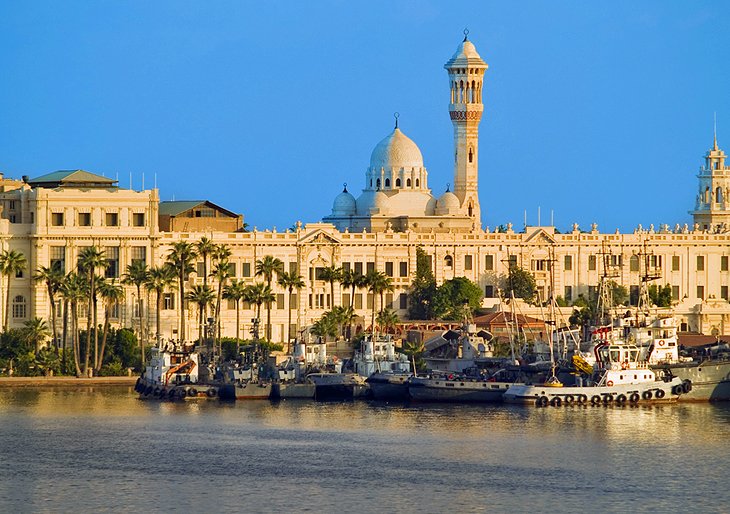
Sumptuous Ras el-Tin Palace was once a summer escape for Egypt's sultans when the desert heat of Cairo got too much to bear.
It's also the famed location where King Farouk–Egypt's last king–officially abdicated in 1952 before sailing out of Alexandria's harbor and into exile in Italy.
Today, the palace is used by the Egyptian navy, which means its glorious interiors are out of bounds to casual visitors, but the monumental white façade, best viewed from the harbor waters, is a must-see.
12. Search for Bargains in Alex's Main Souk Area
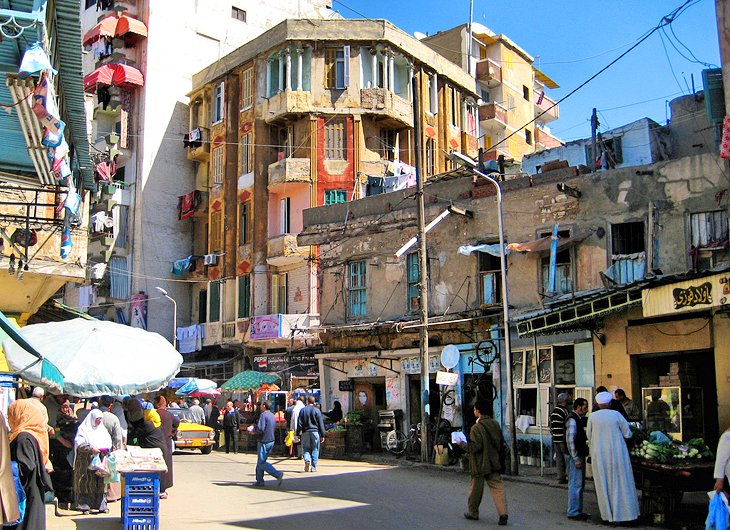
Alexandria's main souq (market) stretches through the back streets, heading west from Midan Tahrir in the central city.
You'll find everything from fresh produce to silver trinkets by poking about in this district.
To be fair, there isn't much on sale to interest tourists; this is a real-deal local souq, and it's a place to visit more to capture an essence of Alexandrian life than to shop.
The entire souq area is a squiggle of lanes that flow off from each other, with each alley specializing in different products.
If you want to dig a bit deeper into Alexandria's soul, don't miss a wander through here.
13. Abu Abbas al-Mursi Mosque
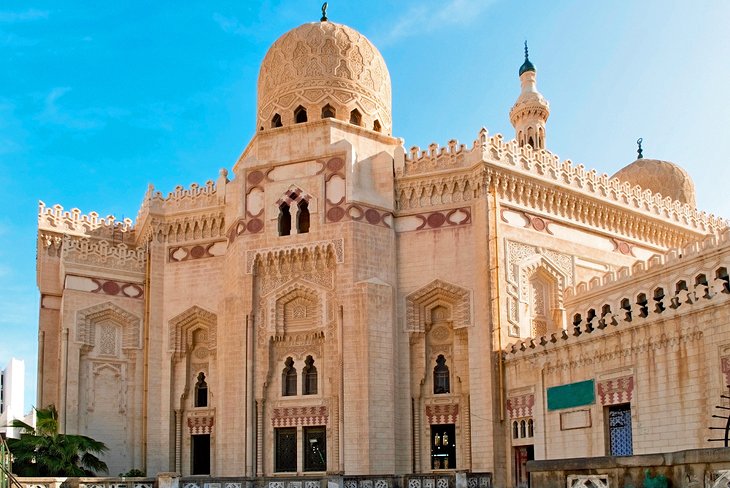
One of Alexandria's major landmarks, the Abu Abbas al-Mursi Mosque was built in 1796 over the tomb of the 13th-century Sufi holy man Abu Abbas al-Mursi.
Originally from Murcia (in Spain's Andalusia region), Abu Abbas became a highly esteemed religious leader in Alexandria, and his teachings are still revered in Egypt.
The mammoth cream-colored mosque that holds his name is a major pilgrimage site.
For non-religious visitors, the mosque's exquisite facade of swirling Islamic calligraphy designs and motifs is the major draw-card.
Those who want to enter to see the beautiful and intricate mosaic halls should dress modestly and leave their shoes at the main entrance.
Address: Mohammad Karim Street
14. Day Trip to the El Alamein War Memorials
The hardscrabble township of El Alamein, about 112 kilometers west of Alexandria, holds a fascinating place in modern world history.
It was across this parched piece of nondescript desert that the Allies' first decisive victory in World War II's North Africa campaign was won.
The bloody battles that took place here in October 1942 killed or wounded more than 80,000 soldiers from countries as varied as Australia, New Zealand, India, and Great Britain (Allies), as well as Germany and Italy (Axis Forces).
Today, the war memorials that stand are a poignant reminder of the 13 days of fighting that claimed so many lives.
The rather excellent El Alamein War Museum does a good job of giving an overview to the El Alamein campaign, with plenty of military memorabilia displayed.
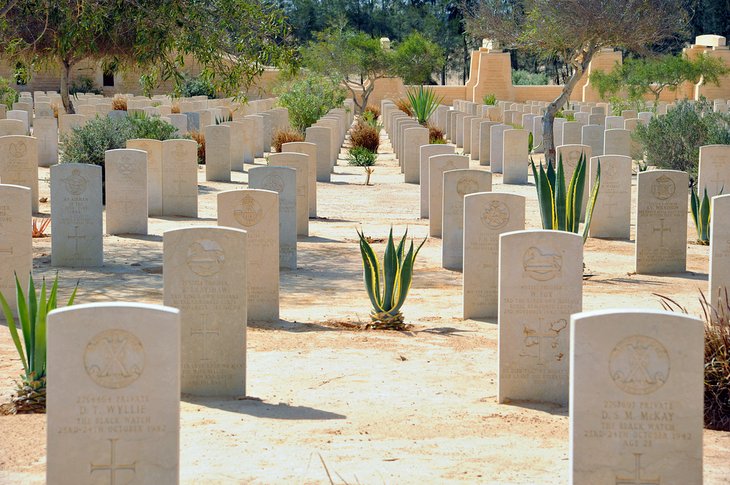
The Commonwealth Cemetery is a beautifully kept tribute to the fallen, with the 7,000 tombstones in regimented rows between well-tended desert plants.
Just north of town, along the coastal highway, is the boxy German Memorial, where most of the 4,500 German dead are buried, and another couple of kilometers north is the Italian Memorial that is also home to a tiny, but interesting, museum.
15. Royal Jewelry Museum
This museum, just north of Stanley Bridge, is easily reached from central Alexandria by tram.
It is set in the palace that was once home to Fatma Al-Zahraa Haider, a descendent of Muhammad Ali Pasha–the first viceroy (pasha) of Egypt under Ottoman rule who went on to establish Egypt's royal family dynasty that ruled up to independence in 1952.
The palace itself, built in 1923, is an excellent example of the merging architectural styles of Islamic and European design.
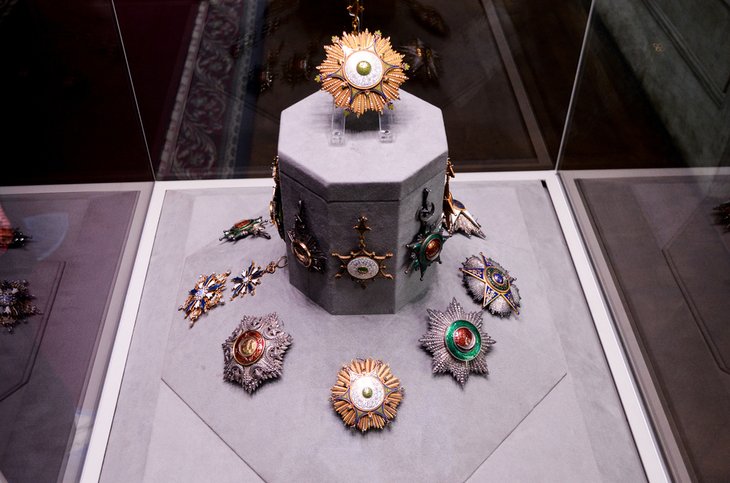
The ornate plasterwork ceilings, gilded and frescoed, of some rooms are enough of a reason to visit, but the interiors are also home to a collection of jewelry, household items and art work once owned by various members of the Muhammad Ali Pasha dynasty.
Address: Abd El Salam Aref Street
16. View the Art inside Mahmoud Said Museum
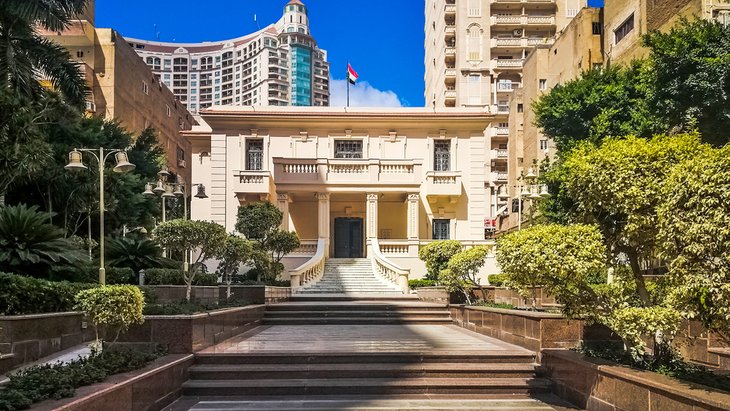
Any visitor interested in Egypt's art scene should make sure to beeline to this Italianate villa, once home to Egyptian artist Mahmoud Said, which is now an art gallery devoted to his work.
Considered by many as the founder of Egyptian modern art, Mahmoud Said's work may be European in style but is infused with a distinct Egyptian identity.
The collection of his work, displayed within the rooms here, ranges from throughout his painting career and covers landscapes to nudes.
The museum is only a one-kilometer walk north from the Royal Jewelry Museum, so the two are easily combined together.
Address: Mahmoud Pasha Said Street
17. Visit Aboukir
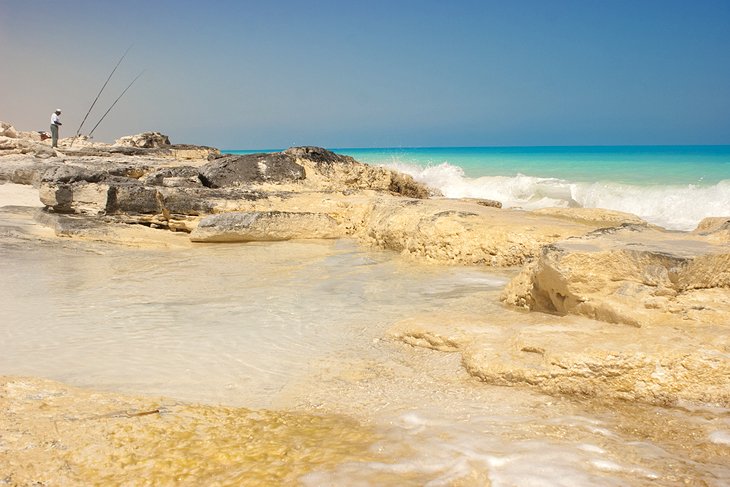
Presiding over a promontory, defended on all sides by old forts, the little fishing village of Aboukir, about 24 kilometers northeast of Alexandria, has an illustrious history that defies its small size.
This is where, on August 1st, 1798, the Battle of the Nile was fought, in which Nelson inflicted an annihilating defeat on the French fleet.
Here, too, in 1799, Napoleon defeated a numerically superior Turkish force; and here also, in 1801, Sir Ralph Abercromby defeated the remnants of the French army and compelled them to evacuate Egypt.
For naval history buffs, this military past of battles is enough of a reason to visit, but for the average sightseer, the main reason for a journey here is to sample some of Egypt's finest seafood.
Aboukir bay is home to a host of fabulous fish restaurants that locals flock to in the summer months. Stuffing yourself full of seafood while sunset sears over the Mediterranean is the perfect end to an Alexandrian day.
18. Cavafy Museum
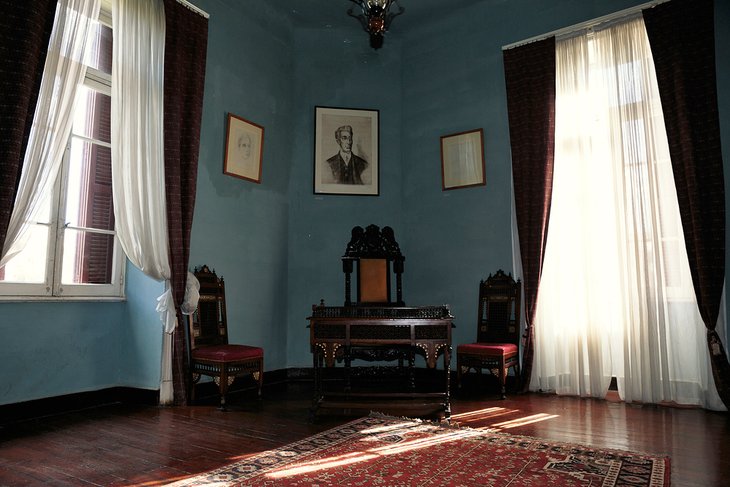
One of Alexandria's most famous sons, Constantine Cavafy (1863-1933), was a Greek Alexandrian poet who found fame and recognition for his writing after his death.
His apartment, on what is now Sharm el-Sheikh Street, is a tribute to his life and a major attraction for anyone on an Alexandrian literary pilgrimage.
Cavafy spent his working life as a journalist and civil servant, little recognized for his poetry outside of a small group of Alexandrian-based writers (including English novelist E.M. Forster, who was a champion of Cavafy's work).
His poetry, though, richly captures the vast history of Alexandria–particularly its Hellenistic origins–and he has become one of the greatly celebrated literary figures of the city.
The small museum contains many of his manuscripts and correspondence.
Address: Sharm el-Sheikh Street, Alexandria
Where to Stay in Alexandria for Sightseeing
Many of Alexandria's attractions lie on or near the Corniche, the city's broad waterfront boulevard. The Corniche stretches along the shore for several kilometers. The big modern luxury hotels are northeast of the center and the sights, while the older historic hotels and budget hotels are in the center.
Luxury Hotels:
- On the waterfront along the Corniche, Four Seasons Hotel Alexandria has a European-style spa, kids' club, private beach, and inviting pools and restaurants. It is one of the city's top luxury hotels.
- Also on the Corniche in this area is the Hilton Alexandria Corniche, with spectacular Mediterranean Sea views, a wellness spa, fitness center, rooftop pool, and multiple restaurants.
- For something more central, and to stay in a piece of Alexandrian history, the Steigenberger Cecil Hotel is the city's legendary hotel. Dating from 1929, this is where the glitterati hung out during the city's heyday. Rooms are regally plush, and the entire place is infused with a sense of history.
Mid-Range Hotels:
- Right on the Corniche, in the center, is the historic Paradise Inn Windsor Palace Hotel, which dates to the early 20th century. Both seafront rooms and public areas are full of old-fashioned charm.
- East of the center, Romance Alexandria Hotel has beautiful sea views, a pool, and private beach area.
Budget Hotels:
- Of Alexandria's many budget hotels, the Alexander the Great Hotel is one of the cleanest, best-run choices, with neatly kept, good-sized rooms in a central position.
Tips and Tours: How to Make the Most of Your Visit to Alexandria
- Day Trip from Cairo: This day trip to Alexandria from Cairo by private car includes transport, entrance, and guided tours of the Catacombs of Kom el-Shuaqqfa, Kom el-Dikka's Roman Theater, and Fort Qaitbey, plus lunch.
- Getting to Alexandria: There are plenty of trains running from Cairo to Alexandria, which means you can easily visit as a day trip from the capital.
- High Season: Unlike most of Egypt, Alexandria's high season is mid-summer, when it seems half of Cairo decamps here for sea breezes. Hotel prices peak during this period.
More Related Articles on PlanetWare.com
More Cities: Alexandria is the best city in Egypt to experience a sliver of the country's early 20th-century ambience. Head to Cairo for more of this atmosphere within the downtown area, and to delve farther back in time amid the grand monuments of the Mameluke era. Afterwards, move on to Luxor to wander amid the temples and tombs of Ancient Egypt.
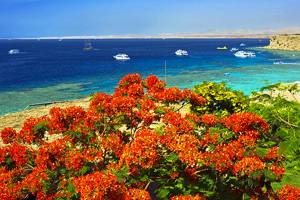
Diving: After diving Alexandria's underwater ruins, head to Sharm el-Sheikh for Egypt's most famous dive sites, including ship wrecks and the reefs of Ras Mohammed National Park, or Hurghada to see the reefs off the coast of the Red Sea.