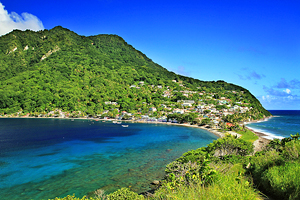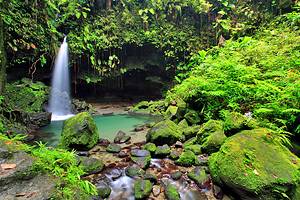
Dominica is a hilly, green and volcanic island known as " The Nature Island of the Caribbean" due to the varied plant and wildlife found within its extensive national park system and its assortment of geo-thermal attractions. The largest and most mountainous of the Windward Islands offers a landscape of waterfalls, hot springs and boiling lakes in addition to rustic coastal villages.
Dominica's black sand beaches reduce its desirability for beach lovers although Dominica is increasingly renowned for its scuba diving.
Dominica is a fusion of British, French and West Indian cultures, and is home to the Eastern Caribbean's largest Carib Indian community. Many of Dominica's 70,000 are Catholic and Creole speakers.
Dominica was the last of the Caribbean islands to be colonized by Europeans, due to the resistance of the native Caribs. France ceded possession to Britain in 1763, who made the island a colony in 1805. Dominica achieved its independence from Britain in 1978. After two years of a corrupt administration, Dominica's fortunes changed when Mary Eugenia Charles, the first female prime minister in the Caribbean took office.
Dominica is one of the poorest and least developed Caribbean islands. With no massive resorts on the island, Dominicans survive through fishing or agriculture. Road access to much of the island is limited and there are few road signs.
Dominica is positioned between the islands of Martinique and Guadeloupe and measures 754 sq km/1,945 sq m.