

Ireland's 10 Must-See Tourist Attractions You Can't Miss On Your First Trip
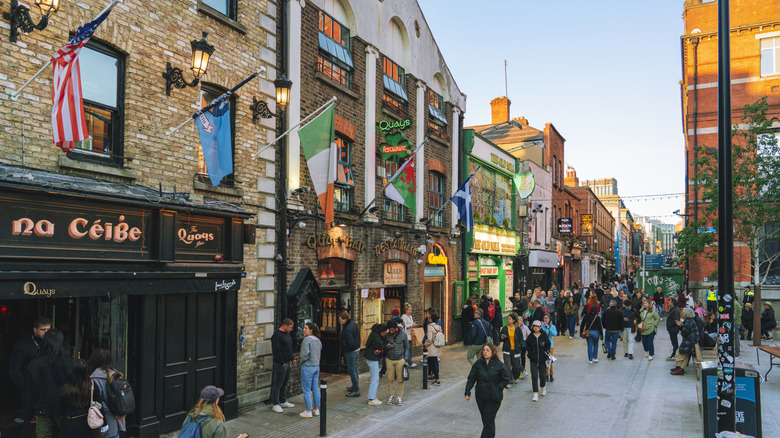
Ireland is truly a magical place. I've been fortunate to spend quite a bit of time here, exploring a great deal of the Emerald Isle over several visits, and each trip is better than the last. From the pubs in Dublin's Temple Bar district to the hills of Donegal, Ireland has a way of wrapping visitors in its charm and never letting go. In fact, Ireland is one of Rick Steves' favorite destinations in Europe. For first-time travelers, deciding the top places to visit can feel overwhelming. That's where this guide comes in. We'll take a look at 10 must-see tourist attractions for your first trip to Ireland.
We'll journey through the splendor of Ashford Castle and drive Ireland's mountainous, lake-filled Ring of Kerry, among other can't-miss locations. Along the way, I'll share personal tips from my own time in Ireland, as well as detailed information to help you plan the perfect visit to each site. Whether you come for the culture, the countryside, or the craic, your first visit to Ireland will having you longing to return time and time again. No matter how many times you visit, there are plenty of great destinations and things to do in Ireland on every trip.
Temple Bar, Dublin
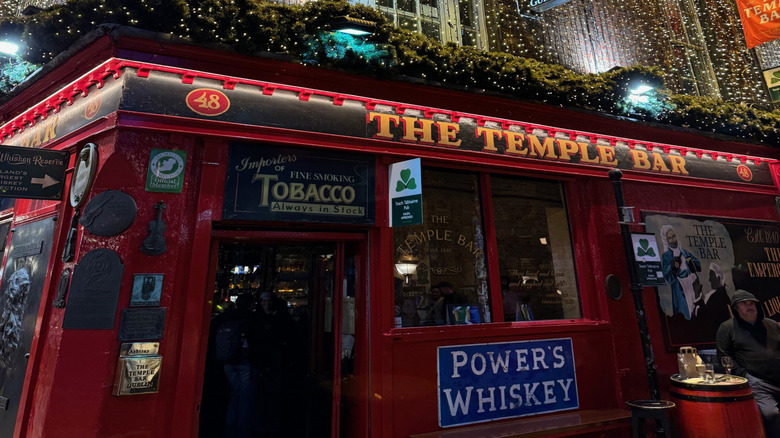
There's no better place to begin your Irish adventure than Temple Bar, Dublin's most iconic and lively district. Famous for its cobblestone streets, classic Irish pub façades, and unstoppable nightlife, this is a neighborhood where music literally spills from every doorway, and there's no such thing as a badly poured pint. Although it has a reputation as a bit of a tourist stop, the Temple Bar Pub is legendary for a reason — before you ask, yes, you should absolutely stop in for a pint. In fact, I firmly believe you haven't lived until you've stood next to the James Joyce statue belting Ed Sheeran's "Castle on the Hill" at the top of your lungs along with the live band. The Quays Dublin and The Oliver St. John Gogarty are two of my other favorite stops in Temple Bar.
However, there is more to the Temple Bar district than the pubs and pints. When I'm waking up after a Temple Bar night out, I always love stopping by House of Read, a coffee shop that dates back to the Read family's earliest origins in Ireland in 1712; Arthur Guinness' mother was Elizabeth Read, meaning this coffee house also has a connection to Dublin's most famous family. Around every corner in Temple Bar, there's something to see and hear. From folk musicians on street corners, to shops selling handmade Irish wares, to delicious restaurants like The Old Mill, this neighborhood is the heartbeat of Dublin. If you want to position yourself in the heart of the action, book a stay at Dublin Castle Suites. Each apartment features industrial-chic decor and offers a great view of the street below.
Guinness Storehouse, Dublin
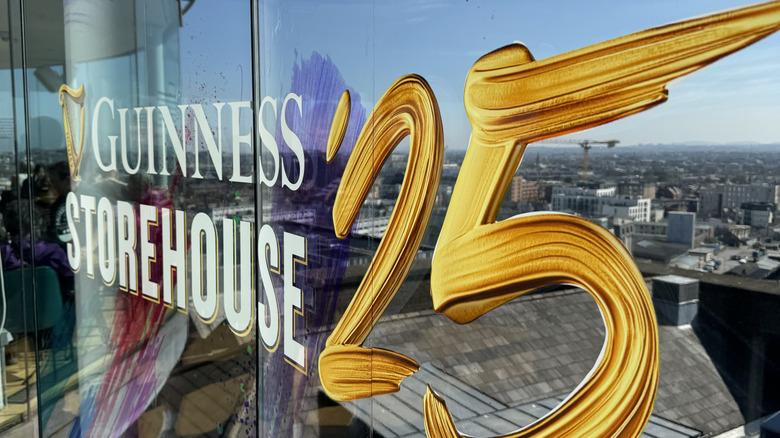
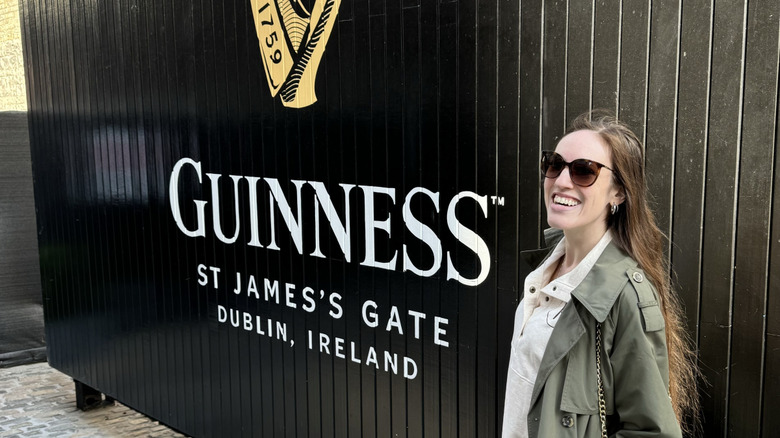
Anyone who appreciates good storytelling should visit the Guinness Storehouse. Ranked one of Europe's best tourist attractions, this seven-floor experience inside Dublin's historic St. James's Gate Brewery is a must for first-time visitors and repeat travelers alike. Your self-guided tour begins at the bottom of a pint-shaped atrium and takes you up via a series of interactive exhibits that tell the story of Guinness, including the beer's history, the brewing process, and iconic advertising. You'll see the actual 9,000-year lease signed by Arthur Guinness in 1759, discover the importance of the Wicklow Mountain water used in the brewing process, find out how hot barley is roasted to create the brew's unique taste (spoiler alert: it's 449 degrees Fahrenheit), and learn the history of the entire Guinness family.
You can even get your face imprinted on a foamy pint of Guinness at the Stoutie bar. The pinnacle of the Storehouse experience, though, is at the top. The Gravity Bar is a circular glass lounge that provides the best views anywhere in Dublin. The windows have detailed captions about the sites below, including the spires of St. Patrick's Cathedral, Croke Park, Trinity College Dublin, and the Wicklow Mountains themselves. To that end, be sure to order a "Guinness Clear," or mountain spring water served straight from the tap. Whether you're a lifelong Guinness drinker or a first-timer, the Guinness Storehouse is a must-see destination.
Ashford Castle, County Mayo
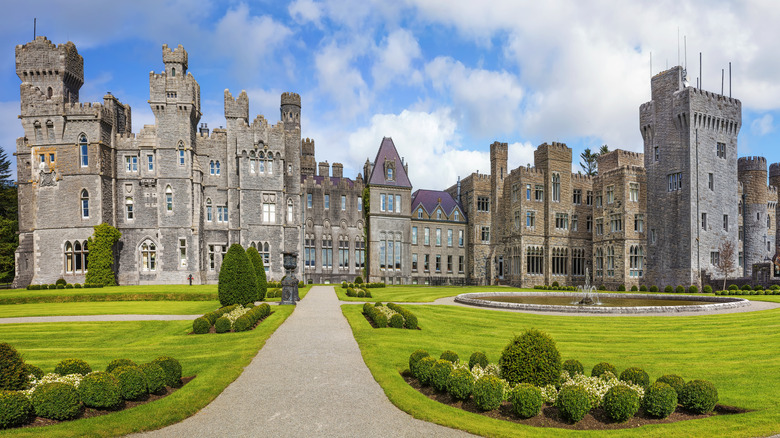
If Ireland has a crown jewel, it's Ashford Castle. This stunningly beautiful medieval fortress turned five-star hotel is immensely luxurious. Built in 1228 by the Anglo-Norman de Burgo family, Ashford Castle has a fascinating and storied past. Over the years, this storybook estate in County Mayo has belonged to Sir Richard Bingham, the Browne family, who added a French chateau to the grounds, and, from 1832 to 1939, to the Guinnesses. Today, as one of the world's most celebrated hotels, Ashford Castle boasts 83 well-appointed guest rooms and suites. The ultimate luxury, though, is reserving the secluded Boathouse, a converted private cottage where the Guinness family once stored its Italian Riva vessels.
Guests at Ashford can enjoy several once-in-a-lifetime experiences, such as falconry lessons with staff from the oldest falconry school in Ireland and lake cruises on Lough Corrib that offer picturesque views of the castle, its surrounding islands, and the Connemara Mountains. Additionally, horseback riding, clay shooting, and afternoon tea in the Connaught Room are just a few of the other timeless indulgences available to hotel guests. Even if you're not staying overnight, you can still book a dining reservation to enjoy the grounds and some of the interior at Ashford Castle. There are six on-site restaurants, including the George V Dining Room, the Drawing Room, the Dungeon, and the more casual Cullen's at the Cottage.
Sliabh Liag Cliffs, County Donegal
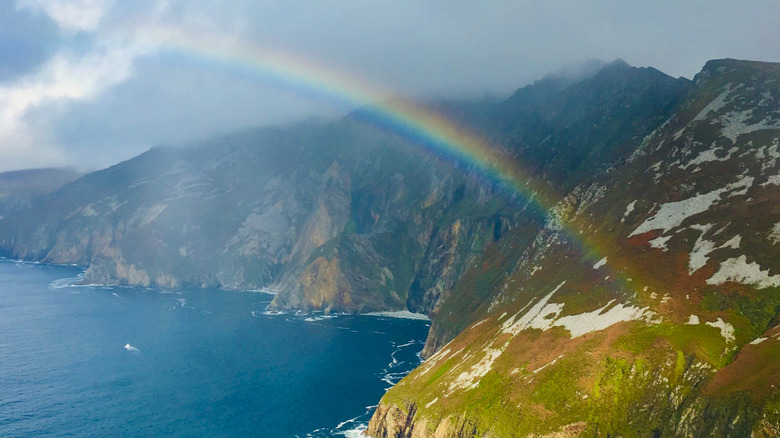
Forget the crowds at the Cliffs of Moher. If you want to experience Ireland's coastline at its most dramatic, head to County Donegal's Sliabh Liag (Slieve League) Sea Cliffs. Nearly three times taller than the Cliffs of Moher, these sea cliffs rise to a height of almost 2,000 feet above sea level, making them the tallest in Europe. Standing on the Wild Atlantic Way, one of the world's "longest defined coastal routes" on the west coast of Ireland, you'll feel like you're peering over the edge of the world. Sliabh Liag is one of my favorite spots in Ireland, and one of the only places I've ever visited where I truly feel like time stands still. The view is so incredible, it leaves you breathless. Be aware, though, that the weather at this height can be teacherous at times, with high winds that could practically knock you backwards.
Challenge yourself by hiking to the top from the visitors' center, or take a shuttle bus to the summit. If you choose to take the shuttle bus tour, you'll see additional sites, like the historic fifth-generation Cunningham Farm, Cnoc Áine, and the mystical Leaba Diarmuid agus Gráinne, or Portal Stone. I also recommend continuing down to Silver Strand Beach. You'll walk down 174 steps to reach this rugged slice of paradise, and it's worth the journey. Reward yourself for making the climb with a pint and some seafood chowder at The Rusty Mackerel, located at the foot of the cliffs. You'll also be near the village of Glencolmcille, where you can visit the traditional Folk Village; I bought a map of the Wild Atlantic Way here, and it is one of my favorite Irish souvenirs. Sliabh Liag and the surrounding region capture everything that makes Ireland's west coast so unforgettable.
The Ring of Kerry, County Kerry
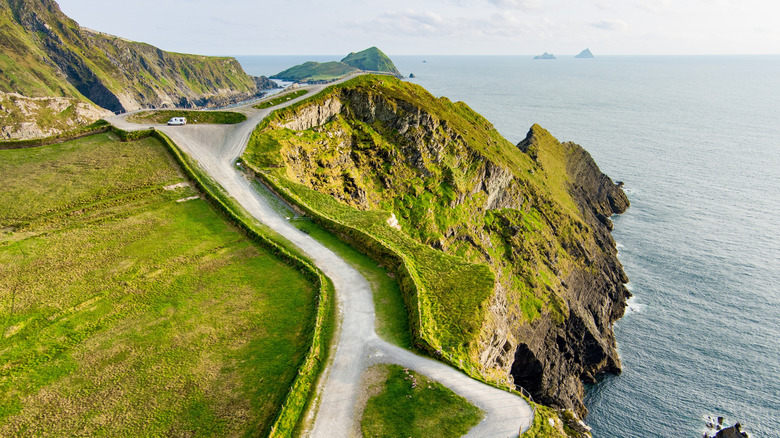
Ireland's Ring of Kerry, a 120-mile driving route around the Iveragh Peninsula, is widely considered one of the most scenic drives on the Emerald Isle. This journey allows travelers to check out a wide variety of scenic spots. The Ring of Kerry takes drivers from Killarney to Kenmare, Cahersiveen, and Glenbeigh, before returning to Killarney. One of the route's most scenic sites is the Torc Waterfall, which can be found inside Killarney National Park. This 360-foot waterfall ends in a lake called the Devil's Punchbowl. If you want to stay overnight in Killarney after your adventure, Muckross Park Hotel, The Killarney Park, and The Europe Hotel and Resort all have excellent reviews.
About 35 miles from Killarney National Park, Staigue Stone Fort provides a glimpse into what life was like in Ireland about 1,500 years ago. Believed to have been constructed between 300 and 400 BC, this is one of the largest intact structures from this period in the nation of Ireland. Staigue Stone Fort was impressively built without mortar and contains two cells that are believed to have once housed Pictish slaves. The Skellig Islands are another must-see spot along the Ring of Kerry. To visit these islands, you'll want to reserve a boat tour in advance, as they are typically popular. "Star Wars" fans flock to this spot, as it was featured in Rian Johnson's "The Last Jedi." The largest of the islands, Skellig Michael, was the setting for Ahch-To, where Luke Skywalker lived in isolation until he was discovered by Rey.
Galway City, County Galway
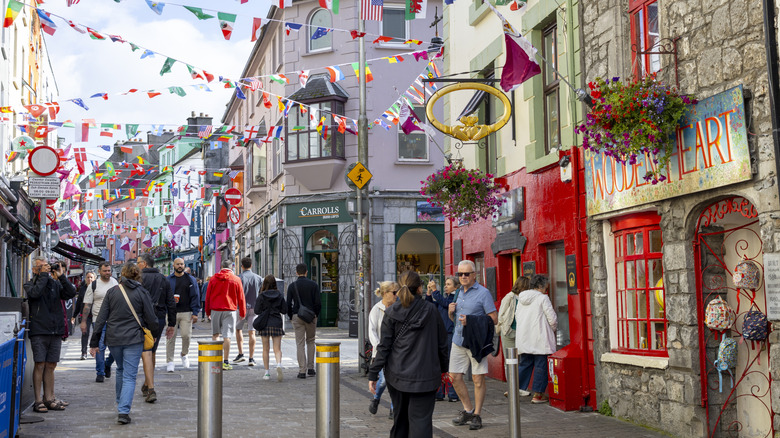
Voted the fourth-best city in the world to visit back in 2020, Galway is a vibrant destination worth exploring. Made famous by "Galway Girl" — both the Steve Earle song and the more contemporary Ed Sheeran tune — this coastal city is alive with creatives, from street musicians and buskers, to local artists and award-winning bartenders who turn cocktails into an art form. On Shop Street, travelers will find a slew of pubs such as The Quays and Sonny Molloy's, the Galway Market with its handmade arts and crafts, and popular stores like Anthony Ryan's. Galway is also a great city for foodies. Known for its fresh seafood, the city celebrates the Galway International Oyster and Seafood Festival every September. This is the oldest oyster festival in the world, and it draws professionals and visitors from around the world. Even if you don't make it to the festival, be sure to check out the incredible restaurants on Galway's Seafood Trail.
In addition to being a destination for food lovers, Galway is also a UNESCO City of Film. It hosts the annual Galway Film Fleadh, the leading film festival in Ireland. If you're looking to get away from the hustle and bustle for a while, consider a day trip to Kylemore Abbey & Gardens. Located around 90 minutes from the city center by car, this neo-gothic building resembles a castle more than a traditional abbey. You could easily spend an entire afternoon exploring Kylemore Abbey and its grounds — visitors are advised to purchase an all-day ticket for full access to the property.
The Burren, County Clare
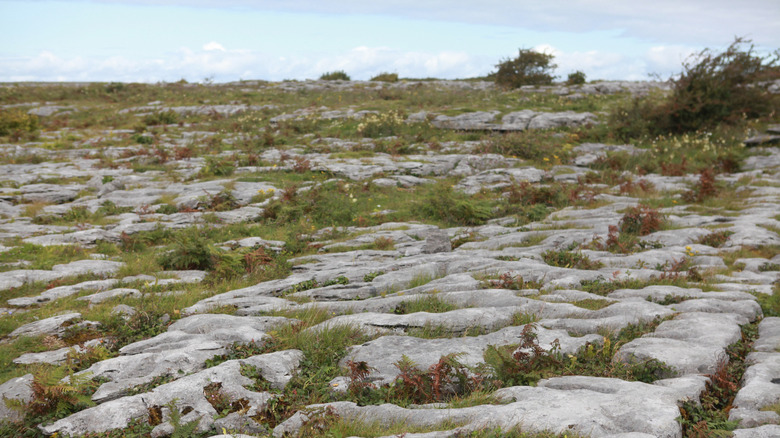
The Burren in County Clare features one of Ireland's most unique landscapes, so stark and striking that some travelers on Tripadvisor have described it as "moon-like". Taking up over 138 square miles, this rocky limestone plateau is a geological anomaly where travelers can enjoy unique formations. The hills and valleys of the Burren were formed by glaciers during the last Ice Age. Meanwhile, fissures in the limestone are the result of a plate tectonic crash that is believed to have occurred nearly 300 million years ago. If you explore Burren National Park during the spring or summer months, you will also see countless wildflowers blooming in limestone cracks. These include orchids that hail from Mediterranean regions, Arctic alpine flowers, and dark blue gentians.
While you're visiting the Burren, there are a couple of landmarks that should be on your list. One is Poulnabrone Dolmen. This Neolithic structure is thought to be over 5,800 years old. Although it is categorized as a "portal tomb" because of its architecture, the exact original purpose of Poulnabrone Dolmen will likely never be known. Another amazing site is Glanquin Farmhouse. This is a working farm that does not welcome visitors, but fans of the popular television show "Father Ted" will recognize the residence as Parochial House. To make a weekend of your time in the Burren, book a hotel like Gregans Castle Hotel or Armada Hotel.
Trinity College and The Book of Kells, Dublin
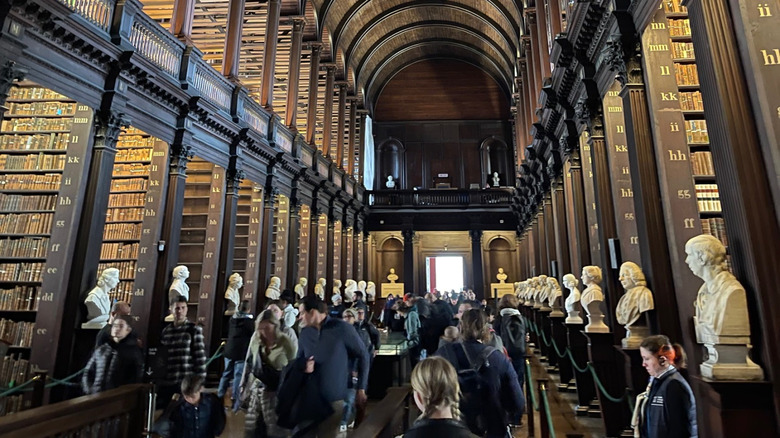
Every trip to Dublin should include one visit to Trinity College. As a former English Literature major, I might be a bit biased, but this is one of my favorite spots in all of Ireland. Founded in 1592, this prestigious university's list of alumni is a who's who of literary greats, including Oscar Wilde, Bram Stoker, and Jonathan Swift. While at Trinity, Wilde met John Pentland Mahaffy, who heavily influenced his keen interest in Greek writing. Hellenic influences played a major role in Wilde's later work, like the iconic "The Picture of Dorian Gray." Today, Trinity College Dublin is a liberal arts university with global reach, but you don't have to be an academic to appreciate the charming historic buildings on its sprawling campus.
One of the highlights of a visit to Trinity College is a stop at the world-famous Book of Kells Experience. Presumed to have been written and illustrated by Celtic monks around the year 800, this illuminated manuscript is one of Ireland's most impressive treasures. The entire Book of Kells Experience is incredible, from the grandeur of the Old Library, to the museum, to viewing the famous manuscript up close. After perusing the pages of the manuscript, which is kept in a glass case, visitors are ushered into the Long Room. The main section of the Old Library, this wood-paneled hall is lined with marble busts of literary greats and houses 200,000 shelved tomes. Although some associate the Long Room with Harry Potter films, the library used as the setting for Hogwarts was actually the Bodleian Library at England's Oxford University.
The Rock of Cashel, County Tipperary
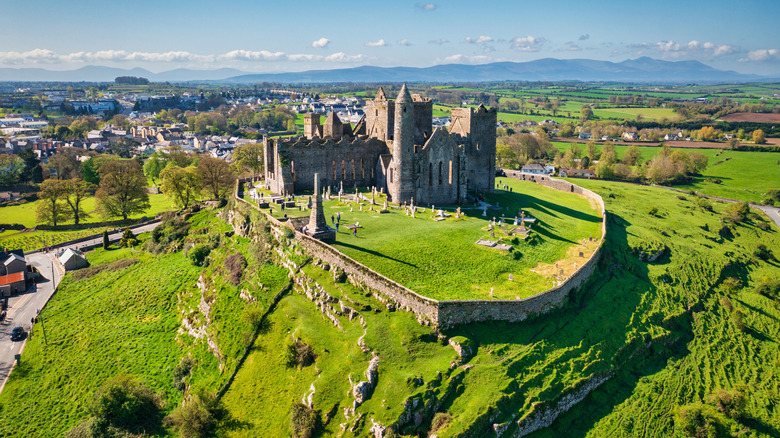
The Rock of Cashel is home to what many consider the most impressive collection of medieval structures in Ireland. Among other buildings, visitors will see the Romanesque Cormac's Chapel, a high cross, a Gothic cathedral, and a Tower House that dates back to the 1400s. According to Irish lore, the Rock of Cashel was created when the devil took a bite out of the mountain spit it out in this very spot. History, however, tells the real story. The Rock of Cashel was once the stronghold of the Eóghanachta clan, who ruled the region for hundreds of years before losing control to the O'Briens in the 10th century. Eventually, the Rock was bequeathed to the Catholic Church. As a matter of fact, St. Patrick himself is said to have come to Cashel. It is supposedly where he baptized King Aengus in the fifth century after converting the monarch to Christianity.
Nowadays, the visitors who flock to the Rock of Cashel can immerse themselves in the Middle Ages either on their own or with a guided tour. It is important to note that entry to Cormac's Chapel is only available to those who book a guided experience, with the final tour at 2:30 p.m. daily. Admission to the Rock of Cashel is reasonable — tickets cost €8.00 per adult, equivalent to roughly $9.30 USD, and only €4.00 or $4.66 USD per child or student, at the time of writing.
Davy Byrnes, Dublin
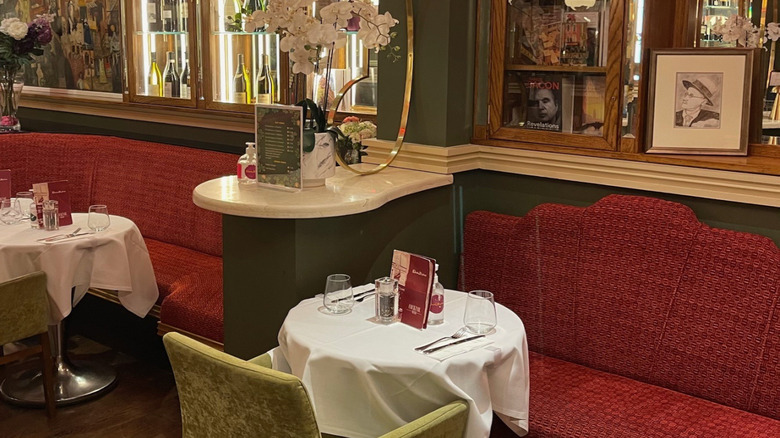
There are about 772 pubs in Dublin, but Davy Byrnes is in a league of its own. I've had some of the best nights of my life here, and I plan to continue visiting for decades to come. Although the origin of this location dates to 1722, it was named Davy Byrnes in 1889 by a proprietor of the same name. This iconic hostelry turned bar and restaurant has been a gathering spot for Dublin locals, the literary set, and world travelers for well over 200 years. Although it is legendary in its own right, Davy Byrnes' legacy was further cemented by James Joyce in his 1922 novel, "Ulysses." Protagonist Leopold Bloom famously stops in to order a gorgonzola sandwich accompanied by a glass of Burgundy wine. Since the book's publication, lit lovers have been flocking to Davy Byrnes. The bar celebrates Bloomsday annually on June 16, inviting guests to order their own gorgonzola and Burgundy.
The seafood chowder here is delicious (worth a trip on its own, really), and I've never had a bad pint of Guinness at Davy Byrnes. This is the type of timeless establishment where you almost forget it's the 21st century when you step inside. For Golden Age thinkers like Gil Pender in "Midnight in Paris," this bar is a dream come true. Whether you're hiding in a corner booth for the evening or make new friends at the bar in one of Europe's friendliest capital cities, Davy Byrnes is a must for your first trip to Ireland and for every trip thereafter.
Methodology
To develop this guide, I drew from official Irish tourism guides, my own experiences, and reviews from hundreds of travelers on trusted review platforms like Tripadvisor. The result is a guide that takes first-time visitors through nearly the entire nation of Ireland, which is easy to traverse by car or train, as it's a small country. If you have enough time, you could see all of these sites in one trip.
The guide features a mix of both contemporary attractions and historic landmarks, as well as places that showcase Ireland's distinctive natural beauty, its metropolitan culture, and soulful way of life. Many of these locations date back hundreds of years and have been enjoyed by both first-time visitors and longtime travelers to Ireland for generations.