

9 Major Illinois Tourist Attractions First-Time Visitors Will Love

The American Midwest is full of hidden gems, and the state of Illinois might be the crown jewel. The Land of Lincoln is home to the iconic city of Chicago, which is frequently voted one of the best cities in the United States. With its world-class museums and stunning lakefront, the Windy City certainly stands out for its unique blend of culture and natural beauty. But there are amazing things to do in Illinois outside of Chicago as well. State parks with sandstone cliffs, 63 miles of gorgeous Lake Michigan shorelines, and the community with the largest number of Frank Lloyd Wright buildings all call Illinois home.
As a former Chicago resident, I know a thing or two about the best places to visit in Illinois. This list of the most interesting destinations was compiled using a combination of my own local knowledge, traveler reviews, and state park recommendations. The aim is to highlight Illinois' fascinating history, unusual geography, and prettiest beaches to give travelers a well-rounded view of the state's complex offerings.
Downtown Chicago's exciting museums, Chicago
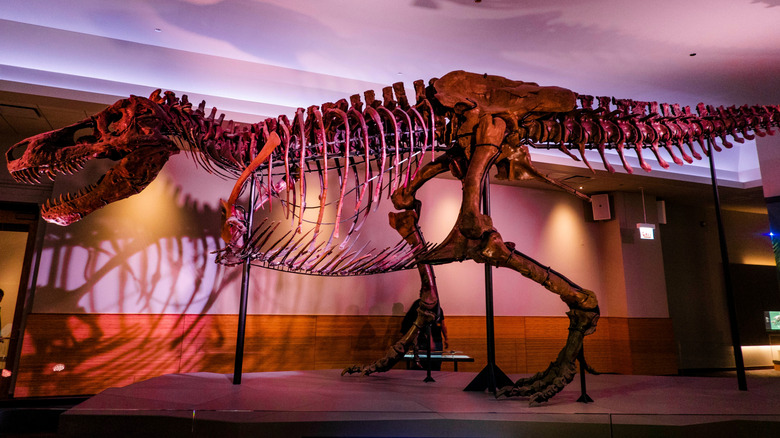
Chicago, Illinois is the third largest city in the United States, and it has a fascinating collection of museums to prove it. The Art Institute of Chicago features more than 300,000 extraordinary works of art from all over the world. Admire paintings by artists like Diego Rivera, Vincent Van Gogh, and Henri Matisse. Then, gaze upon a 500-year-old Aztec coronation stone or an Egyptian mummy. Visitors can literally spend a whole day at The Art Institute of Chicago, so itineraries should be planned accordingly. Adults pay $32 for tickets, while children under the age of 14 enter for free — tickets for teens, senior citizens, and students are $26, and there are perks for some other groups, including free tickets on certain days for Illinois residents.
Beyond Chicago's incredible arts scene, the city offers wonderful natural sciences museums. With its real giant ground sloth and fossilized skeleton of a Tyrannosaurus Rex, the Field Museum is one of the best places to learn about extinct creatures. Families who have visited the Field Museum say that the displays kept their little ones beyond entertained, but even visitors who went without kids felt engrossed by the human history exhibit — which includes a true Māori meeting house imported from New Zealand. Tickets to the Field Museum cost $30 for adults and $23 for children three and up.
It is a five-minute drive to the Field Museum from The Art Institute of Chicago, so it's possible to visit both in one day. The museums are located about 30 minutes from Chicago O'Hare International Airport by car.
Matthiessen State Park, Oglesby
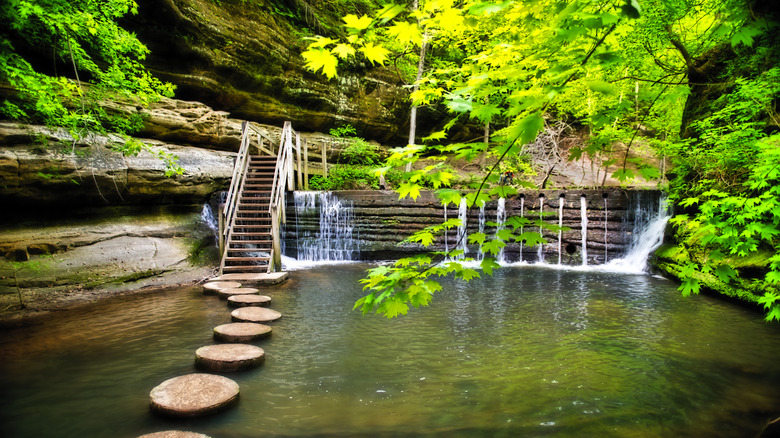
Matthiessen State Park in Oglesby, Illinois, looks like it jumped right out of a storybook. With its layered sandstone canyons, deep green ferns, and rushing rivers, the park reverberates a deeply magical vibe. The crown jewel is arguably Cascade Falls — a thin waterfall that pours over a 45-foot-tall canyon rim. Only visible from the spring thaw to mid-July, this waterfall provides travelers with a spectacular instance of ephemeral beauty.
To explore the cliffs and rivers of Matthiessen State Park, visitors are encouraged to check out the trails. Hikers will enjoy the 5 total miles of trails that snake past dams, wishing wells, and seasonal waterfalls. The most dedicated of hikers can combine the 3.2-mile Bluff Trail loop and the 1.9-mile River Trail by tackling the mile-long path that runs between the two. However, folks who prefer to take it easy can simply wander the trails briefly, then head to the local picnic area for a relaxing day out in the woods. Winter visitors should be aware that Matthiessen State Park offers 6 miles of cross country ski trails. Trail maps are available upon request at the Starved Rock visitors' center.
Visiting Matthiessen State Park is free, but failure to comply with park rules can result in a minimum fine of $195. Swimming, rock climbing, and flower picking are all strictly prohibited, but it's recommended to review the rules in advance. To arrive, drive an hour and a half from General Wayne A. Downing Peoria International Airport.
The charming town center of Galena, Galena

Travelers in search of a Midwest town with cozy inns, local wineries, and historic charm need look no further than Galena, Illinois. A charming compilation of old brick buildings and white-steepled churches, Galena offers visitors a quiet atmosphere that's particularly lovely in the fall. Folks looking for a romantic getaway will love the local gourmet and arts culture. Restaurants in Galena serve everything from French and German eats to old-fashioned American fare, while the town's Galena Wine Cellar offers a tasting room that serves locally produced wines. Pair that with an afternoon of shopping or gallery hopping, and you'll enjoy the trip of a true bon vivant.
Because Galena's main streets are so charming, it can be easy to forget their fascinating past. History buffs will be thrilled to know that Galena has hosted several former presidents. President Abraham Lincoln traveled to Galena to give a speech in 1856, while President Ulysses S. Grant actually lived in Galena. Modern visitors can still visit the Ulysses S. Grant home via guided tours that cost $5 for adults and $3 for children. Folks who are interested in taking a deeper dive into the history of the region can sign up for a red vintage trolley tour at the cost of $22 for adults and $10 for kids between the ages of six and 12 — younger children ride for free. To arrive in Galena, Illinois, drive two and a half hours from Chicago O'Hare International Airport.
Adeline Jay Geo-Karis Illinois Beach State Park, Zion
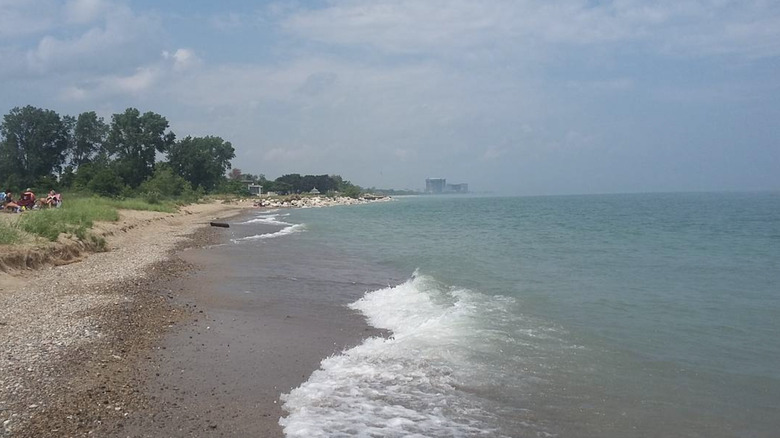
Illinois is home to some of the most beautiful beaches in the Great Lakes, and Adeline Jay Geo-Karis Illinois Beach State Park in Zion is among them. Nestled into the shores of Lake Michigan, this nature preserve is known for its sandy beaches and crystalline waters. Unlike other beaches in the state, Adeline Jay Geo-Karis Illinois Beach State Park still boasts a natural shoreline of sand dunes, oak trees, and swales. The result is a stunning stretch of natural sands, where visitors can swim, fish, or wander the 6.5 miles of preserved beach. According to previous beachgoers, this park is especially clean — making it a great destination for family fun.
Summer is the best time for fun in the sun at Adeline Jay Geo-Karis Illinois Beach State Park. However, there is still plenty to do during the off-season. During the spring and fall, hikers can tackle 5 miles of stunning paths that run alongside rivers and loop around ponds. During the winter, cross country skiers can glide across the 1.8-mile Camp Logan Trail. Just keep in mind that — if you do plan on exploring the park on a cold day — it is recommended to bring a foam sleeve to prevent your water bottle from freezing. Admission to Adeline Jay Geo-Karis Illinois Beach State Park is free. However, there may be a nominal beach usage fee, so be sure to check with local authorities. To get to the park, drive one hour from Chicago O'Hare International Airport.
The Ohio Street Beach and Navy Pier, Chicago
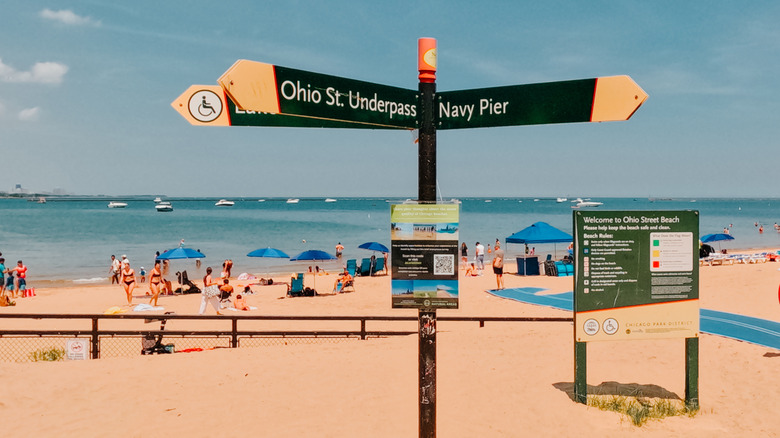
If natural beaches aren't your thing, fear not. Illinois offers man-made urban beaches in spades. The most famous stretches of big city sands are located in downtown Chicago along the shores of Lake Michigan, and the Ohio Street Beach is arguably the busiest of the bunch. Situated directly beneath some of Chi-Town's most famous skyscrapers — including the iconic John Hancock building — the Ohio Street Beach offers a bustling environment that's great for people watching. Stretch out a towel, catch a few rays, then take a dip in the refreshing lake. Afterward, grab a coffee or an ice cream at one of the bakeries that stand just across the street.
Folks looking for a little bit more excitement can walk five minutes from Ohio Street Beach to the Navy Pier, where good old-fashioned carnival attractions await. Ride the Centennial Wheel Ferris Wheel and admire views of Lake Michigan and the Chicago skyline from 200 feet in the air. Ferris Wheel tickets cost $20 for adults or $18 for children 3–11 but include admission to other carnival activities, like a carousel and a drop tower. The Navy Pier is also home to the Chicago Shakespeare Theater, so be sure to check the calendar for plays and other seasonal events.
Alternatively, play a nine-hole round of mini golf right on the water. Previous visitors report that this attraction is entertaining for the youngest of travelers — in addition to being stroller-friendly. Mini golf tickets cost $12 per head. To get to the Ohio Street Beach and Navy Pier area, drive 30 minutes from Chicago O'Hare International Airport.
Shawnee National Forest, Herod
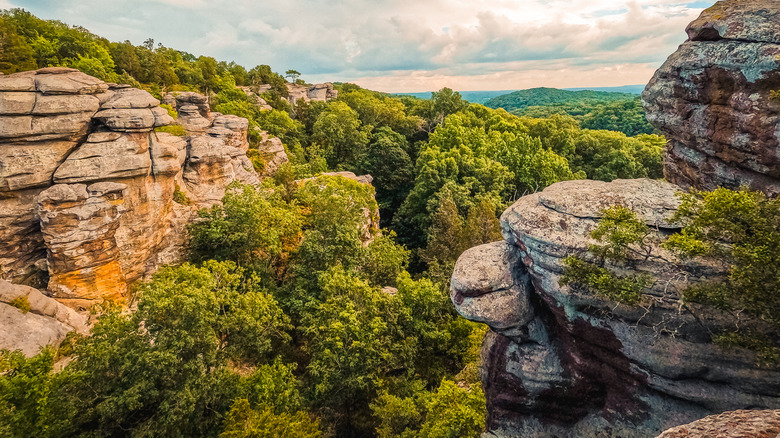
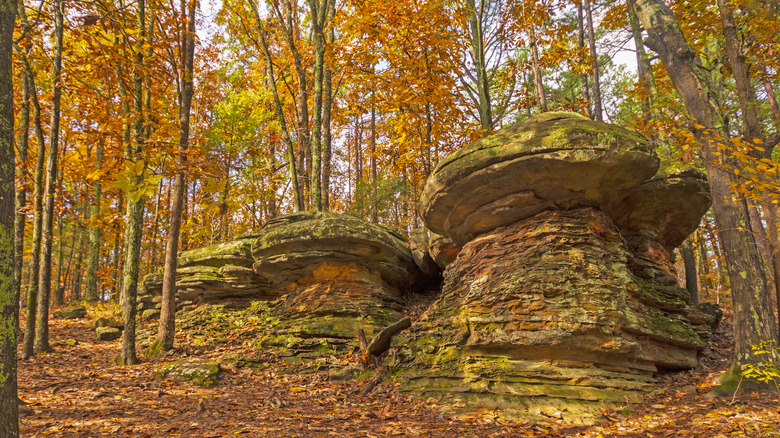
Shawnee National Forest in Herod, Illinois, offers visitors a stunning 289,000 acres of forests, lakes, and cliffs to explore. The most famous part of the natural preserve is hands-down the Garden of the Gods Recreation Area, where magnificent sandstone rock formations tower over the thick woodland below. The 0.25-mile-long Observation Trail provides unique access to this picturesque location, curving over exposed sandstone to give hikers sweeping views of the region. Although this path is not especially exhausting, it lacks even footing, so visitors should be sure to wear appropriate footwear and proceed with caution.
Travelers who would rather spend their day on the water can head to Cedar Lake, where they can take a dip in the lake, sunbathe in the grass, or even go line fishing. Fisherfolk just need to be aware that they can take home no more than six fish per day, and their catch must be at least 15 inches long to qualify. Illinois fishing licenses are also obligatory. Land lubbers will also find that there's plenty to do at Cedar Lake — thanks to the 16 miles of hiking trails that wrap around its shores. Whether you're interested in a casual walk or an intensive trek, these forested paths provide a refreshing atmosphere to gaze out at the lake and watch the waves float by.
Visiting Shawnee National Forest is completely free. To get to Shawnee National Forest, drive about two hours from St. Louis Lambert International Airport in St. Louis, Missouri.
Frank Lloyd Wright Home & Studio, Oak Park
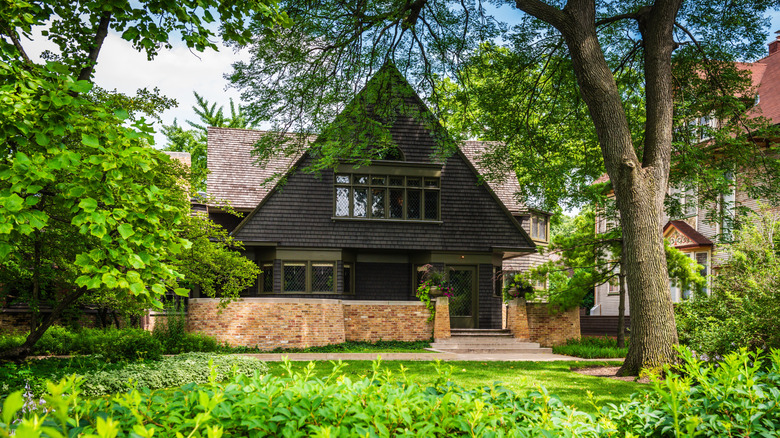
Visiting a home designed by Frank Lloyd Wright is one thing, but exploring the architect's actual place of residence is something else altogether. Illinois is home to the Frank Lloyd Wright Home & Studio, where Wright resided from 1889 to 1909. Located in the village of Oak Park, this beautiful home looks like an unassuming cottage from the outside. The interior, however, boasts a majestic Egyptian-inspired children's playroom, a dramatic dining room, and an architectural studio that's brimming with mystical vibes.
To explore the Frank Lloyd Wright Home & Studio, visitors can sign up for the hour-long Home and Studio Guided Tour– a $24 experience that focuses on the home where Wright once worked. According to past visitors, the tour is an interesting way to learn about Wright's stylistic evolution, regardless of whether you're a Frank Lloyd Wright buff or a total newbie.
The most committed of Frank Lloyd Wright fans, however, may prefer the deeply comprehensive Wright Around Oak Park tour. This $75 semi-private tour runs for an impressive two and a half hours and includes a house and studio tour in addition to a guided walk past the 10 Wright houses dotting the architect's old neighborhood. An abridged audio guide version of this experience — known as the Inside & Out tour — is also available for $38. Please note that the neighborhood tours involve 0.8 miles of walking. To arrive, drive 30 minutes from Chicago O'Hare International Airport.
Ride a gondola and an alpine coaster, Grafton
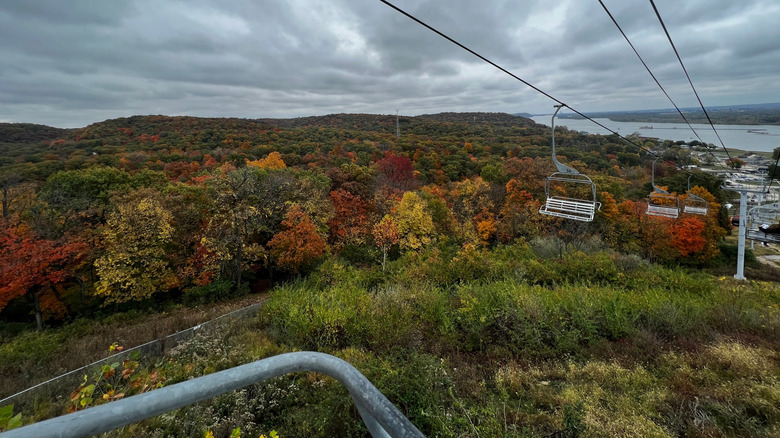
Just arriving in Grafton, Illinois is a major treat. One of Illinois' most scenic drives is a secret scenic byway that ends in this delightful little town. Situated at the point where the Mississippi River and Illinois River meet, Grafton offers some of the best water views in the state. To soak them up to the fullest, visitors can sign up for the Grafton Sky Tour at Aerie's Resort. Through this $12 experience, travelers can enjoy unlimited rides on a chairlift and gondola up Aerie's Hill.
Hop on the lifts, gaze out at the convergence of Illinois' two longest rivers, and then explore the attractions at the top of the hill. The most adventurous of visitors will love the Alpine Coaster — a 4,000 foot-long track that whizzes down the mountain around seven curves and eight twists. This family-friendly thrill costs $18 for adults and $13 for children ages 3–13. Folks who want to take it easy can skip this ride and opt for a nice glass of vino with a view at the hilltop's The Winery at Aerie's Resort.
The Sky Tour attractions at Aerie's Resort are open annually from March to November. According to traveler reviews, autumn is one of the best times to visit Grafton, as the views of the fall foliage from the hilltop are spectacular. Just keep in mind that strollers are not permitted on the Sky Tour. To get to Grafton, drive an hour from St. Louis, Missouri.
Vintage Mississippi River steamboat cruises, Moline
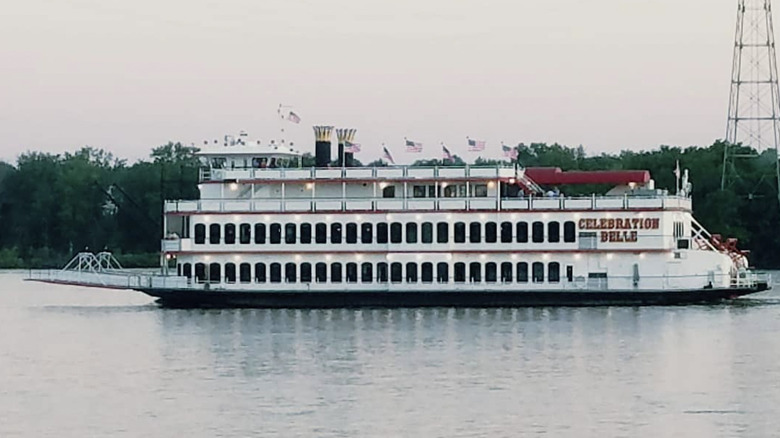
The first steamboat to ever float down the Mississippi River arrived at its destination in the historical city of New Orleans, Louisiana back in 1812. Since then, thousands of passengers have embarked on steamboat journeys down the second-longest river in the United States — with many Americans using this form of transport to move cross-country in the 19th century. These days, visitors can participate in this iconic experience by signing up for a steamboat tour in Moline, Illinois. History buffs will particularly enjoy the Celebration Belle Captain's Narrated Lunch Cruise, which delves into the river's past. Marvel at the features of the vintage vessel and enjoy a delicious buffet lunch while learning about the world's largest roller dam — Lock and Dam #15. Adults pay $45.95, while kids ages 3-10 are charged $35.95; kids under 3 get in for free.
Of course, there's learning about history, and then there's living it. Folks who embark on a longer Mississippi River cruise can do both. Celebration Belle's day-long trip from Dubuque, Iowa, to Moline, Illinois, allows visitors to kick-start their Land of Lincoln adventure the old-fashioned way. Listen to old navigation legends, tune into some live music, and enjoy three full meals as the river floats by. According to one previous passenger, the dedicated captain and crew made this journey worth it. Tickets for the trip from Dubuque to Moline cost $214.95 for adults and $178.95 for kids 3-10, with no charge for younger children. To get to the port, drive 20 minutes from Quad Cities International Airport.
Methodology
Organizing this list of the best places to visit in Illinois was a pleasure. As a former resident, I'm quite passionate about many of the locations on this list. To ensure the recommendations were up-to-date, I cross-referenced my favorite spots with traveler reviews, confirming that they are widely appreciated.
When choosing the locations on this list, I was careful to select places that are fundamentally different from anything else in the state. As for museums, the Art Institute of Chicago ranks first in size for art museums in Illinois and second in the United States, and the Field Museum features the largest and most complete Tyrannosaurus Rex skeleton. While Adeline Jay Geo-Karis Illinois Beach State Park stands as the only remaining natural beach in Illinois, the Ohio Street Beach provides uniquely beautiful views of the Chicago skyline. Shawnee National Forest is the only national forest in the Land of Lincoln, and Oak Park has a record number of Frank Lloyd Wright buildings. Our research shows that Illinois truly stands out, placing it among the top destinations in the Midwest.