Bridgetown Tourist Attractions

Bridgetown, the capital of Barbados, got its name from a native Amerindian bridge which crossed the mouth of the Constitution River. Today two bridges cross the small ship basin.
Bridgetown gained its prominence because harbors on Barbados are rare. Today this port is used by a few pleasure craft. The northern bank bears the street name The Wharf which reflects its importance in olden days. Ships tied up off shore and freight and passengers were transferred to rowboats which landed here.
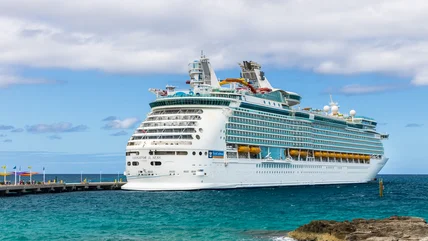
An artificial port has been constructed to the west of downtown to hold four or five cruise and freight ships.
The town retains a busy colonial feel.

Tyrol Cot

While the Tyrol Cot house was constructed in 1854 by William Farnum, its claim to fame was that it was the home of Sir Grantley Adams from 1929. He was the first premier of independent Barbados and the only Prime Minister of the Federation of the West Indies. He was the founder of the Barbados Labour Party. The house became a site for meetings of Caribbean leaders.
The interior contains the furniture and mementos of Sir Adams and his son Tom Adams, the second Prime Minister of Barbados. The property is restored and run by the Barbados National Trust.
The architecture is a mixture of Italian villa exterior, tropical jalousie shutters, and an open interior to let the air circulate. It is built of cut coral stone with prominent quoins around the arched windows. Cot is short for cottage.

Tyrol Cot Heritage Village

On the grounds of Tyrol Cot are a collection of chattel houses now run as craft shops. There is also an 1820s stone and straw slave quarters, a blacksmith's museum, a carriage house and stables, and even an original outhouse which collectively form the Tyrol Cot Heritage Village.
Most interesting are the chattel houses which are typical of the island. Their small size was dictated by several reasons. First, farm workers did not own the land on which they lived. If they changed employment, their house had to be small enough to move to the next estate. Chattel means a moveable article of property and the word applied to these houses. A second factor was that materials were imported by ship in standard sizes which dictated dimensions. Nonetheless, builders mimicked symetrical Georgian styles in miniature.

Red Clay Pottery and Fairfield Gallery

Family owned and operated Red Clay Pottery and Fairfield Gallery invites visitors to tour their studio and facilities which are in a converted sugar syrup-boiling house.

National Heroes Square

National Heroes Square (formerly called Trafalgar Square) is a small park between the Inner Basin of the Constitution River and the Parliament buildings. It has three sculptures.
The obelisk-shaped cenotaph is a memorial to the Barbadians killed in the two World Wars.
A statue of Lord Horatio Nelson which was erected in 1813, 36 years before Nelson's column was put up in London. Barbadians relished the fact that Nelson sailed to this island in 1805 only months before he was killed at Trafalgar off the coast of Spain.
The third structure is a fountain to commemorate the first piped water in Bridgetown. It features dolphins on clam shells and was paid for by public donations.

Parliament Buildings

The grounds of Parliament along National Heroes Square has two wings. The wing with the clock tower houses government offices while the east wing houses the Senate and House of Assembly.
These neogothic buildings were built in 1871, replacing earlier structures destroyed in the fire of 1860.
The ground surrounded by an attractive cast iron fence are generally closed to the public.

Broad Street

The section of Broad Street from the Parliament Buildings to the imposing Barbados Insurance Society Building hints at the wealth once generated by the sugar barons of the island. Also called the Mutual Building it was built 1894-5 and has silver domes which top its bulky green towers. The whole building is in circled by a second-story veranda.
Beyond the Mutual Building are St Patrick's Catholic Cathedral (1899) and the bus terminal.
Those walking into town from the cruise ship docks should use Broad Street in at least one direction.

Da Costa Building

The well-proportioned pink Da Costa building (1898) mixes an elegant Georgian upper story with the wrought iron topped veranda of colonial architecture. Today the building serves as a merchant mall.

Queen's Park

To the east of downtown up St Michael's Row, the sizeable Queen's Park was once the grounds of the home (built 1786) of the commander of British Troops in Barbados.
Today this restored Georgian-style building serves as a theatre and art gallery.
To the east of the building is a children's playground around a giant Baobab tree. Some sources say this tree, about 18 m in circumference, came from Africa on a slave ship. Other sources report that the Baobab is over 1,000 years old and speculate that the seed floated over on its own.

Barbados Museum

Housed in a 19th century British military prison at St Ann's Garrison, the Barbados Museum's collections cover Barbadian history, Amerindian and African culture, plus European decorative arts such as glass, ceramics, and silver as well as a fine collection of antique maps, prints and paintings. There is also a natural history section. The museum contains a research library. The museum was founded in 1933. The museum runs special programs for children.

1627 and All That Show

1627 and All That is a weekly spectacle featuring folk dance, steel bands, plus a tour of the historic museum in which this dinner event is held. This show covers the history of Barbados from 1627 to the present.

Emancipation Statue

This statue of a slave with broken chains stands in a roundabout on the ABC highway. It commemorates Bussa who inspired the revolt against slavery which was abolished in 1834. Abolition was not the total end however since these "freed slaves" were then forced into a four-year apprentice program where they worked 45-hour weeks without pay in exchange for the rent of a tiny hut.
The monument is by Barbadian sculpture Karl Broodhagen.

Independence Arch

Independence Arch which sits at the southern end of Chamberlain Bridge in Bridgetown was built in 1987 to commemorate 21 years of independence gained November 30, 1966. Reliefs of the flying fish and pelican, two symbols of Barbados, adorn the two pillars. Overhead the coat of arms repeats these animals plus the national flower (Pride of Barbados) and national tree (Bearded Fig) from which the island got its name. The motto is Pride and Industry.

St Micheal's Cathedral

The current Anglican Cathedral building was constructed in stone in 1789 as a replacement for the one destroyed by the hurricane of 1780. The firs wooden structure was built between 1660 and 1665. The church became the cathedral with the 1825 arrival of a bishop.
The architecture is the standard English style, with round arches inset with pointed windows to provide a Gothic look. One interesting feature is the roof over the altar which is like an inverted boat prow.

Montefiore Fountain Square

While it is called the Montefiore fountain, there is no water to be seen. It was a drinking fountain in 1865 when given to the city by Jewish businessman John Montefiore in his father's memory. However, it was originally on Broad Street and only moved to its present position near the synagogue in 1940.

Synagogue

Bridgetown is home of the oldest synagogue in the Western Hemisphere. It dates from 1654, though the current structure was erected in 1833 replacing one destroyed by the hurricane of 1831. Tombstones in the adjacent cemetery date from the 1630s. The site was abandoned in 1929, but saved and restored by the Jewish community in 1983 and is now under the protection of the Barbados National Trust.
The jewish community has been strong in Barbados because 300 Jewish immigrants from Brazil in the 1620s introduced sugar cane, which became the basis of the island's economy.
The fully restored synagogue is open to visitors.

Public Library

One of the many neoclassical libraries funded by Andrew Carnegie, the Bridgetown library is worth a step inside to see simple exhibits on local history and plantation architecture.

Law Courts & Police Station

The Law Courts in next to the library in Bridgetown was an early site where the legislature met. The police building is adjacent to the courts.

Cool Runnings Catamaran Cruises

Cool Runnings Catamaran Cruises offers day trips and sunset excursions or private charter. Visitors can snorkel (gear provided) sunbath, or go for a walk along a beach. Day cruises include a lunch and sunset cruises include dinner.

Fish Market

Active in the early morning, workers clean and sell a variety of fish including flying fish. On the waterfront walk which leads from the cruise ship port to downtown, it warrants a stop, though workers are shy about having their photos taken.
Map of Bridgetown Attractions