14 Top-Rated Day Trips from Dublin
For a country as jam-packed with attractions and things to do as Ireland, visitors are often surprised at how easy it is to hit most of them. Drive a few hours in any direction from Dublin and you'll be able to reach most of Ireland's top tourist attractions in a single day.
You can visit iconic places like Blarney Castle and the Ring of Kerry; world-class natural wonders, including the Cliffs of Moher and Giant's Causeway; ancient sites, such as Glendalough and the megalithic tombs of Newgrange; and even the attractions of Belfast, the capital of Northern Ireland, with its impressive Titanic discovery center on the site where the great ship was built.
Getting around couldn't be easier. The main rail service in Ireland is Irish Rail, which will take travelers almost anywhere they want to go. If you're doing quick trips within Dublin proper or to a nearby suburb, DART (Dublin Area Rapid Transit) is the most convenient. It's the electric rail system that runs along the coast from Malahide or Howth down to Greystones in County Wicklow.
Dublin has many different coach bus services, including, but not limited to Bus Eireann, Aircoach, Dublin Coach. Because tourism to Ireland is so high, the country also has an abundance of package day tours that leave from Dublin. All of these options make it easy to arrange these trips without needing to rent a car.
Learn more about the nearby places to visit with our list of the best day trips from Dublin.
- 1. Cliffs of Moher
- 2. Glendalough and Kilkenny
- 3. Blarney Castle and Cork
- 4. Giant's Causeway
- 5. Belfast and the Titanic Quarter
- 6. Newgrange and Hill of Tara
- 7. Ring of Kerry
- 8. Powerscourt
- 9. Boyne Valley and Loughcrew Celtic Tombs
- 10. Connemara and Galway
- 11. Howth and Malahide
- 12. Dalkey and Killiney
- 13. Killarney
- 14. Sligo
- Map of Day Trips from Dublin
1. Cliffs of Moher
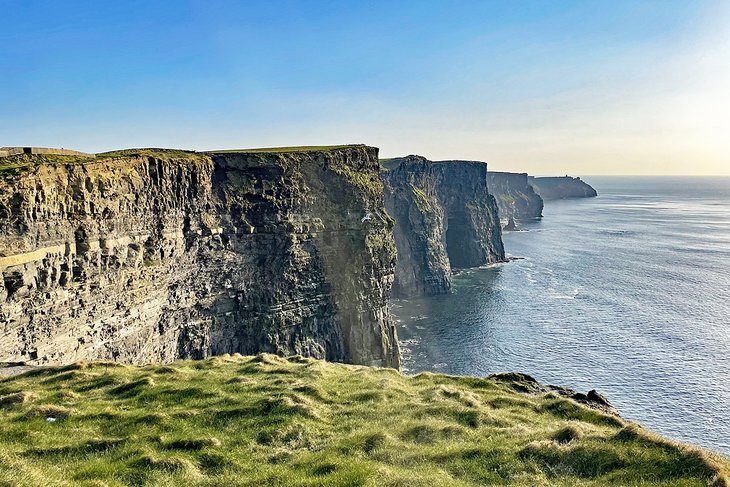
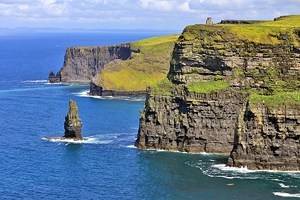
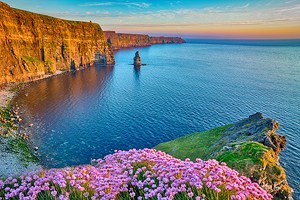
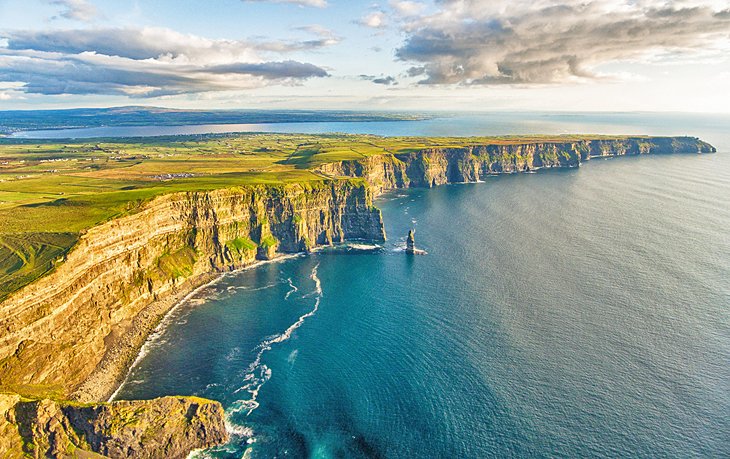
Ireland's most visited natural attraction, the soaring Cliffs of Moher rise to more than 214 meters above the crashing Atlantic in a wild and dramatic eight-kilometer coastline. Take time to walk the trail along the clifftop for views of the Aran Islands, and see displays about the geology and environment of the cliffs at the visitor center.
At the southwestern edge of the Burren, a region in County Clare that includes the wild, rocky landscapes of Burren National Park, the cliffs and the sea stack just offshore are home to thousands of seabirds.
By Car: Because the Cliffs of Moher are quite far from a rail station and it requires also taking a bus, it's easiest to do this day trip by car or on a guided tour. Drive time from Dublin is about three hours.
By Tour: Going on a guided tour will allow you to see many of Ireland's other west coast attractions. On the way from Dublin you can stop in Kilfenora for a visit of the Celtic High Crosses, or in County Limerick to visit the 13th-century King John's Castle, built on a Viking settlement and considered one of the best preserved Norman castles in Europe.
As well as a drive along Galway Bay for views of the Aran Islands and the 12 Bens, some tours also stop at Dunguaire Castle. On a 13-hour Cliffs of Moher Day Trip from Dublin, you can enjoy the beautiful County Clare countryside from an air-conditioned bus as an expert guide explains the area's geology and history. After a leisurely stroll on the path along the cliffs, you can explore the tiny town of Doolin, known for its music. Doolin is one of the most charming towns in Ireland.
Read More: From Dublin to the Cliffs of Moher: Best Ways to Get There
2. Glendalough and Kilkenny
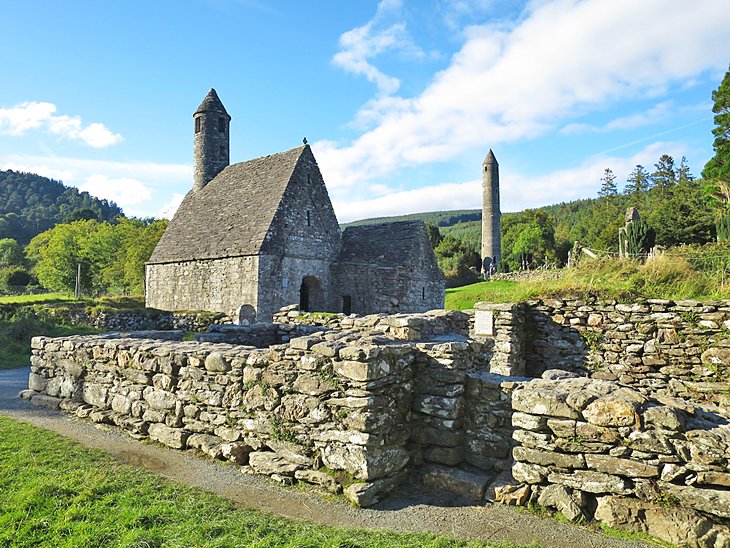
In a glacial valley below the Wicklow Mountains in County Wicklow, Glendalough was one of the most important monastic sites in Ireland. It was founded by St. Kevin in the 6th century and became known as the Monastic City. There are many things to see here, the most impressive being the well-preserved, 30-meter-tall Round Tower.
Near St. Mary's Church is the 12th-century Romanesque Priest's House; a tall granite cross dating to the sixth or seventh century; and the largest church, which dates to the 11th and 12th centuries.
Near Glendalough are two other interesting historic sites: the 11th-century Trinity Church and St. Saviour's Priory, with Romanesque stone carvings. Information at the visitor center will help you find and identify the various landmarks, and you can also follow marked nature trails.
If going on your own, you can take the bus from Dublin to Glendalough aboard the (aptly named) Glendalough Bus. The bus will pick you up in Dublin at St. Stephen's Green for the hour-and-20-minute drive. The bus operates year-round.
If you want to go to Kilkenny for the day, you can travel by train or bus. Irish Rail operates a route between Dublin Hueston and Kilkenny MacDonagh, which takes approximately an hour and a half.
You can also travel by the Dublin Coach (a.k.a. the Big Green Bus), which takes about an hour and 45 minutes and departs from Burgh Quay in Dublin.
If you're driving to Glendalough from Dublin, stop to admire the scenery of the Wicklow Mountains, including Wicklow Gap and the dramatic Turlogh Waterfall. On a 10-hour Kilkenny, Wicklow Mountains, Glendalough, Sheep Dog Trials, Day Trip from Dublin, in addition to traveling through the beautiful Wicklow Mountain National Park, you'll have a guided tour of the tower and other historic sites at Glendalough.
3. Blarney Castle and Cork
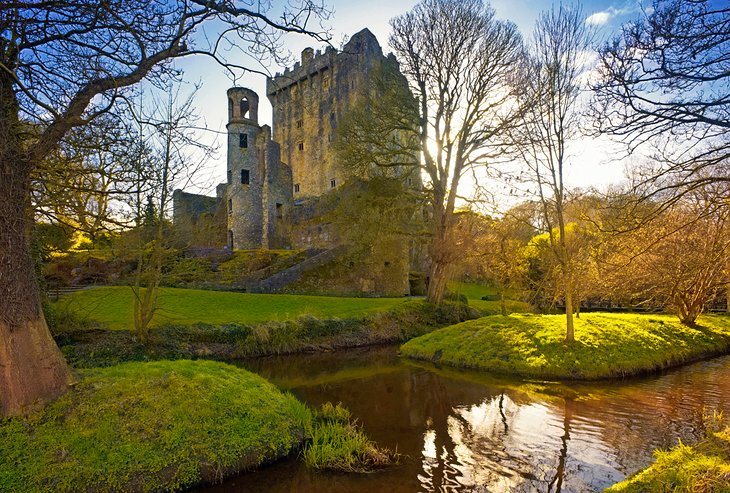
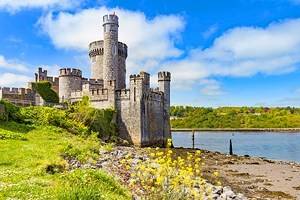
For many, kissing the famous Blarney Stone is a highlight of their trip to Ireland, and it's easy to combine this with a sightseeing tour of the lush and rolling Irish countryside and visits to the cities of Cork and Cobh.
Even for those not interested in perfecting their Irish eloquence of speech by kissing the stone, Blarney Castle is worth seeing for its beautiful gardens and shopping at the famous Blarney Woollen Mills at the castle, an 1824 mill that has become a center for Irish weaving and knitting.
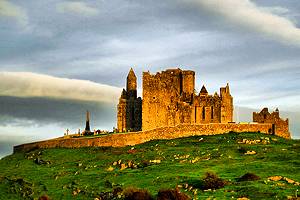
On the Blarney Castle Day Trip from Dublin, you can not only visit Blarney Castle and kiss the famous stone, but also visit the Rock of Cashel in County Tipperary. This spectacular hilltop medieval complex includes a 13th-century Gothic cathedral, a 12th-century round tower, a Romanesque Chapel with wall paintings, and a 15th-century castle. You'll also have time for some independent sightseeing in Cork City, where your local guide will recommend attractions.
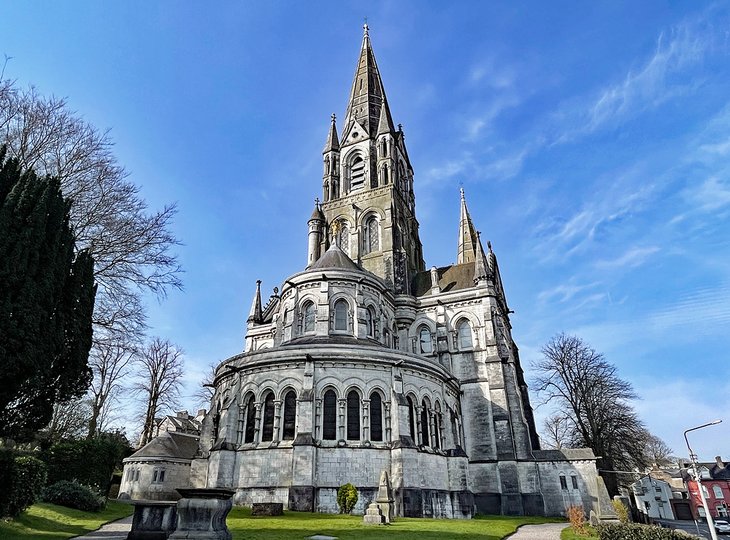
Personally, Cork was one of my favorite cities in Ireland. I love Saint Fin Barre's Cathedral, which is one of the most beautiful Gothic cathedrals I've seen in my travels across Europe. I also highly recommend visiting Sin e' in the evenings for the live traditional music sessions.
There is no convenient way to get to Blarney Castle directly from Dublin using public transportation, so driving yourself or taking a tour will be the most convenient way. However, it is easy to get from Dublin to Cork via public transit. The trip on Irish Rail is about two and a half hours.
Aircoach operates 36 express daily services from Dublin City Centre to Cork, and this is a cheaper option.
- Read More: Top-Rated Tourist Attractions in Cork
4. Giant's Causeway
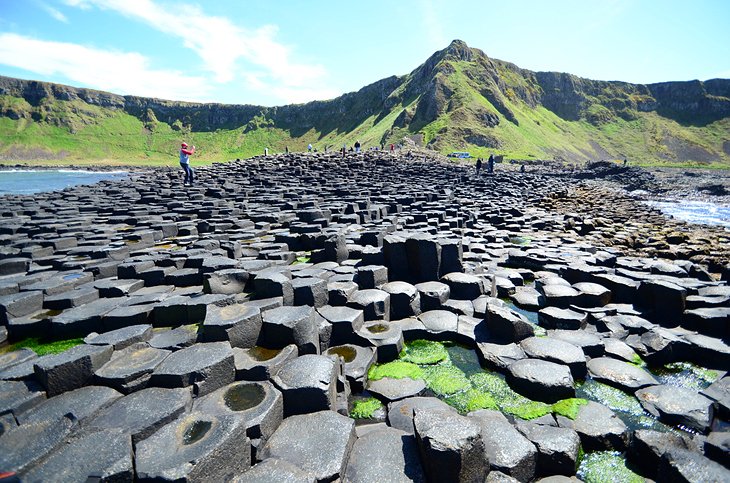
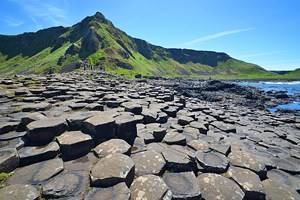
Northern Ireland's only UNESCO World Heritage Site, the strange polygon columns of basalt known as the Giant's Causeway are the result of a volcanic eruption 60 million years ago. The columns form oversized stairs and stepping stones that legend holds to be the work of the giant Finn McCool when he crossed to Scotland to battle his nemesis, Benandonner. On a clear day, you can see the Scottish shore, several giant steps away.
See more of the dramatic coastal scenery as you cross the Carrick-a-Rede Rope Bridge, suspended high over the sea. If the coast looks familiar, it was the location for filming Game of Thrones, and you may see the avenue of beech trees called the Dark Hedges, which served as the King's Road. Day trips from Dublin can easily include other attractions in Northern Ireland.
The Northern Ireland Highlights Day Trip Including Giant's Causeway from Dublin tour includes a stop in Belfast, Northern Island's capital, for a city tour in a traditional black taxi. After a scenic drive along the Antrim coast, there is plenty of time at Giant's Causeway to learn about the geology of this natural wonder at Visitor Heritage Centre, as well as to walk across the Carrick-a-Rede Rope Bridge.
There is no convenient way to get directly to Giant's Causeway from Dublin by bus or train. The trips will be upward of 5 hours and will include a transfer. The best way to get to Giant's Causeway from Dublin is to self-drive the 3-hour drive or to be part of a group tour. Just make sure your rental car is permitted to travel to Northern Ireland, as it is part of the United Kingdom. You will also need your passport.
Address: Causeway Road, Bushmills, Antrim, Northern Ireland
Read More: From Dublin to the Giant's Causeway: Best Ways to Get There
5. Belfast and the Titanic Quarter
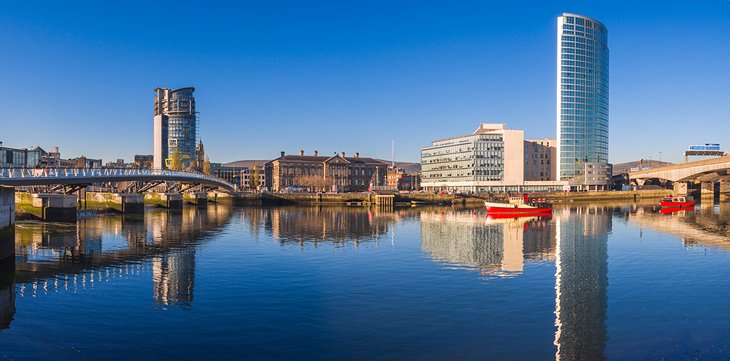
Northern Ireland's capital is a lively, colorful city that has faced its sometimes violent past and is determined to reinvent itself into a cultural capital. The prime tourist attraction is the waterfront Titanic Quarter, where the RMS Titanic was built more than 100 years ago and which was the epicenter of the city's long maritime heritage as the cornerstone of the British Empire's shipbuilding.
The striking star-shaped building of Titanic Belfast is already a city landmark, with state-of-the-art interpretive exhibits that trace Belfast's maritime history and the story of the Titanic with features that include an underwater exploration theater and re-created decks and cabins.
The Titanic Belfast Visitor Experience and Giant's Causeway Day Trip from Dublin combines Northern Ireland's two most popular tourist attractions into a single 13-hour excursion by luxury coach. After learning about the Titanic's voyage in the interactive discovery galleries and visiting the Ocean Exploration Centre to see how ocean behavior is tracked, the tour continues to the Giant's causeway, where there is plenty of time for the Visitor Heritage Centre and crossing the swaying Carrick-a-Rede Rope Bridge before returning to Dublin.
Getting to Belfast from Dublin could not be easier by train. The ride is roughly 2 hours from Dublin Connolly Station directly into the heart of Belfast. There are many coach bus services between Dublin and Belfast, but the Dublin Express is easiest from the City Centre. The ride is two and a half hours.
Address: 1 Queen's Road, Titanic Quarter, Belfast, Northern Ireland
- Read More: Top-Rated Tourist Attractions in Belfast
6. Newgrange and Hill of Tara
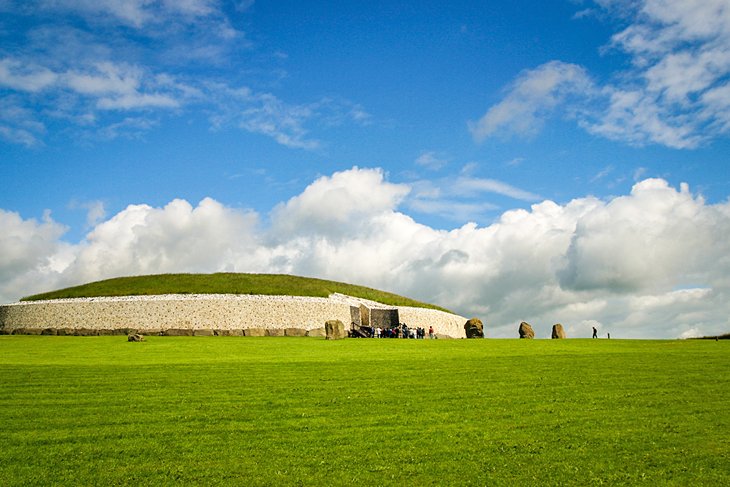
Ireland's most important prehistoric sites lie close to each other, near the River Boyne. Newgrange is a huge passage tomb dating from the Neolithic period. Built around 3200 BC, it predates both Stonehenge and the Egyptian pyramids. The circular mound is supported by a retaining wall of white quartz stones and large stones carved in spiral and other designs. Inside are passages and chambers, and at the Winter Solstice, the rising sun illuminates the interior. Newgrange is a UNESCO World Heritage Site.
The Hill of Tara plays large in Irish history and mythology as the traditional inauguration place of the ancient high kings. There are several stone structures here, the oldest of which is the megalithic tomb called the Mound of the Hostages, thought to have been built about 3000 BC. Earthworks here include two linked enclosures: a ring fort and a ring barrow.
You can step back in time to Celtic Ireland on this Celtic Boyne Valley Day Trip from Dublin, a full-day bus tour that includes the Loughcre with Celtic Tombs, the Hill of Uishneacht, and the Hill of Tara.
There is no direct route between Dublin and Newgrange via public transportation. The best option is to go via a tour or take a taxi.
Official site: www.newgrange.com
7. Ring of Kerry
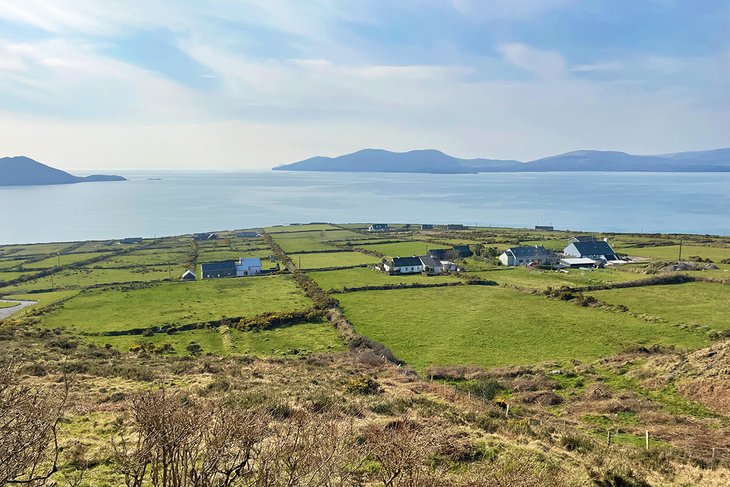
Scenic drives don't get any better than the 177-kilometer route around the Iveragh Peninsula known as the Ring of Kerry. It offers a non-stop panorama of ocean views, islands, lakes, and mountains, dotted with postcard villages. Day tours from Dublin vary, but most include the magnificent inland Lakes of Killarney and stop at viewpoints for Macgillicuddy Reeks, the 17-kilometer mountain range that includes Ireland's highest peak, Carrantuohill.
These and more are covered on the 15.5-hour Ring of Kerry Rail Trip from Dublin, which begins with a train ride to Mallow, in County Cork, before meeting a local professional guide and traveling by coach to the region's most majestic landmarks.
My favorite way to explore the Ring of Kerry is to do self-drive. I've done this route multiple times and it is one of the best things to do in Ireland. Self-driving may be a bit more work, but it allows for greater flexibility when it comes to making stops to explore. Some of my favorite stops in the Ring of Kerry include the town of Kenmare, Ross Castle, and Portmagee.
8. Powerscourt
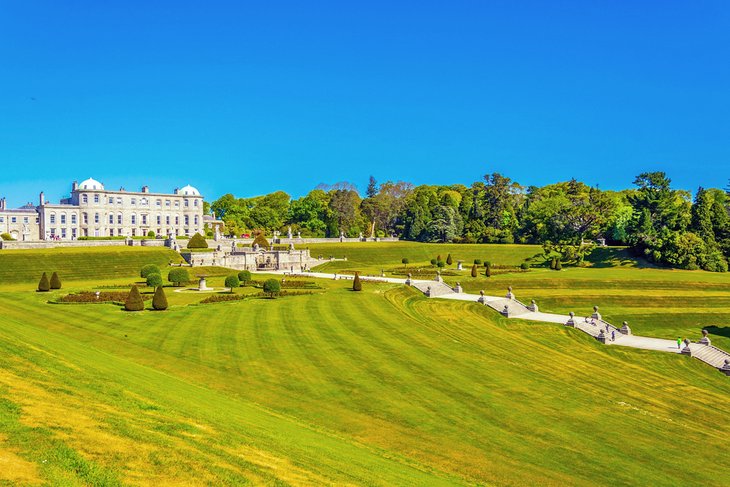
The 47 acres of Powerscourt grounds were designed so the estate would blend harmoniously with the surrounding Wicklow countryside, especially Sugarloaf Mountain, which is framed as a stunning backdrop. More than 200 varieties of trees, shrubs, and flowers are arranged in formal beds along the promenades of the Italian Gardens and in other settings, including a charming Japanese Garden; a Rose Garden; and Kitchen Gardens, where herbs and vegetables share the grounds with flowers.
The interior of the former manor house has been converted into an upscale shopping venue for Irish crafts and designs, including an Avcoa shop, one of Ireland's most revered brands. Powerscourt is often included in a scenic day tour of County Wicklow that also visits Glendalough and Wicklow Mountains National Park.
The most full-service way to visit Powerscourt from Dublin is through a guided tour. An eight-hour, small-group tour includes Powerscourt, along with Wicklow and Glendalough. It gives plenty of time to explore the home and grounds and the entry fee is reduced for those part of this tour.
Powercourt is just 20 minutes south of Dublin so you could take a taxi there, as well as the bus. The closest public transportation to the estate is the 44 bus, which drops visitors in Enniskerry village, just a quick walk from Powerscourt.
Address: Enniskerry, County Wicklow
Official site: http://powerscourt.com/
9. Boyne Valley and Loughcrew Celtic Tombs
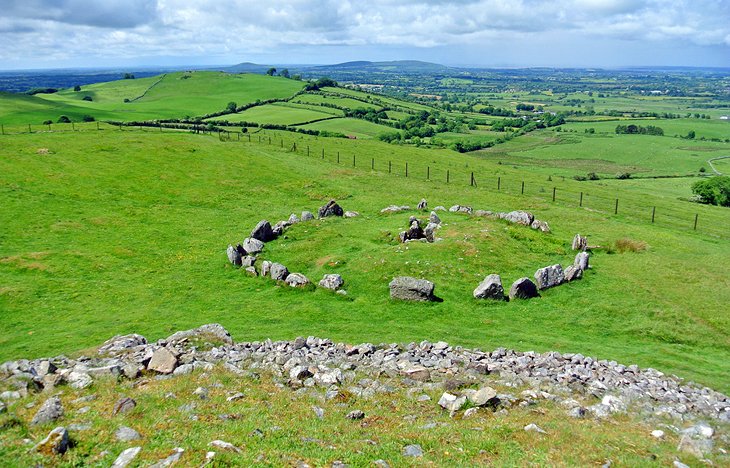
If Ireland's ancient Celtic past fascinates you, the Boyne Valley and its environs are the place to go. Set in beautiful Irish countryside are some of the oldest sites in Ireland, including the well-preserved passage tombs at Loughcrew Cairns. You can walk through winding stone passageways inside to see 6,000-year-old stone carvings on the walls. On the River Boyne, Trim Castle was built in the 1170s, and is Ireland's largest Anglo-Norman castle.
In County Louth are the ruins of the early Christian settlement and famous 10th-century Celtic crosses at Monasterboice. The crosses have biblical inscriptions, and the 5.5-meter Muiredach's High Cross is considered the best in Ireland, covered in intricate Celtic stone carving. Above it stands a round stone tower more than 30 meters tall that protected the monks from Viking raids.
Because this is such a rural and remote part of the Irish countryside, the best way to explore these sites is to take a tour or self-drive. You can visit all of these sites, along with the Hill of Tara (see above) and the town of Drogheda, a Danish settlement in the days of the Vikings, on Ireland's Ancient East Day Trip from Dublin including Boyne Valley. The 10-hour tour travels across the scenic Irish countryside by bus, accompanied by a local guide who relates the history and legends of these ancient sites.
10. Connemara and Galway
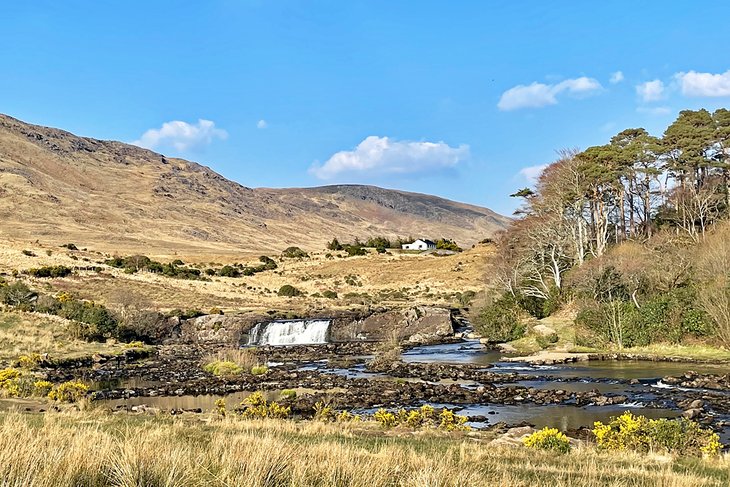
The coast of western Ireland, north of Galway Bay, is an irregular one of bays and tiny inlets with sandy coves, islands, islets, and rocky points. Inland are rugged mountains, lakes, and villages of thatched cottages. At the center of the area is Connemara National Park, south of the scenic loughs (lakes) of Kylemore and Pollacapall, where you'll find the atmospheric 19th-century Kylemore Abbey with its lovely Victorian walled gardens. The coastal towns of Roundstone and Clifden, favorites for artists, are good stopping points for a seafood lunch.
On the Connemara and Galway City Day Tour from Dublin, you can combine highlights of Connemara with a visit to the historic city of Galway, Ireland's major trading port since the Middle Ages. On the included guided walking tour, you can still see reminders of the foreign influences its trade brought, such as the famous Spanish Arch.
If you'd like to spend more time here, the train ride from Dublin takes about 2.5 hours, and you'll find plenty of good places to stay in Galway. I recommend the g Hotel & Spa for a funky, modern hotel in a great location.
Galway is one of my favorite cities in Ireland for its maritime history, beautiful architecture, and vibrant restaurant scene. Quay Street is the most vibrant area if you're in town for only a little while.
11. Howth and Malahide
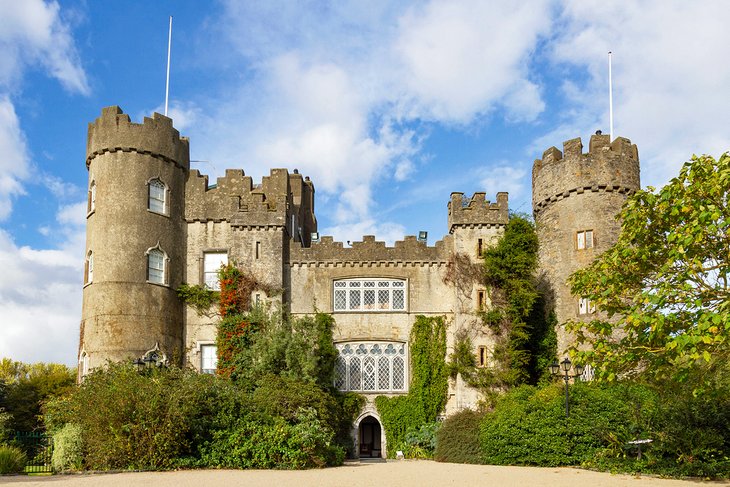
Just north of Dublin, the Howth peninsula is an easy day trip from Dublin by DART train, with plenty of things to do. Along with the tidied-up fishing village itself, you can see Viking ruins and the impressive Howth Castle. If you arrive with an organized tour group, you can tour the castle's interior.
On the castle grounds is a Neolithic site, a dolmen with a 70-ton capstone. Views from Howth Head are spectacular, and on very clear days you can see the Dublin skyline. Also in Howth is the boyhood home of the poet William Butler Yeats. The DART train line also runs to Malahide, with a beautiful castle that's open to the public.
Walkers will enjoy the coastal path around Howth Head, with views of Dublin Bay and the Wicklow Mountains, and looking north to Lambay Island and the Mourne Mountains. The trail is easy to find; it begins at the Howth DART station.
12. Dalkey and Killiney
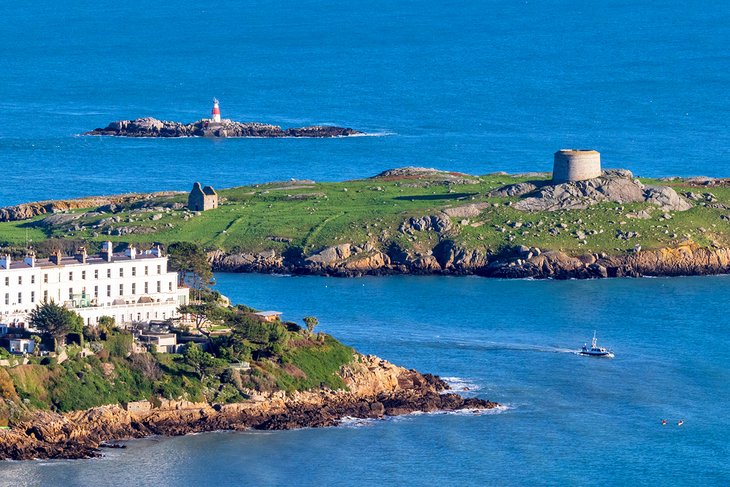
South of Dublin, and reached from the city on the Bray/Greystones DART line, the neighboring towns of Dalkey and Killiney lie along the coast of the Irish Sea.
Dalkey once had seven medieval Norman castles, of which one, Dalkey Castle, survives and houses a Heritage Center. State-of-the-art interactive exhibits include fascinating anecdotes of local history, including tales from the time when Dalkey was the port of Dublin.
Just offshore, Dalkey Island was inhabited as long as 6,500 years ago, and has a burial cairn, two holy wells, and other early remains. The island is a short boat ride from either Bulloch Harbour or Coliemore Harbour.
Continuing south on the DART line, Killiney is a town of parks and affluent homes, with views of Dublin Bay and the Wicklow Mountains. A popular seaside resort in the 1800s, Killiney has a pebble beach. For the best views of a panorama that 19th-century writers compared to Naples Bay (hence the abundant Italian place names), climb the steep hill to the summit of Killiney Hill Park
Official site: https://www.dalkeycastle.com
13. Killarney
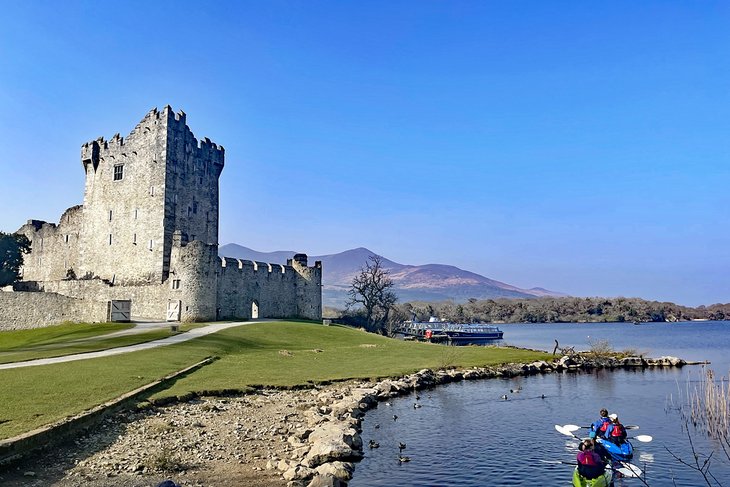
One of the main highlights of the Ring of Kerry is the bustling town of Killarney. A beginning or end point for the journey, Killarney has some wonderful sites and attractions in and around the city that are worth a visit. But travelers do not have to embark on the entire Ring of Kerry to see the best of Killarney. All they need is to take a day trip from Dublin.
This Kerry Highlights Day Tour from Dublin is a 14-hour jam-packed experience that will make sure visitors see everything Killarney has to offer. Travel along the coastal roads into Killarney National Park, stop by charming villages like Adare, and see the natural beauty of the Lakes of Killarney and Torc Waterfall.
Dublin Coach also has a direct bus from Dublin to Killarney. The trip is just over four hours.
14. Sligo
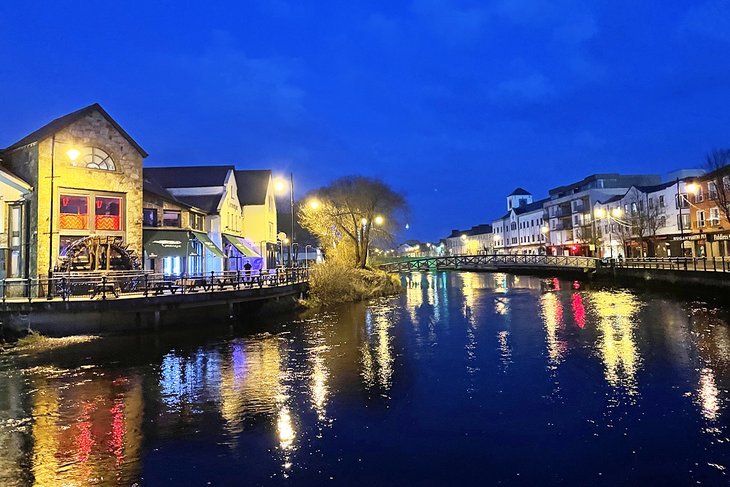
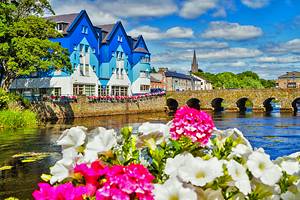
One of the lesser visited cities of Ireland, Sligo Town is absolutely worth a day trip from Dublin. Less than a three-hour drive from the city center, Sligo is a coastal seaport and the capital of County Sligo. It is one of the most historic and culturally significant cities in Ireland and far enough off the tourist trail to have you feeling like you've discovered a secret for yourself.
Sligo sits on the Garavogue River. The centuries-old city has stunning historic architecture, like the medieval Sligo Abbey and the Lissadell House and Gardens. Just outside the city is the Carrowmore Megalithic Cemetery.
Sligo is also the city that gave us W.B. Yeats. Visit the Yeats Society to learn all about this world-renowned poet and author. Yeats is buried at Drumcliffe Church, just outside the city. Sligo also sits in the shadow of Benbulben, a flat-topped rock formation that overlooks the rolling fields of the county. This protected site is one of the most impressive in all of Ireland.
If you decide to visit Sligo, this self-guided eBiking tour can be done in half a day and allows travelers to get around the city efficiently, taking in many of the historic sites that the city has to offer. Another way to visit Sligo is with this guided Sligo surfing tour. Sligo has some of the best waves in Ireland and this guided tour will take surfers of all levels.
You can take a direct train from Dublin Connolly station to Sligo in just over three hours. Bus Eireann operates a route from Dublin to Sligo, as well.