14 Top-Rated Attractions & Places to Visit in French Jura
The Jura is one of France's most picturesque regions, bounded by the rolling hills of Burgundy on the west, the Vosges Mountains of Alsace in the north, and the Swiss Lakes (bordering the Swiss Jura) in the east.
This pastoral landscape corresponds roughly with the historic province of Franche-Comté. Scattered throughout the idyllic countryside are cultural treasures: quaint medieval towns, splendid Romanesque churches, and peaceful spa towns.
During winter, the Jura's ski resorts offer a winter wonderland of powder snow and well-groomed trails. In summer, vacationers relish the longer days and pleasant weather in this unspoiled corner of rural France that is still relatively undiscovered by tourists.
Whether you are seeking outdoor adventures or a relaxing getaway, the French Jura region is a fabulous place to visit. Find ideas to help plan your trip with our list of the top attractions in French Jura.
- 1. Besançon
- 2. Baume-les-Messieurs
- 3. Pérouges
- 4. Dole
- 5. Belfort
- 6. Arbois
- 7. Poligny & Comté de Grimont
- 8. Château d'Arlay
- 9. Montbéliard
- 10. Nozeroy
- 11. Arc-et-Senans
- 12. Chapelle Notre-Dame du Haut in Ronchamp
- 13. Ornans
- 14. Château de Frontenay and Château-Chalon
- Nature Sites, Spa Towns & Ski Resorts
- Colomby de Gex
- Culoz
- Divonne-les-Bains
- Les Rousses
- Lons-le-Saunier
- Luxeuil-les-Bains Spa & Surroundings
- Malbuisson
- Saint-Claude
- Salins-les-Bains
- Villers-le-Lac
- Map of Attractions & Places to Visit in French Jura
1. Besançon
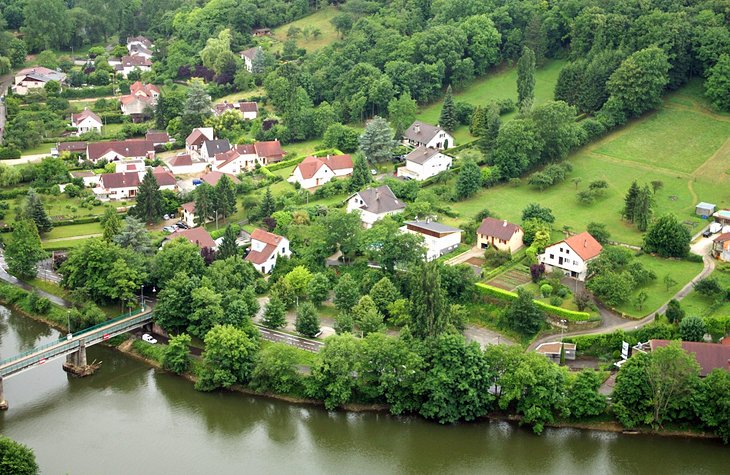
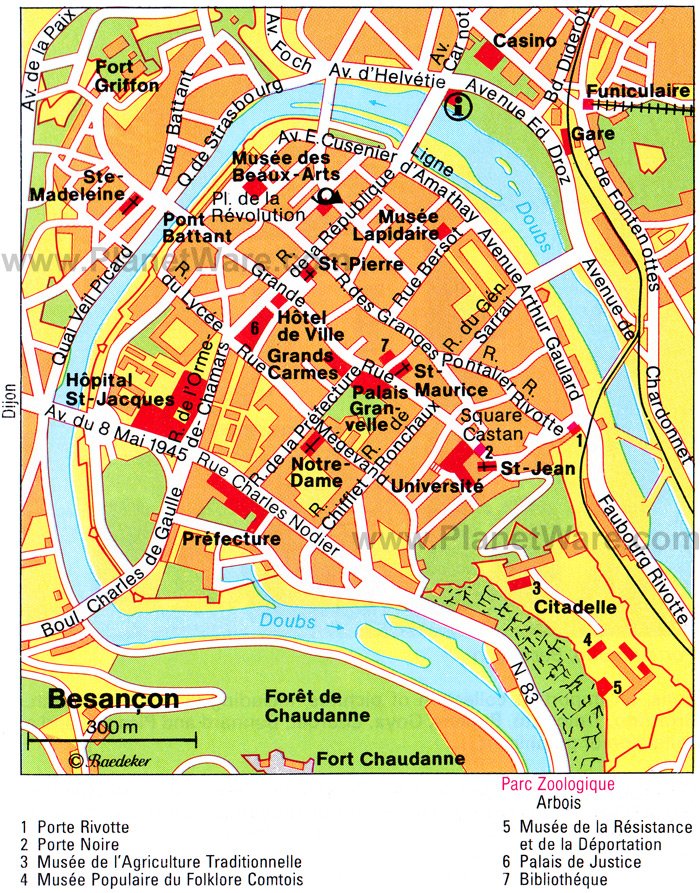
Built up around a horseshoe-shaped bend of the Doubs River, this charming medieval town was formerly the capital of the Franche-Comté region. The historic center of Besançon contains many interesting cultural attractions.
Dating back to the 12th century, the Cathédrale Saint-Jean features a Romanesque choir and the celebrated Virgin and Child with Saints painting by Fra Bartolomeo.
Near the cathedral is the Place Archéologique Castan, a shady English-style garden that incorporates classical-era Corinthian columns that were possibly part of an ancient theater.
The town's main street, Grande Rue, follows the line of the Roman road Vicus Magnus. The Grand Rue's uniform houses were laid out in the 17th century by Sébastien Le Prestre de Vauban, the renowned French military engineer who perfected the craft of building defense fortifications.
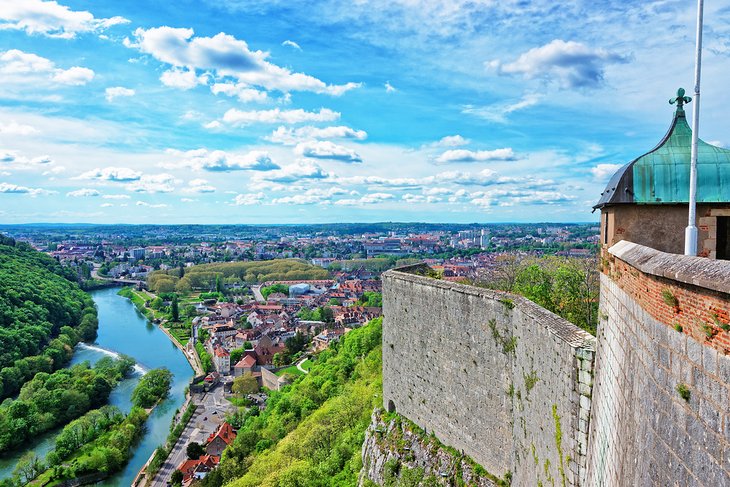
Vauban created the Citadelle de Besançon, a remarkable fortress set 100 meters above the old town, offering stunning views. With its 20-meter-high ramparts, the Citadel is considered a masterpiece of Vauban's work and is designated as a UNESCO World Heritage Site. The Citadel is open to the public for visits; the site has a restaurant, snack bar, and gift shop.
The Citadel also houses three museums: the Musée de la Résistance et de la Déportation (Museum of French Resistance and Deportation); the Musée Comtois devoted to the culture, heritage, landscape, and cuisine of the Franche-Comté region (a highlight is the puppet theater); and the Muséum d'Histoire Naturelle de Besançon (Natural History Museum), which is dedicated to education about wildlife and the conservation of endangered animals.
Another exceptional museum, the Musée des Beaux-Arts et d'Archéologie, in the old town near the river, displays a collection of archeological objects and 15th- to 20th-century paintings, including works by Tintoretto, Rubens, Goya, Courbet, Bonnard, and Picasso.
2. Baume-les-Messieurs
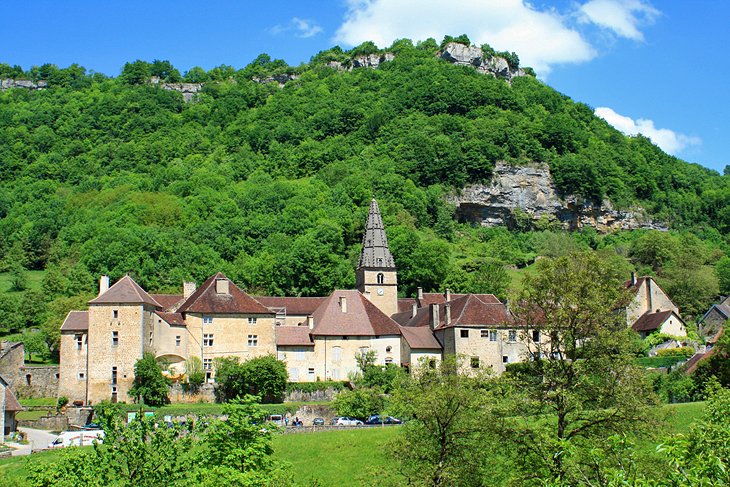
Baume-les-Messieurs is surrounded by woodlands in a secluded spot where three valleys meet. This gem of the French Jura region is listed as one of France's Plus Beaux Villages (Most Beautiful Villages).
The historic houses of Baume-les-Messieurs center around a Benedictine abbey, the Abbaye Impériale, which has a heritage that goes back to the Carolingian era (9th century). Guided tours of the abbey include access to the Romanesque-Gothic Eglise Abbatiale Saint-Pierre (the abbey church), renowned for its gilded 16th-century Flemish altarpiece.
The town's natural surroundings are equally inspiring. The 200-million-year-old Grotte de Baume is a 500-meter-long cave that dazzles visitors with thousands of stalagmites and stalactites, and even waterfalls.
3. Pérouges
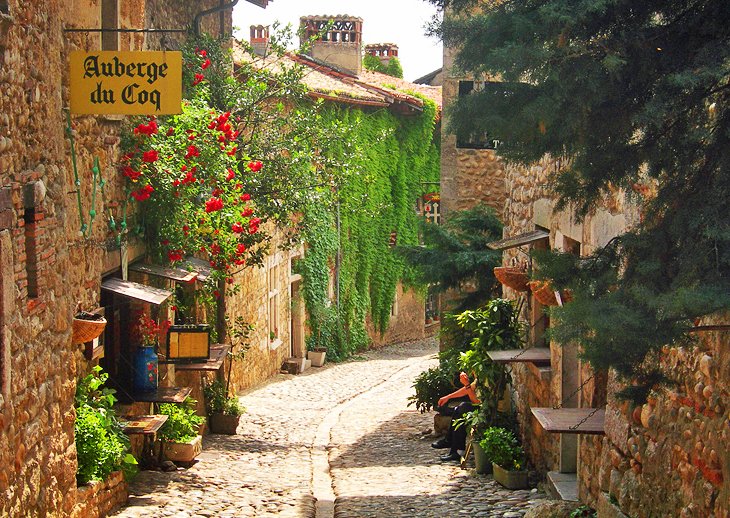
Visitors enter an enchanting medieval world upon stepping through the arched gateway that leads into historic Pérouges, loftily perched on a plateau above the countryside. A maze of atmospheric cobblestone lanes, old stone buildings, and half-timbered houses distinguish this once-wealthy merchants' town.
Because of its beauty and charm, Pérouges is listed as one of France's Plus Beaux Villages. This medieval town's storybook quality has made it a popular movie set location. Most notably, Les Trois Mousquetaires was filmed here.
At the heart of the old walled town, the Hostellerie du Vieux Pérouges on the Place du Tilleul invites visitors to step back in time for the night. Guest rooms in various houses (including a 15th-century building) feature traditional decor, canopy beds, antique furniture, and wood-beamed ceilings.
In a cozy dining room, the restaurant at the Hostellerie du Vieux Pérouges serves authentic regional specialties such as Volaille de Bresse aux Morilles (Bresse Chicken in Morel Sauce) and Galette Pérougienne (a local dessert). Adding to the charm, the restaurant staff wear period costumes.
The Musée du Vieux Pérouges (Museum of Old Pérouges) provides a glimpse into the everyday life in Pérouges during centuries past. Exhibits present historic furniture, cookware, and other household items. The museum also has a traditional weaving workshop, a medieval garden, and a watchtower with spectacular views of the old town.
Not to be missed is the 15th-century Eglise Sainte-Marie-Madeleine, a fortress church classified as a Historic Monument. The walls of this somber Gothic church are actually defensive ramparts, and the small, narrow stained-glass windows were designed to prevent invasions.
Pérouges is known for its lively festivals throughout the year: the Rêveries Véntiennes (Venetian Parade) in April and the Fête Médiévale (Medieval Festival) in June. The Marché de la Création (Arts and Crafts Market) is held at the end of April or early May on the Chemin des Terreaux.
Several boutiques that sell artisanal crafts and small locally owned bakeries are found on the Rue des Rondes and the Rue du For. Also on the Rue du For is La Maison des Arts Contemporains de Pérouges, a contemporary art center that presents five expositions a year.
In December, a festive Marché de Noël (Christmas Market) animates the entire town with a crafts market, music, carriage rides, and candlelit decor.
4. Dole
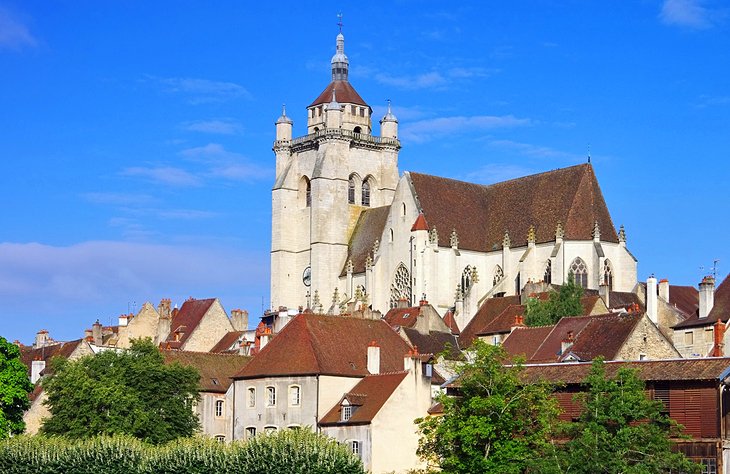
The former capital of the historic Comté de Bourgogne (County of Burgundy), Dole is listed as a Ville d'Art et d'Histore (City of Art and Culture). The town's old-world character and rich heritage is seen in its impressive architecture.
Highlights include the Collégiale Notre-Dame, a Late Gothic church with a soaring bell tower; the Musée des Beaux-Arts' archaeology, European paintings, and contemporary art collections; the 17th-century Hôtel-Dieu (open to the public); and the Maison du Patrimoine, which displays antique bread-making, blacksmiths' and weaving machines (tours by appointment).
To discover the city, tourists can follow parts of the four-kilometer "Circuit du Chat Perché" ("Circuit of the Perched Cat"), which has 35 stops indicated by sidewalk markers featuring little cats. A highlight of the Circuit du Chat Perché is the picturesque waterfront path alongside the Canal des Tanneurs.
Along the Circuit du Chat Perché is La Maison Natale de Louis Pasteur, birthplace of Louis Pasteur. This house overlooking the Canal des Tanneurs is a listed Historic Monument. It has been converted into a museum, which presents Louis Pasteur's scientific research and illustrates his most important achievements. The museum features entertaining interactive exhibits and games.
5. Belfort
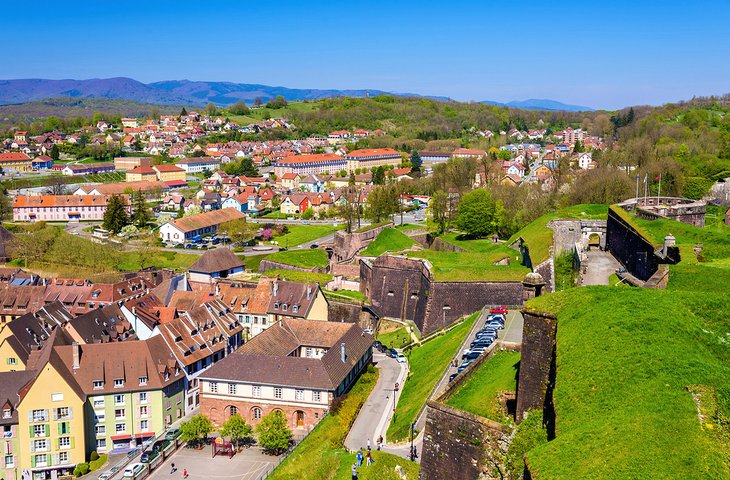
Because of its strategic location on the Savoureuse River, Belfort has endured a turbulent history. In the 17th century, Vauban built an impenetrable fortress on a 70-meter-high crag above the city.
The Belfort Citadel features enormous defensive walls and a terrace with commanding views of the Jura countryside and the Vosges Mountains.
Next to the citadel, the grandiose Lion of Belfort proudly guards this heroic "City of the Lion." The astounding Vosges sandstone monument crafted by Frédéric Bartholdi (the sculptor who created New York City's Statue of Liberty) pays tribute to Belfort's brave resistance during the Franco-Prussian War.
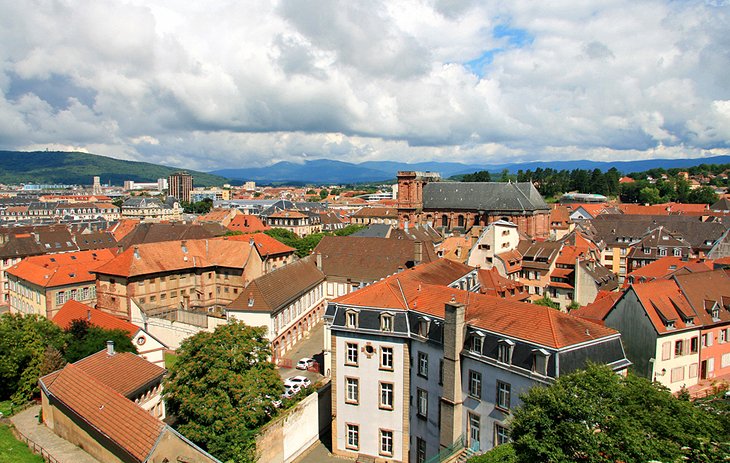
It's also worth exploring the old town of Belfort. At the Place de la République, the Monument des Trois Sièges, another work created by Bartholdi, commemorates the three sieges of 1813-1814, 1815, and 1870-1871.
Other noteworthy sights are the Porte de Brisach, a relic of the medieval ramparts, and the 18th-century Cathédrale Saint-Christophe, a striking red sandstone edifice with a Neoclassical facade.
6. Arbois
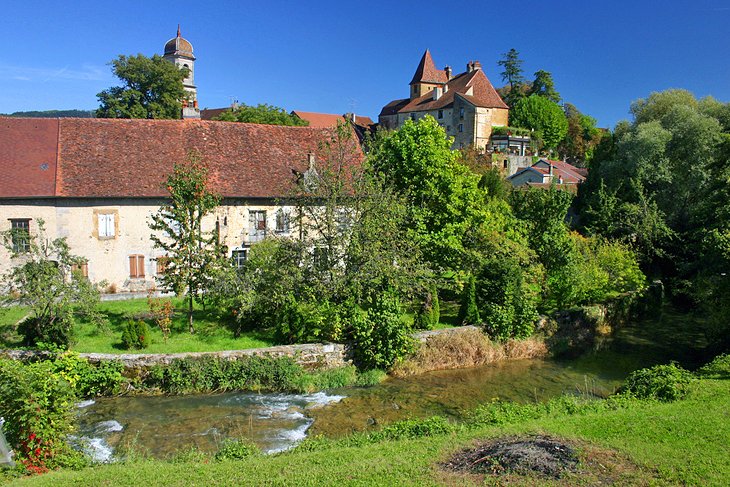
Surrounded by green, rolling hills, Arbois is a pleasant town with beautiful 18th-century houses. One of the loveliest mansions has been converted to the Musée d'Art Hôtel Sarret de Grozon, an art museum with a superb collection of paintings from the 17th to 19th centuries.
The town's most famous resident, Louis Pasteur, performed his experiments at the Maison de Louis Pasteur, a listed Historic Monument that is open to the public (guided tours are available). Visitors will see the rooms where Louis Pasteur and his family lived, as well as the laboratory where Pasteur researched microorganisms and developed the technique of pasteurization.
Tourists may take a guided tour of the Eglise Saint-Just, an impressive 12th-century Romanesque church with 13th-century Gothic architectural elements. The church is built on a hillside and from the 16th-century clock tower (at a height of 44 meters), visitors can admire sensational views of the bucolic landscape around Arbois. (The climb to the top of the tower requires over 200 steps.)
Five kilometers from Arbois is the Reculée des Planches, the Jura's unique limestone plateau filled with lush vegetation, waterfalls, and wildlife, including falcons. A main attraction of this area, the Cascades des Tufs (waterfall) is beautiful nature site and a perfect spot for a picnic.
Continuing six kilometers from the Grotte des Planches is the medieval village of La Châtelaine and a breathtaking viewpoint at the Cirque du Fer à Cheval.
7. Poligny & Comté de Grimont
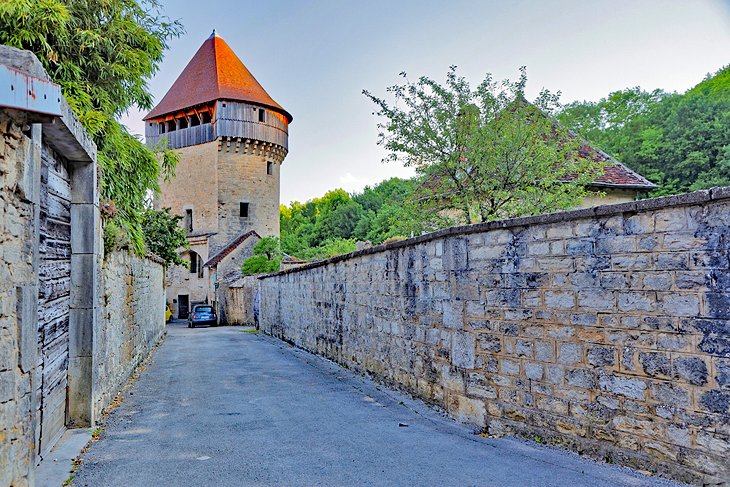
Driving through the historic county of Comté de Grimont, travelers will see many old monasteries, convents, and churches along the way to the Poligny, a picture-perfect town that dates back to the medieval era.
Several churches in Poligny are obligatory tourist stops: the exquisite 15th-century Collégiale Saint-Hippolyte, adorned with many statues; the Eglise des Jacobins, which was formerly part of a Dominican convent founded in the 13th century, and the Eglise Monthier-Vieillard, a Romanesque building that dates back to the 9th century.
The Comté de Grimont terroir has outstanding gastronomy. Regional gourmet specialties include cured meats and Comté cheese, a matured cheese prepared from the milk of Montbéliarde cows that graze in the area's high-mountain pastures. Comté cheese boasts the distinction of an AOP (Appellation d'Origine Protégée) designation.
Gourmands will enjoy exploring the Routes de Comté, where the farms and dairies are located in the rolling hills of the Jura Mountains. A highlight of the area is the Maison du Comté (on the Avenue de la Résistance in Poligny), a museum that explains the process of cheese production; guided tours include a tasting of Comté cheese.
The Comté de Grimont is also one of the best places to visit in the Jura region for hiking. The area has over 200 kilometers of nature trails that offer a glimpse of the region's diverse landscape: valleys, vine-covered rolling hills, woodlands, lakes, and plains.
8. Château d'Arlay
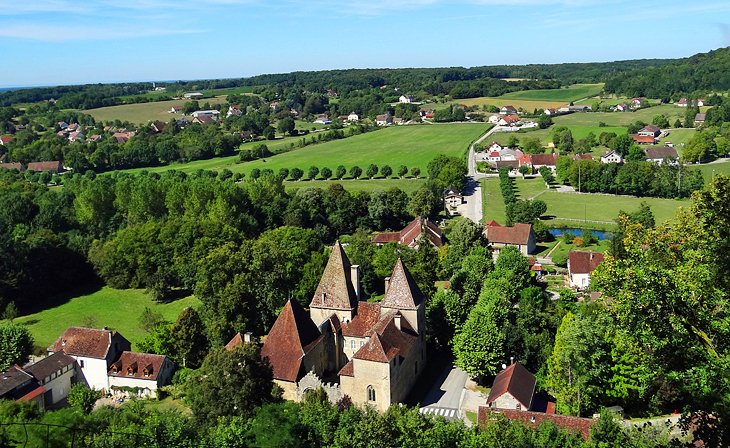
The Château d'Arlay is nestled in a peaceful setting on the site of a 17th-century convent. In 1774, the convent was replaced by a stately Neoclassical manor house built for the wealthy Comtesse de Lauraguais. The only architectural element to remain from the convent is the foundation, which was structured around a cloister.
The old cloister was converted into an elegant courtyard that opens up into the Parc Romantique, an eight-hectare wooded parkland with many terraces, groves, flowers, and fruit trees. This rare example of 18th-century landscaping is classified as a Historic Monument, as well as a Remarkable Garden (Jardin Remarquable).
The château is open to the public by guided tours; the rooms on view have been wonderfully preserved with the original decor. The grand reception rooms and exquisite bedrooms reveal a luxurious style fit for a countess and her guests.
For those who'd like to explore the gardens, it's recommended to set aside one hour for a stroll around the Parc Romantique. The park offers sweeping views of the Bresse plains and the surrounding countryside.
Address: Château d'Arlay, 2 Route de Proby, 39140 Arlay
Official site: http://www.chateau-arlay.com/en/chateau-arlay-visit-history-family-arenberg.php
9. Montbéliard
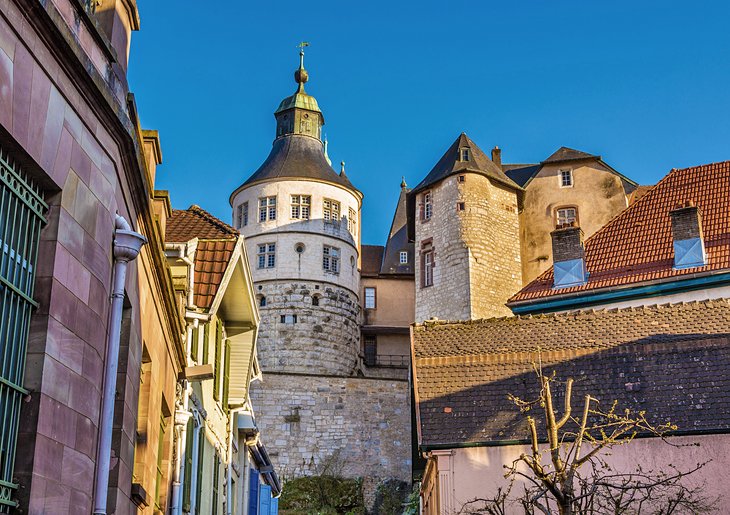
Known as "La Cité des Princes" (City of Princes), Montbéliard boasts over 800 years of regal history and a magnificent turreted château that stands high above the town. Through the centuries, the castle has belonged to different ruling families, from the Counts de Montbéliard to the Dukes of Wurtemberg.
The château now houses the Musée du Château des Ducs de Wurtemberg, a museum that illustrates a timeline of Princes who have lived here. The museum also displays collections of fine arts, archaeology, and natural history. The assortment of historic paintings and furniture is particularly interesting.
For a glimpse into how other residents of the city lived, tourists should visit the Musée d'Art et d'Histoire Beurnier-Rossel, an exquisitely decorated 18th-century bourgeoisie mansion. Period furniture and decor adorn the rooms, giving visitors the impression of a lived-in home. The handsome library is full of books from the Age of Enlightenment.
Another interesting aspect of Montbéliard is its religious heritage. The Pays de Montbéliard (Montbéliard county) was a center of Protestantism in the 17th and 18th centuries. The austere Temple Saint-Martin is one of the largest of France's Protestant churches. The Saint-Martin Church is only open for guided visits and for the "Lumières de Noël" (Lights of Christmas) event.
In the mid-19th century, the Neo-Renaissance-style Eglise Saint-Maimboeuf was built by the request of Cardinal Mathieu to affirm the conquest of the Catholic faith.
10. Nozeroy
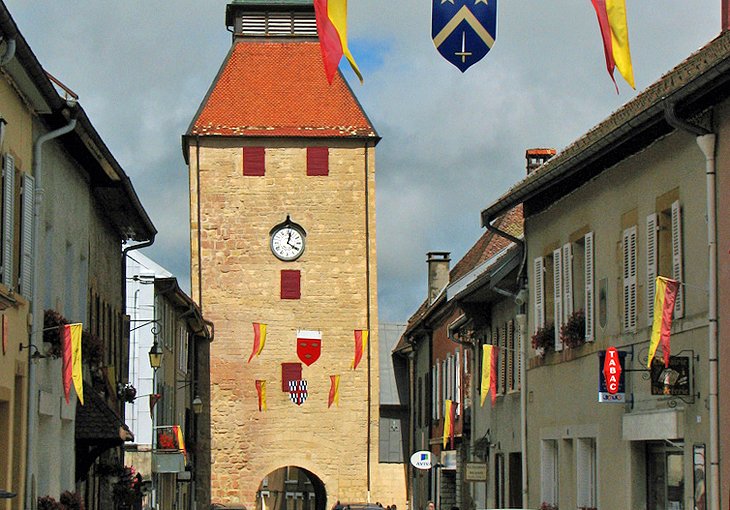
Tucked away in a quiet rural landscape, Nozeroy holds the distinction of being the smallest town in France. Despite its tiny size, the town is full of historical buildings that reveal a rich heritage.
During the Middle Ages, Nozeory was a center of economic activity and religious faith. The Renaissance era brought in humanistic ideas.
Some of the town's well-preserved architectural landmarks include two town gates; the 15th-century Eglise Saint-Antoine; the old houses along the Grande Rue; and the Tour de l'Horloge (clock tower), the last remaining relic of the Château des Chalons.
11. Arc-et-Senans
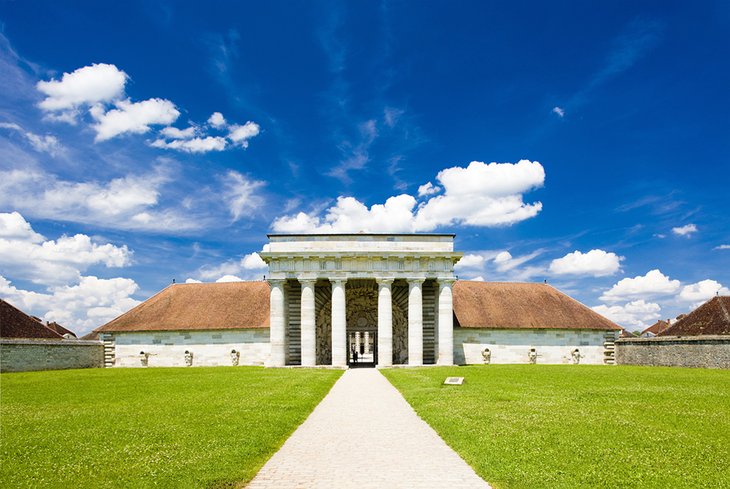
The town of Arc-et-Senans is renowned for the Saline Royale (Royal Saltworks) that was commissioned by King Louis XV. Built from 1775 to 1779, the Royal Saltworks building complex is a masterpiece of Neoclassical industrial design created by Claude-Nicolas Ledoux, and is designated as a UNESCO World Heritage Site.
During the 18th-19th century, the site produced salt from natural sources of saltwater that was transported by underground pipes. The Saline Royale closed its doors in 1895.
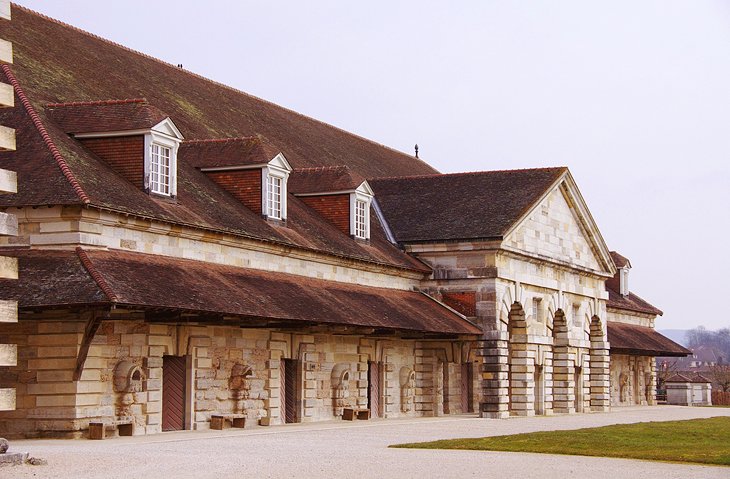
The site now houses the Musée Ledoux, a museum devoted to the architect's life and works, with an excellent collection of his architectural models. There are also exhibits about the history of salt exploitation and its uses.
In late spring, the Saline Royale hosts the Festival des Jardins (Garden Festival). For this special event, four acres of the Royal Saltworks property are developed into eleven distinctly landscaped gardens.
12. Chapelle Notre-Dame du Haut in Ronchamp
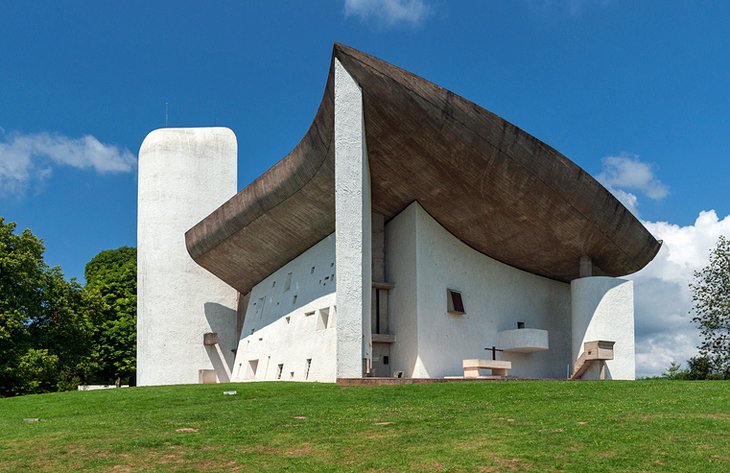
The Chapelle Notre-Dame du Haut in Ronchamp is a tourist attraction as well as a pilgrimage destination. Listed as a UNESCO World Heritage Site, the church was designed by famous Swiss architect Le Corbusier and built between 1950 and 1954.
Created towards the end of Le Corbusier's career, this iconic post-modern church features an avant-garde curved roof and a random collection of colored slot windows that allow ethereal, jewel-like light to filter into the sanctuary.
Inside the simple, somber interior is a precious 17th-century statue of the Virgin Mary. The Chapelle Notre-Dame du Haut is open year-round for visits; an admission fee is required for entrance.
The church stands on the crest of a hill (the Colline Notre-Dame du Haut), a sacred site that affords sweeping views of the landscape. The Colline Notre-Dame du Haut is also home to the Monastère Saint-Clare, a convent committed to silent meditation, prayer, work (including community service) and helping the poor.
The Colline Notre-Dame du Haut draws pilgrims for two annual events devoted to the Virgin Mary: an August 15th pilgrimage (to celebrate the Assumption) and a September 8th pilgrimage (to celebrate the Nativity of the Virgin Mary).
Address: 13 Rue de la Chapelle, Ronchamp
Official site: https://www.collinenotredameduhaut.com
13. Ornans
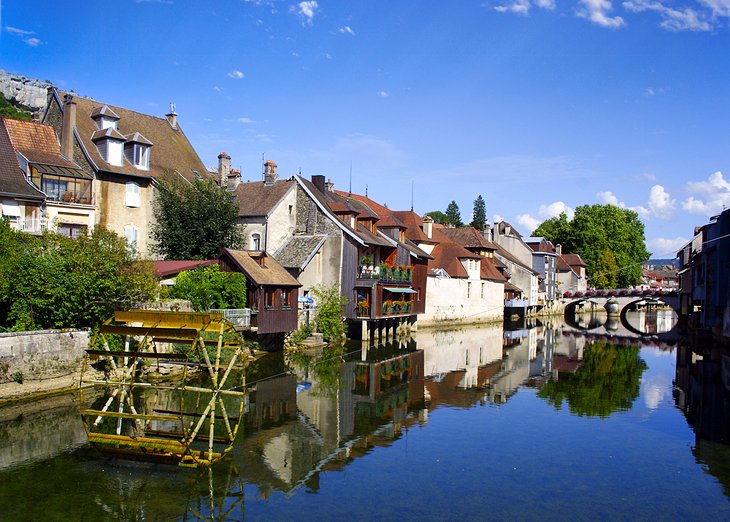
In the verdant Loue Valley, the attractive little town of Ornans was the birthplace of the painter Gustave Courbet. The house where the artist was born now contains the Musée Courbet, with a collection of the artists' paintings, including pieces that depict the regional landscape.
The town's Gothic church, the Eglise Saint-Laurent, was built on the foundations of a 12th-century Romanesque church and richly adorned in the 16th and 17th centuries.
The historic center of Ornan is an enjoyable place to discover at leisure, especially by taking a walk alongside the river to admire the quaint old houses and the graceful arched stone bridges.
14. Château de Frontenay and Château-Chalon
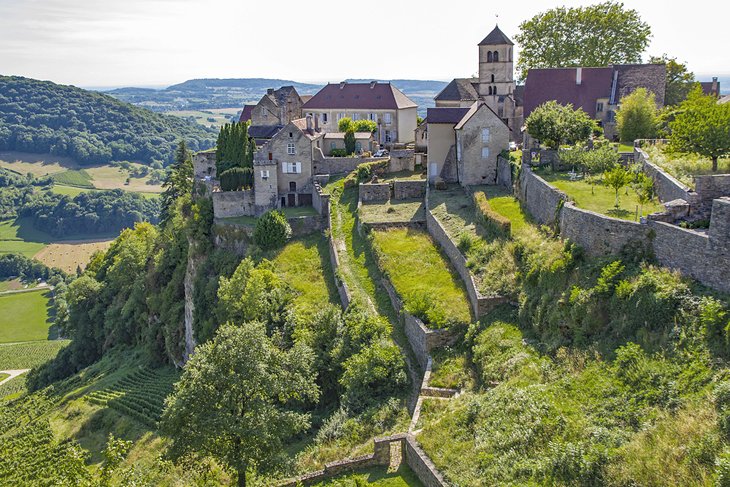
The Château de Frontenay has been home to the same aristocratic family for over five hundred years. Dating back to the 12th century, the castle stands on a protected spur and has the look of a fortress.
Renovations in the 18th century gave the ancient building a more luxurious interior and enhanced the grounds with terraced gardens. The castle grounds are open to the public year-round, free of charge. The interior may be visited from May through October by arranging a guided tour.
The château hosts workshops, cultural events, music concerts, and the Frontenay Jazz festival every two years. During starry nights of summertime, attending an outdoor performance at the château is an enchanting experience.
From May through October, visitors may rent overnight accommodations at the Château de Frontenay; the eight-bedroom space can sleep up to 15 guests.
For those who appreciate quaint country villages, a worthwhile detour (10 kilometers away) is Château-Chalon, listed as one of France's Plus Beaux Villages. The tiny village is perched on a cliff overlooking a vine-covered valley. At the center of the village is the Eglise Saint-Pierre, a 12th-century Romanesque church with delightful paintings and a noteworthy treasury collection.
Nature Sites, Spa Towns & Ski Resorts
Colomby de Gex
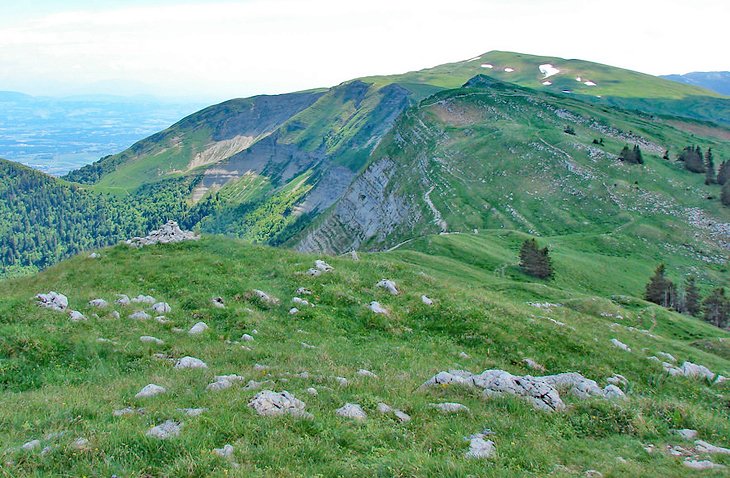
The Colomby de Gex mountain peak near the Swiss border offers one of the best lookout points in the Jura. To arrive here, take the road that runs south from the Col de la Faucille and then hike the footpath ascending to Colomby de Gex (allow about two hours). From the summit, the panoramic views extend to the Alps and Lake Geneva.
Culoz
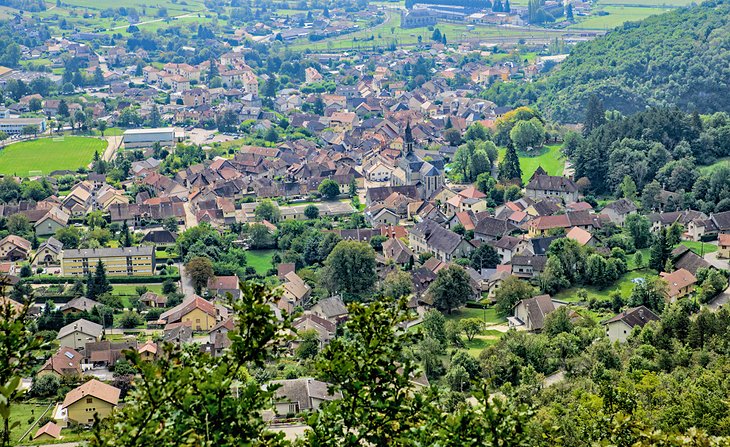
A paradise for hikers and nature enthusiasts, Culoz is a great location to begin an ascent to the Massif du Grand Colombier. This mountain is a place of majestic beauty with exhilarating views from the top.
Culoz also has an incredible château perched on a rocky outcrop overlooking the awe-inspiring scenery. The Château de Montvéran was built in 1316 and inhabited by many illustrious men, including the Constable of Bourbon. The château is open to the public for visits from July through September, and guided tours are available.
Divonne-les-Bains
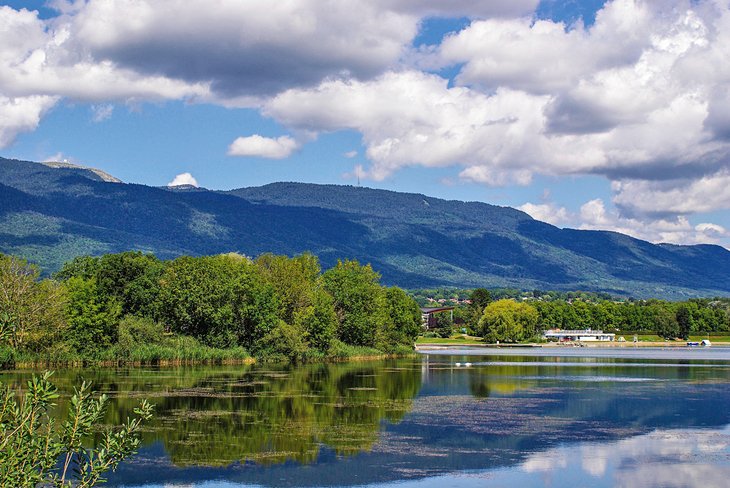
A spa town since antiquity, Divonne-les-Bains is found in a peaceful landscape between the Jura region and Lake Geneva. The town has several thermal spa facilities that offer the latest treatments, as well as the time-honored thermal baths that are said to provide health benefits.
At the state-of-the-art ValVital spa, visitors can enjoy the health and relaxation benefits of the facility's thermal swimming pool, aqua-gym, Jacuzzi, sauna, and hammam. For sports enthusiasts, the town has a racecourse and golf course.
L'Esplanade du Lac cultural center presents theater, music concerts, dance performances, circus acts, and magic shows throughout the year.
Les Rousses
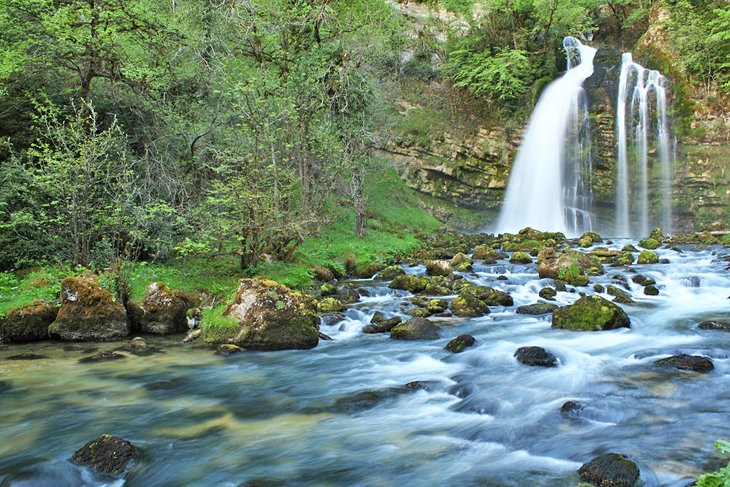
Close to the French Alps and the border with Switzerland in the Parc, Les Rousses is found in the Parc Naturel du Haut-Jura, a natural park with pristine lakes, rivers, forests, meadows, and waterfalls.
During wintertime, Les Rousses is a top skiing destination. The Station des Rousses ski area has slopes with some of the most gorgeous scenery in France.
In the summertime, the area draws many visitors for outdoor sports such as hiking, golfing, biking, fishing, canoeing, and kayaking.
Les Rousses is also renowned for its regional Juraflore Comté cheese. Le Fort des Rousses (Cheese Aging Cellars at the Fort des Rousses) make the Comté cheese following traditional methods. First, milk is sourced from the Juraflore dairy, and then the rounds of Comté cheese are aged in the underground cellars. Guided tours of the site are available.
Lons-le-Saunier
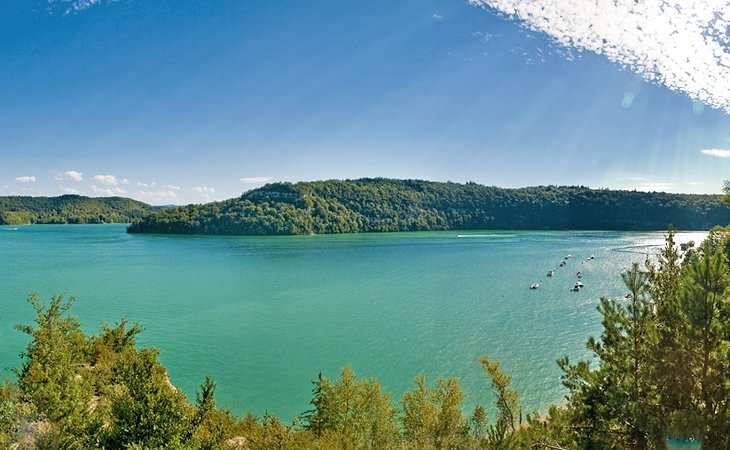
This historic spa town is blessed with a lovely setting in the heart of the Jura countryside. Established in 1892, the Thermes Lédonia (spa facility) offers a thermal pool, sauna, hammam, and well-being center, surrounded by seven hectares of parkland.
Lons-le-Saunier is also famous for being the birthplace of Rouget de Lisle, who wrote the French national anthem, La Marseillaise.
Another bragging point: the beloved brand of cheese "La Vache qui rit" ("The Laughing Cow") is based here.
A top attraction nearby (30 kilometers away) is the Vouglans Lake, a destination for fishing, sailing, windsurfing, and waterskiing. The lake also has sandy beaches, ideal for sunbathing, and shaded lawns that are ideal for picnicking. The serenity of the landscape also inspires relaxation and meditation in nature.
Luxeuil-les-Bains Spa & Surroundings
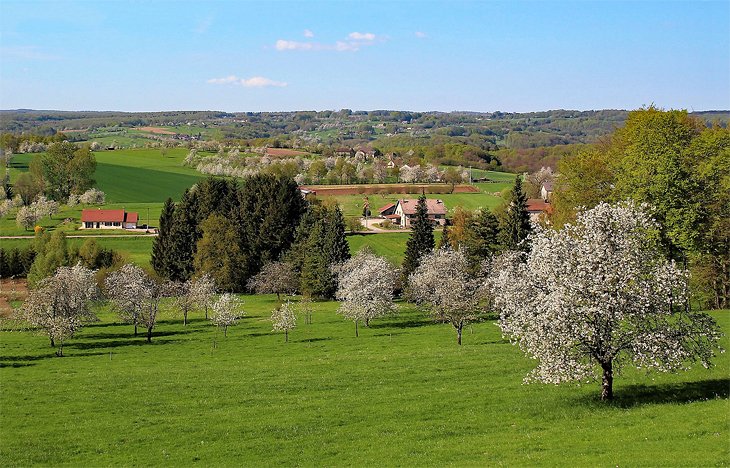
The mineral waters of Luxeuil-les-Bains have made this location a resort destination since Roman times. Visitors still come here to soak in the curative thermal waters, which are said to improve rheumatic, gynecological, and other women's health issues.
The town's main spa establishment, the Station Thermale Luxeuil-les-Bains occupies a 19th-century building with modernized facilities, including a thermal swimming pool, Jacuzzi and hammam.
Luxeuil-les-Bains is also appreciated for its elegant architecture; many of the old sandstone houses are classified as historic monuments.
A worthwhile detour from Luxeil-les-Bains is Fougerolles, a little village (less than 10 kilometers away) in the Pays de la Cerise (Cherry Country). Spring is a delightful time to visit Fougerolles, when the trees are in bloom at the cherry orchards around the village. The landscape is also dotted with old farms and small chapels, and there are many scenic walking trails.
Malbuisson
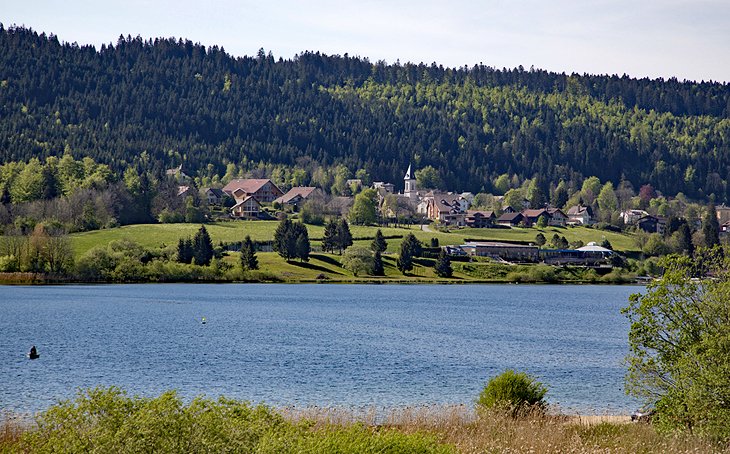
The village of Malbuisson is surrounded by deeply-wooded forests, close to Lake Saint-Point and a short distance from the Mont d'Or ski domain. Many skiers appreciate this spacious ski domain because it's an escape from the larger, more crowded ski resorts. Ski areas in the vicinity include: Métabief, Les Fourgs, Le Larmont, Entre-les-Fourgs, Rochejean, Mouthe, Chaux Neuve, and La Chaux de Gilley.
During summertime, the hiking trails around Malbuisson draw many nature lovers, and Lake Malbuisson is a top destination for water sports.
Other tourist attractions nearby include the Château de Joux (13 kilometers from Malbuisson), a medieval fortress in an amazing natural site, and Pontarlier (15 kilometers from Malbuisson), a picturesque town in the Jura mountains.
Saint-Claude
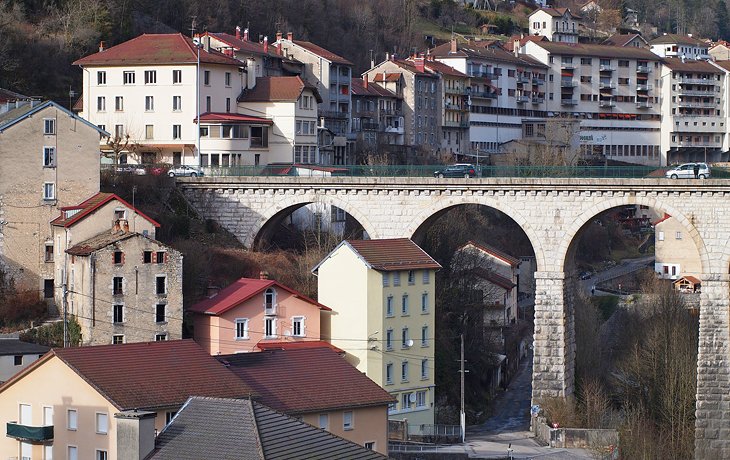
Saint-Claude is an outdoorsy vacation destination in the Jura mountains. During wintertime, opportunities abound for alpine skiing, as well as cross-country skiing. In the town of Saint-Claude, the main attraction is the Cathédrale Saint-Pierre (a classified historical monument) founded in the 14th century, which is one of the finest churches in the Jura region.
Salins-les-Bains
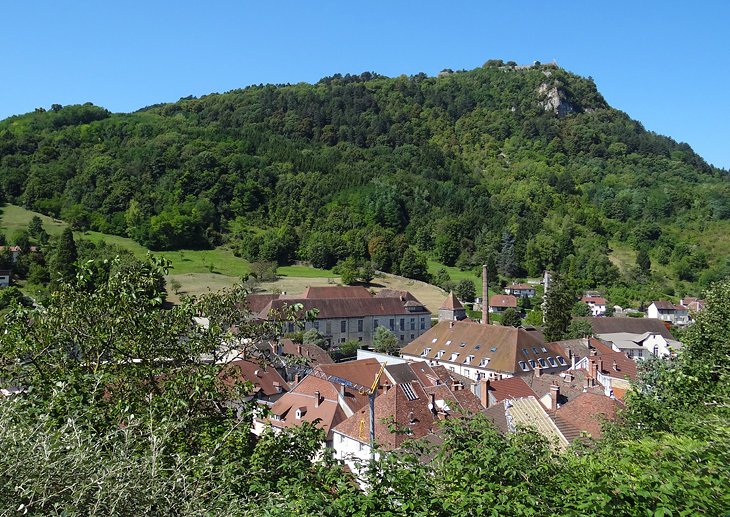
Sheltered in a valley overlooked by the Poupet Mountain, this typical Franche-Comté town has an excellent thermal spa and a rich cultural heritage.
For those seeking a pampering and healing spa experience, the ThermaSalina is a top choice in the French Jura. This sleek, modern facility offers fitness activities, a swimming pool, relaxation area, hamman, sauna, and thermal mineral-water baths that are said to provide medical cures.
The town also has several historic churches, some dating back to the 13th century, as well as handsome Neoclassical hôtels particuliers (mansions) on the Rue de la République.
Villers-le-Lac
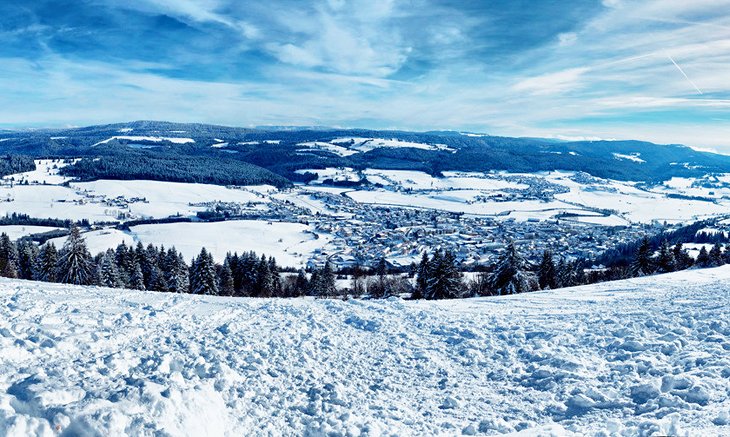
Along the pristine Doubs River, Villers-le-Lac is a small mountain town near the border of Switzerland. The natural landscape of quiet lakes and gentle streams offer an idyllic backdrop for nature walks and outdoor activities. Things to do include hiking, cycling, boating, and fishing. During wintertime, this area offers opportunities for skiing, snowshoeing, and sledding.
About seven kilometers from Villers-le-Lac is the Val de Morteau ski resort, which has five chairlifts for downhill skiing, as well as 11 trails for cross-country skiing.