30 Top-Rated Tourist Attractions in Toronto
Authors Michael and Lana Law live in southern Ontario and enjoy frequent trips into Toronto for dining, shopping, and events.
Toronto, the capital of Ontario, is the largest city in Canada and also one of the most diverse. It's home to a dynamic mix of tourist attractions and memorable places to visit, from museums and galleries to the world-famous CN Tower. And, just a short drive away, is Niagara Falls.
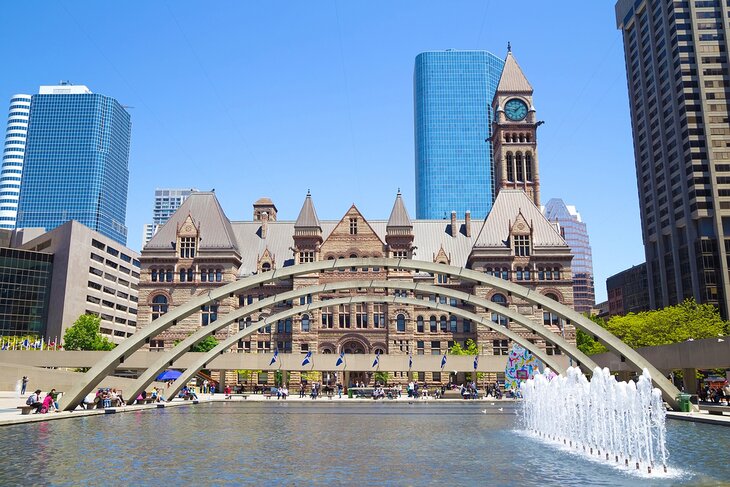
You'll find no shortage of things to do, from the vibrant Entertainment District, featuring the latest musicals and fine dining, to the historic Distillery District, home to unique shops and restaurants set in incredibly restored buildings.
Toronto city center is relatively easy to navigate, with many of the top attractions within walking distance of each other, and a subway system to cover longer distances.
If you are visiting Toronto in winter, head indoors to explore the extensive PATH network of underground walkways that connect shopping, entertainment, and attractions. In summer, wander along the beautiful waterfront and enjoy Toronto's best beaches and parks.
For a complete look at how to spend your time and find interesting places to visit, see our list of top tourist attractions in Toronto.
- 1. The CN Tower
- 2. Visit the Royal Ontario Museum (ROM)
- 3. Ripley's Aquarium of Canada
- 4. Art Gallery of Ontario (AGO)
- 5. Day Trip to Niagara Falls
- 6. Catch a Show or Dine in the Entertainment District
- 7. See the Animals at the Toronto Zoo
- 8. Wander through St. Lawrence Market
- 9. Dine and Shop in the Distillery District
- 10. Tour Casa Loma
- 11. City Hall & Nathan Philips Square
- 12. Shop at CF Toronto Eaton Center
- 13. Watch the Action at Yonge Dundas Square
- 14. See the Stars at the Toronto International Film Festival (TIFF)
- 15. Stroll through Kensington Market
- 16. Visit the Aga Khan Museum
- 17. Enjoy Nature at High Park
- 18. Take a Trip to Toronto Islands
- 19. Ontario Science Centre
- 20. Little Italy
- 21. Head to The Danforth for a Taste of Greece
- 22. Bata Shoe Museum
- 23. Harbourfront Centre and Toronto's Waterfront
- 24. Black Creek Pioneer Village
- 25. Hockey Hall of Fame
- 26. Graffiti Alley
- 27. Rogers Centre
- 28. Visit the CNE
- 29. Go Fishing
- 30. Winterlicious
- Where to Stay in Toronto for Sightseeing
- Tips and Tours: How to Make the Most of Your Visit to Toronto
- Toronto, Canada - Climate Chart
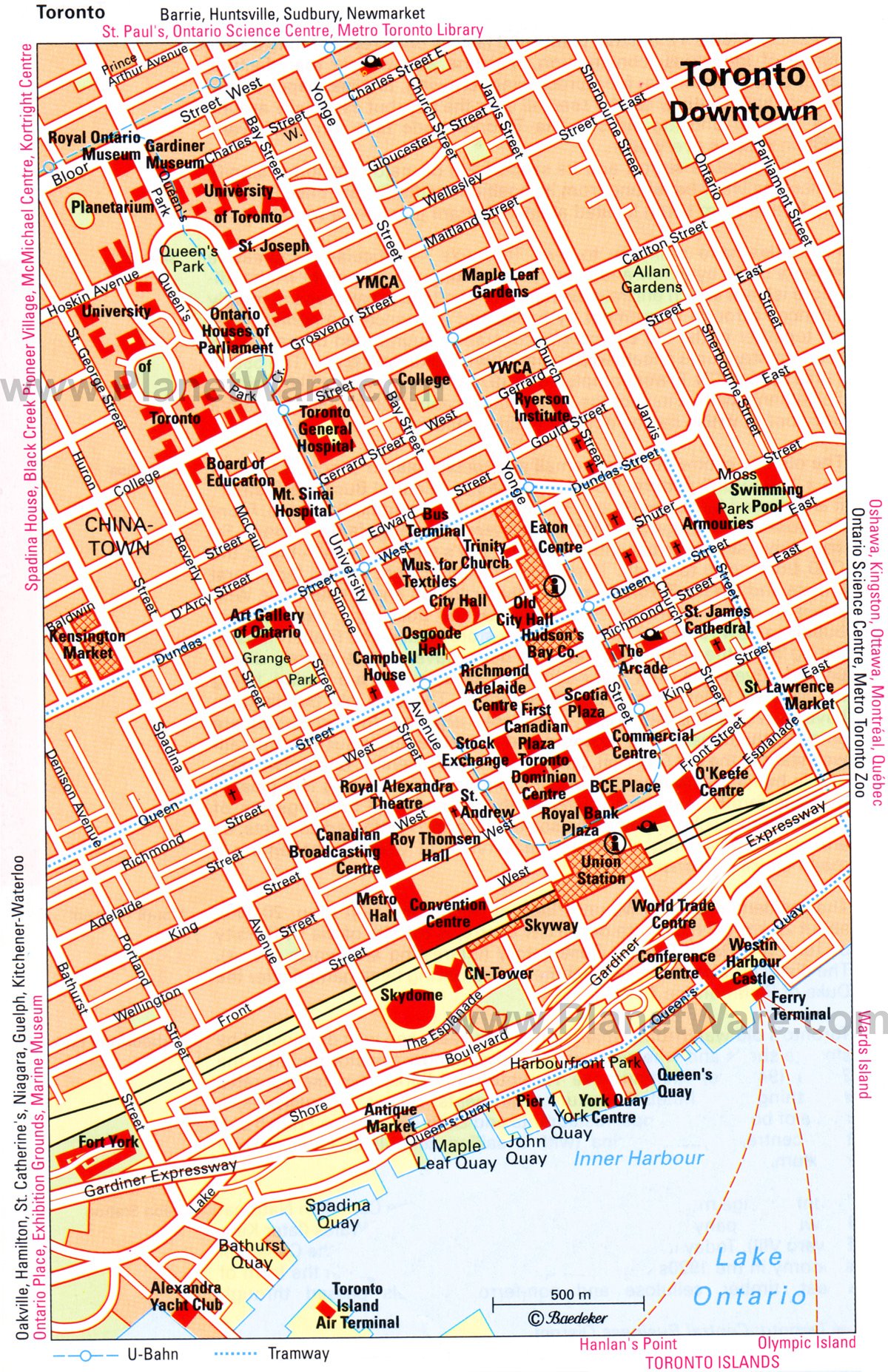
- Map of Top-Rated Tourist Attractions in Toronto
1. The CN Tower
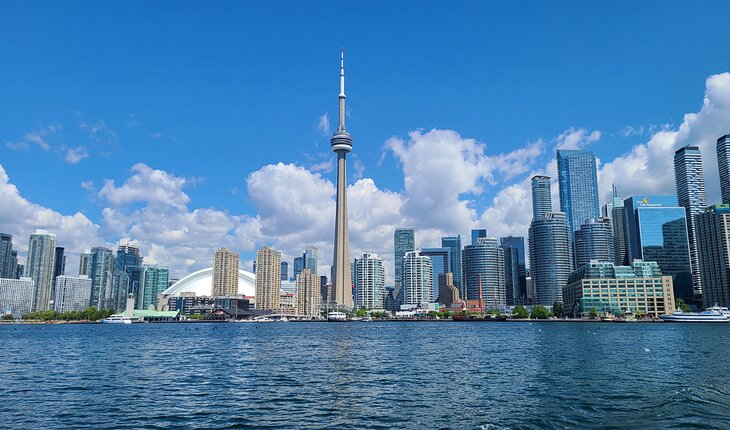
Highlights: Incredible views over Lake Ontario and the city; high-elevation dining; and a chance to walk outside, 365 meters above the ground.
Toronto's famous landmark, the 553-meter CN Tower, is one of Ontario's must-see attractions and also the most impossible to miss. Towering above the downtown, this Canadian icon can be seen from almost everywhere in the city.
You have the option of simply appreciating the building from the ground, or taking a trip up to one of the observation areas or restaurants for fabulous views over the city and Lake Ontario. The CN Tower, built between 1972 and 1976, was once the tallest freestanding structure in the world, but has long since been surpassed.
The highest viewing area on the CN Tower is from the Sky Pod at 447 meters above the city, with views that, on clear days, extend to Niagara Falls and New York State. Getting here requires taking two elevators.
Below this, at the top of the main elevator is the LookOut level at 346 meters, with floor-to-ceiling windows and the new Glass Floor, which looks down to the original Glass Floor, one floor below, where the Outdoor Sky Terrace is located. As the name suggests, the Glass Floor offers a bird's-eye view directly down over the city.
For those looking for a little more adventure, or perhaps a lot more adventure, there is the "Edge Walk." This involves a hands-free walk on a 1.5-meter-wide ledge around the outside edge of the main pod, at an elevation of 365 meters. Participants are attached to a safety harness and rope.
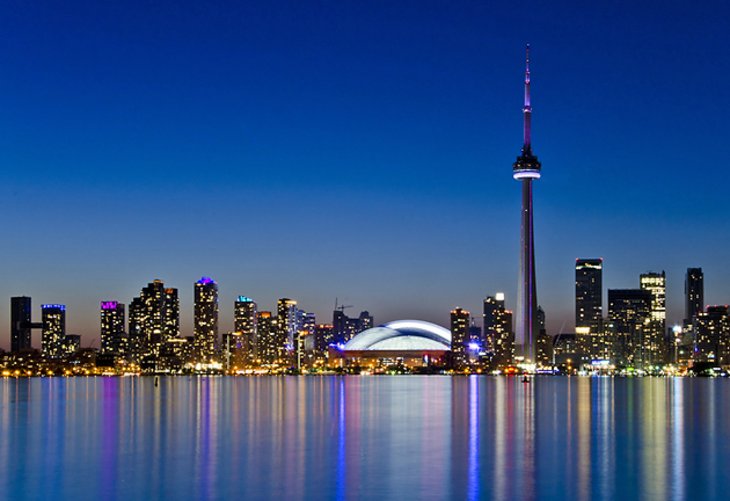
Located at 351 meters is the revolving 360 Restaurant, featuring fine dining and some of the best views from a table anywhere in Toronto. 360 is open for lunch and dinner, and visitors who dine here also receive complimentary access to the LookOut and Glass Floor levels of the tower.
Basing yourself in the city center, preferably near the CN Tower, is the best option for exploring Toronto.
Address: 301 Front Street West, Toronto, Ontario
2. Visit the Royal Ontario Museum (ROM)
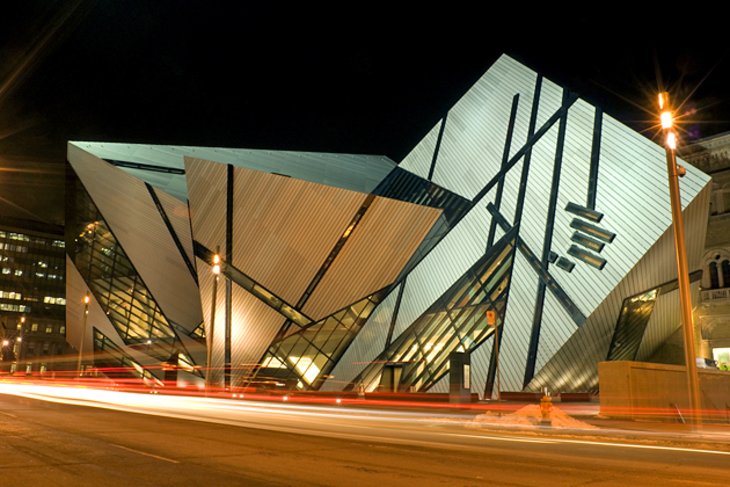
Highlights: Exceptional collections of art, culture, nature, and science in Canada's largest museum.
The Royal Ontario Museum, known as the ROM, is one of Canada's premier museums and one of the top tourist attractions in Ontario, with an international reputation for excellence.
It houses an outstanding collection, which covers natural history, art, and culture from a great variety of periods from all over the world. It is also well-known for featuring exhibitions from across the globe.
A controversial expansion in 2007 saw the addition of the Michael Lee-Chin Crystal, a modern wing featuring glass and sharp angles, added on to a very traditional older building. It's now one of Toronto's most recognizable buildings.
Address: 100 Queen's Park, Toronto, Ontario
3. Ripley's Aquarium of Canada
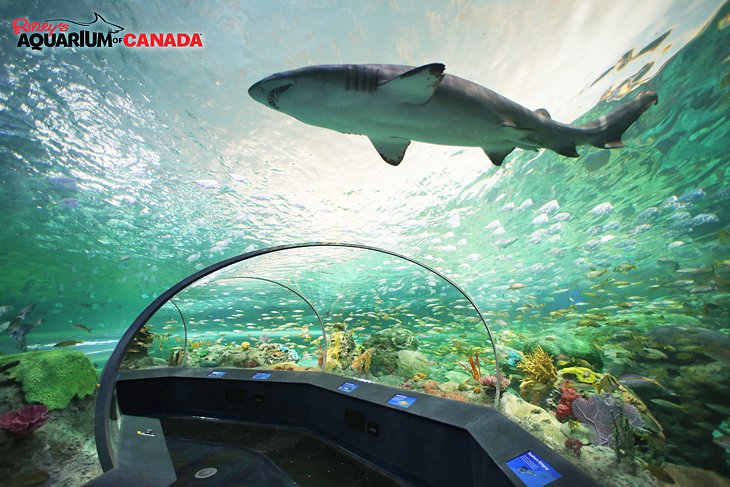
Highlights: Home to over 20,000 marine mammals and an incredible underwater tunnel.
One of Toronto's newest top attractions is the Ripley's Aquarium of Canada near the base of the CN Tower. This fabulous facility displays all kinds of marine life and is one of the most popular things to do in Toronto for families.
The most impressive feature is the huge underwater tunnel with a moving sidewalk. You can watch the ocean world go by all around you as sharks glide past and sawfish linger on the tunnel roof above. This is a truly serene experience for all ages.
Another unexpected highlight is the jellyfish display, accented with creative lighting. Further on, touch tanks with stingrays and small sharks allow for a hands-on experience. And, for the engineering-minded, the building's open concept also allows for a look at the Life Support System and filtration equipment operating the facility.
Address: 288 Bremner Boulevard, Toronto, Ontario
4. Art Gallery of Ontario (AGO)
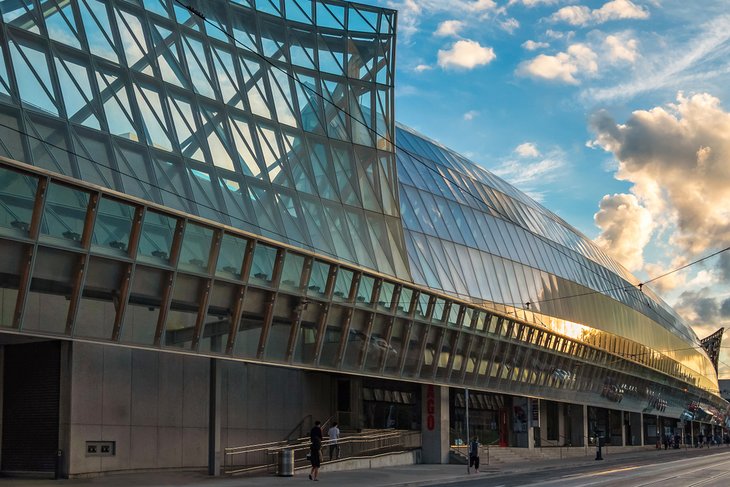
Highlights: A huge collection of incredible art with a Canadian focus, along with treasured pieces from around the world.
The renowned Art Gallery of Ontario (AGO) is one of the largest museums in North America.
The collection of more than 95,000 pieces includes works from around the world, from European masterpieces to contemporary art, but also holds an impressive collection of Canadian Art, including a vast collection of works by the Group of Seven. A series of temporary exhibitions are mounted throughout the year.
The AGO occupies a unique-looking building, with a mix of older and modern architecture, on the west side of the city center. Next to the AGO is the hard-to-miss Ontario College of Art and Design, standing high above the street on stilts designed to look like pencils.
Address: 317 Dundas Street West, Toronto, Ontario
5. Day Trip to Niagara Falls
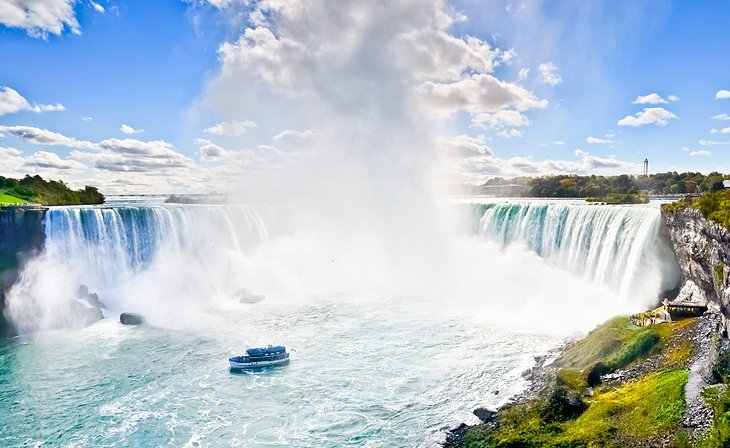
Highlights: An easy day trip to one of the world's greatest natural wonders.
If you have never been, a quick day trip from Toronto to Niagara Falls is well worth the time. You can be standing on the edge of the falls in just over an hour.
A tour to Niagara Falls from Toronto is an easy way to see the falls if you don't want to drive yourself. Tours offer hotel pickup and drop-off and include a Niagara Cruise, which takes you up close to the wall of water tumbling that is the main Horseshoe Falls.
Tours also stop at some of the key sites in the area, including Whirlpool Rapids, the Floral Clock, and the beautiful little town of Niagara-on-the-Lake.
Getting from Toronto to Niagara Falls is easier than you might think, with several different options available. A train (Go Train) runs to Niagara Falls from Union Station in summer, from late June to the start of September, as well as the Thanksgiving weekend in October. On weekends you can even take your bike on the train, and enjoy a bike ride along the Niagara Parkway.
If you have enough time, you may also want to consider spending the night at Niagara Falls to explore the downtown area and see the falls lit up at night.
6. Catch a Show or Dine in the Entertainment District
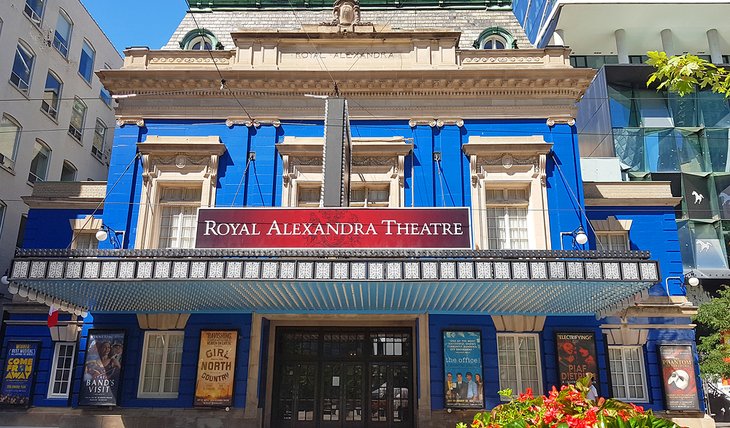
Highlights: One of Toronto's top areas to see the latest shows, grab a meal, or go to a hockey or baseball game.
The Entertainment District in Toronto covers a large area of the city center and includes many of the city's top attractions, like the CN Tower, Scotiabank Arena, Rogers Centre, and many museums.
It's also known for fantastic dining, and most importantly, shows and performances. Most of the action is centered around King Street, between Spadina Avenue and University Avenue.
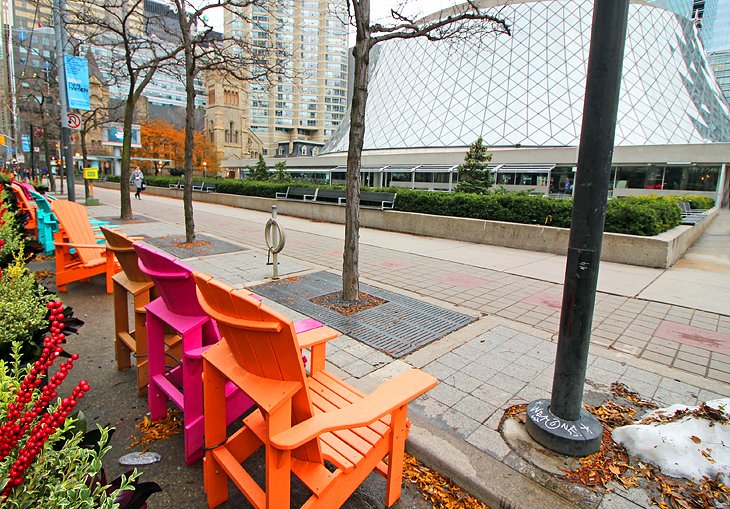
Toronto's answer to New York's Broadway, the Entertainment District comes to life in the evenings and is a great place for nightlife. This is the place to see major theater productions, including musicals, concerts, and other performing arts.
Some of the most prominent venues in this area are Roy Thomson Hall, home to the Toronto Symphony Orchestra, and the Royal Alexandra Theatre, which hosts the most current musicals.
7. See the Animals at the Toronto Zoo

Highlights: Canada's largest zoo, daily shows in the summer, and 10 kilometers of walking trails.
The Toronto Zoo has an outstanding and diverse collection, with approximately 5,000 animals. Some of the favorites include pygmy hippos, lions, tigers, giraffes, penguins, orangutans, and many more. The zoo is divided into several sections, each representing a major region of the globe.
Some of the other highlights at the Toronto Zoo include the Gorilla Rainforest; the Tundra Trek, featuring polar bears; and the Great Barrier Reef.
The Discovery Zone is a popular area with families, and during the summer months, a splash pad offers fun in the sun.
The zoo lies on the Rouge River about 40 kilometers northeast of the city center.
Address: 361A Old Finch Road, Toronto, Ontario
8. Wander through St. Lawrence Market
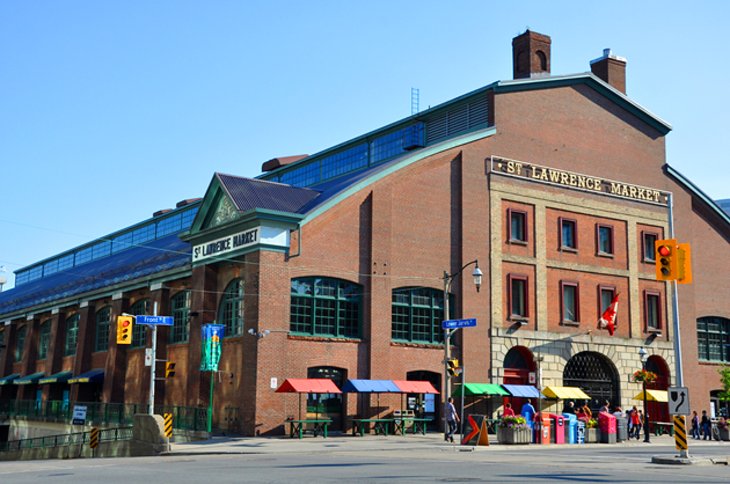
Highlights: Toronto's freshest meats, cheeses, and vegetable stands, all housed in a historical building from 1845.
The St. Lawrence Market houses a variety of vendors selling various food products, flowers, and specialty items. The St. Lawrence Hall was built in Toronto in 1850 and served as a public meeting place and a concert venue.
If you've been shopping or touring nearby, this is an excellent spot to stop in for a bite to eat or to relax with friends over a cup of coffee. In the summer, outdoor patios on elevated spaces allow you to soak up some of the warm sunshine.
The hall was restored in 1967 but has retained much of its old charm. The building provides a unique atmosphere for the market and is also occasionally used for film and television shoots. The interior features a grand staircase and a gas-lit chandelier.
Once you leave St. Lawrence Market, head north (away from the lake) up to Front Street and then head west for a block and a half to check out the architecturally stunning Gooderham building at Church Street. This building framed in front of the towers of downtown Toronto is an iconic picture of the city.
Address: 92 Front Street East, Toronto, Ontario
9. Dine and Shop in the Distillery District
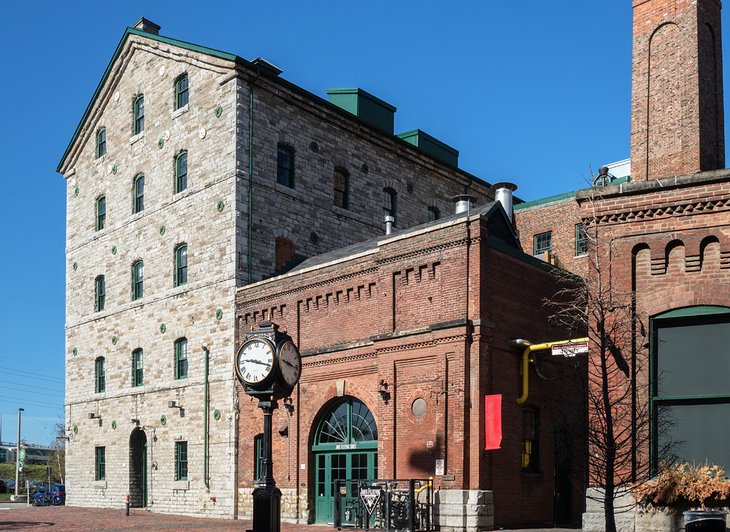
Highlights: Historical buildings, trendy restaurants, galleries, and shops, and home to Toronto's best Christmas market.
Toronto's Distillery District is a restored historic area, which has been transformed into a trendy entertainment and shopping district. Charming boutiques, galleries, artists' studios, and restaurants fill the old buildings. This is an interesting place to come during the day or evening and any time of year.
A variety of entertainment events are held here, but one of the most well-known is the annual Toronto Christmas Market. Wooden stalls all decorated for Christmas sell unique gifts; a huge Christmas tree stands in an open square; and cozy outdoor areas are set up, often with couches and large fire pits to gather around.
Restaurants offer outdoor dining despite the cold, with heat lamps and lap blankets. Hot chocolate is always readily available at this time of year.
10. Tour Casa Loma
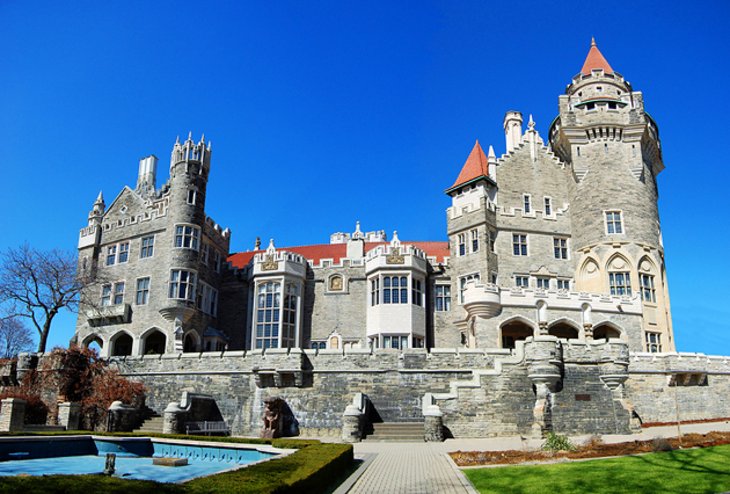
Highlights: A turn-of-the-century Gothic castle with over 100 rooms, a secret tunnel, and gorgeous gardens with views of Toronto.
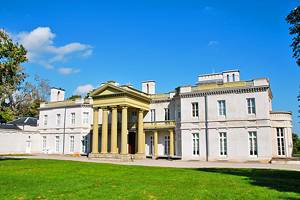
Standing in beautifully kept grounds, Casa Loma is an extraordinary building somewhat reminiscent of a medieval castle. It was originally constructed in 1914 for Sir Henry Pellatt, an eccentric Canadian multi-millionaire who was among the first to recognize and exploit the money-making potential of Niagara Falls.
With close to 100 rooms, including three dozen bathrooms, the house is now a museum. Visitors can take a look back in time to a period of European elegance and splendor. Canada's foremost castle is complete with decorated suites, secret passages, an 800-foot tunnel, towers, stables, and five acres of estate gardens.
Address: 1 Austin Terrace, Toronto, Ontario
11. City Hall & Nathan Philips Square
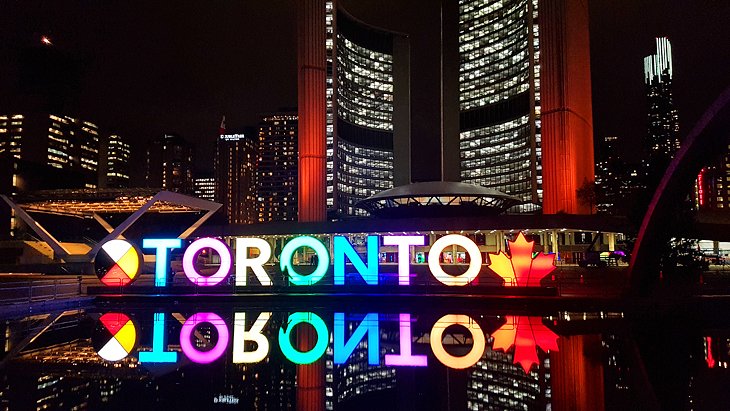
Highlights: Unique architecture, summer concerts, a winter skating rink, and the city's famous Toronto sign.
Dominating the spacious Nathan Philips Square with its bronze sculpture, The Archer, by Henry Moore, is the still highly acclaimed new City Hall.
It was designed by the gifted Finnish architect Viljo Revell and built in 1965. City Hall consists of two arc-shaped high-rise blocks, 20 and 27 stories high respectively, wrapped around a lower central building topped by a flattened cupola.
In the square in front of City Hall is a man-made pond, which becomes a popular skating rink in winter and is where the often photographed Toronto sign is located. This is a beautiful area to visit in December, particularly at night, when it's decorated for the Christmas holidays.
Address: 100 Queen Street West, Toronto, Ontario
12. Shop at CF Toronto Eaton Center
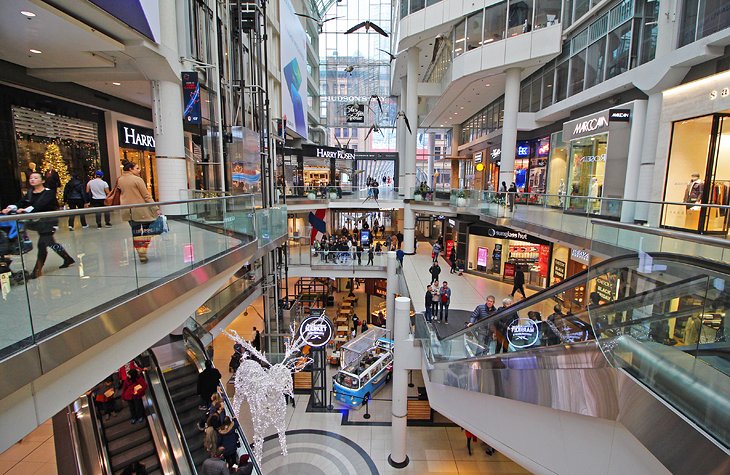
Highlights: Downtown Toronto's best mall, home to all the top retailers, plus a good food court.
The huge CF Toronto Eaton Center mall is located at the north end of the Central Business District. With its own subway station, this ultra-modern shopping complex extends over several blocks and is continually being renovated and enlarged.
Strangers can quite easily lose their way in the bewildering maze of department stores, specialty shops, boutiques, restaurants, cafeterias, and snack bars, which crowd the different levels above and below ground.
Eaton Center is connected to the Hudson Bay store via a skywalk and is also a stop on Toronto's subway system.
Address: 220 Yonge Street, Toronto, Ontario
13. Watch the Action at Yonge Dundas Square
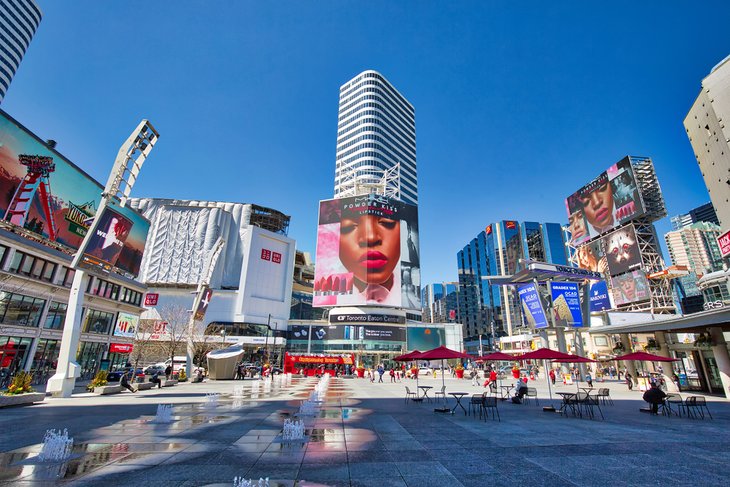
Highlights: A fun gathering place with huge digital billboards reminiscent of Times Square in New York.
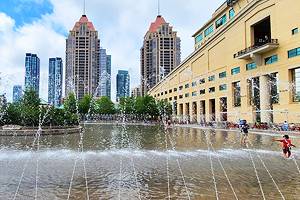
This neon-lit public space is fashioned after New York's Times Square and is a popular gathering spot for Torontonians. The area is complete with seating areas, dancing fountains, and a stage where concerts take place in the summer.
Yonge Dundas Square is best enjoyed in the evening when the flashing neon signs come to life and the place develops a fun vibe. It is by far the best place in the city for people-watching. The surrounding streets are packed with restaurants, many of which have patios.
The square is accessible via Toronto's subway system, or you can park in the large underground parking lot directly beneath the square.
Address: 1 Dundas Street E, Toronto, Ontario
14. See the Stars at the Toronto International Film Festival (TIFF)

Highlights: Celebrity spotting and an incredible roster of first-run movies.
One of the highlights on Toronto's annual events calendar is the Toronto International Film Festival. Held each year in early September, this world-famous festival attracts some of the most famous names in film.
You can see a movie or simply hang around and hope to catch a glimpse of someone famous walking by. The weather in Toronto this time of year is still hot. Dining outside in the evening and relaxing on an outdoor patio is a major pastime, as limos drive by and photographers and press are out in full force.
The vibe in Toronto for this eleven-day event is electric. Throngs of people descend on the city. If you want to visit Toronto this time of year, book a hotel well in advance.
15. Stroll through Kensington Market
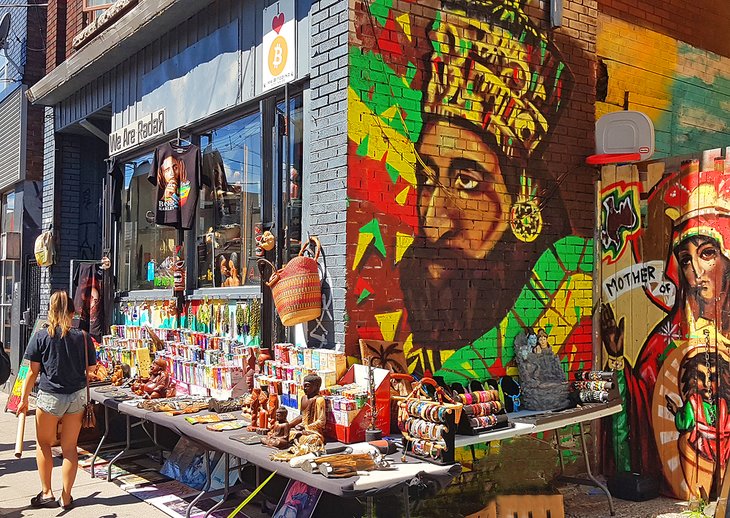
Highlights: Eclectic and unusual shops along with restaurants serving authentic international fare.
Kensington Market is an area of Toronto with a bohemian and multicultural feel.
On a typical summer's day, the smell of incense wafts through the air; music from a street-side musician can be heard; and the numerous retailers, who mostly operate out of old two-story brick homes, set up their goods on designated areas of their deck-covered lawns or on the sidewalks. This is a fantastic area for a stroll.
The shops, many of which display colorful murals and street art, sell everything from Tibetan blankets to jewelry, bags, purses, and vintage clothing, and there are even a couple of cheese shops.
Restaurants and coffee shops here offer a multicultural festival of choices that include Jamaican, Mexican, Tibetan, or more basic options like pizza or smoothies. You can also find natural food stores, tattoo shops, and fruit and vegetable stands.
16. Visit the Aga Khan Museum
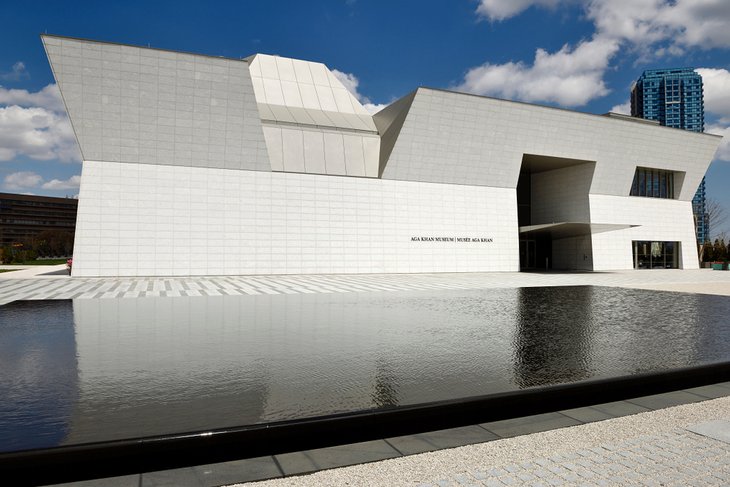
Highlights: A priceless collection of Islamic Art in an architecturally stunning building.
The Aga Khan Museum is one of the best institutions devoted to Islamic Arts in North America. It is housed in a spectacular light-filled modern building with beautiful, peaceful surroundings consisting of large reflecting pools.
The permanent collection was first started in the 1950s by the late Prince Sadruddin Aga Khan and the Princess Catharine Aga Khan. You'll see spectacular items, including manuscripts, ceramics, and textiles, with pieces dating from the 9th right through to the 19th century. The items have been sourced across a wide geographic area from China to Spain.
In addition to the permanent collection, visiting exhibitions are showcased on the museum's second floor.
The museum's restaurant is one of Toronto's top dining destinations.
Address: 77 Wynford Drive, Toronto, Ontario
17. Enjoy Nature at High Park
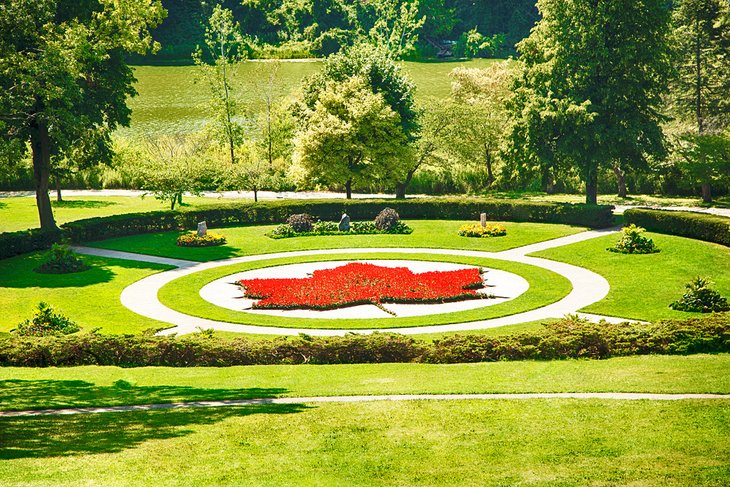
Highlights: Walking trails, ponds, sports facilities, a pool, a zoo, and beautiful gardens.
High Park is a huge green space with sunken gardens, hanging basket gardens, nature trails, natural ponds, and streams, easily ranking as one of the best parks in Toronto.
This 165-acre country property, originally owned by the Howards, was deeded to the City of Toronto in 1873. This deed came with the stipulation that the park was to remain "for the free use, benefit and enjoyment of the citizens of Toronto and it be called High Park."
Park Attractions: Within the park is the High Park Zoo, home to a number of animals, including bison; reindeer; llamas; wallabies; and Toronto's famous Capybara's, Bonnie and Clyde, who escaped from their enclosure and quickly rose to fame, developing their own social media platforms in 2016.
Other things to do and areas of interest in the park include swimming and wading pools, playgrounds, picnic areas, and a scenic train tour. The grounds also include 19th-century recreated gardens, a Coach House, and the Howards' Tomb.
For a week or 10 days in the spring, the sakura cherry trees burst into bloom and herald the start of warmer weather. This colorful spectacle is beloved by the citizens of Toronto, and it always attracts big crowds. The best place to see the trees is near the duck pond.
Annually, the Canadian Stage Company puts on a performance at the open-air theater in the park during the months of July and August, known as "Shakespeare in High Park."
Address: 1873 Bloor Street W, Toronto, Ontario
18. Take a Trip to Toronto Islands
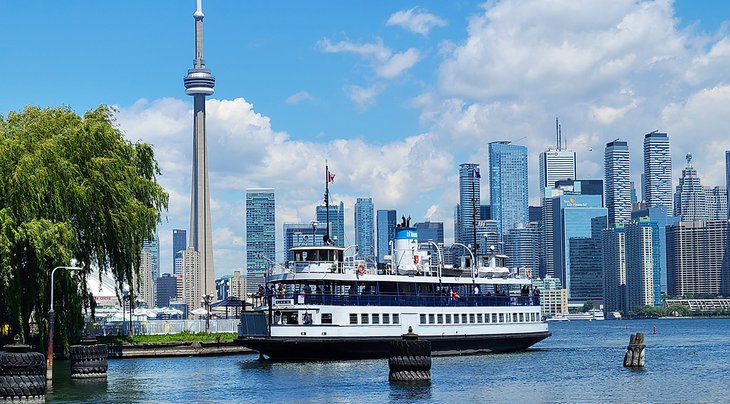
Highlights: Toronto's best beaches, an amusement park for kids, a boardwalk, and a pier.
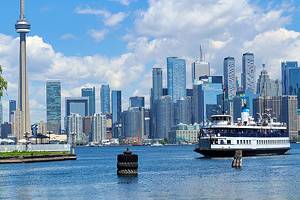
The ferry trip from Queen's Quay Terminal to the Toronto Islands, about a kilometer offshore, is the prelude to a thoroughly enjoyable outing.
Things to Do: There are lovely walks on the islands, as well as the opportunity for rowing, sailing, swimming, and other outdoor activities.
In summer, the Toronto Islands are the venue for numerous open-air events. In favorable weather, you'll be treated to a stunning view of the Toronto skyline from the ferry terminal on Ward's Island.
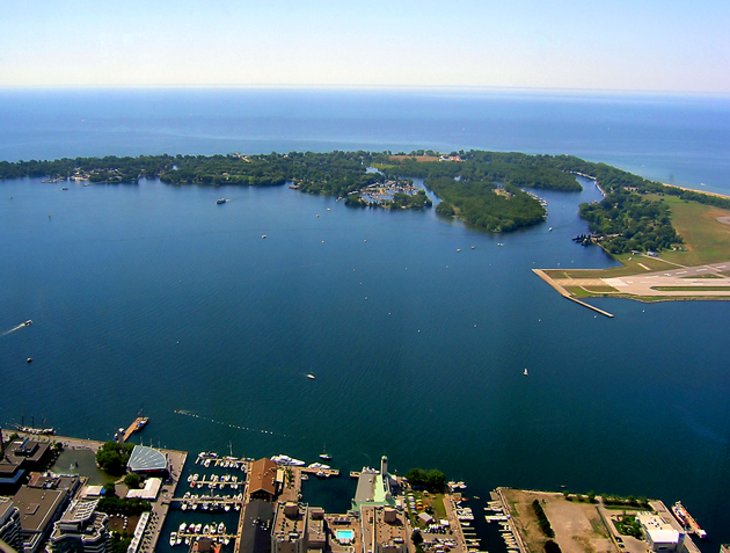
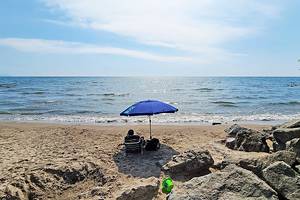
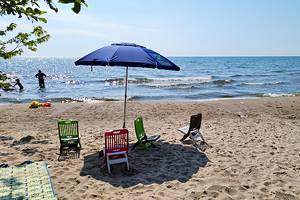
If it's hot during your visit—and don't be fooled, it does get hot in Toronto in the summer—the Toronto Islands are home to some of Toronto's best beaches.
They stretch for kilometers along the offshore islands, and the views from the beaches, along with the golden sands and crystal-clear waters, may have you thinking you are in the Caribbean. That is, until you step into the chilly waters of Lake Ontario and are instantly transported back to reality!
The Centreville Amusement Park is located on Centre Island, one of the Toronto Islands, and features a variety of children's rides.
The Toronto Islands Ferry Service runs from Queen's Quay and travels to each of the main Toronto Islands, and tickets can be purchased in advance online.
19. Ontario Science Centre
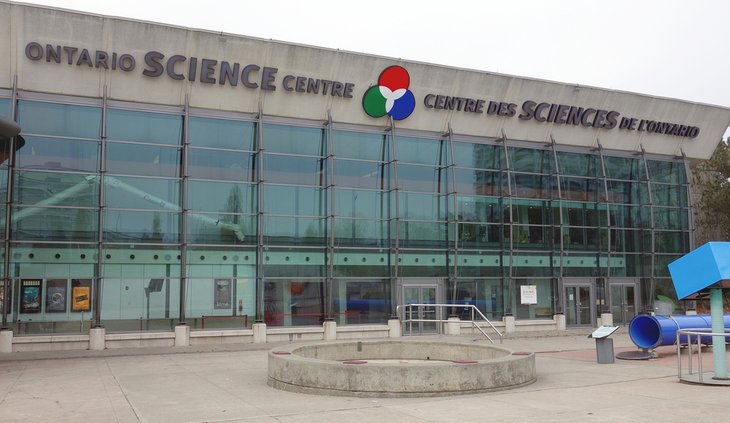
Highlights: An IMAX OMNIMAX Dome theater and fascinating interactive displays for all ages.
The Ontario Science Center is a family-oriented attraction with many interesting exhibits to entertain children. It occupies a site overlooking the Don Valley, about 10 kilometers northeast of the city center.
Designed by the virtuoso architect Raymond Moriyama, this modern building was completed in 1969. The emphasis is very much on visitor participation, with 12 permanent exhibitions, a planetarium, and an IMAX OMNIMAX Dome theater.
Visitors to the center are brought face to face with the latest developments in technology, telecommunications, optics, biology, physics, space travel and meteorology, and much more, all presented in an absorbing and imaginative way.
Address: 770 Don Mills Road, Toronto, Ontario
20. Little Italy
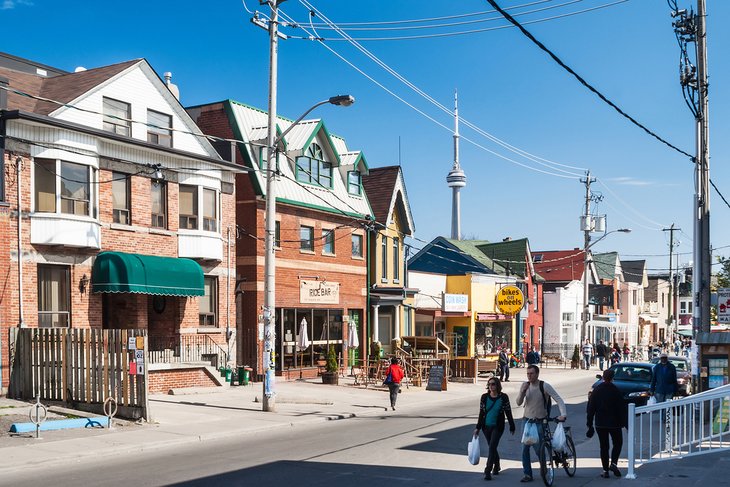
Highlights: Bustling summer patios, authentic Italian food stores, and a popular annual festival.
Toronto's multicultural mix makes it one of the most livable cities in North America. People from around the world have settled here to make this world-class city their home, and with them, they've brought the best of the old country.
Throughout the city, you'll find a number of ethnic enclaves. One of the more popular is Little Italy. Located roughly in the square lined by Dundas and Harbord Streets and Ossington and Bathurst Avenues, the main retail area of Little Italy exists along Collect Street.
This lively area hums with people strolling up and down the wide sidewalks, past Italian restaurants with popular patios (especially during a European soccer game). As you stroll along, keep an eye out for the statues of famous Italian Canadians along the Italian Walk of Fame.
Little Italy is also a good spot to buy imported food and cooking supplies direct from Italy.
21. Head to The Danforth for a Taste of Greece

Highlights: Toronto's best collection of Greek restaurants and food stores.
Another one of Toronto's famous ethnic enclaves, The Danforth, or as it's also known, Greektown, is the place to go for a taste of Greece. Running along Danforth Avenue from Chester Avenue through to Dewhurst Boulevard, the area has long been associated with the Greek diaspora.
Take a stroll along Danforth Avenue, and pop into any one of the restaurants, shops, and other retail outlets along the way. Some of the city's best Greek food can be found here. Grab a spot on a patio or, if the weather is cool, step inside and be transported to the warmth of the Greek Islands.
The area is home to the famous and well-loved Taste of the Danforth. Hopefully, you'll find yourself here in mid-August when, for a couple of days, the area becomes a giant outdoor restaurant.
22. Bata Shoe Museum
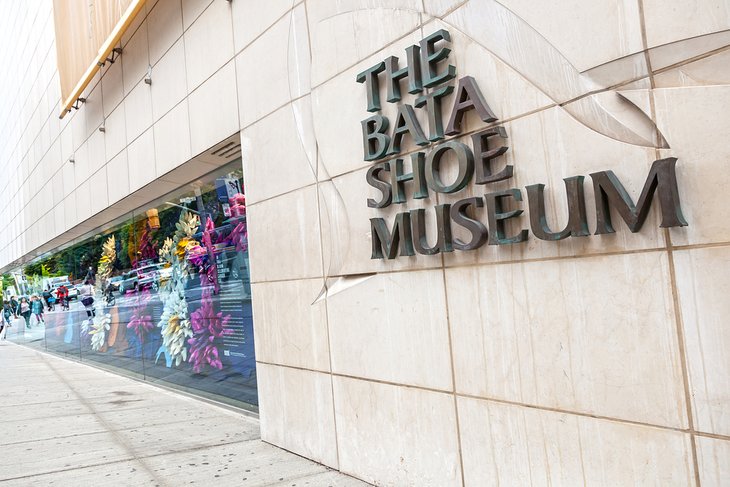
Highlights: The largest collection of shoes in the world, including ones worn by celebrities.
Only 50 percent of the human race understands the need for a shoe museum. Those of the feminine persuasion (in case you hadn't figured it out!), will absolutely love the Bata Shoe Museum and its incredible displays of shoes and over 14,000 other artifacts.
All these and more are part of the world's largest collection of footwear-related items, tracing back over 4,500 years.
The museum has some very unique shoes worn by Indigenous people, 16th-century Italians, and of course, celebrities. The celebrity collection includes Elvis' blue patent loafers, Robert Redford's cowboy boots, Elton John's silver platform boots complete with a monogram, and Queen Victoria's ballroom slippers.
Of particular note for Canadians are Terry Fox's singular running shoe and Karen Kain's ballet slippers.
Address: 327 Bloor Street West, Toronto, Ontario
23. Harbourfront Centre and Toronto's Waterfront
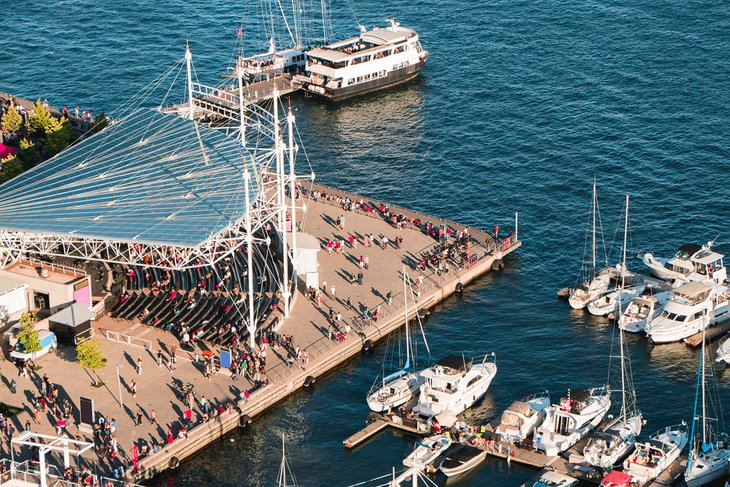
Highlights: Walking trails along the waterfront, views of the Toronto Islands, an ice rink in the winter.
Toronto, like many other cities along the Great Lakes, has done a good job of making its former industrial waterfront areas accessible to its inhabitants.
Harbourfront Centre itself is a performance venue that provides artistic programming all year long at its 10-acre waterfront campus. Indoor and outdoor stages showcase some of the city's most innovative performances.
The area surrounding Harbourfront is one of the most popular places to access Toronto's waterfront. Wide and scenic walking trails along the seawall extend east and west and are backed by restaurants and shops. Many of Toronto's lake cruises leave from this area. The area surrounding Harbourfront is one of the most popular places to access Toronto's waterfront. Wide and scenic walking trails along the seawall extend east and west and are backed by restaurants and shops. Many of Toronto's lake cruises leave from this area.
Come winter, the area doesn't hibernate, in fact, it remains quite lively, with one of Toronto's most scenic and popular ice-skating rinks.
Address: 235 Queens Quay W, Toronto, Ontario
24. Black Creek Pioneer Village
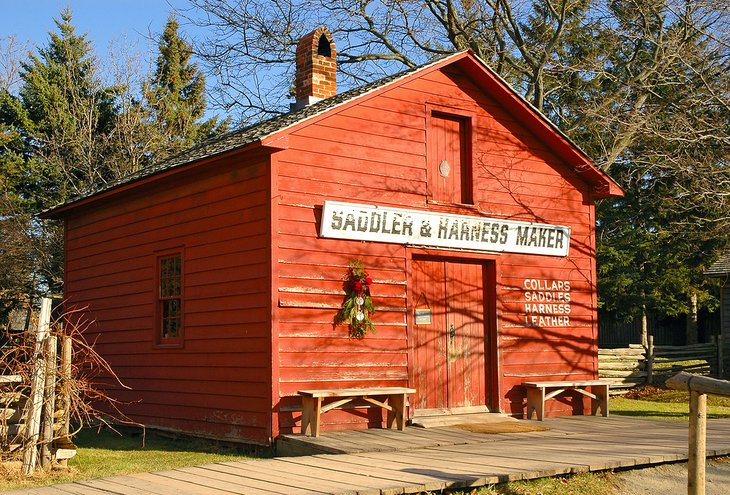
Highlights: A recreated village from 1860, costumed interpreters, and a petting zoo.
One of the most popular things to do as a family in Toronto is to step back in time at the Black Creek Pioneer Village. As you walk through the gates, you'll be transported to village life in the 1860s.
It's not just historical buildings, of which you'll find over 40, costumed interpreters go through their daily routine of living life 160 years ago. Kids and grown-ups alike will enjoy interacting with these fun and friendly characters from the past.
In addition to the human participants, animals also get to play their part, too. Over 70 animals live here, and in many cases are happy for a pet or two.
Address: 1000 Murray Ross Parkway, Toronto, Ontario
25. Hockey Hall of Fame
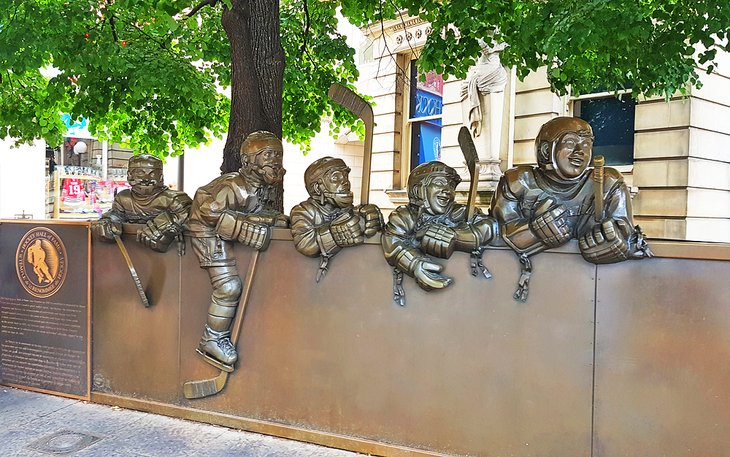
Highlights: Home to the original Stanley Cup, a replica Montreal Canadiens dressing room, and interactive exhibits.
For hockey fans, a trip to the Hockey Hall of Fame in downtown Toronto is a necessity. This is the place to learn about the all-time hockey greats: the players, the teams, and the games.
It also offers a chance to see the original 1893 Stanley Cup, along with a collection of important memorabilia, and an interactive display allows you to test your own hockey skills.
Be sure to step inside an exact replica of the Montreal Canadiens' dressing room from the Montreal Forum, view a display of 90 painted goalie masks, and check out the incredible collection of hockey cards.
Address: Brookfield Place, 30 Yonge Street, Toronto, Ontario
26. Graffiti Alley
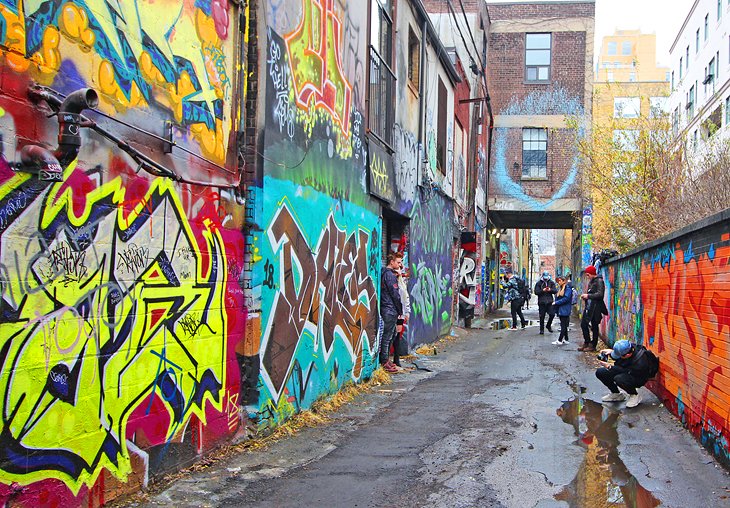
Highlight: Colorful artwork along the walls of a narrow laneway.
This long alley in Toronto will look familiar to Canadians who have watched the long-running TV comedy series, Rick Mercer Report. This is where he filmed his controversial news rants.
Even if you have never seen this show, this is an incredible area that seems to go on forever. Tourists love coming here, posing in painted doorways and windows, and taking selfies day and night.
Graffiti Alley runs parallel to, and between, Queens Street West and Richmond Street West from Spadina Avenue to Portland Street.
27. Rogers Centre
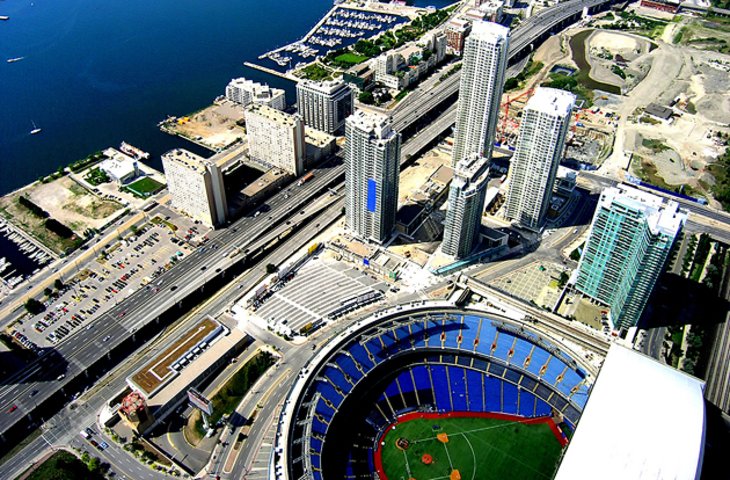
Highlight: A retractable roof allows for the sun and fresh air to flood in during summer baseball games.
Immediately adjacent to the CN Tower is Rogers Centre, a massive domed sports arena and home to the Toronto Blue Jays (MLB). The unique design includes a retractable roof, which slides back, allowing it to be opened in favorable weather.
This mega-structure was completed in 1989 and can accommodate tens of thousands of spectators and is also used as a venue for other major events, including concerts. The center also offers one-hour guided tours with a behind-the-scenes look at the facility.
Attached to Rogers Centre is the Toronto Marriott City Centre Hotel, with rooms that look out over the field. If you are in town to see a game, staying here is an extremely convenient option and a bit of a unique experience.
Address: 1 Blue Jays Way, Toronto, Ontario
28. Visit the CNE
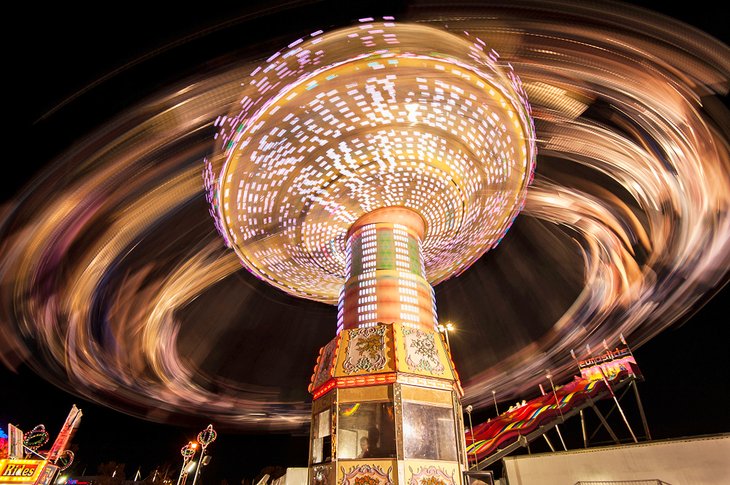
Highlights: Carnival rides, unique foods, midway games, concerts, and an airshow.
When mid to late August rolls around, kids (and some adults) get a bit twitchy in anticipation of the CNE rolling into town. The CNE, also known as the Canadian National Exhibition, is a two-week carnival of craziness that sets up on Toronto's waterfront.
Midway rides, arcade games, and popular musical acts are all part of the heady mix in the hot, humid August weather. In addition to the rides and entertainment, an airshow featuring the Canadian snowbirds, along with other historical planes, also takes place during the same timeframe.
It's not all about entertainment. The CNE is also renowned for its unique fried food offerings. Starting, and still continuing today, Tiny Tom Donuts started the trend that has now evolved (or not, depending on your perspective) to deep-fried butter, deep-fried Red Velvet Oreos, deep-fried corn dogs complete with a pickle, and most recently, deep-fried cheese curds.
29. Go Fishing
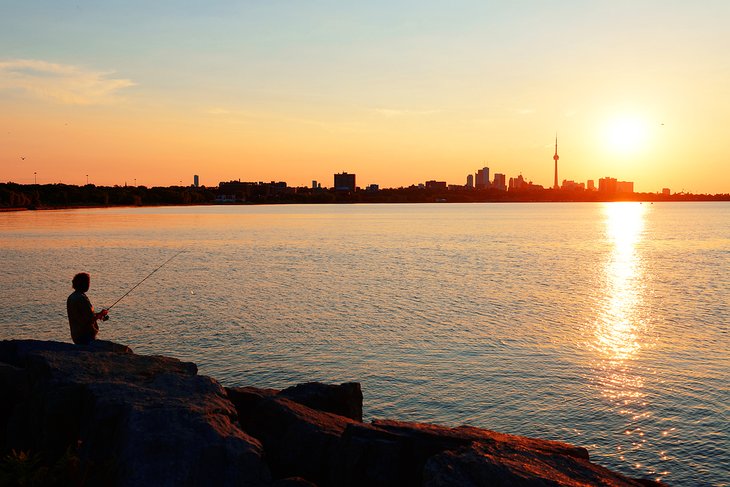
Highlights: Easily accessible fishing spots along the shore and charters on Lake Ontario offer the chance to land the "big one."
Toronto, with its enviable lakefront position, is an ideal place to go fishing. Lake Ontario supports a wide assortment of denizens of the deep, including Chinook and coho salmon, rainbow trout, walleye (pickerel), northern pike, sheepshead, perch, and many others.
If you want to head offshore into the deep waters, consider a salmon charter. Although they can be relatively expensive, your captain and first mate will do their best to put you onto the fish.
There's nothing quite like the call of "fish on" and the screaming of fishing line as the fish takes the bait and runs. Depending on the time of year, you could find yourself battling a 30-pound behemoth.
If that's not in your budget, just head to one of the waterfront parks or the Toronto Islands with a casting rod and reel and a bit of bait. You'll definitely catch something, although it won't be as big as the fish caught on a charter. Note that if you're planning on fishing, you need a license, easily purchased online.
Read More: Top-Rated Fishing Lodges in Ontario
30. Winterlicious

Highlight: Discounted multi-course meals at Toronto's best restaurants.
Should you find yourself in Toronto in the depths of winter during the first two weeks of February, don't despair, it's actually a pretty fun place to be. The saving grace for these dark, cold days is the two-week dining festival called Winterlicious.
At this time, over 200 of Toronto's best restaurants come to the rescue of the city's inhabitants and visitors by offering prix fixe (set price) menus for both lunch and dinner. Each menu consists of a starter, a main, and a dessert, and the restaurant usually has a couple of offerings for each.
The hardest part of Winterlicious is figuring out where to go—dining options are as diverse as the city itself, with meals across all cuisine types. Fortunately, the City of Toronto has a website that lists all the options.
The meals offer tremendous value versus what the restaurants would normally charge and are a great way to try out some of the places you've always wanted to go. Beverages are not included, and this is where the restauranteur makes their money back on the discounted food.
Winterlicious has a seasonal counterpart called Summerlicious that follows the same format. This event takes place during the last two weeks of August.
Where to Stay in Toronto for Sightseeing
For sightseeing and entertainment, the best place to stay in Toronto is right downtown in the heart of the action. The hotels listed below are all highly rated and in good locations in Toronto's city center, within easy walking distance of many of the main attractions.
Luxury Hotels:
- At the top end of the luxury category is The Ritz-Carlton, Toronto, with a convenient, central location near the Entertainment and Financial Districts.
- The Delta Hotels by Marriott Toronto has a great location near the CN Tower, Ripley's Aquarium, and Rogers Center, and offers good views over Lake Ontario.
- Near Eaton Center Shopping Complex and Toronto's famous City Hall and winter skating rink is the Hilton Toronto. The hotel has an indoor/outdoor pool that is open all year long; rooms on the south side of the building have views of the CN Tower.
- The Sheraton Centre Toronto Hotel is kitty-corner to the Hilton and faces Nathan Phillips Square. It's connected to Eaton Center via the underground PATH system.
Mid-Range Hotels:
- The One King West Hotel & Residence offers very good value with a variety of rooms, some with kitchenettes. The hotel is located in the center of all the action and steps to great restaurants.
- At the top end of the mid-range selection is the Radisson Blu Toronto Downtown on the waterfront. This is a great spot, particularly in summer, near many lakefront restaurants and an extensive waterfront pedestrian area and within walking distance of the CN Tower and other attractions. The hotel also has an outdoor pool.
- North of The Esplanade and within easy walking distance of the Financial District and many attractions is the Holiday Inn Express Toronto Downtown, an IHG Hotel, another quality mid-range hotel.
Tips and Tours: How to Make the Most of Your Visit to Toronto
Sightseeing:
- If you're looking for a thrilling new perspective on the city skyline, hop aboard a 7-minute helicopter tour over Toronto. During this whirlwind excursion, you'll see top landmarks including the CN Tower, Fort York, and the Canadian National Exhibition grounds. The adventure also includes both a printed and digital souvenir photo.
Toronto, Canada - Climate Chart
| Average minimum and maximum temperatures for Toronto, Canada in °C | |||||||||||
| J | F | M | A | M | J | J | A | S | O | N | D |
| -3 -11 | -2 -11 | 4 -5 | 12 1 | 18 6 | 24 11 | 27 14 | 26 13 | 21 9 | 14 4 | 7 -1 | 0 -7 |
| PlanetWare.com | |||||||||||
| Average monthly precipitation totals for Toronto, Canada in mm. | |||||||||||
| 46 | 46 | 56 | 64 | 66 | 69 | 76 | 84 | 74 | 64 | 71 | 66 |
| Average monthly snowfall totals for Toronto, Canada in cm. | |||||||||||
| 32 | 26 | 20 | 7 | 0 | 0 | 0 | 0 | 0 | 1 | 6 | 31 |
| Average minimum and maximum temperatures for Toronto, Canada in °F | |||||||||||
| J | F | M | A | M | J | J | A | S | O | N | D |
| 27 12 | 29 12 | 38 22 | 52 33 | 65 43 | 74 52 | 80 57 | 77 56 | 69 48 | 57 38 | 45 30 | 32 18 |
| PlanetWare.com | |||||||||||
| Average monthly precipitation totals for Toronto, Canada in inches. | |||||||||||
| 1.8 | 1.8 | 2.2 | 2.5 | 2.6 | 2.7 | 3.0 | 3.3 | 2.9 | 2.5 | 2.8 | 2.6 |
| Average monthly snowfall totals for Toronto, Canada in inches. | |||||||||||
| 13 | 10 | 7.8 | 2.9 | 0 | 0 | 0 | 0 | 0 | 0.4 | 2.5 | 12 |
The best time to visit Toronto is in the summer, during the months of June, July, and August. At this time, the weather is warm and slightly humid, and the city is alive with festivals and celebrations. It's a great time to hit the beach; go camping near town; or enjoy a long, lingering dinner on the patio late into the evening.
September is very pleasant, with summer-like temperatures but without the crowds. You'll also have the added benefit of the Toronto Film Festival.
October finds cooler days and nights and the signs of fall, with leaf color change in the Don Valley and throughout the city's parks.
The spring months of April and May are cool but offer longer days, spring flowers, and blooming cherry trees in High Park.
The winter months of November, December, January, February, and March are cold and snowy. At this time of year, it's best to plan indoor activities.
Map of Top-Rated Tourist Attractions in Toronto
More Related Articles on PlanetWare.com
Places to Visit near Toronto: If you have time to explore areas outside the city, be sure to take a side trip to Niagara Falls, just a 1.5-hour drive away, and check out some other day trip destinations around Toronto. Within easy striking distance are some of Canada's top cities, including Ottawa and Montreal, just four to five hours away by car and easily accessible by train or short flights. For other ideas on what to see and do in the province, see our list of top attractions in Ontario.
Ontario's Outdoors: Between spring and fall, nature lovers may want to enjoy some hiking, canoeing, camping, or relaxing at a lodge in one of the many Ontario parks, or soaking up the outdoors from the comfort of one of Ontario's top fishing lodges.

Canadian Vacation Ideas: If you are coming to Canada for a short or extended vacation and arriving in Toronto, have a look at some of our Canadian itineraries to help plan the rest of your trip, or select a few of the highlights from our list of top tourist attractions in Canada.