15 Top-Rated Castles in Portugal
Portugal is one of Europe's oldest nations. Its history has determined the landscape, defined a culture, and shaped architecture. Of all the varied historical buildings found across the land, it is perhaps the castle that stands as the most evocative.
Portugal is peppered with castles. You can see them on hills and mountains, along plains and rivers, and in towns and cities. Indeed, these mighty monuments serve as landmarks for posterity, and their romantic appeal is tangible.
Portugal's castles are fun to discover and exciting to explore. Each has its own unique character and a story to tell. They are fascinating reminders of the country's noble though often turbulent past. Learn more about them with our list of the top castles in Portugal.
- 1. Castelo de Almourol, Vila Nova da Barquinha
- 2. Castelo de Marvão, Marvão
- 3. Castelo de Guimarães, Guimarães
- 4. Castelo de São Jorge, Lisbon
- 5. Castelo dos Mouros, Sintra
- 6. Castelo de Silves, Silves
- 7. Castelo de Alcoutim, Alcoutim
- 8. Castelo de Bragança, Bragança
- 9. Castelo de Tomar ou dos Templários, Tomar
- 10. Castelo de Monsaraz, Monsaraz
- 11. Castelo de Mértola, Mértola
- 12. Castelo de Leiria, Leiria
- 13. Castelo de Santa Maria da Feira, Santa Maria da Feira
- 14. Castelo de Penedono, Penedono
- 15. Castelo de Montemor-o-Velho, Montemor-o-Velho
- Map of Castles in Portugal
1. Castelo de Almourol, Vila Nova da Barquinha
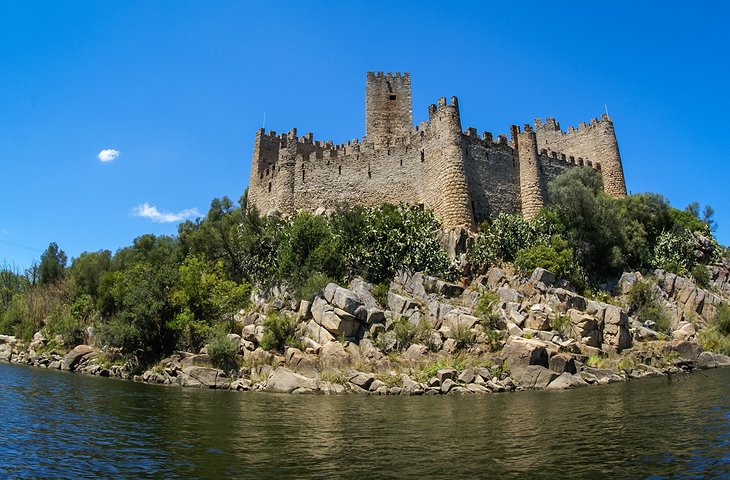
Its spectacular setting, on a stony, pocket-sized islet in the Tagus River presents Castelo de Almourol as arguably the most evocative of all Portugal's castles. Enchanting and mysterious in equal measure, the redoubt, with its tall, narrow keep and ramparts embellished with towers, is the embodiment of medieval Portugal.
Constructed in the late 12th century over the foundations of a Roman fortress, Almourol Castle served as a defensive trading post, guarding river traffic between the region and Lisbon, farther south.
But it was the Order of the Knights Templar, known later in Portugal as the Order of Christ, which is most closely associated with the stronghold. The secretive order ensconced itself on the islet, safe in the knowledge that even if the river was breached, its craggy shore and the castle's vertiginous walls were enough to keep marauders at bay.
These days, a ferry whisks visitors from a landing stage opposite the castle. Once ashore, you can scramble through undergrowth to reach the entrance. There's little to see within the walls. Instead, an uninterrupted pastoral view is the reward for reaching the top of the keep.
As an added allure, after dark, the castle's walls are illuminated with floodlight that further enhances the romantic quality of this ancient building.
Location: Ihota no Tejo, Vila Nova da Barquinha, Almourol, Estremadura
2. Castelo de Marvão, Marvão
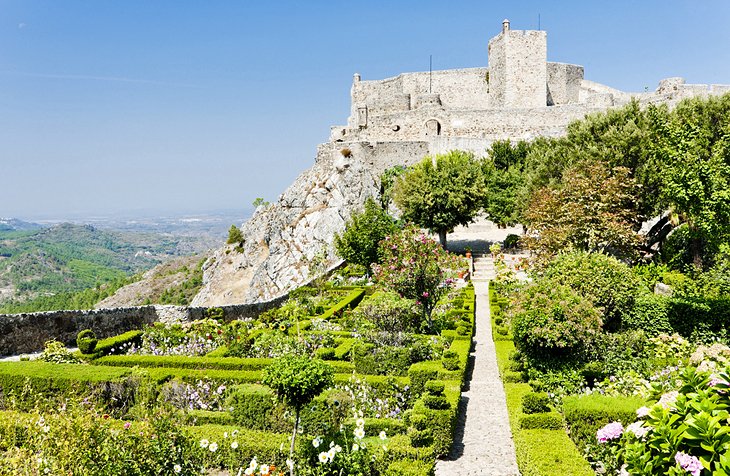
Portugal's vast Alentejo region is dotted with some magnificent castles, but few compare with the isolated splendor of Marvão. In effect an extension of the tranquil medieval hamlet set high up in the remote Serra de São Mamede, the well-preserved castle looks over an expanse of empty plains towards Spain. Indeed, it was built as a frontier fortress in the late 13th century over existing Moorish foundations to repel Spanish incursions.
Visiting the castle requires a long, winding drive to the top of a granite escarpment, where Marvão sits 861 meters above sea level. Its 14th-century walls are remarkably undamaged, as are the later 17th-century buttresses. The battlements enclose a keep and an impressive cisterna, still brimming with water.
In spring, the trees embroidering the spruce lawn cradle delicate almond blossoms. The only other distraction is the village itself, the collection of tiny, whitewashed cottages squatting over cobblestone lanes seemingly trapped in a 600-year time warp. The most memorable aspect, however, is the spectacularly serene landscape and all the history it evokes. The sensation is simply beguiling.
3. Castelo de Guimarães, Guimarães
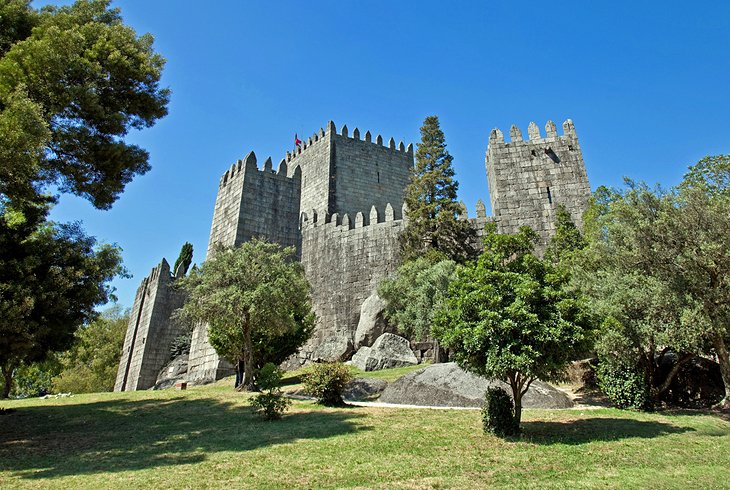
Celebrated as the birthplace of the nation and once the capital of the kingdom of "Portucale," Guimarães, in northern Portugal's wild and verdant Minho province, is also the city where Dom Afonso Henriques, Portugal's first king, was born in 1110. Its historical significance is such that UNESCO declared the old town a World Heritage Site in 2001.
The most significant building is the splendid Castelo de Guimarães. With foundations dating from the 10th century, the structure you see today is largely the result of expansion carried out two centuries later by Henry of Burgundy and reinforcements during the second half of the 14th century. Imposing heavy-set walls and a series of crenellated towers belie the rather modest interior, the highpoint of which is the central keep - the Torre de Menagem.
Visitors can follow the sturdy ramparts and soak in the tangible medieval atmosphere. For a real sense of occasion, however, climb the keep and admire some fabulous views of the surrounding area. After that, you can call in at the diminutive Romanesque chapel of São Miguel, just outside the castle walls, where Dom Afonso was baptized.
Address: Rua Conde D. Henrique, Guimarães, Minho
4. Castelo de São Jorge, Lisbon
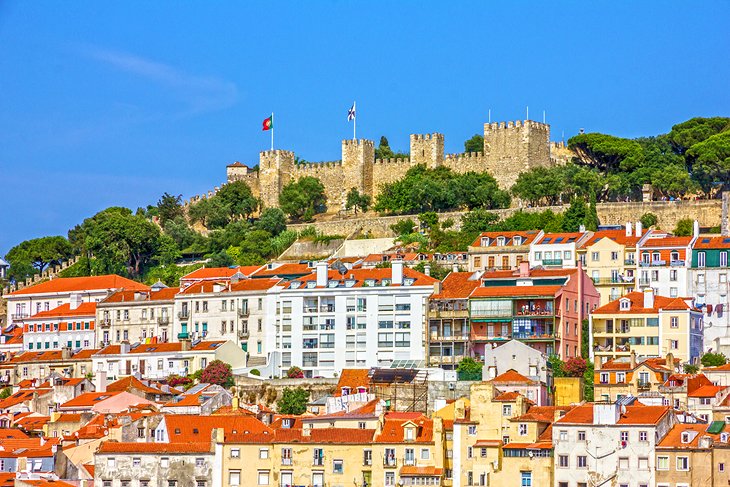
Portugal's most visited castle is the imposing Castelo de São Jorge in Lisbon. The impressive stronghold crowns a hill overlooking the city's busy Baixa (downtown) district and is the Portuguese capital's most visible historical monument.
A "must see" on any Lisbon tour itinerary, the castle's foundations date from the late 12th century, though evidence suggests a fortification of sorts stood here as early as the Iron Age. During their occupation of Lisbon, the Moors reinforced the walls sufficiently enough to repel Christian forces. In 1147, King Afonso Henriques finally recaptured the castle, and a palace was built within the walls as a royal residence.
The devastating 1755 earthquake destroyed the entire building and damaged much of the castle. Subsequent renovation restored much of its former glory, and today, Castelo de São Jorge remains one of Lisbon's most compelling tourist attractions.
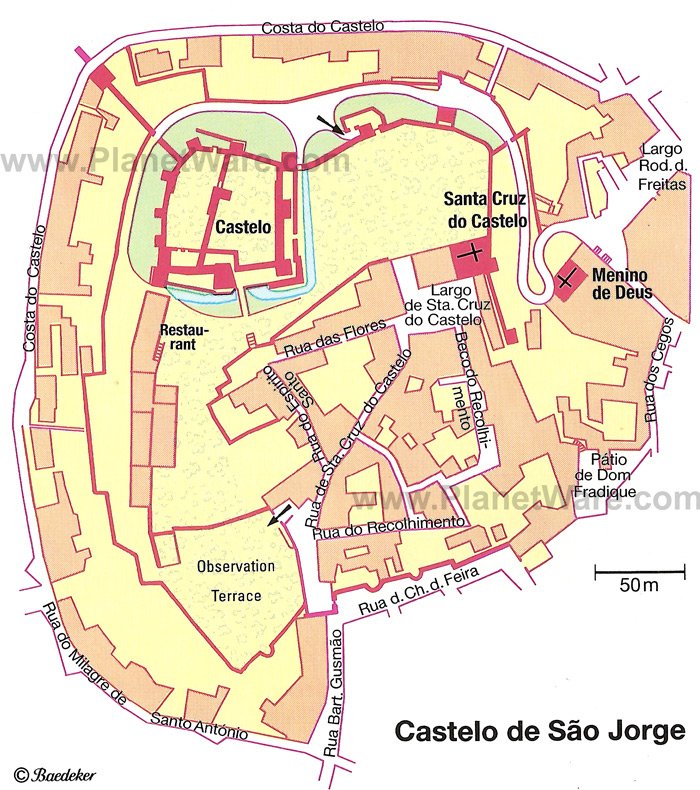
The best way to appreciate the castle's dimensions is to clamber up the battlements and walk along the ramparts. Several towers offer elevated views of the city shining below. One of them, Torre de Ulisses, houses a camera obscura that projects views of the capital onto the interior walls. Kids will have fun scrambling over the cannons lining the observation terrace, which affords a spectacular panorama over Lisbon and the Tagus River.
Elsewhere, the foundations of the once grand royal palace can be explored, and a neighboring interpretation center provides an exhibition of artifacts discovered during archaeological excavations.
Address: Rua de Santa Cruz, Lisbon
Official site: http://castelodesaojorge.pt/en
5. Castelo dos Mouros, Sintra
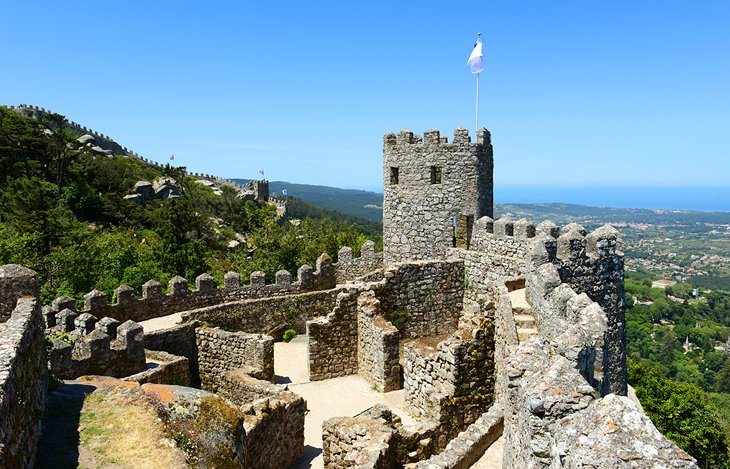
Among the highlights in the verdant and impossibly pretty town of Sintra is the stunning late 8th-century Castelo dos Mouros, the Moorish Castle. Clinging to a craggy escarpment high up in the Serra de Sintra hills, its weather-beaten ramparts snake along the Serra's granite-hewn contours to resemble a line of broken teeth.
The castle remained a strategically important stronghold for the Moors up until 1147 before Afonso Henriques, Portugal's first monarch, conquered it.
You'll need a stout pair of legs to reach the lofty redoubt by foot (a way-signed track from the town center leads hikers through the steep and wooded lower slopes to the castle's curtain walls). Most visitors, however, take the shuttle bus that conveniently stops outside the main entrance.
Once inside allow a good hour to explore the castle. On the ground, you can admire the outline of Moorish-era grain silos and a water cistern, as well as the ruins of a medieval church. Afterwards, climb the solid walls for a breathtaking saunter along the battlements, where dramatic views of the town below and the distant Atlantic coast can be admired.
Along the way, be sure to pause at "Fernando's Tower," a squat bulwark named after the Portuguese monarch, who restored the walls in the 19th century. From this spot, you can understand why UNESCO has recognized the destination as a World Heritage cultural landscape.
Official site: http://www.parquesdesintra.pt/en/
6. Castelo de Silves, Silves
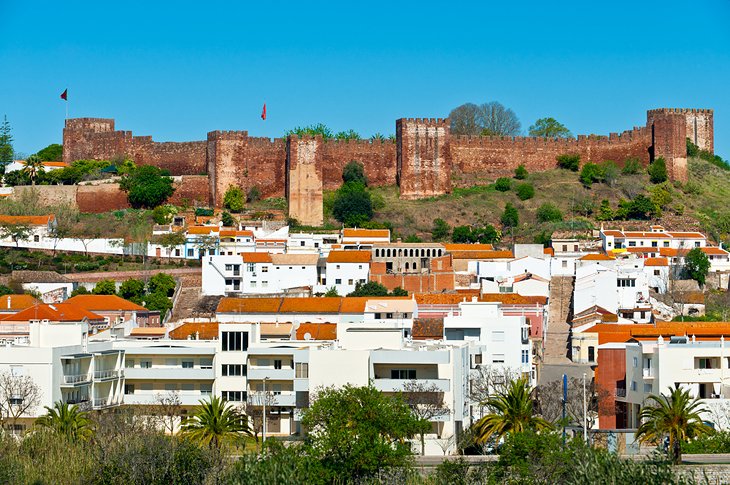
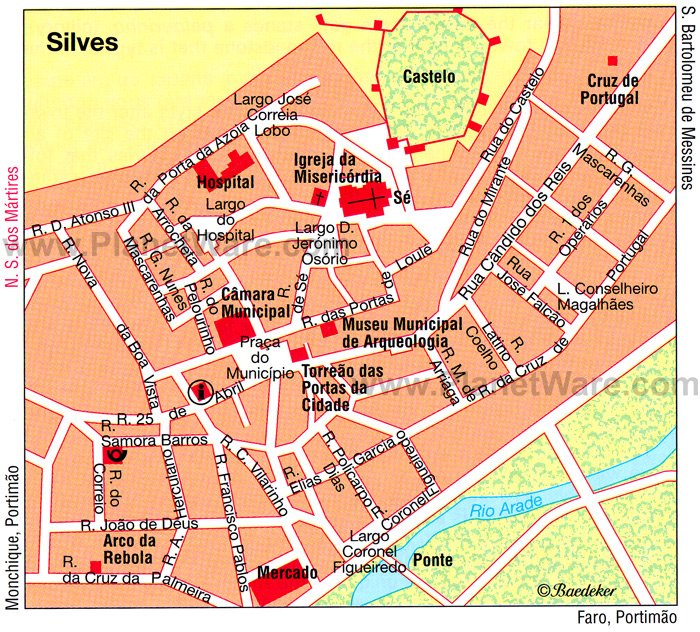
The largest castle in southern Portugal's Algarve province is also the finest example of Islamic military construction in the country, which is why the lively market town of Silves is one of the region's favorite visitor destinations.
As Xelb, Silves was the cosmopolitan capital of Moorish al-Gharb. The occupying Arabs fortified the town by building a seemingly impregnable hilltop castle whose magnificent walls surrounded the entire community.
By the mid-12th century, Silves had become a renowned center of culture, a place that drew Islamic writers, philosophers, and geographers. But this glittering epoch was brutally curtailed by the arrival of King Sancho I and an unforgiving Crusader army, who sacked Silves in 1189.
Today, the castle, still resplendent in dramatic red sandstone, rewards visitors with glorious views of the surrounding countryside from its enormous polygonal ramparts. Within the citadel, you can admire spruce gardens and a lovely 13th-century vaulted water cistern - the ghost of a Moorish maiden is said to haunt the well.
Occasional music concerts are held in the grounds throughout summer, and in August, a wonderful medieval fair unfolds outside the sturdy battlements.
Location: Largo de Sé, Silves, Algarve
7. Castelo de Alcoutim, Alcoutim
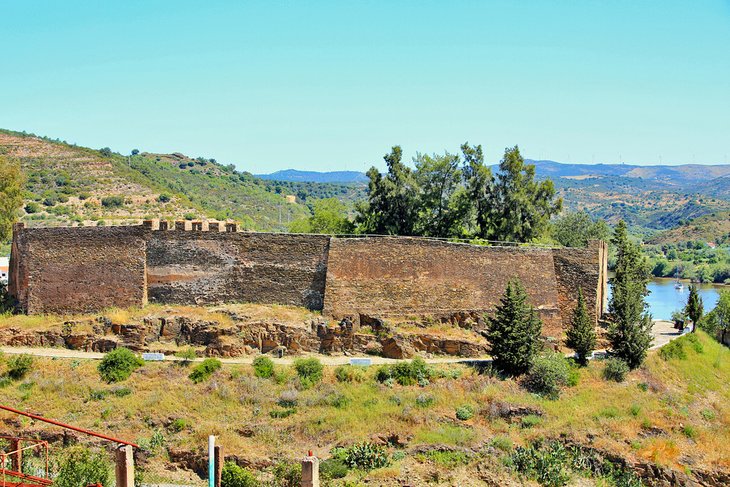
The charming riverside village of Alcoutim is one of the Algarve's unspoiled gems. Set on the banks of the Guadiana River, deep in the heart of the countryside, the tiny hamlet faces Sanlúcar de Guadiana, a similar sized community perched on the opposite side of the river in Spain. This bucolic setting is enhanced considerably from the ancient walls of Alcoutim's castle, which overlooks the waterfront.
Built in the 14th century to replace an abandoned Moorish stronghold farther north along the river, Alcoutim Castle served as a defense against Portugal's old enemy, Spain; the Guadiana serves as a natural frontier for both countries and is at its narrowest at this picture postcard location. The fort also operated to control trade along the busy waterway.
Nearly 600 years later, only a small section of the wall still exists. Fortunately, this faces the village and the river, so visitors are rewarded with an idyllic perspective of the vicinity. An engaging archeological museum has been fashioned within the keep with a display of exhibits that illustrate the history of the region.
It's possible to take a ferry over to Sanlúcar and explore what is in effect a mirror image of Alcoutim: the Spanish village even has its own ruined castle, set high in the hills to the east. The more adventurous can return to Portugal by zipline, currently the only cross-border zipline ride in the world.
Address: Rua 1 de Maio, Alcoutim, Algarve
8. Castelo de Bragança, Bragança
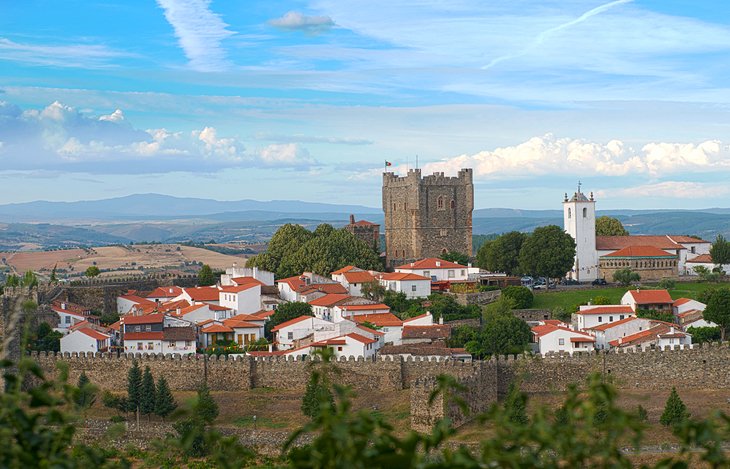
It's certainly worth making the long journey northeast in order to reach the historic town of Bragança - named after Portugal's final royal dynasty - situated in the beautifully stark and wild Trás-os-Montes region. Crowning an isolated hilltop away from the modern conurbation is the Cidadela, or "citadel," a complete circuit of brooding granite walls enclosing a collection of wonderfully preserved buildings and monuments, including the forbidding castle.
Completed in 1187 on the orders of King Sancho I, its austere appearance is deliberate, with one of its watchtowers known as the Torre da Princesa, a de facto prison where mistreated wives of conniving noblemen often ended up. The castle's robust Gothic keep dominates the walled citadel. Inside, you can browse a modest display of medieval suits of armor and weaponry housed in the Museu Militar.
Top off the tour by heading for the roof. The dizzying perspective reveals the sheer strength and impregnability of the walls.
Back on the ground, spend time exploring the old town. Don't miss the Domus Municipalis, the odd-looking pentagonal council chamber, and the only surviving example of Romanesque civil architecture in Portugal.
Address: Rua do Santo Condestável, Bragança, Trás-os-Montes
9. Castelo de Tomar ou dos Templários, Tomar
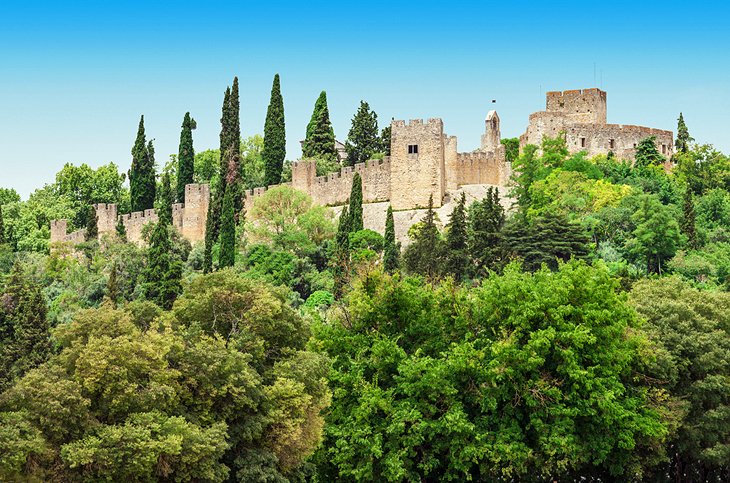
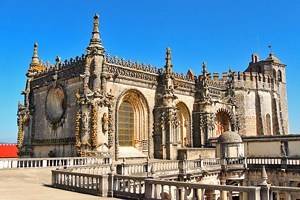
The Convento de Cristo in Tomar is one of Europe's greatest monumental legacies of the Order of the Knights Templar, the militant monk-knights that in Portugal, King Dinis turned into the Order of Christ. The convent alone, one of the country's most important historical buildings, is worth a good hour of anyone's time, but essential to any visit is the adjoining castle. Its oblong keep looms large over the town below, one of the prettiest in central Portugal, and serves as a monastic architectural reference point.
Built in 1160 by the Templars' Grand Master on land given to the Order for services in battle, the stronghold basically consists of the keep surrounded by two crenellated curtain walls. The entrance to the Convent of Christ proper is nearby.
From the top of the keep, visitors are regaled with the tremendous dimensions of the convent building, including the central Charola, the original Templar church, otherwise known as the Rotunda, and the nucleus of the monastery.
The beauty, complexity, and outright rarity of the convent and its sentinel castle are such that UNESCO long ago granted the entire structure World Heritage Site status. Indeed, you can't help but feel privileged to stand among such grandeur.
Official site: http://www.conventocristo.pt/en/
10. Castelo de Monsaraz, Monsaraz
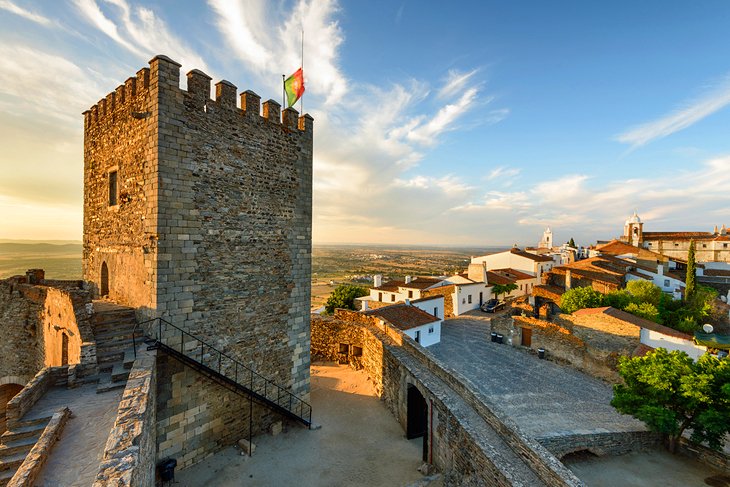
One of Portugal's most recognized castles is the one attached to the walled medieval town of Monsaraz, in the Alentejo. In fact, this expansive region is celebrated for its myriad ancient forts, and this splendid redoubt is as picturesque as they come.
Built from schist and limestone on the orders of Kings Afonso III and Dinis in the 13th century as part of a network of border defenses to deter Spanish attack, the castle perches on the western edge of the hill it's set on, at the end of a long cobbled road that snakes the entire length of the town. Its ramparts blend seamlessly with the walls that appear to prop up the chalk-white terraced houses lining Monsaraz's narrow streets and alleys.
This is a fairly remote part of the country, so don't be surprised if you find yourself the only one following the battlements or ascending the keep. Needless to say, the views are fabulous and take in acres of neatly combed fields; cork oak; and, in the distance, the enormous Barragem de Alqueva, Europe's largest man-made reservoir.
If you have the opportunity, arrive here at sunrise. The burgeoning heat creates a mist off the water that slowly shrouds the surrounding countryside in a beautiful gossamer sheen. Conversely, at dusk the castle walls glow in a tangerine wash as this revered monument is bathed in soft floodlight.
Address: Rua Direita, Monsaraz, Alentejo
11. Castelo de Mértola, Mértola
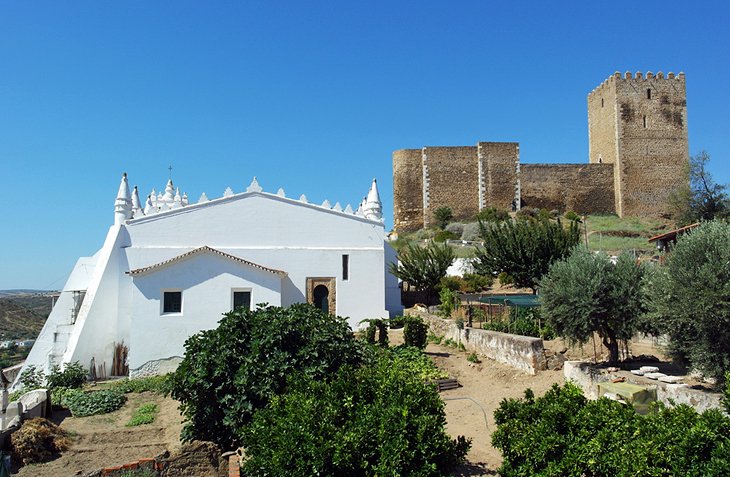
Hidden away in the far southern reaches of the Alentejo is Mértola. Set on a ridge high above the River Guadiana, this attractive whitewashed town is of great historical significance. Classified a vila museu, a museum site, there are no less than 10 mini-museums sited in and around the old quarter, each dedicated to a particular era within Mértola's time frame, a fascinating history that includes the Phoenician, Roman, and Islamic periods. Crowning all this is the castle.
The grounds surrounding the stronghold have been excavated to reveal the foundations of Moorish dwellings, and you should wander this archaeological wonderland before exploring the keep, which dates from 1292.
The castle was built to guard the approach to the town, itself sited near the confluence of the Guadiana and Oeiras rivers. Mértola was once a vital river port, and lookouts standing guard on the battlements would have been able to spy the advance of a potential enemy using the waterway or threatening the town from the surrounding countryside.
Today, visitors can take on those same valley views and peer down on the maze of narrow lanes and alleys that make the ancient walled town such a fascinating area to explore. At the same time look for the huge stork's nests anchored on the walls near the church tower.
Address: Parte Antiga de Mértola, Mértola, Alentejo
12. Castelo de Leiria, Leiria
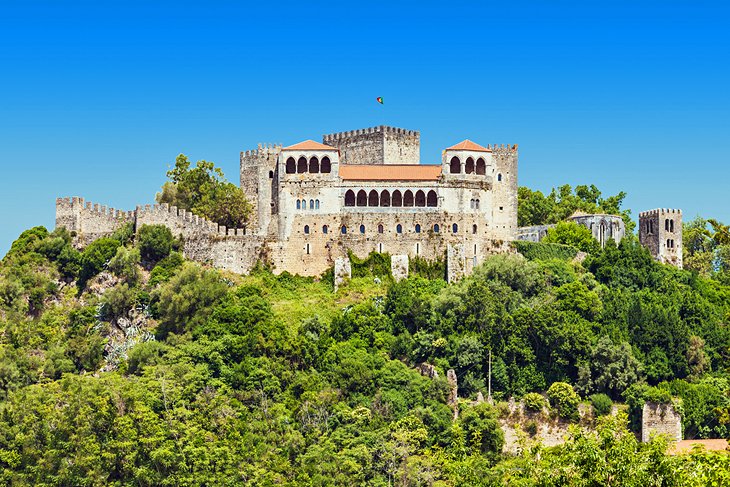
Leiria is not among Portugal's "tick the box" destinations, but this attractive town is full of traditional charm and character and makes for a worthwhile detour through the Estremadura region. Historically, it's defined by one outstanding monument, the resplendent Castelo de Leiria.
Crowning a hilltop in the city center, the castle's foundations date back to the early 12th century. Occupied by the Moors during their domination of the Iberian Peninsula, it was eventually recaptured in 1135 by King Afonso Henriques, only to be taken back by Muslim forces five years later. Finally, in 1142, the castle came under permanent Christian control and thereafter became a favorite royal retreat.
Visiting the elevated stronghold is a delight. You enter through the Albacara Gateway before embarking on a historical stroll that takes in various points of interest. The former royal palace is an obvious attraction. During the 14th century, this was the main residence of King Dinis. Today, the apartments serve as a library and meeting rooms.
The keep houses a diminutive archeological museum. The highlight of a tour is the beautiful loggia from where you can gaze over a verdant canvas of pine forest and the town's terra-cotta-hued rooftops. The castle walls also embrace the Gothic ruins of the church of Nossa Senhora da Pena.
Location: Largo de São Pedro, Leiria, Estremadura
13. Castelo de Santa Maria da Feira, Santa Maria da Feira
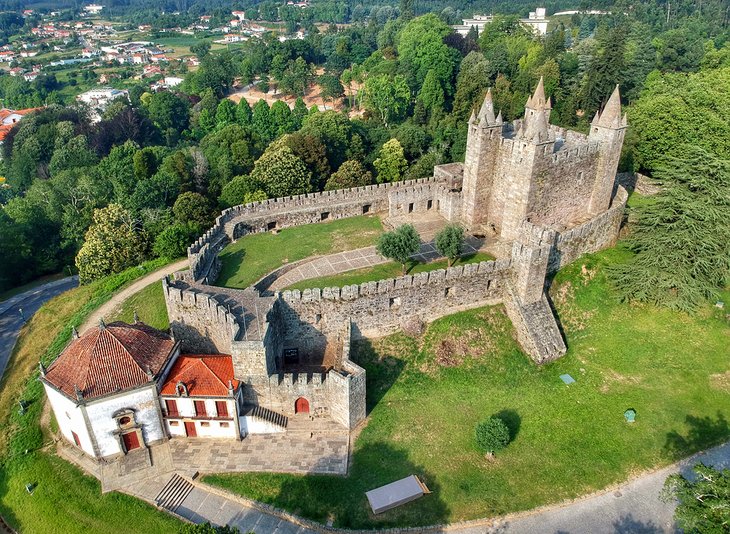
Dating back to the 15th century though benefitting from substantial 20th-century reconstruction, Santa Maria da Feira's pinnacled and crenelated castle crowns a hill overlooking this prosperous town located near Ovar in Portugal's Beira Alta region.
Emblematic of Portuguese medieval military architecture, the castle stands on the site of a temple to a local divinity, the foundations of which date back to the 11th century. In the 1400s, a fortress of sorts was built over the sacred ruins, which was later acquired by wealthy town resident Fernão Pereira. He added the watchtowers and conical towers in an attempt to turn the stronghold into a palatial palace. It remained in his family until 1700.
A national monument since 1910, the castle today makes for novel exploration. The parapets and walls afford pleasing views over the town and surrounding countryside, and the building has managed to retain its romantic air.
Address: Santa Maria da Feira, Beira Alto
14. Castelo de Penedono, Penedono
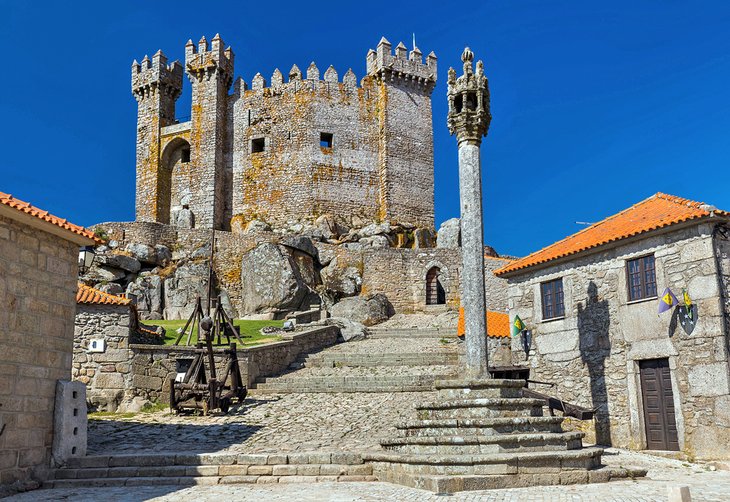
Isolated Penedono has a truly captivating castle. Perched on rocks and appearing as if sculpted from a single piece of granite, this solid lichen-encrusted fortress has stood here since the 10th century.
The castle is the supposed birthplace of a knight celebrated by Portugal's greatest poet, Luís de Camões, as O Magriço, one of the legendary 12 knights who went to England to defend the honor of 12 damsels.
In the early 16th century as the population of Penedono grew, the castle became a residence. By the 1800s, it had fallen into disrepair. Renovated in the 1960s, the castle today stands in silent splendor, a local landmark recognized for its heavy castellated walls crowned with pyramidal tops.
Visitors access the castle through the town's stone-clad square, a public space distinguished by its toothpick-like pelourinho (pillory). There's not much to see inside the castle, but there are fine views from the battlements.
15. Castelo de Montemor-o-Velho, Montemor-o-Velho
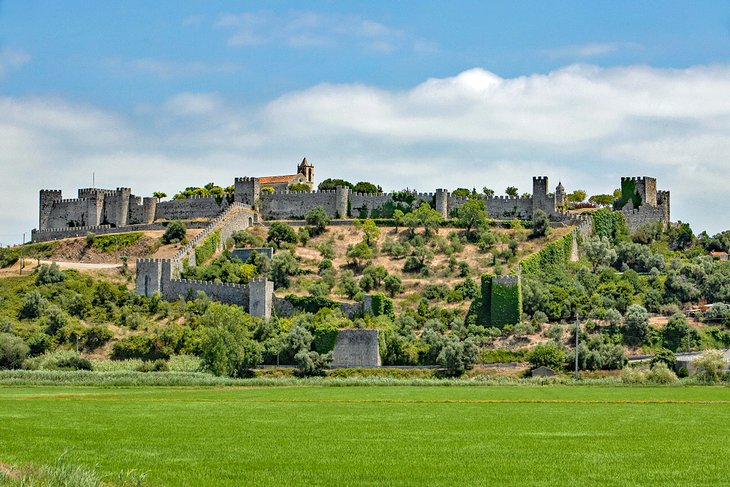
Set along a hillside and overlooking the River Mondego, the castle at Montemor-o-Velho once served as a primary defense of Coimbra, located 32 kilometers to the east.
Built in the 11th century on the site of a Moorish mosque, the castle was expanded and reinforced by successive Portuguese monarchs into what you see today, a truly impressive medieval defensive structure, the crenelated walls of which almost reach down to the water's edge.
Standing within its walls is the church of Santa Maria de Alcaçova, founded in 1090. Pop your head inside, and you'll notice its naves and arches reflect the flourishing Manueline style of architecture, a result of 15th-century restoration.
The views from the walls across the town and the patchwork of surrounding rice fields are stunning. Take your time exploring before relaxing in the terrace-café, which fronts an expansive tree-dotted lawn.